Loading summary
Transcript53 lines
- [00:04]
UK Government Industrial Strategy Announcer
Scaling requires infrastructure, talent and policy certainty. The UK's modern industrial strategy delivers all three and more through a ten year plan. With ten trillion pounds in capital, world class universities and unrivalled market access, the UK is engineered for growth. Start your investment journey at business.gov.uk.
- [00:33]
Bill.com Sponsor Voice
This Economist podcast is sponsored by Bill, the intelligent finance platform that helps businesses and accounting firms scale with proven results with AI powered automation. Bill isn't just moving money, they're simplifying financial operations. For nearly half a million customers, Bill has securely processed over a trillion dollars in transactions. That's proven infrastructure. Ready to talk with an expert? Visit bill.comproven and get a $250 gift card as a thank you. That's bill.comproven terms and conditions apply. See Offer page for details.
- [01:08]
Jason Palmer
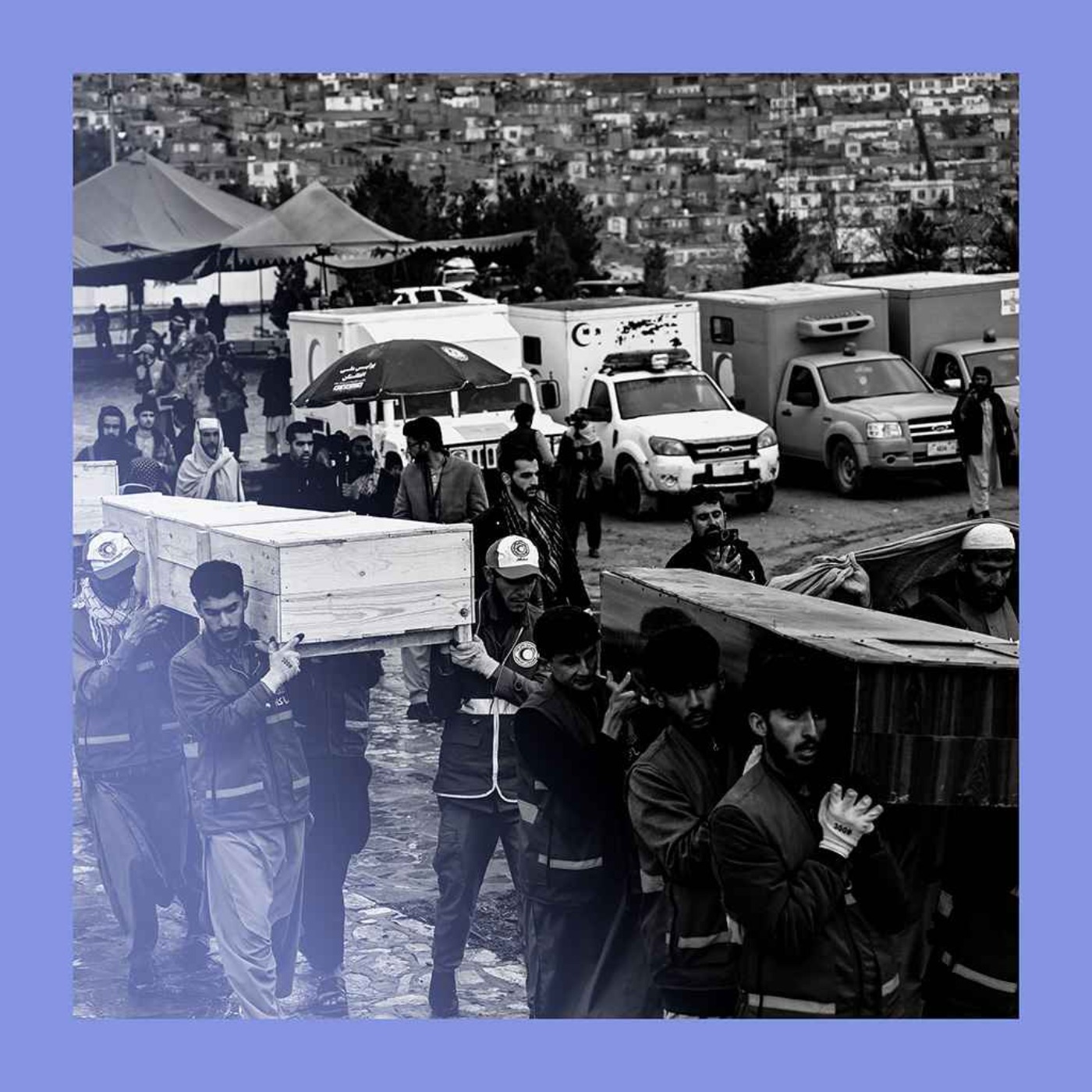
The Economist. Hello and welcome to the Intelligence from the Economist. I'm your host Jason Palmer. Every weekday we provide a fresh perspective on the events shaping your world. The oil pinch brought on by the war in Iran has plenty of people worried about knock on effects to inflation. We discuss the ways that this oil shock is and is not like the past few. And increasingly, there's a way for hardcore fans of a musical artist to get their ears on an album before it comes out. What was once a treat for industry insiders is becoming just part of an album release plan. Ain't no party like a listening party. But first, It's getting harder to keep track of all the military confrontations that deserve our attention. But we should talk about the one going on between two of Iran's neighbors, Afghanistan and Pakistan. By far the deadliest attack since that conflict ramped up last month came on March 16 with a Pakistani airstrike on Omid addiction treatment hospital in Kabul, Afghanistan's capital. Mourners buried the dead in a mass funeral. Afghanistan responded with border raids and drone strikes over the weekend for the Muslim holiday of Eid that marks the end of Ramadan. Both sides agreed to lay down their weapons, but that truce has now expired and it seems only a matter of time before the violence resumes.
- [03:05]
Tom Sasse
So the crux of this war is really that Pakistan accuses Afghanistan of sheltering a group called the Pakistani Taliban, known as the ttp, which it says is behind a big rise in terrorist attacks in Pakistan.
- [03:21]
Jason Palmer
Tom Sasse is our South Asia bureau chief.
- [03:25]
Tom Sasse
Now, the Taliban, who are the government and are ruling in Afghanistan, they of course deny this. But the Pakistani military thinks that they could be doing a lot more to rein in this group and it's now trying to force them to do that with a bombing campaign.
- [03:43]
Jason Palmer
So let's wind back here on our kind of a who's who, because Afghanistan and Pakistan in the past have been
- [03:49]
Tom Sasse
allies, not quite allies, I'd say, but you're right, this is a very complicated relationship. So during the US and NATO mission in Afghanistan, which ran right up until 2021, Pakistan really played both sides. So they were claiming to be an ally of America whilst also maintaining a relationship with the Taliban. And actually many of the Taliban leaders that Pakistan is now fighting a war with actually once sheltered in Pakistan with the connivance of the country's security services. But since the Taliban took over in Afghanistan, the relationship between these two neighbors has worsened quite rapidly.
- [04:32]
Jason Palmer
So that comes down then to the rise. This all focuses on the Pakistani Taliban, the ttp. Tell me more about them.
- [04:38]
Tom Sasse
That's right. So this is a group that was founded back in 2007 and in the past has fought alongside the Taliban, but operates independently from them. So I was looking this morning and their thought at the moment to have somewhere in the region of 7,000 to 10,000 fighters, mostly in the northwest of Pakistan. And of course, the Pakistanis accuse the Afghan Taliban of sheltering them over the border as well. So in February, we saw a big suicide bombing in Pakistan's capital, Islamabad. And there have also been attacks on the Pakistani military. I mean, it's important to say they're not the only militant group operating within Pakistan, but they are the most active. And militant violence in Pakistan has been increasing every year since the Taliban took over in 2021.
- [05:30]
Jason Palmer
And by now this has devolved into what has been declared an all out war. What's happened since then?
- [05:35]
Tom Sasse
So Pakistan has largely been trying to achieve its political aims through a pretty serious bombing campaign. So on February 26, it bombed Kabul, which is Afghanistan's capital, and Kandahar, which is the second city and also the home of the Taliban's supreme commander. The Pakistani Air force had been targeting lots of military sites and ammunition depots, and its ground troops have also been attacking Afghan border posts. Now, Pakistan claims that it has killed more than 270 Taliban members. And then on 16th of March, there was a significant escalation when one of their airstrikes hit a drug rehabilitation facility in Kabul and that killed at least 143 people, including many patients. So after that, what we've seen is a pause in the operation from Pakistan to mark the end of Ramadan. And really now we're all waiting to see what happens next.
- [06:33]
Jason Palmer
And I guess the question is what sort of scope of things could happen next. These are acts of war against Afghanistan. But Afghanistan is not in so much a position to react militarily.
- [06:44]
Tom Sasse
That's right. I mean, it doesn't have a working air force. It can't really do much to to prevent these Pakistani attacks. It has launched some border raids of its own, as well as drone attacks over Pakistani cities. So last week, our colleague in Islamabad was telling me there were drone sightings there. Many analysts will tell you that the Taliban has some ability to hurt Pakistan by sponsoring terror attacks on its soil. And some even think that the Taliban leadership could respond to this hospital bombing by supporting a more spectacular attack in Pakistan, which could in turn lead the Pakistanis to then target the Taliban leadership with their aerial campaign. It's also worth noting that aside from what's going on militarily, civilians are also increasingly getting caught up in this war. So more than 2 million Afghan refugees have been sent home by Pakistan since 2023, and in January alone there were around 80,000 crossing the border. So this war is also starting to produce a pretty big refugee crisis.
- [07:51]
Jason Palmer
And so to your mind, what might bring this to an end? Or is it just bound for greater escalation?
- [07:57]
Tom Sasse
So lots of countries have been rushing in to council restraint and particularly China, which is a big partner of Pakistan. But until recently, neither side has seemed to be in much mood to listen to them. One possibility, though, is that the war in Iran could have a constraining effect on both sides. So Afghanistan's economy is really struggling in part because it's already had this border closure with Pakistan, but also because it relies on Iran for much of its food, its building materials. But Pakistan is also very exposed to this energy shock that's arisen from the closure of the Strait of Hormuz. So it could just about be that the both sides decide that they don't want to escalate this any further. But I think that will depend on them being able to find an off ramp that they can both agree on.
- [08:48]
Jason Palmer
And what chances do you do you give that though, the idea that while all out war is happening and tensions are so high that an off ramp actually exists.
- [08:57]
Tom Sasse
So I think in the immediate aftermath of this really dreadful bombing of a hospital, it's going to be pretty difficult for the Taliban to publicly come to the table. But we will have to wait and see. And in the coming weeks and months, we could see back channels emerge.
- [09:13]
Jason Palmer
Thanks very much for joining us, Tom.
- [09:14]
Tom Sasse
Thank you, Jason.
- [09:27]
Bill.com Sponsor Voice
This Economist podcast is sponsored by Bill, the intelligent finance platform that helps businesses and accounting firms scale with proven results. With AI powered automation, Bill isn't just moving money, they're simplifying financial operations. For nearly half a million customers, Bill has securely processed over a trillion dollars in transactions. That's proven infrastructure. Ready to talk with an expert? Visit bill.comproven and get a $250 gift card as a thank you. That's bill.comproven. terms and conditions apply. See offer page for.
- [10:06]
UK Government Industrial Strategy Announcer
Scaling requires infrastructure, talent and policy certainty. The UK's modern industrial strategy delivers all three and more through a ten year plan. With ten trillion pounds in capital, world class universities and unrivalled market access, the UK is engineered for growth. Start your investment journey at business.gov.uk forward/growth.
- [10:40]
Joshua Roberts
The war in Iran is set to have a huge impact on the cost of living.
- [10:45]
Jason Palmer
Joshua Roberts is our capital markets correspondent.
- [10:50]
Joshua Roberts
It's obviously already hit the oil price, but it's set to feed through to food prices, to transport prices, if you're going on holiday, for instance, and pretty much everything else that takes energy as an input. And there's now a risk that inflation starts to spiral again and price rises get out of control.
- [11:07]
Jason Palmer
Okay, talk me through the mechanism. How do we get from hiccups in the oil market to all of that?
- [11:13]
Joshua Roberts
So energy is an input for pretty much everything else you buy. Houses need to be heated, factories need to be heated. Any good that's produced needs to be transported and that takes petrol. People need to be paid in order to do all of the things like heat their houses and fill their shopping basket. So eventually the energy cost goes through to wages as well. And as all of these costs rise, the prices that businesses need to charge for goods and services rises as well. And it goes much more broadly than just the immediate things that oil feeds
- [11:44]
Jason Palmer
through to, which do include other things that are inputs where it's a little more direct. Right. Like fertiliser, for example.
- [11:50]
Joshua Roberts
Right, exactly. It's not even just oil that's trapped in the Strait of Hormuz. Fertiliser is another big category of things that passes through that straight. And there's an obvious feed through immediately from fertiliser to food. If there's a shortage of fertiliser around the world, then you're eventually going to get food shortages. And people who are expecting that in the coming months are already going to start driving up prices. For example, natural gas is something that's trapped in the strait that's used to produce a lot of fertilisers. But there are also other fertilisers that are trapped there, such as urea or sulphate, comes through there as well.
- [12:21]
Jason Palmer
So talk to me about the mechanism where people come into it, expectations and the like.
- [12:26]
Joshua Roberts
Yeah, so this is really the more dangerous thing for central bankers when they're thinking about controlling inflation. They can see that when there's a shortage of something like energy or fertilizer, that that's going to raise prices in its own right. But central bankers often do what's called looking through that shock. You know, they don't control the supply of this stuff. The supply is going down, that's naturally going to send prices up. But eventually that effect will dissipate. Central bankers can kind of relax about that. When we start talking about inflation expectations though, and changes of behavior, this is what causes a deeper rooted problem. If I look around the world and I see the prices not just of energy, but of pretty much everything going up. In particular, if I see the price of my shopping basket going up each week, I am going to start to think I'd better get paid more. And if I'm a member of a union, I'm going to put pressure on my union to bargain wages up. And if people start doing that across the economy, then that creates its own new pressures because one person's wages are another person's costs. So the effect of people trying to bargain their wages up in itself causes prices to rise faster, which then causes other people to want to bargain their wages up more. This is what economists call the wage price spike spiral.
- [13:37]
Jason Palmer
A positive feedback loop. Sounds like the sort of thing that's hard to stop once it starts.
- [13:42]
Joshua Roberts
Exactly the sort of thing that you really need to clamp down on before it gets out of hand. The trouble is that central bank's tool for clamping down on that is raising interest rates, destroying demand by making money more expensive, making businesses be able to borrow less, making them less able to buy their own inputs, making people less able to afford their mortgages and more likely to save money so they spend less. They this is all painful for pretty much everybody. You see demand going out of the economy because people cannot afford as much and because some people are starting to lose their jobs. Because when we lose demand also typically we see unemployment go up as well.
- [14:17]
Jason Palmer
But this mechanism that connects oil shocks of various kinds right down to consumer behavior and so on with this kind of well known, right? The world has gone through this kind of hiccup before.
- [14:27]
Joshua Roberts
It is well known. A big example that people give where it really got out of hand in the past is the 1970s. This is the original Iran oil shock that central bankers in particular want to repeat. What's particularly dangerous at the moment is this in a sense is a one off shock. It's an idiosyncratic thing, war in Iran that has blocked the Strait of Hormuz. But in another sense it's not a one off shock because we've had several of these over the past few years. We had the shock of COVID of the pandemic and the bottlenecks that followed that. We had the previous energy shock in 2022 when Russia invaded Ukraine and the oil price spiked before that. We've had the shock last year of tariffs raising the costs of lots of things. All of these are kind of one off shocks in their own right. But when you hit people with shock after shock after shock, they stop thinking of them as one offs. And that's the sort of thing that in particular can raise people's inflation expectations and make the problem have deeper roots.
- [15:28]
Jason Palmer
On the basis of those more recent shocks though, do they give us a guideline for what to expect from this one?
- [15:34]
Joshua Roberts
So the IMF has a rule of thumb for how oil shocks eventually feed through to global inflation, and that Is for each 10% sustained rise in the oil price, you get an additional 0.4 percentage points on global inflation. Now what does that mean? Now, since the start of the Iran war, the oil price has risen by about 50%. So we're expecting global inflation by this rule to increase by about 2 percentage points. Now I should say though that that is a kind of all else being equal based on historical averages type rule of thumb. So take a pinch of salt for how precise it should be.
- [16:09]
Jason Palmer
But all things won't remain equal if central bankers get involved and try to stop that rise happening.
- [16:14]
Joshua Roberts
Exactly. And central bankers now have this tug of war going on in their heads. On the one hand, they don't want to repeat the mistakes of the previous shock and the mistakes of the previous shock. This was the energy shock of 2022, which combined with labour shortages and supply bottlenecks after the pandemic. Their mistake then was to react too slowly in much of the rich world. So they let inflation rise much more than they should have done, thinking, oh, this will be transitory, all of the effects will fade, so we don't need to raise interest rates. And then belatedly realized this was the wrong response, started raising interest rates, and because inflation had risen so high already, they probably needed to raise interest rates further than they would have done had they reacted sooner. On the other hand, and I'm particularly thinking of the US Here, President Trump has just appointed a new chair of the Federal Reserve, implicitly on the understanding that he is sympathetic with President Trump's wish and the US Treasury's wish for interest rates to fall. And we've seen how much he can make. Fed officials lives difficult when they don't do what he wants to do. So if Kevin Walsh, the incoming Fed chair, starts raising interest rates instead, you can kind of expect all hell to break loose. For him. Personally, this tug of war means it's really difficult to figure out how central bankers are actually going to deal with this shock. And to make matters worse for them, the increased oil price is not just going to raise inflation, it's also going to hurt global growth. And that is another kind of element in the tug of war for whether they'll raise interest rates or not.
- [17:44]
Jason Palmer
Because our listenership is such a large fraction of the global population, I'm concerned that what we discuss here has only served to increase inflationary expectations and thereby we have made markets moving. Discussions here.
- [17:57]
Joshua Roberts
Well, I suspect listeners to the intelligence are frankly too intelligent to do that, so I wouldn't worry too much about that risk. But there's obviously a serious point here. The more we're all talking about inflation, the more likely it is that people's inflation expectations go up and therefore that becomes self fulfilling.
- [18:13]
Jason Palmer
Yes. Sorry, I didn't mean even momentarily to underestimate our audience. You're quite right. Josh, thanks very much for your time.
- [18:18]
Joshua Roberts
Thanks for having me, Jason.
- [18:40]
Jason Palmer
Oh, hello everybody.
- [18:41]
GNC Advertisement Announcer
The Bruno Mars listening party will start
- [18:43]
Caitlin Talbot
in three minutes at Rough Trade East, a record shop in London. I went to a listening party for Bruno Mars new album, the Romantic.
- [18:55]
Jason Palmer
Caitlin Talbot is our digital culture correspondent.
- [18:58]
Caitlin Talbot
Among shelves of records, the fans were tapping their feet, nodding their head, oohing and ahhing as new tracks came on. And even having a boogie. There I met Jet, a self professed hooligan as Bruno Mars fans like to call themselves.
- [19:15]
Jet (Bruno Mars Fan)
For me, especially like maybe since after Covid, I think listening parties are more of like a communal experience because you can easily like listen to the album on your own at midnight, but getting to listen to it beforehand, especially with other people who are fans as well, you kind of get to have a feel of what the album will be like, what other people's reactions are. They get to see your reactions as well.
- [19:38]
Caitlin Talbot
Mr. Mars is not the only musician giving his fans a hint of his forthcoming hits. Harry Styles hosted listening parties in 40 cities for KISS all the time Disco. Occasionally his new record. Their fans dressed up in disco themed outfits, their phones were taken away and they were given disposable cameras to document the event. Other pop stars, from Billie Eilish to Sabrina Carpenter, have hosted listening parties, some of them in large concert style arenas and others hosted more intimate gatherings for superfans or top listeners. Listening parties started as exclusive previews for industry insiders, but now they're part of the publicity cycle. Among the first major artists to grant their fans early access were Taylor Swift, who started hosting secret sessions for hand selected Swifties, and Kanye west who appeared on stage at huge listing parties for his songs and albums. You Don't Love Me, you Don't Love Me Record labels are turning the volume up on listening parties for two reasons. First, they create a lot of buzz around a new release. Engaging fans early also boosts sales. Listening parties have been found to contribute between 10 and 20% of an album's first week sales. That's particularly important during the streaming age. Billboard counts 1,000 paid streams as equivalent to one physical album sale, so events that encourage fans to buy physical albums can help artists debut at the top of the chart. Second, listening parties allow artists to connect with fans. By adding exclusive giveaways, limited edition merchandise and live performances, artists can create a rewarding experience for fans. And even though the artist is rarely present, listening parties can offer a similar atmosphere to a gig. The party in Brick Lane certainly went down a hit with the hooligans.
- [21:57]
Jason Palmer
That's all for this episode of the Intelligence. We'll see you back here tomorrow.
- [22:18]
Bill.com Sponsor Voice
This Economist podcast is sponsored by Bill, the intelligent finance platform that helps businesses and accounting firms scale with proven results with AI powered automation. Bill isn't just moving money, they're simplifying financial operations. For nearly half a million customers, Bill has securely processed over a trillion dollars in transactions. That's proven infrastructure. Ready to talk with an expert? Visit bill.comproven and get a $250 gift card as a thank you. That's bill.comproven. terms and conditions apply. See offer page for details.
- [22:52]
GNC Advertisement Announcer
There's one place for the newest drops in wellness and performance and the biggest sale of the year. It's the drop by gnc, curating the best of what's new, handpicked by the pros who know what works and right it all. Buy one, get one 50% off during the semiannual LiveWell sale. From crushing workouts to leveling up your nutrition and everything in between, get the best deals on the latest innovations. All the newness is all on sale right now during the Livewell sale on the drop by gnc,