Loading summary
Transcript65 lines
- [00:00]
Grow Therapy Advertiser
The to do list doesn't stop, and neither does the pressure to keep up with it if you've been running on fumes. Growtherapy makes it easier to find care that's covered by insurance and actually built around you, whether it's your first time in therapy or your 50th. Grow makes it easier to find a therapist who fits you, not the other way around. You can search by what matters like insurance, specialty, identity or availability and get started in as little as two days. And if something comes up, you can Cancel up to 24 hours in advance at no cost. Grow Grow helps you find therapy on your time. Whatever challenges you're facing, Grow Therapy is here to help. Grow accepts over 100 insurance plans. Sessions average about $21 with insurance and some pay as little as $0 depending on their plan. Visit growtherapy.com acast today to get started. That's growththerapy.com acast growtherapy.com acast availability and coverage vary by state and insurance plan.
- [01:04]
Dell Advertiser
Dell PCs with Intel inside are built for the moments that matter. For the moments you plan and the ones you don't. Built for the busy days that turn into all night study sessions. The moment you're working from a cafe and realize every outlet's taken, the times you're deep in your flow and the absolute last thing you need is an auto update throwing off your momentum. That's why Dell builds tech that adapts to the way you actually work, built with long lasting battery so you're not scrambling for the closest outlet. And built in intelligence that makes updates around your schedule, not in the middle of it. They don't build tech for tech's sake, they build it for you. Find technology built for the way you work@dell.com DellPCS that's Dell.com Dell PCs built for you.
- [02:00]
Grow Therapy Advertiser
The economist.
- [02:07]
Rosie Blore
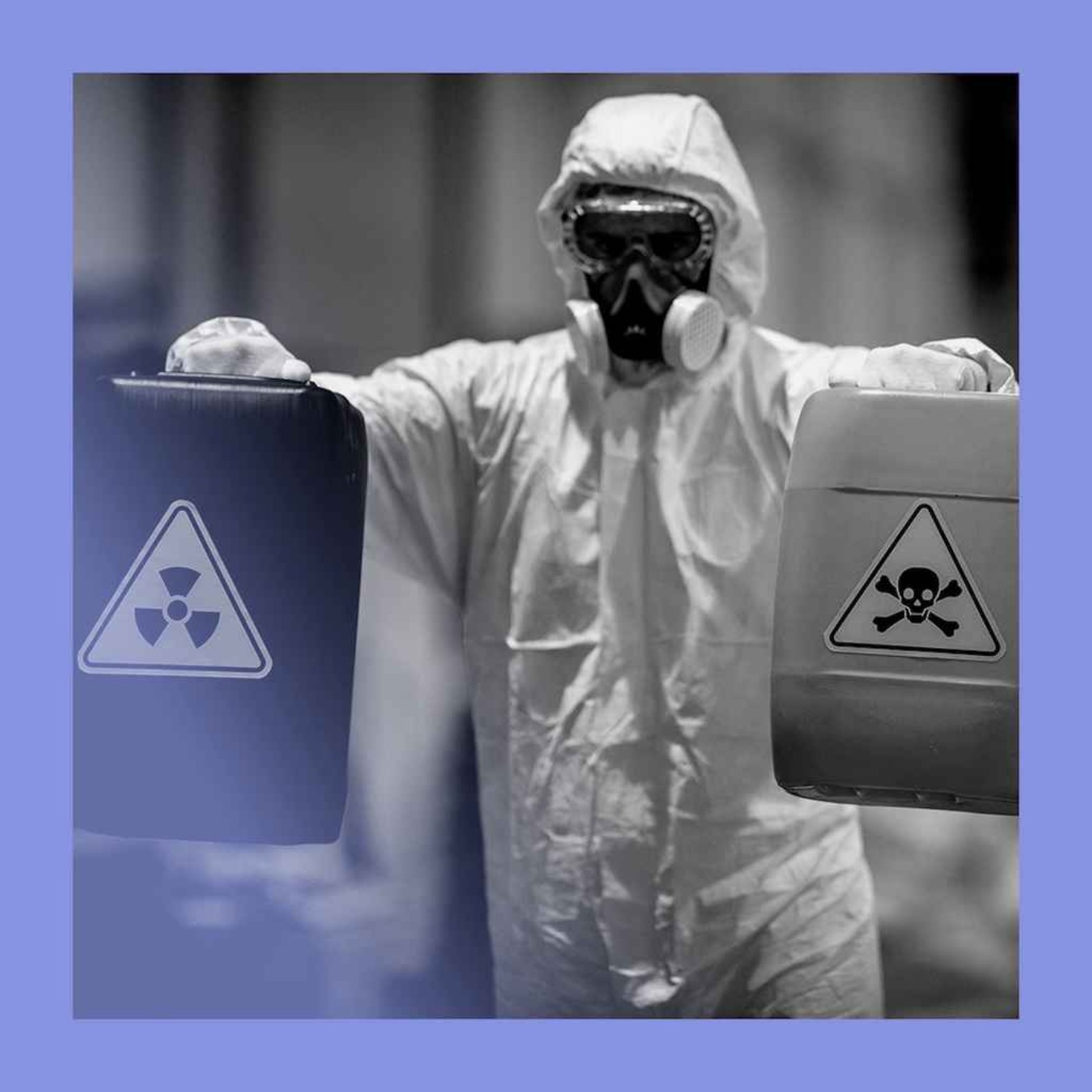
Hello and welcome to the Intelligence from the Economist. I'm Rosie Blore. Today on the show, are there any safe assets left to invest in? And why German bread is on a roll. But first, In recent decades, the list of existential anxieties has only mounted. War, Nuclear war, Climate change. Well, don't expect any reassurance from me now. With the rise of artificial intelligence, another potentially civilization ending threat is gaining momentum.
- [03:06]
Arthur Hollandmischel
For the past few decades, governments have worried that thanks to advances in synthetic biology, it is easier than ever to develop biological weapons.
- [03:16]
Rosie Blore
Arthur Hollandmischel writes about emerging technologies.
- [03:20]
Arthur Hollandmischel
Now AI is making it even easier.
- [03:27]
Rosie Blore
Arthur, you're predicting the end of humanity here. How might that happen?
- [03:32]
Arthur Hollandmischel
AI has become exceptionally good at doing biology. Leading language models have surpassed human virologists on things like bioinformatics and troubleshooting complex experiments. The worry is these same capabilities could enable novices to access a level of capability that previously only existed in the hands of a very small number of governments.
- [04:01]
Rosie Blore
So what role exactly is AI going to play?
- [04:04]
Arthur Hollandmischel
The essential role that many are worried about is that they will provide what's called uplift. They will essentially give people who don't know how to do science a boost. One expert who used AI in a study published last year to help guide him through the trickiest parts of assembling polio virus, described the model as being like an infinitely patient tutor who had read every scientific paper ever published. And so it was able to guide him, with the idea being that someone who's never laid hands on a pipette could have an AI assistant at their side, and when they get something wrong, they can ask, do it again, and, in theory, eventually get it right. The evidence shows both that it's unbelievably helpful to some people, but then there are other studies showing that it isn't.
- [04:57]
Rosie Blore
So who exactly are we worried about? I mean, could I become a bioterrorist?
- [05:02]
Arthur Hollandmischel
Well, I'm glad you asked, in fact, because the industry has looked into this, and a recent study found that actually, novices. I'm going to assume that you don't have experience with sophisticated virological tasks, but novices don't actually get that much help from AI in the lab. On the other hand, someone with, say, a PhD in molecular biology, that might be the person who's actually going to get the most boost out of an AI accomplice. If you have access to a tool that has read every scientific paper ever published, that is somewhat akin to having access to a infinite number of experts who can approach the question from different angles, who can troubleshoot, who can brainstorm in ways that might replicate or mimic the effect of having very large teams of experts, which is, of course, the principal bottleneck for bioterrorism.
- [06:02]
Rosie Blore
So how soon could some kind of deadly virus be produced with the help of AI?
- [06:08]
Arthur Hollandmischel
Governments have looked into this. Last year, there was a major study which found that in terms of actually using AI to develop a totally new pathogen, something that doesn't have any characteristics that we know how to defend against, that would rely on access to some data sets that don't exist yet, what would be possible in expert hands now is some capability in terms of actually modifying existing viruses to perhaps exhibit certain capabilities that they do not currently have how soon? Well, in theory, someone could just develop a respiratory virus that works if they get lucky and infect themselves and then get on an airplane or sneeze in public places. And that could potentially do the trick. But of course, until someone tries that, and we certainly hope that no one does, and it's a little hard to
- [07:08]
Rosie Blore
tell, but you could do this by mistake, then.
- [07:11]
Arthur Hollandmischel
Biology, compared to other ways of causing mass panic and harm is very hard. And the fact remains that there are all sorts of other ways of creating panic and creating harm that are perhaps easier for now. But of course, with the way that these capabilities, these AI capabilities are evolving, that balance could shift, and it could shift very quickly, which is why there is so much interest in how to make models less likely to provide help.
- [07:46]
Rosie Blore
So that's what I wanted to come onto. It's not easy yet to destroy humanity. We should take some comfort from that. But what can be done to keep it that way? Whose job is it to regulate? And can you regulate for this kind of thing?
- [08:00]
Arthur Hollandmischel
It probably starts with the technology itself. The best option would be to have models that do not freely give out sensitive information about how to recruit, cover, and propagate viruses, for example. That begins with models that will refuse dangerous requests. And in fact, models are getting a lot better at refusing requests related to sensitive biological information. But those refusal mechanisms can be very easily bypassed by a motivated actor. So then you have to look at ways of actually changing the capabilities of the model. Maybe you leave some of that sensitive information out of their training data sets so that they don't know about these capabilities. Other approaches might come down to something that is simpler, which is just to restrict who gets access to some of these models.
- [08:57]
Rosie Blore
And governments. Can they regulate?
- [08:59]
Arthur Hollandmischel
Governments can get ahead of the release of models by looking at their capabilities before they've been released to the public. And on the basis of that, they could, in theory, establish guardrails or limitations on what the models can be used for and where they can be used and by whom.
- [09:20]
Rosie Blore
So it's not over yet, but it's pretty terrifying stuff.
- [09:23]
Arthur Hollandmischel
Yeah, biology has always been terrifying. Humans have always sought to find ways to take advantage of the devastating potential. AI is multiplying that, and there is so much uncertainty as to how it's multiple, applying the harm that can be created that I don't think anyone should rest easy about it. Even if the evidence right now suggests that AI is not putting bioweapons into the hands of novices as we speak, that uncertainty itself is cause for alarm, because there isn't strong evidence that it won't do that at some point in the very, very near future, which speaks to the importance of proactive measures rather than a sort of wait and see approach that would be gambling with impossibly high stakes.
- [10:17]
Rosie Blore
Arthur, thank you very much.
- [10:19]
Arthur Hollandmischel
Thanks very much.
- [10:34]
Grow Therapy Advertiser
The to do list doesn't stop, and neither does the pressure to keep up with it if you've been running on fumes. Grow Therapy makes it easier to find care that's covered by insurance and actually built around you, whether it's your first time in therapy or your 50th. Grow makes it easier to find a therapist who fits you, not the other way around. You can search by what matters like insurance, specialty, identity or availability and get started in as little as two days. And if something comes up, you can Cancel up to 24 hours in advance at no cost. Grow helps you find therapy on your time. Whatever challenges you're facing, Grow Therapy is here to help. Grow accepts over 100 insurance plans. Sessions average about $21 with insurance and some pay as little as $0 depending on their plan. Visit growththerapy.com acast today to get started. That's growththerapy.com acast growtherapy.com acast availability and coverage vary by state and insurance plan.
- [11:36]
Cash App Advertiser
Most of us don't think much about how money actually moves until something slows it down or makes it more expensive than expected. That friction is exactly what Bitcoin was designed to rethink. Bitcoin is often talked about as an investment, but it was built to be used with Cash App. You can actually do that. Send Bitcoin instantly, pay at local square businesses that accept it, or move it to your own wallet whenever you want. It works more like real money and less like something locked in an account for a limited time. New customers can get $10 added to their balance. Just use code CASH APP10 when you sign up. And don't forget this part. Send at least $5 to a friend in the first two weeks. Terms apply. Cash App is a financial services platform, not a bank. Banking service is provided by Cash App's bank partners. Bitcoin service is provided by Block Inc. Brand. For additional information, see the Bitcoin disclosures at Cash App legalpodcast.
- [12:39]
Josh Roberts
Looking at what's going on in the world, you might think investors would be flocking to their safe havens. But actually it's been a brilliant few weeks for stock markets.
- [12:49]
Rosie Blore
Josh Roberts is our capital markets correspondent.
- [12:53]
Josh Roberts
In a lot of the world, they're at all time highs or close to it and it's been a great time if you're invested in shares lately.
- [13:02]
Rosie Blore
Josh, that's despite the Iran war causing one of the biggest oil shocks in history. What's going on?
- [13:09]
Josh Roberts
Yeah, it really does seem quite surprising on the face of it because we've talked a lot about how bad this shock could be, how it's constricting the world's energy supply, how markets really aren't really prepared for it, and how economies are going to take quite a bit of damage from the oil shock. And yet you've got all of this optimism in equity markets now. It's quite hard to second guess investors who have all the facts at their fingertips and millions of dollars at stake, in some cases billions of dollars at stake. And journalists are often accused of having predicted nine out of the past four stock market crashes. So I don't want to lean too far in that direction. It could well be that right now investors are right and the benefits from, for example, economic growth, the artificial intelligence revolution, are just going to outweigh this Iran shock. That's certainly how they're acting.
- [13:58]
Rosie Blore
And is that where the optimism of these investors comes from?
- [14:02]
Josh Roberts
I think that's where some of it comes from. And there are other events that have happened recently that kind of support that. The global economy and markets have proved to be a lot more resilient over the past few years than really anyone might have predicted before. We've had shock after shock, whether it's Covid or Russia, Ukraine or the bank crisis we had in the US A few years ago. Time it seemed like they might send share prices over a precipice. But each time share prices have plunged, it's been very short term. They've recovered incredibly quickly. And investors who've sold out when things seemed really bad actually just ended up missing out on the rebound. So perhaps this time with the Iran war, we're seeing some of the muscle memory of that come back. Investors not wanting to make the mistakes that they've made over the past few years, be overly negative and then miss out on future gains.
- [14:52]
Rosie Blore
And is that warranted? I mean, we've talked again and again about how big a crisis this is.
- [14:57]
Josh Roberts
I do worry that this one time that muscle memory, as well as it would have served you for several previous shocks, doesn't seem to be the right response to this one because we are looking at a permanent destruction of oil output. The oil that already has not left the Strait of Hormuz is not going to suddenly be replaced, even if it's reopened. There are Going to be lots of knock on effects. Even war is over and the end of that is not really in sight just yet. So it does seem like this time is different and could be a lot worse. But that's not how shareholders are thinking at the moment.
- [15:35]
Rosie Blore
And if possibly, when investors do get spooked, where are the safe havens?
- [15:40]
Josh Roberts
Now this is another really interesting feature of this moment, which is that investors usual safe havens don't look so safe. So let's take the classic example. Gold is the oldest safe haven out there, for literally thousands of years have flocked to gold as a store of wealth, as a hedge against inflation, as a hedge against all sorts of chaos. So you might think that people were flocking to gold now and in a sense they are, but actually they've been flocking to gold for the past five years or so. Gold price has rocketed since the pandemic. There have been all sorts of buyers, from central banks to average retail investors. The weird result that you've had from that is that gold's price has gone up so far already that at the onset of the war, it, it fell along with stocks. It started to behave a little bit like a speculative asset. It's very unusual for gold to behave in this way. And even though gold investors are sitting on years of gains now, it might make them feel less like it's a haven and more like a bet.
- [16:40]
Rosie Blore
What about something slightly more modern? The dollar?
- [16:43]
Josh Roberts
Yeah. So the dollar is the currency version of gold. It's the currency that investors around the world flock to when times are really bad. Recently we had a severe test of that and the test was the so called Liberation Day tariffs that President Trump introduced last year. Around that time there was a stock market panic, there was a panic in the bond market. But whereas in a time like that you would usually expect the dollar to appreciate, actually the dollar fell along with everything else. Investors started to judge not just that the chaos had come to America, but there was this kind of cocktail of factors that meant the dollar wouldn't be a safe haven. This meant that the dollar fell along with everything else. It didn't behave like a safe haven. The dollar has stabilised since then. It's not still falling in value. But now when you get crisis moments like the onset of this war, if it gains, it doesn't gain very much. And generally it's just been a bit flat. So again, this seems like less of a safe haven than it used to.
- [17:39]
Rosie Blore
What about the supposed safest of safe havens? Government bonds?
- [17:43]
Josh Roberts
Again you would expect Those to benefit at a time like this, just from this flight to safety effect. If everything else is threatened, where do you put your money? It can't be in dollars, it can't be in gold. There aren't infinite options. Government bonds is something you flock to. And the other thing that helps you with government bonds is that in very bad times, during a recession, interest rates tend to fall. Government bond prices move inversely to interest rates. So when things get really bad, the bottom line is government bonds tend to shoot up while everything else falls again. There are some peculiar features of this crisis that make government bonds look less safe. The main one is that you would expect a rise in the oil price and a rise in all sorts of other energy costs to push up inflation. And inflation eats away at the value of government bonds and we expect inflation to rise as a result of these events. The other thing that's kept government bonds down in value is that the war and protecting citizens from the knock on effects is going to cost governments money. And governments are already borrowing vast sums each year across the rich world. So as well as the worries about inflation, there's a worry that rich world governments in particular fiscally are on an unsustainable path and that that will hurt the value of their government bonds in the future. So those two together make even government bonds seem like less of a haven now.
- [19:07]
Rosie Blore
So where does that leave investors? Should they just flock to buying stocks?
- [19:12]
Josh Roberts
That is what a lot of investors say. You go around and these sober minded people, they look at all of the alternatives and say, well, hey, stocks is really the only option. If there's going to be this inflationary problem, then stocks aren't a bad place to have your money. Because if the value of money goes down, you would expect corporate profits to rise along with inflation. And stocks should at least outpace the loss of value you might get if you stuffed your cash under the mattress or kept a bank account or government bonds or whatever. The problem with that reasoning is I didn't at any point there say companies are going to make ballooning profits and therefore share prices are worth more. That's what would actually make you think share prices were worth more. Not just that people are going to flock out and buy them. And when you have people buying shares because it seems like there isn't an alternative, because it seems like the safe havens are gone, not because they're really happy about corporate profit growth, then you've got the potential for building up a bubble and a crash.
- [20:13]
Rosie Blore
Josh, thank you very much.
- [20:15]
Josh Roberts
Thank you. Rosie.
- [20:33]
Lilly Meckel
Hi Sorry, could I please have a. A sesame brutjen, a seeded brutchen and a poppy brutjen? Thank you. I recently went out in search of a little taste of home. Could I also get a knife? Because I'm kind of.
- [20:57]
Rosie Blore
Lilly Meckel is an audience fellow at the Economist.
- [21:01]
Lilly Meckel
I went to Zeitgebrot, a German bakery chain that opens. Opened in London last year, and it provided just that. Its first shop opened in Frankfurt, my hometown, in 2009. And now it's also expanding abroad.
- [21:16]
German Bakery Representative
Yes, I mean, the Germans come in and they're like, oh, finally you're here. Because I know lots of them know the brand, they know the quality they can expect.
- [21:25]
Lilly Meckel
I'm not the only German abroad missing our sturdy bread. Friedrich Merz, Germany's Chancellor, actually complained that he couldn't find a decent piece of bread at the breakfast table in Luanda, Angola, last year. Germany is known to have one of the most diverse bread cultures in the world. It boasts over 3,000 types in their bread registry.
- [22:02]
German Bakery Representative
Signature pieces like our house bread with a very large row.
- [22:07]
Lilly Meckel
There's an annual German Bread of the year announced in January. A designated bread ambassador. And the Day of German bread on May 5th.
- [22:15]
German Bakery Representative
Heavily seeded sourdough. It's just a soaker with all the seeds and a rice sourdough. Fantastic. Again, very simple.
- [22:25]
Lilly Meckel
Bread is eaten for breakfast, lunch and dinner. It has its own names.
- [22:30]
German Bakery Representative
Abenbrodt, Paulsenbrod.
- [22:32]
Lilly Meckel
There's a grumpy puppet character called Bernd das Brud, which is Bernd the bread, Which has appeared on children's television every evening for over 20 years.
- [22:48]
Josh Roberts
Okay.
- [22:58]
Lilly Meckel
Despite playing a big role in German culture, bakeries have been struggling. The number of bakeries has more than halved in the last 30 years or so. There are less than 9,000 bakery businesses left. Larger industrial bakeries are taking up a growing share of the market. And despite the huge variety of fresh offerings, the most commonly bought bread is now pre packaged sliced bread. That may well be because the price of fresh bread keeps climbing by 40% between 2019 and 2023, nearly double the overall inflation rate. But it's not all doom and gloom. The number of baking apprentices has grown in the last two years, and some Germans, like myself, still go out of their way to buy their beloved bread.
- [23:46]
German Bakery Representative
Yeah, and then, of course, this is what, you know, we're famous for, is a schneckel.
- [23:53]
Lilly Meckel
Yeah, looks like you run out of a simchneckel.
- [23:56]
German Bakery Representative
Honestly, what are the odds? Yeah, so, yeah,
- [24:18]
Rosie Blore
That's all for this episode of the Intelligence. See you back here tomorrow.
- [24:32]
Arthur Hollandmischel
Foreign.
- [24:41]
Grow Therapy Advertiser
Most people don't realize how much of their personal information is being bought and sold every day. Data brokers are making billions, pulling details about you from public records and the Internet, then packaging and selling it, usually without your consent. That's how your information lands in the hands of scammers, spammers, even stalkers. It's why you get endless robocalls and why ads seem to follow you everywhere. That's where Aura comes in. Aura actively removes your data from broker sites and keeps it off. They also instantly alert you if your information shows up in a breach or on the dark Web. But Aura goes beyond data protection. With one app, you get a vpn, antivirus, password manager, spam, call protection, dark web monitoring, and even up to $5 million in identity theft insurance, all backed by 24. 7 US based fraud support. Other companies might sell just credit monitoring or even just a vpn. Aura gives you all of it together at the same price competitors charge for just one service. Start your free trial today@aura.com safety protect yourself now@aura.com safety.