Loading summary
Transcript49 lines
- [00:00]
AAA Advertiser
Why get aaa? Because bad roads, bad tires and bad luck. Out of gas, locked out or in a ditch. Stuff happens with 24. 7 roadside assistance AAA's got your back no matter whose car you're in. Join today@aaa.com AAA expect something more. Roadside assistance is provided by independent facilities contracted by aaa. Coverage in taxis, limousines and other ride sharing conveyances is excluded. 2024 AAA US markets rack National Surveys offers terms Conditions and policies are subject to change without notice. Visit AAA.com for details. Did you know? The CBOE VIX Index at its core is a measure of market uncertainty. The VIX Index could be rising because of bullish positioning in the underlying CBOE SBX Index options market due to fear of missing out rather than fear of downside. Download Our whitepaper@cboe.com VixInsight There are risks associated with CBOE Company products. Review the disclosures and disclaimers@cboe.com USDisclaimers.
- [01:06]
Narrator/Host Intro
The Economist.
- [01:13]
Rosie Blore
Hello and welcome to the Intelligence from the Economist. I'm Rosie Blore. Today on the show, the Labubu bubble is bursting and remembering Margaretta Magnuson, guru of decluttering. But first,
- [01:46]
Gareth Brown
If anything represents the tug of war going on between the Lebanese state and and Hezbollah, it is Beirut Airport. The airport is a particularly important institution in Lebanon and for decades it has been a symbol of Hezbollah's control over the country. Over the years, Hezbollah used the airport to bring Iranian weapons and money in and out of the country.
- [02:09]
Rosie Blore
Gareth Brown is a Middle east correspondent.
- [02:12]
Gareth Brown
I've traveled through this airport hundreds of times, literally, and in the last year or so I've seen a real change as it has become a battleground in the Lebanese government's efforts to reassert sovereignty and reclaim parts of the state that have long been ceded to Hezbollah.
- [02:32]
Rosie Blore
So Gareth, you are using the airport here as a microcosm of the relationship between Hezbollah and the Lebanese government. Just remind us of the context here and what has weakened Hezbollah recently.
- [02:46]
Gareth Brown
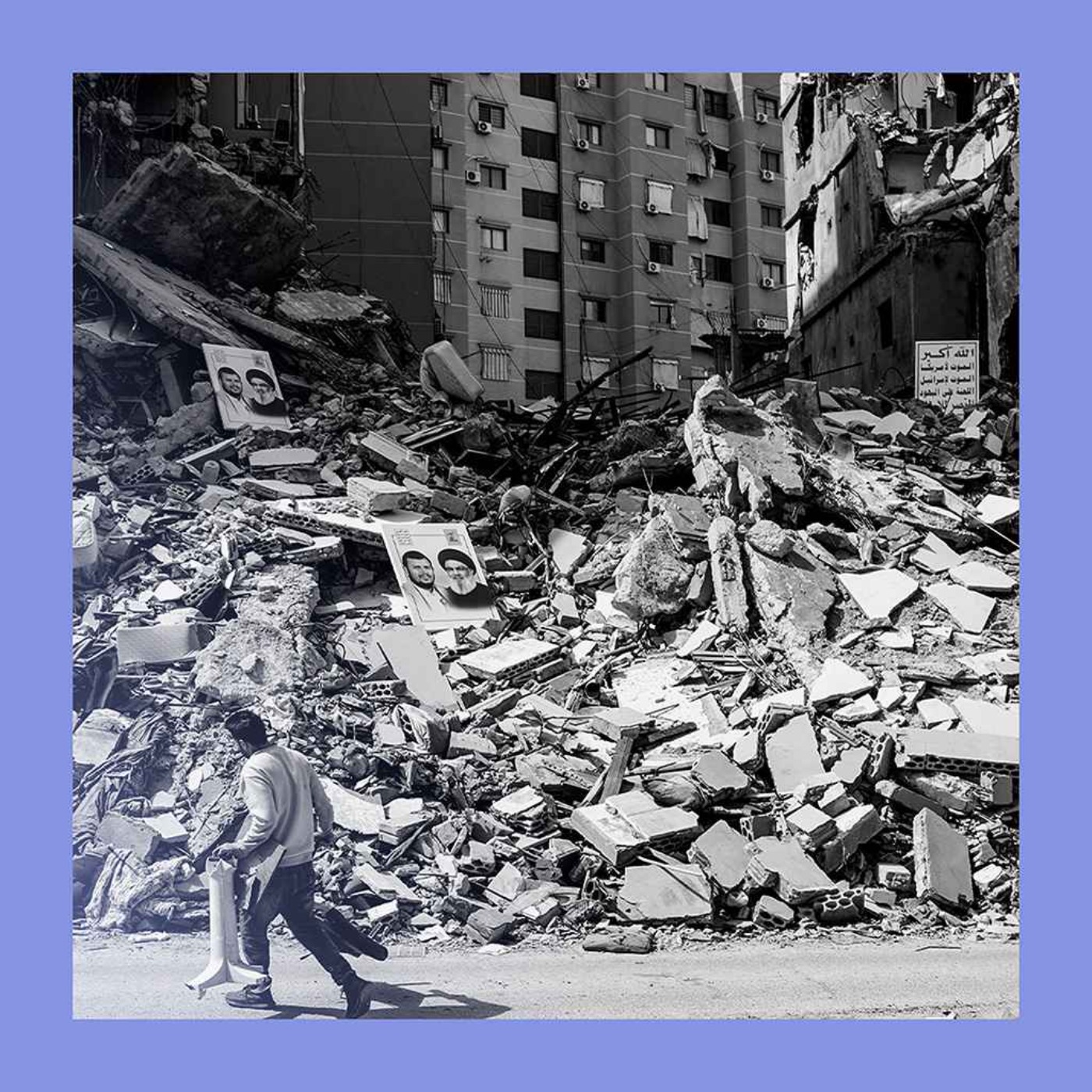
Most recently the Iranian backed group have just come out of a six week war with Israel, a war that began within the atmospherics of the Israel U. S Iran war and Hezbollah made the decision to unilaterally drag Lebanon into that conflict. And over the last six weeks they've taken a real beating from the air. Israeli airstrikes have further decimated their military command, their political command, and dozens of villages along the southern border, some of which Hezbollah has strength in, have essentially been cleared by the Israeli military. This new buffer zone that comes on top of the regional conflicts which we have seen unfolding since October 7, 2003, Hamas's attack on Israel from Gaza, Hezbollah's decision to join that war, the assassination of Hassan Nasrallah, and then that cunning operation by the Mossad where they exploded hundreds of pages of Hezbollah operatives across Lebanon. So, so it's had two or three years of really relentless beating and the group has put itself in this much weakened predicament.
- [03:52]
Rosie Blore
So as we're speaking, there is actually a ceasefire deal between Lebanon and Israel. How is that holding?
- [04:01]
Gareth Brown
It depends who you ask. Baked into the ceasefire, there is provision for Israel to carry out acts of self defense. So with the proviso that it's acting in self defense, Israel can continue to strike pretty much wherever it wants to in any part of the country, and it has been doing that. Dozens of Lebanese have been killed by Israeli airstrikes since the ceasefire. And we've also seen Hezbollah firing some rockets. So there's still some sort of low level conflict going on, but it's nowhere near at the tempo that we saw just a few weeks ago.
- [04:33]
Rosie Blore
And that ceasefire deal was between the Lebanese government and Israel. Right. So Hezbollah wasn't actually part of it.
- [04:42]
Gareth Brown
Hezbollah never explicitly signed on to the ceasefire deal, but they also came out as soon as it was announced and basically said they would respect it if Israel were to respect it. A key expectation of the Lebanese government is as a part of this ceasefire, in exchange for Israel stopping the airstrikes, the war at the tempo it was going, and that the Lebanese government and the Lebanese army would do more to start moving against Hezbollah. I think the ceasefire was agreed upon and is working because every party to it had a different interpretation of what it was expected to do. And the ceasefire agreement is thriving in this ambiguity. I think people are tired on all sides of the border of the war and they just want a period of calm. And so they're happy to sort of acquiesce to that ambiguity.
- [05:27]
Rosie Blore
And you've spoken to a Hezbollah MP recently, haven't you? What did he say?
- [05:32]
Gareth Brown
I spoke with Hussein Hajj Hassan, who's one of the group's ideological mps. He sits in the Lebanese Parliament. Really seen as an intellectual of the movement. I think something that in my interview with him is this real contradiction in Hezbollah's place in Lebanon. We were discussing this idea of the Lebanese government signing a peace agreement with Israel. And his line of argument was Lebanon is a confessional democracy. And so in order to make these big decisions, constitutional changes, you need the buy in of every sect, every religious group. You can't Just do things with a simple majority. You can't do things through presidential decree. You need consensus in the country to make these big decisions. And he says that consensus is lacking when it comes to any sort of agreement with Israel. When I spoke to him, I put to him the idea that last month, when Hezbollah decided to drag Lebanon into war with Israel, again, this was a decision of peace and war, arguably the most important decision a state can make. Hezbollah made it without consulting. There was no consensus. Hezbollah's decision to launch rockets at Israel six weeks ago, two months ago, did not have consensus. That was decision made by Hezbollah. And he sort of, you know, shrugged his shoulders and said, well, this is Hezbollah's right to fight Israel. And he sort of seemed aware of that contradiction, but didn't really try to explain it. And I think that is another indication of Hezbollah's weakness. Now, these ambiguities and. And contradictions, which in years gone by could have been ignored or brushed over, now are coming to the forefront. And you even have the president saying, hezbollah dragged us into this war without consulting anyone. And so these questions are becoming harder and harder for Hezbollah to bat away.
- [07:37]
Rosie Blore
More than a million people were displaced in the recent fighting between Israel and Hezbollah. What's happened to them since the ceasefire?
- [07:46]
Gareth Brown
A lot of them have gone home. You know, within minutes of the ceasefire being announced, people were packing up their cars and driving south. The issue is Israel, despite the ceasefire, now occupies about 5% of southern Lebanon. That's dozens of villages, that's the homes of tens, perhaps even hundreds of thousands of people. And they're unlikely to go home anytime soon. So the displacement crisis has certainly eased, but it's not been fully solved.
- [08:12]
Rosie Blore
So where does the Lebanese government now stand in relation to Hezbollah, both in terms of power and in terms of who gets the say?
- [08:22]
Gareth Brown
I think there is a massive element of the unknown to that question. One of the immediate responses to the fighting flaring up last month was the Lebanese government came out and declared all of Hezbollah's military activities illegal, effectively said any Hezbollah member with a gun going to the south can be arrested. And that was unthinkable even three, six months ago. So it was a huge statement of intent. Now, Hezbollah still has relative freedom in the southern suburbs of Beirut in southern Lebanon, in the Bekar Valley. It is an armed group and a very strong one. But increasingly, the sounds we're hearing from the Lebanese government is that it wants to minimize Hezbollah's ability to act outside of the state. Now, if you're the USA and Israel want to see is the Lebanese army confront Hezbollah head on and maybe even fight them. And for the army leadership in Lebanon, that's just not going to happen. And I think what the government's strategy is, we take them out of institutions of the state, we cut off their funding, we cut off their ability to make revenue from drug smuggling or bringing weapons in from Iran. This is where we go back to the situation with the airport. I think the government's strategy is to gradually weaken them without directly confronting them.
- [09:39]
Rosie Blore
So where does that uneasy truce between Hezbollah and the Lebanese government leave the ceasefire between Lebanon and Israel?
- [09:49]
Gareth Brown
I think that Israel will be willing to maintain the ceasefire as long as they feel that the Lebanese government and the army is doing something about Hezbollah. The moment a consensus forms that actually the Lebanese government is going to do what it has done in years gone by and avoid confronting Hezbollah, avoid this sort of economic suffocation and strangulation of the group, the Nazis fire could be in jeopardy, certainly.
- [10:15]
Rosie Blore
Gareth, thank you very much.
- [10:17]
Gareth Brown
Thank you, Rosie.
- [10:27]
Rosie Blore
If you've got to Friday and feel like it's been another whirlwind of a week, you'd be absolutely right. And on the current issue of Economist Insider, our video series, our editor in chief Zanny Minton Beddoes and deputy editor Edward Carr have gathered a crack team of Economist journalists to talk about one of those big moments, what the closing of the Strait of Hormuz means for the world and if disruption continues, how high oil prices could go. The Insider is really a look behind the scenes of the Economist newsroom. Each week we debate a particular story or issue and thrash out what today's events mean for tomorrow. If you're a digital subscriber, you can watch Insider already. There's nothing extra to sign up for. And if you're listening to this free, you can see extended clips from Insider and I've put a link to that in the show notes.
- [11:21]
AAA Advertiser
Why get aaa? Because bad roads, bad tires and bad luck. Out of gas, locked out or in a ditch, stuff happens with 24. Seven roadside assistance AAA's got no matter whose car you're in, join today@aaa.com AAA expect something more. Roadside assistance is provided by independent facilities contracted by aaa. Coverage in taxis, limousines and other ride sharing conveyances is excluded. 2024 AAA US Market Track National Surveys offers terms, conditions and policies are subject to change without notice. Visit AAA.com for details. Did you know the CBO VIX Index at its core is a measure of market uncertainty. The VIX index could be rising because of bullish positioning in the underlying CBOE SBX index options market due to fear of missing out rather than fear of downside. Download Our whitepaper@cboe.com VixInsight There are risks associated with CBOE Company products. Review the disclosures and disclaimers@cboe.com USDisclaimers.
- [12:33]
Josh Roberts
The bursting of the Labubu bubble is maybe one of the strangest stories I've covered.
- [12:39]
Rosie Blore
Josh Roberts is our capital markets correspondent.
- [12:43]
Josh Roberts
You get bubbles all over financial markets in AI stocks, earlier in.com stocks, even earlier in railways. We had a massive bubble in tulip bulbs in the 17th century. But this one really is very strange. Labubu dolls. We've got one here. They're these slightly small, strange, creepy elf dolls. They have nine sharpened teeth and people have been queuing around the block to buy these things. And more than that, they've then been selling them onto each other for thousands of dollars or even more.
- [13:12]
Rosie Blore
Josh Satanic is the word I always choose for Labubus. But where did this secondary market emerge from?
- [13:20]
Josh Roberts
I agree with Satanic. It looks like a baby that's been possessed by the devil, doesn't it? People have been buying these and they've become really buzzy. Popmart, the company that makes them, has enhanced the buzz by selling them in blind boxes. So there are lots of different types of Labubu. When you buy it, you don't see which one you're getting. It's a little low stakes gamble. The gamble is made higher stakes by the fact that some of these Labubus you could be able to sell on for a lot of money, but people are really viewing them as collectibles. And another thing popmart did to keep the buzz going for a long time is that they restricted the supply of these things. This is why you got people queuing around the block. You'd get a delivery of boxloads, loads of them to a Popmart shop and then they'd be gone within 20 minutes.
- [14:02]
Rosie Blore
Josh I've also been reporting on toys recently and one of the fascinating things I thought when I went into a popmart store was these aren't kids buying these toys, these are adults. Tell me about that.
- [14:15]
Josh Roberts
Yeah, I mean, so maybe the people you see most often buying them are gen zers, people in their early 20s. But I've been to a Pop Mart and seen people who are far older buying them. They're not actually the only collectible that's become really popular with adults. So when I was growing up in the 90s, Pokemon cards were really popular with People my age. Pokemon cards are still really popular with people my age. So recently we had one selling for, I think it was $16 million. It might have been even more so. I think there's this trend where adults are into the collectibles that they have always been into, but they obviously have more money than they did when they were kids. It's a kind of generational thing. And they're no longer buying them even just on special occasions, birthdays and Christmas. They're buying them throughout the year. So it's great if you're a company that's making some of these things. I think companies like Nintendo, like popmart, have done very well out of it.
- [15:05]
Rosie Blore
Where does the value of these toys actually come from and therefore the resale value?
- [15:11]
Josh Roberts
Well, so this is one of the oddest things about the bubble. Think about the other bubbles that you can get in finance. We say share prices, for example, are in a bubble. If prices have risen out of all whack with what fundamentals, corporate earnings, corporate profits could justify. You get bubbles in other things like property. That's, you know, if they rise well above people's wages, what exactly would the fundamentals that you would judge the value of a Labubu doll be? I'm looking at it. There's no cash flows that are going to come off it. Nobody's going to buy it to try and live in it. So I can't really see what it is. It really is just about what people are willing to pay for it. So this is the kind of archetype of the bubble. It's just about animal spirits. One of the things, as with lots of collectibles, is that they are more valuable if they're in pristine condition and in their original packaging. So people will buy these to collect and never actually take them out and play with them.
- [16:04]
Rosie Blore
Josh, does it matter if there's a bubble in a weird satanic product that most of us don't want?
- [16:11]
Josh Roberts
So I don't think we should necessarily worry about this in the way we might worry about a bubble in bank stocks, for example. The Labubu bubble is actually mid bursting now. You used to get these things selling for thousands of dollars each. There was an example last summer of selling at a Chinese auction house for $150,000. That is not happening anymore. Some of the rare ones are still selling above their retail value, but we're talking like tens or maybe hundreds of dollars as they fall in price. One of the things that we have seen that we see in other bubbles is scalpers. People who've been buying them just to sell them on have been going out of business and trying to very quickly offload their old stocks of Labubus. What happened this time, to prompt it, is that Popmart actually expanded their supply. They're now making 10 times as many Labubus as they were this time last year. And that's kind of what Popp Bubble.
- [16:57]
Rosie Blore
And why would popmart undercut its own products and produce so many more Laboobies?
- [17:02]
Josh Roberts
Well, for a start, they can sell more, so it's good for their profit margins. But I think popmart also doesn't want to be seen as a one hit wonder. They sell more than the Boo Boos. They sell all sorts of similarly mildly disturbing odd toys and they want to focus on those as well. And more than that, they want to convince their own shareholders they can deliver reliable, solid earnings growth into the future that they're not just reliant on this speculative bubble that could evaporate after all.
- [17:26]
Rosie Blore
And we're not just talking about Pop Martin Labubus here, are we? I mean, we've got the Funko toys, we've got a Jellycat egg in front of us. There's a whole range of these sort of collectibles and musical products that people are reselling.
- [17:39]
Josh Roberts
Yeah, and we've also got Skullpanda and some gorgeous Lego sunflowers here. I don't think any of them have hit quite the heights of the Labubu bubble just yet, but let's see.
- [17:50]
Rosie Blore
And a final really important question for you, Josh. Should I sell my Labubu now?
- [17:56]
Josh Roberts
Wow. Well, so I think you would need a connoisseur to have a look at it, make sure that it was a valuable Labubu to begin with, not a Lefoufou. This is what they're calling the fake ones. But I'm afraid, Rosie, you might have missed the peak of the bubble. Then again, if you're looking to buy a Labubu, maybe a Mega Labubu, it might just be time to go into the market.
- [18:17]
Rosie Blore
Josh, thank you very much.
- [18:18]
Josh Roberts
Thanks for having me.
- [18:22]
Rosie Blore
And you can hear more about the adult toy market. No, not that kind. In my own episode of the Weekend Intelligence published a couple of months ago. The link is in the show notes.
- [18:41]
Narrator/Host Intro
You might have noticed her in recent years in the streets in Stockholm. An old, rather bent woman wearing a bright stripy top and wheeling a walker stroller, walking about, picking up cigarette butts from the pavement.
- [18:58]
Rosie Blore
Ann Rowe is the Economist's obituary's editor.
- [19:02]
Narrator/Host Intro
This was Margaretta Magnussen. She had been a heavy smoker herself all her life. And picking up the butts now was her way of tidying up after herself. She said it gave her a rush like absolution. If you followed her back to her flat, you would find it was in the most pristine order. There was nothing in the attic, there was nothing in the storage unit in the cellar. She'd even given away 10 of her 16 plates because her table could only seat six people. If you walked into the lounge, there was no extra space for any anything else. Everything had to have its allotted place. So why was she so tidy? Well, she was just a tidy minded person, you could say. The Swedes, she liked to think, were unsentimental clear eyed people. After all, even the Vikings had put all their corpses household objects into the grave with him to try to keep things tidy. But she also felt extremely strongly that people should clear their accumulated clutter before they died. It was a moral duty to do so, because otherwise you left it to your children to try to sort it out. And they would probably have to take time off work to do so. She had had plenty of experience of tidying up herself. She'd moved 17 times over the years following her husband's work round Sweden and round the globe. She eventually had five children in tow and they of course created lots of mess and she would give them each their own cubicle in their own color to try to keep everything as it should be. She also had the experience as an artist because that was really her career of giving away works that she'd spent a long time trying to produce. Her work sold very well, she was quite successful and she had even kept a few of her paintings back because she wanted to improve them. But once she started downsizing into the flat from the family house, she found even though she didn't want to keep, and so she threw them on the fire. She said. She'd also had to clear out the household effects of her mother, who she found had kept a secret stash of cigarettes in the linen cupboard. That was another reason for death cleaning. Did you really want your children to find the dildo in your drawer? Even she, though, found it was extremely difficult to get rid of some things. For example, the shells that she'd picked up as a child on the coast near Gothenburg where she grew up. Or the old cookery book that was falling apart but still held the handwritten recipes of a chef for fried herring and her mother for meatloaf. The worst thing of all was going through photographs, because with every one she wanted to stop and get stuck in memory lane for a while. But she was quite ruthless here. First of all, she sorted them into piles that each of her children might appreciate. So each child got the photographs of themselves and then the rest, unless they were very good, she simply put in her shredder. Her shredder, she thought was a very good investment. She put all the odd bills and invoices in there and really anything that she couldn't either give away, give to charity or put on the dump. Everything else went through the shredder and she felt extremely tidy as a result of it. Though, if you went to her flat, you would still see sitting around, even the stuffed toys that the children used to have, because she simply couldn't bear to get rid of those. The concept of death cleaning, she liked to emphasize, wasn't about death, otherwise it would be a rather morbid thing to do. It was all about life, shedding your burdens and living more lightly in the present. As she got older, she wrote a second book which was about the delights of old age. And she recommended, as well as chocolate and gin and staying active, just giving everything away that you could. When she died, she was actually working on a book called Death Cleaning from the Afterlife. Rather strange title. She didn't really believe in the afterlife, but she did often give the impression that she couldn't believe that tidying up could ever or would ever stop.
- [24:18]
Rosie Blore
Ann Ro and Margaretta Magnussen, who has died aged somewhere between 80 and 100. That's all for this episode of the Intelligence. Do listen tomorrow to the Weekend intelligence to hear 17 siblings and counting, an amazing story about births, donors and what it means to be a modern family. The editors of the Intelligence are Chris Impey and Jack Gill. Our deputy editor is Sarah Lanyuk and our sound designer is Will Rowe. Our senior producers are Henrietta macfarlane and Alize Jean Baptiste. Our senior development producer is Rory Galloway and our senior creative producer is William Warren. Our producer is Anne Hannah and our assistant producer is Kunal Patel. With extra production help this week from Emily Elias and Eleanor Sly, we'll all see you back here for the weekend. Intelligence tomorrow.
- [25:30]
AAA Advertiser
Why get aaa? Because bad roads, bad tires and bad luck. Out of gas, locked out or in a ditch, stuff happens. With 247 roadside assistance AAA's got your back no matter whose car you're in. Join today@aaa.com AAA expect something more. Roadside assistance is provided by independent facilities contracted by aaa. Coverage in taxis, limousines and other ride sharing conveyances is excluded. 2024 AAA US Marketrak National Surveys offers terms, conditions and policies are subject to change without notice. Visit AAA.com for details. Did YOU know? CIBO VIX Index measures market uncertainty, meaning it could rise from bullish positioning in CBOE SPX options due to fear of missing out rather than fear of downside. More@cbo.com VixInsight review important risk disclosures and disclaimers@cbo.com USDISCLAIMERS.