Loading summary
Transcript79 lines
- [00:00]
Brookfield Narrator
At Brookfield, we invest in the thing behind the thing behind the Next big thing. Our focus across infrastructure, energy, real estate, private equity and credit is helping to build the backbone of the global economy. We combine deep operational expertise with disciplined long term investing, uncovering value and partnering alongside clients to shape tomorrow's economy. Today Brookfield Own what's next? Learn more@brookfield.com this is not an offer to sell or investment advice. Investing involves risks, including loss of capital.
- [00:30]
Schwab Narrator
Investing with Schwab is like spending a Saturday at a great farmer's market. You can fill your reusable tote with a bit of everything. Maybe you go for some free range self directed investing or perhaps you pick up a few farm fresh trades while you peruse. You can even get help from a dedicated advisor. That's full service wealth management. Mix, match and change your mind whenever you want. Because at Schwab you can invest your way no matter your goals or appetite for investing. Schwab has everything you need all in one place. Visit schwab.com to learn more.
- [01:08]
Jason Palmer
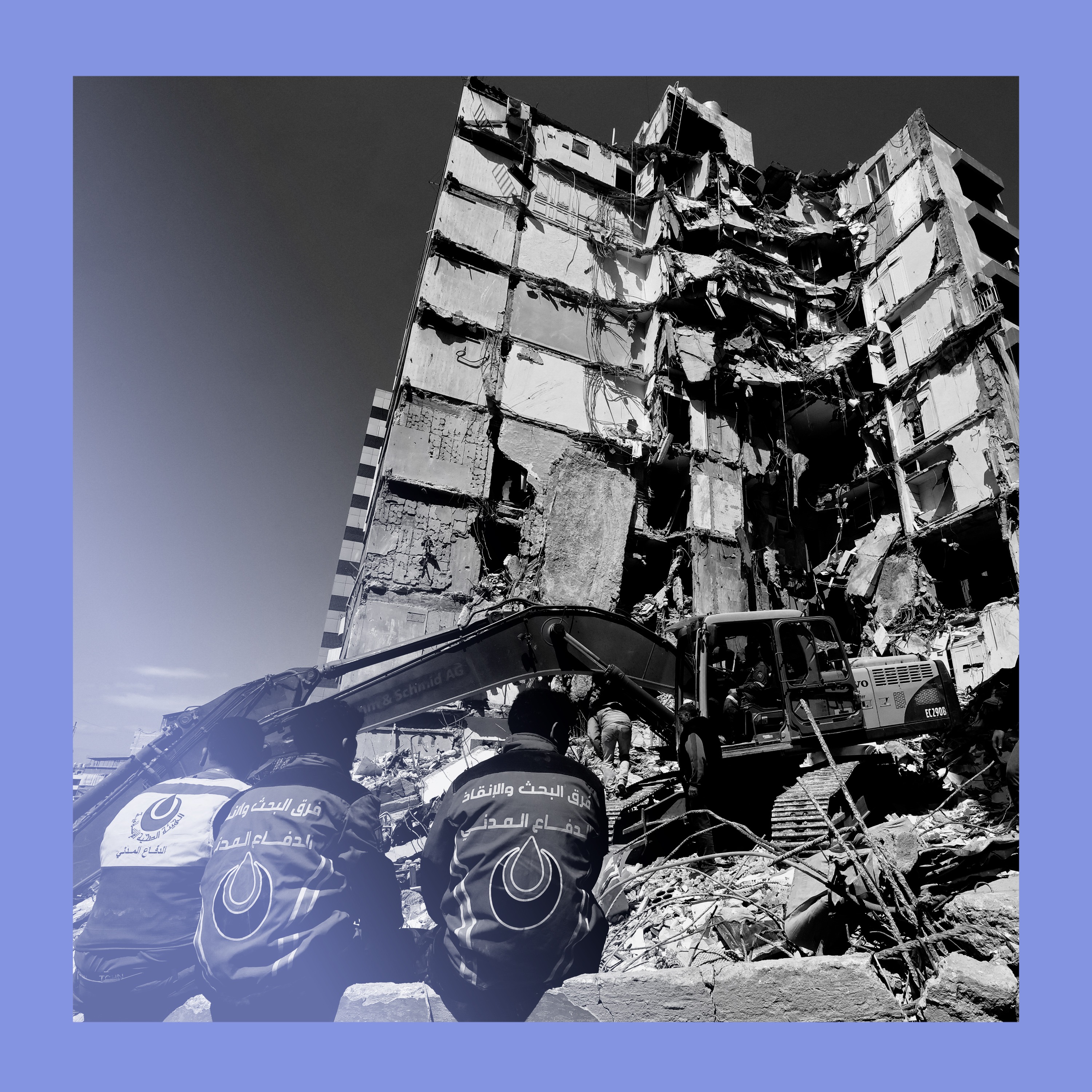
The economist. Hello and welcome to the Intelligence from the Economist. I'm your host Jason Palmer. Every weekday we provide a fresh perspective on the events shaping your world. The crew of the Artemis 2 space mission is on its way back home. Our planetary affairs editor takes stock of what it accomplished far more psychology and public engagement than science, and that is in fact the best objective to have aimed for. And in Soviet Russia, disagreeing with the state was a quick route to a diagnosis of mental illness and a life in the gulag. Semyon Glusman was the first psychiatrist to call out the ruse and did so quietly for years. Our obituary's editor reflects on his life. But first, Israel's Prime Minister Benjamin Netanyahu has developed a fairly Trumpian ambiguity about his intentions in Lebanon. Yesterday he said Israel would begin talks with the country to establish peaceful relations. Hours later, he said Israeli strikes against Hezbollah would continue until the Iran backed militants disarm. The campaign is extracting a heavy human toll. On Wednesday, airstrikes on Beirut resulted In an estimated 300 deaths, the deadliest day in decades. Soon after the capital's streets were deserted, a defiant Hezbollah returned fire. Israel insists Lebanon is not included in the ceasefire agreement between America and Iran, an agreement struck without Israel in the room. Iran says it is included and that is putting strain on what began as a joint mission.
- [03:15]
Anshel Pfeffer
It seems that Netanyahu and Trump rather easily went into this war, but to end it is much more difficult.
- [03:25]
Jason Palmer
Anshul Pfeffer is our Israel correspondent and is based in Jerusalem.
- [03:29]
Anshel Pfeffer
One of the main sticking points right now in the ceasefire negotiation is the question of whether Lebanon is also part of the ceasefire. The Iranians have demanded that it also be included, while Israel has pushed back and said there is no ceasefire in Lebanon. Donald Trump has been holding talks with the Iranians through Pakistan on the terms for ending this war. It seems that Israel has been freezed out of these talks.
- [03:57]
Jason Palmer
Well, let's start there. How did we get to this situation where Israel and America weren't aligned in the way that they seemed to be at the start of this war?
- [04:06]
Anshel Pfeffer
As far as the war goes, Israel and America were aligned. They were carrying out joint operations from the very start. They were coordinating targets, even flying joint missions, Israeli and the American air forces. But the talks that Trump and other representatives of his were holding did not include the Israelis and the mediators here, who now, mainly Pakistan, don't even have relations with the Israelis. And I think it was pretty clear from the start that when the war would draw to an end, it would be on Donald Trump's terms and not so much on Israel's.
- [04:40]
Jason Palmer
And so in that sense, Israel has gone along with the part of the deal where they don't bomb Iran, but pushing back clearly about their war with Hezbollah.
- [04:49]
Anshel Pfeffer
Well, the war between Israel and Hezbollah did not include the United States. So Israel can say, well, this is not the same war we're talking about. This is a different thing. And we have to deal with Hezbollah on our border, Hezbollah which is firing rockets on our towns. And therefore, whatever Donald Trump reached with Iran obligates us when it comes to the war with Iran. That's something that we've been Lebanon is something different. And that does seem to be now one of the main issues that hasn't been totally clear between America and Iran.
- [05:20]
Jason Palmer
So there's a sort of self consistency for what America has agreed with Iran, with what Israel believes it has agreed with America. Iran doesn't agree sort of with any of this. How much does this tension threaten the ceasefire?
- [05:33]
Anshel Pfeffer
Well, it does because Iran has said that they're not going to send their delegation to the talks in Islamabad until there is a ceasefire in Lebanon. And Trump told Netanyahu to tone the airstrikes down in Lebanon. They have done so to some degree since the major strike on Wednesday. But Iran is demanding a formal ceasefire in Lebanon. Israel has pushed back and said no, and Trump still needs to rule on that. I think everybody's waiting for Trump probably to have that call with Netanyahu and say, hold off now. And accept the ceasefire for a few days at least, so the talks in Islamabad can go ahead.
- [06:08]
Jason Palmer
And so what chance do you give that, given the essentially defiance that Israel has shown so far as regards Lebanon?
- [06:14]
Anshel Pfeffer
Well, I think there are two questions here. First, how far can Netanyahu challenge Trump? And I think not very far. If Trump does make it clear to Netanyahu that he expects there to be a ceasefire now, then Netanyahu won't be able to jeopardize his relationship with Trump that much. And I think Netanyahu had to go ahead. The other question is this is not the only sticking point. There is also the question of what's happening right now in the Strait of Hormuz. And perhaps Donald Trump will actually use the Lebanese issue as an excuse to perhaps torpedo the talks or to delay the talks again. So even though these two issues, Hormuz and Lebanon, are not linked, we may find that they will somehow both be used against each other to either push these talks ahead or to delay them.
- [07:04]
Jason Palmer
What's interesting here is the fact that Israel was closed out of those negotiations in the first place. What does that tell you about the current state of relationship with America?
- [07:12]
Anshel Pfeffer
There was always clear that America is the superpower. This is happening because Donald Trump gave the green light. Yes, it's true. Netanyahu has a lot of influence with Trump. And it's true that Netanyahu came along with these plans for the war and Trump accepted them. But ending the war, we always knew that would be on Donald Trump's terms and Netanyahu would have to go along with him. I don't think Netanyahu has an alternative to defy Trump and say, well, I'm going to continue this war on my own.
- [07:41]
Jason Palmer
So you think that will be the ultimate decider, then, even though Israel has shown such determination in its war against Hezbollah?
- [07:46]
Anshel Pfeffer
Well, we're just three days after Donald Trump announced the ceasefire, and I think that we've seen before, wars can happen quite quickly, but ending them is often a much more difficult and laborious process. And I think that's what we' seeing right now. Now, the war hasn't ended at a good point for Israel. The Iranian missiles were still being fired even in an hour after Trump announced the ceasefire. Iran still has its nuclear program, and the Iranian regime is, even though weakened and battered, still intact and entrenched. So these three war aims that Israel had haven't been achieved. So this is not just about Trump and Netanyahu. This is very much about Netanyahu and his own electorate. Here in Israel. He's facing an election in about months and he doesn't want to be seen as someone who's ended the war at a disadvantageous point for Israel. But that's where he's being pushed to and he needs now to show some kind of fighting spirit. And Lebanon is currently the front on which he can show that.
- [08:49]
Jason Palmer
And what about the bigger picture here? There does seem to be a noticeable fracture in the relationship between Israel and America that we kind of haven't seen before.
- [08:57]
Anshel Pfeffer
Well, Donald Trump and Netanyahu took the relationship to unprecedented heights. The fact that Israel and America were together together attacking Iran is something that I think just a few years ago, perhaps even months ago, we wouldn't have imagined. And at the same time, we are seeing the beginnings of a fracture. We're seeing Trump giving Netanyahu these orders, even though for now he's still doing it privately. But we had this piece in the New York Times earlier this week about the discussions leading to the war, and there were interesting quotes there from almost all the main players in the Trump administration with their criticisms of Israel's plans. Now, it's interesting that that's coming out at the end of the war. Suddenly some of the main actors in the Trump team want their reservations before the war to go on. Record night. There does seem to be a conscience distancing away from Netanyahu by some of the main people, including the vice president and the secretary of state and the head of the CIA in the White House. Not from Trump yet, but we are beginning to feel those rumblings. The war in Iran may be ending, but the blame game between Jerusalem and Washington is just beginning.
- [10:08]
Jason Palmer
Anshel, thanks very much as ever for your time.
- [10:10]
Anshel Pfeffer
Thank you for having me, Jason.
- [10:24]
Schwab Narrator
Self Directed Investing, Trading, Full service Wealth Management Automated Investing, Financial Planning, Thematic Investing, Retirement planning.
- [10:32]
Jason Palmer
Phew.
- [10:32]
Schwab Narrator
And to think that's just a small taste of what Schwab offers. Because Schwab knows that when it comes to your finances, choice matters. No matter your goals, investing style, life, stage or experience, Schwab has everything you need all in one place so you can invest your way. Visit schwab.com to learn more.
- [10:51]
Brookfield Narrator
At Brookfield, we believe you can own wealth that's measured in generations. For 125 years, we've built long term wealth through expertise, discipline and and a clear vision for the future, providing investors access to alternative strategies. Built for what's Next Brookfield Own what's Next learn more@brookfield.com this is not an offer to sell or investment advice. Investing involves Risks, including loss of capital. Past performance is not indicative nor a guarantee of future results. Please review performance and offering materials before investing.
- [11:26]
Artemis 2 Crew Member
This is Apollo Control, Houston. 75 hours 47 minutes, and we are, according to our projections, due to acquire just any second via a whole host of states.
- [11:39]
Oliver Morton
Apollo 8, with a crew of three astronauts, arrived in lunar orbit on Christmas Eve 1968.
- [11:46]
Artemis 2 Crew Member
This is the fourth revolution around the moon by a manned spacecraft.
- [11:53]
Oliver Morton
The astronauts went round the moon ten times in all, and for the first few times, they were looking straight down, studying the surface below them. Surface that no human beings had ever seen up close before.
- [12:07]
Jason Palmer
Oliver Morton is a senior editor at the Economist and the author of the A History for the Future.
- [12:14]
Oliver Morton
They were doing the observations they were told to do, but then something happened which they hadn't quite expected.
- [12:21]
Artemis 2 Crew Member
You got a color film? Jim, hand me a roll of color, quick. Ma', am, that's correct. Where is it now?
- [12:28]
Oliver Morton
The spacecraft's rolling.
- [12:30]
Artemis 2 Crew Member
Hey, I've got it right here. Let me get out this way.
- [12:32]
Oliver Morton
It's a lot clearer now. They're seeing it through a different window.
- [12:36]
Artemis 2 Crew Member
Bill, I got it framed. It's very clear right here. You got it? Yep. Let's take several of them. Take several of them. Here, give it to me. Wait a minute. Let me just get the right setting here. Now just calm down, Calm down. Well, I got it right. Oh, that's a beautiful shot. 250 at F11.
- [12:53]
Oliver Morton
250 at F11. That's what you need if you're going to get an iconic picture of the Earth rising above the moon using Kodak ectochrome film in 1968.
- [13:04]
Jason Palmer
So, Oliver, I can't imagine that the astronauts on Artemis on their return to the moon took the same cameras.
- [13:12]
Oliver Morton
Jason, you're quite right. As is so often the case when they took their picture of the Earth setting behind the moon, a very nice counterpoint to Earthrise, the crew Artemis used a Nikon digital camera, the D5, and the settings were 400F8, according to the little bits of technical metadata in the pictures files. And they went on to use that sort of kit to take all sorts of gorgeous pictures.
- [13:35]
Artemis 2 Crew Member
You know, I'm not one for hyperbole, but it's the only thing I could come up with. Just seeing Tycho, there's mountains to the north, you can see Copernicus, Rainier, Gamma. It's just everything from the training, but in three dimension and absolutely unbelievable. This is incredible.
- [13:51]
Oliver Morton
The former astronauts on board integrity, the Artemis 2 spacecraft have been, among other things, looking out of the window and talking to each other about what they see.
- [14:00]
Artemis 2 Crew Member
Christina now has the 400 millimeter and she also is the queen of hyperbole. It's incredible. Wow.
- [14:08]
Jason Palmer
It might be a cynical question to begin with, but was this really ultimately a mission that was about photo ops?
- [14:16]
Oliver Morton
I don't think it's unduly cynical unless you think photo ops are essentially a bad thing. To some extent. The moon missions were the original definition of media events, of stage things that were designed to attract the attention of what was then a very different media culture and focus it on one important thing. Those pictures are to some extent what it's about. It was an experience that could be shared with the people back home by the mode of photography. So, yeah, it's just a photo opportunity, but it's one hell of a photo opportunity. And it's one that actually seems this time around, slightly, to my cynical surprise, to have been moving and meaningful to people.
- [14:58]
Jason Palmer
Even with all that being true, what was the sort of stated mission then of Artemis? They wouldn't have said it was a photo op?
- [15:04]
Oliver Morton
No, no, I don't think they said that. It's to test out the Orion space capsule in deep space to see how it works with four people on board it on a journey of sort of like a week or more. And this is a test flight and
- [15:18]
Jason Palmer
one that went further than ever before as well.
- [15:21]
Oliver Morton
Yeah, that's because Apollo 8 actually went into orbit around the moon. As we heard, they went around the moon a number of times before taking the classic Earthrise picture. Artemis is just swinging past the moon and it swings past the moon at a higher altitude. And because of that greater altitude, it goes out further around the far side of the moon and out into space before gently gliding back down to Earth for its planned splashdown on the 10th.
- [15:48]
Jason Palmer
And this time around, it's a very different kind of crew that's getting that close up view of the moon.
- [15:52]
Oliver Morton
I mean, there's a reason why it's named after Artemis, who was a lady God rather than Apollo, her brother. When Artemis was started, it was very much the point that it would take a woman to the moon, that it would take people of color to the moon. It was seen in terms of the word that is now banned from the American government lexicon diversity. Earlier this year, NASA scrubbed all mention of the idea. Nevertheless, they've actually done that.
- [16:22]
Artemis 2 Crew Member
One of the neat things that I'm seeing right now is in the sort of largest mare field. It's much more obvious now that one of those mares is a Huge basin, because it's just right now it's kind of at the 1 o' clock position. It is phenomenal. And the moon we are looking at is not the moon you see from Earth whatsoever.
- [16:43]
Oliver Morton
We've seen Christina Koch, she's the first woman to have gone as far as the Moon. And Victor Glover, pilot, is the first black man. And again, you can say that that's all symbolism. But symbolism does count for something. And in crewed space flight, it counts for a lot.
- [17:02]
Jason Palmer
You mentioned earlier, though, that you found parts of this mission, especially, actually moving.
- [17:08]
Oliver Morton
Oh, yeah, And I think so. One should. I mean, this is a very brave and inspiring human endeavor, and the people doing it want to bring their reflections on their lives to the Moon because, you know, the Moon's about reflection. Reflected sunlight, reflected Earth life, reflected lives.
- [17:25]
Artemis 2 Crew Member
There's a feature in a really neat place on the Moon, and it is on the near side, far side boundary. But certain times of the Moon's transit around Earth, we will be able to see this from Earth.
- [17:38]
Oliver Morton
And so one of the ways that they chose to do this was to suggest to the International Astronomical Union that one of the small fresh craters which they identified might be named Carol, after Carol Taylor Wiseman, the wife of the Commander Reid Wiseman, who died six years ago.
- [17:57]
Artemis 2 Crew Member
And so we lost a loved one. Her name was Carol, the spouse of Reed, the mother of Katie and Ellie. And if you want to find this one, it's a bright spot on the Moon and we would like to call it Carol. And you spell that. C A, R, R, O, L, L.
- [18:24]
Oliver Morton
And it was obviously a moving moment for them all, and why should it not be?
- [18:29]
Jason Palmer
But what this mission has done is for another generation, a new generation perhaps, to remind them what it's like to have people head to and come safely back from the Moon.
- [18:39]
Oliver Morton
Yes, that's exactly it. The interesting thing to me about this is that there has been a lot of similar feelings to those of the 1960s. Obviously there's a certain sort of like, refraction that comes with time. But I can't remember, Jason, how old are you?
- [18:54]
Jason Palmer
Just turned 50.
- [18:55]
Oliver Morton
Okay, so you've never had the experience of knowing there was someone up by the Moon looking down on you. That's always been something to you that had happened in the past and isn't happening now. So I should turn the question around. Does it meant anything to you to look up at the Moon and think, bloody hell, there are people up there at the moment? Or to look at those pictures and say, it's not just that this is an amazing picture. It's that there's someone up there in a little metal room with windows, taking pictures like this.
- [19:25]
Jason Palmer
It is one more of the many ways in which it is amazing to be alive right now.
- [19:30]
Oliver Morton
It's one of the really amazing ones, I think, at the moment.
- [19:33]
Artemis 2 Crew Member
Yeah. From the Cabin of Integrity here. As we surpass the furthest distance humans have ever traveled from planet Earth, we do so in honoring the extraordinary efforts and feats of our predecessors in human space exploration.
- [19:50]
Jason Palmer
Oliver, thank you very much, as ever, for your time.
- [19:53]
Oliver Morton
Thanks, Jason. It was really nice to get on here and talk about it with you.
- [19:56]
Artemis 2 Crew Member
But we, most importantly, choose this moment to challenge this generation and the next, to make sure this record is not long lived.
- [20:15]
Ann Roe
When Semyon Glusman was in Penal Connolly, 35, at Perm in the Soviet Gulag, his lifeline was to make samidad, or literature that would be distributed underground.
- [20:31]
Jason Palmer
Ann Roe is the Economist's obituary's editor.
- [20:35]
Ann Roe
But it was difficult to do. The only paper the prisoners could get hold of was long thin strips on which he had to write as small as possible. And these were smuggled out of poem 35 to friendly contacts on the outside. And from there these fervent protests reached into the free world. The prisoners had plenty of them. The first and worst was that they were there not because they'd committed any crime, but because they'd disagreed with some dictat of the Soviet state. His immediate group included famous writers, mathematicians, physicists. Almost all of them were intellectuals and they had no business to be there. But there was no redress and no appeal. So most of the content of the samistat was protest against their conditions. And these were dire. They were made to do backbreaking labour. They were housed in thin shacks of tin or wood. Their clothing was worn out. They had to exercise naked, although sometimes the temperature would fall to minus 50. They had to live on greasy soup and dry bread and bits of rotten fish. And if they showed the slightest sign of insubordination, they were put in what was called cell like premises that would be known as a cooler, where they could only walk three paces and where water ran down the walls. Because there was no damp course in the buildings and because Semyon Glusman was a pretty vociferous person and often cheeky or insulting to the officials. He spent quite a lot of time in these kulas in his seven years at Perm. But he also managed to produce an enormous amount of samistat in a few years. He managed to put out about 600 pieces of it. They were all kinds of things, scholarly articles and poems too. He liked to write poems himself, and it was in fact Samizdad that had got him into the penal colony in the first place. When he was 25 in 1971 and newly qualified as a psychiatrist, he took up the case of Major General Grigorenko. Grigorenko had been found guilty of arguing too much in favor of the human rights of the Crimean Tatars, and as a result he'd been locked up in a prison for the criminally insane. But Semyon Glusman looked into his files and came to the conclusion that he was not mad at all. He was perfectly sane. He was simply defending human rights. And he wrote an article called A Forensic Diagnosis of the Case of Pyotr Gryorenko, and it was distributed anonymously. But later he admitted that it was his, and this made the case that he had been put in this ward of psychiatric patients alongside violent lunatics for purely political reasons. This was his first run in with the Moscow School of Psychiatry, which had been set up after the war, whose favorite diagnosis was something called sluggish schizophrenia. This meant that you had a tendency not to understand that you were living in the best system that humans could devise, that is the Soviet Union, but you are hostile to it. So while you were enjoying all its benefits, you were also hostile. But it was a condition that grew quite slowly, so slowly that you could have it without knowing you had any symptoms. So it was a completely bogus diagnosis. But this was what dissidents were charged with. And if they went on persisting with their strange calls for freedom or human rights, they would, like Major General Grammarenko, be put into wards with actual lunatics and violent people. So the most important piece of Samistat that he produced while he was in perm 35 was a manual of advice to dissidents for how to behave when psychiatrists and interrogators were trying to persuade them that they were mad. When Russia in 2022 invaded Ukraine, he was living on the 15th floor of an apartment block just outside Kyiv, in an apartment which was often cut off when power stations were hit. But he refused to leave because he said that he found within his flat, and especially when it was cut off, the same keen sense of freedom that he had felt when he was in the punishment cells in the labor colony. And besides, he hadn't yet finished his forensic diagnosis of the new country of Ukraine.
- [26:09]
Jason Palmer
Ann RO on Semyon Glusman, who's died aged 79. That's all for this episode of the Intelligence. The show's editors are Chris Impey and Jack Gill. Our deputy editor is Sarah Lornjuk and our sound designer is Will Rowe. Our senior creative producer is William Warren and our senior development producer is Rory Galloway. Our senior producer is Henrietta McFarlane. Our producers are Jonathan Day and Anne Hanna and our assistant producer is Kunal Patel. With extra production help this week from Benji Guy, we'll all see you back here tomorrow for the weekend. Intelligence this week we travel to the desert of Southern California. There's a kind of gold in them thar hills. Lithium. Half a trillion dollars worth of the stuff. Just another of the chemical elements that's inextricably built into the modern world. As with deposits elsewhere, getting it out is tricky, mostly in the environmental sense. But in California, where the land's riches have a long history of being unevenly distributed, the question is, who will share in the spoils this time round?
- [27:38]
Schwab Narrator
Self Directed Investing Trading Full Service Wealth Management Automated Investing Financial Planning Thematic Investing, Retirement planning.
- [27:45]
Artemis 2 Crew Member
Phew.
- [27:45]
Schwab Narrator
And to think, that's just a small taste of what Schwab offers. Because Schwab knows that when it comes to your finances, choice matters. No matter your goals, investing style, life, stage or experience, Schwab has everything you need all in one place so you can invest your way. Visit schwab.com to learn more.
- [28:04]
Brookfield Narrator
At Brookfield, we invest in the thing behind the thing, behind the Next Big Thing. Our focus across infrastructure, energy, real estate, private equity and credit is helping to build the backbone of the global economy. We combine deep operational expertise expertise with disciplined long term investing, uncovering value and partnering alongside clients to shape tomorrow's economy.
- [28:26]
Anshel Pfeffer
Today.
- [28:26]
Brookfield Narrator
Brookfield Own what's next? Learn more@brookfield.com this is not an offer to sell or investment advice. Investing involves risks, including loss of capital.