Loading summary
Transcript65 lines
- [00:01]
GNC Advertiser
That new thing? Yeah, we've got it. The Drop by GNC bringing you all the newness that matters. Hand picked by the pros who actually know what's up and what's proven to work. We keep you on top of the trends and dialed into what's next. Whether you're crushing it at the gym, leveling up your game or thriving every day, the Drop by GNC is where the latest solutions in health and wellness land first non stop innovation and fresh finds daily explore what's new and what's next on the Drop by GNC.
- [00:32]
Ollie Millar
Have.
- [00:33]
Dell Advertiser
You been waiting for the perfect time to upgrade your tech? Good news. The wait is over. Dell Tech Day's annual sales event is here and we're celebrating our best customers with fantastic deals on the latest PCs like the Dell 14 plus with Intel Core Ultra processors. We've also got incredible perks like Dell Rewards, Fast free shipping, premium support, Price match guarantee and more. And while you're upgrading your PC, you may as well go all out because we're also offering huge deals on our premium suite of monitors and accessories. You know what that means? That's right. You can get a whole new setup with amazing savings. Clearly this is a sale you don't want to miss. Visit Dell.com deals that's Dell.com deals.
- [01:21]
Ollie Millar
The Economist.
- [01:28]
Rosie Blore
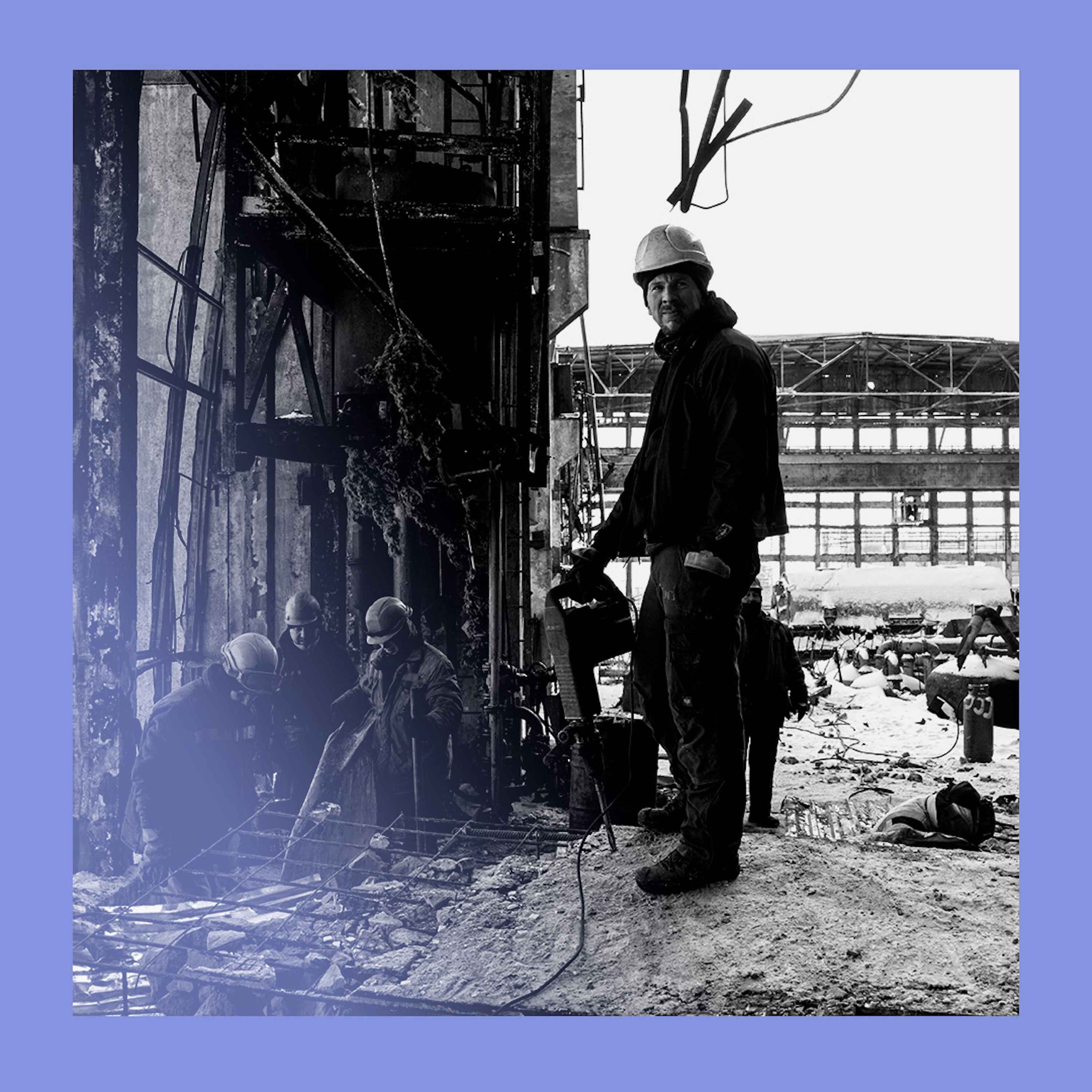
Hello and welcome to the Intelligence from the Economist. I'm your host, Rosie Blore. Every weekday we provide a fresh perspective on the events shaping your world. Our correspondent recently joined a police mission to destroy COCA labs in the Colombian rainforest where much of the world's cocaine is produced. We find out whether these dangerous sorties will really bolster the war on drugs. And you might have heard that crime is rife in London, but just because you've been told that doesn't make it true. What does the cold hard data actually show? First up though, As the war in Ukraine approaches its fourth anniversary, this has been a brutal year, bitterly cold, with much of the country's heat and electricity supplies knocked out. Shellings and drone attacks have been constant.
- [02:47]
Ollie Millar
It was cruel attack. Our miners, they were going back home from their shift in the mine and the first drone attacked the bus.
- [02:57]
Rosie Blore
Oletsky Povolotsky is from dtech, an energy company in Ukraine.
- [03:03]
Ollie Millar
Eventually the second drone hit the people. So we understand that these drones had the cameras and operators. Pilots had full understanding that this is a peaceful people and they hid them intentionally, he said.
- [03:19]
Rosie Blore
Twelve people died in that incident earlier this month, which dtech says was caused by a Russian device, a cruel attack on a passenger Train killed five. And just last night, yet another onslaught left over a hundred thousand Ukrainians in the dark this morning. In recent weeks, American led peace talks have led to an agreed prisoner swap. But the war itself drags on for.
- [03:49]
Ollie Millar
Almost a year now, the talk of ceasefire negotiations, they've hovered around like a ghost. It's hard to believe they're actually happening while Ukraine is being pounded night after night.
- [04:00]
Rosie Blore
Oliver Carroll is our Ukraine correspondent.
- [04:03]
Ollie Millar
But lines are appearing that could frame the end of this four year war. And we're reaching the hour of decisions now. We said before on this podcast that the time for this would be around March for a variety of reasons. The end of the winter, offensive, problems about hardware mobilization, economy on the Russian side, similar problems in Ukraine. So this could be the moment.
- [04:29]
Rosie Blore
Oli, there were talks last week which didn't achieve a breakthrough. We've been there many, many times before. What is it at this point that you would say is holding up peace?
- [04:41]
Ollie Millar
Well, there wasn't a breakthrough, but I wouldn't say the talks were without some kind of progress. And sources close to the negotiating team in Ukraine tell me that for the first time the Russians are showing a level of constructive approach which they haven't seen before. But the unresolved issues, they're essentially the same as they've been for many months now. The first is security guarantees. There's been an agreement between Ukraine and the United States about what the United states calls Article 5. Like security guarantees, it's a little way short of that. But the question is whether Russia can accept those guarantees. The peace process has been quite unusually structured in the sense that it's not operated as a single track. And so the existence of this security agreement between us and Ukraine doesn't mean Russia accepts it. The second point is territory. Russia has added extra requirements, basically demanding that Ukraine withdraws from the heavily fortified parts of the Donbas. It still holds. Ukraine says NEC5 should stay with that current line of demarcation. And the compromise currently being discussed is about creating a demilitarized zone. Sources close to the negotiation teams have been saying that what people are trying to do is steer around positions which are indigestible to both societies. And I asked President Zelenskich last week whether there were signs of movement. And he said that Putin had begun to show some openness to this idea of a demilitarized zone. And there's also the sense that Zelensky himself has signaled some kind of flexibility, but only on a reciprocal basis. So, yeah, we do have some sense. There's movement and it might be as soon as March that we have some kind of an outline of a plan. But then there's so many hoops that need to get through, not least constitutional and everything else.
- [06:28]
Rosie Blore
So there are signs of some progress, but no breakthrough on peace talks. What about on the battlefield? What's happening on the ground?
- [06:36]
Ollie Millar
It's a mixed picture, and I think it requires a little bit of nuance here. Russia is still making creeping battlefield advances at huge costs. In December, Ukraine said that it managed to take in a record 35,000 killed and wounded Russian soldiers. But Ukraine is far from out of the woods. Even with these huge killed and wounded figures, and even when you have a very slow moving front line, the broader issue is of strategic resilience. How long can Ukraine sustain this war, even keeping the front line where it is, if it's losing its own men? And this winter as well, I mean, the main battle hasn't really been on that front line. It's been on energy infrastructure, long range drones from Russia, which have been ramped up to 400 a day being manufactured. Just today we had a ballistic attack on Kyiv. Ukraine has made its own missile strikes on Russian targets. And certainly life in Belgorod, just on the border with Ukraine, isn't nice at the moment. But Ukraine, its society, its economy, it's taking a much larger hit.
- [07:39]
Rosie Blore
And on that much larger hit, four years on, how is this war affecting civilians?
- [07:45]
Ollie Millar
People are tired, really tired. And it's unsurprising that if you look at opinion polls looking for people's response to the idea of a compromise, for some kind of pause in fighting, overall, those figures are rising. And overall in Ukraine, as much as 40% are now saying they would be ready for some kind of compromise, despite all the public rhetoric, which is all about defiance, resilience and so on. But those in Russian occupied Ukraine, they've almost been forgotten about. And they're the ones who feel it most. Just last week I traveled to the westernmost border with Belarus to report on a little known working crossing. It's been working since the first weeks of war, but effectively it's the last humanitarian corridor that people in Russian occupation can use to leave and come back to Ukraine. And despite the risks of traveling out, as much as 40, 50 people are crossing each day. And among the most desperate people I've seen. It's put to me by an intelligence source here that in the Russian occupation, it's cruel, but it's really effective. And the sort of pro Ukrainian underground network they were relying on in the early Years of war, that's no longer there, it's been filtered out and that's created new facts on the ground which feed into this whole proposed deal discussion. One that would mean Ukraine de facto giving up land and giving up the homelands of hundreds and thousands and millions of people. And for those crossing, that prospect carried significant anguish.
- [09:12]
Rosie Blore
What about Ukraine's leadership? There are rumours flying around about elections.
- [09:17]
Ollie Millar
The leadership is hedging its bets on many ways, specifically on the elections. Some of the reporting has been a little bit off kilter. The idea that the Americans are pushing the Ukrainians to have elections by a certain date or lose the idea of security guarantees. My understanding is that it's a little bit more complicated than that. But more generally, if we want to talk about the two approaches that Ukraine is making to this war, then certainly Plan A is this American led negotiation. And the broad outlines are that if successful, Ukraine would get a chance of peace, at least the pause of the war, that's more likely, and some kind of mini EU membership. On the other hand, Russia would get sanctions, relief and a whole load of new business deals. Plan B, which is happening at the same time, is fighting on with the strengthened armies. You're seeing moves to reform the Defence Ministry, but certainly in terms of generals and the army and more broadly, few believe this war is going to end soon. I think there's also some doubt among Ukraine's partners in Europe, if for them, for Ukraine as well, but mostly for them, if a quick and dirty piece is the best outcome. For some in Europe, I think they believe the best scenario is for Ukraine to fight on as long as possible to give Europe a chance to arm up. Whether that's necessarily the best strategy for Ukraine itself to take, that's a big question and it's a very delicate balance.
- [10:39]
Rosie Blore
So where does this get us to? What are the prospects for peace now?
- [10:43]
Ollie Millar
Actually, for the first time in a long time, you might say quite promising, certainly for a pause, let's be very clear, maybe as much as 50, 50 sometime this year, maybe as soon as March. While in theory it's possible, there are multiple hurdles to jump over and I'm absolutely certain that Russia understands this too.
- [11:06]
Rosie Blore
Ollie, thank you very much.
- [11:08]
Ollie Millar
It's always a pleasure. Rosie.
- [11:29]
GNC Advertiser
That new thing. Yeah, we've got it. The drop by GNC bringing you all the newness that matters, hand picked by the pros who actually know what's up and what's proven to work. We keep you on top of the trends and dialed into what's next, whether you're crushing it at the gym, Leveling up your game or thriving every day. The drop by GNC is where the latest solutions in health and wellness land first. Non stop innovation and fresh finds daily. Explore what's new and what's next on the drop by gnc.
- [12:03]
Ollie Millar
Foreign.
- [12:09]
Claire McHugh
Helicopter over the western part of the Colombian Amazon.
- [12:13]
Rosie Blore
Claire McHugh writes about Latin America.
- [12:17]
Claire McHugh
Almost 70% of the world's cocaine is made in these border regions. There are thousands of small laboratories that are hidden inside the vast expanse of the rainforest. And here trees have been cut down to make way for these fields of lime green coca. I'm traveling with the Colombian police force who are on a mission to take down the drug labs. All of us are wearing helmets and bulletproof vests. We're crammed into the helicopter. On these tiny camping stalls, the anti narcotics commandos are clutching assault rifles as they ready to descend into the coca fields. As we land, a dozen of them jump out. I follow with some trepidation because the criminal organizations that control these territories often mine the coca fields. It's really hard to walk because the wind from the helicopter blades is so strong. I follow the commandos as they stalk through the coca fields towards their target, which is a wooden shack concealed by banana trees. Inside there's coca leaves soaking in plastic tubs of fuel. And I can see white blocks of coca paste. Now, that's the base ingredient for cocaine. It takes less than 10 minutes. Then the shack is set alight and as we fly off, a gray tower of smoke billows into the sky.
- [14:02]
Rosie Blore
Claire, this sounds completely terrifying, but also quite slick. How often do the police make these kind of missions to burn down labs?
- [14:11]
Claire McHugh
They are incredibly professional and well equipped. They do this day in, day out. By the time I'd got there that morning in Putamayo, they'd already destroyed a dozen. But the issue is that this laboratory that we visited is one of thousands all across Colombia in very remote areas, sometimes too difficult, too dangerous for the police to get there. Now, the police say that they've raided more than 18,000 of these laboratories in the past three years. But these efforts only knock out production for as long as it takes for the criminal groups to get these expensive chemicals back into the jungle and to continue producing the coca paste. So it's a huge task for every laboratory that the police destroy. More laboratories pop up as more coca fields are grown across Colombia.
- [15:00]
Rosie Blore
So, Claire, we've got coca being grown in these fields. Do the same farmers own the labs?
- [15:06]
Claire McHugh
Yes, the farmers who run the coca fields often also are the ones inside the labs turning the leaves into the coca paste. But many of these laboratories exist in in gang controlled regions. So there's many different ways that the gangs have that territory. And often they force the farmers into making the coca paste. These farmers are threatened with assassination or having their own children being recruited into the armed gangs as well. Some of them simply grow coca because it's more profitable and they just have no other source of income in the area. At the laboratory, I spoke to one farmer named Esperanza who was watching with dismay as the police prepared to set her laboratory alight. She told me that she has three children to look after. She gets no help from the state, and if the police burned everything down, they would take away the only way of making money that she has. Even though this Colombian government only wants to go after the gangsters, these poor farmers like Esperanza end up being collateral damage in the government's anti drugs strategy.
- [16:24]
Rosie Blore
So do these raids actually make a difference? Are they reducing the amount of cocaine emerging from Colombia?
- [16:31]
Claire McHugh
So as the government tells it, under Gustavo Petro, who's a left wing leader, they say that they are making a difference. They are denting the amount of cocaine that's reaching international markets. So since he took office in August 2022 and the end of 2025, the Col Colombian police claim to have intercepted 2,840 tons of cocaine. That's 61% more than the previous right wing government managed over a comparable time period. But the problem is that the size of these seizures actually just reveals the scale of the problem. Cocaine production in Colombia is at a record high. It hit more than 3,000 tons in 2024. Now that's according to the UN Office on Drugs and Crime. So despite the police's best efforts, and they are their best efforts, but they are barely making a dent in cocaine production and exports. Now, President Petro blames this problem on the consumers who are mainly in the rich world, who are snorting cocaine with abandon. He says it's Colombians who are paying in blood for the problems of the rest of the world.
- [17:42]
Rosie Blore
And presumably there's pressure from the Trump administration as well.
- [17:46]
Claire McHugh
Absolutely. Gustavo Petro is under huge pressure from the Trump administration to crack down on cocaine production and also the drug traffickers who profit from these illegal economies. Trump and Petro have clashed repeatedly over the past year with sparring on social media, Trump calling Petro without evidence an illegal drug dealer.
- [18:08]
Ollie Millar
Colombia is very sick, run by a sick man who likes making cocaine and selling it to the United States. And he's not going to be doing it very long, let me tell you.
- [18:17]
Claire McHugh
Things did a U turn last week when the pair met in Washington and Trump declared the meeting was terrific. And the pair seemed to have found a detente in their relationships. But cocaine and drug production still remains a huge issue at the center of relations between Colombia and the United States.
- [18:38]
Rosie Blore
So if raids like the one you went on aren't working, what would work? Claire?
- [18:43]
Claire McHugh
Now, the words of one analyst I spoke to always stay with me. She described all anti drugs policy as treading water. In short, no one has any ideas that will actually fix this problem. Not cocaine seizures at ports, not bombing these laboratories, extraditing criminals to the United States. The crux of the matter is that as long as cocaine remains illegal and the world's demand for the drug is insatiable, then these jungle laboratories in Colombia will continue to stay in business and they will meet that demand. And in the meantime, people are dying in these drug wars that will not stop.
- [19:24]
Rosie Blore
Claire, thank you very much for talking to me.
- [19:27]
Claire McHugh
Thank you, Rosie. It's been a pleasure.
- [19:48]
Sunny Loughran
It's a chilly Monday lunchtime and we're here in Whitechapel in London's East End.
- [19:54]
Rosie Blore
Sunny Loughran writes about Britain for the Economist.
- [19:57]
Sunny Loughran
We're standing on the road where the body of Jack the Ripper's first victim was found. And according to some people, since then, this part of London has only become more dangerous. Dangerous.
- [20:09]
Ollie Millar
Guys, can I ask you a question? Do you feel safe in London?
- [20:12]
Sunny Loughran
Do I feel safe in London? Yeah, not really. There's all sorts.
- [20:17]
Ollie Millar
Yeah, very interesting.
- [20:19]
Sunny Loughran
Doesn't feel like England, does it?
- [20:22]
Ollie Millar
They tell you it's a myth that there's places in London that it's a no go area for anybody who's not a Muslim or Islamic. Watch this video. Oh, you got a knife? Welcome to London, man. Welcome to London.
- [20:37]
Sunny Loughran
Type London simulator into TikTok and you will be presented with a series of videos. Most eclipse from video games in which a given character bounds around with a knife, dagger or sword, dispatching their enemies as quickly and as violently as possible. Such is London's online reputation, a hotbed of violence and above all, knife crime. It's an idea that extends far beyond Gen Z's social media feed. Nigel Farage, the leader of Reform uk, has said that London is in a state of collapse. Rupert Lowe, a populist mp, recently described London as a place that increasingly resembles the Third World and is certainly not safe for women. But the data tell a different story. Violent crime in London has been in decline for years. The annual number of robberies has remained steady since 2010, even as the population grew by around 1 million people.
- [21:29]
Ollie Millar
People.
- [21:30]
Sunny Loughran
In 2024, the number of people admitted to hospital for assault by a sharp object was the lowest in 13 years. And with 1.1 murders for every 100,000 people, the lowest since comparable records began. London is safer than Paris or Berlin. New York has around three times as many murders. That's not to say that London doesn't have any problems. Bone snatching and shoplifting have both risen sharply over the last few years.
- [21:58]
Rosie Blore
It happened to me last year.
- [21:59]
Ollie Millar
I never thought it would happen to me.
- [22:00]
Sunny Loughran
You had your phone snapped.
- [22:01]
Ollie Millar
Yeah.
- [22:02]
Claire McHugh
I literally told everyone it would never.
- [22:03]
Ollie Millar
Happen to me and it did happen to me. So scary. I think it's relatively safe here. There's a lot of drug stuff here, but it's quite safe. I've never encountered any knife issues.
- [22:15]
Sunny Loughran
The perception that London is overrun by violent criminals appears to be based largely on social media exaggeration. Our data team at the Economist scraped all X posts mentioning London and keywords related to violent crime between 2020 and 2025. Last year, the number of such posts was double the yearly average. Between 2020 and 2024, their popularity has risen as well. In 2025, the average number of likes and retweets per post was almost double that in 2024. Taken together, this means that social media posts describing London's lawlessness are roughly seven times more popular than they were just a few years ago. But this isn't just down to the algorithm. There's also a political element because part of this online slander is about blaming migrants for London's perceived crime wave. The proportion of London crime posts that also mention Islam, migrants or race has doubled since 2023. Posts mentioning Londanistan, a phrase used in right wing circles to lament the supposed Islamification of the capital, have doubled since 2020.
- [23:19]
Ollie Millar
I think the media jumping on this, it's like fear mongering a lot of the time. You know, there's truth, of course there's crime anywhere. I don't think it's necessarily spiked in recent months or years enough to warrant some of the headlines that, you know, we're currently seeing. This area is fine, like there's no issues with this area. I'll just say it's because people think that since there's a lot of, for example, there's a lot of Bengalis here, they probably think that it's basically a mini Bangladesh via. It's not actually there's more cultures here, like blacks, Somalis. Everyone's welcome, I would say.
- [23:51]
Sunny Loughran
There's also a monetization aspect. Serial Doom Posting pays and inflammatory content gets the most clicks X now pays contributors for the engagement their posts generate, which has led to a rise in disingenuous accounts posting inflammatory content for profit. Given the volume, it's no surprise that these posts are changing how people see London. A recent YouGov poll found that 61% of Brits now see London as unsafe, up from 39% in 2014. This rises to 85% among Reform voters. Least convinced are Londoners themselves, less than a fifth of whom say their local area is unsafe. As is often the case, the best medicine against online hysteria is the real world. So if you're worried about London, London's lawlessness, maybe head for a leisurely stroll along the Thames.
- [24:52]
Rosie Blore
That's all for this episode of the Intelligence. See you back here tomorrow.
- [25:16]
GNC Advertiser
That new thing? Yeah, we've got it. The Drop by GNC Bringing you all the newness that matters. Hand picked by the pros who actually know what's up and what's proven to work, we keep you on top of the trends and dialed into what's next. Whether you're crushing it at the gym, leveling up your game, or thriving every day, the Drop by GNC is where the latest solutions in health and wellness land first. Nonstop innovation and fresh finds daily explore what's new and what's next on the Drop by GNC.