Loading summary
Transcript55 lines
- [00:01]
Barclays Brief Host
Today's markets move fast. Get the insights you need in 10 minutes with the Barclays Brief, a new podcast from Barclays Investment Bank. Through sharp dialogue and scenario based analysis, our leading experts analyze key market themes each week. So whether you're managing a portfolio or leading a business, the Barclays Brief podcast can help you make smarter decisions today. Stay sharp, Stay brief.
- [00:26]
Sarah Burke
Find Barclays Brief wherever you get your podcasts.
- [00:30]
Barclays Brief Host
Most people don't realize how much of their personal information is being bought and sold every day. Data brokers are making billions, pulling details about you from public records and the Internet, then packaging and selling it, usually without your consent. That's how your information lands in the hands of scammers, spammers, even stalkers. It's why you get endless robocalls and why ads seem to follow you everywhere. That's where Aura comes in, or Aura actively removes your data from broker sites and keeps it off. They also instantly alert you if your information shows up in a breach or on the dark web. But Aura goes beyond data protection. With one app you get a vpn, antivirus, password manager, spam call protection, dark web monitoring, and even up to $5 million in identity theft insurance, all backed by 24, 7 US based fraud support. Other companies might sell just credit monitoring or even just a vpn. Aura gives you all of together at the same price. Competitors charge for just one service. Start your free trial today at aura.com safety. Protect yourself now at aura.com safety.
- [01:49]
Jason Palmer
The economist. Hello and welcome to the Intelligence from the Economist. Jason I'm Jason Palmer. Today on the show, meeting the contenders in Colombia's highly polarized election and our World cup team profiles continue with Mexico. First up though, If you supported or voted for Donald Trump because of his promise not to get America involved in new foreign entanglements, boy are you disappointed. In January, American special forces snatched President Nicolas Maduro from his hideout in Venezuela. That brought Cuba's biggest oil supplier under American control. Mr. Trump thought that would at last bring Cuba to heel.
- [02:53]
Kinley Salmon
It looks like it's going down. It's going down for the count. You ever watch a fight? Yeah, they go down for the count. And Cuba looks like it's going down.
- [03:02]
Jason Palmer
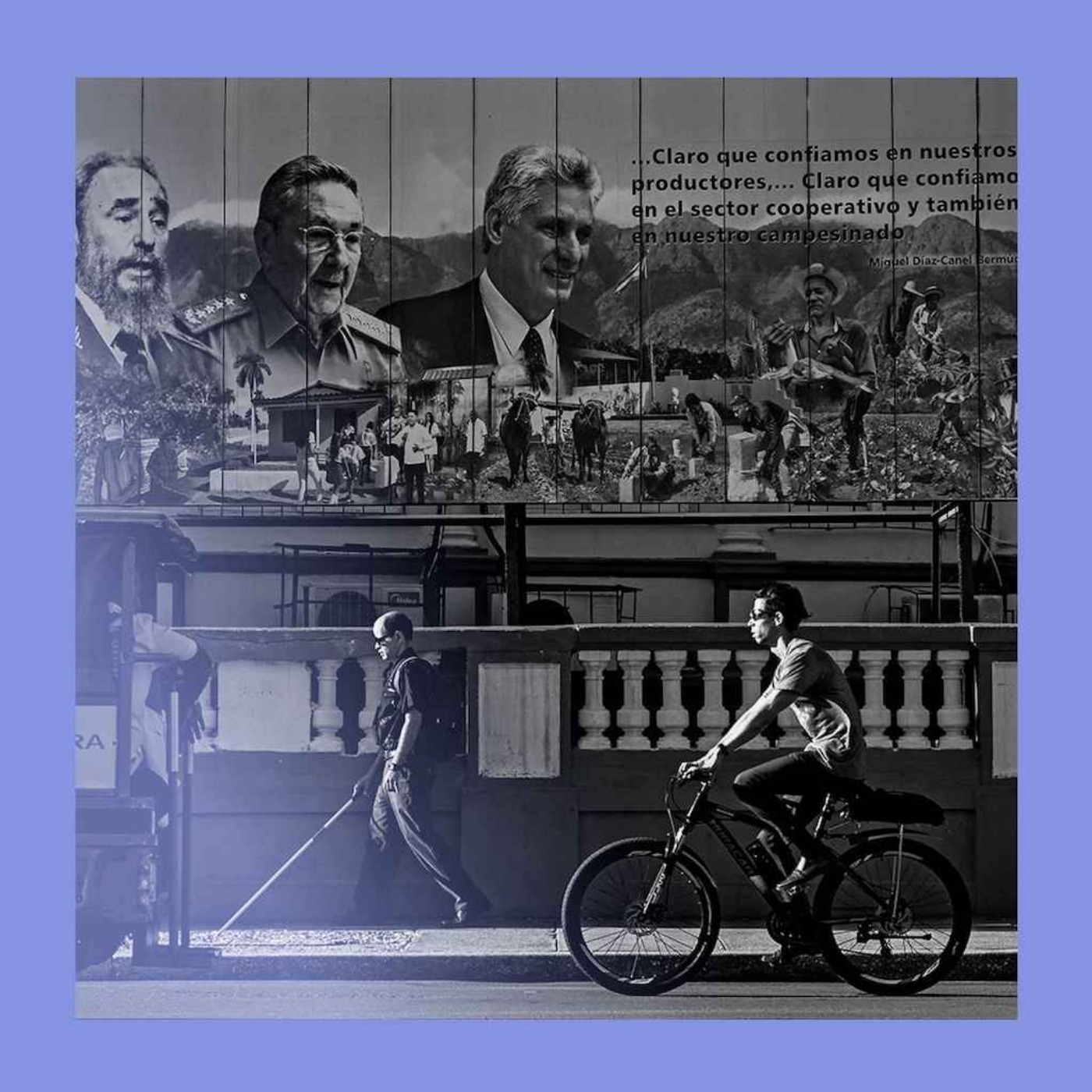
Months later, the only thing that's changed is the increased misery for everyday Cubans. No capitulation of the regime, no popular uprising. No deal to end that misery. So now come the threats of military action. On Tuesday, Cuba's foreign minister, Bruno Rodriguez Parrilla, did not hold back. At the UN's Security Council, he said America's actions amounted to war crimes. He said military aggression would result in a bloodbath. He said that at a moment that we hope will never happen. The people of Cuba will fight to the last consequence. But things simply cannot continue as they are now.
- [03:43]
Sarah Burke
Donald Trump is right to want to change Cuba.
- [03:46]
Jason Palmer
Sarah Burke is our bureau chief for Mexico, Central America and the Caribbean.
- [03:51]
Sarah Burke
The communist rulers of the island are really vile. They have impoverished their people and locked up anyone who disagrees with them. But so far, Trump's methods for inducing change have achieved very limited success.
- [04:07]
Jason Palmer
And by way of recap, we've certainly talked a lot on the show about how miserable the conditions in Cuba have become over the years, much the same as when last we spoke.
- [04:16]
Sarah Burke
Every time I've gone to Cuba, it just gets worse. This is a country that for 67 years has suffered from imprisonment of any political opponents, squashing of free speech, and just a total degradation of the economy that has immiserated the people. Ordinary Cubans who work and have what should be decent jobs as teachers or government workers really can't even afford basic food. Eggs, beans, rice. They have no electricity. It's getting hotter and hotter. So in that sense, Jason, since I was last there earlier this year, it has got wor. And the elites, meanwhile, are pretty insulated from this. They drive around in their nice cars and go to nice restaurants. And so the inequality is also growing.
- [04:55]
Jason Palmer
And you said Mr. Trump's methods for trying to change any. All of this have not worked so far. What's been on the menu up until
- [05:02]
Sarah Burke
now, the menu has mainly been sticks rather than carrots. So from January, he choked off Cuba's oil supply, starting with cutting off Venezuela's once he'd done away with Nicolas Maduro, and then also forcing other countries to stop sending oil as well. And that's mainly the stick they've used, as well as, more recently threatening some form of military action. The Cubans are negotiating and talking to the Americans, and we have seen a few political prisoners released and some offerings in terms of economic opening and reforms, such as letting Cubans abroad invest. But these are pretty small gains and definitely far less than Trump and his Secretary of State, Marco Rubio, who is Cuban American himself, want to see, and indeed less than most Cubans would want to see. There's no sign really yet that there's going to be any. Any wholesale change of the type that would satisfy people or indeed any change of the regime itself.
- [05:56]
Jason Palmer
So do you think the spirit of what's happened so far is an attempt to foment popular protest?
- [06:02]
Sarah Burke
Definitely. At the start, it seemed to be that. It seemed to be, look, let's make the situation source of unbearable, which many Cubans say is just wholly cruel. They're the ones suffering from the oil embargo far, far more than the ruling class. And the idea was that maybe they would come out to the streets and they would overthrow the regime, a bit like Donald Trump called what happened in Iran. Well, now, obviously that hasn't happened, and there are good reasons why it hasn't happened. The Cuban regime cracks down very hard on people who come out to the streets or show dissent. And the other thing is most young people who are more prone to come out and protest have left the island. And so what you're seeing now is a look at different military options instead.
- [06:41]
Jason Palmer
What do those look like?
- [06:42]
Sarah Burke
So none of them are simple. When I've talked to people, there are three broad options. You could do a wholesale invasion, which they're not going to do. I don't think. You could do limited strikes on key targets, which might scare the regime into concessions, at least that's the way the thinking goes, or provoke some split in the ruling class. You could easily imagine strikes on certain airfields, on docks. The Americans, there is no doubt, could do this. Cuba's army is very degraded at this point, but no one thinks that is necessarily going to change anything either. The Cubans tend to dig their heels in when it comes to being under threat, and they've also been preparing for years and years and years and years for. For some form of American invasion. This is a rallying cry for them.
- [07:25]
Jason Palmer
What about the kind of operation that the Trump administration carried out in Venezuela? A decapitation strike, if you like.
- [07:32]
Sarah Burke
So that's doubtless very tempting for the Trump administration insofar as they see Venezuela as a huge success for them. But Cuba is not Venezuela, and everyone would do well to remember that Raul Castro, who is presumably the person they would take out, he's a person they just indicted on May 20, has no formal position of power. And so if you take him out, assuming you could, and he's probably in hiding, it doesn't actually affect the power structure. Not to say he doesn't have power. He has veto power over everything that happens in the island. But either way, in theory, everything still would continue, and it's unlikely that this would cause much to change. He's also 94 years old. In fact, he'll be 95 on June 3rd, and it doesn't look as good. And many Cubans are indeed, I wouldn't say fond of him, but they wouldn't react very well to him being taken off in handcuffs, Maduro style, in the way that Venezuelans reacted to that happening to their leader. It's not an obvious exit route either or success route for the Trump administration.
- [08:31]
Jason Palmer
It's also a very different country that the Trump administration would be dealing with. Right. In that Venezuela broadly a far richer one.
- [08:38]
Sarah Burke
Yeah, I mean, I should have mentioned too that there is no equivalent of Delsey Rodriguez who took power after Maduro was taken out. But yeah, it's a very different country. Oil is a big difference. Venezuela has oil, it has resources. It had a way of reconstructing the economy. Cuba doesn't really have resources in that way. So there's not necessarily clear how you could rebuild this complete economic devastation. And on top of that, Cubans don't have a political opposition in the way that's organized like Venezuela does. Not to say there are good local leaders or one couldn't be gathered together, but it's not as obvious or clean cutters in Venezuela. So you'd need an awful lot of private investment. And there Cuba does have a plus point. There are lots and lots of extremely well off Cuban Americans in the United States who could and would be willing to invest. But you're talking about a recovery that needs to be much more profound and would take much longer and a political transition that would be much harder than in Venezuela.
- [09:35]
Jason Palmer
I guess one question is how much Cubans on the street support American interventions of any of the kinds you've described.
- [09:42]
Sarah Burke
I think that's changed over time, Jason. Cubans are very nationalistic and obviously don't like the idea of America coming and invading or occupying or doing anything in their country. But it's got to the point that people are so desperate that you hear all the time from Cubans, let's just get it over and done with. We don't care how things can't get worse. And so I think we've really got to the point where the suffering is so big that people want change anyway. And if that means the Americans and for many people they think that's the only option that now really is on the table for them, then great, let that be the option.
- [10:15]
Jason Palmer
And so do you think a military option is a good option for the Trump administration, for Cuba, for Cubans?
- [10:21]
Sarah Burke
For all the reasons we've just laid out, Jason, it doesn't seem like it's one that is going to work. And it seems one that the risks are very high. When I've been doing calls with people over the last few weeks and months and we try and game this out and you go down one route and you come to a dead end and you go down another and you come to a dead end and you go down to another and you come to the dead end. This is not an easy problem. This is a regime that has been in power for 67 years and does not want to let go of power. And the idea that you can beat it with a stick or you can offer it such an incentive, these rational economic ways of thinking about things don't necessarily fly. The best possible outcome would be a negotiated deal that leads to a huge economic opening and a gradual political transition. You would have to leave the regime in place, but you would have to do some of the things that have been made public. Oil would come in and the Cubans have to really open up the economy. They have to release political prisoners. They have to not crack down on people. The Army's corrupt business empire needs to back away from some of its control. You could see that working, but whether it's a realistic option or it's going to happen is another question.
- [11:30]
Jason Palmer
Sarah, thanks very much for joining us.
- [11:32]
Sarah Burke
Thanks, Jason.
- [11:47]
Kinley Salmon
Then I thought, what if I've scaled businesses? What if I scaled my philanthropy? What if I did as much in one year as I've done in my whole life?
- [11:54]
John Fazman
See how your wealth could have even
- [11:55]
Aura Advertiser
Greater meaning@creativeplanning.com impact Most people don't realize how much of their personal information is being bought and sold every day. Data brokers are making billions, pulling details about you from public records and the Internet, then packaging and selling it, usually without your consent. That's how your information lands in the hands of scammers, spammers, even stalkers. It's why you get endless robocalls and why ads seem to follow you everywhere. That's where Aura comes in. Aura actively removes your data from broker sites and keeps it off. They also instantly alert you if your information shows up in a breach or on the dark web. But Aura goes beyond data protection. With one app, you get a vpn, antivirus, password manager, spam, call protection, dark web monitoring, and even up to $5 million in identity theft insurance. All backed by 24. 7 US based fraud support. Other companies might sell just credit monitoring or just a vpn. Aura gives you all of it together at the same price. Competitors charge for just one service. Start your free trial today@aura.com safety. Protect yourself now@aura.com safety.
- [13:15]
Kinley Salmon
I've met all three, three leading and starkly different presidential candidates for the elections coming up this Sunday in Colombia.
- [13:27]
Jason Palmer
Kenly Salmon is our Latin America correspondent.
- [13:30]
Kinley Salmon
One of them, Abelardo de la Espilla, is a hard right figure. He dubs himself El Tigre. I went along to a rally of his on a recent trip and his supporters run around in tiger costumes. It's got the feeling of a spectacle. There's pumping music, there's sparks flying on stage. Ivan Sepeda, the hard left candidate, his rallies have a very different feel. His standard prop is instead the pages of his speech, which he keeps his glasses on and reads from very carefully to not miss a word. And then there's Palona Valencia. She's really the establishment sort of center right candidate. She is more centrist, but she's still pretty tough on security. She says she's going to get Colombians their security back. And these three represent really just radically different visions for the future of Colombia. And right now, it's still possible that any of the three could yet be the next president.
- [14:40]
Jason Palmer
And before we talk about the three, tell me about Colombian voters, what they're thinking about what Colombia is like now. What's on the docket?
- [14:47]
Kinley Salmon
Well, it's a bit of a split picture. I mean, security is bad and voters are worried about it. Last year, a presidential candidate was assassinated. Cocaine production. This is a country that produces two thirds of the world's cocaine. That production's at record highs. More civilians have been caught up in the violence than at any point in the last decade. So that's all pretty grim. And that's partly because the government's been pursuing something called total peace, an attempt to negotiate with all these rebel groups who are really just drug traffickers at this stage, at the same time. And that's basically failed. But the flip side is that voters are feeling quite a bit better about the economy. Consumptions are. Petro, the current left wing president, has hiked the minimum wage by 17%. That's a big feel good for a lot of people. The government is overspending, trying to kind of pump up the economy. It's a bit artificial, if you like, that they're bullying the central bank to lower rates. But of course, Jam today is popular and that certainly helps the left and their candidate, Superla.
- [15:43]
Jason Palmer
So tell me about him.
- [15:44]
Kinley Salmon
Well, he's in a good position, arguably a favorite or close to it, partly because of this pumping of the economy by the current government. But he's a very different figure to Gustavo Petro. Petro is a sort of impetuous character. Serpella is severe, austere, serious he likes Nero collar shirts and cardigans. I met him last year in his pretty unfleshy apartment in Bogota. And he kind of almost academic or certainly carefully explained his very left wing views and in particular his unflagging belief in this approach of total peace. He promises to carry on with that, despite its failings. And economically, he wants a left wing slate. He wants land distribution. He wants much greater welfare spending. He even wants state procurement to favor small players like community kitchens. And of course, some of this alarms business end markets. But he tries quite hard and quite clearly to assuage fears and the claims of right wingers that he would somehow turn Colombia into Venezuela, which next door of course collapsed into a sort of socialist dictatorship. The right, of course, does not believe him when he says that, or at least much of it doesn't.
- [17:07]
Jason Palmer
Well, tell me about then, El Tigre, the candidate from the farthest right.
- [17:10]
Kinley Salmon
Well, he's really surging in the polls right now and you can see why to some extent you attend his rallies and he's just a hyperactive perform. He was dressed in a bulletproof vest, dancing around behind bulletproof glass, but in a kind of excited way, pumping up the crowd. I met him in person as well. He was more soft spoken, but he never misses a chance to flash a pearly grin. With his spectacularly perfect teeth. He says to me, I'm not a populist. I'm popular. It's different, But many do compare him. And his own beard resembles the populist president of El Salvador, Nayib Bukele. Just like Bukele del Espieha promises to build 10 privately run mega prisons in the jungle. He told me that mass trials of gang members are a possibility. He said to me, right now, Colombia doesn't have prisons, it has crime universities. But his past has been criticized. I asked him about, for example, the fact he represented as legal counsel Alex Saab. Alex Saab was a close ally of Nicolas Maduro that recently ousted president of Venezuela. And Saab has been extradited to the USA on charges of money laundering. Well, Espria says this was just a product of my work as a defense lawyer. He says I did absolutely nothing wrong. And he offers up a slightly gratuitous, a bit sexual analogy to ram home the point. He points out my wedding ring and says, do I love my wife? He's inquired about my marital fidelity and then followed up by saying, but when I was single, did I used to date a lot of women? Apparently this is all in service of explaining there's a difference between the role of a defense lawyer and the role of a president, just like there's a difference between the role of a single man and the role of a married one. So at the very least, he's quite a character.
- [19:12]
Jason Palmer
And lastly, tell me about Paloma Valencia, the establishment candidate.
- [19:15]
Kinley Salmon
Well, that's right. In some ways, she is a total insider. She's the granddaughter of a former Colombian president. She's the political protege of Alvaro Uribe, a very influential, more recent former president. And she's got a team of experienced politicians around more. She is frankly, in many ways more sensible than the other two candidates. She's tough on security, but she cares about the informal economy. She wants education to be a priority, and she'd be the first female president for Colombia. But she didn't seem that optimistic when I met her. She sort of complained about having to run against these populists who promise more or less anything. She, by contrast, says she's trying to sell decency and realism in the road of long work. But that looks like a pretty tough sell next to have your cake and eat it cost to eat.
- [20:08]
Barclays Brief Host
There's no understanding.
- [20:13]
Jason Palmer
And is it? I mean, it sounds that way from here, too.
- [20:15]
Kinley Salmon
Well, she is trailing in the polls at the moment. One thought is that she is from a more traditional party, as you'd expect, and they might be better at getting out the vote when it comes to the crunch. But I don't think it's looking very good for her right now. So there's a real chance that the runoff, which is likely will be between Abelardo de Le Espriella, this populist hard right figure, and Ivan Cepeda, a very strongly left wing figure. And that really is an extraordinary, extraordinarily polarized choice that Colombians may soon face.
- [20:44]
Jason Palmer
Kinley, thank you as ever, for joining us.
- [20:46]
Kinley Salmon
Thank you.
- [20:59]
John Fazman
Mexico has a long history with the World Cup.
- [21:03]
Jason Palmer
John Fazman is our senior culture correspondent and is counting down to this summer FIFA World cup by introducing us to 10 of the teams taking part.
- [21:12]
John Fazman
The country first played in the inaugural World cup in 1930. This year marks their 18th appearance and their third time as hosts. And at this restaurant in Mexico City, people are feeling pretty optimistic. He said it's a source of pride because Mexico is the first country to have three World Cups. And she said, well, I'm happy. And economically speaking, it could be a good boost. We're going to have a lot of visitors, and in these difficult times, having little joy is good. As for the squad, they'll be looking for the home advantage. But their recent record has been shaken. At the 2024 Copa America, they didn't even make it out of the group stage. And at international matches this autumn ahead of the World cup, they suffered a series of poor results against South American teams. The home crowd even booed them off the pitch. After a scoreless draw with Uruguay, they have a tough group stage draw. They'll face South Africa, South Korea and Czechia. But the biggest challenge for the team may be psychological. They have experience under coach Javier Aguirre and stars like striker Raul Jimenez, who plays for Fulham in the Premier League. And like all sides, with great expectations and demanding fans, they're no stranger to criticism and pressure, but they need to channel that into positive results rather than anxiety. At a press conference, their coach said, you've got to have guts and character here because the fans are demanding and expect us to win and play well. And that's why I want the players to not shy away, to not ask to be substituted just because they got a cramp, to show some character. But a lot of the drama for Mexico around this World cup is off the pitch. In 2018, when Canada, Mexico and the United States won their bid to host the World cup jointly, their slogan was United as One. But heading into the tournament, North America's unity is under strain. The discord can be heard most clearly in its leader's language. President Donald Trump has threatened direct action against drug gangs in Mexico, saying his counterpart, Claudia Sheinbaum, is very frightened of them.
- [23:34]
Kinley Salmon
Our action in the Gulf of America, that sounds so nice when I hear the Gulf of America drugs entering our country by Sea are down 97.
- [23:45]
John Fazman
President Trump has also repeatedly suggested making Canada the 51st state. Canada's Prime Minister, Mark Carney, is clearly not happy with that.
- [23:54]
Kinley Salmon
His territorial views that's never, ever going to happen.
- [23:59]
John Fazman
And the rift goes beyond words. There's the tariffs. And with Donald Trump having led America into war with Iran, President Sheinbaum stepped in, offering to host the Iranian team in Mexico. President Sheinbaum said the United States does not want the Iranian team to stay overnight, but they're going to play three matches there. So they asked us, can they stay overnight in Mexico? And we said yes, no problem, we have no problem. But for many, security concerns are top of mind. President Sheinbaum is in a bit of a bind. America's Justice Department department has indicted 10 officials linked with her party, accusing them of conspiring with the cartel to traffic drugs. And many parents in Mexico are upset with the government for proposing to cut the school year, short for the World Cup, a daft plan that was mercifully abandoned earlier this month. But the gains must go on, and however Mexicans feel about President Sheinbaum, her party and politics more broadly. On June 11, their attention will be on the field as Mexico plays South Africa in the World Cup's opening match in front of 87,000 spectators who all expect to win.
- [25:26]
Jason Palmer
That's all for this episode of the Intelligence we'll see you back here tomorrow.
- [25:49]
Barclays Brief Host
Most people don't realize how much of their personal information is being bought and sold every day. Data brokers are making billions, pulling details about you from public records and the Internet, then packaging and selling it, usually without your consent. That's how your information lands in the hands of scammers, spammers, even stalkers. It's why you get endless robocalls and why ads seem to follow you everywhere. That's where Aura comes in. Aura actively removes your data from broker sites and keeps it off. They also instantly alert you if your information shows up in a breach or on the dark web. But Aura goes beyond data protection. With one app, you get a vpn, antivirus, password manager, spam, call protection, dark web monitoring, and even up to $5 million in identity theft insurance, all backed by 24. 7 US based fraud support. Other companies might sell just credit monitoring or even just a vpn. Aura gives you all of it together at the same price competitors charge for just one service. Start your free trial today@aura.com safety protect yourself now@aura.com safety.