Loading summary
Transcript65 lines
- [00:00]
A
Why get aaa? Because bad roads, bad tires and bad luck. Out of gas, locked out or in a ditch. Stuff happens with 24. 7 roadside assistance AAA's got your back no matter whose car you're in. Join today@aaa.com AAA expect something more. Roadside assistance is provided by independent facilities contracted by aaa. Coverage in taxis, limousines and other ride sharing conveyances is excluded. 2024 AAA US markets rack national surveys offers terms Conditions and policies are subject to change without notice. Visit AAA.com for details.
- [00:30]
B
This is a vacation with Chase Sapphire Reserve the butler who knows your name. This is the robe, the view, the steam from your morning coffee. This is the complimentary breakfast on the balcony, the beach with no one else on it. This is the Edit, a collection of handpicked luxury hotels you can access with Chase Sapphire Reserve and a $500 Edit credit that gets you closer to all of it. Chase Sapphire Reserve now even more rewarding.
- [00:55]
C
Learn more@chase.com Sapphire Reserve cards issued by
- [00:58]
A
JP Morgan, Chase bank and a member
- [00:59]
C
FDIC, subject to credit approval.
- [01:01]
D
Foreign.
- [01:13]
E
Hello and welcome to the Intelligence from the Economist. I'm Rosie Blore. Today on the show, who will stand in France's pivotal presidential election and Brazil's chances at this summer's World Cup?
- [01:36]
D
But first,
- [01:45]
E
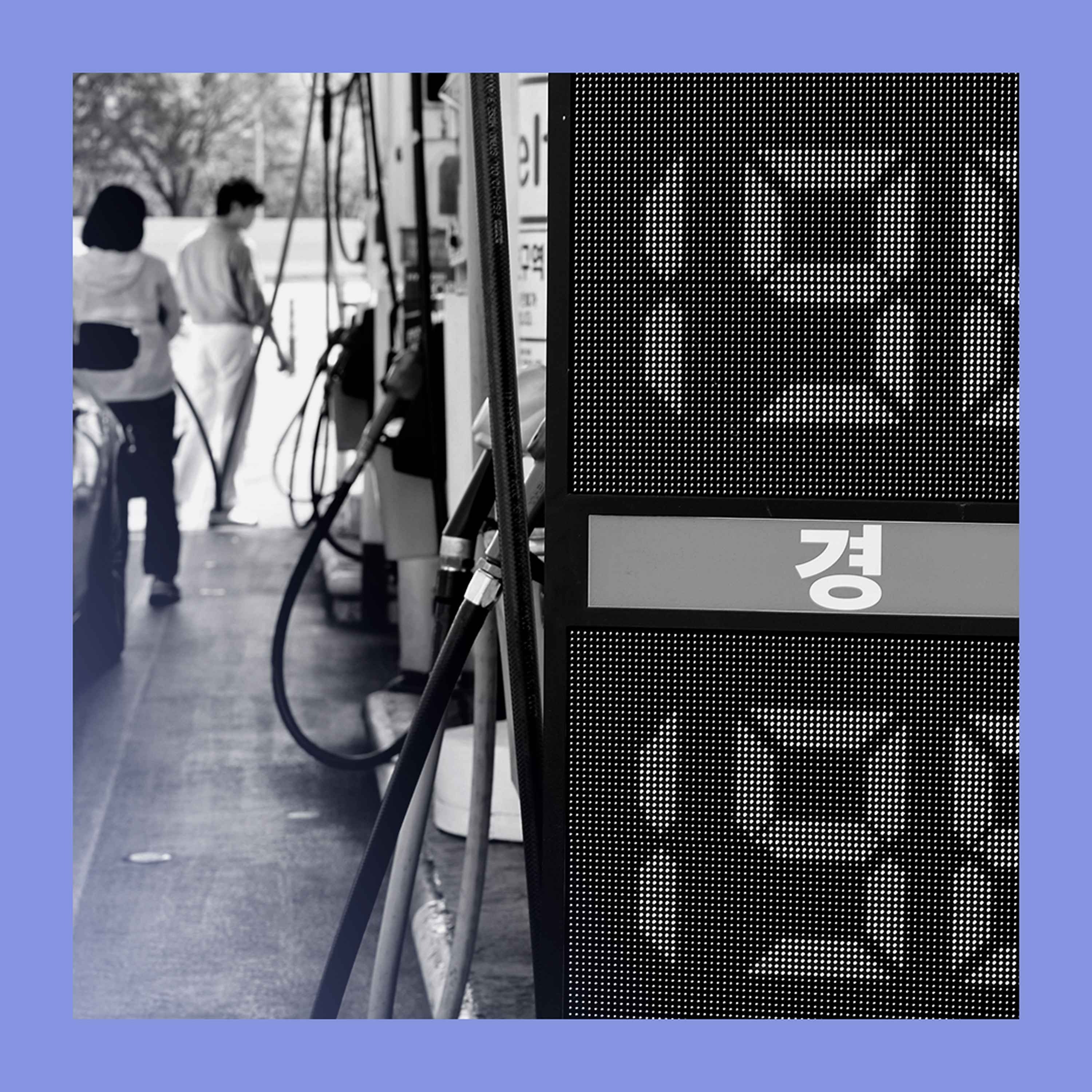
Oil prices have hit their highest level since 2022. The price of Brent crude, the global oil benchmark, past $125 a barrel. And as hopes for a swift end to the conflict in Iran evaporated, this week, too, the United Arab Emirates announced it was leaving opec, the oil cartel that theoretically keeps prices and supply stable. The sustained blockage of the Strait of Hormuz, through which roughly a fifth of global oil consumption flows, once seemed unimaginable. Now we're experiencing the biggest supply shock in the history of the oil market. Yet, high as prices are today, they may not yet reflect that reality.
- [02:29]
C
If you look at oil prices, you wouldn't really believe that we are on the brink of energy apocalypse.
- [02:35]
E
Mathieu Favas is our commodities editor.
- [02:38]
C
And that's because oil prices today, Brent crude, the global benchmark, is still lower than it was at the peak of the Russia Ukraine crisis of 2022. Yes, petrol is a bit pricier. Yes, it costs more to buy a plane ticket, but most people still drive. So there's a feeling of normalcy that is, I would say, quite misleading.
- [02:59]
E
Just put this in a bit of context for me. We're talking about an oil shock, but how big is that hit?
- [03:07]
C
Before the war, you had about 18 million barrels per day, which is roughly 18% of the global supply of oil that went through the Strait of Hormuz. And this now is mostly shut. Now you need to make a few adjustments because some of that oil is being diverted in Saudi Arabia and the UAE via pipelines. And you make a few other adjustments for increase in production from elsewhere. That's making up for a bit of the deficit and things like that. And you land on a number that's about 13 million spas per day, give or take deficit compared to what we expected. It's a very big number. It's much bigger than what we feared would disappear. When Russia attacked Ukraine in 2022, that was about like 3 million bars per day. And this, in the end, did not even disappear. And prices rose higher than they are rising to today. It's the largest petroleum supply disruption in history.
- [03:58]
E
So why hasn't there been a day of reckoning?
- [04:00]
C
There's a few factors to that. So first, we entered the crisis with a bit of a buffer. One buffer is that we expected the oil market to be in surplus this year. So there was a little of surplus that can absorb some of that gigantic loss. A also, just before the war, Gulf countries were sensing that tensions were rising. They saw American warships accumulate in the region, and in preempting that, they exported much bigger volume than they do normally. So a lot of these cargoes were already at sea when the war started. And also you had a lot of oil from Russia and Iran that was basically idling on shadow tankers because sanctions. Before the war, America and Europe tightened their sanctions on Russia and Iran. And the usual buyers of Iran red Chinese oil decided to start churning more of these tankers. So you have an excess of Russian Iran oil at sea as well. But there's been another help that's come from the release of strategic stocks. So rich countries, America mostly European countries, Japan, South Korea, they have emergency stocks of oil that they can release if they are in a pinch. But again, like the oil and water, it's one that you can't repeat forever. And I guess the more you release strategy stocks, the less you have. And that also makes the market anxious. So we are at the stage now where these buffers are pretty much exhausted.
- [05:17]
E
You're painting a pretty apocalyptic scene. The market price for Brent Crude rose above $125 yesterday. But why haven't they gone further? Why haven't they gone crazy?
- [05:29]
C
Because there's been a third reaction, which is that in some parts of the market, demand has already contracted. So something that we would consider quite apocalyptic in our countries has to an extent already happened in developing countries in Asia, in Africa, which relied on exports from the Middle East. So that's, for example, India, which no longer receives cooking oil from the Gulf. Its Asian petrochemical plants, which no longer get a refined oil product called naphta, which they use to make plastics. So you've got these sort of pockets of demand which have disappeared in countries where there is less real time data that people track in sectors that are less visible to the general public. So if you add the buffer that I was talking about just before and this sort of demand destruction that's already happened, you account for quite a big chunk of the deficit that we expected from the Hormuz closure so far.
- [06:18]
E
So, Mathieu, what happens next?
- [06:21]
C
It's likely that at some point, at least in some parts of the world, for certain products, be it like gasoline for cars, diesel for your trucks, or kerosene for your planes, you'll reach a level whereby there's not enough stocks and therefore prices have to rise to ration consumption. So whereby demand so far has contracted, mostly because the supply was not there. Now demand will have to contract or be forced to contract via higher prices. So this is why you shouldn't take comfort in prices being high, but not super high today, because it's likely that they will have to rise quite a bit higher.
- [06:52]
E
It seems like markets have responded to good news, but not bad news. Is that right?
- [06:58]
C
It's a very good point. So when the Iranian Foreign minister and then Trump declared the Strait of Hormuz opened, prices fell by $10 to $90 above. And then when Iran, less than 24 hours later, said, actually no, the is closed, prices rose only by $5. So there is this sort of asymmetry, which is quite puzzling. And it's also puzzling that futures prices are not at the level you should expect them to be, given the size of the disruption. And part of the reason here is that the Brent futures market is a financial market. What's traded there are paper contracts. It's not actual barrels. It's a market that's dominated mostly by financial players. Some of them are algorithmic traders. So they react to tweets, they react to headlines. So whenever there's something really clear, really binary, they're very quick and within milliseconds, they buy or they sell. So that explains why sometimes you've got tweet by Trump and you don't know how much weight to put on it, you see a price fall pretty much straight away. So that partly explains why prices are at the same time volatile, typically biased toward the downside, and perhaps a bit lower than you should expect them to be. And one thing that visibly quite a lot of these financial investors get wrong is how long it takes for energy markets to normalize after Homer's reopens. It's not like flicking a switch, because first you need oil production to be resumed in the Gulf. Many of these countries have cut production. That takes time, maybe like four, six weeks. Then you need the ships to come out and you need new ships to come in. And many of the ships that used to serve the Gulf, those that are trapped in the Gulf, have gone to do business elsewhere. They will want to complete their journey, say from the US to China. That's 90 days. And then once that oil gets to its destination, it will have to be refined into usable fuel and that may take another few weeks. So if you add all this together, you get to three, four months before energy markets can sign relief.
- [08:44]
E
So what difference, if any, will the UAE pulling out of OPEC make?
- [08:49]
C
So in the short term it makes no difference because the UAE cannot export more of its oil. So no difference where it makes a difference probably is when Hormuz reopens because then the EU can decide to export more than it probably would have if it were still part of the cartel. And then it's also really important, even more important for the future of opec, because one big member has gone, others may follow and Saudi may find itself on its own to shoulder the burden of production cuts. It's not an unviable position.
- [09:19]
E
Matio, thank you very much.
- [09:21]
C
Thank you, Rosie.
- [09:23]
E
And how high could the oil price go? That's the question on today's episode of Insider, our video offering when we'll be drilling even deeper into our well of knowledge. Check it out on our website or app. You'll need to be a subscriber
- [09:39]
D
foreign.
- [09:46]
A
Because bad roads, bad tires and bad luck. Out of gas, locked out or in a ditch, stuff happens with 24. 7 roadside assistance. AAA's got your back no matter whose car you're in. Join today@aaa.com AAA expect something more. Roadside assistance is provided by independent facilities contracted by aaa. Coverage in taxis, limousines and other ride sharing conveyances is excluded. 2024 AAA US Market Truck national surveys and policies are subject to change without notice. Visit AAA.com for details.
- [10:15]
B
This is a vacation with Chase Sapphire Reserve. The butler, the spa. This is the edit. A collection of handpicked luxury hotels and a $500 edit credit chase Sapphire Reserve. Now Even more rewarding.
- [10:25]
C
Learn more@chase.com Sapphire Reserve cards issued by JP Morgan Chase bank and a member FDIC, subject to credit approval.
- [10:39]
E
A year from now, France will elect a new president. One name will definitely not be among the candidates. The incumbent, Emmanuel Macron. After serving two consecutive terms, Macron is barred from competing in the next poll. So who else could be on that list to lead the Republic?
- [11:00]
D
If you look at the polls for next year's two round presidential vote, they consistently show that the only candidate who's pretty much certain to reach the runoff will be whoever represents the populist right National Rally. So that could be Marine Le Pen, or it could be Jordan Bardella.
- [11:18]
E
Sophie Pedder is the Economist's Paris bureau chief.
- [11:22]
D
As for the rest of the field, there is really no obvious frontrunner at this stage at all.
- [11:30]
E
Sophie, I think you and I have already talked about this election often, and it's still a year out. So why are people thinking about it so much? Just lay out stakes for this election?
- [11:43]
D
Well, it's an interesting election, partly because Emmanuel Macron, who is the incumbent, cannot constitutionally run for a third consecutive term. So whereas he has won in the last two elections, he's beaten Marine Le Pen. There is no possibility that he is that person anymore. And that means that the rest of the field is wide open. And it makes people very nervous, those who don't want the populist right to be elected, because the stakes are not only high for France, but they're high for Europe. You know, France is a founder member of the European Union. It's one of the biggest players in shaping both domestic and international policy. And so having a populist government at the heart of Europe makes a lot of people outside France as well as inside France, feel really quite nervous.
- [12:31]
E
The National Rally has been rising for a long time. So how are we in a position where it's not clear who's going to oppose it?
- [12:40]
D
The problem is not that there's no opposition, but that the opposition is just so divided and so fragmented, and there are so many candidates who think they have a chance of running for the presidency. And that on the left, you can see not only among the sort of centre left parties. So the Socialists have a candidate, at least one, possibly two, or even three. The Greens have their own candidate. And then on the far left you have Jean Luc Melanchon, who is very much planning to run again for the presidency.
- [13:11]
E
And Sophie, you mentioned the Centre there. What about it? Macron won by creating a broad space, really at the centre. Does he have an heir?
- [13:21]
D
Well, it's an interesting question, because he is an unpopular president, and in a sense, I think if he were to anoint a successor, that might not necessarily help his successor do well in the polls. So what you've got is a split sort of succession race between two of his former prime ministers. You have Edouard Philippe, his very first prime Minister, back in 2017, who is the best place in the polls currently, not just to make it through to the second round, but he's the only candidate who looks as if he could, within a margin of error, beat Jordan Badara or Marine Le Pen in the second round. But he's not the only one who wants to try his hand. You also have Gabrielle et al, another former prime minister, much younger, who has just published a book about his life. It's a sort of autobiography, and that's got a lot of coverage in France. He is quite popular and he also wants to have a go. He runs Emmanuel Macron's party, which is now called Renaissance, and I think that we are going to see over the coming months a real rivalry between the two of them in order to try and inherit the crown of leading the center.
- [14:40]
E
Is there any prospect of a determined, unified opposition to the National Rally?
- [14:45]
D
Well, I don't think you'd have a single candidate for sure in opposition to the National Rally. I think what really matters for anyone hoping to beat the populist right is to make sure that there is a single candidate, at least on the left, or a single candidate in the centre, or even a single candidate that unites the centre and the centre right. Because if you don't do that, the chances are that you could end up fragmenting the vote so much that you end up with a final choice between the extremes. And that's what everyone wants to avoid. Now, it's not as if politicians at the centre and on the left don't understand that, but it's very difficult to find the way of selecting a candidate and whittling it down. Some people want primaries, some people have ruled them out, some parties already picked their person. But I think in the end, what you're probably going to see is that, especially for the centre, that it will be the polls that end up being the sort of sorting tool. And that could happen very late, not even till the early months of 20, when it becomes really clear that one of them has a much, much better chance than the other of making it through.
- [15:50]
E
And when will we know who's representing the National Rally?
- [15:54]
D
Everything hinges on a court of appeal ruling which is taking place on July 7th. Marine Le Pen last year was banned for running for public office in a court case to do with the misuse of European Parliament funds for party use. And she has appealed that if she can run, that is the plan, she will. If the Court of Appeal upholds the ruling, she won't be able to run. And it will be Jordan Bardella. The two of them have agreed that there isn't any question, but we will know that in July, which leaves whoever is the winner, only until, obviously next April for them to put together the proper candidacy and make clear that they are running to be the next president of France.
- [16:35]
E
And, Sophie, we are a year out from these elections. Is it just too soon to have any sense of what's going to happen?
- [16:43]
D
Well, I always think back, Rosie, to 2016. So if you looked at 12 months ahead of the 2017 presidential election, it's really interesting. That was the month in which Emmanuel Macron launched his party called Homme Marche. At the time, the polls barely, if at all, tested him as a presidential candidate. So I think we've all learned in France to be very careful of polling a year out. And actually, if you look at the last six presidential elections, 12 months before the vote, half of them were completely wrong. They named a candidate who didn't even make it to the second round at all. So I think you have to look at polls with a little bit of skepticism and caution. But the reason we're paying so much attention to the polls at this Stage is that 2027 will be the first presidential election at which the populist right has a real possibility of actually winning the presidency in France.
- [17:38]
E
Sophie, thank you very much.
- [17:40]
D
Thanks, Rosie. It's great to talk to you. As ever,
- [17:59]
F
On every Brazilian football shirt, you'll see five stars hovering over the badge on their chest, one for each World cup title. Brazil is the only member of the Five Timers Club.
- [18:11]
D
And Brazil win the World cup for the fifth time.
- [18:15]
E
John Fazman, our senior culture correspondent, is counting down to this summer's FIFA World cup by introducing us to 10 of the teams taking part.
- [18:25]
F
Brazilians are some of the most passionate fans in football. The national anthem wherever their team plays, anywhere in the world. Seas of supporters in gold, blue and green follow. Brazil produced Pele, perhaps the world's greatest men's footballer ever. It's the only country to have played in all 22 men's World Cups, and their overall record of 76 victories in 114 matches is the best ever. Its 1982 side is considered by some to be among the best teams not to win a World cup, and the
- [19:07]
D
flair of the Brazilians has been counted
- [19:09]
F
out by the Italians. But with each tournament come huge expectations and lately, huge heartache. Since 2002, Brazil's last victory, it hasn't finished higher than fourth. And this year their road to qualification has been underwhelming because the field expanded this year to 48 teams from 32. The top six from South America qualified, up from four. Brazil barely slipped in at number five, winning just eight of their 18 games.
- [19:42]
C
Oh, we're so happy.
- [19:46]
F
Both Brazil's team and its government are led by canny veterans facing high expectations. The team is coached by Carlo Ancelotti, who played for Italy in the 1986 and 1990 World Cups and has managed five top pro sides, including Real Madrid, Bayern Munich and Chelsea. President Lula da Silva leads Brazil's government and faces general elections in October. Brazil's annual growth has outpaced expectations. Inflation is tolerable by Brazilian standards, and its unemployment has been at a record low. But its deficit and public debt are worryingly high. It spends far too much on public pensions, and its tax system is fiendishly complex and regressive. And Lula is more or less tied with his opponent, Flavio Bolsonaro, the son of the man Lula defeated four years ago. Victory won't be easy for Lula or the men's football team U Brasil er
- [20:42]
B
Propassionados in Osomos for football.
- [20:45]
F
But at a news conference with the trophy, political concerns weren't on the agenda as Lula kissed the statue and declared, I am convinced we're going to win it. But with 24 years since their last World cup victory, there's a lot of pressure on the players for a coveted sixth star to be added to their jersey.
- [21:26]
E
That's all for this episode of the Intelligence. We'll see you back here tomorrow.
- [21:49]
A
Why get aaa? Because bad roads, bad tires and bad luck. Out of gas, locked out or in a ditch. Stuff happens with 24. 7 roadside assistance AAA's got your back no matter whose car you're in. Join today@aaa.com AAA expect something more. Roadside assistance is provided by independent facilities contracted by AAA. Coverage in taxis, limousines and other ride shar 2024 AAA US Market Truck national surveys offers terms, conditions and policies are subject to change without notice. Visit AAA.com for details.
- [22:19]
B
This is the exclusive table with the view. This is your name on the list. This is three times points on dining with Chase, Sapphire Reserve and a 300 dining credit Chase Sapphire Reserve now even more rewarding.
- [22:29]
C
Learn more@chase.com Sapphire Reserve cards issued by
- [22:31]
A
JP Morgan, Chase bank and a member
- [22:32]
C
FDIC, subject to credit approval.