Loading summary
Transcript63 lines
- [00:04]
A
The economist.
- [00:11]
B
Hello and welcome to the Intelligence from the Economist. I'm Rosie Blore.
- [00:15]
A
And I'm Jason Palmer. Every weekday we provide a fresh perspective on the events shaping your world.
- [00:25]
B
Britain voted to leave the European Union a decade ago. Strangely, though, it has since become more, not less, likely. Europe and policymakers are now trying to catch up. And many universities in America used to uphold a proud tradition of making all students take a swimming test before they got their diploma and dived into the real world. Now, more and more are abandoning it.
- [01:02]
C
First up, though,
- [01:09]
D
Traveling to see Ukraine's drone sheaf was interesting enough, though I can't actually tell you where we were.
- [01:17]
A
Oliver Carroll is our Ukraine correspondent.
- [01:20]
D
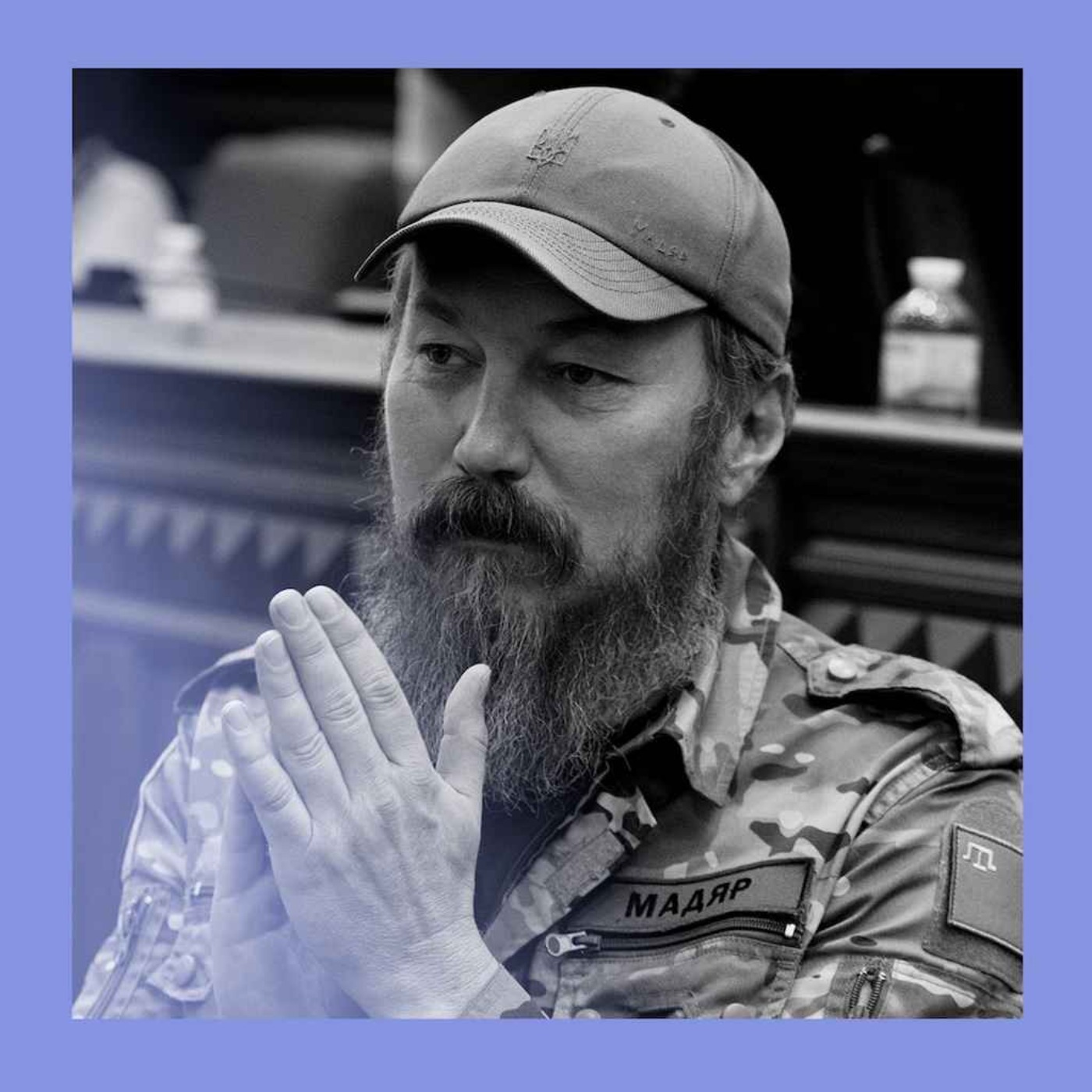
For most of the long, rough, bumpy road to the command point, I was being driven in a minivan with blacked out windows. When the doors finally slid open, we were inside opposite an entrance to a strange and eccentric underground world of corridors, sleeping pods, a gym, a gallery of famous Ukrainian paintings alongside explosives, drones and missiles and walls and walls of screens relaying live data feeds from the battlefield. And somewhere in there, in a 3 meters by 3 meters windowless cubbyhole, chain smoking cigarettes and drinking Fortnum and Mason tea, was Robert Brovdy, AKA Madyar,
- [02:11]
E
A
- [02:12]
D
commander who is busy rewriting the rules of modern warfare.
- [02:18]
A
So what was Mr. Brovdy actually like to meet?
- [02:21]
D
He's a man whose reputation comes before him. Someone who doesn't take fools gladly and certainly doesn't do interviews. This was the first real interview he's done. He's come through this amazing journey. Before the war, he was this grain trader who was used to fraternizing with the super rich in London auction houses. And now he's this 50 year old weathered wolf of war. And few people have been as consequential as him in this war. He's a key architect of Ukraine's latest strategy, targeting drone power on individual Russian soldiers. And this is the thing that's moved the question away from territory onto whether they might be able to remove Russians faster from the battlefield than the Russians can actually recruit them. And largely thanks to the efforts of Brovdi, this is actually happening right now. And Ukraine thinks this is a strategy that might turn the war in their direction.
- [03:15]
A
So how did he get from fancy pants grain trader to the drone Overlord?
- [03:20]
D
Brogdi's journey starts in Uzhgarod, which is basically in the westernmost part of Ukraine, right next to Hungary. And he's actually an ethnic Hungarian and he joins the army on the second day of war as a civilian volunteer. But he has this meteoric rise, applying his business instincts to what he sees on the battlefront. And this is how he develops some of Ukraine's earliest and most potent drone capabilities. 2022, summer, he's sent to the Kherson front and he's in this trench facing the Russians two kilometers away. And the Ukrainians don't know what's hitting them at this point. Brovly remembers that he bought a drone for his son and he thinks maybe we should have a look at using some of this technology. And they use the drones, they put them up in the air and they see actually where the Russians are hiding the tanks. And so what he does is he transfers the coordinates to a neighboring artillery brigade. They then open fire and there's a certain amount of success. And this is repeated again and again. And essentially he's created Ukraine's first ever drone kill chain. The next year he's transferred to Bakhmut, which is the real crucible of war at this time. And, and someone in the team remembers he knows this gamer. He is basically a FPV freestyle drone racer. FPV meaning first person view drones. And they suggest weaponizing these machines and before too long they have a concept of a weapon which drops grenades onto unsuspecting soldiers. And this becomes the cornerstone of Ukraine's entire defense strategy few years later.
- [05:00]
A
So what does that drone strategy look like now?
- [05:04]
D
The Ukrainians have been employing a so called gamification strategy. What it means is you set a list of targets and you give a certain amount of points to brigades which they can then use to buy certain equipment later. So the idea is you're able to change behaviors by prioritizing a certain type of kill. Last summer they decided to prioritise with Russian infantry and Russian personnel, understanding that for example, a drone operator is as valuable to them as a tank. And at this point Brovdy is taking over the leadership of the unmanned forces. By December there's a real turning point. And this is the first month that verified Russian losses to Ukrainian drones actually exceeded Russian recruitment. And that's continued right the way through the winter.
- [05:49]
A
And all of that success simply from changing to a gamified system to aiming for, for people, not materiel.
- [05:56]
D
Yeah. So basically Brovdi has set a target for his units to target personnel at least 30% of the time. He refers to the Russian army as this cow that needs to be milked and exhausted beyond its maximum capacity. And the operation is far from primitive. Everything is verified by video and then is fed into a Business intelligence software that Brovli actually repurposed from his grain trading days. Just changing grain type for missile type, for example. As high tech as all of this is, the killing itself is still managed quite close to the front lines. Brovdi is very much of the view that people need to be close to the action and know what they're dealing with. And he basically thinks that the success of his units is about an integrated ecosystem of what he calls 15 different functions, from Japanese coming to reconnaissance to explosive production.
- [06:59]
A
I guess the question is whether what he's put together can be expanded. Does it work at scale? Does it gain Ukraine more leverage, more comparative advantage if you just make the whole operation bigger?
- [07:09]
D
This is the key question of the war right now. The general picture is that Ukraine's army is in a state of chronic deficits of underfunding. But what Brovdy is saying is with proper funding, you can get to units with cumulative casualty rates of just 1% of 400 Russian lives being exchanged for just one Ukrainian life. And his core message is it's much better to swap plastic and metal for dead enemy soldiers.
- [07:38]
A
But we've talked for actual years now on the show about how this war has shown how the future of war is, well, very droney. Surely innovations and efficiencies are arising on the Russian side as well when it comes to drones.
- [07:52]
D
Yeah, I think still this is a pretty even battle on the drone front. Ukraine certainly are ahead in innovation, but Russia has in its favor huge industrial capacity which it is trying to grow. But the kind of single minded focus that we've been talking about today is giving Ukraine hope. I don't think it's going to be enough to force Putin to stop his war. But December was the first time that figures turned in Ukraine's favor. The important thing to remember also is that Russia's forces had grown an awful lot in the year before that. And Putin doesn't have an exit strategy. Brovdi himself, he's got few illusions. He said, listen guys, let's just see if we can keep this pace into the next year. And he doesn't have any fantasies that this war is about to end.
- [08:48]
A
Oliver, thanks very much as ever, for joining us.
- [08:51]
D
Thank you, Jason.
- [09:05]
B
When Britain voted to leave the European Union nearly a decade ago, the idea was for the country to regain social some of its former autonomy and distinctiveness from the rest of Europe. And some things have definitely changed since then. For starters, the governing political party in Britain and its Chancellor of the Exchequer are not the same.
- [09:25]
F
I believe that closer Alignment, better trade relations with the EU is in our national interest.
- [09:32]
B
But is it possible that since Brexit, Britain might even have become more European?
- [09:41]
G
On coming to office, the new Labour government undertook a fairly cautious and low key rapprochement with the European Union.
- [09:49]
B
Matthew Holehouse is our Public Policy editor.
- [09:52]
G
It started off with what they called the diplomatic reset, a shift in tone and posture that has been followed by negotiations over participation of the UK in two big elements of the single market, energy and agricultural products. Lately, the government has been indicating much more vocally that it wants to go much further. It's been much more critical of Brexit as a venture. We interviewed Rachel Rees for the Economists Insider show, in which she really put to the sword some of the orthodoxies about Britain's place in the world after Brexit that have prevailed for the past 10 years.
- [10:28]
C
Tell me what these orthodoxies were after Brexit and what it is that the Chancellor now thinks she might change.
- [10:37]
G
After the Brexit vote in 2016, you really saw both parties actually come to accept these new ideas about Britain's place in the world and its interests that justified remaining distant from Europe. The first of those might be around the economy. So lots of evidence that Brexit has caused a lot of damage to the UK's growth prospects. The approach of the Conservatives broadly was to dismiss that. The approach of late Labour hitherto was to downplay that and say it was a distraction and there are other more important things they could do. We've seen a real pivot from the Labour government in the past six months to a year or so, really, where they now say that those costs are intolerable and they're going to have to do something about this.
- [11:17]
F
It would be foolish to just carry on as we are in terms of our relationship with the eu. We said when we came into office in the election campaign that we wanted to reset our relations and we've already made good progress.
- [11:30]
G
The second big area where you can see these orthodoxies disintegrating is in geopolitics. So one of the big ideas post Brexit was that Britain would be this nimble country that could leap or barter between the various blocks of Europe, America and China. Reeves is now saying that Britain actually has to pick a side.
- [11:48]
F
We risk being stranded between powerful trading blocs. We have to decide where our national interest lies.
- [11:56]
G
And what she's also saying is, rather than avoiding the crossfire of protectionist policies, Britain's actually going to be caught within that crossfire. It now seems that the negotiating position of this government, and it's fair to say it's pretty hazy, is that they're looking for much broader alignment and participation in the single market.
- [12:14]
C
But I'm guessing it's not just economic orthodoxies that we're talking about here.
- [12:19]
G
This all comes in the context of changing domestic politics. Clearly, the position that Labour's taking that voters are over Brexit isn't necessarily true. The critical thing from Labour's point of view is that in the general election campaign, they were really focusing on a fairly narrow tranche of Eurosceptic voters who they thought were necessary to get them the big majority that they got. Now Labour's polling is much worse and they're losing lots and lots of votes to the Green Party and to the Lib Dems. The people defecting from Labour to those parties tend to be much more pro European. And so from the point of view of Labour, talking about the European Union has gone from being a liability that would lose them votes to an asset and something that could potentially win back some of those votes.
- [12:59]
C
So politically, the Labour Party thinks it needs to move in the direction of Europe in terms of policy, but also it thinks people are. How does all that play out in daily life? Have we not moved further away from the EU since 2016?
- [13:15]
G
This is one of the paradoxes of Britain. Since the Brexit vote, many areas of British life look more European than they did in 2016. And the hope fear amongst people that Britain will become less European actually hasn't manifested at all. In one respect, you could look at the birth rate. Britain's birth rate has been falling. Young people in Britain are now living at home for longer in a way that's more common on continental Europe. Politics has become more European in the sense that it's more fragmented, smaller parties are doing better. We've seen the introduction of stricter employment regulations in a way that looks more typically European, the introduction of renters rights in a way which looks more like a European norm. The great hope on the part of many Brexiteers is that Brexit would quote, unquote, finished the work of Thatcher and produced Britain. That looked a bit like an American economy. Actually. The direction of travel has been in the opposite direction.
- [14:08]
C
So if the Labour Party now says it's going to shift its orthodoxies as well, what does that mean in practice?
- [14:16]
G
Rachel Reeves's comments around alignment being the norm were taken, I think, fairly positively by European diplomats. Beyond that, what a path to returning to close relationship with Europe looks like is still pretty foggy. Lots of things haven't changed. Labour remains opposed to joining the single market as a whole, as it was in the general election. It is still opposed to forming a new customs union with the European Union. It still says it opposes restoring the free movement of people. It won't countenance a referendum to rejoin the European Union. What Reid seems to be proposing is not so dissimilar to what Theresa May was talking about all of eight years ago, because she sought a similar sort of agreement whereby Britain would ally with bits of European Union law and be part of the single market in some areas. That was a very difficult proposal for the European Union to accept because it spoke to what they called cherry picking. And the logic was that if non EU states were allowed to have the bits of the European Union that it liked, but not the bits it didn't, the logic of the project would unravel. Attitudes to the UK are now warmer yet those concerns about cherry picking are still pretty real. There's going to be a lot of vigilance to the idea that Britain's going to attempt to get the bits to the market it wants and not the other parts.
- [15:32]
C
Matthew One of the weirdnesses of the fierceness of debates about Europe in Britain is they almost forget the other side. So how do you see Britain's relationship with the EU developing if Labour does indeed so called change course?
- [15:48]
G
We have been watching this sort of permanent negotiation now between Britain and the European Union for 11 years and one of the constants of that has been a form of vagueness, in that we've seen successive Prime Ministers make declarations of mutual interest. They sort of make overtures that nod to a direction of travel. They might concede some points of principle, but often there has been a tendency to hope that the EU at that point would take the lead and take those positions and conjure something that resembled a workable model. I think you can make a similar critique of Reeves. The notion of alignment across the board is an intriguing declaration of intent. There's lots of warm words. It's not really a negotiating position. We might see the response over the coming months being tonally, it's all very nice, but ultimately a UK government does have to articulate quite precisely what it is that they're looking for.
- [16:38]
C
Matthew, thank you very much.
- [16:40]
G
Thank you.
- [16:54]
H
Since the early 1900s, Dartmouth College and Ivy League University in New Hampshire has required every undergraduate to swim 50 yards before they receive their diploma.
- [17:04]
C
Doug Dowson is a data journalist.
- [17:07]
H
Now, more than a century of tradition is about to Change after the test was scrapped. This year's graduating class will be the first in which some students may not be able to swim. Other elite institutions are also abandoning their swimming requirements. But that shift may be less about proficiency in the in the water and more about other preoccupations.
- [17:30]
C
So, Doug, how widespread is the swimming test and where did it come from?
- [17:34]
I
So today there are very few swim tests. But when they started out in the early 1900s, a lot of American universities, and these were mostly what we would call elite universities, Ivy League schools had these swim tests. Schools like Dartmouth, Cornell, Princeton, all of these schools introduced swim tests in the early 1900s for a variety of reasons. Sometimes it was for military preparedness, sometimes it was the idea of creating a more complete student body. And then I think sometimes schools saw some of these elite universities introduce these tests and they wanted to emulate them. But then over the years, these kinds of concerns didn't matter. It wasn't so important that the student bodies at these schools were prepared for battle. And so a lot of these schools did away with the swim tests.
- [18:24]
C
Does it matter that they're disappearing, that they've become unpopular?
- [18:28]
I
There's arguments on both sides. Some students you see in like student newspapers, students writing columns, you know, bring the test back. It's part of our history, it's part of tradition. Some of these students think of it as a sort of fun initiation experience. And for some of these schools, you're always going to upset some people if you get rid of something that's over 100 years old. And then on the other side, these tests seemed out of date, very old fashioned. Why do we have these tests for swimming and not other light?
- [18:56]
C
But there's another thing going on too, right? There's a particular reason why these swim tests have become unpopular and almost unsavoury, right?
- [19:06]
I
So for most of the 20th century, as these tests were being phased out, it was because it was not seen as very important. It was costly, it was difficult to administer. But in the last decade or so, the main reason that the last remaining schools that have these tests have been doing away with them is because in America, there are disparities in swimming ability across racial groups. And where you have black students disproportionately failing these tests. So if you look at the numbers, black children are about five times more likely to drown in a swimming pool than white students. Black adults are about five times more likely to say that they can't swim. So this appears at these schools when they run these tests. And a disproportionate number of these students that fail the tests are black. And some faculty and students thought that they were discriminatory to require these students to go through a beginner swimming course, while these other students who grew up with a swimming pool and took swimming lessons could jump in the pool for five minutes and pass the test. So that's why in recent years, a lot of schools have been doing away with these tests, mainly for concerns about racial equity.
- [20:17]
C
So would keeping the swim test not actually mean that more students learned to swim, including those who hadn't had the chance to learn beforehand?
- [20:26]
I
Some schools have reviewed these tests and seen these data and decided that actually, precisely because of this disparity in swimming mobility, they should keep these tests. And that was the case for Cornell. They had a vote with a faculty committee and they actually voted overwhelmingly to keep it, precisely for this reason that they could do their small part in helping to address these racial disparities.
- [20:51]
C
But by and large, it sounds like the swim test is dead. Has anything replaced it?
- [20:56]
I
Yeah, the swim test is nearly extinct, I would say. I think the only universities that are trying to hold on to them are very old institutions that place high value on tradition and trying to keep these kinds of century old traditions at their schools. But yeah, there's only a few left, and I think it's only a matter of time before there are none left.
- [21:17]
C
Doug, thank you so much.
- [21:18]
H
Thanks, Earthy.
- [21:38]
B
That's all for this episode of the Intelligence. We'll see you back here tomorrow,
- [21:46]
E
Sam.