Loading summary
Transcript73 lines
- [00:01]
CBOE Market Analyst
Did you know? The CBOE VIX Index at its core is a measure of market uncertainty. The VIX Index could be rising because of bullish positioning in the underlying CBOE SBX Index options market due to fear of missing out rather than fear of downside. Download Our whitepaper@cboe.com VixInsight There are risks associated with CBOE Company products. Review the disclosures and disclaimers@cboe.com USDisclaimers. This intelligence podcast is sponsored by VacMarket, the leading global marketplace for refurbished tech. When the kids need phones, laptops or tablets for school, buying refurbished tech makes sense for families trying to save money without sacrificing quality. At backmarket tech costs up to 50% less compared to new. All devices have been professionally refurbished and come with a 1 year warranty and 30 day return policy. Start saving money. Visit backmarket.com or the back Market app to shop now.
- [01:06]
Jason Palmer
The economist. Hello and welcome to the Intelligence from the Economist. I'm Jason Palmer. Today on the show, the vast cleanup of China's Yangtze river and the world enters a post postcard era. But first, It's primary season in America as the two parties choose their contenders for the midterm elections in November. On Tuesday, voters in five states cast their ballots. Today we're going to focus on one of them, Michigan.
- [01:58]
Abdul El Said
We took on a machine.
- [02:00]
Jason Palmer
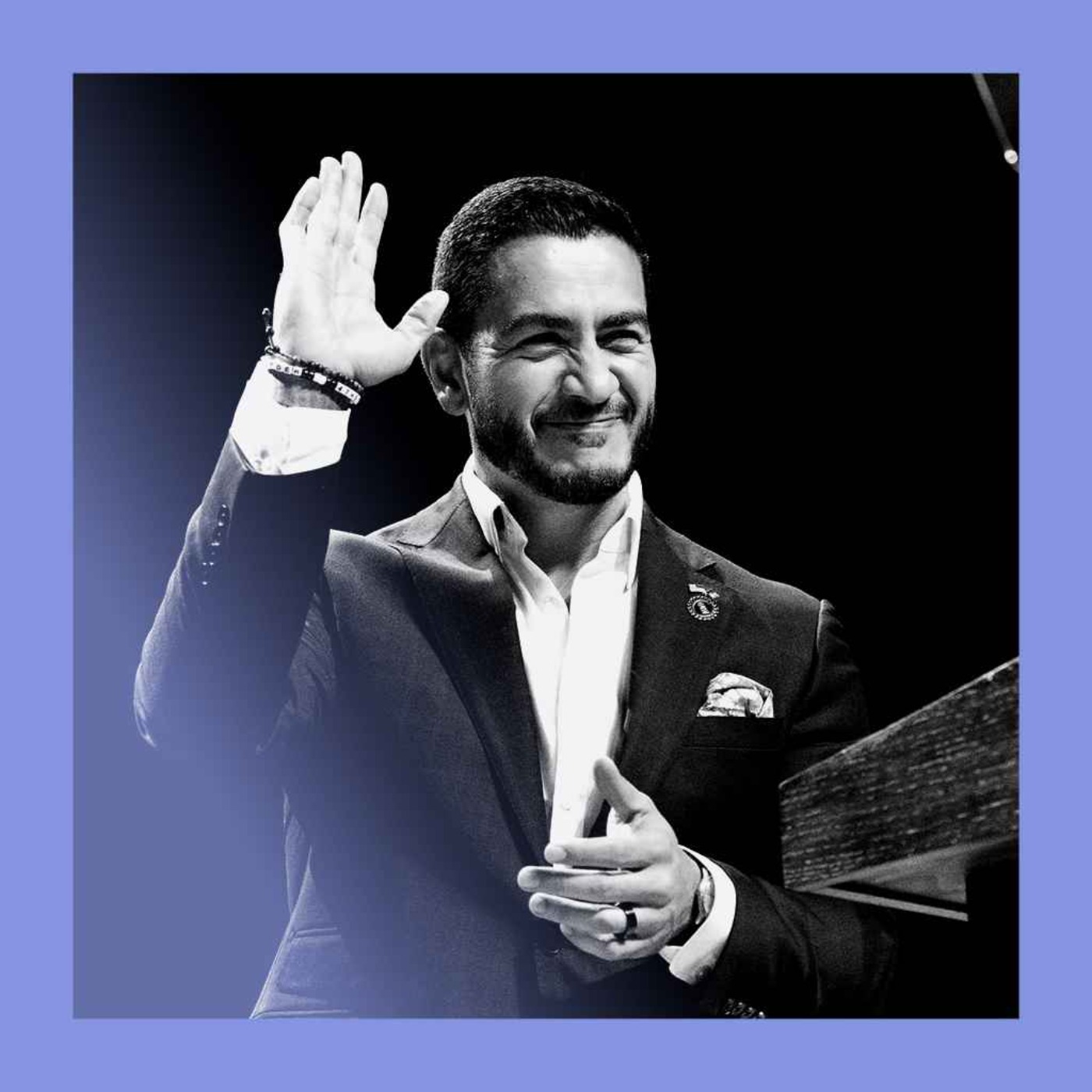
Democratic voters picked Abdul El Said, a former public health official turned podcaster, as their party's Senate nominee. He beat the establishment pick, Haley Stevens, a four term member of the House of Representatives on a particularly lefty platform opposing aid to Israel and getting corporate cash out of politics.
- [02:21]
Abdul El Said
They want us to think that the reason some of us ain't got is because of other people got. But it turns out that the reason so many of us ain't got is because of the system that has corrupted our politics to take it away from us. And that is the thing that we are taking on now. That movement to get money out of politics, put money in your pocket, pass Medicare for all. It is a big movement.
- [02:42]
Jason Palmer
This stuff is good fodder for the Republicans. Dr. El Said is not a member of the Democratic Socialists of America, the leftiest of the Democratic left, but he is aligned with them. So the Senate Republican Campaign Committee called him dangerous. The most radical Democrat Senate nominee ever, Dr. El Said won. But what does that primary win say about the next ballot he'll be on?
- [03:08]
John Prudhoe
Party primaries sometimes throw up results that underline that there's a really big change going on within the party. If you think of Dave Bratt beating Eric Cantor back in Virginia in 2014 or AOC beating Joe Crowley in New York in 2018. This is a result like that.
- [03:26]
Jason Palmer
John Prudhoe is an executive editor at the Economist and hosts Checks and Balance, our show on American politics.
- [03:32]
John Prudhoe
We've seen fights between the so called establishment wing and the progressive left of the Democratic Party for the whole season and I think this is the biggest win for the left wing of the party so far.
- [03:44]
Jason Palmer
So tell us about the race that preceded the win. Who is Abdul Al Said and how did he get over the line?
- [03:50]
John Prudhoe
Well, James Bennett talked to Abdul El Said last week for Checks and Balance. I strongly recommend folks go and listen to that. El Said is a former public health official. He has an impressive academic background. He was a Rhodes Scholar at Oxford. He has a medical degree from Columbia, and he also is a podcaster. So that's an important underrepresented demographic in American political life. Jason, America needs more podcasters in Washington. As a political candidate, he doesn't have a great record. He lost a race to be governor a couple of years ago. If you go further back in his life, he's the son of Egyptian immigrant parents. There's a decent number of Arab Americans in Michigan. And as for his policies, I think that's where he really stands out. There are some policies aimed at changing American politics, getting money out of politics, which is pretty standard Democratic stuff, abolishing filibuster, which has become a cause on the left, and term limits for Supreme Court justices. And on economics, there are also some standard far left policies, big taxes on billionaires, Medicare for all and so forth. But then if you get away from the policy platform on his website and look at the positions that he's taken previously, which he's now having to defend, some of them include, you know, some openness to defunding the police, some more out there criticism of Israel than is standard within the Democratic Party or has been until recently, recently. And quite a lot of these policies, though popular among Democratic primary voters, are not popular in the country at large. And actually, even among Democratic primary voters, he didn't quite get to 50% in this primary in Michigan. So that wasn't quite a ringing endorsement of his program. But nevertheless, he's won.
- [05:41]
Jason Palmer
Not quite a ringing endorsement yet you say it is a telling, a significant win. Why?
- [05:48]
John Prudhoe
For a few reasons, Jason. One of them is where it is, where this has taken place. This is Michigan. This is not New York City. Michigan is a swing state. Donald Trump won it in 2016. Joe Biden won it in 2020, Donald Trump again in 2024. So this is truly competitive political territory. And it's one thing for a candidate on the far left of the party to win in a very blue place in California or, or New York or in Chicago. But this is Michigan, and it's a statewide election. It's a state where the traditional base of the Democratic Party, African American voters, working class voters, are well represented. It's home to the car industry, so there's a big union presence through the uaw. So the fact that Elside was able to convince enough primary voters to elect him here either tells you something about how the Democratic primary electorate is changing, which I think is true, or it tells you something about how the left wing of the Democratic Party is becoming mainstream. And I think there's some truth to that as well.
- [06:51]
Jason Palmer
Before we talk about the changing nature of the electorate, let's talk about the political stakes here. Democrats need this if they want to win control of the Senate. Is that now harder or easier?
- [07:01]
John Prudhoe
I think it's a bit harder to back up here. In order to win a majority in the Senate, which Republicans currently have, Democrats would need a net gain of 4 in, in November for Senate seats. They already hold Michigan. So this is not about expanding their territory. This is about keeping what they have. And they absolutely have to do that if they're even to think about getting a majority in November. And if you look at betting markets, at least the odds of Democrats. A Democratic candidate holding Michigan dipped a little bit after El Said won. So that's useful information for President Trump called his victory great news for the gop. No surprise there. He wrote on social media that El Said is a communist loser who hates Jews and Israel. And so that gives you a flavor of what the Republican attacks on him will be. It's also true that debate about Israel and the war in Gaza and the role of aipac, the pro Israel lobby, in American politics, were big part of this race. Abdul Al Said has called for an end to military aid to Israel and other what he describes as authoritarian countries in the Middle east that's led to attacks on him that he's anti Israel, that perhaps he's even anti Semitic, which I think he's not. And he addressed those criticisms head on in his victory speech on Wednesday.
- [08:30]
Abdul El Said
And to all of my sisters and brothers of the Jewish faith, or any faith at all, or no faith at all, I want you to know that my commitment to your safety, my commitment to Jewish safety is the same commitment that I have to the safety of my own daughters.
- [08:46]
John Prudhoe
And so, Jason, you can be sure that Mike Rogers, who's the Republican nominee, will hammer El Said on his opposition to Israel. It's going to be really interesting to see whether that attack line works as well as it used to.
- [08:58]
Jason Palmer
Well, tell me about Mike Rogers. Who's he?
- [09:00]
John Prudhoe
Rogers, I think it's fair to say is a less exciting candidate than El Said. He ran uncontested in the Republican primary. He's a former member of the U.S. house from Michigan. He chaired the Intelligence Committee and served on the Armed Services Committee. He has a pretty traditional sort of pre Trump blue chip cv. You know, he's a veteran, a former FBI agent. He left Congress a decade ago and moved to Florida, which is the ambition of all good Michiganders. And he's tried to find his way back into the Trump Republican Party now. But just to underline, this race is not done yet. You know, Rogers could beat El Said. Our midterm model says it's about a coin toss at the moment.
- [09:42]
Jason Palmer
And let's come to what you hinted at before, the sort of changes in the left wing or feeling about the left wing of the party. Given Mr. El Said's victory, the standard
- [09:51]
John Prudhoe
bearer for the left wing of the Democratic Party nationally these days is Zoram Hamdani, the mayor of New York who's affiliated with the Democratic Socialists of America. But as I said before, it's perhaps not surprising that somebody with that platform could win A, as a mayor where he doesn't actually have control over national taxation or Medicare, but B, in a place that is stuffed with highly educated Democratic voters and where Republicans don't have a hope in hell of winning. There's a similar Dynamic in Washington, D.C. very liberal cities likely to select a Democratic socialist as mayor. Democratic socialists haven't had it all their own way. The left wing of the party hasn't had it all its own way in the primary season. Graham Platner imploded in Maine, but Abdel Al Said gives this faction of the party, which draws its support largely from highly educated progressives, a real shot in the arm. The next race to look out for in this long going battle between the left and the centre of the party is in nearby Wisconsin, where the DSA is on a tear as well.
- [10:57]
Jason Palmer
Why is that the one to watch?
- [10:58]
John Prudhoe
Well, Wisconsin, like Michigan, is a true swing state on the presidential level, so it's a fairer test of whether these sorts of candidates can win in primaries in competitive places. And in Wisconsin, a state representative, Francesca Hong looks likely to win. The Democratic nomination for governor. And, and she is a very vocal liberal. She's called, like El Said has in the past, to defund the police, something that she's reversed recently as he has as well. That's the next test in this battleground. I think it's important just to underline again that though El Said won in Michigan, he got less than 50% of the vote. So this isn't a knockout blow for one faction in the Democratic Party. So this conflict is going to run throughout the remainder of primary season.
- [11:47]
Jason Palmer
But I thought the party had kind of learned already that these kinds of positions, the extreme ones that you're talking about, like defund the police, ultimately they're unelectable policies.
- [11:56]
John Prudhoe
You would have thought so, right? There's enough evidence from the Trump era that the Democratic Party heading farther to the left is not a great political strategy, I would submit. And there's also a lot of polling evidence that some of the positions that Abdel Al Said and his colleagues have taken are just not popular nationally. This is an area where the primary electorate really distorts behavior. People get a sense from primaries about what's popular in the country that is misleading. It's awfully reminiscent of the Tea Party movement within the Republican Party pre Donald Trump. But I think what it does tell you is that there is such a desire for change that, that voters within the Democratic primary, you know, they're responding. They don't want the same old same old. They want somebody who's going to come in and shake it up. And that is one reason why they went for Abdul El Said over Haley Stevens.
- [12:51]
Jason Palmer
John, as ever, great to talk to you. Thanks.
- [12:53]
John Prudhoe
Thanks Jason.
- [13:04]
Narrator
Foreign.
- [13:08]
CBOE Market Analyst
Did you know CBOE VIX index measures market uncertainty, meaning it could rise from bullish positioning in CBO SPX options due to fear of missing out rather than fear of downside. More@cbo.com VixInsight review important risk disclosures and disclaimers@cboe.com USDisclaimers Today's Markets Move fast.
- [13:26]
Barclays Brief Host
Get the insights you need in 10 minutes with the Barclays Brief, a new podcast from Barclays Investment Bank. Through Sharp dialogue and scenario based analysis, our lead leading experts analyze key market themes each week. So whether you're managing a portfolio or leading a business, the Barclays Brief podcast can help you make smarter decisions today. Stay sharp, Stay brief. Find Barclays Brief Wherever you get your podcasts.
- [14:01]
Jason Palmer
The Yangtze is known by many as China's Mother River. By most measures, it's the world's third longest running from the Tibetan Plateau to Shanghai. It hasn't always been well looked after. Sewage and industrial waste pouring in and millions of tons of fish being hauled out in its waters. The Chinese paddlefish, a massive sword nosed beast, went extinct. The baiji, a nearly blind white bellied dolphin, probably has too. Happily though, things are clearing up at last.
- [14:35]
Gabriel Crossley
After decades of overfishing and pollution, the Yangtze, China's longest river, is making a remarkable comeback.
- [14:43]
Jason Palmer
Gabriel Crossley is a China correspondent for the Economist.
- [14:47]
Gabriel Crossley
Fish biomass, which is total mass of all the fish in the river, is up by over 200% since 2021. There are cleaner waters, so more hospitable to wildlife. And all this seems to be down to sweeping protection measures that China's government put in place in 2021.
- [15:11]
Jason Palmer
So tell me about the protection measures.
- [15:13]
Gabriel Crossley
The center was a 10 year ban on all commercial fishing, which used to be a huge industry on the river, that have resulted in the number of fish in the river plummeting since the 50s. Some fishermen were resorting to using electroshocks to catch the remaining fish or dynamite fishing, really devastating methods. So in 2021, all of that was banned. It was enforced with river patrols, drones, surveillance cameras and so on. And at the same time, China moved a lot of chemical factories to reduce pollution. It reshaped some cities in the river basin to make sure that less polluting storm orders ran into it. And most important of all, Xi Jinping, China's president, has been championing this ban. So he makes sure that everything gets put in place.
- [16:03]
Jason Palmer
And from what you're saying, it sounds like everything has in fact been put into place.
- [16:07]
Gabriel Crossley
The numbers show a pretty remarkable recovery so far at least. Of course, this is an initial recovery. The Yangtze is not a pristine waterway, but it's on the way back there. And it worked much better than many were expecting. That being said, the government is still doing things to the river which are not good for it. Most important of these is building giant dams. China's built huge dams for hydropower and to control floods for decades, including the Three Gorges Dam, the world's biggest hydroelectric facility. And these are really bad fish. So they stop fish moving up and down the river to spawn and such. China's still building lots of those. So that's a big blind spot in all of these protection measures.
- [16:48]
Jason Palmer
And it seems clear that losers from this plan must be all the fishermen who were suddenly completely made unable to fish.
- [16:55]
Gabriel Crossley
Yeah, exactly. I mean, we're talking about 230,000 people, according to the government, possibly more than that. China's state media says that large numbers of these people retrained and found other jobs. I went to check out some fishing communities along the river in southern China in Xinxiang County. It seems like the picture is a little more negative from their point of view. Some locals said that only one in five fishermen were compensated for the loss of their livelihoods. These places are pretty empty these days. Many people have just left to work as migrant laborers elsewhere. Some were encouraged to go into aquaculture to raise eels in ponds. But that's a tough business to make money in. So, yeah, these communities suffered a lot of damage.
- [17:41]
Jason Palmer
And that's another lesson in the way sort of complete state control can just grab an industry like that in China. What do you think we learn from it?
- [17:51]
Gabriel Crossley
From a scientist's point of view, the AXI was in such a terrible state that it probably needed some very sweeping measures to turn it back. And China's government is so powerful that it's very well placed to carry out these kinds of measures against local resistance. And that might be a lesson for other very polluted rivers, too. But if we could do this without causing all of the social damage, then that would be a lesson two here. And it's also worth mentioning that ideally, you don't want to let rivers reach this kind of state. And of course, it was under Communist Party rule that the AXI got as bad as it did.
- [18:26]
Jason Palmer
Gabriel, thanks very much for joining us.
- [18:28]
Gabriel Crossley
Thanks for having me.
- [18:48]
Catherine Nixey
Postcards are cheap, smutty and sometimes saucy, and they are therefore often assumed to be silly. But their effects have been very serious indeed. They have changed the world.
- [19:01]
Jason Palmer
Catherine Nixie is a Britain correspondent for the Economist.
- [19:04]
Narrator
Through the endless English months of war
- [19:06]
Catherine Nixey
games and manoeuvres, it was March 1942. Britain was readying itself to fight the Nazis in Europe. Britons knew that they would have to fight them on the beaches and on the landing grounds. The only problem was that they had very little idea what those beaches and landing grounds actually looked like. And so that spring, the head of British Naval Intelligence, Admiral John Godfrey, took to the BBC airwaves with a public plea.
- [19:31]
Narrator
This is the national program from London.
- [19:34]
Catherine Nixey
Send your photos and postcards, he said. These might look like holiday frivolity to you, but experts may see a lot more. People sent them in in droves. 10,000 had been expected. 10 million were received. Then British intelligence started to sort them. Under the names Omaha and Sword and Juno. The preparations for what would become known as D Day had begun.
- [20:06]
Narrator
All along the coasts of Great Britain that spring, the training went on Navy and Coast Guard landing barges, practiced landing operations day and night.
- [20:20]
Catherine Nixey
Letters of all kinds are in trouble. Twenty years ago, the Royal Mail, Britain's postal service, sent 20 billion letters a year. By 2025, that number was 6.6 billion. And they expect it to fall still further. Postcards are doing worse again. Only 8% of British adults now send postcards. According to the charity English Heritage. The first postcard was sent in 1840. A British novelist called Theodore Hook sent a card through the post to himself in London. This card featured a picture and a lame joke. This card set the standard for what would become a great holiday industry. The advantages of these postcards was clear. They lifted a physical burden from postal services. A single leaf of card was far lighter and cheaper to transport than the threefold thickness of a letter in an envelope.
- [21:14]
Narrator
In a Manchester side street, a boy is writing a postcard.
- [21:18]
Catherine Nixey
And they lifted a literary burden from the writer. Like teenagers turning to text, Victorians relished the limits imposed on their prose.
- [21:26]
Narrator
Dear Auntie, thank you very much for your letter. It must be nice to be in the country.
- [21:33]
Catherine Nixey
Soon hundreds of billions were in circulation. Britons, with their empire were particularly keen. As one historian puts it, postcards were the first worldwide social network.
- [21:44]
Narrator
The boy gets to the post box just in time for the quarter to three. Collection.
- [21:56]
Catherine Nixey
Postcards changed the way the world was seen. Their visual style, those palm trees, sunset, saturated color, is as recognizable as a Greek vase. And like a Greek vase, they were parodied well.
- [22:09]
Narrator
How do these cards sell?
- [22:11]
Catherine Nixey
Well, they sell very well, actually.
- [22:13]
Narrator
Which types go better?
- [22:14]
Jason Palmer
The dirty ones.
- [22:15]
Catherine Nixey
Better than the clean ones.
- [22:16]
Narrator
Do people ever complain to you about the dirty ones?
- [22:18]
Catherine Nixey
Oh, no, never.
- [22:19]
Jason Palmer
They don't mind them.
- [22:20]
Catherine Nixey
If they don't want them, they buy a view. Cheap and cheerful postcards gave tourists an invaluable sense of place and gave intellectuals an even more invaluable sense of superiority.
- [22:31]
Narrator
What do you like then?
- [22:32]
John Prudhoe
Don't really have a very funny sense of humor so far, really. I think it's all according to the
- [22:37]
Catherine Nixey
person you send it to. The author, George Orwell, noted comic postcard's appearance of overpowering vulgarity and their general hideousness. But then, Orwell didn't have to live in a world with Instagram influencers. It's hard to look at the era of the postcard and not feel a bit nostalgic. I'll write my final one. As the old phrase goes, wish you were here.
- [23:16]
Jason Palmer
That's all for this episode of the Intelligence. We'll see you back here tomorrow.
- [23:46]
CBOE Market Analyst
Did you know? The CBOE VIX index, at its core, is a measure of market uncertainty. The VIX index could be rising because of bullish positioning and the in the underlying CBOE SBX Index options market due to fear of missing out rather than fear of downside. Download Our whitepaper@cboe.com VixInsight There are risks associated with CBOE Company products. Review the disclosures and disclaimers@cboe.com USDisclaimers
- [24:16]
Barclays Brief Host
Healthcare can feel complicated. That's why Optum uses technology to connect the people and processes that make healthcare easier, more affordable, and more effective. We're making it clearer for you to know exactly what your benefits cover and to help you better manage your health. We're coordinating care between your doctors and your technology. We believe better, simpler healthcare is always possible. That's healthy optimism. That's Optum. Visit optum.com to learn more.