Loading summary
Transcript33 lines
- [00:04]
A
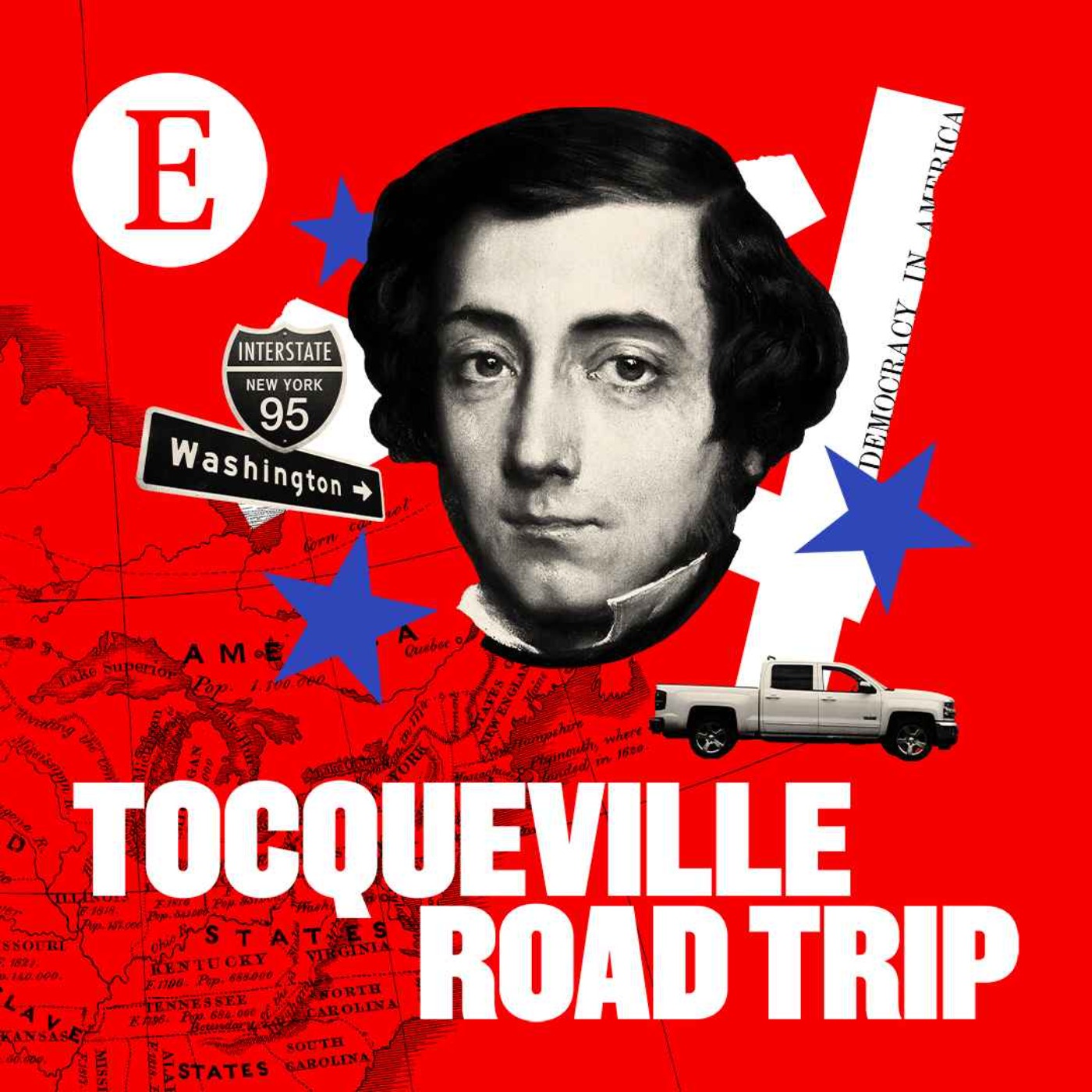
Alexis de Tocqueville is the nearest thing foreign correspondents have to a superhero. He arrived in America on a boat
- [00:11]
B
from France in May 1831.
- [00:14]
A
A young aristocrat on a mission. The US was still a long way off.
- [00:20]
B
Being a superpower back then, it was barely 50 years old.
- [00:25]
A
But Tocqueville caught a glimpse of what it could become.
- [00:29]
B
A new kind of society that would
- [00:31]
A
give the world a spectacle for which history had not prepared it.
- [00:36]
B
A land with no kings or queens,
- [00:38]
A
where citizens made the rules. And so he set off on a nine month road trip to figure out how it worked. He spoke to Americans from all walks of life. He filled up 14 notebooks and dozens
- [00:52]
B
of letters with his observations.
- [00:55]
A
Then he returned to France and wrote a book called Democracy in America. For my money, it's still the single
- [01:03]
B
most insightful thing ever written about the United States. I'm John Prideaux, the US Editor for the Economist.
- [01:16]
C
That book has been my companion since I first arrived in Washington as a correspondent for 13 years ago. Tocqueville's big insight was that America was much more than a country. It was an idea. One with the power to inspire followers and converts all over the planet, almost like a religion does.
- [01:37]
A
But now, two centuries after Tocqueville, more
- [01:40]
B
and more people are questioning their faith in the United States and its right to lead the world.
- [01:49]
A
To make sense of this change, I'm returning to Tocqueville to try to see this America through his eyes. For a new podcast series, I'm going on my own road trip, following the
- [02:01]
B
route Tocqueville took,
- [02:04]
A
talking to Americans from
- [02:06]
B
all walks of life, just like he did from New York's high society.
- [02:11]
D
Oh, now everybody wants you to cut back. We're all on a diet.
- [02:17]
A
To prisoners in Sing Sing.
- [02:19]
E
I made choices. We made choices, unfortunately, that let us hear right, but it's also, we made choices to have us sitting in this room with y' all now. So we learning. And that's America.
- [02:30]
C
And from acolytes of the President, I
- [02:32]
F
do have a framed subpoena from the January 6th Committee on my wall, which I'm very proud of.
- [02:38]
C
To victims of an unchecked government.
- [02:41]
G
This holding cell had bugs. It had feces on the wall. It was nasty. It was really, really disgusting.
- [02:47]
H
Well, the Constitution's been thrown in a dumpster fire. It's not even followed.
- [02:55]
A
I hope that following in Tocqueville's footsteps will help me figure out what's happened
- [03:00]
B
to America as It reaches its 250th birthday.
- [03:05]
A
Is the country he described in Democracy in America still there? Or has this great guidebook to the
- [03:11]
B
future passed its expiry date?
- [03:18]
C
To listen, search for Tocqueville Road Trip
- [03:21]
B
wherever you get your podcasts.