Loading summary
Transcript81 lines
- [00:00]
Grow Therapy Advertiser
The to do list doesn't stop, and neither does the pressure to keep up with it if you've been running on fumes. Growtherapy makes it easier to find care that's covered by insurance and actually built around you, whether it's your first time in therapy or your 50th. Grow makes it easier to find a therapist who fits you, not the other way around. You can search by what matters like insurance, specialty, identity or availability and get started in as little as two days. And if something comes up, you can Cancel up to 24 hours in advance at no cost. Grow Grow helps you find therapy on your time. Whatever challenges you're facing, Grow Therapy is here to help. Grow accepts over 100 insurance plans. Sessions average about $21 with insurance and some pay as little as $0 depending on their plan. Visit growtherapy.com acast today to get started. That's growththerapy.com acast growtherapy.com acast availability and coverage vary by state and insurance plan.
- [01:04]
Dell Advertiser
Dell PCs with Intel inside are built for the moments that matter, for the moments you plan and the ones you don't. Built for the busy days that turn into all night study sessions. The moment you're working from a cafe and realize every outlet's taken, the times you're deep in your flow and the absolute last thing you need is an auto update throwing off your momentum. That's why Dell builds tech that adapts to the way you actually work, built with long lasting battery so you're not scrambling for the closest outlet. And built in intelligence that makes updates around your schedule, not in the middle of it. They don't build tech for tech's sake, they build it for you. Find technology built for the way you work@dell.com DellPCS that's Dell.com Dell PCs built for you.
- [02:00]
Jason Palmer
The economist. Hello and welcome to the Intelligence from the Economist. I'm Jason Palmer. Today on the show, the next in our America at 250 Series and a curious whiskey making boom in China. But first.
- [02:46]
Narrator/Archive Voice
Now
- [02:48]
Gareth Brown
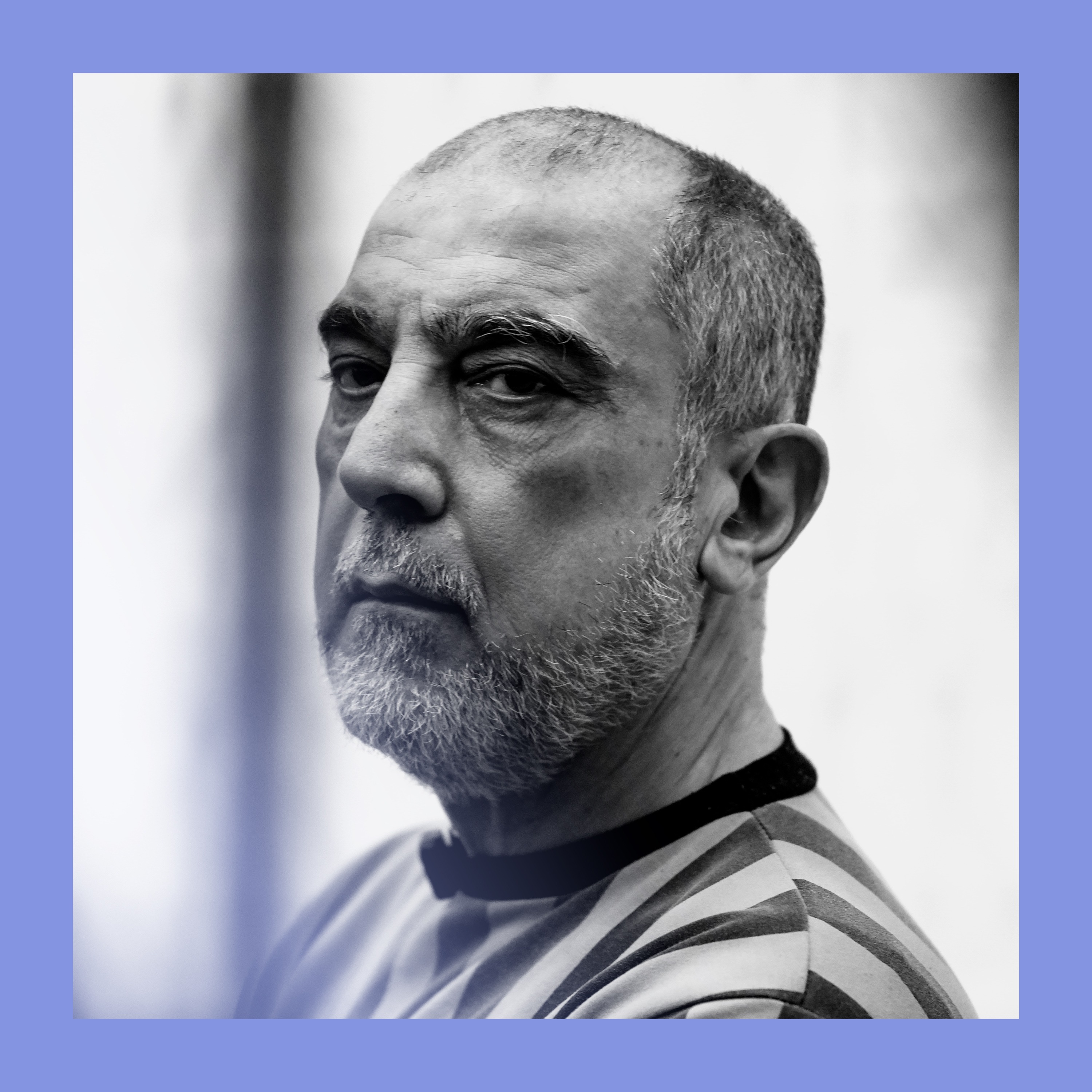
in a Damascus courtroom, an old man stands in a cage. He has a pained expression on his face. He's wearing a black and white prison uniform.
- [02:57]
Jason Palmer
Gareth Brown is a Middle east correspondent for the Economist.
- [02:59]
Gareth Brown
Artif Najib is on trial for murder, torture and orchestrating massacres. Fifteen years ago, this man was the security chief of Dara, a city in southern Syria. When the parents of children arrested in protests in 2011 came to Mr. Najib, who was head of security in the city at the time, to beg for mercy. He told them to forget about their sons, to go home and to make new ones. That brutal period in Dera morphed into nearly 14 years of nationwide repression, bloodshed shed and war. But on May 10, the Syrian courts finally began to catch up with the criminals who ran Bashar al Assad's regime. Artif Najib is the first man to take the stand.
- [04:04]
Interviewer/Host
And so, before we speak about this specific case, what does the justice system in Syria after the revolution now look like?
- [04:12]
Gareth Brown
Well, I think it's a judicial system in transition like the rest of the country. And essentially there are two tracks. Last year, President Ahmed Shara announced this Transitional Justice Commission, which is a special body which was going to look at the idea of transitional justice, look at lessons from other conflicts, Northern Ireland, Bosnia, places like that, and try to develop a system, perhaps a special court for the Syrian context. So this was one track, and it was very much a more ideological, international human rights law led process. However, the trials that have begun in the last few weeks are actually happening as a result of movements by the Syrian Ministry of Justice. And they're fundamentally based on the legal system that already existed in Syria. Prior to Assad's falling, Syria had 50 years of rule by Bashar al Assad, and before that, his father, Hafez Al Assad. And really that has left the country with a judicial system that is not very well equipped to deal with these sorts of crimes. There is no crimes against humanity or war crimes on the Syrian statute book. Legislation around things like command responsibility and indirect responsibility for crimes is also quite weak. So they are being tried under essentially Syrian criminal law. And that makes it difficult to get them in court on some of the more serious crimes.
- [05:35]
Interviewer/Host
So coming back then to the trial of Mr. Atef Najib, why is his trial so important here?
- [05:41]
Gareth Brown
There's a few reasons. One, he's a first cousin of Bashar Al Assad. He was captured in a raid in January 2025. And he's probably the most senior official from Bashar's regime currently in the custody of the new Syrian government. But I also think his involvement in Dera, which is a city where really the Syrian revolution and these protests that he is alleged to have repressed are what kickstarted the whole revolution that turned into 15 years of civil war. So Artif Najib is the face of that very early, very callous repression. He's a name that every Syrian knows. So there's an element of symbolism. He wasn't the face of the regime, but he's inherently associated with that repression right at the beginning of the Syrian revolution.
- [06:27]
Interviewer/Host
And how do you expect his trial to go?
- [06:29]
Gareth Brown
I mean, firstly, this is going to be a big media and public spectacle in Syria. Everyone is watching. If you go to the court on days when there are hearings, hundreds of his alleged victims, their families, people who lost relatives in Dera are queuing up outside the court, trying to get in. Nearly 18 months after the fall of Bashar, many people feel the government really hasn't done anything regarding transitional justice. But it's also an important test for the Syrian leaders legal system. What is the legal basis for these trials? Is this going to be a kangaroo court with the sole aim of punishment and retribution? Or can Syria and the Syrian government, the Transitional Justice Commission, demonstrate that they're capable of putting on a rigorous and fair trial in which the outcome can be sort of internationally lauded, but also accepted within the country, within Syria itself. One thing that's noticeable is the government's interpretation of transitional justice. Many people in Syria will say, look, every side has blood on its hands. Certainly members of Ahmed Al Shara's own group and other armed factions that have supported him in the presidency are accused of pretty gross human rights violations and war crimes themselves.
- [07:41]
Interviewer/Host
So in that sense, a trial that is designed to show the legitimacy of the justice system might fall short, at least in the eyes of Syrians who know that there is blood on the hands of both sides.
- [07:50]
Gareth Brown
Certainly this is a double edged sword for Shara. If you open the box of transitional justice too enthusiastically, it could swing back and it could hit your base, it could hit your closest associates. And I think beyond that, the Syrian president, Ahmed Al Shara has gone even further than that. And he's actually recruited some of the people who were part of the regime. Some senior figures have been brought into his government to help with particular things. So working on security, working with the Alawite community, working on international affairs. And that has angered people because some of these people are also closely associated with some of the worst crimes of the last 15 years. And all of this anger is not just an emotion or a sentiment, but you can see it bubbling up, especially in places outside of Damascus. Reprisal killings, sectarian attacks, people really taking the law into their own hands because their neighbor wronged them many years ago. And I think that is a key driver of why these trials are happening now. The government knows that if it isn't seen to be doing something about transitional justice, this kind of street level vengeance is only going to get worse and destabilize the country.
- [09:02]
Interviewer/Host
And what about the international angle? There is a desire for legitimacy there, too. How will these trials go ahead in the legal system you described that doesn't even have provisions for the crimes that are basically being alleged here?
- [09:14]
Gareth Brown
What the judges kind of leading this trial have said is that they are going to use international law and treaties to essentially plug in the gaps. So where they don't have laws that are appropriate on the statute book, they'll use things like the Geneva Convention, the Rome Statute, and basically apply them as Syrian law. Now, when you speak to lawyers and legal experts, some are quite excited and some are quite nervous. There is a chance for the Syrian judicial system to do something really dynamic and really pioneering when it comes to trying some of these war crimes. But I think there's also this worry that the legal basis isn't that sound. But Syria's new friends in the international community are watching closely, particularly in Europe, in the us, Canada, places like that. And they don't want this to be a show trial. And the basis of Shadow's new government, it's not democratic, but it is built on some form of legitimacy. And I think he knows that that legitimacy could be swayed one way or another, depending on whether these trials are seen as a success or a failure internationally. One thing that does come through when you speak to people involved in the trial is that they're not going to allow the perfect to be the enemy of the good.
- [10:30]
Interviewer/Host
Thanks very much for your time, Gareth.
- [10:31]
Gareth Brown
Thank you, Jason.
- [10:43]
Jason Palmer
I want to direct your attention to the latest episode of the Weekend Intelligence. My colleague, Slavea Chankova had been struggling to breastfeed her daughter. So like the health correspondent she is, she went looking for answers in the latest research on human lactation. Problem was, there just isn't very much of it. That goes all the way back to the 1970s. A schism between advocates of the breast and those of the bottle. So for struggling mothers today, there's not much help to be had. That, at last, is changing as a handful of researchers try to uncover the mysteries of a baby's first food. Check out the Weekend Intelligence in the very same feed where you found this episode.
- [11:29]
Cash App Advertiser
Most of us don't think much about how money actually moves until something slows it down or makes it more expensive than expected. That friction is exactly what bitcoin was designed to rethink. Bitcoin is often talked about as an investment, but it was built to be used with cash app. You can actually do that. Send bitcoin instantly pay at local square businesses that accept it or move it to your own wallet whenever you want. It works more like real money and less like something locked in an account for a limited time. New customers can get $10 added to their balance. Just use code CASHAPP10 when you sign up. And don't forget this part. Send at least $5 to a friend in the first two weeks Terms apply. Cash App is a financial services platform, not a bank. Banking services provided by Cash App's bank partners Bitcoin services provided by Block Inc. Brand for additional information, see the Bitcoin disclosures at Cash App Legal Podcast the
- [12:26]
Grow Therapy Advertiser
To do list doesn't stop, and neither does the pressure to keep up with it. If you've been running on fumes, GrowTherapy makes it easier to find care that's covered by insurance and actually built around you. Whether it's your first time in therapy or your 50th, Grow makes it easier to find a therapist who fits you, not the other way around. You can search by what matters like insurance, specialty, identity or availability, and get started in as little as two days. And if something comes up, you can Cancel up to 24 hours in advance at no cost. Grow helps you find therapy on your time. Whatever challenges you're facing, Grow Therapy is here to help. Grow accepts over 100 insurance plans. Sessions average about $21 with insurance, and some pay as little as $0, depending on their plan. Visit growtherapy.com acast today to get started. That's growtherapy.com acast growththerapy.com acast availability and coverage vary by state and insurance plan.
- [13:37]
Interviewer/Host
As I may have mentioned before July
- [13:40]
Jason Palmer
marks America's 250th birthday, we have been diving deep into our own archive to chart American history through the lens of the Economist's coverage down the centuries. Today's historical window covers the Cold War, Vietnam and a fractured America.
- [14:02]
Narrator/Archive Voice
And for the peoples behind the Iron Curtain, there's a new gleam of hope.
- [14:06]
Annie Crabill
At the end of the Second World War, two great powers eyed each other across a ruined Europe.
- [14:17]
Jason Palmer
Annie Crabill is a senior digital editor at the Economist.
- [14:20]
Annie Crabill
America and the Soviet Union, once allies, were now ideological rivals. The Cold War had begun. The Soviet Union consolidated its grip on Eastern Europe, and in 1949 it tested an atomic bomb that opened a new kind of conflict, ideological and global, but without direct fighting. Because of Mutually Assured Destruction, new proxy wars began on the Korean peninsula and then in Vietnam, as America resisted Soviet expansion and tried to push a liberal order abroad. Back home, the civil rights movement was picking up pace. In 1954. The Supreme Court ruled that segregation of public schools denied black Americans equal treatment. It was the first blow to the Jim Crow era. The Economist supported the move.
- [15:33]
Archive Voice/Quote Reader
This decision strikes at the root of racial prejudice.
- [15:37]
Annie Crabill
The next year, Rosa Parks was arrested for refusing to give up her seat on a bus.
- [15:45]
Gareth Brown
Good evening.
- [15:46]
Narrator/Archive Voice
The television and radio stations of the United States and their affiliated stations are proud to provide facilities.
- [15:53]
Annie Crabill
The first televised presidential debate in 1960 saw youthful, smiling John F. Kennedy pitted against a tired, looking, sweaty Richard Nixon. Kennedy was the youngest person ever elected president, and his brief time in office was a triumph in image making, beginning with his inaugural address.
- [16:16]
Narrator/Archive Voice
Ask not what your country can do for you, ask what you can do for your country.
- [16:25]
Annie Crabill
Even in his first week, President Kennedy set a new tone of urgency. The Economist said at the time.
- [16:32]
Archive Voice/Quote Reader
Panache and joie de vivre are the only words to describe the style with which President Kennedy has stepped. Vaulted is a better word, into his august office.
- [16:42]
Annie Crabill
His years in office were shaped by by Cuba. In his first year, he botched an attempt to overthrow Fidel Castro. But in 1962, he managed the Cuban Missile crisis with deft diplomacy.
- [16:59]
Narrator/Archive Voice
From Dallas, Texas, the flash, apparently official. President Kennedy died at 1pm Central Standard Time.
- [17:08]
Annie Crabill
Kennedy died by assassination in 1963. An almost mythical figure with a sense of promise unfulfilled.
- [17:16]
Narrator/Archive Voice
An oasis of freedom and justice. I have a dream.
- [17:21]
Annie Crabill
In the same year, Martin Luther King Jr. Gave his now famous speech.
- [17:27]
Narrator/Archive Voice
We'll one day live in a nation where they will not be judged by the color of their skin, but by the content of their character. I have a dream.
- [17:35]
Annie Crabill
Congress passed a Civil Rights act in 1964 which officially ended segregation in public places. King kept campaigning for economic justice for poor Americans of all races. But he too was assassinated in 1968.
- [17:55]
Narrator/Archive Voice
I'm going to step off the limb now.
- [18:00]
Annie Crabill
Meanwhile, the Cold war continued even in space.
- [18:04]
Narrator/Archive Voice
It's 1000 step for man, one giant leap for mankind.
- [18:13]
Annie Crabill
On July 20, 1969, America set down two astronauts on the moon. It was a remarkable feat, and it marked the beginning of the space age. America's involvement in Vietnam was a continuation of the ideological battle against communist expansion.
- [18:40]
Narrator/Archive Voice
But we will not surrender and we will not retreat.
- [18:47]
Annie Crabill
Lyndon Johnson escalated the conflict so that by the end of 1969, there were more than half a million troops in Vietnam. But as the war there grew, so too did opposition to it. Anti war protests attracted millions of Americans. America's conventional superiority proved ill suited to a guerrilla war. The war fought to save Vietnam devastated it. In the end, America Withdrew. The economists reported the Vietnam war ended
- [19:27]
Archive Voice/Quote Reader
at 10 o' clock on Wednesday morning, not with a bang, but with a crumple. The victors seem to have made no attempt to organize an uprising in the city. To greet them, the communist supporters cheered the arriving troops, but the accounts of Western reporters suggest that most people watched them in silence.
- [19:45]
Annie Crabill
Having lost more than 58,000 soldiers and contributed to the death of 1 million Vietnamese, America was left questioning its power, purpose and liberal values. War by Edwin Starr powerfully captured the mood of the Vietnam generation. This anti war feeling became the heart of a counterculture that rejected authority and hierarchy. Instead, it embraced personal liberation, sexual, spiritual and psychological. Many older Americans were repulsed by this, and twice they elected Richard Nixon, who promised to restore law and order before himself being forced to resign in 1974 for his role in the Watergate scandal.
- [20:52]
Narrator/Archive Voice
Therefore, I shall resign the presidency effective at noon tomorrow. Good evening. In a landmark ruling, the Supreme Court today legalized abortions. The majority in cases from Roe v.
- [21:08]
Annie Crabill
Wade was the bookend of a historic progressive era for the Supreme Court. The ruling was a triumph for feminist politics, but it also prompted a huge backlash, fueling the rise of a Christian conservative movement determined to overturn the decision.
- [21:26]
Narrator/Archive Voice
And we are very earnestly convicted.
- [21:31]
Annie Crabill
The religious rite, once an upstart, that
- [21:33]
Narrator/Archive Voice
unless America has a spiritual visitation, was
- [21:39]
Annie Crabill
quickly on the ascendant.
- [21:41]
Narrator/Archive Voice
We shall cease to enjoy the liberties and the freedoms that we have for 200 years enjoyed.
- [21:49]
Annie Crabill
We'll see you back next time. For our next chapter, neoliberalism, Globalization and Backlash.
- [22:11]
Don Weinland
Jason, I see you got something there. What are you unboxing?
- [22:14]
Interviewer/Host
I have been provided by my producer with a bottle of Gua Long blended whiskey, fine quality, aged in oak cask, Hunan, China.
- [22:24]
Don Weinland
Wow, a Hunan whiskey. I have not had one from Hunan yet. So I'm really interested to hear what you think about this.
- [22:32]
Interviewer/Host
Well, I think, first of all that it is 11 in the morning and that I suffer for my art, but in the interests of good journalism. Now, for those who don't know, Don Weinland is the Economist China Business and Finance editor, and he's the one who's been looking into whiskey. But I am trying to, in a gonzo journalism way, join in the reporting. Hang on one second.
- [22:55]
Narrator/Archive Voice
Hmm.
- [22:56]
Interviewer/Host
It's not very Scottish malty.
- [22:58]
Don Weinland
When I've been tasting these Chinese whiskies, it has been a little bit hard for me to tell how they are different from what you get from Scotland, but generally I've found them to be decent.
- [23:08]
Interviewer/Host
But you've been looking into this because there's something of a whiskey thing going on in China.
- [23:12]
Don Weinland
So there's been something of a distillery building boom in China. I think there's something around 50 distilleries that have been built in the past couple years. And there's more under construction. Right now they're being built by local booze enthusiasts, but also by multinationals like Diageo, which is a British spirits maker, and by Pernod Ricard, the French spirits maker. When these multinationals invest in distilleries in China, they build them in beautiful places. The Yuntuo distillery is in a quiet village. It cost about $120 million to build. It's got an incredible tasting room. It's almost 30 meters tall and it has about 1,000 whiskey barrels lined on the walls. It's really an incredible sight.
- [23:56]
Interviewer/Host
I think what confuses me about this story is we've spoken on the show before about how basically booze sales are slumping in China. Why would there be a whiskey boom at the same time?
- [24:05]
Don Weinland
It's very strange. So if you look at wine sales and beer sales, they're declining. I don't know if you've ever tried baijiu. It's this translucent spirit which has a very high proof to it. So it can be, you know, something like 50% alcohol. Sales of baijiu fell by 15% last year. And this is by far the most popular spirit in China. The reason behind that, from what we can tell, is that young people are drinking less and consumption in general is not doing great in China right now. So retail consumption, food and beverage consumption, when you go to a restaurant, people in big cities like Shanghai or Beijing, they might not be ordering expensive bottles of wine when they go out. And that, I think, has had an impact on alcohol sales over the past couple of years.
- [24:54]
Interviewer/Host
Is this a like, for like replacement then of baijiu or beer or wine, or is this something else altogether?
- [25:01]
Don Weinland
I think it's a bit different. So, you know, whiskey, of course, is a foreign product. Originally it was imported into China before it was produced locally. And it's being viewed these days as something of a luxury product. And when we look at luxury spending in China on luxury products, handbags, shoes, really expensive stuff like that, that area is actually doing pretty well. What we're seeing consumption wise in China is kind of the hollowing out of mid tier products. Really cheap stuff is very popular and really expensive stuff is doing pretty well. That's why we see whiskey imports hitting a record high last year.
- [25:41]
Interviewer/Host
What about in the other direction, though, is there an international market for the nascent Chinese whiskey industry?
- [25:47]
Don Weinland
So there wasn't. A decade ago, Chinese whiskey makers exported something like $5 million worth of whiskey. Fast forward to last year and they're exporting $585 million worth of whiskey. So suddenly, China has become a relevant whiskey exporter in the region. This is another reason why people are investing in distilleries in China. They're seeing that there foreign market for their whiskey. And this is how, you know, the Hunan whiskey ended up in your studio today.
- [26:19]
Interviewer/Host
But is it trying to be Scottish whiskey or is it trying to be Chinese whiskey, a thing in its own right? Because the Japanese, for example, have taken on the Scottish whisky traditions and do something that is prize winningly close to the original. Is that what's going on in China?
- [26:32]
Don Weinland
What you have there, Jason, is a blended whiskey. That's mainly what you will see on the market in China right now, but we will see a lot more single malts. Chinese distilleries are definitely trying to take on the practices of Scottish distilleries, but they are trying to make it Chinese as well. So they're using Chinese oak to age the whiskey. They want to increase the usage of domestic malts and local water and things like that. So there is a Chinese element to this. It's also worth pointing out that China just introduced its first national standards for single malt in February, and these are largely based on Scottish regulations. Some of these rules say that whiskey must be distilled in copper pots and aged for at least three years in barrels that are no larger than 700 liters. This has led some alcohol makers to be a little bit irritated with the importation of these foreign rules. I've heard that there's some Bajio companies that kind of wanted to make single malts in their own way, but on the whole, this is probably a good thing for the industry and it is going to make Chinese whiskey more like Scottish whiskey, I would say, and more and more.
- [27:45]
Interviewer/Host
I guess we'll be seeing Chinese whiskey outside China.
- [27:48]
Don Weinland
You know, I did get to sample some of the stuff at Yuntuo's distillery. They're not selling their single malts yet. I sampled some stuff directly out of a barrel. Tasted pretty good to me.
- [27:59]
Interviewer/Host
Don, thanks. It was a pleasure as always and I look forward to what advice you bring to us next.
- [28:04]
Don Weinland
Thanks, Jason.
- [28:24]
Jason Palmer
That's all for this episode of the Intelligence. We'll see you back here tomorrow, Sam.