Loading summary
Transcript53 lines
- [00:00]
Capital One Bank Guy
With no fees or minimums on checking accounts, it's no wonder the Capital One bank guy is so passionate about banking. With Capital One. If he were here, he wouldn't just tell you about no fees or minimums. He'd also talk about how most Capital One cafes are open seven days a week to assist with your banking needs. Yep, even on weekends, it's pretty much all he talks about in a good way. What's in your wallet? Terms apply. See capitalone.com bank capital1na member FDIC.
- [00:30]
Wayfair Advertiser
You want to get your backyard summer ready, but you don't want to break the bank. Wayfair gets it. Planning on dining al fresco or relaxing poolside? Wayfair has everything you need to prep your space. Shop now and save up to 70% off during Wayfair's 4th of July clearance. Score huge deals on outdoor furniture, area rugs and more. We're talking thousands of products for every style and budget. Plus surprise flash deals. July 6th. Don't wait. Shop Wayfair's 4th of July clearance now through July 6th at Wayfair.com Wayfair Every style, every home.
- [01:06]
Jason Palmer
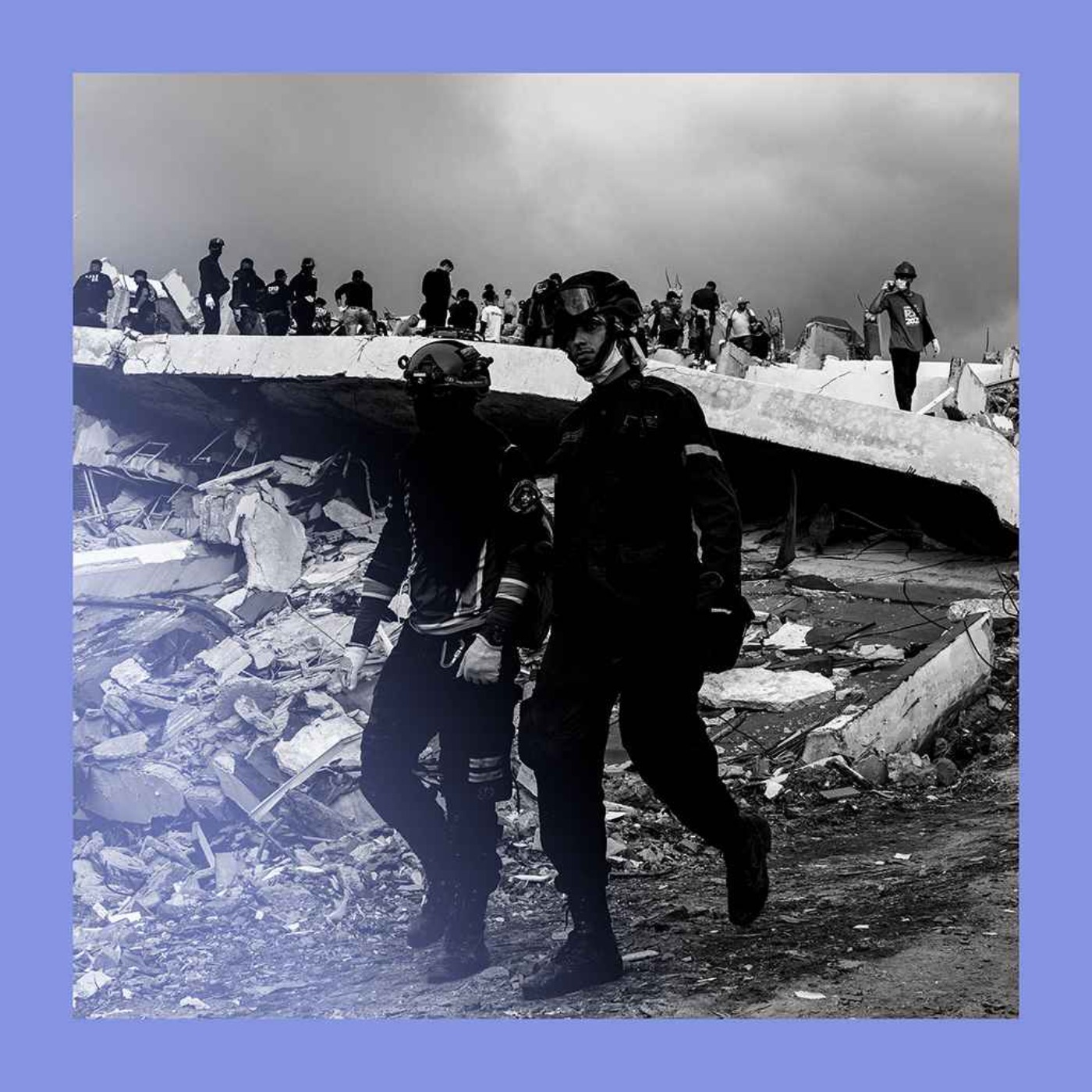
The economist. Hello and welcome to the Intelligence from the Economist. I'm Jason Palmer. Today on the show, the frontier of food delivery, delivery robots, and the mysteries and mystery of Harlan Coban. But first, It's been one week since two earthquakes rattled Venezuela, the largest in a century. Yesterday, rescuers climbed among the rubble in the state of Laguaira, Calling for silence so that any cries from the wreckage could be heard. Then, a sliver of good news,
- [02:14]
Kinley Salmon
A
- [02:14]
Jason Palmer
three year old boy was pulled out alive. It's a story that will only get rarer as days tick by. But volunteers like Juan Andrade say they will keep searching. He hadn't yet pulled out anyone alive that day, but he says his faith is still intact, that he will get his family out. The dangers aren't over. An aftershock on Monday made a bad situation worse. The death toll is nearing 2000.
- [02:54]
Kinley Salmon
It's pretty grim still in Venezuela.
- [02:58]
Jason Palmer
Kinley Salmon is a Latin America correspondent for the Economist.
- [03:02]
Kinley Salmon
The morgues in La Guayra, one of the hardest hit areas near the capital Caracas, they are overflowing. There are thousands of people displaced and this is really a huge blow for a country where there were growing hopes that it might be getting back onto its feet. Instead. Now what we see is a real beginning of public anger at the regime in Venezuela's response to this earthquake.
- [03:28]
Jason Palmer
And Kinley, we're a week on now from the earthquakes. What do we know, on the ground, the extent of the damage?
- [03:34]
Kinley Salmon
Well, the damage is just huge in terms of the death toll that is unfortunately still going to rise higher. There are 5,000 people injured, hundreds of buildings fl threatened or damaged, and also critical infrastructure, including health centers that have been seriously damaged and making them unable to be used. So it's a very difficult situation still right now, a week on.
- [03:56]
Jason Palmer
Well, let's wind further back in time. You said there was some hope that the country was getting back on its feet. What did you mean by that?
- [04:02]
Kinley Salmon
Well, since the capture of Nicolas Maduro in January, he was the authoritarian president of Venezuela and was seized by US Special forces. Since then, Delsey Rodriguez, she was Maduro's former vice president, and she's been running the country, but with close collaboration with Washington under the watchful eye, if you like, of Donald Trump. And both sides have sold that as mutually beneficial. America has eased sanctions on venezuela and on Ms. Rodriguez herself. And in return, Rodriguez has maintained stability. She's reformed some of the rules that made it very hard for investors from outside the country to get into Venezuela's oil or mining sectors. And she has released quite a number of political prisoners. Not all, though. So a sense of stabilization and perhaps a little bit of liberalization. Of course, Donald Trump's portrayed this as an enormous strategic success.
- [04:52]
Capital One Bank Guy
Venezuela is doing better right now than they've ever done in the history of their country. It's sort of like a joint venture.
- [04:58]
Kinley Salmon
But I think that narrative, which was already being overstated by Donald Trump, is now being severely tested.
- [05:04]
Jason Palmer
And you say that Venezuelans are angry at the government response so far, or lack of it. What has there been a lack of?
- [05:12]
Kinley Salmon
Well, that's right. My colleague's been speaking with a number of people, telling him that they've been left on their own in that first critical 48 hours after the quakes, when there's the highest chance of getting people out alive. A lot of people saying it was just volunteers. There was not really any serious government help. Aid has been arriving since then, but slowly. And there's been just crucial shortages, a shortage of heavy machinery to move rubble, or in some cases, there's been machines, but no fuel for the machines, leaving people scrabbling with their hands, trying to find loved ones. And it's also, I think, the case that a lot of this very weak response is a result of a hollowing out of the Venezuelan state over decades of corruption under the Maduro regime under its predecessor of Hugo Chavez. And that means that just firefighters have got equipment problems, hospitals are ill Equipped as well. Millions of people have fled the long economic disaster in Venezuela, and among them, of course, many people who'd be crucial in a moment like this, like nurses and doctors. The government also seems to be trying to centralize the response, keep a control of everything. And that's been getting in the way in some cases. And the last thing I think is that there's this growing suspicion that some of the buildings that collapsed were sloppily built by the government itself. Plenty of them were part of social housing projects or had been built without being required to follow regulations or on bad terrain. So there's a variety of sources of anger that are really coming into focus now.
- [06:30]
Jason Palmer
But coming back to the aid question, certainly America had suggested that it would be part of the response.
- [06:36]
Kinley Salmon
That's right. I think it's safe to say that part of the response from Washington and indeed from Donald Trump himself, has been quite strange, really.
- [06:44]
Capital One Bank Guy
I mean, outside of what happened last night with the terrible.
- [06:47]
Kinley Salmon
That was terrible, what happened. It was a big earthquake, knocked down buildings. But outside it was really, it's a happy country again.
- [06:55]
Capital One Bank Guy
The people are happy, they're dancing in the streets.
- [06:58]
Kinley Salmon
But the administration in the U.S. of course, has been doing some things, and I think it's now a question of just how far they're going to get involved in large scale reconstruction as well as the immediate response has caused $6.7 billion in material damage alone. My colleague spoke to a former American ambassador to Venezuela who said the United States has a duty to Venezuela, given the overt interference it has undertaken in the country in seizing Maduro in January and the tutelage under which it's had the country since. He said there should be a full effort of American assistance, including deployment of a hospital ship. There's not been, I think, yet an indication from the Trump administration that it's ready to go quite that far. But it has dispatched a military vessel towards the Venezuelan coast. It specialized search and rescue teams and American military personnel have repaired the earthquake damaged Runway at the main Caracas airport. So some action. But there's also, I think, irritation in Venezuela at how positive US Officials have been in some cases about the overall response and in particular the regime's response. People don't see or feel that on the ground in quite the same way.
- [08:02]
Jason Palmer
And how does all this figure into the sort of wider plans that America had for Venezuela even before the earthquake?
- [08:08]
Kinley Salmon
Well, America's plan for Venezuela was supposed to happen in three stages. When I was in Caracas a few months ago, people could even quote these to me on the street. Stabilization, recovery and then transition. And the idea is that stabilization and recovery could take place while Dulcie Rodriguez serves as interim president. But the third stage of transition means democratic elections at some point. There's been no timetable given for that, at least from the top of the Trump administration. And the earthquake could well be used as a reason to delay that third stage. That would be to the of the unpopular regime of Delsey Rodriguez. And the regime probably also sees this as a chance to look munificent, handing out aid to look competent for them, perhaps a chance to both delay a reckoning with the polls and improve its image with people. And the Trump administration. So far, there's no sense that it's showing much urgency in speeding any of this up. In fact, in recent days, American officials have been telling journalist that Maria Corinne Machado, she's the Nobel Prize winning laureate for the Peace Prize and by far Venezuela's most popular opposition leader. They've been complaining that she's been asking for American assistance to get her back to Venezuela. That's been irritating them. She even reportedly attempted to go back via Curacao, a nearby country, but had to cancel plans after Americans made it clear they didn't back her return. So real tensions about her potential return and what that might mean. She's even released a video after that saying she's in Panama and determined to go back. There's now a real question over what she's going to try next to get back and be with Venezuelans.
- [09:53]
Jason Palmer
Well, especially if American officials and Mr. Trump are all backing Dulcie Rodriguez in the government response at home.
- [10:00]
Kinley Salmon
That's right. I mean, obviously having the Trump administration on Dulcie Rodriguez's side is some comfort for her. And Trump has continued to be very clear that the Americans back the Rodriguez led regime. But being the leader of a deeply unpopular regime following a mass trauma of a natural disaster like this, I think brings real risks. Anger is already growing, as I've mentioned. I think it could get sharper still as failings in the response become clearer. And we saw hints of this anger just last Friday when Delsey Rodriguez visited a collapsed building in Caracas. And instead of a positive photo opportunity, that really turned into a chance for locals to voice discontent. Some shout shouted where is the aid? Another in the crowd simply shouted, go away. And I think the chances of seeing that kind of outright, very intense anger against the regime is going to grow in the weeks ahead as the focus shifts away from the immediate response to what has happened. Why were things not better why has this been so deadly? I think the chances of really harsh anger towards the regime are going to go up considerably.
- [11:09]
Jason Palmer
Kinley, thanks very much for joining us.
- [11:11]
Kinley Salmon
Thank you.
- [11:27]
Capital One Bank Guy
With no fees or minimums on checking accounts, it's no wonder the Capital One bank guy is so passionate about banking with Capital One. If he were here, he wouldn't just tell you about no fees or minimums. He'd also talk about how most Capital One cafes are open seven days a week to assist with your banking needs. Yep, even on weekends it's pretty much all he talks about in a good way. What's in your wallet? Terms apply. See capitalone.com bank capital1na member FDIC.
- [11:57]
Wayfair Advertiser
You want to get your backyard summer ready, but you don't want to break the bank. Wayfair gets it. Planning on dining al fresco or relaxing poolside? Wayfair has everything you need to prep your space. Shop now and save up to 70% off during Wayfair's 4th of July clearance. Score huge deals on outdoor furniture, area rugs and more. We're talking thousands of products for every style and budget. Plus surprise flash deals. July 6th. Don't wait. Shop Wayfair's 4th of July clearance now through July 6th at Wayfair.com Wayfair Every style, every Home.
- [12:36]
Alex Hearn
Milton Keynes is one of the places you could go in the UK to see the future of food delivery.
- [12:42]
Jason Palmer
Alex Hearn is our AI writer.
- [12:45]
Alex Hearn
It's the UK's largest market for Starship Technologies, a robotic delivery startup. Starship was founded by Artie Heinler who also co founded Skype, which was bought by Microsoft for eight and a half billion dollars in 2011. There's a small group of these Skype co founders who have become enormously influential in European tech.
- [13:07]
Jason Palmer
Tell me more then.
- [13:08]
Alex Hearn
Starship Technologies is the market leader in this sector and if you haven't seen their robots, you'll have seen ones by competitors. Small icebox sized things, usually six wheeled that trundle around on the pavements. That's sidewalks for American listeners of cities with normally one or two deliveries in them. They at walking pace, rock up to your front door, play a little sound and you go out and pick your delivery out from them. It's nothing fancy in itself except that it is the sort of low stakes autonomy that when it works can scale very, very quickly and I think slots into the existing urban fabric of a lot of cities. Much better than fancy things like self driving cars or you know, unmanned aerial vehicles, flying taxis transporting people around the place.
- [13:58]
Jason Palmer
At the mention of competitors. Why is it we're talking about Starship and not anyone else?
- [14:02]
Alex Hearn
Starship were one of the first. They have been running for an extremely long time, and they've done a really good job of focusing on efficiency. It's quite easy to do this stuff on a technical level, right? You don't even need autonomy if you've got a little cooler sized robot driving on the pavement, it's going slowly, it's not very dangerous. So you can teleoperate it. And some of Starship's competitors do exactly that. There are holes, industries of people just getting low paid people in the same time zone as an expensive delivery market. To teleoperate initially one robot and then perhaps ten at a time.
- [14:40]
Jason Palmer
Teleoperates, euphemistically remote control.
- [14:43]
Alex Hearn
You sit on a video call and you drive that robot like it's a little video game, and it lets you pay Colombian wages. For a delivery driver in Berkeley, California, that's a good arbitrage, but it's not one that really scales. Starship, by contrast, has been focusing on automation since day one. And they've been focusing on just getting their unit costs down. Because the other thing about this sector is any high school robotics shop can knock up something that looks like one of these delivery robots, right? But it can't do it in a way that actually out competes a bloke with a bicycle. And that's the holy grail here. That's why you want to do this. You want to make something that actually uses the economies of scale of building lots and lots of robots, running them for as long as you can before they break, repairing them quickly, charging them efficiently, getting everything right so that you can actually change the fundamental economics of urban delivery.
- [15:37]
Jason Palmer
So what are they doing to do that?
- [15:40]
Alex Hearn
Starship have been operating for a decade now, and they have been. To hear them tell it, looking at every single part of the chain, that's software, that's hardware, and that's the physicality of the robots. So just to give one example, if the robot breaks down crossing the road, for instance, it suddenly becomes quite dangerous, both to itself and others. It's fairly large, fairly chunky, and you don't want it to be hit. So what they've learned is it's actually a good use of money to build an entire separate backup computer inside the robot that if the first one crashes while it's crossing the road, can just take over and finish that trip, get to the other side of the road and then shut down safely on the pavement. That's the sort of thing that you only get if you've been operating for long enough. And it's the difference between at scale margins that are positive and negative. If lose one in every thousand robots when a truck careens into them at high speed, well, that might make you an unprofitable company.
- [16:34]
Jason Palmer
So the game is to beat somebody on a delivery bike, but also not just on getting the job done, but on price. Where is Starship on that?
- [16:41]
Alex Hearn
So Starship, say in the last year or so that they have beaten human delivery drivers on unit economics. That means that they can straightforwardly charge less per delivery than if you were going to a person.
- [16:53]
Jason Palmer
Which means if I were a bicycle or scooter delivery guy, I would be
- [16:57]
Alex Hearn
hating on these things, quite possibly. And I think this is going to play into some of the larger automation of labor questions that we've seen everywhere else at the margin, this won't ever eliminate delivery drivers. The nice thing about human delivery drivers from a delivery business point of view, is that they don't need to be delivery drivers all the time. It is very easy to offer someone more money to do deliveries at times of ultra high demand and then let them do something else at times when they're not needed. If you've invested in the physical capital of a delivery robot, it sort of needs to be running all the time. And so what you should expect to see from this at the small scale of delivery robots and the large scale of robo taxis is a hybrid model where you have enough vehicles built or enough robots built to satisfy the baseline demand. And then at the ultra high peaks of Friday and Saturday nights, say, human delivery drivers coming on, being paid more really than the cost per delivery to at least make it so that the service is efficient, efficient so that customers aren't lost going to other alternatives.
- [18:00]
Jason Palmer
Thanks very much for your time, Alex.
- [18:02]
Alex Hearn
Thanks for having me.
- [18:18]
Catherine Nixie
The first mystery, that of a missing daughter, appeared in 2018. The second, a vanished wife, appeared in 2020.
- [18:29]
Jason Palmer
Catherine Nixie is a culture correspondent for The Economist.
- [18:33]
Catherine Nixie
These two mysteries were followed by a mysteriously missing husband in 2021, a mysteriously revived dead husband in 2024, and another mysteriously missing daughter in 2026. However, as so often, the deeper mystery was less the crimes themselves than the mysterious figure spotted hanging around them. He could be seen in that very first mystery, which viewers learnt was Harlan Coben's safe. He was spotted in the next one, titled with equal mystery, Harlan Coben's the Stranger. He was there in the next ones too, which were variously titled Harlan Coben Stay Close, Harlan Coben's Fool Me Once and Harlan Coben's Run Away, which led to the deepest mystery of all. Namely, who is Harlan Coben and why is Netflix so obsessed by him? The question of his identity is perhaps the easiest. Mr. Coben is a 64 year old American thriller writer and by all accounts a sweetie, a modest, quiet, living family man. But for his job he writes very splattery thrillers and they sell a lot. His spread has been viral in extent he sold over 100 million books, and in its style, like COVID 19, most didn't even notice him spreading until it was too late. Since last year alone, Mr. Coben has been behind seven series and two novels. Harlan Coben has thus become one of those baffling word combinations like vibe coding or token maxing that went from meaningless to ubiquitous. Ubiquitous seemingly overnight. Coburn's shows offer other mysteries too, such as why does his name have such prominent billing when another author called Jane Austen often has a far smaller font? And why are such quintessential American thrillers being filmed as these often are in places like Manchester? And above all, how do characters who have such humdrum jokes jobs afford such astonishingly swanky kitchens? His shows have also elicited some critical bafflement too, though some of them have received decent reviews, like Stay Close, about a cold case that suddenly heats up. Others have been rather less lauded. His plots have been called twisty and confusing, not without cause. The series plots are what might politely be called eventful unless delicately be called soap operas. Open the episode menu for Netflix's 2021 series The Innocent, and over the course of four swift episodes, you find yourself offered an accidental murder, episode one, an alleged suicide, episode two, and a mysterious nun in episode three who is rapidly a mysteriously dead mysterious nun. These are followed by episode four, in which, as the episode summary explains, the nun's body is squirreled away by federal agents, which infuriates Lorena Nun Corpse theft can be so annoying. Coben's plots, then, are not Pinteresque, but nor are they meant to be. His books are archetypal thrillers. They have dark, ominous covers. Fog is a feature, and ominous strap lines in the a missing girl, a deadly game, a lot of full stops. Vain. Their characters tend to have names that sound as though they might be medical procedures. Griffin Scope or possibly Cockney rhyming slang Larry Gandal. Either way, they sound bad. So why do people like them so much? Well, it's partly that family tragedy is Aesopocles. Could have told you always compelling, and it's partly because the setting helps. Just as Greek tragedy was removed from a too alarming immediacy by being set in similar but different Thebes, so Cockburn's tragedies are calmed a bit by being set in the similar but different world of swishy murder series chic. The reason why they're set in Britain is a bit more complicated, partly suggests one industry inside at its cost British tax breaks making shoots here more economical. And as for the mystery of why his name appears over all the titles, it is, in his telling, not such an enigma. Mr. Coben says that the title of an early show sounded much too like the title of another show, so to differentiate, they just put his name above the title, which was somewhat to the bafflement of audiences at the time. Someone tweeted that they keep talking about Harlan Coben, but I don't know who the hell Harlan Coben is. They probably do now.
- [23:19]
Jason Palmer
That's all for this episode of the Intelligence. We'll see you back here tomorrow.
- [23:42]
Capital One Bank Guy
With no fees or minimums on checking accounts, it's no wonder the Capital One bank guy is so passionate about banking with Capital One. If he were here, he wouldn't just tell you about no fees or minimums. He'd also talk about how most Capital One cafes are open seven days a week to assist with your banking needs. Yep, even on weekends, it's pretty much all he talks about in a good way. What's in your wallet? Terms apply. See capitalone.com bank capital1na member FDIC.
- [24:12]
Wayfair Advertiser
You want to get your backyard summer ready, but you don't want to break the bank. Wayfair gets it. Planning on dining al fresco or relaxing poolside, Wayfair has everything you need to prep your space. Shop now and save up to 70% off during Wayfair's 4th of July clearance score. Huge deals on outdoor furniture, area rugs and more. We're talking thousands of products for every style and budget, plus surprise flash deals. July 6th don't wait. Shop Wayfair's 4th of July clearance now through July 6th at Wayfair.com Wayfair every style, every home.