Loading summary
Transcript75 lines
- [00:00]
Financial Advisor
Because you didn't just say how can I provide these investments? You'd be how do I holistically provide everything? How do I bring in the legal, the accounting, all this, and do it at a price point no one else is doing it.
- [00:09]
Wealth Management Representative
Learn more about how we approach wealth management@creativeplanning.com integrated hey, I'm Paige Desorbo from
- [00:15]
Paige Desorbo
Giggly Squad and I want to talk to you about Arm and Hammer Hardball cat litter. Because when it comes to fighting cat odor, they are the champs. Like what? Smell the litter box was my biggest fear when I got my kitty, Daphne. But since I started using Arm and Hammer cat litter, I I don't notice any cat smell. I always feel confident about anyone stopping by, whether it's my friends or my family or even people in my building. So for my fellow cat parents, be guest ready with Arm and Hammer Hardball cat litter. Find it now at Walmart or Amazon.
- [00:51]
Jason Palmer
The economist. Hello and welcome to the Intelligence from the Economist. I'm Jason Palmer.
- [01:01]
Rosie Bloor
And I'm Rosie Bloor.
- [01:07]
Jason Palmer
Today on the show, Germany's left wing delinke wins over the young. And a selection of our readers hacks for managing managers. First up though, President Donald Trump put Sharpie to paper yesterday, inking the long awaited and much touted deal with Iran. With that, a reminder that for all the power plays and posturing, he always has his eye on markets and money.
- [01:46]
Financial Advisor
I didn't want to see economic catastrophe. If you kept this going, that could have happened. But all I know is every time we talked about the possibility of peace,
- [01:56]
Wealth Management Representative
the stock market shot up like a rocket ship.
- [01:59]
Jason Palmer
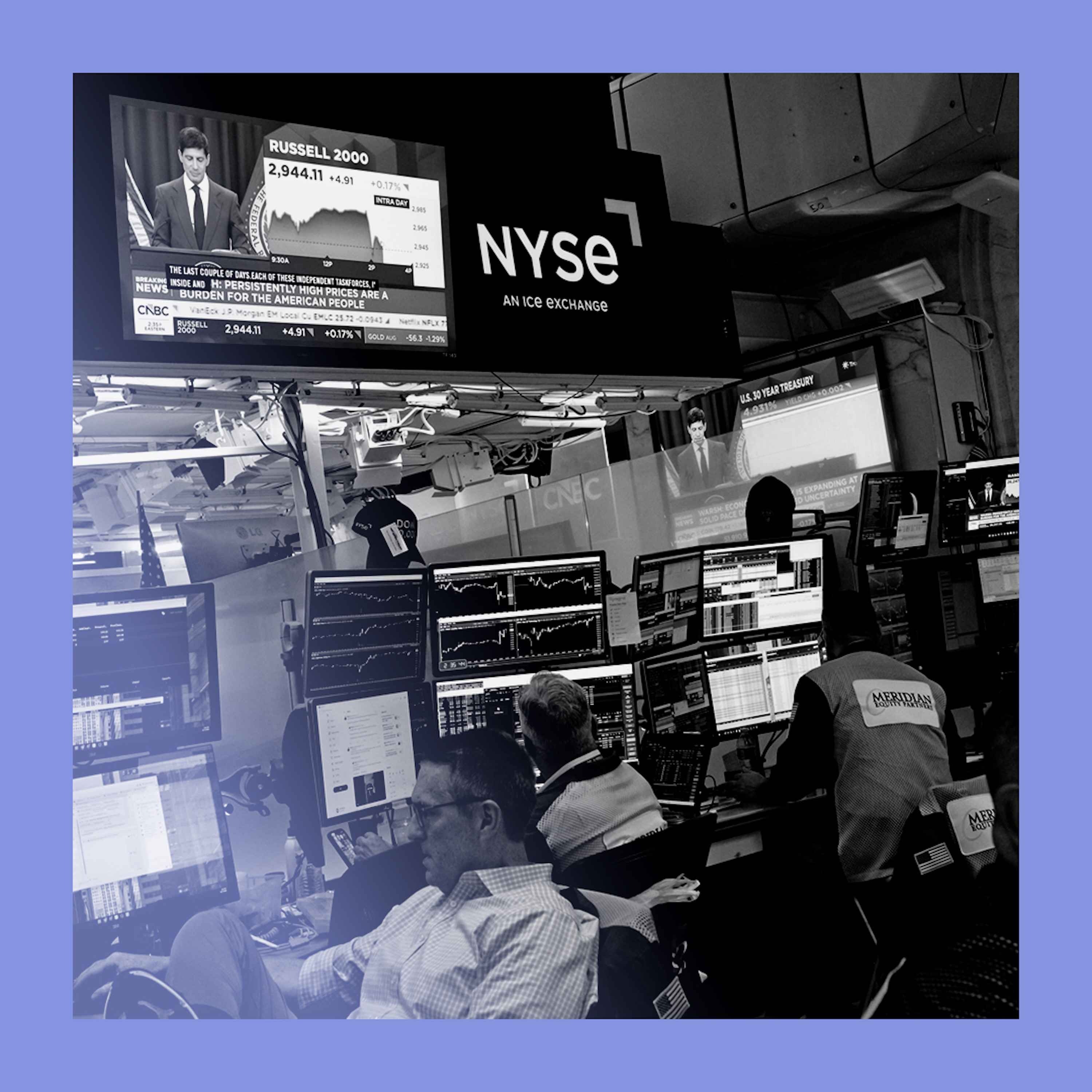
You know who must have been glad Mr. Trump was preoccupied with Iran? Kevin Warsh, freshly minted chair of the Federal Reserve. It was rate setting time yesterday, his first what to expect from this lifetime hawk who got all dovish when angling for the job from the next chair, who should expect relentless Trumpian pressure to lower rates?
- [02:19]
Federal Reserve Spokesperson
As you saw a few moments ago, the committee decided to maintain the target range for the Fed funds rate at 3 1/2 to 3 1/4 percent.
- [02:29]
Jason Palmer
He held firm. Not the most exciting news, but as so often with Fed shares, there were more tea leaves to be read.
- [02:39]
Archie Hall
In some ways, the least interesting part of the Fed meeting yesterday was what happened to interest rates.
- [02:45]
Jason Palmer
Archie hall is our US Economics editor.
- [02:48]
Archie Hall
They stayed flat. Everyone expected them to, and Kevin Walsh managed to push that through. What was much more interesting was everything else. His communication style, his plans for federal reform, everything that's said about how he's going to handle the next four years.
- [03:03]
Jason Palmer
So let's start with what might otherwise have been the big news, the decision on interest rates.
- [03:07]
Archie Hall
Kevin Walsh came in with a claim that he was going to be a crusading interest rate cut, or at least that's what he pushed for during his campaign to get Donald Trump to actually nominate him for the job. And we've argued that was always a dubious proposition. That was never really quite in line with, frankly, either his prior reputation or certainly where the American economy was at the moment. The more pressing issue is that actually, since he was nominated in late January, the American economy has shifted pretty decisively. So inflation's now up a decent bit because of, in part the Iran war, but also in part investment. AI and so on, generally is looking firmer than it was at the start of the year. The lay markets, if anything, looking a bit stronger as well. So all that pushes in the direction of higher interest rates. And it's become clear that the notion that Walsh was pushing during the campaign, that AI would be a disinflationary force and push inflation down, while maybe plausible in the long term, certainly doesn't seem to be biting in the short term when we have data centers and so on, showing up and really pushing demand into the American economy. So it was always going to be hard to cut interest rates. We're also at a stage, frankly, where inflation is a bit above target, but not devastatingly so, may well come down, given some of the news from the Iran war side. And so holding on, waiting and seeing was a pretty sensible thing and seems not to have been terribly controversial.
- [04:20]
Jason Palmer
But you said that was in fact not the interesting thing. In particular, you mentioned his communication style. What do you mean by that?
- [04:27]
Archie Hall
Central bankers sit on a spectrum. Some of them like to talk and like to explain what they're doing pretty closely to markets and the public. And they think that means they're better understood, they're treated as more legitimate by the public. And also markets are more likely to know what they're going to do and therefore, therefore be less volatile around central bank meetings. There's another school of thought which is much more where Kevin Walsh is, which is basically that central bankers job is to set interest rates and really not do very much else, and that a lot of the communication that's going on is a distraction.
- [04:56]
Federal Reserve Spokesperson
That statement just gives you the facts as best we can judge it.
- [05:00]
Archie Hall
Walsh even went further, he thinks might sometimes distort markets if they're too busy looking through the lens of what the Fed's going to do. Rather than just what the data says about the economy on its own terms. And so the result of that, we got quite a different communication style. We had a statement that was much shorter and much more terse than usual. He was very willing simply to say, I'm not going to answer that question.
- [05:22]
Federal Reserve Spokesperson
I can't give any forward guidance about what we're going to do next. The good news is we'll be meeting
- [05:26]
Archie Hall
in six weeks, rather than try to give a bit of a window into how he was thinking, as it's more the style of at least the last couple of his predecessors. And he didn't submit a dot for the famous dot plot where Fed governors lay out where they expect the economy to evolve over the next few years.
- [05:40]
Jason Palmer
And then you mentioned something of reforms. What does Mr. Walsh want to do with the Fed?
- [05:44]
Archie Hall
He appears to have great ambitions. He's long been someone who's said both that he loves the Fed and really cares about the institution, but also that he thinks in pretty urgent need of repair. And some of that is genuine, long standing belief. And some of that, particularly recently, has certainly been hammed up in his campaign to persuade Donald Trump, who certainly doesn't love the Fed. He's someone who can be trusted to take the reins. Specifically, what he pushed for now was effectively, if we're being uncharitable, kicking the can down the road, if we're being more charitable, trying to really work through how to do this properly. And that was the announcement of five task forces which are going to go through various bits of the Fed's remit, like the balance sheet, what data it looks at, including how it communicates, and report back with a set of recommendations that he could then take forward to see how to reform the Fed. So certainly this is not. He's coming in all guns blazing, day one, huge changes in the next few months. But it does seem like if we have this conversation a year's time, the Fed could look fairly different.
- [06:41]
Jason Palmer
But coming back to the rate decision, he did what was expected and what you think is right for the economy right now?
- [06:48]
Archie Hall
Yeah, absolutely. The particular decision to not raise or indeed not lower interest rates wasn't terribly controversial. It was effectively what almost every Fed watcher expected. The Iran war is obviously very in the news right now. It's a terribly important geopolitical story. It's an economic story for the us it's moderately important, but not hugely so. Higher oil prices did matter. They did raise inflation a little bit, but ultimately they didn't really knock about the US economy in the way that has been true for a lot of the rest of the world in response to this war. So what we're left with instead for the US Is an economy that's doing pretty well. Inflation is a little bit high. Some of that reflects the Iran war, some of that reflects AI exuberance, a general hot economy, fiscal stimulus, and a whole bunch of other factors. And the question going into later this year where it may well be possible the Fed needs to raise rates a bit. Certainly, judging by the dot plot that was released yesterday as well, a number of Fed governors and regional bank presidents think so. Will really lie on does inflation recede either naturally or as a result of the Iran war deal pulling oil prices down? Or do all those other factors that I mentioned firm inflation up and kind of keep it in a sort of place where the Fed actually does need to intervene and raise rates later on in the year?
- [08:01]
Jason Palmer
But raising rates is going to be relatively difficult under Mr. Trump, who always, always wants lower ones.
- [08:09]
Archie Hall
Yes, that's the looming political danger over this Fed. And the question a lot of Fed watchers were asking going into this meeting was how political and how much of a lackey, frankly, Kevin Walsh would appear to be.
- [08:24]
Federal Reserve Spokesperson
We recognize that inflation has been running well ahead of the Fed's long stated inflation goal of 2% that's been going on for more than five years.
- [08:35]
Archie Hall
He came out very, very strong in asserting the Fed's commitment to its 2% inflation targets, which implicitly, of course, means that if inflation is durably looking like it's going to be a problem, he's suggesting the Fed would be very happy to raise rates and deal with that. And he really foregrounded the inflation side of the target, which was interpreted as more of a hawkish tilt. So in that sense, good news on the politics side, Walsh wasn't coming out and saying, inflation's not a problem, AI is going to fix everything. We're okay to cut rates. Which was a little bit of the tone of some of his campaigning rhetoric from last year when he was trying to sell a present on appointing him. The less reassuring part was that the flip side of Walsh's pretty non communicative style is it's very easy for him to avoid confronting potentially difficult choices, and therefore it's hard to know exactly how he'd respond in a real crunch point, which may be part of the point of not communicating a lot. So for instance, right now he can say, we didn't raise interest rates, we didn't lower them, we kept them flat. I'm not going to speculate about what I'm going to do in the future. And indeed on almost any substance question, we have a task force for that. They'll report back. And so he's very, very unlikely to say anything that's going to annoy the President. But obviously at some point he also has to make decisions.
- [09:47]
Federal Reserve Spokesperson
I think we're going to come up with some new and interesting things. We made some changes today. I expect more changes to come.
- [09:54]
Archie Hall
And whether those decisions also keep the President happy, or whether he's willing to sidestep and push against the President's wishes as a good fare really ought to do in the right circumstances, that still remains to be seen.
- [10:05]
Jason Palmer
Thanks very much for joining us, Archie.
- [10:07]
Archie Hall
Thank you.
- [10:22]
Paige Desorbo
Hey, I'm Paige desorbo from Giggly Squad, and I want to talk to you about Arm and Hammer Hardball cat Litter. Because when it comes to fighting cat odor, they are the champs. Like what? Smell the litter box was my biggest fear when I got my kitty, Daphne. But since I started using Arm and Hammer cat litter, I don't notice any cat smell. I always feel confident about anyone stopping by, whether it's my friends or my family or even people in my building. So for my fellow cat parents, be guest ready with Arm and Hammer Hardball cat litter. Find it now at Walmart or Amazon.
- [10:53]
Cash App Advertiser
Most of us don't think much about how money actually moves until something slows it down or makes it more expensive than expected. That friction is exactly what Bitcoin was designed to rethink. Bitcoin is often talked about as an investment, but it was built to be used with Cash App. You can actually do that. Send Bitcoin instantly, pay at local square businesses that accept it, or move it to your own wallet whenever you want. It works more like real money and less like something locked in an account for a limited time. New customers can get $10 added to their balance. Just use code CASHAPP10 when you sign up. And don't forget this part. Send at least $5 to a friend in the first two weeks. Terms apply. Cash App is a financial services platform, not a bank. Banking service is provided by Cash App's bank partners. Bitcoin services provided by Block Inc. Brand for additional information, see the Bitcoin disclosures at cash app LegalPod,
- [12:04]
Wealth Management Representative
Which roughly translates to Merz licks balls.
- [12:09]
Rosie Bloor
Tom Nuttall is the Economist Berlin Bureau Chief.
- [12:12]
Wealth Management Representative
Insulting Friedrich Merz, the German chancellor, is perhaps not exactly what you would expect from a senior opposition politician, but that probably wouldn't trouble Heidi Reichenk who is one of the leading figures for Germany's Die Linke, or the Left party. Die Linke is gaining momentum with some young voters who have been mobilizing around Ms. Rajinik's powerful, perhaps off color speeches this weekend at the party's annual congress in Potsdam. They will be looking for strategies to keep climbing.
- [12:48]
Rosie Bloor
Tom, we've talked a lot about the AfD and the rise of the right, a bit less about the left. Where is this rise in popularity coming from with the left?
- [12:59]
Wealth Management Representative
In some ways, it's one of the most extraordinary stories in German politics. About 18 months ago, we had a snap election looming in Germany and Die Linke, which has been around for the best part of 20 years, was literally on the verge of extinction. They were languishing at about 3% in the polls. There'd been a very acrimonious split with a figure called Saare Wadenknecht over foreign policy and cultural issues. The party was bruised. It's lost a lot of its MPs. Voters were either literally dying out because they were too old, or they were moving to the far right afd. And what happened was, first of all, a very good ground game. They knocked on hundreds of thousands of doors, which is not actually a typical campaign tactic in Germany. And then just a few weeks before the election came this extraordinary decision by Fredrik Merz for his party, the Conservative Christian Democrats, to vote in Parliament with the AfD on some anti immigration measures. And this was exactly what Dee Lincoln needed. Ms. Reichsnek, who we heard at the beginning of this clip, gave an electrifying speech in the Bundestag against this. It went viral on social media, media, and all of a sudden you saw Die Linker start. If you look at the charts, it's almost a vertical line from January 2025 to the election a month later. They're now sitting at 11% in the polls, only a couple of percentage points behind the Social Democrats, the main party of the center left who sit in government with Mr. Merz's CDU.
- [14:30]
Rosie Bloor
Do you expect them to maintain that momentum?
- [14:33]
Wealth Management Representative
Yeah, that's a big question. I mean, they feel like the wind is in their sails. It's not only that they're doing a lot better than they were, it's that their electorate and their membership has completely. So in the past, one of the main bases for Die Linke was an older electorate in East Germany, former Communist East Germany. Now what we have is a party that's become much, much younger, both in terms of its electorate and its membership. And Also some of its leaders, including Ms. Reichschinek. It's become much more Western in terms of its voter base. It's about sort of 50, 50 between west and East, which is a radical change from the past. And this has meant that the sort of conversations that the party has and the way it presents itself to the electorate are RA from what we saw in the past. As the AfD has got stronger and stronger, it's now the most popular party across all of Germany and in eastern Germany by an absolute mile. Die Linke likes to present itself as the most credible, as they would say, anti fascist force in Germany.
- [15:33]
Rosie Bloor
So what does Die Linke actually stand for?
- [15:36]
Wealth Management Representative
One of the things that they decided on in the election campaign last year was to have a very, very disciplined campaign focused basically on two issues. One of them was the cost of living and the other one was housing. So rents have gone up very quickly in most German cities in recent years. A lot of people have been struggling. You do have very strict rent control laws in Germany compared to some other parts of Europe. But nevertheless, this is something that the party realized that basically everybody could get behind. It wasn't the sort of thing that was going to expose divisions within the party and it was a very simple message to take to the doorstep.
- [16:11]
Rosie Bloor
What about the issues that divide the party still?
- [16:15]
Wealth Management Representative
Yeah. So Die Linka, as a party of the far left, is riven with division, as parties of this sort always are. We saw this last year when the party came quite close to kind of ripping itself apart over Israel and Gaza. And to simplify a little bit, some of the party's newer, younger members, who, like in similar parties elsewhere in Europe, are incredibly exercised by this issue. And last year at the party congress, you actually had a number of senior figures of the party quit in protest. They thought that some of the motions that were emerging from some of the younger branches basically were coming quite close to anti Semitism. They've put together a motion for this year's congress that they think is kind of big and capacious enough to please everybody. I spoke to Katrine Gabel, who's a D Linker MP who sits on the party's board, and she says that the party's younger members have been important in redefining the party's focus through their protests.
- [17:13]
Archie Hall
The social protests that we're engaging in this summer, we've already started on 1
- [17:17]
Rosie Bloor
June and managed to put 6,000 people
- [17:21]
Archie Hall
on the streets in very short notice. So I think it's going to be
- [17:25]
Rosie Bloor
like a very scorching hot socialist summer. And is that what you're anticipating, Tom? A scorching hot socialist summer?
- [17:34]
Wealth Management Representative
Yes. I mean, I think they're going to be pretty active about bringing people onto the streets. I think, looking ahead, Friedrich Merz's government is. Is embarking on a program of domestic reforms, which means cuts to welfare programs, cuts to healthcare provision. We're probably going to have a very bitter row on pensions coming in the next few weeks. And this is basically grist of the mill of Die Linka. They're going to fight back against this stuff very hard. They've already brought thousands onto the streets for some protests, and they promised that there will be lots more in the summer ahead.
- [18:06]
Rosie Bloor
Germany, of course, has a coalition government. So where does Die Linke stand in relation to that? What's its role in the current situation?
- [18:14]
Wealth Management Representative
One of the tricky things for the party is to what extent, basically, they want to be a party of political power, either in coalition governments in Germany's states or supporting governments versus a kind of protest movement that spends a lot of time on the streets that has a political wing. It's not going to be possible for the party to avoid this. The reason for that is that the AfD has got so big in these states, it's attracting in some parts more than 40% of the vote because no other party will work with them to make a coalition. The space for that has been completely squeezed. And so you'll have the very, very awkward situations where the cdu, the main conservative party, in order to put together a coalition government, it needs to have votes from Die Linka. Both of these parties detest the other. So it's a horrible situation. You have lots of people in Die Linka who will say, well, I didn't join this party to put Conserv Conservatives into office. And then you'll have other people in the party say, the only thing that matters is that we stop the AfD from entering government. And if that means that we have to hold our nose and vote for CDU prime ministers in these states, then that's what we have to do. But this is a very uncomfortable discussion for the party to have.
- [19:29]
Rosie Bloor
So how does that all shake out in terms of strategy? What happens next?
- [19:34]
Wealth Management Representative
They will discuss this in Potsdam at their congress this weekend. They will embark on a summer of protests against all of domestic reforms that they hope will prove as mobilizing as their election campaign last year was. And I think the, as it were, good news for Die Linke is that in the capital, Berlin, the vote is so fragmented that Die Linke actually has a chance of coming first and attempting to put together a left wing city government with the Social Democrats and the Green Party. And this is the thing that they're really excited about. They have been in government in Berlin before, but they've never run the government and now they have a chance of doing that. So basically this is the thing that's really exercising the party right now.
- [20:19]
Rosie Bloor
Tom, thank you very much.
- [20:21]
Wealth Management Representative
Thanks Rosie.
- [20:34]
Andrew Palmer
Have you ever been in a situation where you've done what you feel is a great piece of work and then you're boss comes along asking for things to be changed, making things worse? You get the feeling that they're only pointing things out so they have something to do.
- [20:51]
Jason Palmer
Andrew Palmer, no relation, hosts Boss Class, our wildly successful podcast series about the world of work and management.
- [21:00]
Andrew Palmer
Well, let me tell you a secret. There's a hack that can help you. It's the idea of Atwood's Dutch the deliberate insertion of a redundant or incomplete feature whose only purpose is to be discovered and removed by the higher ups. That way your boss feels they've done something useful, but no actual damage has been done to the end product. The phrase Atwood's duck comes from a video game, an apocryphal story about a programmer who who added a pixelated duck to the character of the queen in a chess related game. A producer reviewed it and asked for one thing, get rid of the duck. The programmer complied and the game was ready to ship. I mentioned Atwood's duck in a recent piece and to my surprise, many, many of you emailed in to tell me about equivalents. So here's one from construction. Peter Deman wrote from Canada to say that in construction this phenomenon is called leaving something for the inspector. So when an inspector comes to look at something, if it's electrical, you leave the COVID off a junction box. If it's a building, you leave some piece of concrete out of place, something really simple, so that this person will feel important. They found it, they've got rid of it, their job is done. That's not the only example of a duck based tactic. Mervyn Taylor wrote from Dublin to say that Atwood's duck may not be a duck at all. It could be a potato. The Admiral's potato is something that people in the Navy referred to. And it's the idea that when someone is coming aboard again to inspect a ship, a potato is left out. It's there only for the Admiral to spot it, tell it to be tidied up, and the inspection can Then proceed. And then a final variation on the idea of Atwood's duck. And this has the memorably unpleasant name of the hairy arm. This came from Arnold Peterson, who emailed from California to say that in the business of TV commercials, the hairy arm refers to the deliberate insertion of a hand model with a hairy arm. It gives someone at the agency a very obvious thing to ask to be removed. Everything else is left untouched. The commercial goes out just as the producers wished it would. I wasn't expecting any more duck based correspondence, but the letters kept on coming. Steve Rachel wrote to talk about his experience when he was the managing director of a business in Jamaica in the early 1990s. He says that his factory manager there would paint the bottom of the coconut trees which lined the long driveway every time someone grand was visiting from headquarters. The point of this painting was to impress the higher ups with the neatness of the environment and to distract them from the real issues. Steve called this management by paint, which is a great phrase. Bruce Manford wrote in to point out that sometimes the duck survives. He told the story of a friend who was working in house for a Canadian oil exploration company and had to advise on an exploration agreement. The contract draft went back and forward and Bruce's friends suspected that absolutely nobody was reaching. So he inserted a clause into the draft which required that certain heavy equipment had to be transported to the wellhead by horse and carriage. No one noticed and Bruce's friend forgot that he put the clause in until sometime later he got a call from his boss asking why did he need to get a horse and buggy. There's plainly lots of demand for this kind of content. So I'm pleased to announce that we're going to be launching a new video show in the autumn called Inside Ducks. In the meantime, you can email me@bartlebyconomist.com I also wanted to thank listeners to the intelligence who responded to our remix of Velocity Pivot, a meaningless filler text that we set to music. Lots of you have written in with your own wonderful versions of this. We think AI may have been involved, but we wanted to play you a few. The first one is from Istvan Horvath.
- [25:39]
Archie Hall
Insatiable Appetite let's begin.
- [25:43]
Wealth Management Representative
Artificial Intelligence Tokamaxing Tokenist Tokelin Double Diggers
- [25:47]
Federal Reserve Spokesperson
Drozen It's Humanity Fireside Chat Drinking from
- [25:50]
Wealth Management Representative
a fire hose Burning Platform General Pyromania
- [25:53]
Andrew Palmer
Augmentation I actually quite like that. It starts really badly. It's like European rock ballad and then gets better. Yeah, so well done, Istvan. And this one is from Ed Sevilla of Massachusetts.
- [26:11]
Wealth Management Representative
Like the drip, drip, drop of a waterfall chart that oozes through the deck.
- [26:17]
Federal Reserve Spokesperson
Like the what, when, why of a
- [26:19]
Wealth Management Representative
toolkit from a team alignment check. Like the final end of a project plan that spans all stakeholder views. A voice inside me keeps insisting use, use, use corporate speak.
- [26:38]
Andrew Palmer
Yeah, very enjoyable, Ed. Very, very listenable. Almost too enjoyable for something which is supposed to be unbearable to listen to. So, yeah, lots of great stuff. Thank you both.
- [27:08]
Jason Palmer
That's all for this episode of the Intelligence. We'll see you back here tomorrow. Foreign.
- [27:31]
Paige Desorbo
Hey, I'm Paige Desorbo from Giggly Squad, and I want to talk to you about Arm and Hammer Hardball cat Litter. Because when it comes to fighting cat odor, they are the champions. Like what? Smell the litter box was my biggest fear when I got my kitty, Daphne. But since I started using Arm and Hammer cat litter, I don't notice any cat smell. I always feel confident about anyone stopping by, whether it's my friends or my family or even people in my building. So for my fellow cat parents, be guest ready with Arm and Hammer Hardball cat litter. Find it now at Walmart or Amazon.
- [28:02]
Financial Advisor
Because you didn't just say, how can I provide these investments? You'd be how do I holistically provide everything? How do I bring in the legal, the accounting, all this, and do it at a price point no one else is doing it? It.
- [28:11]
Wealth Management Representative
Learn more about how we approach wealth management at creativeplanning.
- [28:14]
Archie Hall
Com Integrated.