Loading summary
Transcript63 lines
- [00:00]
Capital One Bank Narrator
With no fees or minimums on checking accounts, it's no wonder the Capital One bank guy is so passionate about banking with Capital One. If he were here, he wouldn't just tell you about no fees or minimums. He'd also talk about how most Capital One cafes are open seven days a week to assist with your banking needs. Yep, even on weekends, it's pretty much all he talks about in a good way. What's in your wallet? Terms apply. See capitalone.com bank capital1na member FDIC.
- [00:31]
Andrewton
Many business leaders see AI's tremendous potential for their companies but are still struggling to turn their potential into measurable results and competitive advantage. I'm Andrewton.
- [00:41]
Sarah Elk / Jason Palmer
And I'm Sarah Elk. And on our new podcast, Winning with AI, we're talking to CEOs who are using AI to drive business transformation, delivering real wins and changing how their companies run.
- [00:52]
Andrewton
We'll hear how leaders empower and mobilize their people and make the use of AI part of how the whole organization thinks. Winning with AI.
- [01:06]
Sarah Elk / Jason Palmer
The economist. Hello and welcome to the Intelligence from the Economist. I'm Jason Palmer. Today on the show, whether stock markets can stomach the coming wave of giga IPOs and and our World cup contender series continues with Iran. First up, though,
- [01:45]
Tom Luttall
I believe the people
- [01:47]
Josh Roberts
of Europe understand very well that we must stand up against this cruel aggression.
- [01:53]
Sarah Elk / Jason Palmer
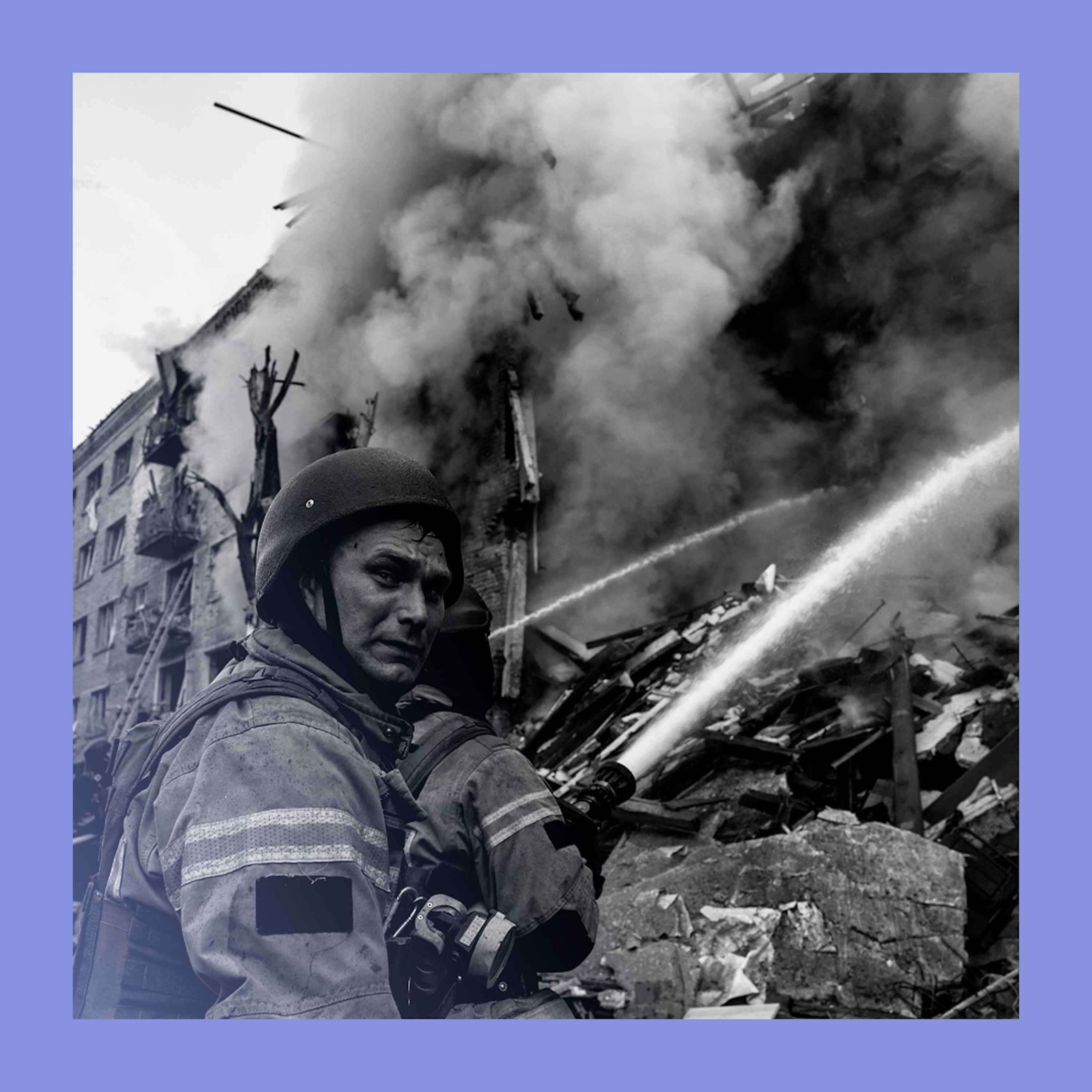
March 1, 2022, the world was still digesting Russia's invasion of Ukraine. And Ursula von der Leyen, president of the European Commission, called it a moment of truth for Europe.
- [02:04]
Tom Luttall
Yes, protecting our liberty comes at a price, but this is a defining moment
- [02:10]
Josh Roberts
and this is the cost we are willing to pay four years later.
- [02:15]
Sarah Elk / Jason Palmer
And the time has come to live up to that impassioned notion.
- [02:20]
Tom Luttall
This is now Europe's war to manage for three reasons.
- [02:24]
Sarah Elk / Jason Palmer
Tom Luttall is our chief Germany correspondent and Berlin bureau chief.
- [02:29]
Tom Luttall
One is that America has disengaged. It's cut off financial aid. It's lost interested in diplomacy. The second reason is that the election in Hungary a few weeks ago got rid of Viktor Orban, who was the veto player inside the EU on things like sanctions and aid. And the third reason is that there's now a sense of diplomatic possibility because Ukraine has enjoyed some advances on the battlefield and with its deep strikes inside Russia. And there's some hope that that might be the beginning of a process that could see Vladimir Putin come to the negotiating table.
- [03:03]
Sarah Elk / Jason Palmer
So it's in Europe's hands at last. What is the strategy here?
- [03:08]
Tom Luttall
Well, the question is, is there a strategy or is there Just a bunch of tactical muddling through. There are lots of things happening than ejection of Mr. Orban. The EU is about to begin dispersing the first tranche of a huge 90 billion euro loan to Ukraine, which will be used to fund its army, and much more. There is chatter in European circles that it might be time to think seriously about dispatching somebody or a group of people to talk directly to the Russians, which is a task that hitherto they have left to the Americans. And maybe most importantly, the discussion about Ukraine's bid to join the European Union, which is absolutely crucial for everybody from Volodymyr Zelenskyy to a babushka in a village somewhere in the countryside, that is now gathering pace. But there are also signs of a gulf on that issue between Ukraine and its European partners.
- [04:08]
Sarah Elk / Jason Palmer
Well, let's start with the prospect of bringing Mr. Putin to the negotiating table, as you mentioned. Would he want to? Is he ready to move any more than been for four years?
- [04:17]
Tom Luttall
I think basically the answer to that is no, or at least there is not yet any sign of it. But one of the striking things in the last few weeks has been a flurry of chatter about possible names that the Europeans could send to negotiate with Mr. Putin. This actually began with a suggestion from Vladimir Putin himself, who a few weeks ago floated the name of Gerhard Schroeder, the former German chancellor, who of course is very close to Russia and has become a reviled figure in Europe. Now, that's obviously not going to happen. But some other names that were floated around, people like Angela Merkel, Mario Draghi. Now, I think people eventually realized that we were putting the cart before the horse. If we were talking about names before we began to think about what we wanted to negotiate and how we might be able to achieve it. So that discussion has settled down for now. But it is certainly clear to me, talking to people across Europe, that there's now a readiness to think about this much more seriously than there was in the past. But the bottom line is that the sense in Europe is that it is not yet time for a serious negotiation with Vladimir Putin.
- [05:25]
Sarah Elk / Jason Palmer
And what about the discussions that seem to be changing character as regards Ukraine's EU membership that again, has been floating around for the entirety of the war?
- [05:33]
Tom Luttall
This is crucial if you go back to 2014, when you remember the Maidan revolution and Ukrainians swarmed that square in Kiev carrying EU flags. Ever since then, there's been a strong feeling in Ukraine that this is the destiny of the country to turn their back on Russia. Corruption authoritarianism and move towards the European Union. Now, the EU was not interested in that for quite a while. But then a few months after the full scale invasions in 2022, they accepted Ukraine as official candidate. And this was a big move. But the Ukrainians, understandably, they want much more and they want it to move much more quickly. The thing that I worry about is that there's a growing gulf between these kind of sky high aspirations that you find in Ukraine. There's talk about joining as soon as next year, 2027, and a deep sense of skepticism amongst Europeans that Ukraine is going to be ready, anything like that pace. And let's remember this is a big country with weak institutions, big problems with corruption and the rule of law. It's much poorer even than the poorest member of the eu, Bulgaria. So there is a sense in Europe that we have to slow this thing down. Yes, maybe we can think creatively about how to adjust our own processes so that this thing can move in a more accelerated fashion. And there have been some suggestions in that regard from the German Chancellor, Frederick Merz a couple of weeks ago. But if you talk to people off the record, you get a sense that if we don't do something to address the growing gulf between two sides, this process could go seriously off the rails.
- [07:16]
Sarah Elk / Jason Palmer
And you say that Ukrainian citizens are already impatient with that process?
- [07:21]
Tom Luttall
Yeah, I mean, when Mr. Matz put forward this proposal, the idea was to give Ukraine temporarily a form of what he called associate membership, which would be like presence in meetings without voting rights, a judge on the European Court of Justice without voting rights, and these sorts of things. That was immediately rejected by Volodymyr Zelenskyy as unfair. And I think one of the reasons why the Ukrainians get so irrit by this sort of thing is not just that they see it as code for just putting us in the waiting room endlessly, but because they have begun to enjoy some advances on the battlefield, and because in some senses they have begun to see themselves as a security partner for the Europeans rather than just a recipient of charity. There is a strong sense that we here are safeguarding the security of all Europeans and it's our people who are paying the price in blood, not the Europeans. And yet we are being told that we're not worthy of anything, anything except for quote, unquote, associate membership. The problem is that for the Europeans, when you get somebody like Mr. Metz, who is doing something like this, as people will say, to try to re inject some energy into the succession process, it's immediately dumped on by the Ukrainians, who by the way, they will say are doing nothing like enough to tackle some of the institutional problems, the corruption, the rule of law, difficulties in the country that they must do to get this accession process back on the road.
- [08:48]
Sarah Elk / Jason Palmer
Putting that to one side though, you say that there has been some spine stiffening in Europe, a certain resolve that wasn't around before. Do you think it will hold to get through the details of everything you've just said?
- [08:59]
Tom Luttall
A few years ago there was a lot of concern about so called war fatigue taking hold in Europe, that they were not going to have the stomach to ride this one out, particularly if America lost interest. And in fact, the opposite has happened. Europe has replaced the financial aid that America has provided. It's an increasingly important security partner to the Ukrainians. See any sign yet, at least in important EU countries of the fatigue that people were worried about? The problem is this issue of a gulf in understanding between the two sides and the sense that you get in countries like Germany that we are doing our best to try ensure that we retain some energy in the accession process and maintain support for sanctions and so on, and that our best efforts are battered away by the Ukrainians. So that I think is the thing that both sides need to be mindful of as we move into this new phase of the war.
- [09:52]
Sarah Elk / Jason Palmer
Thanks very much for your time, Tom.
- [09:54]
Tom Luttall
Thanks, Jason.
- [10:10]
Sarah Elk / Jason Palmer
I'm taking a moment here to wish a happy birthday to Economist Education, a separate division of our parent company. For five years now, they've been developing courses hand in hand with the economists, editors and correspondents. Business writing, data visualization, critical thinking and decision making, influence and persuasion, international relations. The list goes on. Now to celebrate, they're offering 15% off these brilliant courses, but only until June 9th, which means it's a great time to stretch your mind with the help of the very people you hear on this show every day. Just go to education.exterator.com and use the code five years. That's numeral. Five years at checkout.
- [10:58]
Tom Luttall
I thought, what if I've scaled businesses?
- [11:00]
Josh Roberts
What if I scaled my philanthropy? What if I did as much in one year as I've done in my whole life? See how your wealth could have even
- [11:06]
Capital One Bank Narrator
greater meaning@creativeplanning.com impact with no fees or minimums on checking accounts, it's no wonder the Capital One bank guy is so passionate about banking with Capital One. If he were here, he wouldn't just tell you about no fees or minimums. He'd also talk about how most Capital One cafes are open Seven days a week to assist with your banking needs. Yep, even on weekends. It's pretty much all he talks about in a good way. What's in your wallet? Terms apply. See capitalone.com bank capital1NA member FDIC.
- [11:46]
Josh Roberts
SpaceX is planning the biggest stock market listing in history.
- [11:52]
Sarah Elk / Jason Palmer
Josh Roberts is our capital markets correspondent.
- [11:55]
Josh Roberts
It's going to be followed by two other massive ones, OpenAI and Anthropic. Now these three firms together are set to add as much as 4,4 trillion dollars to the value of America's stock market. But some people are worried about the knock on effects, especially for pension schemes and other retirement savers.
- [12:13]
Sarah Elk / Jason Palmer
Okay, before we get into the knock on effects, tell me why these, I believe the in house term is giga IPOs are all happening now.
- [12:20]
Josh Roberts
So there are three reasons to sell your stock to the public, which is what happens in an ipo. One is to raise capital because you need it to invest. And these firms all do need a lot of capital to invest. The other two reasons are because your employees want to sell their stock and early investors want to sell their stock and because you just think it's a great time to sell shares to the public. And these are more important reasons for SpaceX, OpenAI and Anthropic. Investors are really excited about AI at the moment. They've been sending share prices motoring up as a result. So I think the main reason is they just think it's a great time to sell their shares.
- [12:52]
Sarah Elk / Jason Palmer
Now talk me through why the concern then with investment pots?
- [12:57]
Josh Roberts
A massive proportion of investments these days by big institutional investors, but also by retirement savers and big pension schemes tracks stock market indices. So these are things like the S&P 500 index or the Dow Jones Index. And one of the things we're seeing happening with these Giga IPOs is that the people who make the stock market indices are fast tracking the entries of these firms into them. Some of the index providers are including these Giga IPOs in their indices as soon as five days after they first listed. So one of the worries is that index funds that automatically track them will have to buy these shares when they're still very volatile. So they might buy them at an improper price and that could expose their investors to losses. And another worry is that once you've exhausted these trillions of dollars of index funds, buying their shares immediately, there won't be enough people to trade them afterwards. And so a kind of natural pool of buyers will have been used up and their shares might fall afterwards.
- [13:57]
Sarah Elk / Jason Palmer
So is the concern the speed with which this is happening, or just the absolute size of these IPOs and how much they are messing with the dynamics.
- [14:05]
Josh Roberts
Speed is definitely a concern. Size, though, isn't as much of a concern as you might think. These IPOs are massive, but so is America's stock market. And the IPOs are actually very small compared to the size of that. Take SpaceX. It's planning to raise about $75 billion in its IPO, a huge amount. But the total value of America's stock market is more than 70tr. So if these firms are included in indices only at their market weights at the start, SpaceX, for example, you'd expect to be about 0.1% of the S&P 500 index. So I probably shouldn't worry too much about that.
- [14:43]
Sarah Elk / Jason Palmer
So instead of being worried, I should instead be thinking about piling in. Now, is this a good time for me to ride the index wave?
- [14:49]
Josh Roberts
Well, not quite. And there are two things to think about here. One is that overall IPOs tend to be a bad investment for ordinary investors. There's a lot of hype around them. They initially get sold to big institutional fund managers, then they get released to the market. That's what's going to happen with SpaceX. On June 12, it'll get released to the public market. There's often a pop on that first day where shares are first sold to the public at a higher price than they are bought by the fund managers. But in general, IPOs tend to underperform the rest of the market over time. Jay Ritter, who's an academic at the University of Florida, has has studied IPOs and their subsequent returns over the past few decades. He's got a massive data set that goes back to about 1975. And one thing that he's found is that Overall, over the three years after an IPO, the firm IPOing tends to underperform the broader market by about 20 percentage points. And for firms that are very expensive relative to their underlying revenues and earnings, and SpaceX is definitely one of those, the underperformance tends to be even greater. So lesson one, as an individual, it's not, not necessarily a good idea to buy recently IPO'd stocks. Lesson two is that the bankers and companies who are selling these shares in the first place want to pick the best moment for the companies to sell their shares. That's probably what they're doing now. But the best moment for the seller is not necessarily the best moment for the buyer. What that means is that the companies selling their shares now kind of think that we're approaching the top of the bull market. And now what that means for the buyer is you might be at risk of buying just before a downt starts. That's what we've seen with previous surges in IPOs.
- [16:32]
Sarah Elk / Jason Palmer
But given recent rallies and the extraordinary valuation of SpaceX as it is, how much upside is left for investors anyway if a bear market might be just around the corner?
- [16:40]
Josh Roberts
Well, that's the big question. And it also links into another trend that we've seen, which is firms that are very successful tend to stay private for longer and only sell their shares to the public quite late in the day, after they've already achieved this astonishing valuation. If SpaceX gets what it wants, it will be valued at $1.75 trillion by the stock market. That means that investors now buying its shares have missed out on that early kind of explosive phase of its growth. How much bigger can it really get from there? To create trillions of dollars worth of value from there, it would need to be absolutely gargantuan. And already that $1.75 trillion valuation is predicated on investors paying 90 times as much for SpaceX as the sales SpaceX makes in an individual year. Not even the profits, just the sales it makes. What it would need to do in order to justify that is grow its sales and its earnings incredibly quickly. And that in turn rests on SpaceX's trajectory many years into the future. If you think that this company actually is going to launch data centers into space, sell huge amounts of compute to Earth, maybe find a way to monetize taking people to Mars, if you basically think this company is going to take over the solar system, yeah, maybe you should pay this multiple for it and you can earn returns. I might have a bit more of a sober assessment of its prospects than that, though.
- [18:06]
Sarah Elk / Jason Palmer
So do you see this as a sort of fundamental shift in the way markets work, in terms of the IPOs and fast tracking into indices and so on, or is this just a little pocket of time while AI hype is at its absolute peak?
- [18:19]
Josh Roberts
I think it is a bit of a shift in how markets are working, because for years we've seen the big tech firms operating with very little capital and throwing off large amounts of cash, which they've essentially given back to investors by buying back their shares. Now, what we're seeing, not just with these IPOs, but with the tech giants issuing lots more bonds than they used to, issuing lots more follow on shares than they used to, rather than returning cash to investors, they're sucking more of it.
- [18:46]
Tom Luttall
Up.
- [18:47]
Josh Roberts
So that means investors in turn have less cash to plow into the stock market and push prices up. So I think we're seeing some of the capital flows that once helped buoy stock markets reverse and we should be nervous that that should send stock markets down.
- [19:03]
Sarah Elk / Jason Palmer
Josh, thanks very much as ever for your time.
- [19:04]
Josh Roberts
Thanks, J.
- [19:18]
John Fazman
Last month, Iran organized a send off for their team ahead of the World cup, but at that point it wasn't quite clear where they were going.
- [19:28]
Sarah Elk / Jason Palmer
John Fazman is our senior culture correspondent and is counting down to this summer's FIFA World cup by introducing us to 10 of the teams taking part.
- [19:36]
John Fazman
Their games are all in America and the news is changing quickly, but as of this recording on June 2nd, they still don't have visas. Geopolitics has complicated the road of Team Meli, besides nickname, which means national team in Persian, to the World Cup. All of the squad's group stage games are in America, but America has been at war with Iran for months. President Trump appears resigned to their presence at the tournament.
- [20:04]
Tom Luttall
Do they have a good team?
- [20:05]
Andrewton
Do you have any idea?
- [20:06]
John Fazman
I have no idea.
- [20:09]
Tom Luttall
It would be hard to believe actually,
- [20:10]
Sarah Elk / Jason Palmer
but I think let them play.
- [20:14]
John Fazman
But America has denied visas to much of the team's delegation on the grounds that some of them have links to the Revolutionary Guard and they appeared reluctant to let the team stay in the country. Team Meli instead will stay in Mexico, traveling to America only to play their matches. And although Iran has demanded guarantees from FIFA, including respect for the Iranian flag and the national anthem in stadiums, Team Meli may well still face a hostile reception. In Iran, as elsewhere, football is deeply entwined with politics. At the 2022 World Cup, Iran's players refused to sing the national anthem in solidarity with anti government protests after the death of Mahsa Amini. Iranian fans in the stadium booed the anthem, then applauded the team's silence and its rivalry with America has impacted games before. Iran's first ever World cup match against America in 1998 was so heavily charged, the president of the US Soccer Federation nicknamed it the Mother of All Games. Before kickoff, each team gave the other gifts Iran some white flowers and America commemorative pendants. Team Meli won 2:1 and Iranians celebrated into the night. This year like that one, Iran's team is in pretty good shape in its six World cup appearances. Team Melly has never made it past the group stage, but this might just be its chance. It will play Belgium, Egypt and New Zealand in the group stage, and Team Meli is considered one of the best sides in Asia. At a time when many Iranian fans feel exhausted by war and crisis, football may just offer them something different. A chance to celebrate.
- [22:42]
Sarah Elk / Jason Palmer
That's all for this episode of the Intelligence we'll see you back here tomorrow.
- [23:05]
Capital One Bank Narrator
With no fees or minimums on checking accounts, it's no wonder the Capital One bank guy is so passionate about banking with Capital One. If he were here, he wouldn't just tell you about no fees or minimums. He'd also talk about how most Capital One cafes are open seven days a week to assist with your banking needs. Yep, even on weekends, it's pretty much all he talks about in a good way. What's in your wallet? Terms apply. See capitalone.com Bank Capital One NA Member FDIC
- [23:35]
Andrewton
Many business leaders see AI's tremendous potential for their companies, but are still struggling to turn that potential into measurable results and competitive efficiencies. Vantage I'm Andrew.
- [23:45]
Sarah Elk / Jason Palmer
And I'm Sarah Elk. And on our new podcast, Winning with AI, we're talking to CEOs who are using AI to drive business transformation, delivering real wins and changing how their companies run.
- [23:56]
Andrewton
We'll hear how leaders empower and mobilize their people and make the use of AI part of how the whole organization thinks. Winning with AI.