Loading summary
Transcript61 lines
- [00:00]
Bill.com Advertiser
When it comes to managing money, forget the hype and look at the results. Bill has a trillion dollars of secure payments powering our BillPay tools. Instead of just moving money, Bill is powering the financial operations of nearly half a million customers. So stop the guesswork and start scaling with the proven choice. Ready to talk with an expert? Visit bill.comproven to get started and grab a $250 gift card as a thank you. Terms and conditions apply. See Offer page for details.
- [00:36]
The Economist Narrator
The economist.
- [00:43]
Rosie Blore
Hello and welcome to the Intelligence from the Economist. I'm your host, Rosie Blore. Every weekday we provide a fresh perspective on the events shaping your world. American science has taken a battering since Donald Trump took office over a year ago. Now Republicans in Congress are beginning to fight back, and there's something of a shortage of tenors at the moment. Not ten pound notes, but the higher male voices in a choir. Our correspondent looks for the key to the problem and asks whether ensembles may have to change their tunes. But first, Just over a week ago, Iran's Ayatollah Ali Khamenei was killed in joint US Airstrikes. Now a new supreme leader has been picked. Is the son of the last one chosen by a panel of clerics. As the battering of the country continues. With assaults on oil and other energy facilities and an Iranian response in kind, a new leader and a new phase of the third Gulf War begins.
- [02:24]
Greg Karlstrom
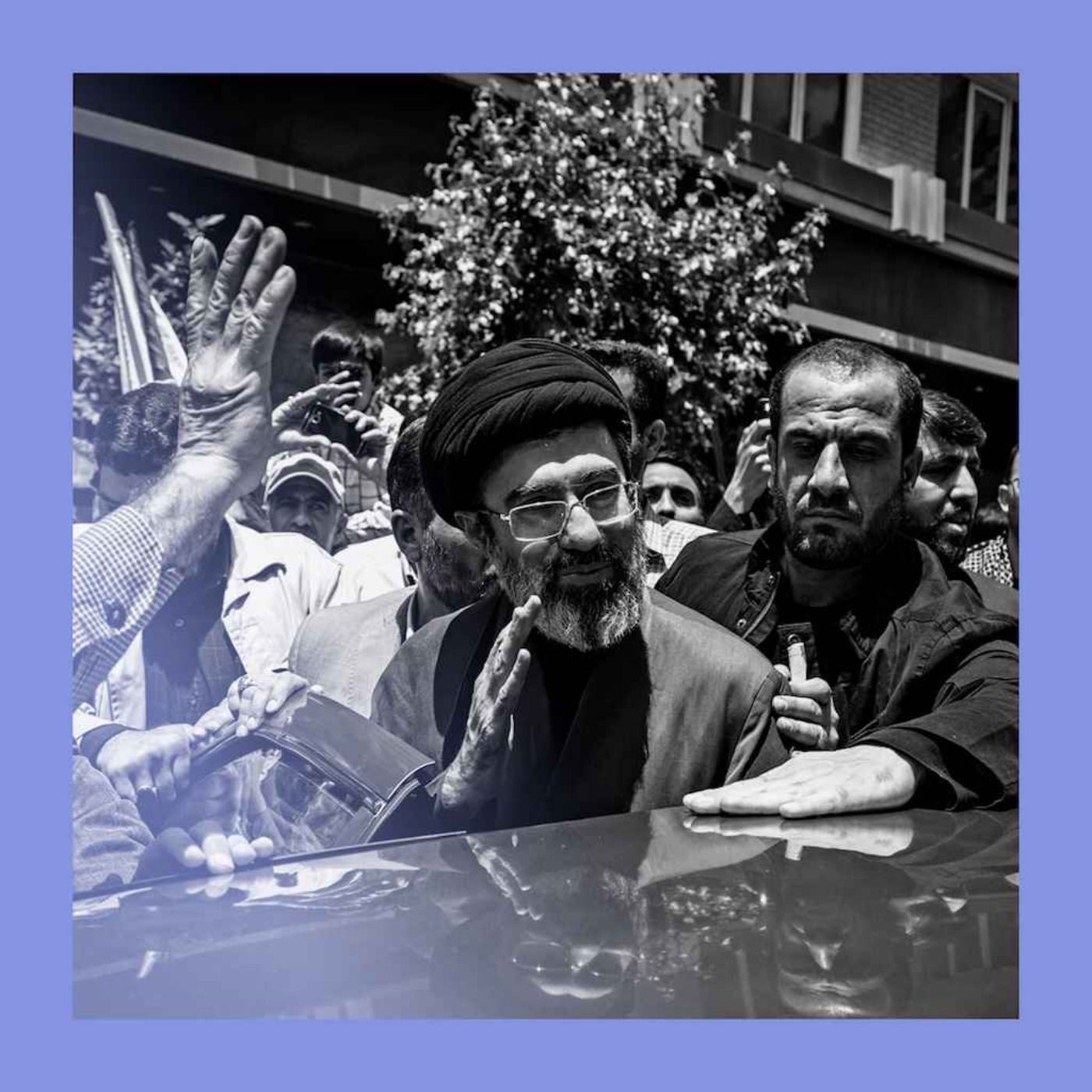
The choice of Mojtab al Khamenei as Iran's new supreme leader is a signal of continuity rather than change.
- [02:33]
Rosie Blore
Greg Karlstrom, our Middle east correspondent, is in Riyadh this morning.
- [02:38]
Greg Karlstrom
The regime intends it to show that it is still intact and it is not willing to bend. But I think it's also going to be taken by many Iranians as a signal that their government is simply incapable of any sort of change or reform.
- [02:54]
Rosie Blore
So how much do we actually know about this new supreme leader?
- [02:58]
Greg Karlstrom
We don't know much about him. He is a reclusive figure who worked for a long time in his father's office, but in a sense never really held a proper job. We do know that he is close to the Islamic Revolutionary Guard Corps, the regime's Praetorian Guard. And he's a quite influential figure behind the scenes in what's known as the beit, the office of the supreme leader that his father inhabited for decades. But beyond that, we don't know much about his political views. He hasn't spoken much in public. His clerical credentials are rather lacking. He's not in Ayatollah as the previous two supreme leaders were. He's a mid ranking cleric at best. So when it comes to matters of theology, his views also somewhat a mystery. The sense in Iran is very much that he's going to be a hardliner, cut from the same cloth as his father, if not even more hardline. But exactly what he wants to do with the office of the Supreme Leader, we really don't know.
- [03:57]
Rosie Blore
What does the choice tell us about how the regime is actually coping with the attacks?
- [04:02]
Greg Karlstrom
Again, I think it tells you that the regime wants to show that it's business as usual and everything is still functioning and that they are not in the mood to moderate or bend the knee to the United States or to their own people. The choice of Mujtaba is going to be very unpopular with Iranians, not just because his father was deeply unpopular, but even for regime supporters, the idea of dynastic rule is unpopular. Many regime supporters think, did we really overthrow a monarchy in 1979 just to replace it with another monarchy? And so his popular support is going to be lacking. But the regime doesn't care about that. It wants to signal that it is still intact and still in charge. I think in practice, it's an open question how much power, how much control most of us is actually going to have. This is a moment when Iran is navigating a transition in wartime, when most of its leaders are in hiding, they're struggling to communicate with one another, and there are power struggles playing out behind the scenes where various factions are trying to take charge right now. So nominally, most of us is now now the Supreme Leader of Iran. He's meant to be in charge of everything. But I think in reality, it's going to take him a while to exert his authority, and you're likely to see the Revolutionary Guard and other camps within the regime really pulling the strings.
- [05:26]
Rosie Blore
And what has been the US Response to his appointment?
- [05:29]
Greg Karlstrom
Donald Trump is not happy. He previously described most of us as a lightweight and someone who was an unacceptable choice for Supreme Leader. He's talked about wanting to have a role himself in the selection of the Supreme Leader, as if this is the Miss Universe pageant or something, which he used to run. He hoped going into this war 10 days ago that he might find some regime insider that he could cut a deal with, the way he did with Delsey Rodriguez in Venezuela. That hasn't happened yet. There have been no signs of prominent regime figures breaking off and engaging in serious talks with the United States. And I think the fact that most of us has been chosen as the supreme leader is a very clear signal that the regime doesn't want to make that sort of a deal and that Trump is going to be frustrated.
- [06:17]
Rosie Blore
And, Greg, it's been a busy weekend. What other shifts have we seen in this conflict?
- [06:22]
Greg Karlstrom
We've seen increasingly over the past few days, both America and Israel on one side and Iran on the other, aiming at vital infrastructure across the region. Overnight Saturday into Sunday, there were Israeli strikes on fuel depots in Tehran and then in another city to the west of the capital, that's created just apocalyptic scenes, flames shooting into the night sky. When the sun came up on Sunday morning, it was basically dark in Tehran because there was so much smoke hanging over the city that the sunlight couldn't pierce through. People spent the day hiding from toxic fumes inside of their homes. And then we've seen similar escalation from Iran in its attacks on the Gulf states, which have continued hundreds of missiles and drones being fired every day. And Iran more and more seems to be aiming at their energy supplies and their vital infrastructure. Dozens of drones fired at a major oil field in Saudi Arabia. On Sunday morning, there was a strike on a water desalination plant in Bahrain, which is obviously a huge concern because Gulf countries rely on such facilities for most of their drinking water. And then on Monday morning, another drone attack in Bahrain, this one on the country's main oil refinery, which injured dozens of people and led Babco, the state oil company, to temporarily pause production. So this looks to be shifting into a phase where it is an economic war, it is a war on critical infrastructure. And it's going to be a test to see which side can withstand more of that pain.
- [07:57]
Rosie Blore
So if we're shifting into a new phase, what else can we expect to see?
- [08:01]
Greg Karlstrom
I think more of these sorts of attacks on energy, on power plants, water desalination infrastructure. I think for both sides, they went into this war thinking that they might be able to achieve a quick victory. Trump thought that the regime might cut a deal, and the Iranians thought if they caused enough damage in the Gulf states that the monarchs there would demand that Trump end the war. And neither side has been successful. The Gulf states, instead of urging Trump to end the war, the Iranian strikes have hardened their view of the regime. And many of them are privately telling Trump that he needs to finish what they started. And so I think we're going to see more escalation on both sides. We've watched these wild spikes in oil markets over the past couple of days. With oil Prices now above $100 a barrel fears that it could go even higher. Goldman Sachs projecting that Maybe it hits $150 a barrel. There seem to be some Iranian officials who think this strategy of targeting the Gulf states is a mistake. We heard over the weekend from Masoud Pizzaskian, the president who apologized for those attacks and said that he had ordered a halt to them. The problem is no one in Iran listens to the president who has complained for years now about being and sure enough, we saw in the hours after he supposedly issued that order, continued attacks on everything from oil fields and desalination plants to the international airport in Dubai.
- [09:22]
Rosie Blore
So, Greg, does this all come down to who blinks first?
- [09:26]
Greg Karlstrom
I think it does. And it's a risky calculus for everyone involved. The politics of it are quite complicated. I think for Donald Trump, he has midterms coming up in November and this war is already unpopular. The Gulf states, they've kept the stiff upper lips so far. And I think if this goes on for a period of a few weeks, they can endure the pain. But if this becomes a months long conflict, the economic damage, the reputational damage is going to accumulate. There's already been some grumbling from businessmen in the Gulf about what this means for their bottom line and also grumbling from citizens who are enduring days and days of drone and missile attacks. How long can Gulf monarchs remain resilient? And then for Iran, if it keeps escalating, it has to bear in mind that its foes can escalate in kind. Not America and Israel. Saudi Arabia has already threatened to join the war if Iran carries out a strike that seriously damages its oil industry. Other Gulf states have set their own red lines around things like desalination infrastructure. So there's a risk here for Iran that yes, it can impose a lot of pain on its enemies, but they can do the same thing. And a regime in a country that has been through decades of economic mismanagement and sanctions and environmental crisis may not have as much capacity to be resilient as the regime is hoping.
- [10:46]
Rosie Blore
Greg, thank you very much for talking to me.
- [10:49]
Greg Karlstrom
Thank you, Rosie.
- [11:06]
Bill.com Advertiser
This economist podcast is sponsored by Bill, the intelligent finance platform that helps businesses and accounting firms scale with proven results with AI powered automation. Bill isn't just moving money, they're simplifying financial operations. For nearly half a million customers, Bill has securely processed over a trillion dollars in transactions. That's proven infrastructure. Ready to talk with an expert? Visit bill.comproven and get a $250 gift card as a thank you. That's bill.comproven terms and conditions apply. See Offer page for details.
- [11:41]
Rosie Blore
Here's how to stay alive longer so
- [11:42]
Greg Karlstrom
you can enjoy Boost Mobile's unlimited plan
- [11:44]
Christian Wilson
with a price that never goes up. Do not mistake a wasp nest for a pinata. Stay alive and switch now at boost mobile.
- [11:51]
Greg Karlstrom
After 30 gigs, customers may experience slower speeds. Customers will pay $25 a month as
- [11:54]
Christian Wilson
long as they remain active on the
- [11:55]
Greg Karlstrom
Boost Mobile Unlimited plan. The Trump administration is waging a wholesale assault on US Science, an effort that threatens the country's economic development.
- [12:11]
Rosie Blore
Well, the president says he's repealing a long standing scientific finding that greenhouse gas
- [12:16]
Greg Karlstrom
emissions endanger human health.
- [12:18]
Daniela Raz
It means polluting international aid to veterans benefits. But one area that Donald Trump and his appointees have been particularly keen to cut has been scientific research that has
- [12:29]
Rosie Blore
sparked fears the Trump administration has been upending American science. In the past year, thousands of grants have been canceled and billions of dollars withheld from researchers. That assault has provoked a rare reaction from Republicans in Congress who've rejected $30 billion in proposed cuts. But the threat to American science persists.
- [12:53]
Daniela Raz
So the mood in the science community has been really anxious in the past year.
- [12:58]
Rosie Blore
Daniela Raz is a US Correspondent and data journalist at the Economist.
- [13:04]
Daniela Raz
What's happening in America does really matter because it's a kind of center of gravity for global science research. Funding has been cut and trust in the entire enterprise is really being eroded.
- [13:17]
Rosie Blore
So just talk me through the nuts and bolts of what's actually happened. What does the administration propose to do with scientific research?
- [13:25]
Daniela Raz
So every administration, when they enter office, they will change their scientific priorities. That part is not unusual. But at the start of last year, the administration proposed these really unprecedented cuts to almost every single scientific agency. Just as an example, they wanted to reduce the nih, which is the National Institutes of Health, by something like 40%. They wanted to cut a ton of centers at the nih. They even suggested cutting portions of some agencies entirely. So in Congress, Republicans, not just Democrats, really pushed back on this. So lawmakers and the budget they passed early this year, they really preserved the NIH's structure. They even nudged some budgets up for some scientific agencies. They maintained funding for the National Science foundation, which is a pillar of the American scientific enterprise. They maintained funding for NASA. And that was just a really important move by Congress.
- [14:24]
Rosie Blore
So it sounds like things actually might be getting better after all this anxiety and indeed crisis for funding somewhat.
- [14:31]
Daniela Raz
Not entirely. So Congress did insert some long term safeguards into the bills that they passed. The spending bills included tighter language that really specified how certain funds should be used, so that is meaningful. But the protections aren't uniform. Some especially politically controversial or sensitive areas like renewable energy research and vaccines are still very exposed. And so even though headline budgets are preserved, there's still this instability and there's still cancellations at the program level that is still having real effects.
- [15:11]
Rosie Blore
Okay, so let's take those concrete examples of areas that have really been damaged. What's happened with renewable energy research to start with?
- [15:20]
Daniela Raz
So in the January budget, funding for renewable energy research within the Department of Energy was cut sharply. Solar research by something like a third. At the same time, research into coal swell by something like 260%. In addition to those funding cuts, there's still been a lot of institutional disruption. So roughly 200 advisory committees across government have been terminated, suspended or delayed. And those committees are committees of mostly outside experts that advise the government on all sorts of technical matters. At the Department of Energy and Health Departments, something like two in five committees were inactive.
- [16:03]
Rosie Blore
So that all sounds quite abstract. How does this really ultimately affect research into renewable energy?
- [16:10]
Daniela Raz
We still don't know the full consequences of what's happening right now. But late last year, the administration canceled something like 7.5 billion in department of Energy research funding. That had a lot of serious repercussions for labs across the country that deal in renewable energy research. I spoke to Michael McGee at the University of Colorado. He studies solar power. He had an 8 million federal grant. In October 2025, it was cut. He's now on the precipice of maybe having to close his lab. And in his department there are about three other professors in that same situation. So that's a very tangible effect from what happened just last year. And that reduction in funding is nothing compared to what they passed this January.
- [16:55]
Rosie Blore
And Daniela, you also mentioned vaccine research.
- [16:59]
Daniela Raz
So the Health Department removed last year at least $1.2 billion in grants aimed at developing MRNA technology. There have also been a lot of structural changes already in vaccines. There are basically four vaccine committees that advise the government and those have each been affected. They've been either dismissed, suspended, they've held perfunctory meetings that don't really cover any serious business this year. Also, the chair of one of the most important vaccine committees said publicly that he does not like established science. And the Health Department also reduced the list of recommended childhood vaccines from 13 down to 7. And that was done without any of the in depth analysis that's usually done when a decision like that is made. And just for reference, the last time a disease had its vaccines removed was in the 1970s for smallpox. And the last known American case of smallpox occurred two decades before that.
- [18:00]
Rosie Blore
How does all of this ultimately affect the lives of Americans?
- [18:05]
Daniela Raz
We're already seeing some worrying signs. So America's experiencing its largest measles outbreak in decades. Most of that is probably caused by vaccine hesitancy that existed before the second Trump administration. But we know for sure that RFK Jr. As health secretary, and the Trump administration more broadly, is doing a lot of things to encourage more vaccine hesitancy. So we can assume that that will only get worse. Beyond health damage from measles, it's also quite an expensive public health problem. It can cost something like 150,000 dol. $50,000 to respond just to one measles case. It's a bit harder to quantify the longer term consequences of cutting research funding. But we know that MRNA technology could be transformative, not just for pandemics, for cancers and all sorts of diseases. The boss of Moderna has already said that his company will invest less in all sorts of clinical trials because it's clear that federal support for this has waned. And then, I think more broadly for Americans, there's the deeper problem that this all really fosters mistrust in America's scientific bureaucracy. You know, in the past, distrust of science was generally misplaced, but the danger now is that all of this instability and this latent politicization will make some of that mistrust almost justified. And that is probably one of the most damaging legacies.
- [19:31]
Rosie Blore
Daniela, thank you so much for talking to me.
- [19:33]
Daniela Raz
Thank you for having me.
- [19:37]
Rosie Blore
And you can hear more about the Trump administration's plan to make America healthy again in a recent episode of Checks and Balance, our weekly U.S. politics show. The link is in the show notes you'll need to be a subscriber.
- [20:06]
Christian Wilson
A standard choir is divided into four voice types in this day and age. Those are the soprano, alto, tenor and bass, going from top to bottom. My name is Christian Wilson. I'm the director of music at Keble College in Oxford University. The basses would be expected perhaps to sing from a low D or E, almost two octaves below the middle C or D. On a piano, the tenors usually about a fourth or a fifth higher. Their top range might be up on an A, so really quite high. And of course, it's difficult up there to have control unless you have the kind of voice that enables you to do that. Of course, tenors aren't expected to sing those lower notes that the basses sing.
- [21:06]
JP
Hi, I'm jp. I'M a tenor in Keeble College Chapel Choir. Yeah, there were four of us today. One of us is away, you know, we've just got the five of us on a good day and sometimes it's down to three when one of us is ill or one of us can't make it, you know, it's. It's a big impact on the choir, so there is kind of that pressure. And currently we're five tenors in the choir, which is not bad, but obviously the smallest section by far. As to why, I'm not really sure, honestly. I mean, it's a difficult part to sing, but I guess all four parts are difficult in their own ways. It's quite hard to push yourself to sing the tenor inch when you're younger. I mean, my singing teacher, when I was quite young, when my voice had just broken, was like, you're a baritone, you won't sing tenor. Luckily, I proved him wrong. I do think it's quite easy to just kind of pigeonhole yourself quite early on.
- [22:06]
The Economist Narrator
It's not just Keble College, Oxford, the world is suffering from a shortage of tenors.
- [22:13]
Rosie Blore
Joel Budd is our Britain Social affairs editor.
- [22:16]
The Economist Narrator
A lack of high men's voices is a growing problem for amateur and church choirs. Given the enormous scale of choral singing, it's really a problem for music in general. The best statistics come from Germany. In Germany, 8% of adults say that they sing in a group or they sing publicly. Women choral singers turn out to outnumber men by about 2 to 1, and we see that same sex ratio in country after country. In Europe, it also seems to be roughly the American ratio, and there was even a study of Nigerian church choirs which found the same two to one ratio. I have sung in four choirs in my life, and all of them, to a greater or lesser extent, suffered from a shortage of tenors. Why there are so few tenors around is a little bit of a mystery. One possibility is that men's voices have become lower as they've grown taller. Another possibility is that men associate low voices with sounding manly, and so they deliberately lower their voices, at least their speaking voices, and that may carry through into their singing voices. The explanation I favour, though, is simply that singing the tenor part in a chorus is quite difficult. It's both physically difficult and it's also musically difficult, because you're neither singing the highest line nor the lowest line. And the tenor line in a choral work is often quite alarming. It jumps around. The other thing about a tenor voice is that it's a trained Voice, it's something you learn to get better at. If a man who hasn't been trained just opens his mouth and starts singing, he's probably a baritone of a high bass, but not really a tone. So to become a tenor takes work.
- [24:18]
Christian Wilson
Hi, I'm Zach. I sing tenor at Keble College Choir. It requires a specific technique that needs to be trained, definitely. I think the natural voice sits somewhere a bit lower than what a tenor range would be, and so it requires good technique, otherwise you just wear yourself out. It's not sustainable. Like for many tenors, I was a baritone in my teenagers and the choir I was in had very few tenors, so I was forced to sing tenor too. And then I think, you know, over the years, your voice just develops and I just ended up singing more and more. Tenor.
- [24:59]
The Economist Narrator
Choirs are doing various things to try to cope with this shortage of tenors. Quite a common solution is that some women, especially older women, sing the tenor part that used to be really condemned and it no longer is, thankfully. The problem is that conductors don't see female tenors as a perfect substitute for male tenors. Another thing that choirs are doing is they are hiring people, semi professional singers, who can sing the tenor part. And so you'll see advertisements for somebody to come and join a choir for the final rehearsal before a performance and then for the performance itself. Those people are known as stiffeners or ringers. And the final thing choirs are doing is they're picking music that just doesn't have a tenor part in it at all. It's a really difficult problem to fix. One thing that would help a lot is if schools focus more on getting people to sing.
- [25:58]
Christian Wilson
What we really need to focus on in this country is musical education at a young age, encouraging young people to sing as a means of expressing themselves. But also it's a wonderful way of learning skills, of developing everything from leadership skills to camaraderie and communication skills. I myself was a chorister at Westminster Abbey from the age of 7 to 13, and we sang around 28 hours of music a week there.
- [26:26]
The Economist Narrator
One thing that happens to boys around the time their voices break is that they often stop singing. If you're a boy, your voice changing quickly makes it quite hard to sort of carry on singing. As your voice lowers, you go from singing the lead line in a song to singing a harmony part, which they're not used to. Singing in a choir makes a lot of people really very happy.
- [27:01]
Christian Wilson
Singing allows you to express the full range of human emotions. You can imagine that wailing in a large building is something you might not do under normal circumstances, but of course, within the context of a choir, and in a slightly more controlled manner than a complete whale. It's a spectacular way to really listen to what's going on around you, but also in a mission to unify the expressive meaning of the music as a whole.
- [27:42]
Rosie Blore
That's all for this episode of the Intelligence. See you back here tomorrow.
- [28:05]
Bill.com Advertiser
Over 90 of the top 100 US accounting firms trust Bill to simplify and secure bill pay. That's proven financial infrastructure built on over a trillion dollars of secure payments. Visit bill.com proven for a special offer.