Loading summary
Transcript65 lines
- [00:00]
Advertisement Narrator
Running a business is hard enough. Don't make it harder with a dozen apps that don't talk to each other. One for sales, another for inventory, a separate one for accounting. That's software overload. Odoo is the all in one platform that replaces them all. CRM, accounting, inventory, E commerce, hr. Fully integrated, easy to use and built to grow with your business. Thousands have already made the switch. Why not you try Odoo for free@odoo.com that's odoo.com if you're the purchasing manager at a manufacturing plant, you know having a trusted partner makes all the difference. That's why hands down, you count on Grainger for auto reordering with on time restocks, your team will have the cut resistant gloves they need at the start of their shift and you can end your day knowing they've got safety well in hand. Call 1-800-GRAINGER Click grainger.com or just stop by Grainger for the ones who get it done.
- [01:06]
Jason Palmer
The economist.
- [01:14]
Rosie Blore
Hello and welcome to the Intelligence from the Economist. I'm Rosie Blore.
- [01:18]
Jason Palmer
And I'm Jason Palmer. Every weekday we provide a fresh perspective on the events shaping your world.
- [01:28]
Rosie Blore
Who do you consult when making big life decisions? Whether to take a new job, who to marry, time to get pregnant. Well, our correspondent would like to encourage you to consider a new oracle for an annual checkup. Your economist will see you now.
- [01:44]
Jason Palmer
And you know what I'd do if I hit the lottery? I'd get a snazzy private chef. Partly as teacher, but mostly just to feed newly rich, newly lazy me. It'd be easy to find one too. They're plastered all over social media, spilling the secrets of other lazy rich folk.
- [02:05]
Rosie Blore
But first.
- [02:14]
Tom Sasse
On a sunny day a few weeks ago, I visited the port of Felixstowe, about an hour east of London. It's Britain's busiest port. 11,000 containers pass through it each day, and the whole area around it is a maze of industrial units and packing facilities with giant stacks of containers and lorries bustling to and throw. But I was there to find out how the police hunt for stolen cars.
- [02:40]
Rosie Blore
Tom Sasse is our Britain Public Policy editor.
- [02:45]
Tom Sasse
Guiding me around was Adam Gibson, the lone police officer tasked with finding vehicles stashed away in the shipping containers before they get exported. He showed me around a giant marquee where he inspects suspicious cars and then took me down to the port itself where a ship was being ready to leave. We watched as the giant gantry cranes stacked containers in the ship's bays.
- [03:06]
Adam Gibson
We could be Standing now, there could be three or four boxes full of stolen cars just there. Probably at least one in those stacks. How would we know? It's manifested as teddy bears. Someone said to me once, if these things were made of glass, our job would be so much easier. But it wouldn't because they just packed mattresses around the outside and shit fridges, wouldn't they? They just put the cars in the middle, you know, they'd always have a way of doing it.
- [03:31]
Tom Sasse
Adam showed me a few shiny SUVs that had been stolen and explained how thieves are increasingly using sophisticated methods.
- [03:38]
Adam Gibson
Where it really changed was they brought in all this stuff to make it convenient for the customer. So all your kids, keyless entry and all that. Keyless start.
- [03:48]
Gavin Jackson
Yes.
- [03:48]
Adam Gibson
It's lovely. That all brings vulnerabilities. What people need to look at cars and say is those cars aren't just cars, they're computers on wheels, basically. And they're being hacked. That's literally what it is. The reason they're getting stolen is because they're being hacked.
- [04:06]
Tom Sasse
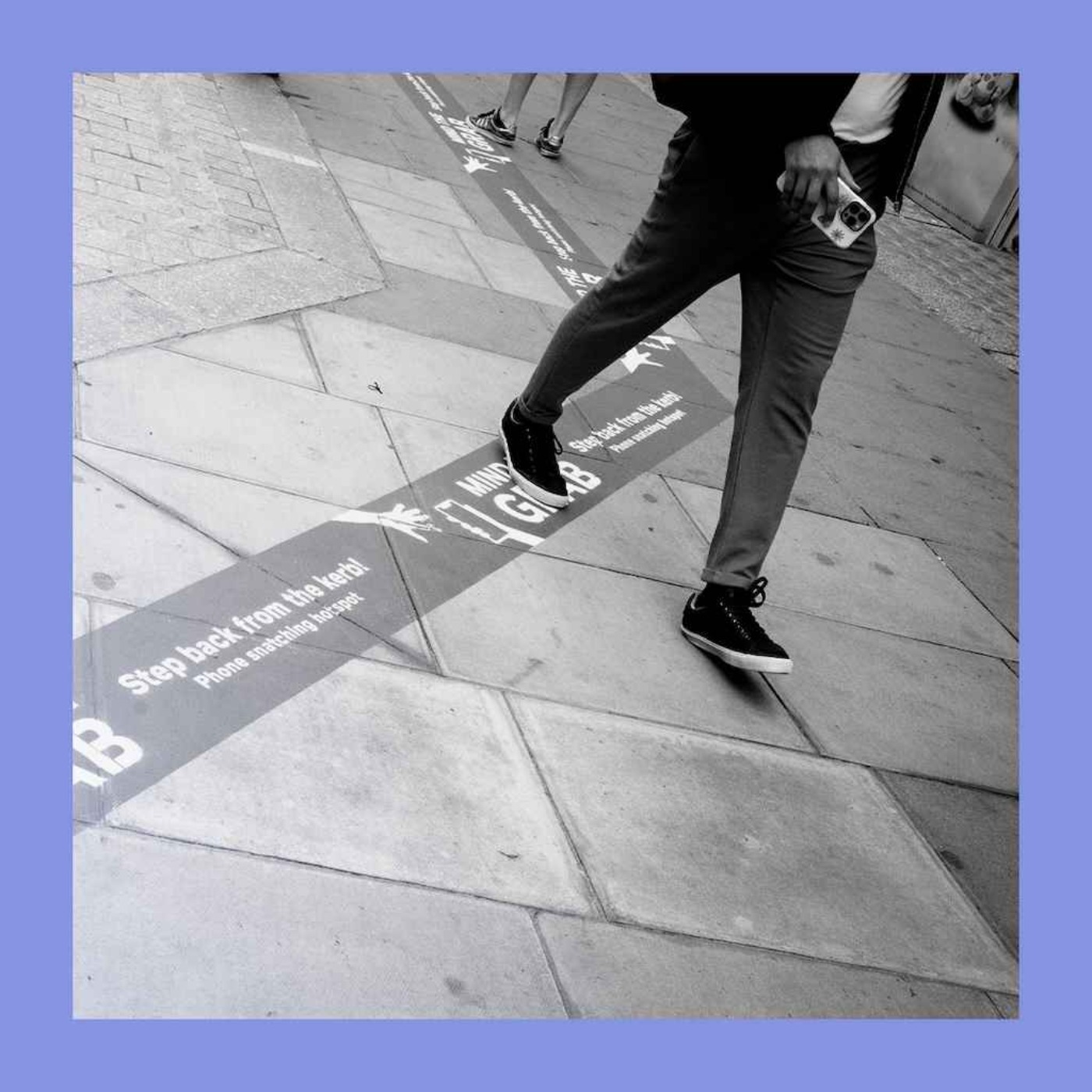
The stolen cars that Adan doesn't intercept will effectively disappear as soon as the ship leaves port. Many are ending up in Africa and the Gulf. And it's not just cars. This export business also lies behind the boom in phone thefts which largely head to China. As countries in Africa and Asia have become richer, demand for the products common on the streets of the rich world is growing. The result is a flourishing criminal enterprise that we've dubbed Grand Theft Global.
- [04:36]
Rosie Blore
Tom, it's sounding very dramatic. Just how severe is this problem?
- [04:40]
Tom Sasse
It's not a new thing entirely. People have nicked things and smuggled them across borders for a very long time. What is new here is that it's really globe spanning and it's underpinned by a rather sophisticated criminal supply chain. What is also new is that we're seeing that Britain has become unfortunately something of a world leader in this new enterprise. Both on cars, where we've seen a 75% increase in vehicles being stolen on Britain's streets in the last decade. A lot of those being exported around the world, but also on phones. London is the phone snatching capital of Europe. 70,000 phones snatched in London last year. A lot of those are ending up in China. So this is really taking off in Britain, but we think it's likely to grow elsewhere.
- [05:28]
Rosie Blore
And why Britain? Why are things so bad in the uk?
- [05:31]
Tom Sasse
If you look at it, quite a lot of what's behind Grand Theft Global are factors that we see elsewhere. So it's having a Lot of expensive cars and phones, what experts would call a satchel saturated consumer market. It's also weak export controls or checks on exports. So actually the vast majority of the effort goes on checking what comes in. What goes out barely gets checked. The reason why it might be taking off in Britain in particular, we can speculate one might be that London has been a hub for criminal innovation in the past. So it's a place where you have quite a lot of organised crime, you've got a lot of wealthy people, you've got high inequality, you've maybe got not a particularly effective police force. That means that we get these sorts of criminal innovations emerging in London, but then they spread elsewhere. The police in Britain only solve 5% of all crimes and it's only 2% of all vehicle crimes. So in a sense, there's very little deterrent for the people doing this.
- [06:25]
Rosie Blore
I thought that cars had become harder to steal since they became effectively giant computers. So what's going on there? How do you steal a car?
- [06:34]
Tom Sasse
In the 90s, car manufacturers were made to introduce immobilisers and that led to a long decline in rates of car theft. It became much, much harder to hotwire a vehicle that was essentially no long possible. The model now is completely different. And actually, it's interesting you mentioned computers. That's what's introduced a lot of the vulnerabilities that are now being exploited. So at Felixstowe Port, I was shown cars that had been broken into, where thieves will plug an electronic device through the tail light and trick the car into opening by sending messages to the computer system from the tail light. The other thing that's interesting about this new model of car theft, I think, is just the sophistication of the supply chain. So a bit like with the phone theft, one gang will steal the car, they'll then sell it on to another gang who handles the logistics involved in export. That often will then involve a third party to help with fake paperwork or masking the vehicle. Sometimes it will be taken to what's called a chop shop, where it will be chopped up. I saw these cars that were just cut into thirds very quickly. And also we're seeing rental cars being targeted, so things like AI being used to develop very, very convincing fake paperwork. The gangs can then take to a rental company, get a car, put it into a box and export it. And this whole process, actually, from the point of theft to a car being in a container on the back of a boat, is sometimes happening in a day. So it's really difficult for the Police.
- [07:54]
Rosie Blore
To respond to and on phone thefts. We've talked before about phone snatching on the show, but what insights did you gather when you were doing this reporting?
- [08:02]
Tom Sasse
A bit like with the car theft picture, there's been this evolution of the way thieves have responded to what manufacturers have done. So manufacturers introduced security measures in phones, things like biometric id, face recognition, which made it much, much harder for thieves to get into a phone that was locked. But what that's led to is a big rise in snatch thefts. So essentially, people will come up, often from behind on an electric bike. They'll try and grab the phone out of someone's hand, critically while it's unlocked. They'll then very quickly disable the tracking and try and switch over the details before that phone can be tracked either by the user or by the police. So you see this evolution of the way thieves operate, similar model to the cars. So your thief on the street selling onto a fence, it's then being wrapped in tinfoil, put on the back of a container ship. Most of those phones then ending up in China, in one market in Shenzhen, which, interestingly, is a place where many of the phones are being made in the first place. And what you've got there is a lot of people with the skills to maybe unlock those phones using different methods, but also to break apart those phones if they are locked and sell them on for parts. Actually, some of those screens which are taken when the phones are broken up for parts are then sold back to the uk. So if you go to a secondhand repair shop in London, they're likely to import their phone screens. If you've just broken your phone screen, those are likely to come from Shenzhen. So there's this kind of circular model where it's sort of imported, exported again and then brought back.
- [09:30]
Rosie Blore
So what can be done to counter Grand Theft Global?
- [09:34]
Tom Sasse
I think it's quite hard. One idea is to put pressure on the destination countries. I think realistically, that's not going to work, have a great incentive to tackle this and they might not have the capacity, particularly in the case of some of those African countries where these cars are going. Potentially manufacturers you can put a bit more pressure on to make them prioritise security measures. Another, more promising idea is to stop this at the border, so you can try and get freight companies to know their customers a bit better and actually require a bit more id. When someone is booking a container. At the moment, it's really quite easy for a gang to book a container, but I think the main thing actually is policing. And really policing has not prioritised these crimes, they've not seen them as high harm and they've not given a lot of resources to it. So I think you could find ways for the police to clamp down on some of the new methods so things like unrestricted electric bikes, the type of kit that's being used for break ins. But really the big shift is to see this as an organized global enterprise, not some low level crime.
- [10:36]
Rosie Blore
Tom, thank you very much.
- [10:38]
Tom Sasse
Thanks Rosie.
- [10:49]
Weight Watchers Narrator
Weight Watchers now offers access to affordable.
- [10:51]
Caitlin Talbot
GLP1s Weight Watchers has everything I need from weight loss medications to nutrition support and help with my side effects.
- [10:59]
Weight Watchers Narrator
With our program, our members are losing more weight with expert nutrition and side effects support.
- [11:05]
Gavin Jackson
Weight watchers prescribing GLP1 medications.
- [11:08]
Advertisement Narrator
It's been life changing.
- [11:09]
Weight Watchers Narrator
Better results, expert support, lose more weight, make it last. Get started today for as low as $25 at weight watchers.com holidays mean feasting. From cheddar biscuits to French toast bakes, Herobread has you covered with 0 to 5 grams net carb and high fiber options to ensure your holidays stay delicious and balanced. Like their 3 grams net carb pain au chocolat, Herobread is offering 10% off your order. Go to Hero Co and use code fall25 at checkout. That's fall25 at HERO CO. All figures are per serving of HeroBread contains up to 17 grams of fat per serving. See the product nutrition panels on Hero Co for more information.
- [11:56]
Gavin Jackson
You wouldn't be the first to put off your annual checkup after what feels like an eternity in the waiting room flicking through dog eared copies of the world's finest publications. Hmm. Indonesia is still at a crossroads. A buzzer sounds and your name appears on screen. You're called through.
- [12:15]
Tom Sasse
Mr. Jackson, your economist will see you now.
- [12:20]
Rosie Blore
Gavin Jackson is an economics and finance correspondent.
- [12:24]
Gavin Jackson
The economist John Maynard Keynes once wrote that economists should behave in a manner that would lead the public to think of them as humble, competent people, akin to dentists. But what if the profession took his idea both seriously and literally? Could a trip to your economist make your life better? The first question in your annual economic checkup is what seems to be the matter? Income or happiness? Now, there's some good news here. More money doesn't necessarily mean more problems. In fact, more money should generally make you happier. Research at the University of Pennsylvania found that for all but a small minority, well being typically increases right along with income and that there is no upper limit to the trend. Instead of there being a plateau when you earn enough, you keep getting happier as you earn more. Now let's check your vitals. Just as with your doctor, a big factor in your checkup is going to depend on how old you are and what has already gone wrong. A handful of big decisions whether to go to university and what you study, what career you pursue, whether you start a family and with whom are going to matter more than any others. Now, a college education is usually a good bet. In 2020, the British think tank the Institute for Fiscal Studies found that after accounting for individual characteristics and taxation, university leads to a typical bump of about 20% in lifetime earnings. Another factor where you're from, a person's place of birth has the biggest impact on their life outcomes. The 83% of the world's population who live outside of rich countries hold a bad hand. The prescription for that is simple. Move if you can. A paper in 2016 from the Centre for Global Development, World bank and Harvard calculated the benefits of moving from the poor world to America. For a typical 30 year old man with a secondary education, the returns to moving came to about $14,000 a year, adjusting for the different price level. So returns to migration are sky high now, immigration laws, border fences make that easier said than done. But still fewer people move than you'd expect. The psychological ties of family and place are stronger than you might think. Then there's the type of work you do. Although wages do vary widely between occupations, it matters whether you're a banker or a janitor. A rising share of the variation is explained not only by what you do, but by the company for which you work best. Then to get a job at a superstar employer. Unionized companies pay more than their non unionised counterparts. But unions tend to ensure that low performers get paid more, while high performers get paid less. So if you're a high flyer, you might want to opt for the non unionized option. But if you'd prefer the easier life, maybe go for the union. Then there's the big life choices. Getting married, having kids. Now, on the surface, it looks like you should wait to get married later. Marriages are typically more stable, but the timing has little effect on itself. Instead, the pattern reflects the type of people who wait for just the right partner. So if you find them early, no reason to delay. Though if you want kids, the research does suggest it might be better to wait. And in this case, it might not be a matter of who decides to wait and who doesn't. The later a woman's career break, the smaller the impact on her lifetime earnings. Seems like if you get your feet under the desk before you take maternity leave, the costs of doing so are lower. For older patients coming to their economist's office for their annual checkup, there's less helpful advice. Saving for retirement is more valuable the earlier you start. You can save the impromptu refresher on compound interest for another day so older folk do not have so much time to improve their earning power. Taking a career break to go back to school or switching employers may not pay off. Instead, perhaps, focus on becoming happier and less lonely. Instead, get out and meet people. All of this comes with a caveat. Economic research tends to deal in averages. Much of the advice should be generic rather than tailored to the individual. That's much the same for dentists. Their advice brush your teeth, avoid sweets is the same for everyone. But dentists can fix things. And after they've gone wrong, they can drill out decay. They can give you a polish. Economists are limited in what they can do. Maybe they could hand you a big sum of money, but why pay someone to do that if you can do it yourself? To live up to Keynes metaphor, then economists are going to need more than data. They need drills. They need some method of fixing what's broken.
- [16:58]
Weight Watchers Narrator
Here is Diplo shrimp and vegetable curry for his weekly high protein meal prep. I always roast the sweet potatoes for the curry.
- [17:04]
Caitlin Talbot
The world of the private chef is one of culinary fantasy. Brook Bayevsky, better known as Chef bae, spills the culinary secrets of the super rich to her followers on social media.
- [17:17]
Weight Watchers Narrator
Next, it's on to Diplo's pantry and fridge goals to get some of ingredients for a dairy.
- [17:21]
Jason Palmer
Caitlin Talbot is a culture correspondent at.
- [17:23]
Caitlin Talbot
The Economist, but she's not the only one. She is part of a batch of private chefs who are serving up recipes with a side of celebrity intrigue.
- [17:34]
Jason Palmer
Unsure as I am that I want to see in this particular way in which the other half lives, tell me, what am I gonna see?
- [17:40]
Caitlin Talbot
So TikTok private chefs give fans glimpses of huge fridges and record their endless shopping lists and trips to posh grocery stor. Chef BAE says in one of her videos that a client spent $20,000 sending her across the world to fetch their favourite dark chocolate and nuts. Another creator called Saucy Rosie whips up four course menus on yachts in the Bahamas. In the summertime, many private chefs go to the Hamptons, an upscale coastal resort near New York, where they serve seasonal dishes with simple ingredients and a sort of sense of elevated luxury.
- [18:19]
Jason Palmer
Now, do I even want to know what it costs to have One of these chefs taking care of your every culinary whim.
- [18:25]
Caitlin Talbot
So I spoke to an agency called the Culinaistas, who match clients and chefs, and they told me that for an average summer season, it costs $50,000 to have a chef to cook whatever you may desire.
- [18:39]
Jason Palmer
Does that include the food costs or is that just the chef cost?
- [18:41]
Caitlin Talbot
Just the chef goodness. Ingredients on top.
- [18:44]
Jason Palmer
And there are plenty of people who are willing to pay this cost?
- [18:47]
Caitlin Talbot
Oh, yes. And in part thanks to the kind of boom on social media, business is up. The culinistas told me that business in the Hamptons this summer is up 40% on last year, and they've had to kind of extend the amount of accommodation for the number of chefs that they're sending out there.
- [19:04]
Jason Palmer
It's easy to imagine that for some chefs, that's better than the normal chefy grind.
- [19:09]
Caitlin Talbot
Yeah, exactly. And the Culinistas note that when they started the agency, private chefing was definitely seen as something that was sort of inferior to being a restaurant chef. And that has kind of turned on its head a little bit, thanks in part to the pandemic. And also, you know, the rich and famous are seeing these private chefs on their own Instagram feeds, and according to Chef BAE are actually reaching out to her to kind of collaborate, both to have their meals cooked and also to kind of create fun videos. All of this draws in viewers who get a sort of glimpse behind the velvet curtain. The hashtag private chef has been viewed nearly 5 billion times on TikTok. So the industry has definitely benefited from its viral moment.
- [19:53]
Jason Palmer
I guess the question is, why do these rich and famous want that kind of relatively intimate thing as, like, part of their social media feed? Why lift the velvet curtain?
- [20:02]
Caitlin Talbot
Well, exactly. And I think that the really interesting thing about TikTok private chefs is there's nothing really private about them. You know, this is an industry that traditionally you'd go in, you'd sign an NDA and you wouldn't even be able to tell, you know, your close friends who you're cooking for. But I think it's really become a sort of trend. You know, it's still curated, it's controlled. They're only allowing certain elements to be seen. But I think it. It makes them more relatable. They have their own social media feeds where they might be sharing more of this stuff now anyway. And having a kind of private chef who themselves are a sort of public figure, I think allows them to do this in a sort of stylish way.
- [20:40]
Jason Palmer
Mutual brand management with. With a meal on the side.
- [20:44]
Caitlin Talbot
Exactly. And some of these creators have become big stars. Meredith Hayden, who started cooking several summers ago in the Hamptons, released a cookbook which became a New York Times bestseller. She has since quit private cheffing and moved to the Hamptons herself. So a real full circle moment.
- [21:00]
Jason Palmer
And presumably eventually she'll get her own private chef.
- [21:04]
Caitlin Talbot
Well, yeah, even if she could do it better herself.
- [21:07]
Jason Palmer
Caitlin, thanks very much for coming on.
- [21:09]
Caitlin Talbot
Thanks very much, Jason.
- [21:25]
Rosie Blore
That's all for this episode of the Intelligence. We'll see you back here tomorrow.
- [21:48]
Weight Watchers Narrator
While holiday shopping is almost always fun, credit can be confusing. Download the MyFico app now and shop with confidence, knowing that you can stay on top of your credit 24.
- [21:58]
Rosie Blore
7.
- [21:59]
Weight Watchers Narrator
Get your FICO score straight from the people that created it, plus free credit monitoring and a free credit report every month. No credit card required. FICO scores are used by over 90% of lenders, so trust the MyFico app to keep you in the know. Visit myfico.com free or download the MyFico app today.