Loading summary
Transcript82 lines
- [00:00]
SoFi Advertiser
High interest debt is one of the toughest opponents you'll face unless you power up with a SOFI personal loan. A SOFI personal loan could repackage your bad debt into one low fixed rate monthly payment. It's even got superspeed since you could get the funds as soon as the same day you sign. Visit sofi.compower to learn more. That's s o f I.com P-O-W-E r loans originated by SoFi bank and a member FDIC. Terms and conditions apply. NMLS 696891.
- [00:36]
Jason Palmer
The economist. Hello and welcome to the intelligence from the economist. I'm jason palmer.
- [00:47]
Rosie Blore
And I'm rosie blore.
- [00:52]
Jason Palmer
Today on the show, our America at 250 series concludes and how plants use the sound around them. First up though,
- [01:12]
Questioner/Interviewer
Okay, how about a
- [01:14]
Iran-related Commentator
couple of quick questions on Iran?
- [01:16]
Narrator/Reporter
On Iran, Mr. President. Wait, you said that Iran violated the ceasefire. Will they face any consequences?
- [01:22]
Iran-related Commentator
You'll find out.
- [01:26]
Jason Palmer
You'd hardly have known over the weekend there was an Iran war ceasefire in place.
- [01:32]
Iran-related Commentator
I don't like the fact that they took a shot.
- [01:36]
Jason Palmer
Day after day attacks on and from
- [01:38]
News Reporter
Iran, attacks on US Allies Bahrain and Kuwait, an apparent response to US Central Command confirming airstrikes on Iran overnight.
- [01:47]
Jason Palmer
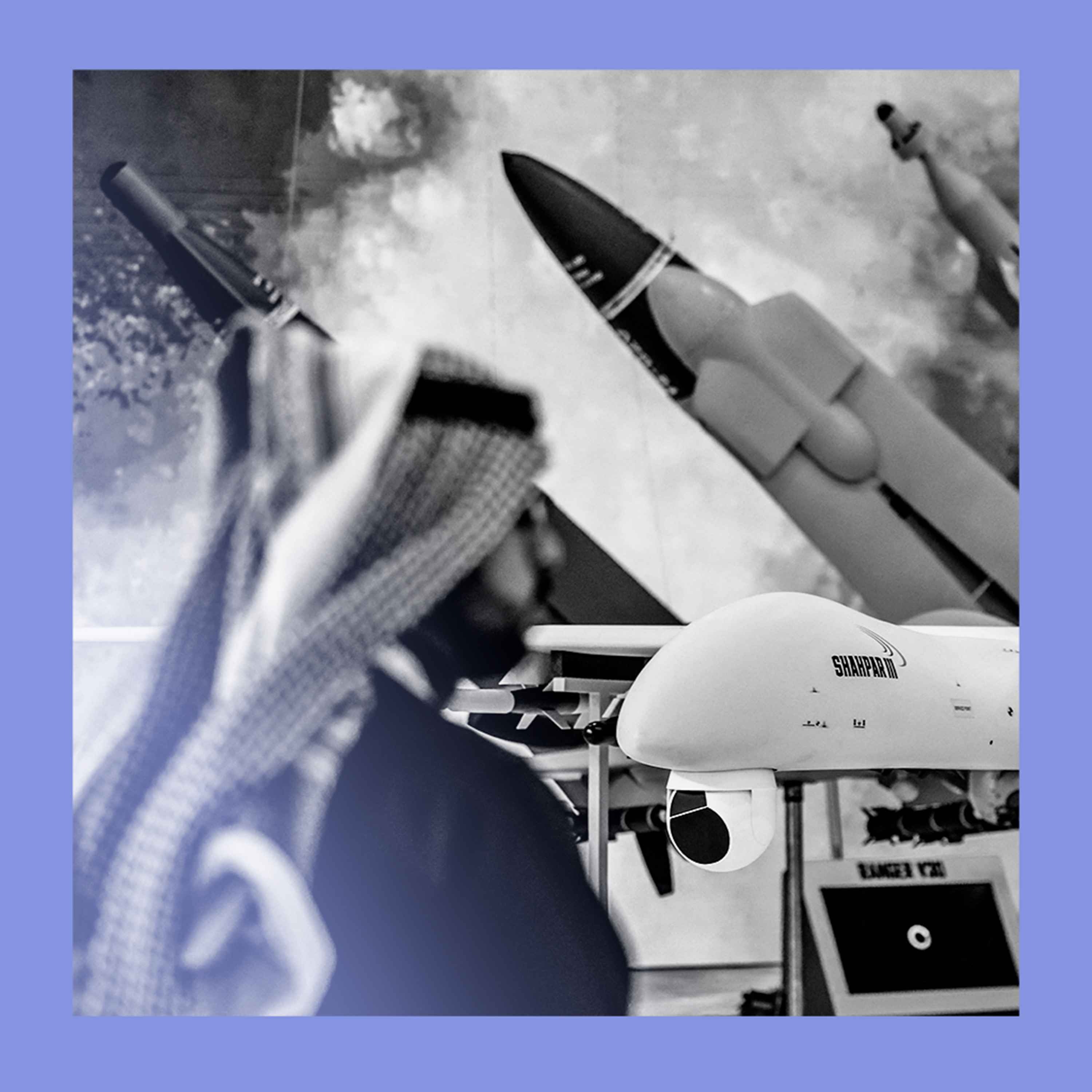
It's also hard to figure out the state of negotiations between America and Iran. American officials said there would be more high level talks in Qatar this week. Iran's deputy foreign minister said yesterday that there wouldn't. In short, it's all still uncertain. And that uncertainty, for Iran and for all its regional neighbors, may be the most potent and lasting harm of this war.
- [02:10]
Greg Karlstrom
The Gulf states aren't total strangers to conflict. They went through the tanker wars in the 1980s. They endured Saddam Hussein's occupation of Kuwait in 1990.
- [02:22]
Jason Palmer
Greg Karlstrom is a Middle east correspond for the Economist.
- [02:25]
Greg Karlstrom
And yet I think in many ways you could argue this is the greatest shock the Gulf has ever been through. Even though the consequences of this war might seem less visible than previous ones,
- [02:38]
Interviewer/Host
the consequences have, on the basis of our conversations over those four months alone, seemed pretty visible.
- [02:44]
Greg Karlstrom
Greg, yes and no. You've had thousands of Iranian missile and drone strikes on Gulf states and they've caused tens of billions of dollars in damage. But mercifully they killed very few people. Compare that to the invasion of Kuwait, for example, when hundreds of Kuwaiti civilians were killed. We haven't seen anything like that this year. And despite the closure of the Strait of Hormuz, even though you could bring almost nothing through for four months, we haven't seen shortages in the Gulf. Countries in this region have spent huge amounts of money to keep shelves stocked and to keep their economies somewhat functioning. So they've managed to blunt the most direct impact of the war for their residents. But this war comes at a time when the Gulf is a very different place than it was in the 1980s or the 90s. Back then, it really was the world's petrol station. Dubai was a sort of sleepy trading town on the coast. It wasn't yet a household name. Saudi Arabia was a dour place that didn't even offer tourist visas. Today, it's something much different. It's a huge player in everything from finance to logistics. Some the world's biggest airlines are in this region, some of the world's biggest sovereign wealth funds. You have millions of expats who have moved here over the years, drawn by low taxes and stability and the opportunity to start businesses and settle down. It's a very different region than it was. But all of that growth, all of that change has depended on the perception that the Gulf is stable and secure. And Iran has damaged that perception.
- [04:18]
Interviewer/Host
By which you mean sort of permanently damage that perception.
- [04:22]
Greg Karlstrom
It depends on how the war ends, if the war has ended. And that depends a lot on Donald Trump. I hate that that is the answer to almost every question in global politics these days, but it's really true here. If America and Iran can get to a lasting deal that ends their state of hostilities, then I think the Gulf could move on from this quite quickly. That perception of risk in the region will dissipate. On the other hand, if the deal falls apart and we see a return fighting between America and Iran, we could see even more destructive Iranian attacks in the Gulf. And obviously that would have far worse consequences. When I talk to people in the region, though, the expectation that most have is that we won't see either of those outcomes. We will see this interim deal remain in effect, but no broader transformative peace between America and Iran. And that is going to leave the Gulf with an elevated level of risk for the foreseeable future. And it's going to leave them with three challenges. They will have to rebuild confidence. They will have to rethink what it means to diversify their economies at a time of elevated risk. And they will have to navigate the geopolitics of a moment where they don't trust each other. And they also have lost trust in America as well.
- [05:37]
Interviewer/Host
And so what's your take on Gulf countries readiness to tackle all three of those things?
- [05:41]
Greg Karlstrom
No one is entirely prepared for it, but you have some countries that are much better positioned than others. I would say at one end of the spectrum is a country like the uae, where first there are no signs that there's been a mass exodus of expats from Dubai or elsewhere. People speak pretty positively about the way the government defended the country from Iranian attacks. So there seems to be confidence within the expat population. They have lots of fiscal firepower to prop up their economy, to offer incentives to try and woo back tourists and business travelers, and they have alternatives to the Strait of Hormuz. They're planning to expand ports and build new pipelines and look for ways to, to bypass the strait. So they're in a much better position than a country like Bahrain, which went into the war with one of the highest debt to GDP ratios in the world, with limited foreign reserves. Those problems have been exacerbated by the war. Bahrain hasn't been able to export oil, which has strained its finances. It's probably going to rely on bailouts from its Gulf neighbors for some time to come now. And so I think it's going to be very difficult for Bahrain to try and grow its economy going forward. And then you have a lot of countries that are somewhere in the middle. And I think what we've seen over the past four months, particularly because those countries don't have alternatives to the Strait of Hormuz, I think it's going to make it harder for them to position themselves as tourism hubs or hubs for business or look for ways to diversify away from hydrocarbons.
- [07:12]
Interviewer/Host
So in a lot of ways, this war has made at least some of these Gulf countries work on changes that were kind of already underway.
- [07:19]
Greg Karlstrom
It's going to speed them up and it's going to perhaps take them in a different direction. I think one lesson for the Gulf from these past few months is they need to invest a lot more money in strategic sectors to try and mitigate this newfound risk that they face. So I think you're going to see a lot of investment in defense, in logistics, building these ports and pipelines and things to bypass the Strait of Hormuz. Food security is going to be a big conversation. Hydroponic farms and other ways to try and grow food. I think you're going to see a lot of money pouring into that and probably less money going into ski resorts in the desert and sci fi cities on the Red Sea coast and the sorts of things that they were focused on before. The other lesson from this, and it's one that I'm skeptical the Gulf states will actually learn is that they need to be more united going forward.
- [08:11]
Interviewer/Host
What do you mean by that?
- [08:12]
Greg Karlstrom
What we've seen over the past few months indeed is that Gulf countries have very different views of Iran. Some want to try and reconcile with it now, others think it's a threat and they're focused on trying to contain it. And they don't trust one another. We've seen even their air defenses over the past few months have not been properly integrated. Despite years and years of pleas from the Americans. Each of the Gulf countries is probably too small and too weak to confront Iran on its own. So this should be a moment where you would think the Gulf gets together and comes up with a unified position and tries to harden its defenses vis a vis Iran. But if past is prologue here, I think it may end up deepening those divisions and we'll see each Gulf country going its own way.
- [08:57]
Jason Palmer
Greg, thanks very much as ever for joining us.
- [08:58]
Greg Karlstrom
Thank you, Jason.
- [09:13]
SoFi Advertiser
Today we'll attempt a feat once thought impossible, overcoming high interest rates, credit card debt. It requires merely one thing, a SOFI personal loan. With it, you could save big on interest charges by consolidating into one low fixed rate monthly payment. Defy high interest debt with a SOFI personal loan. Visit sofi.com stunt to learn more. Loans originated by SoFi Bank NA member FDIC terms and conditions apply NMLS 696891.
- [09:53]
Rosie Blore
As you most certainly know by now, America celebrates its 250th birthday this weekend. In recent months, we've been diving deep into the Economist's own archive to chart American history through the lens of our past coverage. Now our final chapter brings us to the current day.
- [10:22]
Iran-related Commentator
Today there is unprecedented turmoil in our capital markets.
- [10:27]
Narrator/Reporter
Nobody years of risky subprime lending had helped inflate demand for housing.
- [10:35]
Rosie Blore
Annie Crabel is a senior Digital Editor.
- [10:38]
Narrator/Reporter
By 2007, house prices were falling. Soon many borrowers began to default. Mortgage backed securities lost value and banks were hit hard.
- [10:50]
News Reporter
Lehman Brothers is going bankrupt. And financial markets from Asia to Europe are doing their utmost to prevent Monday from turning from dark to black.
- [11:00]
Narrator/Reporter
As banks began to collapse, the financial system seems seemed on the verge of unraveling. The Bush administration proposed a $700 billion bailout, largely an attempt to protect those institutions deemed too big to fail. The crisis triggered the worst global recession since the Great Depression.
- [11:29]
Barack Obama
I stand here today humbled by the task before us.
- [11:37]
Narrator/Reporter
In November 2008, America elected its first black president. Barack Obama seemed to embody what commentators called post racial America. The vast majority of African Americans thought that his election would improve race relations. That was the hope, anyway. Antipathy towards Obama and his policies fueled a new populist movement called the Tea Party, which would reshape the Republican Party. Conservative media amplified the baseless claim that Obama had not been born in the United States, a conspiracy theory that Donald Trump, then a reality television star, enthusiastically supported.
- [12:21]
Iran-related Commentator
It's a real possibility, much greater than I thought. Two or three weeks ago, then he has pulled one of the great cons in the history of politics.
- [12:38]
Narrator/Reporter
In 2012, a 20 year old man armed with a semiautomatic rifle walked into Sandy Hook elementary school and killed 20 young children and six adults before killing himself.
- [12:52]
Barack Obama
The majority of those who died today were children, beautiful little kids between the ages of 5 and 10 years old.
- [13:08]
Narrator/Reporter
School shootings had already become a familiar problem. But the mass murder of children shocked the country and briefly raised hopes that Congress would pass tough gun laws. It did not. The Economist said, if even the slaughter
- [13:27]
Matt Kaplan
of 20 small children cannot end America's infatuation with guns, nothing will.
- [13:34]
Narrator/Reporter
In the decade after Sandy hook, there were 900 shootings on school grounds in America.
- [13:43]
Iran-related Commentator
Ladies and gentlemen, I am officially running for President of the United States, and we are going to make our country great again.
- [14:00]
Narrator/Reporter
When Trump announced his presidential campaign in 2015, few pundits gave him a chance of winning.
- [14:09]
Iran-related Commentator
I'm using my own money. I'm not using the lobbyists, I'm not using donors. I don't care. I'm really rich. I'll show you that in a second.
- [14:17]
Narrator/Reporter
But voters were in an anti establishment mood. He championed a new brand of nationalism that viewed foreign affairs as a zero sum game. He won, of course, and over his first term, he captured the Republican Party. He passed tax cuts that favored the wealthy and appointed three conservative justices to the Supreme Court. That court would later make historic decisions, including overturning Roe v. Wade. During Trump's first term, debates over sex, race and power intensified. The killing of George Floyd by a white police officer prompted another reckoning.
- [15:08]
Questioner/Interviewer
Please. Please. I can't.
- [15:10]
Jason Palmer
Please.
- [15:12]
Questioner/Interviewer
Please, man, please.
- [15:14]
Narrator/Reporter
Citing other instances of racism and police brutality, Millions marched under the banner Black Lives Matter. We were pretty understated in our coverage of COVID 19 when it first appeared in China around January 2020. But as we all know, it was not an understated event.
- [15:49]
Questioner/Interviewer
I'm declaring a public health emergency of international concern over the global outbreak of novel coronavirus.
- [15:59]
Narrator/Reporter
To slow it down, state and local governments imposed sweeping restrictions, which was a lot to absorb in liberty loving America.
- [16:09]
Protester
I will not comply. I will not comply. I will not comply.
- [16:14]
Narrator/Reporter
More than a million Americans died. Trump's handling of the pandemic did not inspire confidence.
- [16:23]
Iran-related Commentator
And then I see the disinfectant, where it knocks it out in a minute, one minute, and is there a way we can do something like that? By injection, inside, or almost a cleaning?
- [16:38]
Narrator/Reporter
Voters turned on him in 2020, favoring instead a veteran Democrat, Joe Biden, for president, despite the fact that he was well past retirement age. But Trump refused to concede, claiming falsely the election had been rigged. That culminated in a rally on January 6, 2021, after which his supporters stormed the Capitol.
- [17:02]
Protester
We want Trump. We want Trump. We want Trump.
- [17:08]
News Anchor
At this hour, our democracy is under unprecedented assault, unlike anything we've seen in modern times.
- [17:17]
Narrator/Reporter
By that time, the Economist already had a podcast.
- [17:21]
Commentator
The intelligence will last a very long time. It really was a watershed moment for American politics, and not in a good way.
- [17:29]
Narrator/Reporter
When Biden took office, he presided over perhaps the most energetic American government in nearly half a century. But in 2024, it became clear to voters that Biden himself was not as energetic as his government. Capitalizing on high inflation, concerns about immigration, and short memories, Mr. Trump defeated Kamala Harris in the race for the White House. In his second term, Trump has doubled down on the policies of his first.
- [18:00]
Commentator
New Orleans and Minneapolis are the latest targets of the Trump administration's federal immigration crackdown. You can see some live images towards
- [18:09]
News Reporter
what President Trump has called America's Liberation Day. He says he will unveil a massive slate of import taxes. An Israeli defense official says the attack has been coordinated with the US and had been planned for months. Smoke can be seen coming from buildings in terror.
- [18:33]
Narrator/Reporter
To paraphrase Ben Franklin, America is a republic if you could keep it. As the country marks its 250th birthday, the great liberal experiment is again under strain. In another 50 years, when America marks its 300th birthday, historians might look back at this moment and judge whether its citizens kept their republic.
- [19:24]
Rosie Blore
We tend to think of hearing as a uniquely animal sense. We certainly know how to make a lot of noise. But scientists have long wondered if plants might be secretly listening in. A study in 2018 claimed that one species of Asian shrub grew larger leaves when exposed to Buddhist chants. Another last year found that the sound of traffic stunted the growth of marigolds. And for plants, as with the rest of us, hearing could prove useful.
- [20:10]
Matt Kaplan
We have evolved in our understanding of how plants interact with sound quite a lot in recent years.
- [20:16]
Rosie Blore
Matt Kaplan is a science correspondent.
- [20:19]
Matt Kaplan
We used to Think that because plants don't have ears, they couldn't hear. But as time has progressed, we have increasingly found that plants most definitely are using sound to gain information about the world around them.
- [20:36]
Rosie Blore
So if plants don't have ears, how are they using sound?
- [20:43]
Matt Kaplan
So sounds are waves, they're energy waves and they cause vibrations. That's why even someone who is deaf can hear. And I put here in quotes bass from a really loud vehicle passing by, because the bass makes you shake. You feel it in your body. Plants have water inside them, and when waves of energy hit them, they vibrate. And plants can detect that. We didn't realize that they were making use of that information, but they do.
- [21:15]
Rosie Blore
So what are they doing with that information then?
- [21:18]
Matt Kaplan
So some of the most interesting research has demonstrated that when plants are being nibbled on by a plant eating insect, they can detect what kind of nibbles they are based upon the vibrations of the nibbler, and they can then respond accordingly. I mean, it's unbelievable the arsenal that plants have at their disposal. They can respond to attack by flushing their leaves with chemicals that make them taste terrible. But more interestingly, in recent years, we've discovered discovered that plants can release chemicals into the air that smell sweet to parasitic and carnivorous insects to come and eat the herbivorous insects that are on the plant. Plants do actually communicate to carnivores and say, hey, yo, I've got these really bad insects on me. Will you come and eat them? And of course, it's symbiotic for the predator because they get a meal, they're alerted by the plant.
- [22:13]
Rosie Blore
So, Matt, if plants aren't just listening, but actually good at listening, are they also speaking in some form?
- [22:21]
Matt Kaplan
So yes, plants do emit noises and they're created by bubbles, usually of air inside the plant's tissues. When different conditions are present, like there not being enough water or the tissues being damaged by infection, the bubbles get released or they collapse. And this causes small shock waves in the surrounding tissues that cause the plant to vibrate. That is what creates the sound. You and I can't hear them, but a microphone put at the right location absolutely can. And they sound like little pops. And what's more is the noises are distinct to different conditions. Virus infection versus drought versus being bitten or chopped.
- [23:08]
Rosie Blore
Feel like you're opening up whole new areas of paranoia for plants to be eavesdropping on us. Aside from the weirdness and amazingness of all of this, why does it matter?
- [23:20]
Matt Kaplan
Well, it raises all kinds of interesting possibilities. You know, farmers could put microphones in their field and listen into their crop and have that fed to a computer and have the computer alert them. We have these plants in this sector of the field that are suffering from, for example, mosaic virus, or this crop here is suffering from drought. Also, if you can communicate to those plants via sound, that's a really cheap way to potentially get your crops to do a specific thing. Right now our main go to for trying to keep pests off of wheat is to spray the wheat with pesticides. And we know from experience that those pesticides have knock on effects on you, me, our children. But if we have the option to shape a field by causing the plants to hear herbivores coming for them or to behave in a manner that leads carnivores to come and protect them, these are mechanisms that would not change the chemistry of the plant in a manner that makes us ill, but potentially make the plant a lot less interesting to the herbivores. So it's early days, it's the wild west in botany with this kind of stuff. But it's starting to show promise for a mechanism of changing the way we farm in a good way.
- [24:39]
Rosie Blore
Matt, thank you so much.
- [24:41]
Matt Kaplan
My pleasure, Rosie.
- [24:45]
Rosie Blore
And thank you also to all our plant listeners out there.
- [25:04]
Jason Palmer
That's all for this episode of the Intelligence. We'll see you back here tomorrow.