Loading summary
Transcript60 lines
- [00:00]
AAA Advertiser
Why get aaa? Because bad roads, bad tires and bad luck. Out of gas, locked out or in a ditch. Stuff happens with 24. 7 roadside assistance AAA's got your back no matter whose car you're in. Join today@aaa.com AAA expect something more. Roadside assistance is provided by independent facilities contracted by aaa. Coverage in taxis, limousines and other ride sharing conveyances is excluded. 2024 AAA US markets rack National Surveys offers terms Conditions and policies are subject to change without notice. Visit AAA.com for details.
- [00:30]
Capital One Advertiser
With no fees or minimums on checking accounts, it's no wonder the Capital One bank guy is so passionate about banking with Capital One. If he were here, he wouldn't just tell you about no fees or minimums. He'd also talk about how most Capital One cafes are open seven days a week to assist with your banking needs. Yep, even on weekends it's pretty much all he talks about in a good way. What's in your wallet? Terms apply. See capitalone.com bank capital1NA member FDIC.
- [01:06]
Kinley Salmon
The Economist.
- [01:13]
Rosie Blore
Hello and welcome to the Intelligence from the Economist. I'm your host Rosie Blore. Every weekday we provide a fresh perspective on the events shaping your world. For decades he manned Britain's UFO hotline. In a field of wild speculation and fantasy, he set himself up as a man of calm appraisals. Our obituary's editor remembers Nick Pope, who remained open minded to the very end. But first.
- [02:04]
Kinley Salmon
I was recently able to get a visa to Venezuela after many years of trying and came at the last minute. And so I got up there and traveled around the country and what I found was quite a striking feeling of optimism 100 days on more or less from the raid by American special forces that seized Nicolas Maduro, then president and strongman of the country.
- [02:27]
Rosie Blore
Kinley Salmon is our Latin America correspondent.
- [02:31]
Kinley Salmon
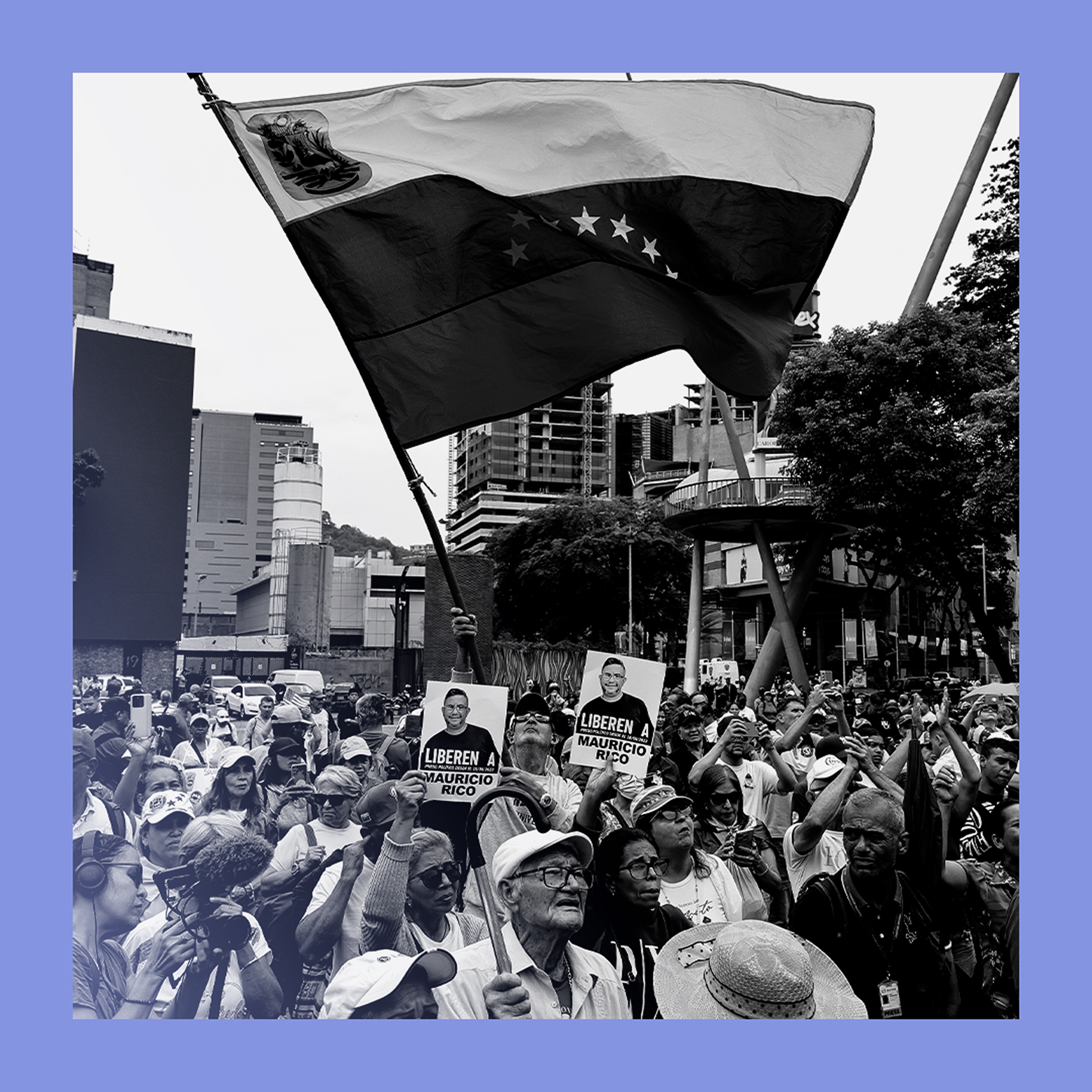
I tried to get out and about. I got out of the capital Caracas to a town called Ocumare del Tui to a political parties meeting and there were hundreds of jubilant people there. They'd come along despite this being a traditionally very pro regime town, and they were all supporters of Maria Corinna Machado. She's the Nobel Peace Laureate and also the main opposition leader. She's out of the country right now, having been in hiding for a long time and then having snuck out in an extraordinary journal to go and receive that peace prize in Norway. And the organizers of this meeting told Menon they'd all either been essentially in prison or in hiding just months ago, before that extraordinary American rank, before that change of reality for every Venezuelan, no one would really have dared to attend these rallies, let alone string up the balloons that were outside the hall. But now, with Nicolas Maduro in custody in New York, there were people on stage, the organizers singing lustily. People told me in the audience, we're no longer afraid. We're full of joy. We're eager to keep fighting. One woman I met there was attending a political event for the first time in her life, and she came along with her daughter, and she told me she's finally attended because she wanted to try to help build a better future for her children.
- [03:58]
Rosie Blore
So just clarify what happened in Venezuela then? Maduro was extracted, but the rest of his repressive regime is still in power, isn't it? So why is there this burgeoning of freedom?
- [04:11]
Kinley Salmon
Well, this is the remarkable thing, really. I mean, there has been 27 years of rule by this socialist turned authoritarian Chavismo movement named after its founder, Hugo Chavez, and they are still in charge. The new leader is Delsey Rodriguez, who is Maduro's deputy. And Trump has left her in charge and essentially said, do what I ask or else. And for the most part, she's doing so. But there is a sense that things are changing. I think this optimism comes from that sense that there's less repression, there's less fear now, despite the regime in some form still being in charge.
- [04:46]
Rosie Blore
And what role is America playing?
- [04:49]
Kinley Salmon
Well, they're very focused on foreign investment, frankly, and on oil, which is Trump's overwhelming priority. So the Americans are pushing for changes to laws on investment, which have already happened. They're pushing for the economy to be liberalized to some degree to advantage American investors. And there's optimism about the economy. I was at the Caracas Country Club, a pretty different world, sparkling pool, tennis courts, and people around that pool were, frankly, pretty bullish. Businessmen think good times are coming, but there's also been pressure, a little bit of pressure, I think, not as much as on the economy, to liberalize politically. Dulcie Rodriguez, the new acting president, has dumped some of Maduro's loyalists. She's even arrested at least one of them. She's brought in some of her own loyalists, but also some technocrats, which is building a little bit of optimism as well. So it's a gradual change, but it is some kind of a change under pressure from the Americans.
- [05:42]
Rosie Blore
So it sounds like you're broadly positive about the direction that Venezuela's going in.
- [05:47]
Kinley Salmon
Well, positive about the direction, certainly, but one shouldn't forget where the country is coming from. I mean, the degree of destruction under this regime of Turismo is hard to overstate. You know, 8 million people, that's about a quarter of the country that have fled since about 2015. That's, I think, the biggest migration of people outside of a wartime ever. So this is a desperate situation to be starting from, and those problems still remain. Venezuela had about 600% inflation this February. It has got the world's largest reserves of oil, hence Donald Trump's excitement about it. But it's had decades of poor management that have made it difficult to extract and profit from that. And there are deep challenges still about liberalizing, about having the rule of law work not just for investors, but for everyday Venezuelans. And the road back is very long. I don't want to understate how challenging what is ahead really is.
- [06:41]
Rosie Blore
As you say, Venezuela has such a long history of repression. How is that playing out in daily life now? Or is it still playing out?
- [06:50]
Kinley Salmon
We should be clear that there have been changes. There have been about 700 political prisoners that have been released since January, but some 480 are still in prison. I went along to a candlelit vigil outside the Fiat Heliokoide prison in Caracas, and I spoke with a woman who was crying as she told me the story of her brother who's still in prison. She says he's forced to clean excrement from the floors. Desperate families there hold photos of their loved ones. They're chanting justice and Liberty in Spanish, and even some of the people that have been released from prison aren't fully free. I visited the home of Maria Corina, Machado's former lawyer, that he's still under house arrest. He has two guards camped outside his door 24 hours a day. They drink coffee that he and his wife provides. They rest on mattresses that they also give them, use their wifi, and they knock on the door every three hours. They knock loudly, and what they demand is to take a photo to send to their superiors to show that he's still there. His wife laughs at me and says, where is he going to go? We're on the 11th floor of an apartment building. But this kind of grim ritual carries on, and there's no sense speaking to them, that they're about to be in a relieved from that awful situation.
- [08:21]
Rosie Blore
And yet at the same time, people are able to go to these rallies that you attended and announce their support for the opposition.
- [08:28]
Kinley Salmon
That's right. Fear is falling. There was still some caution at some of the political meetings I went to. They were in a hall that had been hired it was a big venue, but they were checking names at the door to make sure perhaps there wasn't some infiltration. But protests more generally have leapt in number. In January and February, there were about 1,200 protests of some sort across the country. I went along to one, met a retired teacher who told me, and we're determined not to leave the streets.
- [09:01]
Rosie Blore
So, Kinley, where does Venezuela go next?
- [09:05]
Kinley Salmon
Well, this is the huge question. To be fair, a lot depends on the Americans. Trump cares about oil, not particularly about elections that would appear. He's praised Delsey Rodriguez, the person running the country now, and has lifted personal sanctions on her. And the regime, I think, is playing for time. They're saying we must focus on the economy. They say, sure, we might have elections sometime, but we need first a big agreement covering not just the political rules of the game, but the social. The economic also need to be agreed on, and only then should elections be held. But that sort of sounds like a recipe for indefinite procrastination, and that may, of course, be the point. So I think without pressure from the United States, the chances of a real transition can seem quite weak. I was very struck by the extent of expectation among almost all Venezuelans I spoke to that elections are coming. They have faith in Trump. They have faith in particular in Marco Rubio, the Secretary of state, who said a number of times that there will be elections in Venezuela. And they have perhaps above all, hope in Maria Karina Machada. She's been outside the country since December. She snuck out initially on a small boat, a journey that fractured a vertebra, to go and receive the Nobel Peace Prize. But wherever she goes abroad, she gains huge crowds. She was recently in Santiago and Chile and she drew 17,000 people. She's about to have a big rally in Madrid this weekend. And so she really represents, I think, hope for many people who are looking forward hopefully, to her being back in Venezuela soon.
- [10:41]
Rosie Blore
Hindley, thank you. I actually want to focus now on Maria Carina Machado. You have been jet setting. You've not just been to Venezuela, you've also been just last week to Washington, D.C. to actually meet Machado. Tell me what she was like.
- [10:56]
Kinley Salmon
Well, that's right. I met her in her temporary offices in D.C. which are conspicuously pretty close to the White House. And she is, I would say, above all, formidable. She is clearly an extraordinarily determined person. She is evidently very brave as her campaign and her time in hiding and her escape really underline. She was very warm. She was very personable and casual in a way. But she also has a hard itch, and at times, when challenged, she was willing to push back pretty vigorously on the premise of my questions.
- [11:30]
Rosie Blore
So what was up for discussion?
- [11:32]
Kinley Salmon
Well, I started by asking her how she understands this very bizarre kind of political moment in Venezuela.
- [11:39]
Maria Corina Machado
This is the moment in which the regime is the weakest in its history, and it's a moment in which our people are closest, united and determined than ever.
- [11:51]
Rosie Blore
So does she think that there's a chance that there could be an election in Venezuela and she might actually find a way to power?
- [11:59]
Kinley Salmon
She does. She certainly does. And I asked her, how do you make that happen?
- [12:04]
Maria Corina Machado
Today is very different, and you know why? Because January 3rd represented a point of inflection, because the regime was faced with a real, credible threat that made them understand this time is different.
- [12:22]
Rosie Blore
It's all very well saying all of this, but how is she going to make it happen? She can't, can she?
- [12:28]
Kinley Salmon
I mean, it's a very difficult road, and I don't think she can make it happen on her own. She needs American support, if not explicitly for her, but for a democratic transition and reelections. But she does think she has some tools in her toolkit that she can pull on. She wants to make the case that postponing elections is riskier for instability than having them.
- [12:53]
Maria Corina Machado
I believe the voice of the people should be heard peacefully, civically, and strongly. And sometimes the voices of those that might be comfortable with the status quo are the ones that are heard, but that's not what Venezuelan people truly want, and that's very risky.
- [13:21]
Kinley Salmon
She comes back again and again to the voice of the people, the role of the people being a crucial player in this. And she sounds like she wants to harness that voice of the people and the support they have for her to add pressure for elections once she's back in Venezuela.
- [13:38]
Maria Corina Machado
Postponing an election is actually very risky. If people get impatient, these tensions could get out of a civic channel. And having an election will unite the society and give certainty to people and to investors.
- [13:59]
Rosie Blore
Is that realistic, Kinley, to expect a democratic election after quite an undemocratic removal of the head of state?
- [14:08]
Kinley Salmon
Many people find it very difficult to imagine that Darcy Rodriguez would hand over directly to Maria Karina Machado because of her strong condemnations of the regime with great clarity over a long time, because, in short, they fear her. And many people had said to me in Caracas that maybe what's needed is a candidate that would be somehow more palatable to the regime, who they'd be less afraid to lose. To. Or she was not particularly impressed with that argument.
- [14:34]
Maria Corina Machado
One could say, well, once again, who chooses the leadership in Venezuela or the people of Venezuela? You know, I've heard that so many times. That was the argument why many did not want me to run in the primaries. I won a primary process with 92% of the votes. So let's forget about what the people think, and let's have business people or the diplomatic community or the regime choose who should be the president of Venezuela. So much for democracy in Venezuela.
- [15:12]
Kinley Salmon
There is this really wide expectation that elections are coming, and you can see even members of the regime, they want to delay. But there's a sort of implication that at some point they'll have to go to the polls. And some people told me they think the strategy is to try to boost up the economy, and then they might even think they can win an election, which seems hard to believe, but that may be the plan.
- [15:32]
Rosie Blore
Where does America come into all of that?
- [15:35]
Kinley Salmon
America is absolutely fundamental. And a lot of the expectation that there will be elections comes from the idea that although Trump may be a bit flaky on the question of elections, there will be enough pressure. We actually saw very recently Chris Wright, the Energy secretary, who has visited Venezuela, saying publicly that he hoped and expected elections would happen in Trump's term. That might sound vague, but that's the first specific timing we've really had. So there's a sense that elections are going to come, but there's a big question on the exact timing. And she, Maria Corinne Machado, wants them to happen really as quickly as possible, but admits there will be some preparations needed.
- [16:13]
Maria Corina Machado
What we have estimated is that from a technical perspective, this would take approximately 40 weeks. So we have to start right away. That's our position.
- [16:26]
Rosie Blore
Surely there are still huge risks, though. Countless regimes have found ways to cling on, even through supposedly fair and open elections.
- [16:37]
Kinley Salmon
That is, of course, a very serious risk, a real possibility. There's a question of having an election that seems moderately fair. And I think there she puts faith in international actors and in getting these kind of technical changes to the electoral body and things to happen before the election. There's also a question of just will they actually hand over the power they lost in July 2024, the regime, and they just didn't. She's quite concerned about this, and she speaks about the need for there to be justice and accountability for people in the regime.
- [17:05]
Maria Corina Machado
Certain individuals that are willing to cooperate and facilitate will certainly have different conditions than those that insist in exercising violence and repression.
- [17:19]
Kinley Salmon
But she also talks in a way about the need for the regime to fail gracefully, to have some easing out. And a lot of people in Caracas talk to me about that as well.
- [17:29]
Maria Corina Machado
So certainly we need to move ahead into a process in which there are guarantees and some compromises will be made. Yes. And the Venezuelan people, I'm sure, will agree with those compromises as long as they really trust the leadership who is representing them in those agreements.
- [17:58]
Rosie Blore
So, Kinley, I've already asked you, what next for Venezuela, but what next for Machado?
- [18:04]
Kinley Salmon
Well, the big question is when she goes back. Donald Trump has leaned on her to delay, but she is itching to get back and that will be a huge moment because people are going to want to come out to see her. The regime is going to be quite possibly in a difficult position of having to repress protests on a big scale in front of the world's media or letting some kind of rally happen and looking impotent and unpopular. That will be a crunch point. We don't know exactly when it will be, but that could be the beginning of a turn or it could be a beginning of us seeing that actually the American pressure for democracy is not as strong as everyone hopes and believes.
- [18:45]
Maria Corina Machado
Thank you. And I just want to assure you that Venezuela will be free soon.
- [18:51]
Kinley Salmon
Machado herself is confident and has what almost feels like a deep faith that things are going to work out and
- [18:57]
Maria Corina Machado
will turn it into a land of praise, na tierra de Gracia, in which her children will come back and huge opportunities for all will flourish.
- [19:10]
Rosie Blore
Kinley, thank you very much.
- [19:12]
Kinley Salmon
Thank you.
- [19:29]
Rosie Blore
Tomorrow on the weekend Intelligence, we travel to Da Nang in Vietnam to meet the Passport bros. Western men going abroad seeking relationships with more traditional women. They call it the ultimate life hack, a way to bypass the struggles of modern dating. But online, the movement starts to sound like the angriest corners of the manosphere, where dating struggles morph into broader grievances about Western women. This is a must. Listen, you'll need to be a subscriber.
- [20:06]
AAA Advertiser
Why get aaa? Because bad roads, bad tires and bad luck. Out of gas, locked out or in a D. Stuff happens with 24. 7 roadside assistance. AAA's got your back no matter whose car you're in. Join today@aaa.com AAA expect something more. Roadside assistance is provided by independent facilities contracted by aaa. Coverage in taxis, limousines and other ride sharing conveyances is excluded. 2024 AAA US Market Truck national surveys offers terms. Conditions and policies are subject to change without notice. Visit AAA.com for details.
- [20:36]
Capital One Advertiser
With no fees or minimums on checking accounts. It's no wonder the Capital One bank guy is so passionate about banking with Capital One. If he were here, he wouldn't just tell you about no fees or minimums. He'd also talk about how most Capital One cafes are open seven days a week to assist with your banking needs. Yep, even on weekends, it's pretty much all he talks about in a good way. What's in your wallet? Terms apply. See capitalone.com bank capital1NA member FDIC.
- [21:13]
Nick Pope Narrator
Nick Pope didn't really have a program or a department. What he had was a desk in the bowels of the Ministry of Defense in London's Whitehall.
- [21:23]
Rosie Blore
Ann Ro is the Economist's obituaries editor.
- [21:27]
Nick Pope Narrator
And there he looked after all the submissions about UFOs that came in from the general public on what was called the Hotline. His colleagues used to make fun of him when they passed him in the corridor, they'd hum the theme from Close Encounters of the Third Kind. They called him spooky. And also they made a lot of references to Fox Mulder, the FBI paranormal specialist on the X Files. But Nick Pope didn't mind that at all, because he considered he had the best job in the world, which was to go through all these weird messages he got from the British public. Two or three hundred came in every year when he was there, and they came in the form of letters, emails, photographs, and sometimes bouncy videos. And he looked through all of them and tried to work out what on earth they showed him. Apparently there was a giant manta ray hovering over Scunthorpe. There were balls of fire whistling about in the hedges of Wiltshire. There were strange lights in the sky almost everywhere. And so he had to work out which ones to worry about and which ones to ignore. He found that 80% of them had another explanation, sometimes quite an easy one. For example, the lights in the sky were often airplane lights, white, red and green. On the other hand, there were 20% that gave him a bit more pause. 15% were just too odd for anyone to interpret, even though he could call on the services of astrophysicists and cosmologists, meteorologists, imagery experts, a lot of people around the mod who were called in if he got really perplexed. But some of them couldn't help much either. At the bottom of it, there were 5% that seemed really inexplicable. And he began to come to the conclusion that there was actually something happening. He thought the mod ought to be really worried about this, but unfortunately they were not very worried. In inexplicable things. They were far more worried about Russia or China, things that were easily explicable and not these extraordinary phenomena in space. Eventually, in 2006, he had to leave, and soon after that, he moved to America. And both in the UK latterly and in the States when he got there, he was seen as the person to go to whenever there was some strange incident happening, some extraterrestrial image or sighting which really bothered people. He could give a very sober appraisal, which was valuable because it was such a fantastically fantastical field, full of wild theories, and he debunked those very willingly. But always in the end, he had to say he wasn't quite sure what was going on. People would always besiege him with questions. And in fact, interest was growing exponentially all the time. The last great peak in human interest in visitors from elsewhere came in the 1950s, after the crash landing, so it was assumed, of an alien craft at Roswell in New Mexico. At the beginning of the 21st century, a lot more interest started to happen, and he was at the heart of it. There were reports from NASA which had often rather ignored these things. And there were also, most impressively, a whole clutch of military men who came before Congress and swore on oath that they had seen most extraordinary things. The evidence from military pilots always impressed him more than anything else, especially on oath. He felt that this was probably conclusive evidence. But in the end, even he was not sure. When people asked him, he would say he didn't actually know. Perhaps it was an attack being brewed by another civilization far away wanting to attack the Earth. Or perhaps a civilization that wanted to monitor the Earth and was somewhat concerned by the way technology was speeding ahead on Earth, sometimes rather carelessly. In the end, perhaps it might come from another dimension altogether, because there were hidden and other dimensions which theoretical physicists had to posit in order to make their equations work. And it was in these completely invisible places that perhaps the visits had originated. So in the end, he was left rather like the general public, looking up at the sky and asking the eternal question, are we alone? And that was the most profound and, he believed, the most urgent question humans could ask.
- [27:02]
Rosie Blore
Ann Ro on Nick Pope, who has died, age 60. That's all for this episode. Episode of the Intelligence. The show's editors are Chris Impey and Jat Gill. Our deputy editor is Sarah Larnyuk, and our sound designer is Will Rowe. Our senior development producer is Rory Galloway, and our senior creative producer is William Warren. Our senior producers are Henrietta McFarlane, and Aliza Jean Baptiste. Our producers are Anne Hannah and Jonathan Day and our assistant producer is Kunal Patel. We'll all see you back here for the weekend. Intelligence Tomorrow.
- [28:02]
AAA Advertiser
Why get aaa? Because bad roads, bad tires and bad luck. Out of gas, locked out or in a ditch stuff happens with 24. 7 roadside assistance AAA's got your back no matter whose car you're in. Join today@aaa.com AAA expect something more Roadside assistance is provided by independent facilities contracted by aaa. Coverage in taxis, limousines and other ride sharing conveyances is excluded. 2024 AAA US Market Truck National Surveys offers Terms Conditions and policies are subject to change without notice. Visit AAA.com for details.
- [28:32]
Capital One Advertiser
With no fees or minimums on checking accounts, it's no wonder the Capital One bank guy is so passionate about bank if he were here, he wouldn't just tell you about no fees or minimums. He'd also talk about how most Capital One cafes are open seven days a week to assist with your banking needs. Yep, even on weekends it's pretty much all he talks about in a good way. What's in your wallet? Terms apply. See capitalone.com bank capital1na member FDIC.