Loading summary
Transcript73 lines
- [00:00]
Capital One Bank Advertiser
With no fees or minimums on checking accounts, it's no wonder the Capital One bank guy is so passionate about banking. With Capital One. If he were here, he wouldn't just tell you about no fees or minimums. He'd also talk about how most Capital One cafes are open seven days a week to assist with your banking needs. Yep, even on weekends it's pretty much all he talks about in a good way. What's in your wallet? Terms apply. See capitalone.com bank capital1na member FDIC
- [00:30]
Aramco Representative
because you didn't just say, how can I provide these investments? How do I holistically provide everything? How do I bring in the legal, the accounting, all this, and do it at a price point? No one else is doing it.
- [00:39]
Jason Palmer
Learn more about how we approach wealth management@creativeplanning.com integrated.
- [00:50]
Rosie Blore
The Economist.
- [00:56]
Host (Rosie Blore)
Hello and welcome to the Intelligence from the Economist. I'm Rosie Blore.
- [01:01]
Rosie Blore
Jason Palmer,
- [01:06]
Host (Rosie Blore)
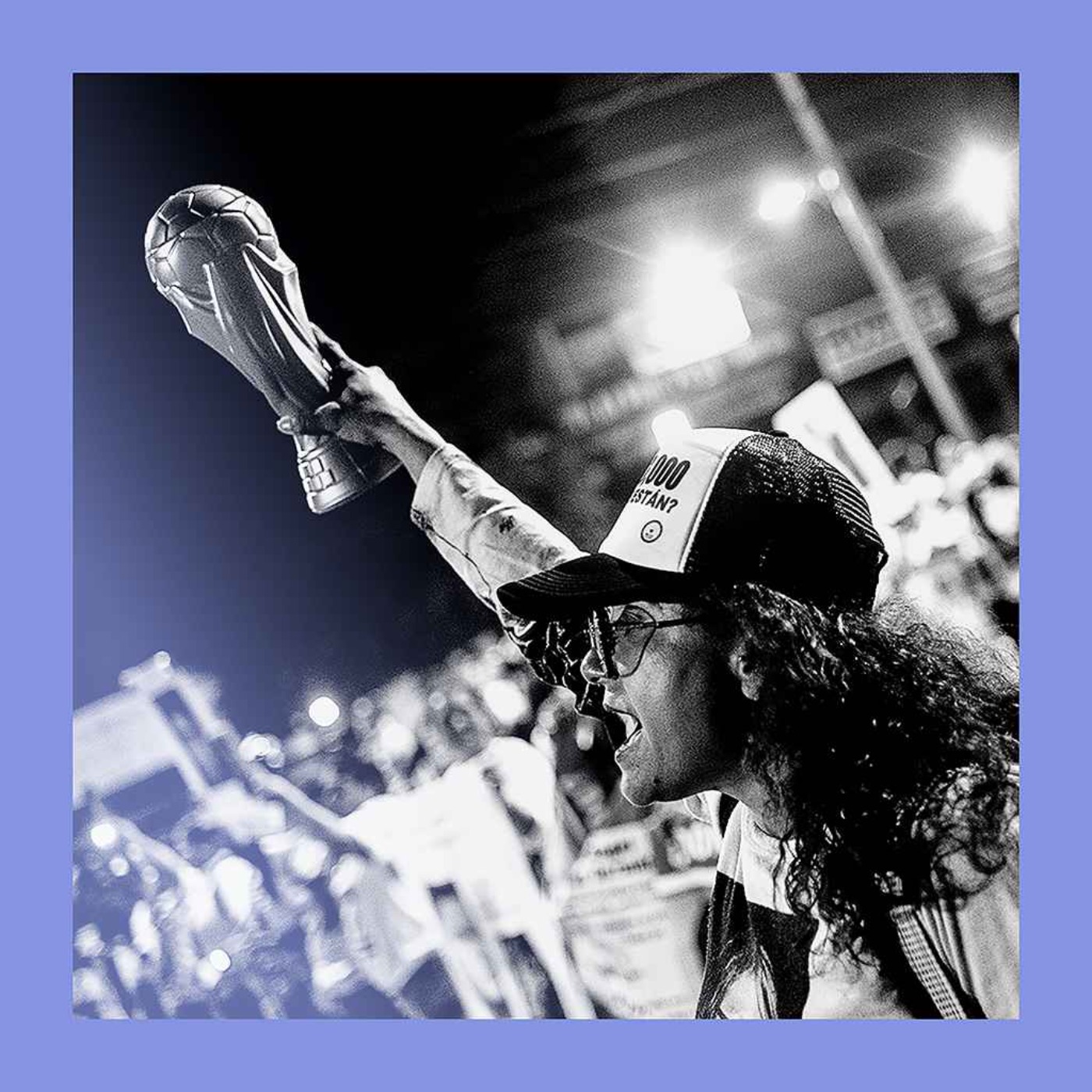
Today on the show Tax in Space and will India's elite tighten their belts? But first, When the whistle blows today for the first match of the World cup, millions of people will be watching. But it won't just be football fans flocking to the great stadium in Mexico City. In recent weeks, there have been giant protests there over the country's 130,000 missing people. Demonstrators are taking advantage of that rare international audience to draw attention to their cause. The Mexican government had hoped the tournament would be a chance to show itself as a hub for technology innovation and foreign investment. Now there's a more basic question. Can it keep all those eyeballs on the beautiful game?
- [02:15]
Hal Hodson
This World cup is going to be the most watched sporting event ever. There's going to be 104 matches spread across 16 different cities in three countries. That's the United States, States, Canada and Mexico.
- [02:28]
Host (Rosie Blore)
Hal Hodson is the Economist, America's editor.
- [02:31]
Hal Hodson
The US is going to have 78 matches, and Canada and Mexico are going to have 13 each. And in Mexico, the matches are going to be hosted in Guadalajara, Monterrey and Mexico City. Mexico's hosting schedule is attracting particular attention and not necessarily the good kind.
- [02:49]
Host (Rosie Blore)
If Mexico is only hosting 13 matches, why is it under such scrutiny?
- [02:55]
Hal Hodson
Well, Mexico is one of the most dangerous countries in the world, is the short answer. It's the third most dangerous country ever to host the World cup, after South Africa and Brazil In May. The average was 44 people murdered every day. And the most powerful drug gangs in the world control not just their own business, but entire swathes of territory in Mexico. They extort legitimate businesses for money they can shut down Entire cities. It was actually only in February this year that gangsters brought Guadalajara itself, one of the host cities, to an absolute standstill after a Mexican government operation had resulted in the death of El Mencho, a renowned gang leader, the leader of the Jalisco New Generation Cartel. The gangsters basically came out in the streets and took over the city and shut it down. And so they have shown very clearly that they have enormous power to do what they like. They clearly have the capability to massively disrupt World Cup. But the key thing to remember is that they almost certainly won't, because all that would bring them is trouble. They're far more likely to quietly exploit the World cup rather than getting involved to make some kind of big demonstration or make a political point, which would only really be likely to bring the government and even the American government down on their heads.
- [04:15]
Host (Rosie Blore)
So is it that criminal gangs are just massive football fans and so not planning to disrupt things, then?
- [04:21]
Hal Hodson
It's not out of respect for the game? No. They see a business opportunity the same as anyone. The World cup is going to bring enormous numbers of people into the regions that they control, and they have an opportunity to sell those people drugs or prostitutes, or to run fraud operations to steal money from them. What's in their interest is to exploit the World Cup. Just like legitimate businesses want to use the World cup to make money, they don't have an interest in messing around and disrupting it and causing problems. So the idea that the gangs pose a security threat to the World cup is probably misplaced.
- [04:57]
Host (Rosie Blore)
Mexico is, as you say, though, a very dangerous place. So presumably there are also some plans to make sure that there aren't security risks.
- [05:05]
Hal Hodson
That's right. This is a heavily militarized police force that operates in Mexico, and There are about 100,000 forces deployed in order to keep the country secure. But the Mexicans, they understand the logic that the gangs operate under, and so they are more worried about, for instance, a rogue terrorist attack or drones sort of crashing into stadiums. Stadiums or crashing into fans in stadiums. They are more worried about quotidian security threats rather than the gangs attacking World cup operations. But even terrorism is more likely to be a problem in America than Mexico. Mexico doesn't have much of a history of these so called lone wolf terrorist attacks. Part of the reason for that is that it's much easier to get weapons in America. That is, after all, where the Mexican gangs get their weapons.
- [05:54]
Host (Rosie Blore)
There are protests planned too, is that correct?
- [05:57]
Hal Hodson
There's quite a few groups in Mexico who are planning to use the spectacle of the World cup to further their own agendas. The biggest group is Mexico's teachers, who say that they are not paid enough and have already blocked the road in Guadalajara to one of the main stadiums and say that they will do that all the way through to match day. Another interest group is a group of activists. They're the family members of what Mexicans call the disappeared. This is a group of 150,000 or so people who have disappeared off the face of the earth. Really what's happened to them is that they've either been killed or recruited by gangs, and their family members are pressing the government to do more to figure out what happened to them, and they are using the World cup as a platform for publicity as well.
- [06:47]
Host (Rosie Blore)
Isn't security a huge issue for Mexico, given that that is exactly what Trump has been talking about in terms of his relationship with Mexico for months now?
- [06:58]
Hal Hodson
Yeah, it's a huge test for Mexico's president, Claudia Sheinbaum, because it becomes a very public question whether or not Mexico is managing to maintain control over its own territory. So Trump has been putting out there for months the idea that Claudia Shanebaum is terrified of the gangs and that she can't even run her own country and that the gangsters run the. And so any little incident during the World cup, and it's quite hard to get through a whole World cup without some sort of incident, is quite likely to be blown out of proportion. And taken in the context of Donald Trump and the Americans saying that the Mexican government is not in control of its own country. So that's what the Mexicans care about. They're not really worried. They don't think that gangsters are going to blow up the World Cup. They think that any little thing like a drone mishap could bring more Trumpian attention down on their heads and make their lives harder.
- [07:50]
Host (Rosie Blore)
And we've also heard quite a lot of discussion about visas and Iran. Where has all that landed?
- [07:56]
Hal Hodson
The latest seems to be that Trump has said that the Iranian football team can play matches that are scheduled to take place on American soil, but that they cannot stay overnight on American soil. And so, as a result of that, Claudia Sheinbaum has offered for the Iranian team to stay in Mexico overnight, to basically base itself out of Mexico and travel into the United States for its matches, which I can only imagine will presumably prove to be quite a difficult turnaround. If they have matches in the afternoon and then they have to hightail it back over the border, it makes for a rather strange wrinkle in their schedule.
- [08:32]
Host (Rosie Blore)
Hal, we have a tendency to talk up all the problems before a big sporting event, and then it's usually good. I mean, aren't there quite a lot of upsides to Mexico hosting the World cup in the long run?
- [08:45]
Hal Hodson
Absolutely. And the point we talked about earlier about the gangs is kind of demonstrative, right? It's in almost everybody's interests for this to go really well. Everybody stands to make a bit of money out of it. Lots of people stand to have temporary jobs that will be important to them. And for the Mexican government, while the risk is that something happens that brings Trump down on their heads, the possible reward is that everything goes pretty well and Mexico implicitly becomes a country that hosts World Cups. With Canada and the United States, two rich developed countries, Mexico less rich, less developed, standing toe to toe with them, organizing the biggest sporting event in the world.
- [09:24]
Host (Rosie Blore)
Hal, thank you very much.
- [09:25]
Hal Hodson
Thanks for having me.
- [09:26]
Rosie Blore
Ros.
- [09:36]
Aramco Representative
Seeking, pushing, optimizing, creating, learning, discovering. At Aramco, we believe in harnessing the power of data to push the limits of what's possible. That's how we deliver reliable energy to millions across the world. Aramco, an integrated energy and chemicals company.
- [10:00]
Capital One Bank Advertiser
Learn more about us@aramco.com.
- [10:06]
Jonathan Fields
Hi, this is Jonathan Fields, host of the Good Life Project. What if your home could welcome you at the door, energize your kitchen and calm your bedroom all automatically. With Pura's family of smart diffusers, you can scent every space perfectly. Choose premium clean fragrances, adjust the intensity and set schedules right from your phone. It's whole home scenting, designed for the way you live. Build your Pura system today@pura.com Wholehome.
- [10:43]
Shira Aviona
The heavens have long fascinated and inspired humanity.
- [10:47]
Host (Rosie Blore)
Shira Aviona is a business correspondent.
- [10:51]
Shira Aviona
In the ancient world, they set the stage for myth and divinity. During the scientific revolution, they compelled us to reconsider the shape of the universe and our place in it.
- [11:11]
Jason Palmer
10, 9. We have ignition sequence stars.
- [11:15]
Shira Aviona
By the afterglow of the space age, the cosmos had cemented itself as a frontier of exploration and innovation.
- [11:21]
Host (Rosie Blore)
Morning. Giant leap for Vanda.
- [11:25]
Shira Aviona
A testament to human curiosity.
- [11:28]
Host (Rosie Blore)
Touchdown confirmed.
- [11:29]
Shira Aviona
We're safe on live. Now the realms beyond Earth may come to embody an even more essential condition of the human experience. Taxation.
- [11:45]
Host (Rosie Blore)
So, Shira, you've brought us back down to Earth with a firm bump there. How does taxation fit into all of this?
- [11:53]
Shira Aviona
Yes, as Benjamin Franklin once said, death and taxes the only certainties. Space as an industry is shifting rapidly from a government run scientific endeavor to a huge private market. So the world Economic Forum estimates that annual sales in the commercial space sector could hit 1.8 trillion by 2035. And companies are no longer just launching satellites. They're planning asteroid mining, off planet tourism, and even private space stations.
- [12:20]
Host (Rosie Blore)
So it is becoming a real possibility that companies are actually going to make a lot of money out in space. Who is going to tax that?
- [12:29]
Shira Aviona
Right. So the legal regime that governs space activity in general was really not designed for this kind of large scale commercial activity. Right now, when anyone launches a vessel into space, it's registered with the flag of a certain country. And governments sometimes have launch fees and things like that. But the legal regime of space law doesn't really envision real commercial activity that is not directly tied to a launch on Earth. And right now, also under that regime, space is the province of mankind. It's not divided up into American space space, if you think of the analogy to airspace or Russian space space or anything like that. And so this raises a lot of difficult questions for governments that want to tax space activity, but don't really necessarily know how that might be achieved.
- [13:21]
Host (Rosie Blore)
And are any governments currently trying to tax this space space, this province of mankind?
- [13:28]
Shira Aviona
Not yet. So for example, in the 70s, several countries that sit on the equator claimed, well, satellites that orbit around the equator are actually in our airspace, if you think about it. And countries like Russia and China have also said tentatively in various laws, well, maybe we might want to do this at some point. But no one has really made that kind of first attempt to say, this activity in space is taxable by my country. And part of that is that we're on the cusp, but not quite there yet in terms of the actual commercial activity. So lots of companies have announced plans, but they haven't carried those to fruition to the point where it would really bring this question to the fore. So, for example, when we have at some point private space stations which are currently being planned, and two citizens of two different countries go onto that private space station, neither of them are citizens of the country which launched the private space station and they start a retail business up in the heavens, who gets to tax that activity? Is there going to be a vat on space sales? Not to mention that if we really do have life on Mars, as Elon Musk imagines, you can think about real economic activity and people staying up in space for more than half the year and losing their tax residency on Earth. So it raises a lot of interesting questions that are academic right now, but very soon they won't be.
- [14:52]
Host (Rosie Blore)
So, as you say, it's quite academic, it's quite abstract right now. But there are examples of this here on Earth, right? We have the oceans, we have Antarctica, many areas which actually belong to no country right now. So surely there's precedent.
- [15:08]
Shira Aviona
Yes, but none of the analogues are perfectly comparable. So for example, we're familiar with sovereign waters and know how to deal with that example. And there's a clear delineation between the ocean that is all of ours and is collective property and each individual country's sea space. With Antarctica, the status quo was basically frozen in 1959 when the treaty that governs Antarctica came into force and that recognized a few countries national claims and said there should be no commercial exploitation of Antarctica at all. Neither has been applied to space. And in fact one of the big questions is where does space begin? There's no actually widely recognized legal definitions. So if you think about low Earth orbit and things like that, you can get into lots of tricky questions about, okay, say you do agree that space is the province of mankind. Well, where does it begin then?
- [16:06]
Host (Rosie Blore)
So Shira, what are the options here? Where might this be headed?
- [16:10]
Shira Aviona
The high minded academics among us have suggested more treaties, a kind of grand international bargain. But unfortunately I think as with many other areas, we're not in a world order that's particularly conducive to that kind of broad based international cooperation. Especially when there's a lot of money to be made. As profits from space become more and more consequential, we might see a breaking of the taboo that there's no such thing as space property. And if Elon Musk really does achieve his dream of a self governing city on Mars, the ultimate battle may not be in fact with the planet's climate, but with the irs.
- [16:50]
Host (Rosie Blore)
Fascinating. Shira, thank you so much.
- [16:53]
Shira Aviona
Thanks very much, Rosie.
- [17:12]
Jason Palmer
A bunch of really strange things have been happening in India over the past few weeks.
- [17:16]
Rosie Blore
Leo Mehrani is an India correspondent for the Economist and writes Ashoka our new column, All About India.
- [17:22]
Jason Palmer
To start with, Delhi's Chief Minister who normally goes around in a convoy of several cars, rode the metro to work one day. Then a High Court judge in central India cycled to work. A politician in Kashmir, not to be outdone, decided to go by a tonga, which is a horse drawn carriage. And the leader of Bihar, he walked all of the 500 or so meters to his office. But probably the biggest sacrifice of all was made by the elected head of Maharashtra, the state in which I live. He poor chat flew economy.
- [17:56]
Rosie Blore
So Leo, tell me what's going on with all of these great sacrifices.
- [18:00]
Jason Palmer
Well, the leaders of the states of this country are trying to lead by example. You see, Jason, they're heeding Prime Minister Narendra Modi's call for austerity. What's happened is, like much of the world, in India, Donald Trump's little excursion in the Middle east has caused some ructions. Energy supplies are disrupted, the rupee has nosedived. But for the first couple of months, the government didn't really put in place any emergency measures or anything, because perhaps, like Mr. Trump, they were hoping for a swift end to the war. It may also be the case that they didn't do anything because there were elections ongoing, and nobody wants to declare a state of economic emergency in the middle of an election. Anyway, recently the prime minister made a speech in which he issued a whole list of recommendations for the citizens of this country. You could use less fuel, carpool, or take public transport, which is what the state leaders are doing. Avoid foreign trips, use less edible oil. Frankly, not a terrible idea. Work from home, and most important, don't use fertilizer. Now, what links all of these is that they are measures to conserve foreign exchange. But it's really not great economics. Normally, what you want, or at least what the economist would say you want, is you want price levels to determine demand. But more than that, it's really bad politics. If you think about the measures I just listed, apart from the fertilizer one, almost entirely they are targeted at India's elite. And these are the people who support Narendra Modi, who vote for him, and who are getting increasingly fed up.
- [19:33]
Rosie Blore
Now, I know that definitions are important in this context, Leo. So when you say elite, what do you mean?
- [19:39]
Jason Palmer
So the funny thing is, the people I'm referring to, a lot of them would think of themselves as middle class. These are people like marketing types in Bombay or public servants in Delhi or IT workers in Bangalore. But the fact is, in this country of 1.45 billion people, only 28 million of those actually pay any tax. That is 2% of the population, 5% of the labor force. Or if you want to be really generous and assume there's only one taxpayer in every household, it's 10% of households. Whichever way you look at it, it's a very, very thin slice. And therefore, I think that is what counts as the elite.
- [20:14]
Rosie Blore
So why is it that these elites you describe back, Mr. Modi?
- [20:17]
Jason Palmer
Well, it's certainly not because they're getting value for money from their taxes, the state of public health care and public education. In India is pretty abysmal. And a far greater section of society sends their kids to private school or would prefer private healthcare if they can afford it. It's not because they get decent public transport, which they're being advised to use. It's not even like they get clean air to breathe. The reason they support the Prime Minister is because he promised better days, that the government will provide economic growth, national pride and international respect.
- [20:51]
Rosie Blore
But it sounds as if the elites are not getting a lot for their vote either, in the sense that Mr. Modi's dream doesn't look like is being fulfilled.
- [20:59]
Jason Palmer
Well, that's exactly it. So what the elites are seeing now is they're watching their tax payments being handed out as free money before every election cycle. They've put up with all of this, right? But the whole promise of this government was that they get to enjoy some stuff. They get to have a consumer lifestyle. They get to go on foreign holidays, which until 20 years ago, nobody did. It was unaffordable. And now to be told you can't drive around in your suv. You probably should feel guilty about going abroad. That's really enraging for this small number of people. And I know, I know, world's tiny violin and everything, but this is politics. And this is how people react when you tell them to give up stuff that you've promised them.
- [21:40]
Rosie Blore
Well, what about the politics? Does the chance that they fail to support Mr. Modi really matter in the politics?
- [21:46]
Jason Palmer
Not when it comes to electoral politics. So if we're simply talking about votes, no, these people don't matter. But they have a very loud voice. And their priorities are the priorities of the television channels, the priorities of the newspapers, the priorities of social media. They're a very, very influential group. And what's more, obviously their taxes matter. It's not like they can stop paying taxes. India operates a very punitive system, but the mood is turning and that mood influences the discourse in the country.
- [22:17]
Rosie Blore
Now, Leo, I know that all of what we've been speaking about here has come from a new column you'll be regularly doing. Tell the listeners all about it.
- [22:24]
Jason Palmer
Right. So, exciting news. Well, exciting for me mainly. The Economist has launched a new column exclusively devoted to India. It's called Ashoka, and I am the author. So now, instead of inflicting my curmudgeonly views on my friends and family, I can inflict it on the entire readership of the Economist.
- [22:41]
Rosie Blore
I am trembling with excitement. Leo, for now. Thanks very much for your time.
- [22:46]
Jason Palmer
Thank you very much for having me. Jason.
- [23:09]
Host (Rosie Blore)
That's all for this episode of the Intelligence See you back here tomorrow.
- [23:32]
Aramco Representative
Then I thought, what if I've scaled businesses? What if I scaled my philanthropy? What if I did as much in one year as I've done in my whole life?
- [23:39]
Jason Palmer
See how your wealth could have even
- [23:40]
Capital One Bank Advertiser
Greater meaning@creativeplanning.com impact what if a marginal
- [23:45]
Aramco Narrator
gain unlocked greater performance? What if an insight in data could change everything? At Aramco, our focus on detail helps us deliver reliable energy to millions across the world. Because margins aren't marginal they're where we can truly push the limits of what's possible. Aramco, an integrated energy and chemicals company. Learn more@aramco.com.