Loading summary
Transcript54 lines
- [00:00]
AAA Advertiser
Why get aaa? Because bad roads, bad tires and bad luck. Out of gas, locked out or in a ditch. Stuff happens with 24. 7 roadside assistance AAA's got your back no matter whose car you're in. Join today@aaa.com AAA expect something more. Roadside assistance is provided by independent facilities contracted by aaa. Coverage in taxis, limousines and other ride sharing conveyances is excluded. 2024 AAA US markets rack national surveys offers terms Conditions and policies are subject to change without notice. Visit AAA.com for details. This intelligence podcast is sponsored by Back Market, the leading global marketplace for refurbished tech. When the kids need phones, laptops or tablets for school, buying refurbished tech makes sense for families trying to save money without sacrificing quality. At backmarket tech costs up to 50% less compared to new. All devices have been professionally refurbished and come with a 1 year warranty and 30 day return policy. Start saving money. Visit backmarket.com or the back Market app to shop now.
- [01:06]
Podcast Host
The economist.
- [01:13]
Rosie Blore
Hello and welcome to the Intelligence from the Economist. I'm Rosie Blore. Today on the show, why police killings are rising in America, though murders are falling and our correspondent visits a Japanese haunted house. First up though, In recent weeks Ukraine and Russia have been pounding each other with vengeance. On Sunday, Kyiv suffered one of the biggest ballistic attacks of the war with a five hour assault. Ukraine has responded with strikes in Crimea and used drones to hit giant warehouses in Russian cities. But this week the conflict came home to Ukraine in a different way, with a cabinet reshuffle that's provoked outrage among ordinary Ukrainians. It's the sign of a deep domestic political battle. The question is whether it could trigger a an even More significant 1.
- [02:26]
Shashank Joshi
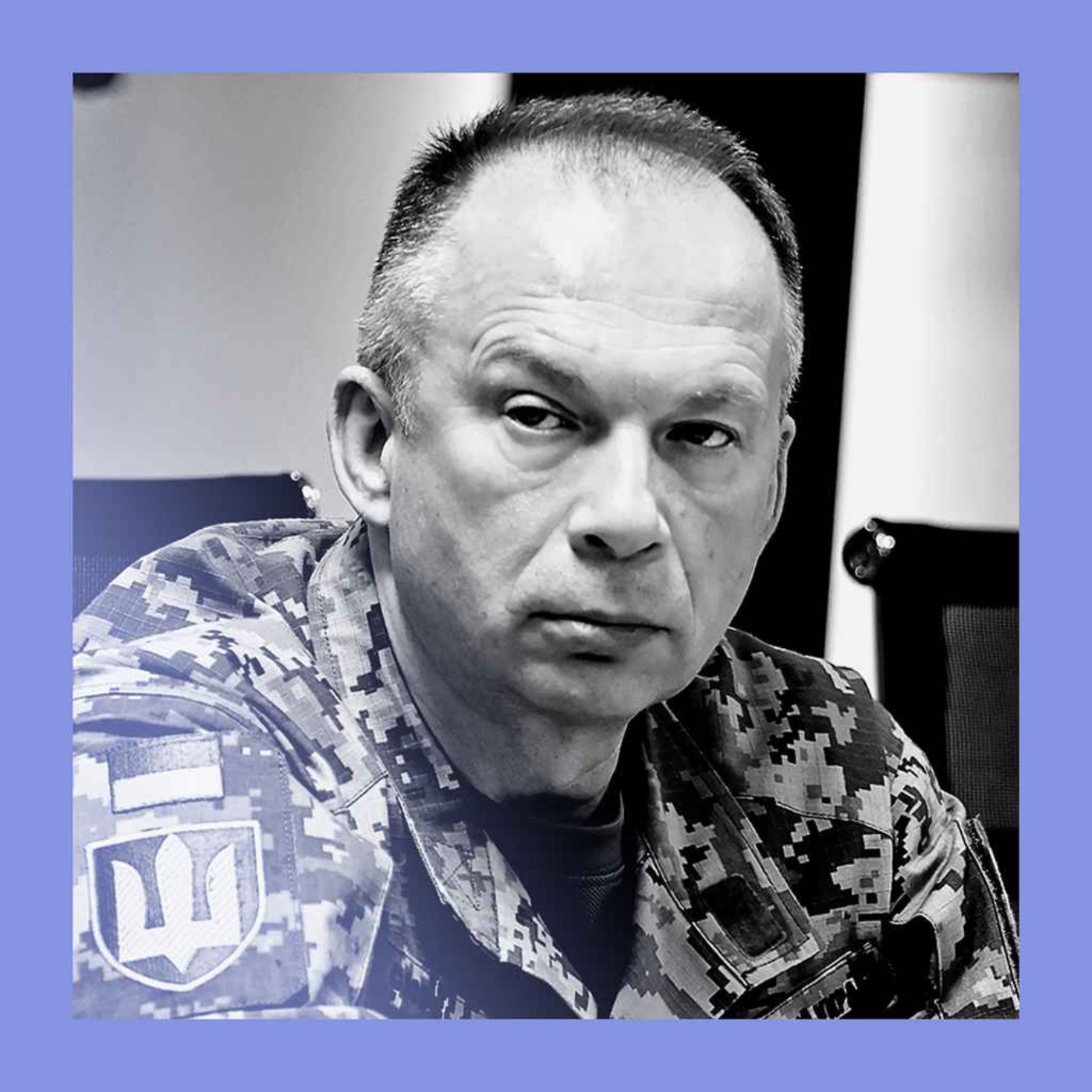
Ukraine's president, Volodymyr Zelensky, has just fired his top military general, Oleksandr Syrsky. This very controversial figure in the army,
- [02:37]
Rosie Blore
Shashank Joshi, is our outgoing defense editor.
- [02:41]
Shashank Joshi
This came after days of public protests calling for Syrsky's sacking, but also calling for the return of the Ukrainian Defense minister, Mihailo Fedorov, who was dismissed last week in a cabinet reshuffle. And I think what's at stake here is the very ethos of the Ukrainian military and the nature of its war effort.
- [03:11]
Rosie Blore
Shashank this seems like a really weird situation. You've got a country at war and massive changes at the top of its military and defense defense structure. You've also got a cabinet reshuffle bringing people onto the streets. Let's start at the beginning. What's going on and why did Fedorov
- [03:30]
Shashank Joshi
leave So Fedorov, to take a step back, was appointed as Defence Minister at the very beginning of this year. And he was previously Minister of Digital Transformation. He was a young, very well regarded minister among Ukraine's allies. You know, I met him a few years ago. His office was covered in drones. He had done a huge amount to scale up Ukraine's use of drone technology, but also reform the way in which these things were procured. For example, creating incentives for different brigades to hit more Russian targets that would get them more drones and more ammunition. So he was pretty well regarded in that respect. But he had clashed repeatedly with the army and particularly with Syrsky, the commander in chief, who was viewed as a kind of very Soviet style, rigid, disciplinarian general who had very crude tactics, a very divisive figure within the army. And these clashes got worse and worse. So, for example, Fedorov, as Defence Minister would say, you have to consolidate your best brigades and make sure that they're located along the same points on the front. Syrsky split them up and put them at different points on the front. Fedorov tried to channel resources towards those units and brigades that were doing the most interesting things with technology. And he would find that Syrsky had basically taken some of those units and, and put them into assault regiments which had the highest casualties. So again and again there was an enormous personality clash, but I think much more importantly a culture clash between this young reformist minister and an army that he saw as blocking him and obstructing him at every turn.
- [05:07]
Rosie Blore
Okay, so Zelenskyy fired Fedorov. Now he's fired Syrsky, who he was fighting with. Will that resolve the problem?
- [05:16]
Shashank Joshi
No, I don't think he does. First of all, Fedorov is still sacked. He doesn't have his old job back. Zelenskyy's been considering other candidates for that job, including the Interior Minister. He seems to have offered Fedorov other roles, you know, some sort of roles overseeing procurement or technology. And Fedorov realizes, I think, that he has leverage here. There's protests on the streets in favor of him. He secured the sacking of the army chief here, who was his sort of nemesis. And so there's an opportunity here for him to perhaps wrest his job back. But that's part the other question is Syrsky's successor, who is Mykhailo Dropaty? And he has been responsible for Ukrainian defenses in the northeast of the country. And I think that his appointment is going to go down well in the army. He is viewed as a kind of new generation. And he had a public post last week and he said he believed the Ukrainian armed forces needed new technology, needed to protect people. And I think that phrase will be seen as a kind of coded rebuke to Syrsky's approach to more crude tactics, which involved higher casualties. And he also said commanders have to take responsibility. I think all of that will be seen as an indication he is much, much more in tune with the kinds of reforms that Fedorov was seeking. And so that's going to be encouraging for all of those who have been looking at Ukraine's ability to, for example, improve recruitment and enlistment in the last six months and the prospect of that momentum being kept up.
- [06:50]
Rosie Blore
Shashank, in that case, I want to reiterate my previous question. Does that appointment mean that the deeper problem is then solved?
- [06:58]
Shashank Joshi
I think it begins to address one problem, which is the way that Ukraine's army is run. And that's really, really important because this moment of optimism in the war is in large part down to the fact that Ukraine's ground forces have been able to successfully blunt the extent of Russian advances and they have imposed on Russia an unsustainably high price. And I think that keeping up the reforms was in a way the essential condition of making that happen and of everything else in the war. But there's other stuff going on, right? And I think that's really, really important to recognize. Just a couple of days ago, we saw a massive Russian ballistic missile and drone attack on Ukraine, killing eight people. And we know that Ukraine is running desperately short of the Patriot air defense interceptors that it needs to stop that kind of thing. We also know that we've seen Russian attacks on merchant ships in the Black Sea that have been putting more pressure on Ukrainian exports. So changing Ukraine's high command, changing the military leadership is really, really significant. But it doesn't solve all of those other problems that Ukraine also has to grapple with.
- [08:08]
Rosie Blore
Shashank, you've talked about what this might mean for Ukraine's strategy. What might it all mean for Zelenskyy himself.
- [08:17]
Shashank Joshi
I think Zelenskyy's come out of this politically bruised. This isn't the first time he's shown bad political judgment and triggered popular outrage. You know, last year, you recall, the domestic security service in Ukraine launched raids targeting the country's anti corruption bodies. And people were furious at that. And Zelenskyy had to backtrack. And here again, he's had to do the same thing. Fedorov, after being sacked publicly gave a press conference. He criticized the sitting army chief, criticized the way things were done, said that he had presided over a dysfunctional culture of lies, that units were poorly organized, there was no personal responsibility, and that's pretty bruising. And now Zelenskyy has to consider, does he reappoint Fedorov to that job, which would be clearly a rebuke to his own authority and bow to popular protest? Does he try to persuade Fedorov back to a different job? But I think Fedorov is unlikely to accept that. Whatever happens, I think there's a sense that Zelenskyy has really fumbled the politics of this, and I think particularly done so in a way that will cause his allies in Europe, in the United States, who liked Fedorov, who shared many of Fedorov's concerns about Syrsky's leadership, about the way these things were done, that they will be concerned. Zelenskyy simply had poor judgment on this, and I don't think that looks terribly good for him.
- [09:46]
Rosie Blore
And Shashank, you've talked about Ukraine's strategy in the war on this week's Insider. Tell us about that.
- [09:54]
Shashank Joshi
I have. I spoke a few days ago to Jack Watling, who is a senior research fellow at the Royal United Services Institute. He has worked really closely with Ukraine's armed forces and we spent a lot of time discussing exactly a lot of these issues that are at stake in the Fedorov Syrskyi standoff. So if you'd like to learn more, definitely tune into that. It's available on the Insider right now.
- [10:17]
Rosie Blore
Shashank, thank you very much.
- [10:19]
Shashank Joshi
Thank you, Rosie.
- [10:31]
Bill Advertiser
This Economist podcast is sponsored by Bill, the intelligent finance platform that helps businesses and accounting firms scale with proven results with AI powered automation. Bill isn't just moving money, they're simplifying financial operations. For nearly half a million customers, Bill has securely processed over a trillion dollars in transactions. That's proven infrastructure. Ready to talk with an expert? Visit bill.comproven and get a $150 gift card as a thank you. That's bill.comproven. terms and conditions apply. See Offer page for details.
- [11:06]
AAA Advertiser
Why get aaa? Because bad roads, bad tires and bad luck. Out of gas, locked out or in a ditch. Stuff happens with 24. 7 roadside assistance. AAA's got your back no matter whose car. Join today@aaa.com AAA expect something more. Roadside assistance is provided by independent facilities contracted by aaa. Coverage in taxis, limousines and other ride sharing conveyances is excluded. 2024 AAA US Market Truck National Surveys offers terms, conditions and policies are subject to change without notice. Visit aaa.
- [11:47]
Laura Ives
He had a tiny little pocket knife. He was £120. And he was grieving. His wife had died the day before. His wife of like 50 years had died the day before. And instead of just somebody like sneaking up behind him and getting him, which they definitely could have done. Yeah, they belted him with a pepper ball, which ultimately killed him.
- [12:09]
Podcast Host
That was Laura Ives, a lawyer I met in Albuquerque. The rate of police killings in that city is among the highest in the United States, and they're rising. In fact, they've been on the rise for some time nationally as well as in the city. Daniel Knowles is our Midwest correspondent. I visited the site of another police killing in the city. It didn't feel like an obvious place for a shootout. There were children playing in a paddling pool. But on May 26, Jose Almas, a 23 year old man who was threatening suicide, was shot dead by police officers.
- [12:43]
Moeka Iida
Everybody move back this way.
- [12:45]
Laura Ives
Back this way, back this way.
- [12:49]
Shashank Joshi
He shot down.
- [12:52]
Podcast Host
His family had called the emergency services and they were hoping social workers would arrive, but instead they got police. His brother told local news that Amos was shouted at by the cops. He went inside and he came back out with his gun and he fired it, breaking a police car's window. And then the police shot him dead. That was the fourth killing by Albuquerque's police department this year. And since 2013, 116 people have been shot and killed by the city's police. Daniel Williams is from the New Mexico branch of the aclu, an organization which focuses on human rights and civil rights abuses in the United States.
- [13:34]
Daniel Williams
We are frequently the national leader, so to speak, in police killings, the frequency is high. You know, some years we've had a police killing somewhere in the state as frequently as every 10 days.
- [13:48]
Podcast Host
The figures come from Mapping police violence, a non profit which tracks police killings in Boston, a city with a population 20% larger than Albuquerque's, there were 16 killings over the same period. Nationwide, the number of Americans killed by police has jumped by a third since 2014. The numbers are rising particularly fast in rural areas and small police departments. And it comes even as national murder rates are falling to record lows. Now, one in 10Americans who were killed in a violent way are so at the hands of the police. It's not a new problem. Think of the 2020 George Floyd protests in Minnesota and across the country. A 2014 report by Barack Obama's Department of Justice said that officers too frequently use deadly force against people who pose a minimal threat. Big cuts to New Mexico's mental health care in the last decade have made the problem worse. Here's Daniel Williams again.
- [14:55]
Daniel Williams
The reality is that in many cases, the longer you go without the care that you need, the harder it becomes to get care. The harder it becomes for that care to work quickly to correct or to alleviate some of the symptoms.
- [15:15]
Podcast Host
New Mexico has also seen a steep increase in drug overdose deaths in recent years.
- [15:20]
Daniel Williams
While overdose deaths were trending down in most of the rest of the country, we saw an increase. And that's something that's not acceptable, I think, for any of us. And I think it's clear that that is not a problem that we can arrest our way out of.
- [15:38]
Podcast Host
The Police Department for 11 years was under a federal consent decree ended last year. The idea was to reduce the use of force by police by introducing all sorts of new policies, like restrictions on when officers can draw their guns. Alfred Mathewson's a lawyer at the University of New Mexico and he worked on the order. We did not accomplish the primary purpose of the consent decree, which was to reduce the shootings. Why do you think Ellis culture more police could be held accountable for particularly egregious killings? At the moment, barely a dozen are criminally charged a year. But in a lot of cases it can be hard to fault the cops, at least at the moment of the shooting. America's a very well armed country with little appetite for gun restrictions. One of the big challenges is that police seem to be put themselves into dangerous situations. In Chicago, the number of police killings has really dropped. And one of the reasons why is that police are now restricted from chasing people on foot, which means they're less likely to get boxed into an alleyway or something with somebody with a gun. To learn more about this, I spoke to Laura Ives, who heard from at
- [16:52]
Laura Ives
the very start, it appears people's patience is thinned and they don't do the things and we are talking about like a human life and people should be willing to wait to ensure that they don't take one.
- [17:12]
Podcast Host
Albuquerque's consent degree was not a total failure. It did change how police work. They have tasers and body cameras. But the problem, she says, is that they've also become more risk averse. There hasn't been anything like the protests in 2020 after the killing of George Floyd. But with the numbers rising and police versions of events sometimes contradicted by witnesses, you have to wonder if it will happen.
- [17:51]
Moeka Iida
On a recent afternoon, I visited an apartment building. But in the past, something rather tragic happened. In this Place.
- [17:59]
Rosie Blore
Moeka Iida is our East Asia reporter.
- [18:03]
Moeka Iida
I press the bell and go inside and I'm greeted by a man called Matsubara Tanishi Matsubara is a comedian in Japan. Matsubara pulls out his phone and shows me photos of what the room looked like before he moved in. There was an old lady living alone, and she was quite isolated. And she was a hoarder. She passed away and then went unnoticed for days. By the time she was found, her body was lying there, buried under mountains of rubbish. For over a decade, Matsubara has lived in houses like this, where people have died in tragic or brutal ways. In one house, a man killed his brother, in another, a woman hanged herself. And even the natural deaths are quite grim. One man died alone and went unnoticed for two years. As a comedian, he's written memoirs about his experiences, which have also inspired films. These homes are known as jikobukken in Japanese, or incident properties. Many Japanese people recoil at the thought of living in one. But now, because of rising living costs and housing costs, these properties are looking less unappealing to some tenants.
- [19:32]
Rosie Blore
Morika, what's this all about? Why don't people want to live in a house where someone's died?
- [19:38]
Moeka Iida
Effy so in Japan, ancestral worship is a big part of traditional culture. So when someone passes away, there are all these Buddhist rituals that take place in mourned. So any form of death that deviates from the norm, like a murder or a suicide, or when someone goes unmourned, like the lady who used to live in the house that I visited, it's seen as a source of bad luck. It's seen in a very negative way. And a lot of tenants are reluctant to live in these houses. So that's why these houses lose value. And the level of the discount depends on the level of grimness of the previous occupant's demise.
- [20:14]
Rosie Blore
How much can you save then, by living in one of these so called haunted houses?
- [20:19]
Moeka Iida
They can be priced anywhere between 10% or 50% below their normal value. In the case of natural deaths, it tends to be around 10%. But especially for murder, the discount can go as much as 50%. And these discounts exist in other markets as well. So for instance, in Hong Kong, a murder can kill a price by a third. But I would say Japan has a very unique culture around them as well.
- [20:43]
Rosie Blore
How do things differ in Japan?
- [20:45]
Moeka Iida
Japan has an unusually elaborate culture around them. So for instance, there's a popular website run by a man called Oshima Teru here. It basically includes a Map of Japan and it shows all the Jikobuken all across the country. It's flags these properties with a fire icon and has a brief description of the nature of the death. And there's even YouTubers who visit these houses just to look for scares. And I would say that Japan is a country where most people identify as non religious and they would also say that they don't believe in an afterlife. But people here are surprisingly superstitious. So there was a recent survey that showed a third of Japanese people believe in spirits. There's actually an industry that's starting to cater to these fears. So for instance, some companies dispatch Buddhist monks to visit these places and perform cleansing rituals. And I also spoke to the founder of a company called Kachimodo. The man is called Kodama and he does this very interesting business where he visits Jikobuken and stays there overnight to investigate whether there are ghosts or paranormal activity there. And he brings thermal cameras and other devices and tracks whether there's any unusual activity. And if there's no paranormal activity found, he issues a certificate saying the house is not haunted. And he gets requests from landlords and people in the housing market who hope that these certificates will convince possible tenants to live in these places.
- [22:20]
Rosie Blore
Marca, you've now been to one of these houses. Would you live there or even stay the night?
- [22:26]
Moeka Iida
You know, I would like to say yes, that I don't care about such things. I'm a scientific person, I'm a rational person, but I do think if I was, you know, living in my living room and I was aware of some brutal murder that took place there or about someone who took their own life, I do think it might have a bit of a psychological impact. So the house I live in, I could check Oshimotera's website to see if it is a Jikobukken, but I haven't done that and I think I prefer not to know. So maybe I think the answer is no, I would not live in a Jikobukken. Thank you very much. Thank you so much for having me, Rosie.
- [23:23]
Rosie Blore
That's all for this episode of the Intelligence. See you back here tomorrow.
- [23:46]
AAA Advertiser
Why get aaa? Because bad roads, bad tires and bad luck. Out of gas, locked out or in a ditch. Stuff happens with 24. 7 roadside assistance. AAA's got your back no matter who car you're in. Join today@aaa.com AAA expect something more. Roadside assistance is provided by independent facilities contracted by aaa. Coverage in taxis, limousines and other ride sharing conveyances is excluded. 2024 AAA US Market Truck National Surveys offers terms, conditions and policies are subject to change without notice. Visit AAA.com for details.
- [24:16]
Chase Sapphire Advertiser
This year's girls trip to Telluride was the best. We went up ourselves with my Sapphire Preferred card, and with five times points on Chase Travel, plus three times points on vacation homes with top brands, we got this incredible cabin.
- [24:28]
Moeka Iida
It was a mansion.
- [24:29]
Chase Sapphire Advertiser
And with three times the points on dining, we ordered a wagyu steak dinner
- [24:32]
Moeka Iida
and that pistachio gelato was too good.
- [24:35]
Chase Sapphire Advertiser
So where should we go next year?
- [24:37]
Moeka Iida
I've got ideas.
- [24:38]
Chase Sapphire Advertiser
Chase Sapphire Preferred the card that's preferred for a reason. Cards issued by JPMorgan Chase bank and a member FDIC, subject to credit approval terms apply.