Loading summary
Transcript77 lines
- [00:00]
CBOE Announcer
Looking for more investing options? Meet cboe, the exchange that pioneered options trading. With exclusive trading products like VIX and SPX Options, CBO can help you trade in any market environment. There are risks associated with CBOE Company products. Review the disclosures and disclaimers@cboe.com USDISclaimers
- [00:17]
Bill.com Sponsor
this Economist podcast is sponsored by Bill, the intelligent finance platform that helps businesses and accounting firms scale with proven results with AI powered automation. Bill isn't just moving money, they're simplifying financial operations. For nearly half a million customers, Bill has securely processed over a trillion dollars in transactions. That's proven infrastructure. Ready to talk with an expert? Visit bill.comproven and get a $250 gift card as a thank you. That's bill.comproven terms and conditions apply. See Offer page for details.
- [00:53]
Jason Palmer
The Economist. Hello and welcome to the Intelligence from the Economist. I'm Jason Palmer.
- [01:04]
Rosie Blore
And I'm Rosie Blore. Every weekday we provide a fresh perspective on the events shaping your world.
- [01:15]
Jason Palmer
In the realm of humanoid robots, China seems to be making huge progress. They're even showing up at state sponsored events. The question is whether they can get past the bit of fun stage and into the real world jobs they should be suited to do.
- [01:32]
Rosie Blore
And the power nap has always remained a little elusive to me. How long, how useful, and if you're in the office, where to do it. Today, our correspondent guides us gently through the art and science of the daytime sleep.
- [01:52]
Jason Palmer
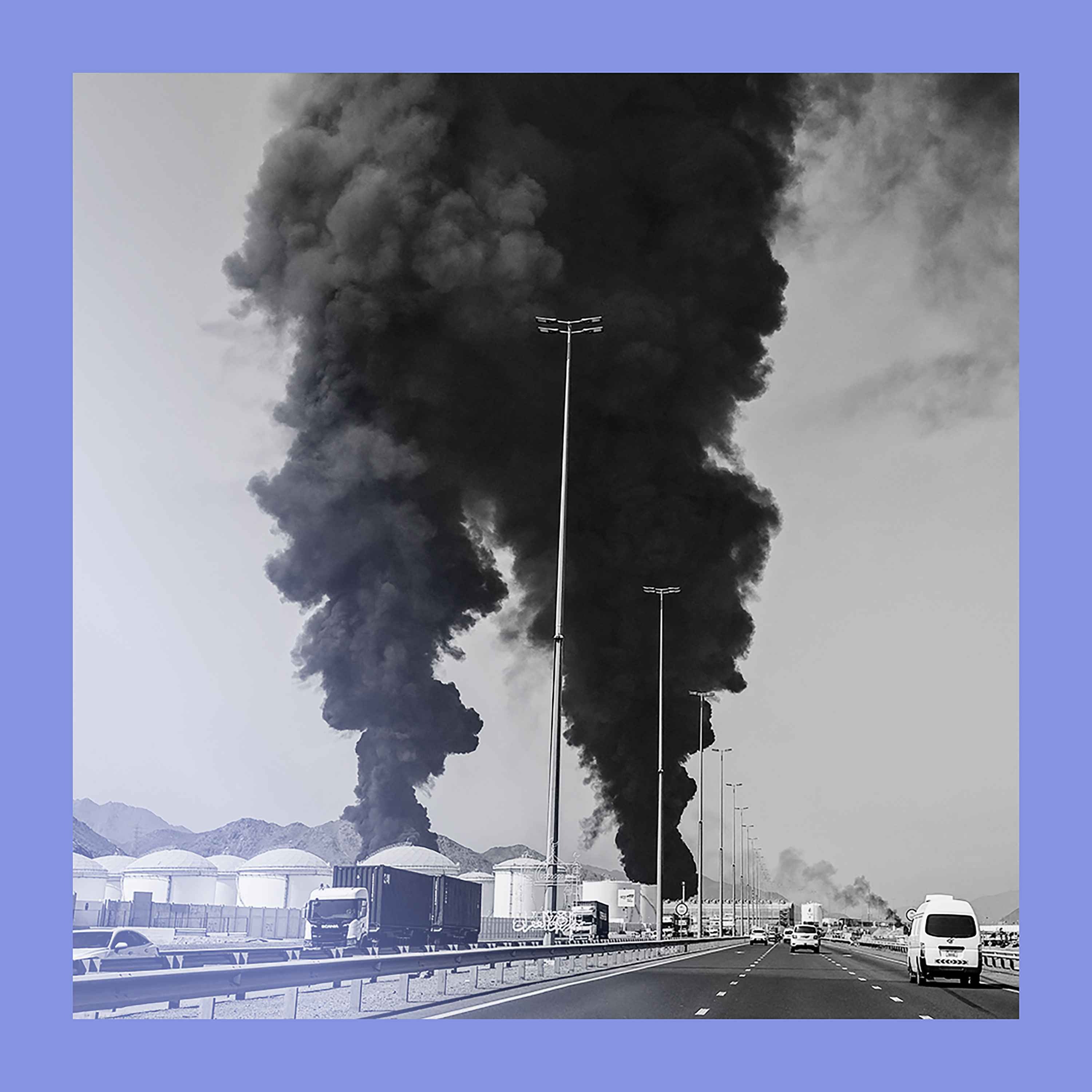
First up, though, Donald Trump needs a hand as America and Israel continue bombing hundreds of Iranian targets. Iran is firing back at Israel and at Gulf states targets military and civilian. But the real focus isn't what's on land. It's on the water of a narrow strait through which about 15% of the world's oil is shipped. Or was until Iran's threats caused a de facto closure. Mr. Trump wants badly to open it back up. He says he's in talks with several unnamed governments about help with naval escorts through the strait. Those who are saying anything like Australia and Japan are are saying, nope, not us. In one of his signature pronouncements, both VAGUE and sinister, Mr. Trump most recently said it would be very bad for the future of NATO if the alliance didn't help out. This impasse over the impassable could make for a far wider conflict.
- [02:59]
Greg Karlstrom
In many ways, this feels like a war over the Strait of Hormuz at this point.
- [03:06]
Jason Palmer
Greg Karlstrom is a Middle east correspondent for the Economist.
- [03:10]
Greg Karlstrom
The Trump administration, by all indications, did not expect that the strait was going to shut the way it did. It's scrambling to come up with a response, but it doesn't have any easy options to reopen the strait. And so this dilemma, this standoff over the waterway, may lead the President to consider some very risky escalation elsewhere in the Gulf.
- [03:33]
Jason Palmer
But do you have any sense as to why the Trump administration did not expect that to happen in Hormuz? It's a strategic vulnerability, not unlike the Red Sea Strait attacked by the Houthis for years now with similar kinds of market conniptions.
- [03:46]
Greg Karlstrom
It's a very clear vulnerability, and it's one that planners at the Pentagon have been thinking about for decades. But I think the Trump administration just didn't take the possibility seriously. They thought this war was going to end quicker than than it did. They were imagining perhaps a Venezuela like scenario or perhaps a situation where the regime simply collapsed. We saw mass protests and popular unrest, and none of that happened. And so I think it's just the case of the political folks in the administration not giving credence to the warnings that they received from the Pentagon, from military planners who did expect this as a possible scenario.
- [04:25]
Jason Palmer
So talk me through the options here, both for America trying to change what is now the status quo, and Iran's options.
- [04:33]
Greg Karlstrom
So when we talk about the strait being closed, we're not talking about Iranian naval ships imposing a physical blockade, cutting off the waterway. What's happened is Iran has threatened vessels, warned them not to transit the strait, and it's carried out a number of attacks on ships both in the strait and elsewhere in the Persian Gulf using missiles, drones. It hasn't carried out a huge number of those attacks, but just the threat of being attacked is enough to scare off shippers and insurers. And that's one problem for America when it tries to wrench open the strait, is that it just doesn't take much. If Iran can continue carrying out an attack every week or something, that is probably enough to maintain a de facto closure of the strait. That's one problem for America. The other is just simply the geography of it. The strait is only 54 km wide at its narrowest point. It's very mountainous terrain on the Iranian side. So when you're sending ships through, if Trump manages to stand up these naval escorts that he's been talking about and pressuring other countries to join, if Iran were to try and strike at those convoys, you only have a few seconds to respond.
- [05:49]
Jason Palmer
And you hinted darkly at escalation elsewhere. What do you mean by that?
- [05:54]
Greg Karlstrom
For some reason, Donald Trump has had a fixation for Almost half a century with Kharg island, which is very small wedge of land off Iran's coast in the Persian Gulf that is home to Iran's main oil export terminal. Something like 90% of its oil exports are processed on Kharg Island. One thing we know about Trump is that the things he was obsessed with in the 1980s tend to still be fixations of his today. And sure enough, over the weekend, he ordered American strikes on Iranian military positions on Kharag Island. The oil terminal was not touched, which Trump said was done for reasons of decency. But there's a belief that this may have been the US Trying to soften up Iranian military positions on the island in advance of potentially trying to seize it.
- [06:44]
Jason Palmer
And how would that go, if that is, in fact, America's plan?
- [06:47]
Greg Karlstrom
I think America could certainly take the island. It's moved a marine force that's trained to do exactly this sort of mission from Japan to the Middle East. But what happens next? American troops would have to hold this very tiny piece of land that is within easy range of missiles and drones fired from the Iranian mainland. And then what do you do with it? Maybe you try to hold it in the hope that you can use it as leverage to pressure the regime into making a deal. You cut off its oil exports, you cut off its main source of hard currency. But the regime has proven very, very stubborn, not just during this war, but in years of negotiations with the United States. And I'm skeptical that they would be willing to cut a deal even if the US Seized the island. Meanwhile, oil markets are not going to like this. Trump wants to get oil prices down, but by seizing the island, he may end up, at least in the short term, doing the opposite.
- [07:42]
Jason Palmer
And about the short term and what the rest of the region is doing, what other means do countries have to move oil now that the Strait of Hormuz is pinched?
- [07:49]
Greg Karlstrom
Oil markets would be in a much worse position right now if it wasn't for two partial workarounds that exist in Saudi Arabia and the uae. To bypass the strait, the Saudis have what's known as the East West Pipeline, which takes oil from where it's produced in the eastern part of the kingdom to its ports on the Red Sea in the west. It can move about 7 million barrels a day, which is two thirds of Saudi oil output. And then there's a similar pipeline in the UAE which connects to the port of Fujairah on the east coast of the Emirates. That's outside the Strait of Hormuz. It can move about half of the UAE's 3.6 million barrels a day of production. So it's not a complete solution, but nonetheless, it's allowing some Gulf oil to flow. And so, sure enough, we've seen the Iranians over the past few days already begin to step up their efforts to target both oil facilities in Saudi Arabia and the port in the UAE that is working.
- [08:48]
Jason Palmer
So whatever workarounds there are, the wisdom here is that Iran is going to try to disrupt those as well.
- [08:55]
Greg Karlstrom
I think it will. If the strategy here for Iran is inflict economic pain on the region and on the world to compel America to stop fighting and to deter it from attacking in the future. If closing Hormuz isn't enough to achieve that goal, then you need to escalate further. So the past few nights, there have been dozens of drones launched at oil facilities in Saudi Arabia. On Saturday, there was an attempted drone strike on that port of Fujairah. Iran could try and hit the pipelines themselves. They're narrow targets, but long ones. And then there's also a concern that they might ask the Houthis in Yemen to resume their attacks on commercial shipping. If you look at a map of the shipping traffic right now, there are dozens of big tankers redirecting from the area in the Indian Ocean in the Gulf of Oman. They're heading towards the Red Sea to collect oil from that Saudi port that is operational. If the Houthis were to take, I think, even one shot at one of those vessels, it would probably scare many of them off. It would send oil markets into a panic. The consequences of that would be quite severe.
- [10:02]
Jason Palmer
And we get closer to the thing that has been hinted at from the start of this war, is that it becomes a regional one rather than a U.S. israel, Iran war.
- [10:11]
Greg Karlstrom
All of the Gulf states have been pretty clear, either in public or in private, that they regard serious attacks on their oil infrastructure as a red line. The Saudis have said that publicly that they would get involved in this war themselves if Iran were really to damage their oil infrastructure. And so I think that's the dilemma on both sides here. The Americans are trying to find a way to open the strait and push down oil prices, but they don't have any easy options to do that. Trump is going to consider escalation on Kharg island or elsewhere. The Iranians have managed to disrupt energy markets, but again, they haven't managed to stop the war. And so that might lead them to escalation as well. Both sides, the incentives here are pushing them to widen the conflict.
- [10:58]
Jason Palmer
Craig, thanks very much for speaking to us.
- [11:00]
Greg Karlstrom
Thank you, Jason.
- [11:15]
Bill.com Sponsor
This Economist podcast is sponsored by Bill, the intelligent finance platform that helps businesses and accounting firms scale with proven results. With AI powered automation, Bill isn't just moving money, they're simplifying financial operations. For nearly half a million customers, Bill has securely processed over a trillion dollars in transactions. That's proven infrastructure. Ready to talk with an expert? Visit bill.comproven and get a $250 gift card as a thank you. That's bill.comproven. terms and conditions apply. See Offer page for details.
- [11:49]
CBOE Announcer
Looking for more investing options? Meet cboe, the exchange that pioneered options trading. With exclusive trading products like VIX and SPX options, CBOE can help you trade in any market environment. There are risks associated with CBO company products. Review the disclosures and disclaimers@cboe.com USdisclaimers.
- [12:14]
Don Weinland
The Spring Festival Gala is an incredibly important event in China. It takes place on the eve of the Chinese New Year. It's a showcase of everything the Chinese government wants people to see.
- [12:27]
Jason Palmer
Don Weinland is our China Business and Finance Editor.
- [12:30]
Don Weinland
The centerpiece of this year's event was humanoid robot dancers and there were several different routines that featured them. There was one where they were brandishing swords and flipping around on stage with actual human dancers alongside them. It was very impressive to watch. The message was very, very clear this year that humanoid robots are the thing to be watching.
- [12:58]
Jason Palmer
So what we're to take from this is that the Chinese government wants to point out that humanoid robots are very much a thing in China at the moment.
- [13:05]
Don Weinland
That's right. So in 2025, deliveries of humanoid robots was up by four times over the previous year. There's about 14,000, 15,000 of them that have been delivered recently. I was in a robot rental service company and had the pleasure of chatting with one of these robots.
- [13:26]
Harry Taunton
Hello.
- [13:26]
Don Weinland
Can you speak English?
- [13:28]
Humanoid Robot
Yes, I can speak English. How can I assist you today?
- [13:33]
Don Weinland
What do you like to do in your spare time?
- [13:36]
Humanoid Robot
I enjoy sports like lifting weights and playing with vehicles such as scooters, hoverboards, bicycles.
- [13:45]
Jason Palmer
But tell me about the industry though, Dawn. Is this just one superstar state backed company that's making all these things?
- [13:53]
Don Weinland
So last year during the Spring Festival Gala, there was one Chinese humanoid robot maker that was featured. It's called Unitree. This year there were four of them that were able to feature their humanoid robots on stage. There are many, many companies that are actually producing humanoid robots. We think that there's about 100, maybe 120 that are selling these human looking things. And then there's thousands and thousands of companies that are producing the parts of the robot. So China's supply chain is really humming right now and delivering up all of the components that need to go into these things.
- [14:31]
Jason Palmer
So in that sense, it's a broader business story than just about the companies that are making the finished product.
- [14:37]
Don Weinland
Absolutely. And I have the pleasure of living essentially at the center of this supply chain. So I live in Shanghai. Shanghai itself and many of the surrounding cities are probably the world's most robust supply chain for humanoid robotics. If you look at the number of Western companies that are actually selling robots at this point, there's not very many. So Tesla is creating this robot called Optimus and it shipped an estimated 150 units. And it's also worth pointing out that Optimus sources many, many of its parts from the cities around where I live. I took a trip to the city of Changzhou, which is an hour north of Shanghai by high speed rail, and went to this specific district called Wujing district. And when you're talking with the companies that are supplying the parts for humanoids, they like to talk about how 90% of what you need to make one of these humanoids can be sourced just from that district alone. One really interesting thing about what's going on here is if you were to go to these same places, these Same manufacturing districts, 10 years ago, a lot of these companies already existed, but they were making parts for the EV industry. And what's happened over the past five years is many of these companies have transitioned to creating parts for humanoid robots.
- [15:51]
Jason Palmer
So that's a snapshot of the, of the makers of these things. Who are the buyers?
- [15:57]
Don Weinland
It's not clear who has bought these 14 or 15,000 robots that have been sold in China this year, but it seems like from what people are saying that, that local governments are one of the biggest buyers at this point.
- [16:11]
Jason Palmer
But to do what? I mean, so far you've only mentioned sort of dancing, chatting, that these things must have presumably an intended industrial use.
- [16:19]
Don Weinland
One would think so. And that is the goal years from now. But at this point they're really only for entertainment purposes. So perhaps a coffee shop might want to rent one and have it greet customers as they walk in. Local governments seem to like to have them walk into a, and sometimes do a jump or they can be programmed to dance.
- [16:42]
Jason Palmer
But that can't be the final point. There must be a push for these things to do something other than, you know, glitz up your party a bit.
- [16:49]
Don Weinland
Of course. And this is something that analysts and companies are really focused on. They want these humanoids to be working in factories, carrying heavy stuff around, carrying out industrial tasks. That is what they're really designed to do. But at this point, they don't actually have the data that is necessary to perform these tasks.
- [17:14]
Jason Palmer
But how are the companies going to get the data they need without putting the robots in those kinds of situations to gather the data? That will ultimately be the training.
- [17:23]
Don Weinland
At this point, about 95% of the data that companies are using is simulated data. It's not from real activities. These companies need to get their robots into real situations where they're doing real work, not just saying hello to people at coffee shops, but obviously to get them into factories. They need to be able to do these tasks. It's a chicken and egg problem. It's what the industry is focused on right now. And it's not really clear exactly how long that is going to take.
- [17:53]
Jason Palmer
The prize, presumably, is big. People are very much geared up for that transition.
- [17:57]
Don Weinland
It's easy to make estimates for industries that are 10, 15 years out. Morgan Stanley, the bank, is saying that there could be a billion robots walking around us by 2050. Annual spending of something like $7.5 trillion on this industry. I'm not saying that that's not going to happen, but there are a lot of hiccups in the road that need to be figured out ahead of time. And one advantage that China has on this is that the government can be very, very active in supporting these things, like with the electric vehicles market. So when the government needs to step in and help out and make sure companies don't just all die off, I think it will be there to do that.
- [18:40]
Jason Palmer
Don, thanks very much for joining us.
- [18:42]
Harry Taunton
Thank you. It turns out that trading in your afternoon coffee for a power nap will actually do you a lot better in the afternoons.
- [19:06]
Rosie Blore
Harry Taunton, you're one of our audience editors, and you've been bravely pioneering the idea of sleeping while in the office at the Economist. What's going on?
- [19:16]
Harry Taunton
Well, coffee is a popular antidote to midday drowsiness, but it turns out the science suggests that a nappachino might be a little better for you.
- [19:24]
Rosie Blore
So you've been taking the method approach to writing an article, then?
- [19:27]
Harry Taunton
I take my health tips from Winston Churchill. So it's said that, you know, after a good boozy lunch, a couple of glasses of bubbly and a measure of brandy, the former British Prime Minister would nip upstairs for an afternoon nap, and then he'd be able to work right through to the early hours of the morning. So I try and take that approach as well as I can.
- [19:44]
Rosie Blore
You haven't just been emulating Winston Church, but you've been looking at the science of all of this. What are the benefits of a nap?
- [19:50]
Harry Taunton
Well, absolutely. The science suggests that Winston was onto something. We have this natural dip in the circadian rhythm just after lunchtime and. And modern working life tells you to plow on through, but really you should be listening to that feeling. And there's a neuroscientist called Matthew Walker who wrote a book called why We Sleep a little while back. And just to quote him, he said humans are not sleeping the way nature intended. The number of sleep bouts, he says, the duration of sleep and when sleep occurs have all been comprehensively distorted by modernity. There was a landmark study back in 2007 of 23,000 Greek adults, and they tracked them over about six years and found that those who gave up their afternoon siesta, they had 37% increased risk of heart disease. So it goes to show that we're actually meant to have a nap in the afternoon to get us through to that kind of biphasic sleep patterns, something where you'd split your slumber into two sections rather than the traditional way that we all do, where we head on home and we have that seven hours sleep at night.
- [20:47]
Rosie Blore
So I'm a devotee of coffee. What does a nap do that coffee doesn't?
- [20:53]
Harry Taunton
Well, there was a study that found that power naps are actually more effective than caffeine at improving alertness and memory in the afternoon. And research published last year suggested that a midday dose could even reverse the effects of a bad night's sleep. But that's not to say that you can just power nap your way through the afternoon. You actually need to have that full seven hours sleep because there are so many more restorative benefits to getting those six sleep cycles rather than just the one power nap. It's a bit like having a healthy snack versus having a full square meal. You need both.
- [21:22]
Rosie Blore
So, unfortunately, the Economist, we don't have sleeping pods ready for us, but you're saying it really would be an investment in our physical health and our mental agility if we did absolutely well.
- [21:33]
Harry Taunton
There are some offices, especially in Japan, where they will have a sleep pod ready and raring for the office workers because they recognize that sleeping on the job is not something to be frowned upon, but something that actually will give you more energy to get through your work in the afternoon. There have been studies that have shown that if you take somewhere between a 10 to 30 minute nap in the afternoon, it really improves alertness and mood. And that's the window that you're looking at, somewhere between 10 and 30 minutes. So a sleep cycle is normally about 90 minutes long and at night we'll go through about six of these. The thing with the power nap is that you stick to 10 to 30 minutes because within that 90 minute sleep cycle it's divided up into light sleep and deep sleep. So the idea with a power nap is that you stay asleep long enough to benefit from that light sleep without going into the deep sleep and waking up feeling worse than when you got to sleep.
- [22:18]
Rosie Blore
So the definition of a power nap then is that it's short and sweet, but you do get some sleep.
- [22:24]
Harry Taunton
Exactly. So there's a sweet spot that you really want to stay inside with a power NAP. And in 1994, NASA came up with this study and they found that a 26 minute power nap improved pilots physiological awareness and performance.
- [22:36]
Rosie Blore
Okay, so we've got 26 minutes. The magic number. When should we sleep?
- [22:41]
Harry Taunton
Well, the ideal time frame they say is between 1 and 3pm where production of cortisol might be slightly down, that hormone that produces that alert feeling. And the core body temperature might be a little bit lower. And also when your body's digesting food, it's taking a little bit more energy to do that. So you'll feel a little bit more inclined to sleep anyway. So it's worth listening to that feeling. If you're starting to nap later than that, towards five, six, that's when it's gonna start disrupting your late night sleep. So it's worth, if you're gonna do it, do it earlier rather than later.
- [23:11]
Rosie Blore
And how do you just fall asleep? I mean, surely you've got to build in some time to get to sleep.
- [23:17]
Harry Taunton
Well, some people might find it harder than others just to get straight off to sleep. But there are some benefits to just resting your eyes for 15 minutes. You might not get the full whack, but at least you'll be giving your brain a chance to recharge for those 15 minutes.
- [23:30]
Rosie Blore
And is there a benefit to napping every day or is it something you can do kind of once or twice a week?
- [23:36]
Harry Taunton
So the idea that you can just have one power nap and you're done, that's not really going to have the same cumulative effect of doing it over time. It's a bit like working out. You have to do it over time in order to build that muscle. They did a study of healthy American adults. And they found that over time, these power naps gave them a 37% lower risk of heart disease. But if you're sleeping for too long, if you start having regular naps over the 60 minute mark, it can actually have some damaging effects on your health. So there's been a study that found that the risk of diabetes and associated cardiovascular trouble went up if you're napping for too long on a regular basis.
- [24:09]
Rosie Blore
Harry, thank you so much.
- [24:11]
Harry Taunton
Thank you, Rosie.
- [24:31]
Rosie Blore
That's all for this episode of the Intelligence. See you back here tomorrow.
- [24:54]
CBOE Announcer
Looking for more investing options? Meet cboe, the exchange that pioneered options trading. With exclusive trading products like VIX and SPX options, CBO can help you trade in any market environment. There are risks associated with CBOE Company products. Review the disclosures and disclaimers@cboe.com USDISCLAIMERS there's
- [25:10]
GNC Announcer
one place for the newest drops in wellness and performance and the biggest sale of the year. It's the Drop by gnc, curating the best of what's new, handpicked by the pros who know what works. And right now, get it all. Buy one, get one 50% off during the semi annual LiveWell sale. From crushing workouts to leveling up your nutrition and everything in between, get the best deals on the latest innovations. All the newness is all on sale right now during the LiveWell sale on the drop by GNC.