Loading summary
Transcript54 lines
- [00:04]
A
The economist.
- [00:11]
B
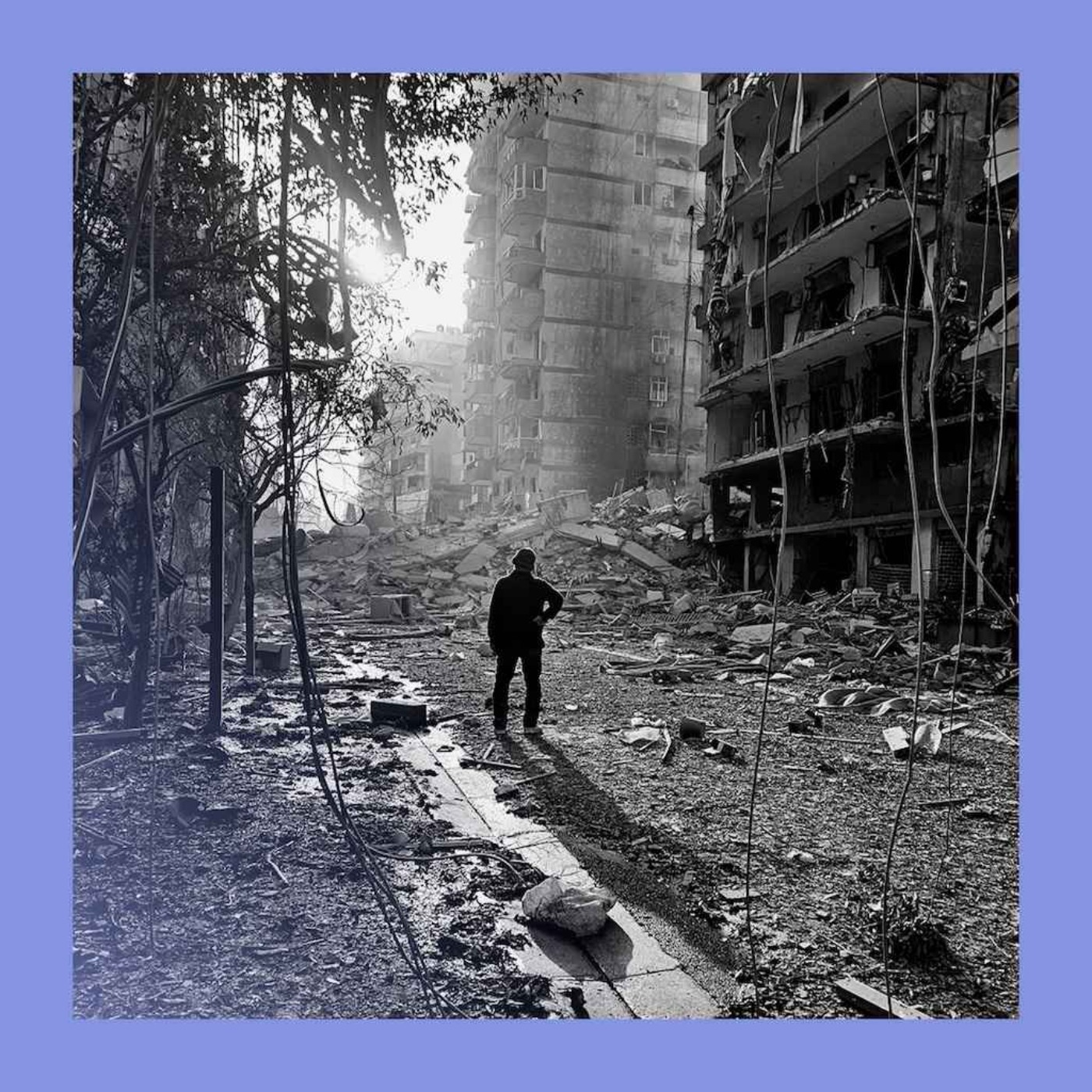
Hello and welcome to the Intelligence from the Economist. I'm your host, Rosie Blore. Every weekday we provide a fresh perspective on the events shaping your world. In times of turmoil, people think they should buy up quite quality stocks. Our correspondent explains why purchasing crap shares may be a better option. And for Philip Gollier, the greatest sin was to be boring. He threw insults at his students to help them find their inner idiot and become a marvellous fool. Our obituary's editor celebrates the life of a master clown. But first, Last night, Israel's Prime Minister Benjamin Netanyahu gave his first press conference since the start of the war nearly two weeks ago. Iran is no longer the same Iran, he said, adding that Israel would crush the race regime and that of Hezbollah, Iran's proxy in Lebanon. As he spoke, Israel was yet again pounding Tehran and widening its operations in Lebanon to a larger area in the country's south. Meanwhile, America was dealing with different problems. A refueling plane crashed in Iraq, though apparently that was due neither to hostile nor friendly fire. And oil prices rose once again. A war with confusing aims is already taking a toll. The question now is whether America and Israel will stay united.
- [02:13]
C
So Netanyahu last night tried to give the impression of everything going according to plan, even ahead of plan.
- [02:22]
B
Anshul Pfeffer is our Israel correspondent.
- [02:25]
C
Israel together with the United States in a joint front where there is no daylight between the two countries and their leaderships, and they are smashing the Iranian regime together. We are now almost at the end of the second week of the war, and Israel and America are still striking together against Iran. But we're hearing more and more rumblings of differences between the two countries and their leaderships.
- [02:53]
B
So rumblings of differences, Anshul, what exactly are those differences?
- [02:58]
C
Well, we're not really seeing those yet coming to the surface, we are hearing different emphases from the two sides. Netanyahu and other Israeli officials who have been speaking over the last few days are emphasizing the issue of regime change, whereas from Trump and from his people, we're hearing rather mixed signals. But what we're hearing from also behind the scenes speaking to Israeli and American officials is that they are much more focused on trying to control oil coming out of Iran. For that, the Americans do need a functioning regime. They just need that regime to more or less do what the Americans tell it to do. Trump, of course, is meeting Chinese President Xi Jinping at the end of the month, and I think he would like to go to that summit having established control over the energy flow and China as the main customer of Iranian oil will certainly be impacted. So ultimately, these are two different strategies. Israel would like to see this war at least setting the ground for Iranian protesters to come out and sweep the regime away, while Trump wants a Venezuela outcome where basically the same regime is in place, but it's led by people who take orders from him.
- [04:15]
B
So what happens if essentially the two countries continue to pursue or continue to talk about these divergent war aims?
- [04:24]
C
Well, what it means is that there will be, at some point an argument. It may not break out in the open, but there will be a difference over how to end this war. Both countries so far are pursuing a joint air campaign where they are coordinating the targets. They're in many ways working together on specific missions. American aircraft are refueling Israeli strike jets en route to target. Intelligence is being shared. So in most aspects, this is a joint operation. But the question is, what happens when we reach an off ramp? What happens if Donald Trump decides this is time to end the war? If Israel's objectives haven't been met by then, then there is a problem for Israel and vice versa. If Israel thinks that they have reached that point where they have prepared the ground for regime change and want to end the war and Donald Trump hasn't yet achieved that control he wants, then once again, there's a disagreement between them, and we'll have to see how they settle them. We're not quite yet at that point, at least not what we're seeing now.
- [05:26]
B
Anshul, what's at stake for Netanyahu if Trump continues to diverge from Israel's aims in Iran?
- [05:34]
C
Well, ending this war in an inconclusive way without clearly leading to regime change and what is already being perceived in the region by a sort of victory by Iran, not because they managed to inflict major blows on Israel or in America, but because they're still standing despite the American and Israeli onslaught, I think would be very bad for Netanyahu with the Israeli public and with an election looming, because people are already asking what actually has been achieved by this war, especially as Israel and Iran only had a war eight months ago. And people are saying, hold on, you told us at the end of that war that Israel had won, as Netanyahu said, a victory for generations. It turns out that generations is just eight months. So those questions, I think, will be asked even more strongly here in Israel if this war ends inconclusively.
- [06:25]
B
When we spoke 10 days ago, Israel had just launched an offensive against Hezbollah in Lebanon. We've had reports that maybe 700 people have died there. What's happening with that. Is there an end in sight?
- [06:39]
C
No, quite the opposite. This is something that seems to be escalating. There is an air campaign in which Israel is carrying out hundreds of airstrikes on Hezbollah targets across Lebanon. As you said, it's at least 700, probably by now quite a bit more than that. Lebanese have been killed. We don't know the breakdown between civilians and combatants in that. And that is very much aimed at trying to weaken Hezbollah, prevent it from rebuilding its military arsenal that was destroyed partly by Israel at the end of 2024. They are, of course, Iran's biggest proxy in the region. And then there's the question of will there be a ground offensive? So far, a few hundred Israeli troops have gone in on the ground, but they've only captured positions quite near to the border, in some cases maybe one or two miles from the border. But that's as far as they've gone in. There is a large contingent of Israeli troops ready to go in and carry out a much broader ground offensive. But as far as I know, that's a decision that the Israeli government hasn't yet taken. And a lot depends on whether Hezbollah continues firing missiles. And a lot depends on whether the Lebanese government can get things under control, because from what I know, that still is the preferred outcome of the Israeli government to see the Lebanese government replacing Hezbollah as the main military force in Lebanon.
- [08:02]
B
And so we've got no end in sight to the offensive against Hezbollah in Lebanon. The goal of regime change has not yet been achieved in Iran. If America walks away, where would that leave Israel?
- [08:14]
C
That would leave Israel in a rather precarious point, because it would seem that certainly on the Iranian front and perhaps also on the Hezbollah Lebanon front, Israel has begun two wars which it can't win. Now, let's just go back a few months when the Israeli army and intelligence community were planning this war. Originally, it was supposed to be a much more limited war against Iran's ballistic missile project, which had been damaged during the war in June, but not enough. And Israeli officials were telling me, look, at some point over the next year, we're going to launch a campaign specifically against those ballistic missiles. Then along came Donald Trump in January and said to the Iranian protesters, help is on its way. And suddenly this became a joint Israel American campaign with much broader aims. And Israel, partly initiated and partly was dragged along by this mission creep towards regime change. And now it doesn't seem something which is attainable in the near future. And if America does end their participation in this war, I don't see how Israel continues it as well.
- [09:20]
B
Anshel, thank you very much for talking to me.
- [09:22]
C
Thank you for having me, Rosie.
- [09:27]
B
And for more on the domestic fallout from the Iran conflict in America, do listen to Checks and Balance, our weekly U.S. politics show, which is out later today for subscribers.
- [09:48]
D
It's been a wild couple of weeks in markets, and that's because war in Iran has threatened the world's oil supply. And this has sent shockwaves through pretty much every other market.
- [09:59]
B
Josh Roberts is our capital markets correspondent.
- [10:03]
D
Now, when things like this happen, investors often talk about a flight to quality. You know, when the world gets more dangerous and uncertain, seek safety in the highest quality assets you can find. In fact, that might be the wrong advice just now. Instead, this might be just the time to go out and buy the most rubbish stocks you can find.
- [10:23]
B
Rubbish stocks? Doesn't sound like ordinary investment advice. What's going on?
- [10:28]
D
No. Well, so let's row back a little bit. Quality is what investors call a factor. Factors are attributes that that stocks have that help explain their performance. So as well as quality, you have things like size, value, expensiveness or cheapness or momentum. Investors differ on what exactly the quality factor means. Pretty much everyone agrees it means profitability that's stable, high, preferably growing. Usually when investors are talking about high quality firms, they mean firms that have high, stable, growing profitability. And it kind of makes sense that in uncertain times, those would be the firms that you would want to own. But since the war in Iran started, a sub index of the s and P500 with the highest quality firms in it has actually done worse than the main index. And it's not just America. A sub index of the MSCI World Index representing the highest quality firms has also done worse than the overall index. So these quality firms aren't actually offering safety as the world gets more uncertain.
- [11:33]
B
Josh, we hear endlessly about oil prices at the moment. How does that actually affect the price of other stocks?
- [11:39]
D
Well, oil feeds into everything. It's an input for pretty much everything that any firm makes. It's a cost for consumers. So if oil prices are higher, they can afford fewer things. They'll spend less money. And it affects government finances as well in all sorts of ways. As the oil price spikes, governments feel more obliged to offer subsidies to their citizens and firms to offset the impact that strains budgets. It also depresses growth. And what I mean by all of that is it affects government bonds in a big way, too. And those then feed back into currencies and stocks. So this is why you're seeing such shock waves from these events in the Gulf.
- [12:15]
B
So what are the ones that are offering safety? What are the crap stocks that are good?
- [12:20]
D
Actually, energy companies are a great example of this trend. They tend to be low quality junk stocks because their earnings are very volatile. If you look at for example, the lowest quintile of The S&P 500 quality wise, about 9% of that is made up of energy stocks. Whereas among the highest quality firms, only about 1% of them are energy stocks. So the fact that energy prices are going up naturally helps the low quality stocks. When I talk about low quality stocks, I might be talking about energy firms or financials or healthcare firms that might not be expected to grow their earnings quite as much and have volatile earnings, but the earnings that they have got are in the near future. So now when uncertain things happen, when uncertainty rises, the high quality stocks with their earnings in the distant future take more of a hit. Because if their earnings are in the distant future, they're more uncertain. Whereas the lower quality stocks, which might have more ho hum earnings, actually they're almost within grasp. So they're more certain, so they've done a bit better.
- [13:20]
B
So fear is good for low quality stocks.
- [13:22]
D
Yes, exactly. And it doesn't hurt either that in this particular situation the fear has involved energy prices rising. And a lot of low quality stocks are energy stocks. So they've obviously been doing well from energy prices rising.
- [13:34]
B
Does this all mean we have our terminology wrong? Quality and crap?
- [13:38]
D
Yeah, it's kind of like a lot of things in finance where the jargon doesn't really make sense. You have investment grade bonds and junk bonds, but sometimes junk bonds do better than investment grade bonds. You have things like firms giving forward guidance, but obviously they never give backward guidance. So what is the word forward doing in that? Yeah, like a lot of other things in finance, maybe we need to reassess what exactly junk means in this context.
- [14:03]
B
So you're talking about the longer term outlook for these high quality stocks. What do we mean by longer term?
- [14:09]
D
Well, when you think of a high quality stock, you might think of a really successful tech firm. Those firms are high quality because they've grown earnings very fast in the past and investors expect that they're going to carry on. They expect that they're going to carry on growing their profits very fast into the future. And so they're kind of looking out into that future and already writing down some of those profits they expect that might only take place in 20, 30 years time. Now that's a lot more speculative than valuing a firm based on the profits you expect it to make in the next year. In the next two years, they might already have orders for the next year, two years. No one really knows what the world's going to look like in the next 20 or 30 years. So when you talk about growth or quality firms that investors are valuing based on that much longer term horizon, those values are inherently more speculative. And then they're inherently hit harder when the world changes and becomes more fractious or unpredictable.
- [15:07]
B
Given that most people would think about going for quality stocks, what will it mean if they now dive into the crap ones?
- [15:14]
D
Well, crap stocks tend to have what investors call lower multiples. They tend to be worth a lower multiple of their yearly earnings. That means that they look cheap. So when investors are snapping these up because they look cheap, they have room to get more expensive. The corollary to that is that the high quality growth stocks tend to be expensive because they're such high quality. So their multiples will tend to contract as the price comes down. This means, counterintuitively, that really good stocks can offer you negative returns and really bad stocks can offer you positive returns. And again, that's particularly surprising when you might think that a flight to safety would mean a flight to the better quality ones.
- [15:56]
B
And if the world calms down, well,
- [15:58]
D
then you'd expect a reversal, I think, particularly because the big worry that investors have at the moment is about whether the world can get enough energy if the war in Iran persists. Were that to suddenly end, were the Strait of Hormuz to open again and oil to flow freely again, then you would definitely get a sudden reversal in all of the trends that you've seen recently in markets. Obviously that looks quite unlikely, so I wouldn't bank on it.
- [16:24]
B
Josh, thank you very much.
- [16:25]
D
Cheers, Rosie.
- [16:38]
B
And if you're looking for something a bit different, please do listen tomorrow to the weekend intelligence, which is by me. Some time ago, I found myself tempted to buy a stuffed toy avocado. And that weird moment sent me off on a journey to find out why more and more adults are buying toys for themselves. And no, it's not about that kind of toy. In the interests of journalism, I met over 500 stuffed plushies, conversed with an AI carrot, and visited the world's largest toy fair. Definitely a break from war. Listen, tomorrow you'll need to be a subscriber.
- [17:24]
E
When he got up in the morning and walked to his school, Philippe Gollier could never quite decide what he was going to teach
- [17:33]
B
Ann Rowe is the Economist's obituary's editor.
- [17:39]
E
It would take him, he said, only about a second to judge each student as they appeared and as he had told them to appear, which was usually in some outlandish costume or other. And after that second of viewing them, he would shout out, usually boring, horrible, or he would say they sounded like a vacuum cleaner or looked like a plate of spaghetti.
- [18:05]
A
The one that really struck me was someone who I was quite close to while we were there, who was really embarrassed about their thighs. And so when it came to giving people a costume, he was like, you'll be a cheerleader. And only because he could see the way that she felt about that. And eventually she came on with the costume and we were all howling with laughter and she just started crying and then she started laughing. She found a way to allow us to laugh at the thing that she'd always been embarrassed about.
- [18:43]
E
This sort of teaching was called by other masters of theatre, the Via Negativa, that is trying to find your way through a barrage of insults. And he thought it was really a very good method to have. Insofar as it was a method, it was certainly what he liked to do with his students. He said, first of all that he loved saying horrible things to people, that his mother had taught him that. But also, if he told people they were good, he thought they wouldn't progress. And in all these ways, you dug to the bottom of yourself and you found where your unique absurdity was. And then if you were very lucky, he might say you had been good. But he never smiled at them, that's for sure. The most unforgettable sin in his book, the Cardinal Sin, was to be boring. If you were boring, you should never think of going on the stage at all. Instead, you should be a pharmacist and just count out pills all day, or you should be a hairdresser. But you must certainly not think that you could seduce an audience.
- [19:58]
A
Towards the end, he did this clown nightmare thing, and he goes, who believes they are the worst clown? I went, look. Yeah, go on, I'll put my hand up. And he goes. And he looks at me up and down, he goes, yeah, I think so. Good. Good choice.
- [20:12]
C
Right.
- [20:13]
A
He gets you up and makes you relive one of the worst things that you've done, and it's just sort of mimicking machine gun fire at me. And he goes, you need to die now. You need to die. And I said to him, and he goes. And he said, you cannot even die beautifully.
- [20:35]
E
In 1980, he founded his own School, the Ecole Philippe Gollier. He ran it for 42 years. Some very famous comedians passed through his doors, including Sasha Baron Cohen, Helena Bonham Carter, Roberto Benigni. And the auditions were very quick. He just said name check, and that was it. If you could pay, you were in. He taught two sorts of clowning, principally. The first was called Le Jeu, and it was based on play. It means the game. And everyone was encouraged to find their inner 7 year old or their inner idiot and simply play with their colleagues as if they had no inhibitions. Philippe Golia always said that within five seconds everybody would become ridiculous. What he wanted his students to do was to find the inner core of themselves, the core where their funniness came from, if they had funniness in them. He never asked what their secret absurdity was. He was pretty secret himself, said very little about his life. And he certainly didn't show anyone the notebooks that were filed all around his flat, the ones he used to record his dreams. The other sort of clowning he taught was called Le Buffon. Le Bouffon was quite a nasty character who got cheap laughs from mocking other people and from parodying their voices or their movements. And he was very keen that there should be that element in clowning that was mercilessly aimed at society and all the parts of it he himself didn't particularly like. He had a long list of enemies that he would like to see mocked with no limit. They included all racists and fascists, Germans, collaborators, the army, all teachers and the Catholic Church and any sort of government as well. He disliked Germans because when he was born in 1943, Paris was occupied by them. He wanted teachers attacked quite fiercely, even though he himself was a teacher. And that was in memory of his gym teacher at school, who used to make the boys march around like little soldiers. And he had been so upset by this at the age of eight that he'd actually hit the teacher and been expelled for it. He hoped he had brought his actors a sense of complete freedom as a clown. He hoped he'd brought them beauty as well, because he thought that when people were in the grip of pleasure and utterly free, then they became beautiful. I don't know where this came from, but I just summoned my grandma, who's Dutch. She's not with us and hasn't been
- [23:58]
D
with us for years and years.
- [24:00]
E
Her voice came out of my mouth
- [24:02]
D
and I just went, help me, help me.
- [24:05]
E
I just felt alive. He just laughed. I just saw this kindred spirit and I saw the child in him Anne
- [24:18]
B
Rowe on Philip Gollier, who has died aged 82. And thanks to clowns Gary Starr, Alexis Dubas and Marnie Gooden for sharing their stories with us. And that's all for this episode of the Intelligence. The show's editors are Chris Impey and Jack Gill. Our deputy editor is Sarah Lanyuk, and our sound designer is Will Rowe. Our senior producers are Henrietta McFarlane and Alize Jean Baptiste. Our senior development producer is Rory Galloway, and our senior creative producer is William Warren. Our producers are Ann Hannah and Jonathan Day. And our assistant producer is Kunal Patel. With extra production help this week from Benji Guy and Sarah Treenor, we'll all see you back here for the weekend. Intelligence tomorrow.