Loading summary
Transcript39 lines
- [00:00]
A
Why get aaa? Because bad roads, bad tires and bad luck. Out of gas, locked out or in a ditch. Stuff happens with 24. 7 roadside assistance AAA's got your back no matter whose car you're in. Join today@aaa.com AAA expect something more. Roadside assistance is provided by independent facilities contracted by aaa. Coverage in taxis, limousines and other ride sharing conveyances is excluded. 2024 AAA US markets rack national surveys offers terms Conditions and policies are subject to change without notice. Visit AAA.com for details. This is the exclusive table with the view. This is your name on the list. This is three times points on dining with Chase Sapphire Reserve and a $300 dining credit Chase Sapphire Reserve now even more rewarding.
- [00:40]
B
Learn more@chase.com Sapphire Reserve cards issued by
- [00:43]
A
JPMorgan Chase bank and a member FDIC
- [00:44]
B
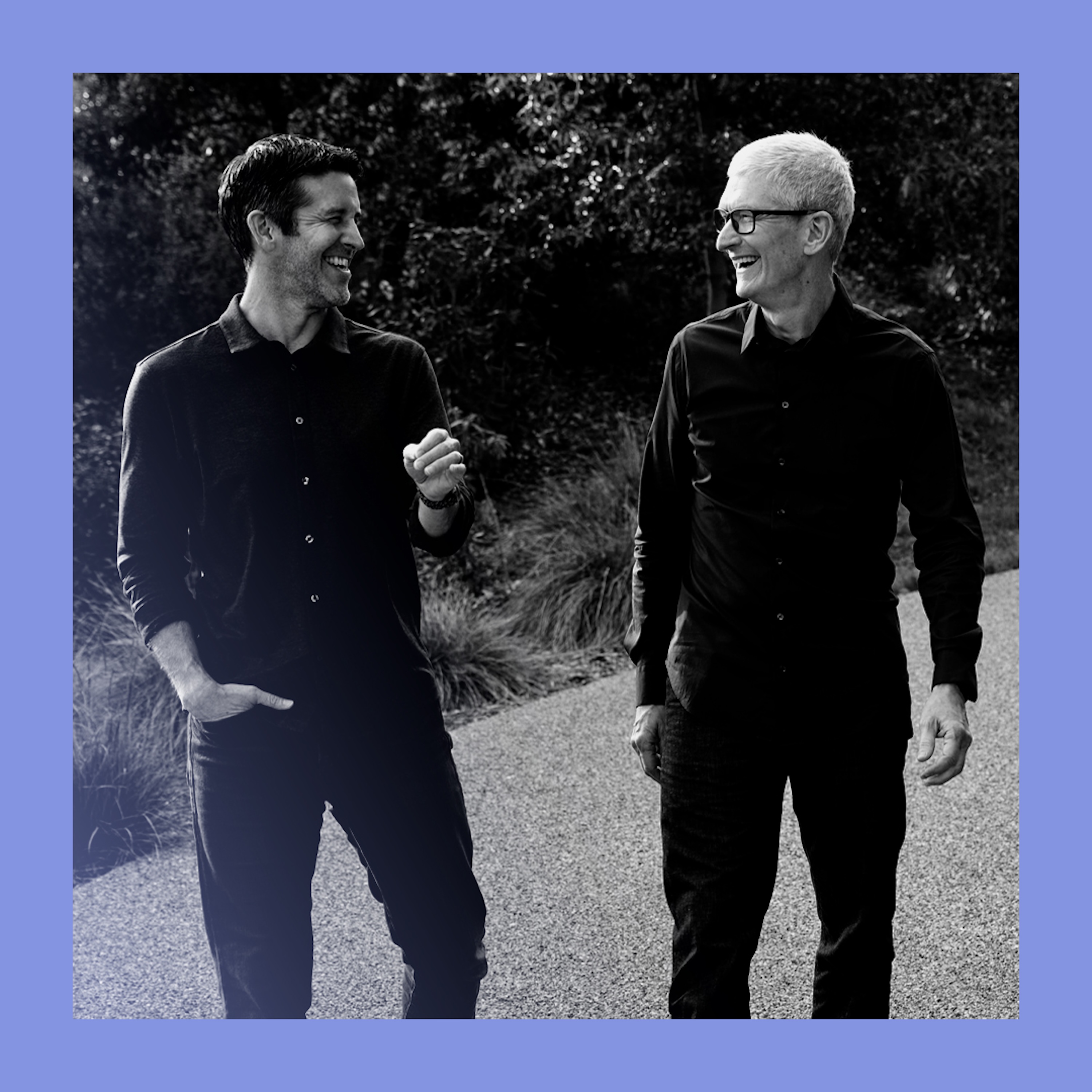
subject to credit approval. The Economist. Hello and welcome to the Intelligence from the Economist. I'm your host Jason Pa. Every weekday we provide a fresh perspective on the events shaping your world. Among the demographic quirks of modern Japan is a growing flood of rural women into cities with grave consequences for their hometowns. We discover what local governments are doing to keep more women from going or to lure them back. And once upon a time, boredom was seen as a scourge, a danger, a sign of societal decay. And Britain's had it real bad. These days it could be said they're not bored enough. But first, One of the world's largest companies is getting a new boss. Apple has announced that John Ternus will be taking the reins in September. The changeover is not exactly a surprise, but the choice of successor is worth a closer look.
- [02:13]
C
One of really the hallmarks of Tim Cook's 15 year tenure at the helm of Apple has been its incredible reliability. And that seems to be true even when it comes to succession.
- [02:24]
B
Tom Lee Devlin is the Economist's Business editor.
- [02:27]
C
Many had expected Tim Cook to step aside this year, and his choice of replacement was not really a big surprise. Still, it's hugely consequential. Apple's new boss is faced with this incredibly daunting task of remaking the company for the AI era.
- [02:46]
B
So tell me first of all about the new boss.
- [02:48]
C
Taking over from Tim Cook is John Turnus. He is Apple's head of hardware engineering. He's had a long career at Apple. He spent almost half his life there and has really led the iPhone own successes in recent years. He worked under Steve Jobs, Apple's founder, and called Tim Cook his mentor. And he's worked across all sorts of product lines at the company been involved in the development of the first iPad and the AirPods. And really he shares a lot of the understated qualities of Tim Cook, but also his unflappability. Tim Cook won't be leaving the company entirely. He will be sticking around as executive chairman, but the day to day management of the company will be shifting to John Turner's.
- [03:29]
B
And you said a handover was not entirely unexpected. Why the change now?
- [03:34]
C
Well, I mean, Apple is doing incredibly well and I think you could argue that Tim Cook is to some extent at the top of his game. I mean, iPhone sales are booming at the moment and Apple's market value has risen by more than 40% over the past year to in excess of $4 trillion. But Cook has been in the job since 2011. I mean, he's 65, John Tanis is 50. And there's also this strategic question that's been looming over Cook over the past few years, which is around AI. And I suppose a sense from a lot of commentators and a lot of investors that Apple hasn't changed quickly enough in response to this technological shift.
- [04:11]
B
So that is to say that John Ternus is the AI savior of Apple.
- [04:15]
C
It's early days, but I think it's certainly true that Apple needs a shift in strategy here. I mean, I think Apple Intelligence has by all accounts being a bit of a flop. This is Apple's foray into AI. You made a big hoopla about relaunching Siri, its voice assistant, but that has not materialized yet. And frankly, the company has really been unique among its big tech peers for having failed to take advantage of this new technology. I mean, Apple is going to be relying on the models from Google, its Gemini family of models to power its AI features when these are integrated into the iPhone and other devices. And it is interesting really that Apple has chosen its head of hardware to run the company going going forward, given many think that it should be more focused on the software and services side of its business.
- [05:00]
B
But if AI is the part where Apple has been lagging, why bring a hardware guy into the top job?
- [05:06]
C
Well, I think there is a case to be made that it's not as crazy as it sounds. The reality is, is that software is not and has never been and probably never will be Apple's primary source of competitive advantage. It is an incredible creator of hardware products and innovative hardware products. That's really been what has driven its success, its long history. Think about the way the Mac upended personal computers, then the ipod, then the iPhone, really all transformational technologies. And so I suppose the bet here is that by continuing to innovate around the hardware and incorporating AI into that in sort of a seamless way, Apple will be able to carve out a role for itself in this new era. I guess the big question though is can the company really continue to create these new transformational products? The reality is, is that the Mac, the ipod, the iPhone, those were all developed under Steve Jobs. Tim Cook, he was an incredible operator of the company. He made some very successful moves around the supply chain which really boosted the profitability of the company. But he didn't really lead the development of any revolutionary products. And so I suppose that the hope is that John Ternus is going to be able to come up with the sort of next generation of hardware products that will be native to the AI era and will really take advantage of that technology. Things like smart glasses, for instance, or wearable pins or another technology that people have been talking about.
- [06:36]
B
And perhaps Tim Cook didn't shepherd huge new devices into the world, but he was a good steward for the company for sure.
- [06:44]
C
Absolutely. I mean, I think Tim Cook can certainly step aside with pride. In the decade and a half since he took over, Apple's profits have ballooned. His share price has risen by nearly 2000%. So I think any CEO would claim that as an incredible success. And the fact that he's done that with such a large and already valuable company is really a credit to his leadership. I mean, Apple's annual sales have quadrupled under his watch and he has been great for shareholders, both in terms of dividends and buybacks. People always say that it's an incredibly tall order to follow a legend. And I think Tim Cook is fair to say he did that admirably, taking over from Steve Jobs. And I suppose that makes John Turner his job even harder because he now has two legends to follow.
- [07:28]
B
Tom, thanks very much for joining us.
- [07:29]
C
You are very welcome. Thank you.
- [07:41]
A
Why get aaa? Because bad roads, bad tires and bad luck. Out of gas, locked out or in a ditch, stuff happens with 24. 7 roadside assistance. AAA's got your back no matter whose car you're in. Join today@aaa.com AAA expect something more. Roadside assistance is provided by independent facilities contracted by aaa. Coverage in taxis, limousines and other ride sharing conveyances is excluded. 2024 AAA US Market Truck National Surveys offers terms, Conditions and policies are subject to change without notice. Visit AAA.com for details.
- [08:11]
B
Here's news from the ETF industry as demand accelerates for ultra fast computing and advanced AI, iShares has introduced a new European ETF, tracking the stock's global Quantum Computing Index. The index identifies companies using a unique methodology, scanning patents, annual filings, and corporate disclosures to capture leaders in quantum innovation. Learn more at stocks.com quantum that's S-T-O-X-X.com quantum.
- [08:58]
D
On a recent trip to Nanto, a small town in central Japan, I found myself sitting in a community hall watching a workshop themed on gender equality. At the front of the room, a woman called Koyasamiwa was speaking passionately, and in the audience there are dozens of people, mostly older men in dark suits, listening carefully, nodding along. The theme of the workshop was female representation in the region's community councils. But women are seriously underrepresented here. Of the 31 council chairs in the region, not a single one is a woman.
- [09:33]
B
Moeka Iida writes about Japan for the economist.
- [09:37]
D
Ms. Koyasu is a unique kind of consultant. She travels all across Japan, advising local governments and local companies on how to make their workplaces more gender equal. Her work keeps her very busy because policymakers have grown alarmed by the number of young women leaving the countryside, and depopulating towns are trying hard to convince them to stay or win back those who've already left for the city.
- [10:03]
B
So this is not just a small demographic blip. This is a serious problem.
- [10:07]
D
Yeah, this is a very serious problem. And I want to zoom out a bit. So we have this problem of the population being overly concentrated in Tokyo. So as a result, rural areas are being hallowed out, and that has very big implications for local industries like agriculture, fishing, and is also a massive strain on public services. This part of the story might sound familiar, but what people are increasingly realizing these days is that the effects are not evenly distributed between men and women. So women are far more likely to leave the countryside and go to the city than men. And this issue really came into focus in 2014 when there was a very influential government report that came out which said that nearly 900 municipalities across Japan could face extinction. So the logic is very simple. If you don't have enough women of childbearing age, there won't be anybody to give birth, sustain the population.
- [10:59]
B
So why is this happening, though? Why is that disproportionate number of women leaving?
- [11:03]
D
So I asked that question to Koyasu, and she cited some economic challenges. So, first of all, Japan does have a very big gender pay gap, but this gender pay gap is much larger in rural areas, and also a lot of rural areas simply don't have enough appealing jobs for women. But there's also a deep cultural problem as well. So Japan in general is a very patriarchal country. We rank very low in gender gap indexes. But these patriarchal norms are especially strong in rural areas. So for instance, if you go to local towns and if you go to local companies, you still see women being forced to serve the tea while men are making the decisions. And these things still do happen in the city, but they're seen as outdated. And also, a lot of people in the countryside, they live in these tight knit communities. They often live in three generation households with their grandparents. So a lot of women who are in the countryside say they often face pressure from relatives and people in their community who ask them, like, oh, isn't it time to have a baby? Or isn't it time to get married? Or something like that.
- [12:06]
B
So what are the municipalities that are seeing this exodus supposed to do about that? Those deeply entrenched cultural norms that you're talking about?
- [12:14]
D
So a lot of towns have started to implement gender equality initiatives. So that includes things like holding workshops and training community leaders and business people and teachers. And there's a town called Toyoka in western Japan, Japan, that even made a manga or a cartoon that is themed on sexism as a way to educate locals. And Koyasu, the consultant I met, said that whenever she gave these lectures back in the day, she used to meet a lot of backlash or pushback. She said there were people in the audience, especially older men, who would laugh at her or say very rude things to her. But now people's attitudes are changing and a lot of people are coming to realize that being inclusive towards women is also a matter of survival for the town.
- [12:55]
B
So these gender equality initiatives that you were talking about are pushing an open door.
- [13:00]
D
They're working well, I think it's too early to tell and there is a tension that keeps coming back as I was reporting on this story. So the logic of these towns implementing gender equality initiatives is because they want young women to move back, and they want them to move back so they could marry and have children. Which is a bit ironic because if you really want to achieve gender equality, then you shouldn't be pressuring them into having children or pressuring them into marrying. And I think this manifests in the way towns implement their efforts around demographics. So for instance, a lot of towns, they have these very advanced gender equality initiatives, but at the same time, they also like to resort to what we call in Japanese, kansei konkatsu, which is like government backed matchmaking. So a lot of towns Also host these matchmaking events and hire these local consultants who are often like an auntie type older person in the rural area who would be not judging younger people who are too shy to find a partner and pair off, as you say,
- [14:02]
B
There is a certain irony there. What about the women who are leaving? What do you think it would take to convince them rather than convincing the towns to take this question seriously?
- [14:11]
D
The overall picture is that young people are increasingly moving to Tokyo. Tokyo is a very appealing place. There are so many more appealing job opportunities, so it might seem very difficult to challenge this overall picture. But actually there are women in the countryside who would prefer to live in their hometowns if there are enough appealing job opportunities or if they felt a bit more comfortable living there as women. The countryside has a lot to offer as well. There's very beautiful nature. People say the food is more delicious or the sake is delicious. So there are people who want to live there. If these activists can help make the countryside a bit more friendly towards women, I do think there will be people who are moving back, but changing attitudes is going to take a lot of time.
- [14:55]
B
Moeka, thanks very much for your time.
- [14:57]
D
Thank you so much for having me. Jason.
- [15:17]
E
The symptoms were alarming. In the 18th century, a new disease appeared in Britain. It gnawed at a man's entrails, turned healthy men into thinking phantoms, caused lethargy, depression and the desire for death. The name of this disease was boredom. Catherine Nixie writes about Britain. Boredom has been blamed for everything from binge drinking to casual sex, random shootings and the novels of Henry James. Boredom, wrote this philosopher, Soren Kierkegaard, is the root of all evil. Britons used to be heroically bored. The emotion was a late arrival to the land. But having arrived, it thrived. Soon anyone who was anyone was bored. Charles Darwin was bored by barnacles. George Eliot was bored by Darwin. Almost everyone was bored by George eliot. By the 1840s, boredom had reached epidemic proportions. By the 1850s, Dickens could describe someone as bored to death. In the 1960s, Winston Churchill would declare, I am so bored with it all, and then actually die. But something has changed. Whereas once Britain fretted about boredom's abundance, there is now increasing anxiety at its scarcity. Observers have noted that the age of boredom seems to have now passed. Quite where boredom came from is unclear. The word bored first appeared in written English in 1768, the same year Manichean ly as the word interesting. Various critics blamed various culprits for this innovation, though most agreed that the likeliest culprit was someone else. The socialists blamed the capitalists, the capitalists blame the socialists, the old blame the young. Everybody blame the French. Not wholly without cause. That first mention of boredom in English appears in the phrase about being bored by these Frenchmen. The French, in turn, blamed the English. To convey the idea of total, deep dullness, the French adopted the phrase etre de Birmingham. The only things that Britons in Birmingham beyond seemed actually unbored by was boredom itself. They were obsessed by it. Charles Baudelaire had said that boredom would swallow the world in a yawn. And certainly it consumed Britain. Victorian preachers censored it, novelists lambasted it, and scientists started to study it. Scientists have since studied whether bored people are more likely to binge drink. They are to sadistically punish their schoolmates. Likewise, or to wish to shred worms in a coffee grinder. They do. In a study published in Science, researchers shut people in a room with nothing but the injunction to enjoy being alone with their thoughts and a button that gave them an electric shock. Many pressed it. Being alone with one's thoughts, a paper dolefully noted, seems difficult and unpleasant. Britain's boredom epidemic is rarely discussed now. The medical malaises fretted about in the smartphone era are instead the stress epidemic and the anxiety epidemic. Boredom has today been described as an endangered state, though precisely quantifying its decline is hard. Boredom is not well measured, but though direct evidence of its decline is scant, indirect evidence is everywhere. So many of the things that Britains once did to alleviate it are declining. Britons, especially the young, are drinking less, they are reading less and they are having less sex. Even sales of Henry James novels have fallen by 50% in a decade. What are up, of course, are tech profits. As the academic Robert Putnam has said, technology has privatised our leisure time. Boredom has not wholly gone from Britain. There are, as was once observed, so many boring things to be bored with. There is rain and cold and Britain's growth rate and people who talk about hamnet. There is Sikhir Starmer. Boredom, however, is not one of these dull things. Boredom, the philosopher Bertram Russell once said, has been one of the great motive powers throughout the historical epoch. And yet it has received far less attention than it deserves. That is truer now than ever. It is time to find boredom interesting again.
- [19:59]
B
That's all for this episode of the Intelligence. We'll see you back here tomorrow.
- [20:22]
A
Why get aaa? Because bad roads, bad tires and bad luck. Out of gas, locked out or in a ditch, stuff happens with 24. Seven roadside assistance AAA's got your back. No matter whose car you're in, join today@aaa.com AAA expect something more. Roadside assistance is provided by independent facilities contracted by aaa. Coverage in taxis, limousines and other ride sharing conveyances is acceptable. Excluded 2024 AAA US Market Track National Surveys offers terms, conditions and policies are subject to change without notice. Visit AAA.com for details. This episode is brought to you by Progressive Insurance. Do you ever think about switching insurance companies to see if you could save some cash? Progressive makes it easy to see if you could save when you bundle your home and auto policies. Try it@progressive.com Progressive Casualty Insurance Company and affiliates. Potential savings will vary. Not available in all states.