Loading summary
Transcript33 lines
- [00:04]
A
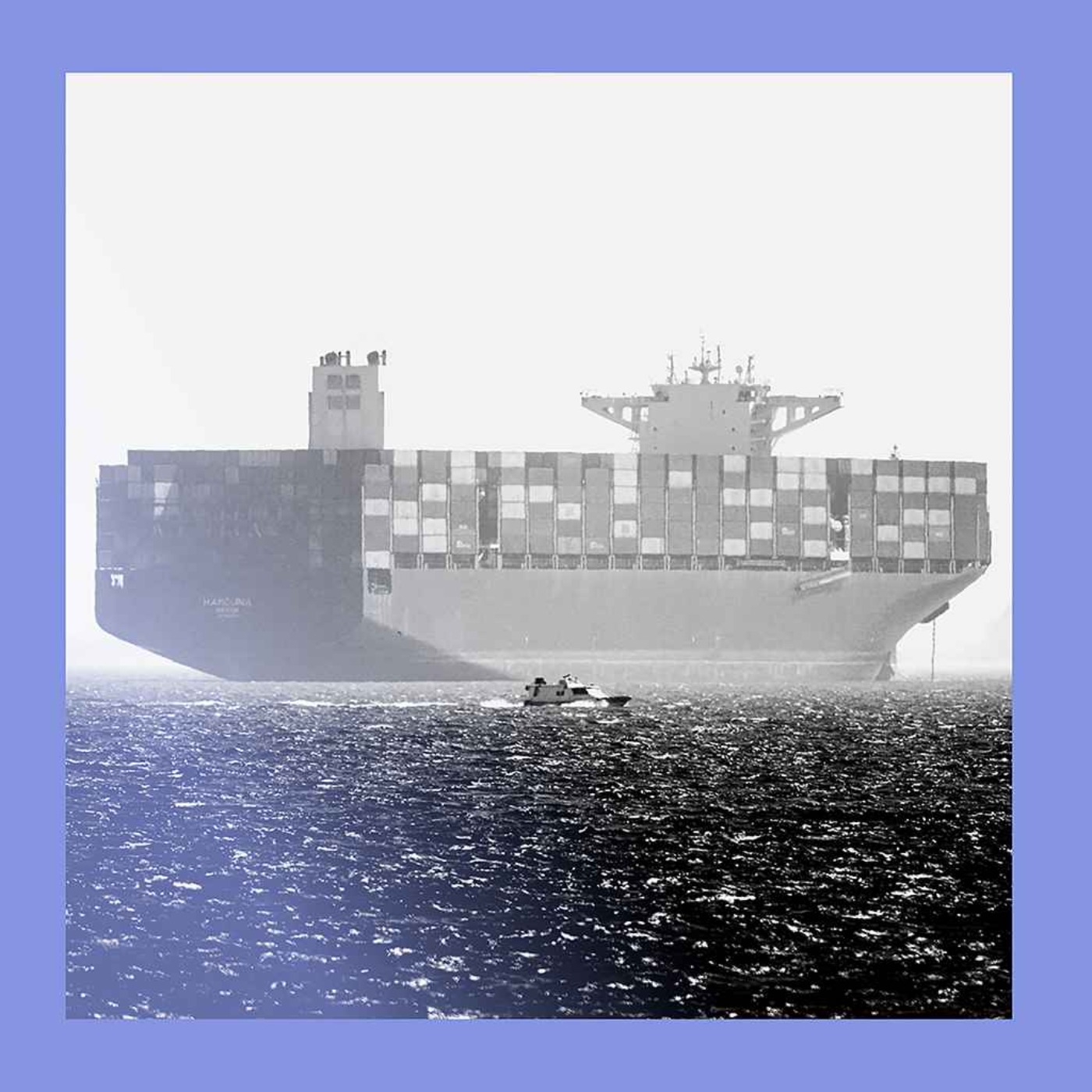
The economist. Hello and welcome to the Intelligence from the Economist. I'm Jason Palmer. Today on the show, how an influencer's message to Vladimir Putin has resonated and the costs to health of India's street noise. But first, If nothing else, you have to appreciate the branding attempt. On Sunday, the Trump administration announced Project Freedom, a bid to restore freedom of navigation in the Strait of Hormuz. When it came into force yesterday, it immediately ran into trouble with aggression from both sides. The oil price roller coaster lurched up again this morning. Brent crude is at about $114. It's not peace, but it's not out and out war either.
- [01:13]
B
Yet America and Iran have drifted into a dangerous and unsustainable stalemate.
- [01:21]
A
Greg Karlstrom is a Middle east correspondent for the Economist.
- [01:24]
B
We're three weeks into the American blockade of Iranian shipping in the Strait of Hormuz, and that was never going to be a situation that could stay as it was indefinitely. Someone was going to be tempted to try and escalate the war to break this stalemate. And the events that took place in the region on Monday are a sign that we're getting closer and closer to that point.
- [01:48]
A
And so talk me through how we got to that point and the degree to which Project Freedom is what's breaking the stalemate a bit.
- [01:56]
B
So you're right. It started with that announcement from Donald Trump of what he's calling Project Freedom. Now, if you read Trump's post on social media, it sounded like the US Was going to send destroyers to escort commercial vessels. That is not, by and large, what the Americans want to do. The way they've described it in background briefings to reporters is more of a coordination effort. So they are going to to speak with commercial vessels about the best route to take through the strait to try and avoid the mines that the Iranians have placed there. And then they will have destroyers and other military equipment nearby should the Iranians attack commercial vessels. So that's what Donald Trump announced. And then on Monday, the Americans did escort two US Flagged vessels through the Strait of Hormuz. Now, the Iranians treating all of this as provocation and escalation. And so what did they do in response? They announced a wide, wider closure of the strait. They're basically declaring not just Hormuz itself, but water on either side of it as a closed military zone where vessels need to coordinate with them. They carried out two attacks on commercial ships, one owned by the United Arab Emirates, the other a South Korean vessel. Both of those were struck on Monday. And then they fired missiles and drones at the UAE itself, some of which caused damage at the port in Fujairah, which is right now the main oil export terminal that the UAE is using to get some of its oil to the market market, a significant violation of the ceasefire that's been in place for almost a month now.
- [03:28]
A
So it doesn't sound as if Project Freedom is succeeding on its own terms.
- [03:32]
B
Not in the first day, and I think it's unlikely to succeed in the coming days or the coming weeks. There's a few issues with it. One is if the Americans mostly are not going to provide naval escorts, but only provide coordination and a helpline for ships that want to sail through Hormuz, most ships will not be willing to make that journey because they will still fear being attacked by Iran. And the Iranian attacks on Monday will reinforce that fear. The second issue is, if you read what Trump posted, if you listen to what the Americans are saying, they're focused on getting vessels out of the Persian Gulf, so sailing eastward through Hormuz into the Arabian Sea and the open ocean. There are hundreds of vessels stranded there in the Persian Gulf. If you're going to bring them through just a few at a time, it's going to take months to clear the backlog, and then no one is going to sail in the other direction. No one wants to risk sailing into the Persian Gulf right now, lest the ceasefire completely fall apart and you wind up stuck there. The impact of this on the flow of oil and gas and other commodities is going to be quite limited. The energy shock is not going away anytime soon. So for the moment, despite this announcement, the Strait is still effectively shut to the vast majority of commercial traffic.
- [04:46]
A
We've kind of been waiting for something to happen that brings both sides to the negotiating table in a serious way. And everything is just sort of dragging on and on. What's going to bring enough pain, do
- [04:56]
B
you think they're both waiting each other out at this point? You speak to people close to the regime in Tehran, and they think they can endure this for months, whereas the Americans only have weeks before the global economy is really tipped into crisis. And then you hear the opposing view from people in Washington who think that the Iranians are weeks away from some sort of dramatic crisis themselves. So both sides think they can outlast the other one, which is why I think we haven't seen more urgency to make a deal. There are still some indirect talks going on. They haven't met directly since April 11, that first round of talks in Islamabad, but America and Iran are Passing messages via intermediaries in Pakistan. Iran sent its latest ceasefire proposal to the Americans late last week, which in some ways is a bit more flexible than they were several weeks ago. They had insisted for a while that they won't speak again unless America lifts its blockade of Iranian ports. They seem to have dropped that precondition. They're willing to talk now in sort of a two phase negotiation, the first of which would focus on reopening the Strait of Hormuz. Both sides would lift their blockades and then if they manage to agree to that over a period of perhaps several weeks of talks, there would be a second round of negotiations that would deal with Iran's nuclear program, its demands for sanctions relief and some of the other meteor issues here. Now, that's what they've proposed. The Americans have not formally responded to it yet. Trump has said he's unhappy with it. He's also said he hasn't read it yet. Make of that what you will, but they don't seem like they're jumping to accept that offer. But that's where we're at diplomatically. We're still at this stage of passing messages and there is not yet a firm plan for another round of in person talks.
- [06:42]
A
But what about things going in the other direction? Given the violence that we've seen in the Straits overnight, what chances that this goes the other way and we end up with all out fighting, greater conflict than we've seen in weeks?
- [06:54]
B
There's still a very real risk of that. There are still American aircraft carriers in the region. The head of America's Central Command made a visit over the weekend to an amphibious warfare ship in the Arabian Sea. And after these attacks on the uae, there is some pressure on the Americans to retaliate, not to let this pass because it was a significant violation of the ceasefire. So there's very much that risk of not just renewed fighting, but escalated fighting. And that was the problem all along with this strange period we've been in over the past few weeks where the war was paused. Diplomatic talks weren't really making progress. Both sides were blockading one another and imposing economic pain on each other. The war had settled into this weird ennui phase where it almost seemed like nothing was happening. But again, that was never going to be sustainable for very long. Someone was going to be tempted to press their advantage militarily to try and break that deadlock. We saw Trump do that, in a sense by announcing Project Freedom. It wasn't resuming the war, it wasn't an attack on Iran, but It was trying to use the US military to shake things out of the stasis, to reopen the strait, to deprive Iran of a card that it could use at the negotiating table. The Iranians responded to that militarily, and they brought us to the brink of the ceasefire falling apart and the war resuming. And I think the longer we are in this in between period where there's no war, there's no peace, and there's no oil flowing through the strait, the more likely it is that this truce is going to fall apart and the war is going to resume.
- [08:30]
A
Greg, thanks very much for your time.
- [08:32]
B
Thank you, Jason.
- [08:55]
C
This is the voice of Russian influencer Victoria Bonya from her home on the southern coast of France, near Monaco.
- [09:04]
D
Arkady Ostrovsky is the Economist Russia editor.
- [09:14]
C
She is saying, Vladimir Vladimirovich, the people are afraid of you. Bloggers are afraid of you. Artists are afraid, Governors are afraid. But you are the president of our country and people shouldn't be afraid. I'm not afraid. Of course, the Vladimir Vladimirovich she refers to is Russia's president, Vladimir Putin. The video was posted on Instagram, which is formally banned in Russia, but in fact used by millions. What's remarkable about it is not its content, but the response it triggered. Within hours, her video had clocked 10 million views. Five days later, it had reached 30 million. In the fifth year of Russia's war against Ukraine, it has revealed an important, some say seismic, shift in the public mood.
- [10:08]
D
Arkady, just explain to us who is Victoria Bonya and why this has got such a massive response.
- [10:16]
C
So Victoria Bonya is not an activist. She's not a political figure. She's not a liberal journalist. She is a blogger and an influencer. And her business is selling clothes and vegan cosmetics and her lifestyle and fitness on Instagram. And she has 13 million subscribers. She's a former television presenter. She usually talks about things like glowing lip oil. So this kind of came out of the blue.
- [10:44]
D
So why the move from lip oil and mascara to politics? What's happened?
- [10:49]
C
The true answer is we don't quite know. But she's an Instagram influencer and she gets the mood and the trends. And she clearly sensed and expressed this growing disaffection amongst her followers. This is not an alienated anti war minority. This is actually the majority of Russians. This is ordinary people, those who in opinion polls register supporters of war. Whereas, in fact, these are normal people who never wanted this war, never embraced it as their war. They just kind of tried to distance themselves from it. And for the first three or four years, they sort of acquiesced to it. In this fifth year of war, there is this disaffection. And I think what's going on is the erosion of that majority for a number of factors. And that's what she captured. That's why the 30 million views.
- [11:39]
D
You've told us so many times how dangerous it is to criticize Putin. So how is she getting away with it? And I mean, is she getting away with it?
- [11:49]
C
It is very dangerous. And the video is very interesting because it's very carefully constructed. It's a very well known genre in Russia of a petition to the good czar, usually against the bad boyars, the bad intermedia. She sort of appeals to Putin, saying, I'm not afraid of you, but I'm your loyal subject, and then pointing a finger at him. And she first airs all the grievances of ordinary people. She doesn't mention the war. She talks about the oil spills on the Black Sea coast of Anapa. She talks about the deadly floods in Dagestan and the slow response of the authorities. And then she turns to culls of cattle in Siberia. And then she turns to the Internet, which is the source of her income, and she points the finger at Putin, saying, you've deprived us of the ability to communicate and make money and advertise on Instagram. It's sort of very carefully done. But the reason she gets away with it is one is because of the genre of the petition, and secondly is because she has 13 million subscribers who are loyalists on the whole, who are part of this majority.
- [12:48]
D
So just explain the why now a bit more then what you're saying is that she's touched a nerve now, but also she's emerged now because there's some bigger shift. What is that shift?
- [13:01]
C
The shift is from quiescence and doesn't impact us to active disaffection. What caused it is this massive disillusionment after last year's peace talks. Last year, a lot of people saw peace negotiations and Trump's role in it as a path out of the war, which nobody liked in the first place. Now, those negotiations, as we know, came absolutely nothing. Meantime, it became very obvious after the latest offensive that Russia's progress on the battlefield basically is reduced to crawl now. The human cost obviously mounted up. It's now past 1 million dead and wounded. The war, in a way, is coming home because Ukrainian drones can reach very, very deep into Russia, reaching the Urals. The latest example is their hit on Russian oil refineries and terminal In Torpse, which is only 80 km from Sochi, the economic cost has increased massively because basically the government is now extracting money from the population for this war in higher taxes. Inflation is going up, interest rates are 14, 15%, which is triple what they were before the war. So there is a clear economic cost. At the same time, there is sort of a tight ideological control and there is interference in people's lives through restrictions on the Internet. So all this is creating a new dynamic when basically the people are saying, well, we stay loyal to you and we enjoy these benefits. Now you're taking away the benefits and you don't trust us. So it's erosion of that majority. And this is incredibly important. And this is why the Kremlin jumped onto it very, very quickly.
- [14:55]
D
And how has the Kremlin responded?
- [14:58]
C
The response was very miscoordinated. Putin's spokesman, Dmitry Peskov, was very quick to acknowledge the legitimacy of her grievances, partly because these are also his grievances. So he came out very quickly saying, yes, we've heard this, and to be fair, we're working on the issues that, that she's pointed out to. So it's not like it's been unnoticed. Then comes out this propagandist, Vladimir Solovyov, foaming in the mouth, wearing his trademark black nose jacket, saying, you know, she's a worn out slut and how dare she to open her dirty mouth. And that only makes things worse because then all the other influences start coming on board and saying, no, we're going to stand for her. And it almost turns into a MeToo movement where other women bloggers saying, well, he's insulted not just her, he's insulted all of us. We're hardworking, entrepreneurial women. What you're creating is you're creating a revolt. There will be a revolt by women who are struggling with their businesses, who don't like the fact that their kids have been denied higher education, all that. So the Kremlin then clearly slaps down this propagandist, tells him to pull back and apologize in air, which is what he's done. So it's not the first time the Kremlin makes a step back. But the fact that an influencer has taken on and shown the state to be actually discoordinated and possibly showing sign of weakness is part of this, this process which is brewing. We can't really say where it leads to, but there is a new dynamic which wasn't there six months ago. I think we'll see more and more ripples as the economic situation deteriorates, as it becomes clear that this war is unwinnable.
- [16:43]
D
Arkady, thank you very much.
- [16:45]
C
Thank you.
- [17:01]
E
In a rap shackle shop in an old and crowded part of Delhi. Delhi, a booming trade is underway.
- [17:09]
D
Vishnu Padmanabhan is an Asia correspondent.
- [17:15]
E
Diamond Horn palace restores horns for expensive bikes and cars because they are so overused in India that they lose their quality of sound in their first few months. But the success of this business should sound an alarm in India and its ease easy to hear. Why? That is the sound of a busy street in Delhi. Across India's capital. Average noise levels are around 75 decibels. That's roughly four times louder than the threshold recommended by the World Health Organization. In some Indian cities, the noise can exceed 100 decibels. That's the equivalent of standing next to a chainsaw. Compare the noise in Delhi to the sound of an average street in London. How does that make you feel? The contrast is jarring. Manish Manohare, a researcher at the Indian Institute of Technology, Delhi, compared the responses of Indian and British participants to these clips from their countries. When exposed to the sound of a Delhi street, the British participants heart rate increased and they displayed signs of physiological stress. Indians, by contrast, were more accustomed to the noise. But still they showed alarming vulnerabilities, such as signs of chronic cardiovascular strain caused by their constant exposure to noise. Taken together, this has a serious impact on public health. Research has shown that noise pollution can increase the chance of heart disease and slow the development of working memory. Estimates from Europe suggest that the health burden from noise could shave off 0.6% of GDP each year. Despite all these harms, very little is being done to tackle noise pollution. The Central Pollution Control Board, the country's pollution regulator, has a mandate to address noise pollution, but it is struggling. For example, it has established silent zones in big cities near schools and hospitals. But the noise levels in all of these places almost always exceed the recommended thresholds. The big problem is road traffic, which accounts for the bulk of noise pollution. And a lot of that is down to the horn, which in India is used as an all purpose communication device. For example, one study in Kolkata, a city in eastern India, showed that scooter riders honked 131 times an hour. Shops like Diamond Horn palace actively advertise how loud their horns are. Even fancier firms like Mercedes Benz have adapted horns in India to make them more durable and suitable for the Indian road. So what leads to change? One way could be to nudge drivers to get them to break the habit of honking. More than a decade ago, Anand Damani, a behavioral scientist, built a dashboard device that beeped and flashed every time the driver honked their horn. Silencing it required pressing a button. This small interruption jolted drivers out of autopilot into conscious thought, and as a result, they were able to break the habit of honking. There could also be more systemic interventions. In China, for example, authorities have built sound barriers on roads. But ultimately, the first thing that needs to occur is for people to be aware of the harms and noise pollution. Doctors and public health officials should flag the dangers from loud sounds, but in India, those calls are being drowned out by the noise.
- [21:26]
A
That's all for this episode of the Intelligence. We'll see you back here tomorrow.