Loading summary
Transcript36 lines
- [00:01]
Optum Narrator
Healthcare can feel complicated. That's why Optum uses technology to connect the people and processes that make healthcare easier, more affordable, and more effective. We're making it clearer for you to know exactly what your benefits cover and to help you better manage your health. We're coordinating care between your doctors and your technology. We believe better, simpler healthcare is always possible. That's healthy optimism vats Optum. Visit optum.com to learn more.
- [00:31]
Pura Fragrance Narrator
Summer Smells like summer road trips, ocean breezes and long evenings under the stars, it's a feeling you want to hold onto. Restore your sense of place With Pura's new summer fragrance collection, we've captured the magic of the season in clean, premium scents that transform your home into your favorite destination. Discover the art of scentscaping and bring the summer in. Visit pur.com to explore the collection.
- [01:02]
Jason Palmer
The economist. Hello and welcome to the Intelligence from the Economist. I'm Jason Palmer. Today on the show, a parting shot from our outgoing defense editor on the nature of modern war and a tribute to the trailblazing Congressman Barney Frank.
- [01:39]
Shashank Chi
Eight Palestinians have been killed in Israeli drone attacks across Gaza. The strike hit a community kitchen in Da' Alban skies over Iran, killing three.
- [01:53]
Jason Palmer
Family.
- [01:53]
Shashank Chi
Russia overnight launched its long anticipated attack on Ukraine, striking military posts across the country. The last eight years have been, to put it mildly, busy.
- [02:15]
Jason Palmer
Shishank Chi is our defense editor and incoming Washington bureau chief.
- [02:19]
Shashank Chi
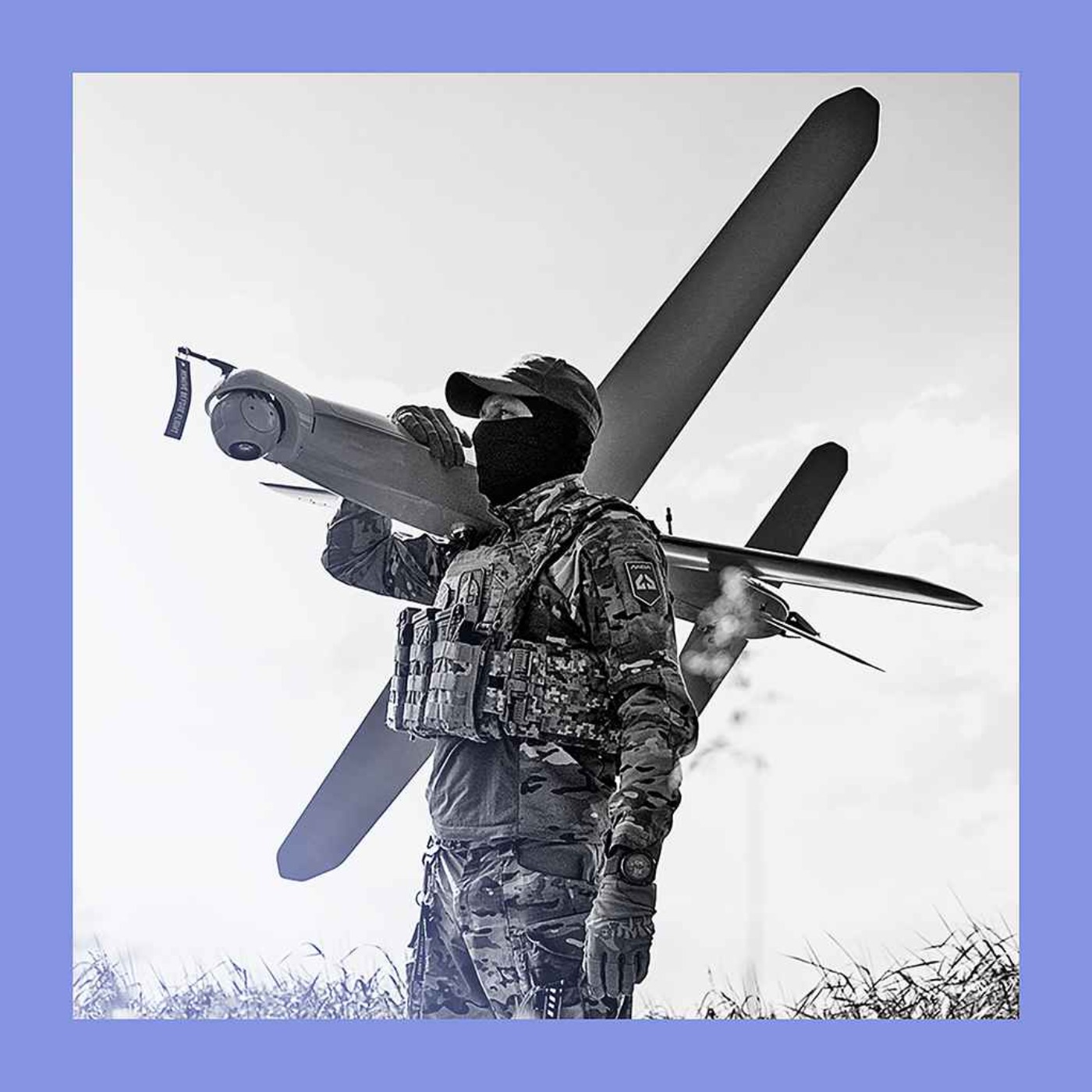
When I started this role in 2018, the biggest questions were over Donald Trump's handling of North Korea, and there seemed like a very real risk of war, perhaps even nuclear war on the Korean Peninsula. That calmed down. And then, of course, we saw the great withdrawal From Afghanistan in 2021, the debacle of American troops leaving in chaotic fashion out of Kabul. And I did remember thinking at the time, God, that was busy. But at least next year will be a little bit calmer. At the time, Vladimir Putin's armies were slow building up on the edges of Ukraine, and that is what would come to dominate the rest of my time in this job. On top of that, of course, have been the incredibly destructive post October 7th wars in the Middle east, in Lebanon, in Gaza, in Iran, alongside an array of lesser, though often similarly bloody ones around the world. There was a great military historian, Michael Howard, and he once observed that the profession of the soldier was unique, he said, in that he may have to exercise it only once in a lifetime. Indeed, that often it was as if a professional swimmer had to spend his life practicing on dry land for an Olympic championship on which the fortunes of his entire nation depended. The soldier therefore turns to the wars of others, past and present, to discern the future. For after all allowances have been made for historical differences, wars still resemble each other more than they resemble any other human activity. That's always stuck with me because I think it tells us why we look at these wars around us beyond the importance of documenting them and understanding the human experience. They teach us about what could be to come and what could happen elsewhere. There's been a big change in how we consume, interpret, talk about war. I think of America's current leadership, for instance, which sometimes appears to revel in conflict and in war. Donald Trump talks about torpedoing Iranian ships as being fun. We have seen the Department of War release these slick music videos which blend Hollywood clips with battlefield footage in a way that really glorifies that. I'm also fascinated by this profusion of first person view drone footage from Ukraine depicting the terrified or resigned faces of cornered Russian or Ukrainian soldiers. And on both sides, it's frequently woven into these effectively snuff movies set to heavy metal. And these are recruiting videos. They're also propaganda. They're psychological intimidation. In some ways. There are actually comparatively few infantry on infantry attacks. Combat sometimes resembles remote controlled execution. Death is dealt out on this artisanal scale. And it's in a contrast to semi anonymous high altitude bombing. There's one video that was highlighted by the US Army's training in Doctrine command. A Russian soldier gestures to an approaching Ukrainian drone. And the whole thing is being filmed by this drone. And the Russian soldier is saying, don't kill me, kill my comrade lying in a ditch nearby. You know, he points to him, gestures to him, and the drone pauses, it turns to the second soldier, it drops a grenade on him, it decapitates him, and then it returns to the first soldier and kills and decapitates him as well. That engagement is horrifying, though you could argue it is no worse than an artillery barrage that kills dozens of soldiers at once. It's just the intimacy of it that horrifies us. It's also not illegal. Both soldiers were legitimate targets from what we can see. But I do think amongst the professional military officers I talk to, not to mention lawyers and ethicists, I think there is a significant concern that the laws of war have been eroded away in many recent conflicts. Russia's campaign in Ukraine, which has involved the torture of civilians, attacks on hospitals, efforts to freeze civilians in wintertime, that stands out. We've also seen other developments. One of them is the revival of what you might call punitive language threats of reprisals, for example, often shading into collective punishment. The Israeli heritage minister, Amichai Eli Yahoo said that Israel is racing to wipe out Gaza and will make it. I think the other development is threats against entire classes of targets, bridges and power plants, both of which have been threatened collectively and in totality by Donald Trump. In Iran, where every bridge in Iran
- [07:42]
Ann Rowe
will be decimated by 12 o' clock
- [07:46]
Shashank Chi
tomorrow night, where every power plant in Iran will be out of business. Military officers would possibly retort that, look, the public misunderstand the laws of war, that these are much more permissive than commonly believed, that we've become quite used to slow, deliberate wars of choice in the Middle east, in Iraq and Afghanistan, and that high intensity wars are different. If Hamas built a tunnel under a building, it may under some circumstances be lawful to topple it. There is no easy or clean way to fight an enemy that's deeply woven in, into and below the urban landscape. But I think in wars with more powerful adversaries, and in a world in which their missiles reach further than ever before and are more precise than ever before, I think Western populations would be shocked to find the same infrastructure in their own countries. Their own bridges, their own power plants, their own critical national infrastructure become targets in the future. And I think it's hard for them to imagine that they could be the civilians one day in need of the same protections of the laws of war that are applied to war torn countries today. In 2011, Steve Pinker, a professor at Harvard, put forward a provocative thesis. He said the world was becoming less violent in every way. Murders, homicides. He also said war was on the decline. And that was a common argument. I think that that's become increasingly difficult to sustain for lots of reasons. Political scientists pointed out that yes, battlefield deaths might be going down, but that was because medicine had improved, armor had improved, evacuation had improved. And so soldiers who would previously have died now ended up wounded but on a bigger scale. I think there's just more evidence that war is really back. If you look at the Uppsala Conflict data program, a monitoring group that recorded 61 active state based conflicts in 2024, that was the highest level since records began in 1946. There were 11 full fledged wars. That was the highest level. Since 2016, the number of state based conflicts has doubled. When I take all of that together, I think there's a paradox. We see that war is becoming harder to wage, the battlefield is becoming more lethal. Armies are still at the early stages of trying to work out how they evade and defeat this blanket of sensors and drones and munitions that darken the skies above them. And yet political leaders seem to be perennial optimists when it comes to the utility of war as an instrument of statecraft. They all think they can win. They all think they can deliver the knockout blow. And there's lots of evidence to the contrary all around them.
- [10:50]
Jason Palmer
Shashank, to your mind, having done this job for 8 years, how has war changed?
- [10:56]
Shashank Chi
I think we have seen a succession of battlefields in which the impact of technology has become really clear. That technology didn't appear on those battlefields. It was evolving for years before. But wars are always clarifying moments where you see these technological trends that have been developing for years and years and years burst forth in different and sometimes unexpected ways. And for me, the thing that has stuck with me through various conflicts, some of the big ones, but also some of the ones you haven't heard of, you know, Nagorno Karabakh, has been the idea that the battlefield has become more and more transparent. It means that there's stuff in the sky above you, whether that's satellites, but particularly drones, watching you all the time, watching every time you try and move, every time you try and attack. And there is more stuff that can kill you. Precision firepower. Not just the smart bombs and big missiles of the first Gulf War of the 1990s, but small, intelligent weapons with chips inside them all over the place, accessible to a much wider range of actors, whether that is the United States of America or whether that is the Houthi rebels in Yemen firing Iranian made projectiles. And that transparent battlefield where everything is being watched, where it's increasingly lethal, and which armies struggle to move without being struck. That, I think, is one of the single most important trends I've seen on the battlefield for many years.
- [12:25]
Jason Palmer
And so what should the response to that be? If you were starting an army today, how do you make it?
- [12:32]
Shashank Chi
I don't think you'll find a single answer to that question that's uncontested among the big armies of the world. We all recognise that Ukraine has been incredibly innovative in how it's fought. You know, it has no navy, but it's destroyed a big chunk of the Black Sea fleet. We can see that it's staved off this much bigger Russian army, in part through very, very clever use of technology, creating this incredibly lethal kill zone in which it's very hard for the Russians to adv. And they've done it with massive amounts of drone use, with electronic warfare, with new tactics They've made an unmanned ground systems branch of their army, things like fibre optic controlled drones. So types of weapons that are being revived from decades ago on the battlefield. But if you talk to Western armed forces, they'll say, we need to learn that stuff. But we would fight differently. We in NATO, for instance, would have air dominance over Russia. We would have long range firepower in much greater quantities than Ukraine. So that debate is the one that has shaped my time in this job, which is, which are the right lessons to take from the Ukrainian battlefield and the other battlefields and which ones would not apply elsewhere? So, for example, drones, highly effective in Ukraine. But if you want a drone that can operate over the much bigger distance of the Pacific, it has to be bigger, it's much more expensive. It may not be as disposable or consumable as a tiny little Ukrainian drone. And suddenly you're in a kind of different world in terms of the hardw that you're using. The geography powerfully shapes the capabilities you need. And so I don't think there's a single cookie cutter answer of what should armies look like. It's about drawing the right lessons.
- [14:11]
Jason Palmer
So it sounds to me that armed forces that wish to be prepared for a range of conflicts don't necessarily do different in light of all this change, they just do more.
- [14:19]
Shashank Chi
I think a great way to think about that is look at the war in Iran, which in military operational terms, though not in political terms, was a success for the United States and Israel. How did they project power into Iran? Well, it was legacy equipment. It was F35 stealth aircraft that cost huge amounts of money. It was refueling aircraft allowing these jets to be projected over these big distances. It was high end cruise missiles that cost way more than the stuff Ukraine is using now. Not all of that perhaps needed to be expensive, but it allowed for complete overmatch over Iran. And I think what we will see more of is the idea of hybrid forces. If you look at, for example, the Royal Navy in the uk, they talk about a hybrid fleet. So you'll have crude ships, you'll have aircraft carriers, but you'll have drone ships operating, operating off them. You'll have drone ships providing pickets and scouting ahead of them. If you look at air forces around the world, they're talking about loyal wingmen complimenting their expensive crew jets and they might be able to push into hostile Chinese airspace in the way that you might not put a crewed aircraft, you might send your drones up ahead of it. So this hybrid concept that I think is going to be a shaping force for Western armed forces in the years ahead.
- [15:27]
Jason Palmer
Now, Zejank, this is, I believe, our last conversation in your capacity as defense editor. So a question for you. Kind of more about the effects of war and the degree to which war is kind of just feels much more on almost everyone's doorstep. We're thinking about war. We're talking on the show about war far more than we did even five
- [15:44]
Shashank Chi
years ago for the west, at least we took a holiday from war, didn't we? And it's now coming back. It's more palpable. I just think of the fact that in the last couple of months we've seen two ballistic missile attacks on Turkey, drone attacks on an EU country, Cyprus, we've seen Russian drones coming into Poland. Isn't that remarkable? Last year we saw the first and most substantial Indian, Pakistani airstrikes since 1971. War occurring under that nuclear threshold. We have seen the Iran war spread all the way from the Mediterranean to Sri Lanka, the first act of an American submarine torpedoing an enemy warship since the Second World War. As you string all those things together, there is this sense that it's not the 90s anymore, it's not even the 2000s anymore. These are not wars that are far away, far from home home. Things that happen in the Middle east, they feel more all encompassing. Society feels it closer to home. The defence burden on economies is rising, particularly in those countries where it fell dramatically, like in Europe, but also, certainly also in Asia. And the players are changing. We have smaller groups like the Houthis able to shut down major international waterways. You have countries that were once quiet and restrained, like Japan loading up with Tomahawk missiles brimming out of their pockets. War is just so much more palpable than when I started this job eight years ago. And I think that that is only
- [17:11]
Jason Palmer
going to continue on that frankly terrifying note. Then, Shashank, tell me about what you'll be getting up to next.
- [17:17]
Shashank Chi
Well, I have the great privilege of going to Washington, D.C. to serve as the paper's Washington bureau chief. And I think there is some continuity here. America is a society that's been shaped powerfully by war. If I look at the people around Donald Trump, Pete Hegseth, JD Vance, these are veterans of the Iraq and Afghan wars. And I think the Iraq and Afghan campaigns really traumatized American society, had a lasting effect. They shaped its politics and attitudes towards government to this day. And of course, America is currently at war. It's blockading Iran. It has forces all over the Middle East. Donald Trump wants a Pentagon budget that's going well over a trillion dollars. So I'm not escaping war, but in this new role, I'll also have to think really deeply and profoundly about all the other big changes taking place in America from the midter to the 2028 elections, to the technological forces reshaping American society. And I am really looking forward to that for now.
- [18:12]
Jason Palmer
Shashong, thank you very much as ever for your time.
- [18:15]
Shashank Chi
Thanks so much.
- [18:18]
Jason Palmer
Side note here to remind you about the Economist Insider, our video series. It gives you unprecedented access to our newsroom, to the people and the thinking behind our journalism. From dynamic debates to the latest developing stories, our senior editors explain what today's events mean for tomorrow. This week, it's an even deeper dive than you just heard on the new tools of war. Shashank is joined by Adam Roberts, the Economist's foreign editor, and our correspondents in Kyiv and Jerusalem to talk about the swarms of armed drones, unmanned ground vehicles, and AI enabled targeting systems that have transformed battlefields across the world. But what has this technological progress actually achieved and how might it evolve in the years ahead? If you're a digital subscriber, Insider is already included in your subscription. There's nothing extra to sign up for, and if you're listening for free, you can watch extended clips from Insider via the link in our show Notes.
- [19:22]
Optum Narrator
Healthcare can feel complicated. That's why Optum uses technology to connect the people and processes that make healthcare easier, more affordable and more effective. We're making it clearer for you to know exactly what your benefits cover and to help you better manage your health. We're coordinating care between your doctors and your technology. We believe better, simpler healthcare is always possible. That's healthy options. Optimism. That's Optum. Visit optum.com to learn more.
- [19:52]
Pura Fragrance Narrator
Summer smells like summer road trips, ocean breezes and long evenings under the stars. It's a feeling you want to hold onto. Restore your sense of place with pur's new summer fragrance collection. We've captured the magic of the season in clean premium scents that transform your home into your favorite destination. Discover the art of sunscaping and bring the summer in. Visit pura.com to explore the collection.
- [20:25]
Ann Rowe
Barney Frank never really knew what it was to be in the majority.
- [20:30]
Jason Palmer
Ann Rowe is the Economist's Obituaries editor.
- [20:34]
Ann Rowe
For a start, he was left handed, and that accounted perhaps for the horrible mess he seemed to drop on himself whenever he went out to lunch somewhere. Also, he was Jewish and that was not a very useful fact for making A career when he was growing up in Bayonne, New Jersey, heavily Catholic city, also quite full of the Mafia. A third way in which he was in a distinct minority was that he was someone who really believed in government. He had always thought that government was essential for helping everyone who was on society's losing side. And he'd felt that ever since he was a boy, when he'd been really startled by the racist lynchings in the South. He was gay, but not many people knew that as he was coming up through the political system, and he hoped no one would have to know about that, because to be gay meant that you couldn't marry, that you couldn't join the army, that maybe you couldn't do the job you wanted to do. And when he went to Washington, part of the reason why he suddenly decided that the 4th district of Massachusetts would be just right was that it would give him a chance to have a very full and thriving gay social life down in dc, well out of the way of the eyes of his constituents. It thoroughly frustrated him that, in fact, in the matter of being gay, his whole life was ruled by this central dishonesty, as he called it. So in 1987, for it took him all that time to get round to it, he suddenly set up an agreement with the Boston Globe that one of their journalists would come and point a microphone at him and ask him straight out, are you gay? And he said, yeah, so what? The reaction was not at all what he expected. Barney Frank had always wanted to completely control the way in which this news came out, but it seemed that he had done, and that his careful staging of the whole thing just led people to sympathize with him and embrace him. He found his straight colleagues, Republicans even, were actually embracing him. He found activists were cheering him, and even his constituents seemed not to mind because his polling numbers in the Fourth District of Massachusetts fell by only 4 points after his declaration, and they fell by only 4 points more when later on it came out that he had done favours for a male prostitute called Stephen Goby, that he'd helped get him off parking tickets. He could focus quite openly on all the gay rights issues that he wanted to help with. For example, allowing gays to serve in the armed services. There was a rather feeble halfway measure called Don't Ask, Don't Tell, which Bill Clinton had brought in. And Barney Frank managed to persuade President Obama that this was no good and he must declare that gays were no longer security risks in the armed services, but in fact, they could be allowed to serve as freely as anybody else. And this legislation got through. He also put great store by an act which forbade discrimination against gays in the workplace so they could not be turned down for jobs simply because they were gay. That was a great triumph for him. But when he looked back on his congressional career, he thought his best piece of work was actually on a financial reform called Dodd Frank. This had come about after the great subprime mortgage crash of 2008-2009, when many, many ordinary people had found themselves with their homes foreclosed on and the banks too going bust, everything collapsing and a lot of money being owed to ordinary folk who had merely been trying to buy their homes. And he got together with Christopher Dodd and between them they managed to put forward a massively detailed piece of legislation which restrained the banks from taking risks with lending. And they had just not to play fast and loose with the deposits that people had entrusted to them. At the same time, he tried to get extra protection for consumers. And in the end, $21 billion was returned to people who'd lost out during the crash. The roof over his own head was now in Ogunquit, a town in Maine where he lived with his husband, Jim Reddy, and reflected on his long legislative career. He had done a great deal to fix in law all the things that had most concerned him when he went into politics. There wasn't yet a mandate against making kitchens really messy when you went in to have a snack. Nor was there a mandate about tucking in your shirt. Nor, sadly, was there a mandate that people had to think the best of their government. But Barney Frank truly did.
- [26:25]
Jason Palmer
Ann Roe on Barney Frank, who's died aged 86. That's all for this episode of the Intelligence. The show's editors are Chris Impey and Jack Gill. Our deputy editor is Sarah Larnyuk and our sound designer is Will Rowe, with help this week from Mark Burrows. Our senior producer is Henrietta McFarlane, our senior creative producer producer is William Warren and our senior development producer is Rory Galloway. Our producer is Anne Hanna and our assistant producer, Kunal Patel. With extra production help this week from Emily Elias, Eleanor Sly and Minea Nieto, we'll all see you back here tomorrow for the weekend Intelligence. This week, our correspondent is confronted with a truth he's not sure whether to believe. Trying to live a quiet life after a traumatic one, he finds out his mild mannered nature is in fact a spy. A prolific one.
- [27:39]
Optum Narrator
Healthcare can feel complicated. That's why Optum uses technology to connect the people and processes that make healthcare easier more affordable and more effective. We're making it clearer for you to know exactly what your benefits cover and to help you better manage your health. We're coordinating care between your doctors and your technology. We believe better, simpler healthcare is always possible. That's healthy optimism. That's Optum. Visit optum.com to learn more.
- [28:11]
Shashank Chi
Dondes a que vayas ganas puntos.
- [28:12]
Ann Rowe
Com un pro con la nueva targeta
- [28:14]
Shashank Chi
American Express my los pro rewards en compras el eibles gana tres puntos porcada
- [28:19]
Jason Palmer
do la re los primero seismec espo
- [28:22]
Shashank Chi
naquenta adamas ganapuntos on the accepting la targeta American Express approve suheto provision de credit applicant.
- [28:34]
Jason Palmer
Synchrony punto com diagonal m? Lfonal Business Credit.