Loading summary
Transcript70 lines
- [00:00]
Capital One Sponsor
This episode is brought to you by Capital One. Capital One's tech team isn't just talking about multi agentic AI. They already deployed one. It's called Chat Concierge and it's simplifying car shopping using self reflection and layered reasoning with live API checks. It doesn't just help buyers find a car they love, it helps schedule a test drive, get pre approved for financing and estimate trade in value. Advanced, intuitive and deployed. That's how they stack the that's technology at Capital One.
- [00:30]
Grow Therapy Sponsor
The to do list doesn't stop and neither does the pressure to keep up with it if you've been running on fumes. Growth Therapy makes it easier to find care that's covered by insurance and actually built around you. Whether it's your first time in therapy or your 50th, grow makes it easier to find a therapist who fits you, not the other way around. You can search by what matters like insurance, specialty, identity or availability and get started in as little as two days. And if something comes up, you can Cancel up to 24 hours and advance at no cost. Grow helps you find therapy on your time. Whatever challenges you're facing. Grow Therapy is here to help. Grow accepts over 100 insurance plans. Sessions average about $21 with insurance and some pay as little as $0 depending on their plan. Visit growththerapy.com acast today to get started. That's growththerapy.com acast growtherapy.com acast availability and coverage vary by state and insurance plan.
- [01:37]
Jason Palmer
The economist. Hello and welcome to the Intelligence from the Economist. I'm Jason Palmer.
- [01:48]
Rosie Blore
And I'm Rosie Blore.
- [01:53]
Jason Palmer
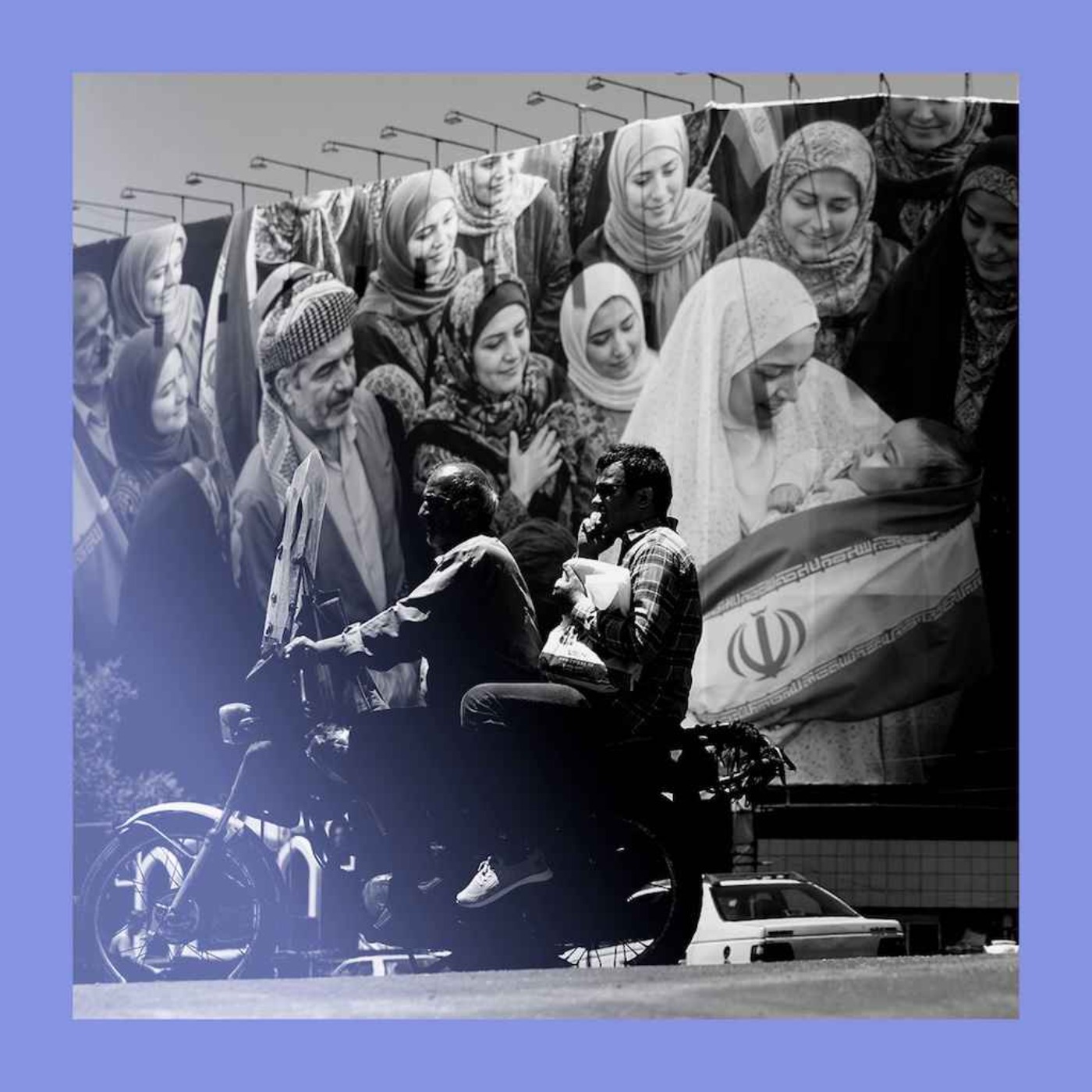
Today on the show, agentic AI comes to China's super apps and solving the great ski resort grouse mystery. First up though, If you're confused about the status of talks between America and Iran, you're in good company. Even the state of the ceasefire is unclear. Overnight, America launched new airstrikes on Iranian missile sites and mine laying boats, couching them as acts of self defense. And thanks to America's mixed messenger in chief, how diplomacy is progressing remains really murky.
- [02:44]
Greg Carlstrom
Despite the American strikes overnight, we are now almost two months into what was supposed to be a two week strike ceasefire. But it still seems we are some way from a lasting deal to end the war.
- [02:57]
Jason Palmer
Greg Carlstrom is our Middle east correspondent.
- [02:59]
Greg Carlstrom
Now. Going into the weekend, there had been some optimism about an interim agreement that might extend the ceasefire. Envoys from the mediating countries visited Iran on Friday. Donald Trump seemed to imply on Saturday that a deal was imminent. But then we heard mixed messages. He said he was in no rush to get a deal done. And as we're speaking now on Tuesday morning, we still haven't reached even that interim agreement.
- [03:24]
Jason Palmer
But what sort of progress has been made? What is now on the table, perhaps that hasn't been before? Or is there anything.
- [03:31]
Greg Carlstrom
I do think America and Iran are closer than they were to that interim deal, which the Americans are sometimes calling a letter of intent or a memorandum of understanding to end the war. And effectively it's a deal to keep talking about a deal. So it would likely extend the ceasefire by 60 days, and then it would set out a list of broad principles that both America and Iran would agree to. So Iran, for example, might agree to a time bound moratorium on uranium enrichment. America would agree to deliver various forms of sanctions relief for Iran, and then they would spend the next 60 days, or perhaps longer, negotiating over how to implement those principles. Iran agrees to pause uranium enrichment. What exactly does that mean? What has to happen at its nuclear facilities? Who's going to monitor and verify its compliance? What milestones does it have to reach in order to unlock various tranches of sanctions relief? All of those details are going to take time to negotiate. And so they would be discussed during this extended ceasefire.
- [04:41]
Jason Palmer
And much of the discussion up until now is who would blink first or who holds the cards, if you like, has that changed at all? Does it seem as if someone has time on their side more than before?
- [04:54]
Greg Carlstrom
The Iranians still think they're the ones with time on their side. Both sides need this agreement. America needs it and the rest of the world needs it. Because of soaring energy prices. You had American motorists paying $4.50 a gallon for gasoline on average over Memorial Day weekend, and they're not happy about that. And therefore there's pressure on the Trump administration. There's also pressure on Iran. It has managed to find ways so far to stash its oil output in tankers that have been pressed into service as floating storage, and it's jury rigged some additional onshore storage. But at some point, Iran is going to have to start shutting in its oil wells and it wants to avoid that because that can potentially damage its oil industry. So both sides have an incentive to make this short term deal that might help to reopen the Strait of Hormuz a bit. But the Iranians think that Donald Trump needs a deal more urgently that the political situation in America and the energy shock that is rippling across the entire world is putting more pressure on him than the prospect of shutting in their wells is Putting on the regime in
- [06:03]
Jason Palmer
Tehran and movement through the straight oil industry. That has been the, the big sort of near term question. But you hinted at the ultimate long term question about Iran's nuclear program. What does what's on the table look like now compared to what things were like before the war or the nuclear deal that Mr. Trump tore up?
- [06:23]
Greg Carlstrom
In some ways it would be very similar. This is one of the problems that Trump is having with this deal. It's one of the reasons why he seemed to do an about face in his messaging over the weekend. The deal that's being discussed sounds not dissimilar from the jcpoa, the deal that was negotiated by Barack Obama and then abandoned by Donald Trump. And he's taking a lot of flack from hawkish Republicans in Washington who think this is not what we were promised. When Donald Trump abandoned the JCPOA in 2018, he called it the worst deal ever negotiated. He said he would negotiate something better. But this sounds quite similar. In fact, it would impose restrictions on Iran's nuclear program again, perhaps a time bound enrichment moratorium, but wouldn't go further than that. It wouldn't dismantle Iran's nuclear facilities, which is something that Trump has long talked about doing. It's not clear if it would prohibit Iran from conducting research on centrifuges, for example, the machines that you use to enrich uranium, if it was allowed to continue doing that. In some ways this could even be a weaker agreement than the jcpoa. So there's been a lot of criticism around that. And then there's still a big question surrounding Iran's stockpile of highly enriched uranium. It has 400 kg of the stuff that is enriched to 60% purity, which is very, very close to weapons grade. And it's still not clear what is going to happen to that stockpile.
- [07:53]
Jason Palmer
And putting that aside for a moment, coming back to the near term, if a deal is struck of whatever quality, whoever claims a victory, when does the world get back to the way the world was before this war?
- [08:05]
Greg Carlstrom
I think unfortunately not as fast as people would hope or people would expect. Now, if you look at the oil markets, there was a lot of enthusiasm about even this talk of an interim agreement, because the expectation is that the Strait of Hormuz would be reopened as part of that deal. So when Asian markets opened on Monday morning, Brent crude was down about 6%. But I think it's likely to take a period of months, perhaps longer, to really get oil and gas and other commodities moving. You do have hundreds of ships that are stranded inside of the Persian Gulf right now. They would make their way through the Strait of Hormuz if a deal is struck, that would bring some relief to energy markets. But there's a limited number of those ships after that to really get things flowing again, what needs to happen, hundreds of other tankers would need to make their way back to the Gulf. Some of them now are as far away as the Atlantic Ocean where they're picking up cargoes from America or from elsewhere. So it's going to take them months to finish those voyages and then come back. And then you would also need energy firms in the Gulf to restart all the things that they've shut down during the war. So all of this, the timeline for restarting energy production and energy shipments is going to take a lot longer than the 60 days envisioned by this interim agreement. And that leaves all of these companies, producers, shippers, insurers, with a bit of a dilemma. Do you try to go back to normal? Do you send your tankers back to the Gulf when you don't know if America and Iran will actually reach a final agreement or whether this might all fall apart? So whatever happens in the next few days, I'm sure Donald Trump and the Iranians will try to sell it as if this is some great achievement and it's a war ending deal. But in fact, I think the uncertainty of this war is going to be with us for some time to come.
- [09:57]
Jason Palmer
Craig, thanks as ever for joining us.
- [09:58]
Greg Carlstrom
Thank you, Jason.
- [10:11]
Capital One Sponsor
This episode is brought to you by Capital One. Capital One's tech team isn't just talking about multi agentic AI. They already deployed one. It's called chat concierge and it's simplifying car shopping using self reflection and layered reasoning with live API checks. It doesn't just help buyers find a car they love, it helps schedule a test drive, get pre approved for financing and estimate trade in value. Advanced, intuitive and deployed. That's how they stack. That's technology. At Capital One, the to do list
- [10:42]
Grow Therapy Sponsor
doesn't stop and neither does the pressure to keep up with it. If you've been running on fumes, GrowTherapy makes it easier to find care that's covered by insurance and actually built around you. Whether it's your first time in therapy or your 50th grow makes it easier to find a therapist who fits you, not the other way around. You can search by what matters like insurance, specialty, identity or availability and get started in as little as two days. And if something comes up, you can Cancel up to 24 hours in advance at no cost. Grow helps you find therapy on your time. Whatever challenges you're facing, Grow Therapy is here to help. Grow accepts over 100 insurance plans. Sessions average about $21 with insurance, and some pay as little as $0 depending on their plan. Visit growtherapy.com acast today to get started. That's growththerapy.com acast growtherapy.com acast availability and coverage vary by state and insurance plan. Great. I found some fantastic options for you
- [11:52]
Don Weinland
Based on the 20 Getting a Coffee delivered to my office in Shanghai is really easy these days.
- [11:57]
Rosie Blore
Don Weinland is our China Business Editor.
- [12:00]
Grow Therapy Sponsor
It's a specialty pour over with a rich, nuanced flavor profile. A real standout.
- [12:05]
Don Weinland
I open up an AI app. I say something like pick me a coffee and send it to my office. Then I click a button to make the payment and within about 15 minutes the coffee arrives at my office. It's really convenient.
- [12:23]
Rosie Blore
Don, this sounds like a utopian ideal where coffee just magically appears at your door. What exactly is going on?
- [12:31]
Don Weinland
So this is what we call agentic AI. It's when artificial intelligence makes a decision on your behalf and then sometimes produces a physical object in the real world. You think it sounds like heaven, but the AI doesn't always pick you the best coffee. I received a rose petal vinegar flavored coffee a couple days ago when I asked the AI to pick me something special. But anyways, there are more than 600 million people in China that are already using some form of agentic AI. That's a government estimate. And the companies behind these apps are really well positioned to push into this new era of the Internet.
- [13:14]
Rosie Blore
So forgive me Don, but what's the actual point of this agentic Internet?
- [13:21]
Don Weinland
So we often think of AI as something that we interact with and they help us do our work sometimes. But if you think about the companies that are behind AI in China, these big tech groups, Alibaba, Tencent, Bytedance, these are entertainment, social media and commerce companies. And for them, the point of AI in many respects is to push you into their e commerce networks or their entertainment network. What they're trying to do is create a a super app that uses their AI to direct you to all the goods and services and entertainment that you're ever going to need and you don't need to go anywhere else.
- [14:06]
Rosie Blore
So in a sense, existing companies are trying to make sure that its existing consumers stay with it. How are they going to make money?
- [14:16]
Don Weinland
Well, they have to figure out some way of cashing in on their AI. They've been making massive investments over the past two years, and their investors really haven't seen big returns from this. For a company like Alibaba, which heavily relies on e commerce as one of its main businesses, it's actually seeing that part of its business slow down. And it's worth keeping in mind that consumer spending is not very healthy right now. People aren't spending nearly as much as they used to, so that's a big concern. When you are one of the world's largest E commerce groups, there are basically two ways they can make money from this. One is by taking a cut of whatever you're spending your money on through their payment platform. Another way is through advertising. So these companies are already massive advertising groups, and agentic AI is a big area that they can move into. They can better recommend things to you when you are asking for a coffee or a chicken dinner to be sent to your house.
- [15:20]
Rosie Blore
And how does this differ from what's happening elsewhere in the world?
- [15:24]
Don Weinland
The biggest difference in China is scale. So the Internet in America and the Internet in China have developed in different ways. In China, people don't use desktop web search very often. Everyone is on apps on their phone. A lot of people don't even own computers. And within these apps, you have a very broad range of services. So by plugging in AI, it's a lot easier for these companies that already have connections to digital services and physical networks of drivers and warehouses and that type of thing to create one of these agentic services. In the US you just don't have these super apps in the same way we do in China.
- [16:11]
Rosie Blore
And we've heard in the US about OpenAI working on a device that would do this for you. Is that happening in China too?
- [16:21]
Don Weinland
Yes. I think that lots of these companies would love to create a super AI device. No one has done it very well at this point. ByteDance tried to create a phone late last year that had an embedded AI agent on it. And when you turned on the phone, anything you did on the phone could be controlled or assisted through ByteDance's AI app. That didn't work very well because other companies, other tech giants basically blocked that AI assistant from working very well. But it's early days. There are a lot of other Chinese companies that make devices and they create AI agents. Huawei is one of them. Xiaomi is another one of them. So it wouldn't be too surprising if one of these companies within a year or so, creates a device that is a AI super app. the same time, competition feels very Very heated right now, so this is a really interesting process to watch. I think what you see happening in China now is going to happen elsewhere in the world in the months and years to come.
- [17:39]
Rosie Blore
Don, thank you so much for talking to me.
- [17:41]
Don Weinland
Thank you.
- [17:57]
Rosie Blore
Nature has evolved an extensive range of mechanisms so that animals can pass important messages to each other. Brightly colored skin. Don't eat thorns. Better to avoid. Unfortunately, the message do not fly into the ski lift has proved rather harder to communicate.
- [18:17]
Matt Kaplan
So you wouldn't think that black grouse and ski lifts have much to do with one another, but unfortunately, they certainly have had a lot of impact upon one another over recent years.
- [18:29]
Rosie Blore
Matt Kaplan is a science correspondent for the Economist.
- [18:33]
Matt Kaplan
The main problem the black grouse face is that they have a habit of flying into chairlifts, breaking their necks and then falling to the ground dead, which is obviously bad for the black grouse, but it's also surprisingly bad for the ski resorts, which would rather not have a bunch of dead birds underneath their chairlifts for skiers to look at, because it doesn't make anybody happy.
- [18:59]
Rosie Blore
Matt, what is a black grouse and what on earth is going on here?
- [19:04]
Matt Kaplan
A black grouse is a member of the chicken family. They have bright red patches on top of their heads, and they're found all over northern Europe and Asia, much of the Nordic countries, in Russia. But they have this tiny isolated population in the Alps, and their numbers there have been diminishing for years. And particularly notable are their populations around ski resorts. When there are ski lifts present, grouse populations seem to suffer particularly badly.
- [19:40]
Matt Kaplan (continued)
And that, bonded to the observation of
- [19:43]
Matt Kaplan
grouse smacking into the lifts suggests that there is a problem.
- [19:47]
Rosie Blore
So what's anyone tried to do about this so far?
- [19:51]
Matt Kaplan
To deal with the issue of the grouse smacking into chairlifts, ski companies and resorts have been putting up warning signs all over their cables for their chairlifts. These signs have varied in size from 3.5 to 15 centimeters in width. They're almost always bright red because the bird colliding with the chairlift has bright red patches on its head. So everyone and their dog has assumed,
- [20:17]
Matt Kaplan (continued)
well, if we make the warning signs red, the grouse will see them and not fly into the chairlifts. But as these researchers have published an experimental biology recently that has not been working, the numbers continue to drop.
- [20:32]
Matt Kaplan
And so the quest was on to
- [20:34]
Matt Kaplan (continued)
figure out what can these grouse actually
- [20:36]
Rosie Blore
see and what have they discovered?
- [20:39]
Matt Kaplan
They put the grouse through a whole
- [20:40]
Matt Kaplan (continued)
bunch of visual experiments looking at, you know, can they see contrast what colors can they see?
- [20:46]
Matt Kaplan
And on the whole, their vision stinks. They don't see contrast very well, but
- [20:51]
Matt Kaplan (continued)
they can see it. They can see blue, they can see yellow, they can see purple. They can even see ultraviolet. But shockingly, they see red really, really badly. And so all of these signs all over the Alps that have been put up by ski resorts mean nothing to the poor birds because they can't see them.
- [21:12]
Rosie Blore
And, Matt, how do you actually work out what a bird can see?
- [21:16]
Matt Kaplan (continued)
Well, the solution is to do two things.
- [21:19]
Matt Kaplan
One, you find a dead grouse, you take apart its eye, and you look at the receptor proteins that are found inside the eyeball, and that tells you what colors the bird can see. It doesn't tell you very much about contrast, though. And that's where the second part of the experiment that these researchers ran gets interesting. You put a grouse in a box
- [21:38]
Matt Kaplan (continued)
where it can't move around very much,
- [21:40]
Matt Kaplan
and you have one clear wall along the top of the box. And then you project onto the ceiling, outside that clear wall, contrasting patterns, and
- [21:50]
Matt Kaplan (continued)
you move them with the video camera back and forth.
- [21:54]
Matt Kaplan
Grouse eyeballs don't move very much. And so with grouse, if it can
- [21:58]
Matt Kaplan (continued)
see the contrast moving along the wall, the grouse has to move its head back and forth. And so they knew which contrasting patterns the grouse could see by watching their head. If the head moved to follow the pattern, they knew the grouse could see it. If it didn't move its head, they knew they couldn't see it.
- [22:15]
Matt Kaplan
So the grouse have bad vision, and they really need stark contrast, be able to see much of anything.
- [22:21]
Rosie Blore
And did they work out why a bird that actually has red on its head can't see?
- [22:26]
Matt Kaplan
Turns out that the patches on the red head of the grouse actually reflect a ton of ultraviolet. And while you and I can't see ultraviolet, grouse can. And so the color that's reflecting off of this animal's head that it can see is ultraviolet, but the red is lost on it. So the solution, really, for the ski resorts is to create warning signs that have very stark contrasts and which don't involve red. So something like bright purple and bright yellow right next to each other in a checkered pattern would be really great, or black and white even, because the grouse could see that. But the bright red, forget it. It's not going to work, really. This is a matter of interspecies communication going all wrong.
- [23:11]
Rosie Blore
Matt, thank you so much.
- [23:13]
Matt Kaplan
My pleasure, Rosie.
- [23:30]
Jason Palmer
That's all for this episode of the Intelligence. We'll see you back here tomorrow.
- [23:56]
Jackson Sponsor
This message comes from Jackson. Taxes aren't something you can only think about once a year, with investments planning for tax days year round. Fortunately, Jackson offers tax efficient products. Visit Jackson.com for more information on how our products can make your tax bill a little bit less painful. Jackson is short for Jackson Financial, Inc. Jackson National Life Insurance Co. Lansing, Michigan and Jackson National Life Insurance Co. Of New York, Purchase, New York.
- [24:21]
Barclays Brief Sponsor
Today's markets move fast. Get the insights you need in 10 minutes with the Barclays Brief, a new podcast from Barclays Investment Bank. Through sharp dialogue and scenario based analysis, our leading experts analyze key market themes each week. So whether you're managing a portfolio or or leading a business, the Barclays Brief podcast can help you make smarter decisions today. Stay Sharp Stay Brief Find Barclays Brief Wherever you get your podcasts.