Loading summary
Transcript65 lines
- [00:00]
A
When everything is moving all at once. Your workforce, your tech stack, your business. You don't need more tools. You need one solution. That's why Paylocity built a single platform to connect hr, finance and IT with AI driven insights and automated workflows that simplify the complex and power what's next. Because when everything comes together in one place, growth comes easy experience. One place for all your HCM needs. Start now at paylocity.com 1 I'm done.
- [00:30]
B
With subscriptions, Streaming fitness razors, vitamins. I've got subscriptions for everything in my life. They lock you in and half the time I can't figure out how to unsubscribe. That's why I'm so excited about the new Blue Apron. Now you can get delicious meals delivered with no subscription needed, including new pre made options. Keep the flavor, ditch the subscription. Get 20% off your first two orders with code APRON20. Terms and conditions apply. Visit blueapron.com terms for more.
- [01:06]
C
The economist. Hello and welcome to the Intelligence from the Economist. I'm Jason Palmer.
- [01:17]
D
And I'm Rosie Blore. Every weekday we provide a fresh perspective on the events shaping your world.
- [01:23]
C
That's every weekday for seven years. Years to the day. I know. I can't believe it either. Speaking of birthdays, this year America is celebrating its 250th. Over the next few months, we're going to look back on some highlights of the American experiment today, the founding fathers, founding documents, and the first attempt to annex Canada.
- [01:47]
D
And something rather curious can be heard in children's playgrounds around the world. A song with a repetitive beat and catchy lyrics that has a surprising origin. Find out why it's terrifying parents.
- [02:04]
C
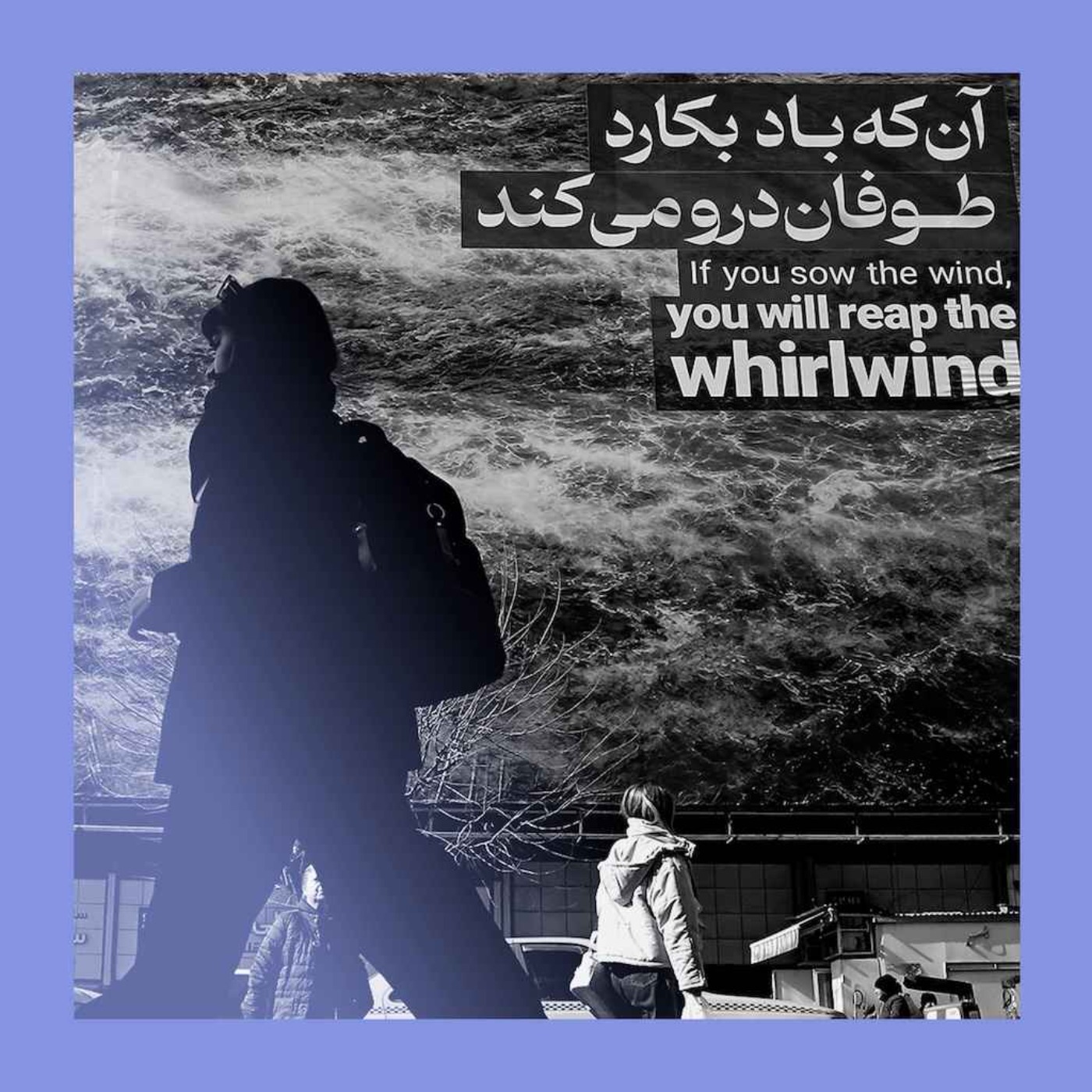
But first, As Iran's protests kept gathering pace earlier this month, Ayatollah Ali Khamenei, Iran's supreme leader, has had his security forces cut the electricity and fire their guns into the dark. Only now that the Internet blackout has been lifted is the scope of the violence becoming clear. Torched shopping centers. Upturned security vehicles. A university museum in ruins. Opposition sources say as many as 30,000 mostly young people, have been killed. Relatives sift through piles of body bags. They must pay what's called a bullet tax to recover the corpses of their loved ones, paying the regime for the materiel of murder. This brutality, this humiliation is radicalizing a public that had already turned violent.
- [03:08]
E
Ostensibly, the streets are calm. Shops have begun to reopen. But there's a real sense of mourning. People describe the smell of blood and ashes that still linger on the Streets.
- [03:22]
C
Nick Pelham is a Middle east correspondent for the Economist.
- [03:25]
E
And people that I manage now to speak to in Iran are describing a state of things as a quiet civil war. That kind of variegated society, that dynamic society where you had many different ethnicities, people of all different sort of walks of life rubbing shoulders with each other, is kind of falling apart. The country evermore feels divided into two camps, the regime and the royalists who want to restore the Shah.
- [03:52]
C
So tell me about that division, then. What are those camps aiming for thinking about?
- [03:57]
E
In many ways, they're sort of two sides of the same coin. Both see a kind of hierarchical structure. Both see the other as their inveterate adversary. Both accuse each other of hiring mercenaries. The regime says that the protesters on the street are working with Israel and its agents on the ground. They accuse them of being terrorists. The protesters say that the regime has brought in Shia militiamen from Iraq and elsewhere in the region to shoot at them. And there's a kind of sense that the only way out is through bloodshed. Like peaceful protests, which used to be a kind of hallmark of a struggle for a new Iran, haven't worked and that now the confrontation has to be a violent one. And so both sides are ever more talking about resorting to arms to kill the other.
- [04:46]
C
And insofar there is this polarization, this division into royalists and regimeists, what does that look like for. Well, for politics at the moment, in a sense.
- [04:56]
E
You have these two figureheads, the supreme leader, Ayatollah Ali Khamenei, and the son of the last Shah, Reza Pahlavi, who are at the top of the pyramid of the respective camps. But in many ways also, both are somewhat absent from the scene. Khamenei is clearly afraid of the prospect of an American strike and is spending a lot of time in his bunker and so leaving the day to day command in the hands of others. And I think that to some extent is true of Pahlavi, that his calls to come out on the street or strike haven't really been respected. But it's the people who claim to be acting in his name who are really controlling events on the ground. And so in many ways, it looks as if Reza Pahlavi is a captive of the people running the royalist agenda rather than their commander.
- [05:45]
C
And when we spoke last time about Mr. Pahlavi, you were again saying this unrest really is on a different level from what we've seen before, that this really did look more existential for the regime.
- [05:57]
E
I think this round of protests has just been so fundamentally different from previous rounds. It's been so much more bloody and it has to be said that blood has been spilled on both sides. There have been repeated reports of protesters with knives lunging at some of the regime's own bully boys, the Basejis, and beheading them. There've been torching of banks and shopping centers and really anything that is seen to be symbolic or emblematic of the regime. And those voices who previously were out on the street calling for change have very much been sidelined. There's just so much more anger and so much more venom and fury and hatred, a sense of despair. That protest itself isn't going to really deliver a new Iran and that, you know, it's only going to be through force, that change is going to come about. Even those who are kind of political prisoners and were seeking some form of constitutional democratic reform and a republic, their voices have largely disappeared. This is very much a ruralist led demand for change and increasingly a demand for change through force.
- [07:05]
C
And that change in tenor from protest to what you mentioned as being called a quiet civil war, that all seems very fast changing. Is this just because the scope of what happened during the protest, the brutality of it, has now become clear? Is that what hardens people into these two camps?
- [07:22]
E
Yes. I think it isn't just shock at the scale of the killing, which surpasses anything that Iran has seen in the history of the Islamic Republic. It's also the way in which the regime seems intent on humiliating the memory of the dead. It's piling up bodies in morgues, it's leaving families to go and search for the dead amid these piles of bodies. It's charging families to pay for the recovery of their bodies. It's kind of limiting the scope of their funerals. It's a sense of which is actively humiliating and dishonoring the dead. And I think that's just kind of so exacerbated the anger that you're seeing, coupled with this economic crisis that precipitated these protests, which shows no sign of getting better. You've had the Internet out that's crippled the digital economy. Prices have continued to rise exponentially. You're still having a plumme Riyal. It's a really sort of desperate situation which nobody sees any peaceful way out. You know, part of that anger is being expressed in a revival of tribal demands for vengeance, particularly in the provinces in places like Loristan and Elam, where the protests erupted. You know, you've had images circulate of tribal elders wearing fatigues and Brandishing rifles, calling for revenge, calling on the tribe to rise up. And then you hear people in exile talking about how they're going to mobilize, how they're going to try and get guns to their supporters in Iran. There's even been talk of recruiting an army in exile. Much has kind of happened when Syria's protesters turned to rebels. All sides seem to be planning for the next round of militant showdown.
- [09:01]
C
There is a certain sense of inevitability here in what you're saying, that this is a powder keg and in one way or another, it will be lit. Is there anything that could bring Iran back from that, this brink?
- [09:10]
E
The wild card in all of this is President Donald Trump and the armada that he's amassed on the shores of Iran. And an American military strike would clearly give the initiative to external actors, to the US in the past, the west has engineered regime change in some ways remarkably successfully. There have been at least three attempts to change the leader in Iran over the last hundred years. And on each occasion, that handover took place without years and years of civil war that you saw in Iraq and in Libya and other places where the west has tried to bring about regime change. Whether or not you can have that sort of clinical, surgical strike that many in the west seem to be talking about, I think is uncertain. It's just really hard to see how you can satisfy all sides at the moment. I don't think there'd be much love lost in Iran if Fetullah Ali Khamenei was to go. He's even from inside his own camp. Zina, in some ways past his expiry date. And Fennec something of a liability, but it just has to be said, you know, what is going to come the day after Khamenei? Is it just going to lead to the Revolutionary Guard taking control, in which case that's hardly going to satisfy the protesters on the street. Is it going to lead to wholesale attempts at regime change? In which case it's likely that the vestiges of the regime are going to continue to fight. So, you know, even with American military intervention, I think it's really hard to see how you at the moment avoid a prospect of a descent into greater bloodshed and the prospect of civil war.
- [10:53]
C
Nick, thanks very much for your time.
- [10:54]
E
Jason, thank you. As always.
- [11:11]
F
I pledge allegiance to the flag of.
- [11:13]
E
The United States of America.
- [11:16]
D
In 1776, the American colonies declared independence from Britain. Out of that act of defiance came a great liberal experiment, the United States of America. To celebrate that experiment's 250th birthday. In the coming months, the Economist will be charting moments from America's triumphs and failures using extracts from our own archive Today the Birth of American Liberalism and How the Founding Fathers confused us for 250 years.
- [11:54]
C
Through the perilous fire in.
- [11:57]
G
The mid-1770s, King George III insisted on raising taxes in Britain's colonies in America. The protests this provoked turned into revolution, then war.
- [12:10]
D
Annie Crabill is Senior Digital Editor.
- [12:13]
G
On July 4, 1776, the second Continental Congress in Philadelphia approved the Declaration of Independence.
- [12:21]
H
We hold these truths to be self evident, that all men are created equal, that they are endowed by their Creator with certain unalienable rights that among these are life, liberty, and the pursuit of happiness that to secure these rights, Governments are instituted among men, deriving their just powers from the consent of the governed.
- [12:42]
G
The Declaration of Independence proclaimed equality for all, while not quite all. With rare exceptions, white women, black people, and many poor white men were excluded from voting. Indigenous nations were ignored or exploited, and most of the Declaration signatories were slave owners themselves. In practice, the society of equal people was nothing more than a narrow aristocracy. Over time, the character of the new United States government began to take shape. By 1787, the founders had settled on a republican system with three branches of government. Each would limit the power of the others, imposing a system of checks and balances. When the first modern election was held just a few years later, it was conducted through the Electoral College. There was no public campaign, no political parties, and no sweating the count on election night. George Washington, the man who led America to victory in the war, was a shoo in the Founders wanted to spell out some additional liberties. To that end, they ratified the Bill of Rights in 1791.
- [14:04]
H
The Conventions of a number of the states having, at the time of their adopting the Constitution, expressed a desire, in order to prevent misconstruction or abuse of its powers, that further declaratory and restrictive clauses should be added and as extending the ground of public confidence in the government will best ensure the beneficent ends of its institution.
- [14:27]
G
Ten Amendments to the Constitution these are the ones Americans still talk about as iconic, such as freedom of speech and the right to bear arms. But vague language has kept Americans, including Supreme Court justices, arguing for 250 years. Around the same time, two of the Founding Fathers, Alexander Hamilton and Thomas Jefferson, clashed over how much power the central government should have. You may recognize some of the story from the epic Broadway musical Hamilton for.
- [14:59]
C
A Cabinet Meeting, huh?
- [15:02]
G
The issue on the table Hamilton wanted a strong federal government that paid its debts, things we at the Economist support. Jefferson, a Virginia farmer and slaveholder, pushed for states rights, worrying that centralization could bring tyranny. Hamilton won that argument. Over the next 20 years, the United States of America encountered many firsts. In 1803, under President Thomas Jefferson, America made its first attempt to expand. It bought France's territory in the middle of the country, nearly doubling the size of the United states. That cost $15 million, or just over $300 million in today's money. The Louisiana Purchase must go down as one of the greatest bargains in history. The young, free, upstart country made some great strides and some clear mistakes, including a failed attempt to take Canada from the British. Talk about Trumpian. But it ended its first chapter, according to our timeline, at least with some serious problems. Its founders continually tried to extend excuse the biggest stain of all, slavery. Here's Jefferson, America's third president, in a letter to his pen pal John Adams.
- [16:37]
H
Are our slaves to be presented with freedom and a dagger?
- [16:42]
G
In 1820 came a fudge. The Missouri Compromise drew a line across the map, allowing slavery below the line and not above.
- [16:53]
H
An act to authorize the people of the Missouri territory to form a constitution and state government and for the admission of such state into the Union on an equal footing with the original states and to prohibit slavery in certain territories.
- [17:07]
G
That would delay the reckoning over slavery for another half a century and leave fertile ground for our next chapter of American history. See you then.
- [17:40]
D
To those of you who are parents, the following lyrics may be familiar this Russian song has become an unlikely anthem in playgrounds across the world. Seven year olds everywhere are putting on a Russian accent and droning the lyrics to Sigma Boy.
- [17:59]
F
So one day my daughter came home from school and said, the boys have been singing this song. Sigma Boy.
- [18:06]
D
Abigail Fielding Smith is deputy editor of 1843.
- [18:11]
F
And that was quite odd for two reasons. One is that I tend to know the songs they sing in their playground. They're normally things like Taylor Swift or Katy Perry or Steve's lava chicken from the Minecraft movie, and I hadn't heard of this one. But also primarily it was odd because sigma is a term from the manosphere and these are six year old kids. I didn't really know how that got into their classroom, so I started googling it. And then I found out that it was actually produced in Russia, which was a twist I wasn't expecting. It was actually sung by a pair of Russian tweenagers. The main artist, Betsy, is Tvetlana Chatisheva, and produced by Rhymes Music, a Russian label.
- [18:55]
D
Right, so it's not just your daughter, it's not even just in the uk, is it?
- [18:59]
G
Yeah.
- [18:59]
F
So this is what I discovered when I started looking into it. It was uploaded on YouTube at the end of 2024 and quickly got tens of millions of views. I found some posts about it on mumsnet, which is this parents forum in Britain. Then I contacted some ethnographers of children's play and I got put in touch with a researcher in Greece who'd been paying attention to the phenomenon and told me that it had swept across Greece and Germany and Italy, and that researchers in those countries had been contacting each other saying, what on earth is going on? Why is this happening so quickly and where has it come from?
- [19:37]
D
I hadn't heard it before we were talking today, but it's not exactly brilliant music, is it?
- [19:43]
F
No, it's quite repetitive, but it had a moment of sudden and quite marked supremacy last summer. And I think part of the appeal, a bit like with the 67 chant, is the sense that it is something slightly transgressive or something that adults don't get. But it is also a bit catchy and it got adopted for whatever reason. There's an intricate ecosystem of different forms of content and sub genres in the world of children's social media and children's YouTube. One that made it go very big in Germany at least, was this German tiktoker, whose shtick is to play music very loud in public places. But then it also got picked up by Italian Brain Rot, which is a subgenre of children's content on YouTube involving AI generated cartoon characters often set to music. And one of the most famous characters, a shark who wears trainers called Tralilero, did a Sigma Boy song. So that made it go big in Italy and elsewhere.
- [20:47]
D
So it is pretty unusual, though, isn't it, for a Russian song to make it across global playgrounds? How did that happen?
- [20:55]
F
Well, the first thing to say is actually that it's not as unusual as you might think, that actually Russia and the former Soviet Union has quite a track record of producing successful viral content. So it's possible that Russians are just quite good at coming up with catchy content that, for whatever reason, sticks. However, the Ukrainians believe that there's a more sinister explanation, and they've put out a statement saying that their center for Countering Disinformation believed it to be a propaganda operation promoted by bot farms and aimed at rehabilitating Russia in the cultural sphere. And also reinforcing this idea of patriarchal dominance.
- [21:35]
D
And how likely is that theory?
- [21:37]
F
Well, a lot of people I spoke to are quite sceptical about it. It's really hard to evaluate without seeing the charts and the data, but certainly it seems like it would be quite a lot of effort for a fairly oblique gain. But I did speak to one disinformation researcher who said that Russia has changed its propaganda strategy in recent years and whereas previously it might have been more focused on kind of trying to put different versions of events out there, it's become much more vibes based, much more fluid, much more about promot certain feelings and ideas. And the research also said it's become much harder to disentangle artificial promotion from organic virality. It's quite murky, but I think the whole world of children's media content is extremely bizarre and opaque.
- [22:23]
D
Abby, thanks so much.
- [22:24]
F
Thanks for having me.
- [22:44]
C
That's all for this episode of the Intelligence. We'll see you back here tomorrow.
- [23:07]
G
Lunch was great, but this traffic is awful.
- [23:10]
B
Um, can we stop at a bathroom?
- [23:12]
G
Are you alright? I keep having stomach issues after eating, like diarrhea, gas and bloating, abdominal pain and sometimes oily stools.
- [23:19]
B
Sound familiar? Those stomach issues may actually be a.
- [23:22]
G
Pancreas issue called exocrine pancreatic insufficiency, or epi.
- [23:26]
B
Creon pancrelipase may help manage ep.
- [23:30]
G
Creon is a prescription medicine used to treat people who can't digest food normally.
- [23:33]
B
Because their pancreas doesn't make enough enzymes.
- [23:36]
I
Creon may increase your chance of fibrosing colonopathy, a rare bowel disorder. Tell your doctor if you have a history of intestinal blockage or scarring or thickening of your bowel wall, if you are allergic to port or if you have gout, kidney problems or worsening of painful swollen joints. Call your doctor if you have any unusual or severe gastrointestinal symptoms or allergic reactions. Take Creon as directed by your doctor and always with food. Do not chew capsules as this may cause mouth irritation. Other side effects may include blood sugar changes, gas, dizziness and a sore throat and cough. These are not all the side effects of Creon. Call 800-633-9110 or visit creoninfo.com to more that's creoninfo. Com.
- [24:04]
G
I'm asking my doctor about epi and if Creon could help.