Loading summary
Transcript69 lines
- [00:00]
Monday.com Advertiser
This is a Monday.com ad. The same Monday.com helping people worldwide getting work done faster and better. The same Monday.com designed for every team and every industry. The same Monday.com with built in AI scaling your work from day one. The same Monday.com that your team will actually love using the samemonday.com with an easy and intuitive setup. Go to Monday.com and try it for free. Yes the same Monday.com most of us
- [00:31]
Cash App Advertiser
don't think much about how money actually moves until something slows it down or makes it more expensive than expected. That friction is exactly what Bitcoin was designed to rethink. Bitcoin is often talked about as an investment, but it was built to be used with Cash app. You can actually do that. Send Bitcoin instantly, pay at local square businesses that accept it, or move it to your own wallet whenever you want. It works more like real money and less like something locked in an account for a limited time. New customers can get $10 added to their balance. Just use code CASHAPP10 when you sign up. And don't forget this part. Send at least $5 to a friend in the first two weeks. Terms apply. Cash App is a financial services platform, not a bank. Banking service is provided by Cash App's bank partners. Bitcoin service is provided by Block Inc. Brand. For additional information, see the Bitcoin disclosures at Cash App legalpodcast.
- [01:32]
Jason Palmer
The Economist. Hello and welcome to the Intelligence from the Economist. I'm Jason Palmer.
- [01:42]
Economist Correspondent
And I'm Rosie Blore.
- [01:48]
Jason Palmer
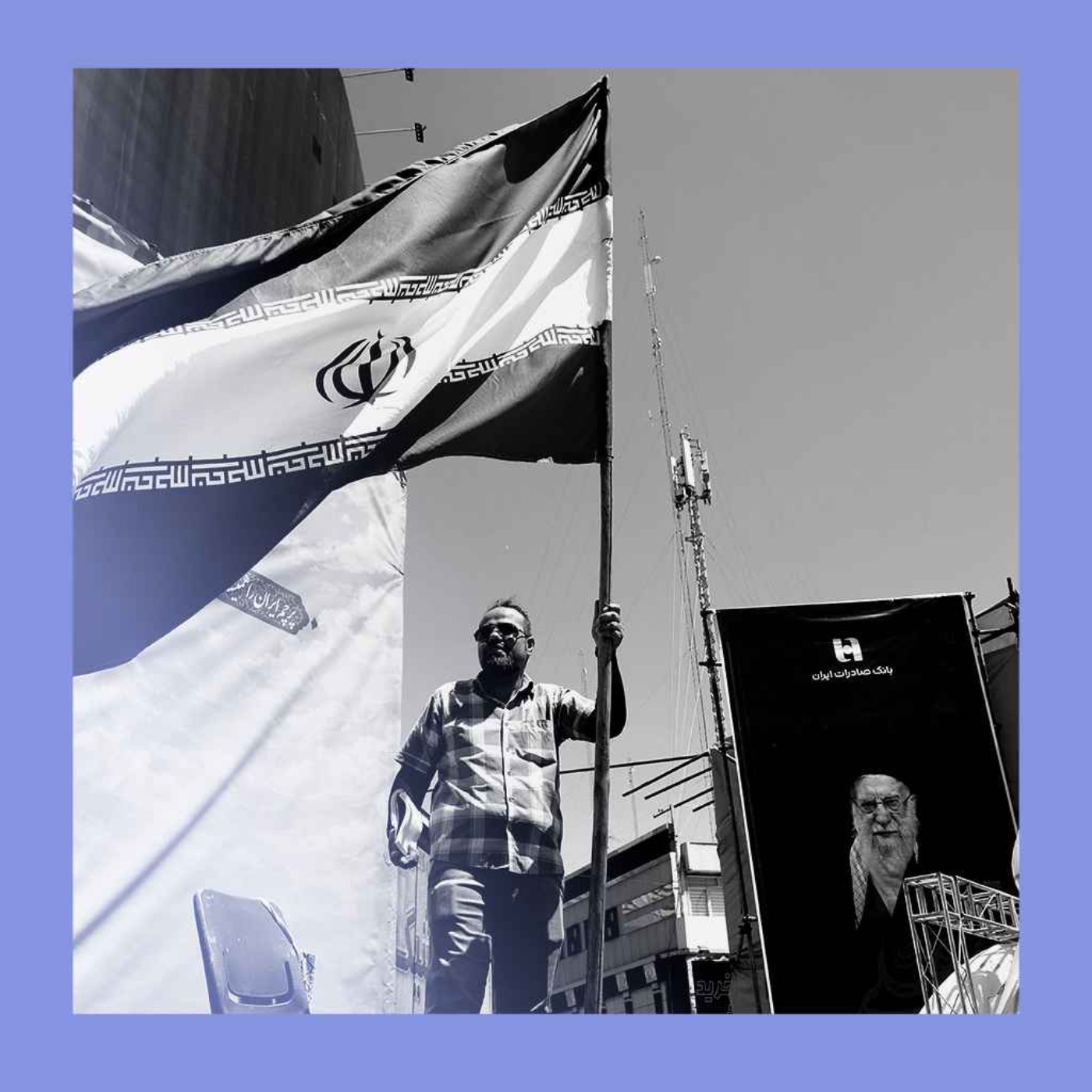
Today on the show, how to divide the coming AI windfall and our World cup team profiles conclude with England. First up, though. At last a framework deal is in place to put an end to the Iran war. That's almost as much as anyone knows. Even that was unlikely as of yesterday, the day President Donald Trump had promised an agreement would be signed, though Pakistani mediators weren't so definitive. Then another cycle of strikes between Hezbollah and Israel that threatened to scupper the whole plan. Mr. Trump tenderly sought calm on social media by saying don't blow it, and then overnight, something of a deal to be signed in Geneva on Friday.
- [02:46]
Greg Karlstrom
We know only a couple of details of what is actually in this agreement.
- [02:51]
Jason Palmer
Greg Karlstrom is a Middle east correspondent for the Economist.
- [02:55]
Greg Karlstrom
It is meant to extend the ceasefire across the region, including in Lebanon, and it is meant to reopen the Strait of Hormuz within 30 days. Beyond that, the details are sketchy and there is a more comprehensive agreement that America and Iran will still need to negotiate.
- [03:14]
Interviewer (Jason Palmer or another host)
You mentioned that Lebanon is included in the deal. That's where over the weekend, the whole process nearly came unstuck.
- [03:20]
Greg Karlstrom
It was, we saw another exchange of fire between Hezbollah and Israel over the weekend. Hezbollah firing drones into northern Israel. And then Israel, which had threatened to retaliate for such attacks by bombing Beirut, the Lebanese capital, made good on those threats, did so later in the day on Sunday, killing at least three people. And then at that point, Iran threatened to carry out missile strikes against Israel, which is something it had vowed to do whenever Israel bombed Beirut. So it looked like we were stuck in the same sort of cycle that we were in the previous weekend. It looked as if the possibility of a deal might be slipping away, only to have this somewhat surprising late night announcement from both America and Iran that they had, in fact, reached a final agreement.
- [04:11]
Interviewer (Jason Palmer or another host)
It does seem that this story has been much less Iran and America and more Israel in Lebanon along the way, and that Israel has almost defied America at various points. What do you read into that?
- [04:22]
Greg Karlstrom
We don't know if it's real or if it's a bit of diplomatic theater. Donald Trump has publicly criticized the Israelis for striking in Beirut. He said it shouldn't have happened, but we don't know if in private he actually gave Israel a green light to do that. And this public messaging was just meant to placate or avoid antagonizing the Iranians. But nonetheless, I think the strain here between the US And Israel underscores the fact that they went into this war together, but with different aims. And ultimately, for the Trump administration, the focus of the war became the Strait of Hormuz. Right? It became figuring out a way to reopen the Strait. They tried doing that by imposing a blockade on Iran. They tried doing it through military means. They weren't able to do it. And so now I think they feel as if they have no choice but to make an agreement that will reopen the straight and get oil and gas moving again. Whereas for Israel, their priorities were different in this war. They wanted to do more damage to Iran's, not just nuclear program, but its missile program, its regional proxies such as Hezbollah. And so we got to a point where their interests simply diverged. And the Israelis, I think, are quite unhappy with the sort of deal that has emerged between the US And Iran.
- [05:41]
Interviewer (Jason Palmer or another host)
So about what's in the deal more broadly or eventually more concretely, is this, as you've said before, just a deal to do some deal making in the future, or does this have some sharp edges?
- [05:51]
Greg Karlstrom
It's a deal to do more deal making. And I think we should also be clear that none of us have seen the deal yet and we're not likely to see it until it is signed on Friday. And until then, we're going to hear a lot of competing claims from America and Iran. They will both want to present this deal in the most favorable light for themselves. But we should be skeptical of those claims because some of them are going to be nonsense. Having said that, I can tell you what I think is in the deal, having spoken this morning to some people who were involved in the talks, and it's more or less what we've been talking about over the past few weeks. The Strait of Hormuz should reopen within 30 days. There will be 60 days of negotiations between the United States and Iran about Iran's nuclear program and about some other substantive issues. And then Iran will receive some limited upfront sanctions relief, I'm told, both a temporary waiver on oil sales and the release of some of its assets that are frozen in banks overseas. That money will be dispersed in stages over these 60 days of talks, but that's it. What happens to Iran's stockpile of highly enriched uranium? What happens to the rest of its nuclear program? What sort of long term sanctions relief will it receive from the United States? All of those questions are left to be negotiated in these talks, which I'm quite skeptical are going to succeed in just 60 days.
- [07:24]
Interviewer (Jason Palmer or another host)
So a lot of details still wanting, but as you say, a lot of this has centered, certainly for the rest of the world, around the Strait of Hormuz. What are the terms there? Is it truly as wide open as has been promised? No blockade, no escorts, no tolls?
- [07:40]
Greg Karlstrom
You listen to Donald Trump. The answer to that is yes. He posted on Truth Social Overnight ships of the world, start your engines, let the oil flow. He said there won't be any tolls on the Strait. I was reminded that if you go back to April 8, when Donald Trump announced the initial ceasefire with Iran, he said that ceasefire was subject to the complete and immediate reopening of the Strait of Hormuz. Here we are more than two months later and the Strait still isn't open. So again, I think a bit of skepticism is in order. If America and Iran do agree on Friday to reopen the Strait, the Iranians will need to remove the mines that they have put there. It's not clear exactly how long that's going to take, but you will see the tankers that are stuck in the Gulf, I think, start to make their way for the exits pretty Quickly, you have about 60 tankers that are laden with crude oil waiting to get out. They've been stranded for months. They will sail out and bring that oil to world markets. So we should see a bit of short term relief for energy prices. And indeed, the price of oil is down about 5% since the deal was announced. But what happens after that? Do tankers start to come back into the Gulf as well? Do they take the risk of doing that when this is only an interim deal and there's no guarantee that they will actually get to a final agreement? We don't know the answer to that yet. So after that initial glut of oil sails out of the Gulf, I think some companies might wait to gauge whether this agreement is actually going to hold.
- [09:07]
Interviewer (Jason Palmer or another host)
Well on that. Do you think it will? If this is just essentially a framework deal and there's still lots to be worked out and it has been a hair trigger affair from the start, are we going to be talking later this week, later this month about how it all felt apart?
- [09:19]
Greg Karlstrom
Probably not later this week or later this month, but at some point it's possible. If you think about the two big events that brought us here, it was the failure of nuclear negotiations before the war between the US And Iran, and it was the protests this past winter over Iran's dire economic situation that became Donald Trump's pretext for launching the war. Neither of those issues have been resolved. There's still no final nuclear deal agreed and Iran has not received any long term sanctions relief from the United States. Now they will spend the next 60 days trying to negotiate a deal that would resolve both of those issues. But if they fail to do that and we get to the end of the summer, there's still no nuclear deal. Perhaps the Americans try to reimpose oil sanctions because they're frustrated Iran could then threaten to close the Strait of Hormuz yet again. And so we could find ourselves right back where we were before this interim agreement because none of the underlying issues between the two countries have been resolved.
- [10:21]
Jason Palmer
Thanks very much for joining us, Greg.
- [10:23]
Greg Karlstrom
Thank you, Jason.
- [10:36]
Creative Planning Advertiser
Then I thought, what if I've scaled businesses? What if I scaled my philanthropy? What if I did as much in one year as I've done in my whole life?
- [10:43]
Cash App Advertiser
So see how your wealth could have even Greater meaning@creativeplanning.com impact most of us don't think much about how money actually moves until something slows it down or makes it more expensive than expected. That friction is exactly what Bitcoin was designed to rethink. Bitcoin is often talked about as an investment, but it was built to be used with Cash App. You can actually do that. Send Bitcoin instantly, pay at local square businesses that accept it, or move it to your own wallet whenever you want. It works more like real money and less like something locked in an account for a limited time. New customers can get $10 added to their balance. Just use code CASHAPP10 when you sign up. And don't forget this part. Send at least $5 to a friend in the first two weeks. Terms apply. Cash App is a financial services platform, not a bank. Banking services provided by Cash App's bank partners Bitcoin services provided by Block Inc. Brand for additional information, see the Bitcoin disclosures at Cash App legalpodcast.
- [11:52]
Economist Correspondent
Some people have already got very rich from the artificial intelligence boom. Jensen Huang, one of the founders of chipmaker Nvidia, owns less than 4% of his company, but the value of that stake increased 50 fold in less than a decade. It's now worth $175 billion. Other firms are rocketing too. Anthropic is worth nearly a trillion dollars. That has more than doubled the estimated wealth of its boss, Dario Amadei. But as AI booms and a few techies amass extreme riches, most Americans don't expect to get anything.
- [12:31]
Rosie Blore
Recent surveys have found that fewer than 1 in 3Americans think that ordinary people will actually become wealthy as a result of the AI boom.
- [12:40]
Economist Correspondent
Alex Domash is an economics correspondent.
- [12:44]
Rosie Blore
This has led politicians really across the spectrum, both the left and the right, to start to think about what is an answer.
- [12:54]
Economist Correspondent
So Alex, what might an answer be?
- [12:56]
Rosie Blore
It started with Sam Altman of OpenAI, who actually proposed the idea that AI blabs could voluntarily contribute equity to the US government, with that equity being put in some sort of public wealth fund where the proceeds will eventually be distributed to the American public. Reporters started to ask President Donald Trump what he thought of these ideas, and he did seem to endorse the plan that Sam Altman has proposed having to do with some form of voluntary equity contributions from some undefined AI companies with those funds eventually getting distributed to the American public. Donald Trump is not the only one to have talked about this. Bernie Sanders actually proposed a different version where the government would actually do a one off 50% tax on AI companies stock. With Americans then having a direct ownership stake in in these AI companies, isn't
- [13:58]
Economist Correspondent
the possibility of getting super rich almost the definition of American capitalism? Is there really any chance of a change here?
- [14:08]
Rosie Blore
Right now, wealth in the US is extremely highly concentrated. And so the top 1% do own nearly one third of wealth in America. The bottom half holds just 2.5% of it. And there's a lot of fear with AI that this could just widen the divide further. There's a lot of talk about when artificial general intelligence eventually comes here, whether it's going to displace a lot of workers, whether the returns in the labor force are going to increasingly go to capital and the owners of AI rather than to workers. There is a strong desire to think about how to redistribute this wealth. It's true that the American government already has a mechanism for this. The most obvious mechanism is to tax corporate profits. So the idea is if all of these AI companies end up doing fantastically well, we can tax their profits and the government revenues will be redistributed to the American public in the form of public services. And that is a quite efficient way to do it, because then you do not have to guess which companies are going to do well. You don't need to be on the hook for possible losses by AI companies.
- [15:20]
Economist Correspondent
So inequality is very tangible. What are the ways then that are being proposed? Now? It sounds quite an abstract idea to somehow redistribute.
- [15:29]
Rosie Blore
One way to do this is, as Sam Altman proposed, through voluntary donations of equity. The voluntary donations could come from company equity or from owner equity. What this means, though, is for companies like OpenAI that are still privately listed, there are already existing investors such as Microsoft and SoftBank, and which, if you are going to issue new shares to the US Government, it would dilute the shares that these investors currently have, which would probably be quite contentious. Another way to do this is for governments to buy stakes directly. They could wait for OpenAI or Anthropic to go public, and they could buy ownership through the stock market. Of course, this incorporates quite a bit of risk, and it is not clear whether the U.S. taxpayer should be on the line through the U.S. government buying shares. And then the third is the Bernie Sanders approach, where it's not that we are going to wait for benevolent leaders to donate their equity. We are not going to buy it, we are simply going to take it. And this is akin to just expropriation, and there's risks of legal battles. It also has the negative side effect of really chilling investment.
- [16:43]
Economist Correspondent
All of those approaches still seem to rely on government activity, and the government essentially redistributing wealth and redistributing the profits from AI. How will that actually help?
- [16:57]
Rosie Blore
So it's a form of taxation. But it depends what you do with the proceeds. The way that it could look different is instead of just going into general government revenues and then be redistributed in the form of government services, you could take the proceeds and basically put them in some sort of public wealth fund. There are examples of this. So a lot of people point to Alaska's permanent Fund. Alaska does this with oil revenues. The fund invests across different equities, it has a pretty healthy return and then pays dividends to the citizens of Alaska.
- [17:30]
Economist Correspondent
So how much could schemes like this actually raise?
- [17:35]
Rosie Blore
Some of the numbers that have been thrown around is that a possible voluntary equity contribution would be roughly in the range of 1 to 5%. Assume OpenAI and Anthropic voluntarily give 3% of their equity to the US government. Given their current private valuations, that would lead to a fund of roughly $55 billion. If you assume like healthy normal returns of 10% and you say we're going to wait 10 to 15 years and then pay out a dividend to each American, that dividend is going to be very small. It's going to be like somewhere in the neighborhood of $10 to $20 annually per American. Now that is under a normal scenario when these schemes are being talked about, usually we're not thinking about a normal 10% return. We're thinking about a scenario where these companies valuations soar basically to the moon. You can think of scenarios where the valuations actually increase by 20 fold or something of that nature. Even in those scenarios over 10 years or so, the annual dividend that would be paid to every American would still be in a couple of hundred dollars. So still really not enough money to protect against the worst case scenarios of some massive jobs apocalypse.
- [18:49]
Economist Correspondent
And wouldn't it put governments on the line if something goes wrong with a company, but also raise the barriers to entry of another company? Getting involved in AI the most obvious
- [19:00]
Rosie Blore
risk is regulatory capture. The government is both the regulator and if they also owned equity, they would be a shareholder. This obviously creates a conflict of interest. You're not going to want to impose some sort of safety regulation on a company that you are the owner of if it might threaten the profits of this company. Another risk is that it does act as a sort of implicit subsidy. Especially in the scenario of where you are picking a couple of AI companies to invest in. You are picking winners and you are hoping that these companies do very well. And if they don't do so well, you are going to have the incentive to try to prop up their valuations at the expense of other companies. And so it does run the risk of undermining competition, of creating barriers to entry for new potential AI companies. There is also a lot of uncertainty just about where rents are going to accrue. It is far from certain that 10 years from now, the leading AI labs are going to be the ones that actually capture all of the gains from AI. Really what you would want is some sort of broad based investment in companies across the economy because many companies should benefit from AI, many companies should see productivity gains from AI. And in the end, as you sort of broaden out the scope of the companies that might be winners in the AI boom, it starts to look something quite similar to just why don't we have a tax on every company in the economy, which we already have through corporate taxation? Which is why the idea, it sort of loses steam, you think, through the full implications of it.
- [20:38]
Economist Correspondent
Alex, thank you very much.
- [20:40]
Rosie Blore
Thank you, Rosie.
- [20:58]
England Football Fan 1
I would say that match was one of the most traumatic moments of my youth.
- [21:05]
John Fazman
In 1986, England lost 21 in a quarterfinal game against Architecture Argentina.
- [21:11]
Jason Palmer
John Fazman, our senior culture correspondent, has been profiling the teams taking part in the FIFA World cup today. The tenth and last.
- [21:20]
England Football Fan 1
That goal. The ball loops into the penalty area. Maradona's only five foot something. Somehow the ball ends up in the back of the net. No one can work out what's happened.
- [21:31]
John Fazman
Diego Maradona's infamous hand of God goal, in which he punched the ball into the net, and another dubbed goal of the century, knocked the team out of the World Cup.
- [21:42]
England Football Fan 2
I remember feeling, though, very, very angry about the game afterwards.
- [21:46]
Rosie Blore
I mean, although the second goal was
- [21:47]
England Football Fan 2
absolutely brilliant, the first goal, yeah, he obviously cheated.
- [21:52]
John Fazman
The first recorded use of the word football dates back to 1314, when the powers that be tried to ban rowdy mob games in the streets. That suggests two things about the relationship between the beautiful game and England. First, the English have been obsessed with football for more than 700 years. Second, they've been pretty emotional about it for almost as long. Despite inventing the game, England has only won one World cup in 1966. Since then, a string of dramatic disappointments to common enemies.
- [22:35]
England Football Fan 2
I'm used to football devastation because I'm old enough to remember all the dreadful misses in the 1970s. So we were very successful in the 60s. I missed that.
- [22:47]
John Fazman
1990, England lost the semi final on penalties to Germany in a game which many believed was the start of England's penalty curse. 1998, they went out again to Argentina in a game that saw a red card for David Beckham and more penalty pain.
- [23:03]
England Football Fan 1
The interesting thing about that incident was not what happened on the pitch, but what happened afterwards. That when David Beckham, the golden child of British football, the person everyone loved, was vilified when he came home.
- [23:17]
John Fazman
2006. This time, striker Wayne Rooney was sent off against Portugal in an infamous clash with his club teammate Cristiano Ronaldo. At the last World Cup, England went out in the quarterfinals to France after Harry Kane sent a second penalty over the bar.
- [23:35]
England Football Fan 2
England's World cup is over, and England's leader and savior on so many occasions, Harry Kane deserves so much better.
- [23:46]
John Fazman
And in the last two euros, they got agonizing close. They were runners up in both 2021 and 2024. And still every tournament begins with optimism. Football in England isn't just a sport, it's an industry. The media coverage is relentless, and each defeat feels existential. So how are fans feeling this time? We asked colleagues in our London office.
- [24:19]
Greg Karlstrom
I mean, I feel generally primed for disappointment.
- [24:23]
Economist Correspondent
Football is a football game. You know, anything could happen at any point. So, you know, we've got a good chance this year.
- [24:31]
Jason Palmer
With slightly tempered expectations, it's actually probably
- [24:34]
England Football Fan 2
a good place to be.
- [24:36]
Greg Karlstrom
There are actually few things in my
- [24:38]
Economist Correspondent
life I hope for, more than England's
- [24:41]
England Football Fan 2
men's team winning a major tournament in my lifetime.
- [24:46]
Economist Correspondent
When I'm watching them play, it just
- [24:48]
England Football Fan 2
feels like unbelievably important because we have now had successive tournaments where we've come quite close to winning. I get kind of far too hopeful, and then we get defeated by much stronger teams such as France in the quarterfinals. And it all feels kind of inevitable after it's happened. This time, though, it's coming home.
- [25:08]
John Fazman
Will disappointment bite? The Economist England fans again? The squad looks strong. Jude Bellingham, the Real Madrid midfielder, is considered one of the best players in the world. Harry Kane remains captain for his third World cup campaign. England fans know better than anyone that hope can be dangerous. Yet every tournament, they start with it. Anyway,
- [25:49]
Jason Palmer
That's all for this episode of the Intelligence. We'll see you back here tomorrow.
- [26:12]
Creative Planning Advertiser
Because you didn't just say, how can I provide these investments? How do I holistically provide everything? How do I bring in the legal, the accounting, all this, and do it at a price point. No one else is doing it.
- [26:20]
Cash App Advertiser
Learn more about how we approach wealth management@creativeplanning.com Integrated.
- [26:26]
Barclays Investment Bank Advertiser
From globalization to innovation, sustainability to market volatility, there's always more than one side to a story. Explore different perspectives on today's most important business and economic issues with the Flipside Podcast from Barclays Investment Bank. Hear two research analysts in a lively debate and get insights from every angle to further inform your view. Listen to the Flipside on your favorite platform.