Loading summary
Transcript50 lines
- [00:00]
Capital One Advertiser
With no fees or minimums on checking accounts, it's no wonder the Capital One bank guy is so passionate about banking. With Capital One, if he were here, he wouldn't just tell you about no fees or minimums. He'd also talk about how most Capital One cafes are open seven days a week to assist with your banking needs. Yep, even on weekends it's pretty much all he talks about in a good way. What's in your wallet? Terms apply. See capitalone.com bank capital1NA member FDIC. This intelligence podcast is sponsored by Back Market, the leading global marketplace for refurbished tech. When the kids need phones, laptops or tablets for school, buying refurbished tech makes sense for families trying to save money without sacrificing quality. At Back Market, tech costs up to 50% less compared to new. All devices have been professionally refurbished and come with a one year warranty and 30 day return policy. Start saving money. Visit Backmarket or the Back Market app to shop now.
- [01:06]
Jason Palmer
The economist.
- [01:13]
Rosie Blore
Hello and welcome to the Intelligence from the Economist. I'm Rosie Blore.
- [01:17]
Jason Palmer
And I'm Jason Palmer.
- [01:22]
Rosie Blore
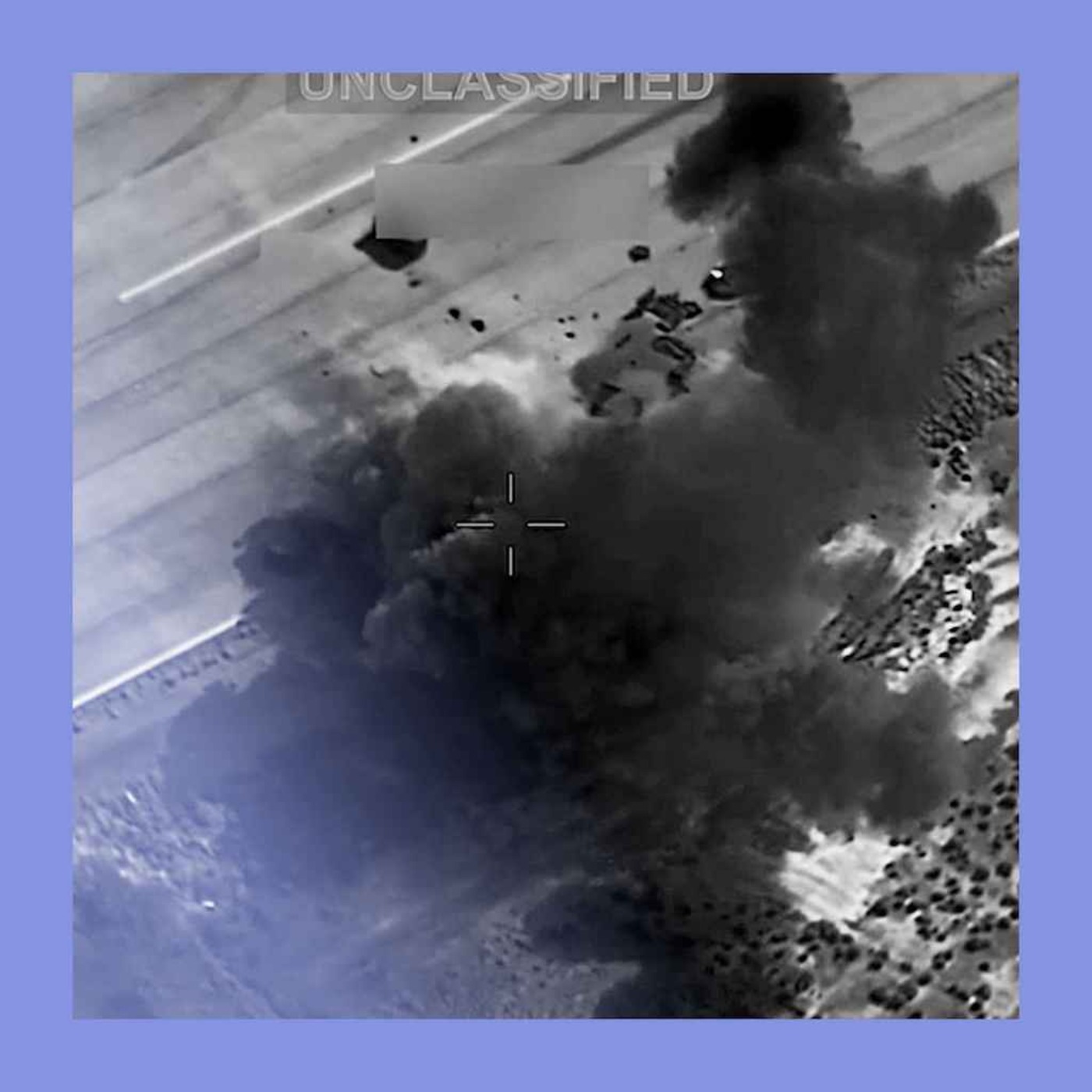
Today on the show, governments in Asia are forcing children to care for aging parents, and our journey across Route 66 reaches Oklahoma. But first, America has hit 90 targets in a second day of strikes on Iran. Iran returned in kind by hitting American bases in Bahrain and Kuwait. The US Said its attacks were prompted by unjustified aggression against commercial shipping. Three weeks into the ceasefire between America and Iran, Donald Trump yesterday said it was over. Oil prices have jumped, traffic through the Strait of Hormuz has stalled, all as Ayatollah Ali Khamenei's six day funeral continues with crowds chanting Death to America and revenge. Negotiations about a longer term agreement were due to restart this weekend. Now those talks and the prospect of peace seem ever more precarious.
- [02:37]
Nicholas Pelham
There's a strong possibility that the strikes are going to continue, both as part of a negotiation on the battlefield as well as at the table.
- [02:46]
Rosie Blore
Nicholas Pelham, our Middle east correspondent, is currently in Baghdad.
- [02:50]
Nicholas Pelham
At the same time, American and Iranian negotiators are still expected to resume talks in Islamabad on Saturday. But they're both looking belligerent. They're both talking the language of war, of an end to the Memorandum of Understanding. And diplomacy is really hanging in the balance at the moment. The leadership that's emerged in Iran in the wake of Khamenei's death looks much more concerned with projecting strength, wearing down Trump and negotiating through military pressure as much as diplomacy.
- [03:23]
Rosie Blore
Nick, you say that diplomacy hangs in the balance. Just remind me where we're at with the negotiations.
- [03:30]
Nicholas Pelham
A ceasefire was initially agreed in April. And then in mid June, we had a Memorandum of understanding which set 60 days for America and Iran to agree final status on the issue of Iran's nuclear program, on passage through the Strait of Hormuz, on fighting in Lebanon, on the return of Iran's frozen assets and its release from decades of sanctions, and even on foreign investment in Iran. And on every issue, there really hasn't been much progress. Iran really hasn't benefited financially from the deal as yet. Despite a waiver on oil sales, it's found it very hard to persuade anybody to buy its oil. It hasn't received any of its assets and it's begun lashing out.
- [04:20]
Rosie Blore
Just explain the timing of that renewed fighting. What's the significance of them happening now?
- [04:28]
Nicholas Pelham
We're on the last of six days of a huge funeral procession that's taken the coffin of the last Supreme Leader who was killed on the first day of the war, Ayatollah Ali Khamenei, through five cities both in Iran and in neighboring Iraq. He's due to be buried today. But overshadowing this funeral has been the drumbeat of revenge, of war, of retribution. On the one hand, Iran's rulers are frustrated. They haven't seen the benefits of the Memorandum of Understanding as yet. But at the same time, you've got a leadership which is trying to project its authority on the street of Hormuz, on the Gulf, on Iraq, on the region, and wants to show that somehow it's come of age and it's doing that in this, in some ways, rather ham fisted way. And I think there's also a mood in Iran that doesn't believe in a final settlement with America, that still believes that it can achieve this new projection of power without a deal with the United States, which in some ways cast those who are negotiating as selling out and believes that military victory alone can secure its future.
- [05:40]
Rosie Blore
And Nick, we talked about that funeral earlier in the week, but you're now in Iraq and have seen various ceremonies. What have you gathered? What have you seen?
- [05:49]
Nicholas Pelham
I've been to funerals in Iran and Iraq before where they're full of lamentation and chest beating. And this was much more upbeat. It was almost like a victory parade. The throng that I was caught up in yesterday in Karbala as a cortege moved incredibly slowly through vast crowds, was really one of determination and of a sense that the resistance is very much alive. It appeared very different from the signatures that were on that Memorandum of Understanding. Where there was a sense that Iran was about to turn the page in its relations with the West. The slogan that predominated on many of the billboards was Rise for God. And there were Iranian flags everywhere. And it has to be said that this was in an Iraqi city. So it appeared as if Iran was continuing to project a picture of force of power, not just within Iran, but within the region.
- [06:51]
Rosie Blore
And what will that mood of revenge and belligerence, the new power arrangements that are emerging within Iran, look like in practice?
- [07:01]
Nicholas Pelham
Throughout the decades that I've been watching Iran, there's always been this tension between diplomacy and confrontation. And above the fray was Khamenei, who was in some way able to hold both sides in check, derived power from playing one side off against the other, but was also able to be a sort of check and balance on both. And it appears at the moment that check and balance has gone. This is a more impulsive and more reckless system, one that is in some ways euphoric, if not drunk, from what it sees as its victory against America and Israel. It's enjoying its control over the Strait of Hormuz through which much of the world's oil flows. One of the messages that you heard on the streets was death to come from. And that was aimed specifically at the current president, Massoud Possesskian, and his foreign minister, Abbas Ekji, who appeared to be portrayed on the street as selling out Iran's victory in the eyes of some of the mourners, allowing America to rearm and refuel during what I think many now see as a potential lull rather than an end of conflict.
- [08:04]
Rosie Blore
What does that shift in style for Iran mean for the region more generally?
- [08:09]
Nicholas Pelham
I think there's real consternation in the Gulf. They backed this memorandum of understanding. They thought it could lead to a turning of the page in Iran. They're very nervous about Iranian control over what they see as their waterways, which are essential for their economies. In Iraq, you have a new prime minister who is about to make his first foreign trip to Washington. I think in Iran, there's a sense of. Even by the detractors of the regime who were numerous protesting against it just a few months ago, there's a sense of perhaps new national pride, and they're riding this wave, and I think it's going to make it quite difficult for them to compromise. If there are more sober minds in the system who want to go down that route. And there are just so many constraints on Iran's leaders, when they bury Khamenei, they're going to wake up the following morning and realize that they've got a devastated economy that has been wracked by sanctions, by isolation, by corruption, misleading management, and most recently by the pulverization of its industrial base in the war. The problems are so numerous, it's really hard to see how they're going to find any way out without some form of arrangement with their enemies, and particularly with the United States.
- [09:24]
Rosie Blore
So where does that all leave the negotiations? Is the ceasefire over or can a deal be made?
- [09:30]
Nicholas Pelham
Rationally, it looks as if the two sides don't really have an alternative. Iran needs a way out of its economic quagma and it can only do that with better relations with the outside world. The United States has tried war and only emboldened a regime that it said it had declared war to topple. We're back to square one. The strait of Homu is no longer flowing. Problem is that we're dealing with two systems of government which are reckless, which are impetuous, which in some sense are drunk on their own rhetoric. We've got a new system in Iran which is led by generals who appear to have very little check on their authority. And given that new constellation, it's really hard to see how they're going to get to a table and thrash out a final deal.
- [10:19]
Rosie Blore
Nick, thank you very much.
- [10:21]
Nicholas Pelham
Thank you, Rosie. Always a pleasure.
- [10:28]
Jason Palmer
Foreign.
- [10:35]
Rosie Blore
This episode is brought to you by Capital One. Capital One's tech team isn't just talking about multi agentic AI. They already deployed one. It's called Chat Concierge and it's simplifying car shopping using self reflection and layered reasoning with live API checks. It doesn't just help buyers find a car they love. It helps schedule a test drive, get pre approved for financing and estimate trade in value. Advanced, intuitive and deployed. That's how they stack. That's technology.
- [11:03]
Monday.com User
At Capital1 Monday, AI agents took over my work and I absolutely love it. Chasing deadlines, writing status reports, updating stakeholders. Agents handle the daily grind. Now they live inside Monday.com, so they see the full picture. My work, my team, the whole company. And I don't have to worry about the data. It's safe. Which means I'm free to focus on the big stuff. Knowing everything runs smoothly in the background. It's completely shifted the way we work. Create your own AI agent in minutes on Monday.com.
- [11:46]
Jason Palmer
Ravind Reddy, the Chief Minister of the Indian state of Telangana, has some thoughts about filial obligations. A person who does not look after their parents is not fit even to live as A human being in society, he said. A few months ago, he was speaking about a bill since passed that puts a price on the idea. If an adult child is found to be neglecting their parent or parents, as much as 15% of their salary can be shunted into the parents bank accounts. This is pretty hands on as far as the state mandating elder care goes, but it's not so uncommon.
- [12:28]
Farah Chia
This is actually not the first law of its kind.
- [12:31]
Jason Palmer
Farah Chia writes about Southeast Asia for the Economist.
- [12:35]
Farah Chia
Interestingly, Singapore passed a similar law back in 1995 and China did so just a year after. So in general, this kind of filial piety law is a growing trend across Asia.
- [12:50]
Jason Palmer
So what kind of forms do they take though? It's not all this kind of salary
- [12:54]
Farah Chia
docking stuff, so it varies slightly from country to country. Many countries, including South Korea, India and Japan, set out legal protections against elderly abuse, including financial exploitation. But some take it a step further. In Shanghai, one of China's largest cities, those who defy court orders are then put on a credit blacklist. In worst cases, this will affect the defaulter's ability to travel, take loans or assume executive appointments. Countries elsewhere in the region are still actively pursuing similar law. So Malaysia, for example, lawmakers are expediting a senior citizens bill, which is expected in a few months. In the Philippines, one MP has filed for similar laws to criminalise elderly neglect and abuse. His bill proposes to punish wrongdoers with up to 10 years in prison.
- [13:50]
Jason Palmer
So it's clearly a broad trend that one assumes is in response to some social change. What's going on here?
- [13:57]
Farah Chia
Across the world, elderly abuse and abandonment have become more commonplace as populations age. This is a particular problem in Asian countries, where culturally filial love has always been a bit of a social policy. But this shouldn't absolve states from providing elderly care. Let me tell you about Malaysia. It has 36 million people, but it only has 18 licensed nursing homes. Authorities in parliament quoted more than 2,000 cases of elderly patients abandoned in hospitals between 2018 and 2022. A lot of the child adults in these situations said they just had no feasible alternatives for step down care, including end of life facilities and welfare systems that give families options rather than ultimatums.
- [14:47]
Jason Palmer
But from a demographic point of view, this is a problem that was going to get worse anyway, I imagine.
- [14:52]
Farah Chia
Exactly. So Asia is ageing faster than any region in recorded history. About 15% of Asia's 722 million people are over 60 years old. Filial piety has always carried an Economic logic. Right. So children were for a long time part of retirement planning. So some portion of their wages will flow home to their parents so long as they live together and work together. But urbanization these days has broken that. The offspring migrates to cities, establish separate households and shoulder mortgages. You know, they pay separate bills for their kids. So there are competing claims on their income. And as these claims multiply, the expectation of caring for their parents still remains. So that's why this generation is stretched thin.
- [15:42]
Jason Palmer
I wonder how much trying to essentially legislate that care will work. Do you think this is a viable way to go about it? If people don't voluntarily do it, they can be compelled to do it.
- [15:53]
Farah Chia
Well, one of the things that I've mentioned is step down medical care, adequate welfare systems, rather than taking kids to jail, imprisoning them for the incapacity to provide rather than the unwillingness. Since 2013, China has required adult offspring to visit aging parents, often on pain of fines or jail. Right. There was a widely circulated social media comment that put it quite poignantly. It said the government should have thought of how they would address this problem when it brought in the one child policy. So there certainly is strong sentiment that governments need to take some responsibility for the situation of the elderly in Asia that they have found themselves in.
- [16:38]
Jason Palmer
Farah, thanks very much for joining us.
- [16:40]
Farah Chia
Thank you, Jason. It was lovely.
- [16:54]
Edward Threat
My name is Edward Threat and my grandpa, his name was Alan Threat Senior. That's a picture of him back there. And we're actually at the 3 filling station located on Highway 66 in Luther, Oklahoma.
- [17:12]
John Fasman
Remember yesterday when Lee was talking about the route's 1950s vibe? You see a lot of that in Route 66. Themed restaurants and businesses. Pastel and neon, giant cars with back fins, white T shirts and leather jackets. That kind of thing.
- [17:26]
Rosie Blore
This week, John Fasman, our senior culture correspondent, is taking us with him down one of America's most storied highways. Do check out this week's earlier episodes.
- [17:36]
John Fasman
And I heard over and over again during the trip how Route 66 evokes simpler, better time. But it wasn't better for everyone. And one thing linked everyone who said that to me. They were all white. Black travelers had a different experience before the civil rights legislation of the 1960s. Many businesses refused to serve them. And not just in the Deep South. You may have heard of the Green Book, published every year from 1936 to 1966. It listed restaurants, hotels and other businesses that would serve black travelers as well as sundowntowns to stay away from these are places where African Americans faced arrest or worse if they were caught after dark. Businesses like Mr. Threats Made Road travel possible for African Americans
- [18:23]
Edward Threat
because it was back in the Jim crow era, a safe haven for people of color, because my family owned 160 acres here and we still own it. But it was a safe haven because people of color during the Jim crow era couldn't stop anywhere and get gasoline, couldn't stop anywhere and get food to eat. And because we had both a full service filling station and because of the amount of property we have, people were able to, you know, camp out back, get rest, get something to eat here. The building next door is a blue building. I mean, it was the Brown Bomber Jr. Which was a bar that my dad owned and operated. And, you know, adults could go in there, have a drink, get tipsy, and rather than get on the road while they were tipsy, park out back, sleep it off and, you know, move on. Go on down the road, you know,
- [19:31]
John Fasman
and it's a long road in either direction. Luther is around 80 miles from Tulsa and 30 from Oklahoma City, but it was also located right between two sundown towns. Mr. Threate's grandfather Alan finished the modest sandstone building in 1939. He ran the business until he died in 1950 when it passed to his son who operated it until 1956. The current Mr. Threat's aunt ran it until it shut down in 1974. It was never in the green book, but it is the only known black owned in october filling station on Route 66. It has since been restored, and today it looks remarkably like an old time service station. Out front are two gleaming vintage conoco fuel pumps. The building is modest but pristine. The interior is wood paneled and lined with family photographs, advertisements and notices from the business heyday. A lot of work has gone into restoring it. Why did you and your family think it was important? Important to preserve it, to restore it?
- [20:33]
Edward Threat
Well, we knew from just being black. And in 1995, the property got recognized as a historic site. And like I said, we got started in 2019. We got shut down by Covid. Price of material and everything went through the roof. But we were determined not to give up, not to quit, not to stop. And here we are today. You know, we have a viable entity here that we can present to the public and we can also present to the family that comes behind us, our offspring, so that they understand, they recognize the importance of this place and what it means. And it does mean a lot because again, like I said this, it was a safe haven for people,
- [21:40]
John Fasman
it still feels like a safe haven. And I would hope that everyone who travels Route 66 to venture out on the open road to see the real America stops the by. Because this is also the real America. And to a lot of real Americans, the road wasn't always all that open.
- [22:17]
Rosie Blore
That's all for this episode of the Intelligence we'll see you back here tomorrow.
- [22:54]
Capital One Advertiser
With no fees or minimums on checking accounts, it's no wonder the Capital One bank guy is so passionate about banking. With Capital One. If he were here, he wouldn't just tell you about no fees or minimums. He'd also talk about how most Capital One cafes are open seven days a week to assist with your banking needs. Yep, even on weekends, it's pretty much all he talks about. In a good way. What's in your wallet? Terms apply. See capital1.com Bank Capital One NA Member FDIC
- [23:24]
Monday.com User
Monday AI agents took over my work and I absolutely love it. Chasing deadlines, writing status reports, updating stakeholders. Agents handle the daily grind. Now they live inside Monday.com so they see the full picture. My work, my team, the whole company. And I don't have to worry about the data. It's safe, which means I'm free to focus on the big stuff. Knowing everything runs smoothly in the background. It's completely shifted the way we work. Create your own AI agent in minutes on Monday. Com.