Loading summary
Transcript52 lines
- [00:00]
Fin AI Representative
AI is transforming sales support and every customer interaction in between. But too often you're sold a different AI agent for every job. That changes. With Fin is a single customer agent that works across the entire customer journey. From qualifying sales leads to resolving support issues. FIN works across teams, carrying context from one conversation to the next. Meet the agent, making perfect customer experiences possible at Fin AI.
- [00:32]
Back Market Advertiser
This intelligence podcast is sponsored by Back Market, the leading global marketplace for refurbished tech. When the kids need phones, laptops or tablets for school, buying refurbished tech makes sense for families trying to save money without sacrificing quality. At Backmarket tech costs up to 50% less compared to new. All devices have been professionally refurbished and come with a 1 year warranty and 30 day return policy. Start saving money. Visit backmarket.com or the back Market app to shop now.
- [01:05]
Jason Palmer
The economist.
- [01:12]
Rosie Blore
Hello and welcome to the Intelligence from the Economist. I'm Rosie Blore.
- [01:16]
Jason Palmer
And I'm Jason Palmer.
- [01:21]
Rosie Blore
Today on the show Brazil, strict laws on hate speech and possibly the most important lager in the world. But first, The impact of this war continues to ripple across the world. Global oil prices jumped and stocks fell sharply on Monday. In Asia, the conflict has so far had a dramatic effect on the price of oil due to fears that the
- [01:55]
Back Market Advertiser
US Oil prices rose sharpl again today, with Iran saying it would take decisive action in response. And there are reports tonight the Iran
- [02:04]
Rosie Blore
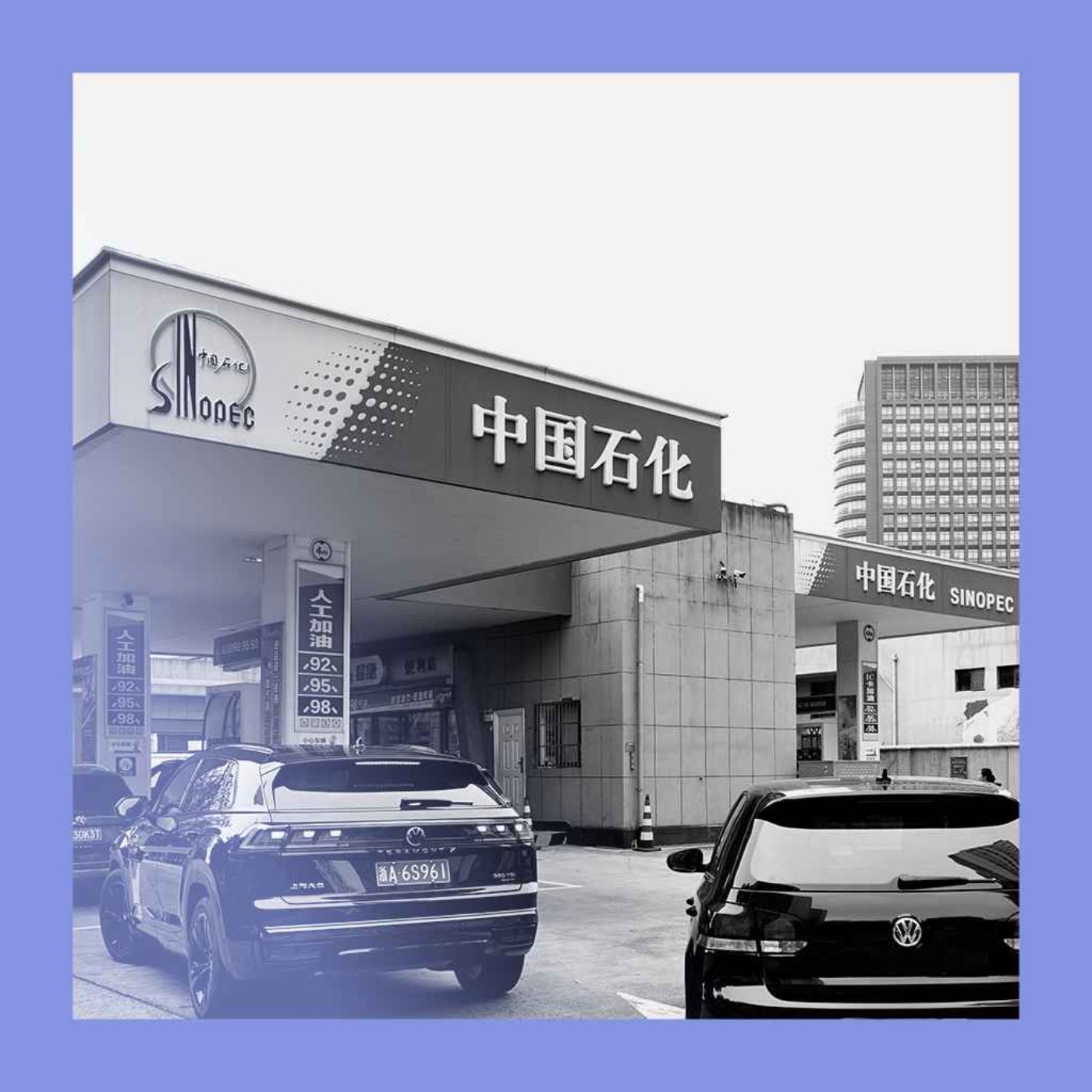
war triggered the largest supply shock in the history of oil when the Strait of Hormuz became unpassable. 14 million barrels of crude a day were trapped inside the Gulf. Yet oil never reached the hundred and fifty dollars a barrel many analysts predicted. In an attempt to keep up supply, Abu Dhabi and Riyadh increased the pipeline flow that bypassed the Strait. America and Japan released emergency stocks, but prices would have rocketed further were it not for decisions taken in a more surprising place.
- [02:41]
Mathieu Favas
Between February and April, China slashed its imports of crude oil by half.
- [02:49]
Rosie Blore
Mathieu Favas is our commodities editor and
- [02:52]
Mathieu Favas
to give you an order of magnitude, it's more than 5% of global demand. So it's a huge amount. It's so huge, in fact, that people think it's probably as $30 of the price of brands, which is the global oil price benchmark.
- [03:09]
Rosie Blore
And why would China do something like that?
- [03:12]
Mathieu Favas
It didn't do that in the interest of the global citizen. It did it because it was in its interest. And that's because before the war, China was the single biggest buyer of Gulf oil. And from late April it stopped receiving cargoes from the Gulf because Hormuz was closed. It needed that oil, but it realized it maybe did not need that much. And so by slashing its imports, it brought the price down. And also the volumes were smaller. So its import bill was overall smaller than before the war.
- [03:42]
Rosie Blore
That's a massive cut in imports. How did it do that?
- [03:46]
Mathieu Favas
In a few main ways. One thing to know first about China is that it has huge, absolutely massive stocks of oil. China has been building those stockpiles for years across a lot of other commodities too, from copper to grain. And that's to prepare for a time when a shock might be coming or they might be isolated themselves. In the 12 months to early 2026, it made these stocks even bigger by adding something like 200 million barrels to stocks that were already at around 1 billion barrels. And when the war started, first it stopped adding to these stocks, and because it was buying too much before, that already made a difference to the amount it imported. And then from late April, when the cargo stopped coming from the Gulf, it started drawing from these stocks. One thing to note is these stocks were not necessarily state owned stocks. They were commercial stocks owned by profit seeking divisions of big oil firms. But the biggest oil firms in China are all state owned, so the distinction is not very clear. The other big lever is that in normal times, China refines much more oil than it consumes. It has the world's largest refining capacity, which means it can refine so much more than it needs. And all this excess of oil products is exported to its Asian neighbors. And in March it announced a ban on these exports. Not a blanket ban, but a pretty comprehensive one. And the effect of that is that it could use some of the crude oil it used before to produce exports for its own purposes, whether to make fuel or to make petrochemical products that it needs for its plastics industry, for example. So that's a very powerful second lever that China used to do that. So add these two and you already have a big part of the explanation for why it was able to slash its import in such dramatic fashion.
- [05:37]
Rosie Blore
So a big cut in imports and exports, what effect did that have on China's economy?
- [05:43]
Mathieu Favas
Well, you would have expected quite a big one, right? Because, for example, during COVID 19, oil consumption fell by quite a big amount and the economy basically crashed. It was a deep recession here. We're not seeing that much of that. I mean, Chinese GDP is still going at 4 to 3% in the last quarter, which is good enough. Inflation is under control. Consumer prices are in fact pretty weak. Producer prices are not rising as fast as we expected. So the Overall macroeconomic impact is pretty limited, which is again remarkable. And Chinese demand, and Chinese demand also has fallen by quite a lot. And this is one of the most puzzling aspect of all that. Stocks you can understand, export controls you can understand, but domestic demand falling and no impact on the economy is really striking. And what we've seen, what we're starting to, is that there's been quite a big decrease in the use of motor fuels. So commuters, for example, in cities, they've stopped driving to work. Freight operators have switched to gas powered trucks, electric vehicles. A lot of local governments have postponed or cancelled faster projects to save on diesel. So all that saves on fuel basically by probably double digit percent. And then another thing that's less appreciated is that China's massive petrochemical industry, it needs a lot of petrochemical products and it has apparently managed to do without as much of them as before. And that's partly because it found new ways to produce these basic ingredients for its plastics, notably from coal and from other petroleum products that it had access to. So it found workarounds. And these workarounds seem to have worked. And the lesson is some of these workarounds, they've been invented during years where China was under pressure from Trump's tariffs, for example. So there's been a long history of trial and errors that explain why China has been in a position to be more flexible today.
- [07:41]
Rosie Blore
So a lot of cuts in activity and workarounds is all that sustainable.
- [07:49]
Mathieu Favas
So China's been able to do it for a few months now. So it tells you that they can last some distance. And again, that's not like a miracle, that's born out of today's necessity. It's a strategy that's been developed over a few years. It's billions in stead backed investment in renewables, in green transport, that has made the energy system, the transport system, much more flexible. So when a shock happens, demand can adapt in a way that we didn't think was possible. It's also because in recent years there's been this phenomenon in China called involution, whereby there was overcapacity across a lot of industries. And the result from that is that there were stocks not just in oil and crude oil and oil products, but also things like plastics or synthetic fibers. But the thing to say is, like all stocks, they're finite. So you're right, at some point China will run into the problem that it won't be able to draw on these buffers. But for now, showing that for a few months at Least it can survive a big shock.
- [08:44]
Rosie Blore
Mathieu, you've written about commodities for years. Is it ultimately a good thing that China's able to do this?
- [08:50]
Mathieu Favas
So that's an excellent question because typically when China manages to corner big global markets that we care about, we don't like it so much. And that's because China has in recent history used that power to bully other countries. But in this case, it does look like China is on our side. It's on the side of the oil consumers. Because if you consider the alternative, for four decades the oil markets have been, I wouldn't say managed, but have been under the influence of opec, the Organization for Petroleum Exporting Countries and their allies, which includes Gulf states, Russia, Iran. And their goal has been to keep prices high by cutting outputs. Or sometimes they've flooded the market to try and crash the competition. These are all anti competitive behaviors that we typically don't like so much as the Economist, as a liberal newspaper. So we prefer when like China, they are responsive to market signals. So if the prices are high, then they start releasing stocks. If prices are low, then they start buying more. That makes the market more efficient. It keeps prices at the right level. It's good for consumers, it encourages investment in new production when it's needed. So overall it's quite a good thing.
- [10:03]
Rosie Blore
Fascinating. Mathieu, thank you very much.
- [10:06]
Mathieu Favas
Thanks, Rosie.
- [10:21]
Anna Lancas
A Better help Ad matching with my
- [10:22]
Mathieu Favas
therapist was very quick and easy. I just filled out a couple of questions. Before you know it, I was matched with a therapist.
- [10:27]
Anna Lancas
I just felt like a weight just was lifted off of my shoulders and I felt like it was a good match match from the first time we talked. BetterHelp is there to meet people at their needs, giving them a space to feel safe. There is a stigma about therapy, but with BetterHelp, I meet people where they
- [10:44]
Vishnu Padmanabhan
are, wherever you are.
- [10:45]
Anna Lancas
That's where BetterHelp begins. Visit betterhelp.comrandompodcast to get started.
- [10:51]
Mathieu Favas
Pay testimonials Results may vary.
- [10:53]
Aura Advertiser
Most people don't realize how much of their personal information is being bought and sold. Every day, data brokers are making billions, pulling details about you from public records and the Internet, then packaging and selling it, usually without your consent. That's how your information lands in the hands of scammers, spammers, even stalkers. It's why you get endless robocalls and why ads seem to follow you everywhere. That's where Aura comes in. Aura actively removes your data from broker sites and keeps it off. They also instantly alert you if your information shows up. In a breach or on the dark web. But Aura goes beyond data protection. With one app, you get a vpn, antivirus, password manager, spam call protection, dark web monitoring, and even up to $5 million in identity theft insurance. All backed by 24, 7 US based fraud support. Other companies might sell just credit monitoring or just a vpn. Aura gives you all of it together at the same price. Competitors charge for just one service. Start your free trial today at aura.com safety protect yourself now@aura.com safety.
- [12:07]
Jason Palmer
Governments are showing more and more willingness to treat racist language as a crime. In recent years, in Belgium, South Africa and Spain, landmark jail sentences for racist insults have been handed down. New laws prohibiting hate speech are on the books in Canada, Australia and Singapore. But it seems no country has gone is going further than Brazil.
- [12:29]
Anna Lancas
In the past few years, the number of people prosecuted for racist speech in Brazil has skyrocketed.
- [12:35]
Jason Palmer
Anna Lancas is our Brazil bureau chief.
- [12:38]
Anna Lancas
But it's not that clear yet that it's doing that much to curb racial inequality or prejudice in the country. And as the rest of the world considers how to tackle hate speech, Brazil provides some useful lessons.
- [12:51]
Jason Palmer
Okay, for a start, Ana, just talk me through what the actual laws are in Brazil as regards racist speech.
- [12:58]
Anna Lancas
So racism in Brazil is banned under the country's constitution, and racism is defined as discrimination against a whole group. So for example, if an employer says, I don't want to hire people of a certain ethnicity or race, racist slurs were included under the country's penal code. So the bar for evidence was a little higher and the penalties weren't as high as in the constitution, because under the constitution it offers no statute of limitations and it's a non bailable offense, meaning you cannot pay bail to avoid pretrial detention. What happened in 2021 is that the Supreme Court ruled in one specific case that a racist slur that a woman had said equaled racism. So racist slurs basically were the same thing as the constitutional crime of racism. And in 2023, Brazil's Congress made that law. And that's why you've seen this big increase in prosecutions against racist speech. What's happened in the past year is that several foreign tourists have been arrested for racist speech. And so that means that there's been far more publicity about this recently.
- [14:10]
Jason Palmer
So why is it that Brazil has gotten so serious about this?
- [14:13]
Anna Lancas
It's mainly an attempt to right a deep historical wrong. During the 350 odd years of the transatlantic slave trade, around 12 million Africans were trafficked to the Americas and of those 5 million disembarked in Brazil, that's more than anywhere else. So just to give you a sense of Comparison, only around 400,000 people were disembarked in the United States. And Brazil was the last country in the Americas to abolish slavery in 1888 because it was so dependent on slaves for the economy. Slaves worked coffee plantations, they worked sugar cane plantations, they worked tobacco plantations, and they worked in gold and silver and diamond mines. In recent years, there's been a growing black rights movement, and this has led most strikingly to far more Brazilians identifying as black or brown in the census. So before, most people in Brazil identified as white, even if they weren't white. And today, black and brown people make up more than half the population, which makes Brazil the biggest country with Afro descendant people outside of Africa in the world. It's about 100 million people.
- [15:21]
Jason Palmer
And as regards these laws and what they're trying to do, you suggested earlier that they aren't necessarily tackling the structural problems.
- [15:29]
Rosie Blore
Yeah, that's right.
- [15:29]
Anna Lancas
So when I talked to supporters of these laws, they said it was really important to raise awareness around racist slurs so that people can see what racism looks like and sounds like. But I think the problem is that it doesn't, like you said, tackle the underlying problems that lead to deep racial inequalities in Brazil. I think Brazil's education system plays a far bigger role. So the gap between test scores of public and private secondary school students is larger in Brazil than anywhere else in Latin America and almost anywhere in the world. Rich Brazilians, who tend to be white, do everything they can to keep their kids out of the public school system. And poor grades for those who do attend public schools often mean that they can't go to good universities or study subjects that tend to lead to higher paying jobs. So I'll give you an example. One economist has calculated that differences in the field of study account for around a third of the difference in median earnings between black and white Brazilians. And then finally, even though Brazil's police forces are opening up units specialized in racist speech all over the country, they're still so brutal in ways that disproportionately affect black people. So Brazil's Police kill about 6,400 people a year. Just to give you an idea, American police kill about 1,000 people a year, and it's a much bigger country. And black Brazilians are three and a half times as likely to be killed by the police as white ones are.
- [16:55]
Jason Palmer
So these laws on racist speech are Tackling a symptom, not the disease.
- [17:00]
Anna Lancas
Yeah, that's my worry, that they're not actually tackling the underlying root cause of inequality and prejudice. And rather than doing so, my fear is that Brazil's very muscular hate speech laws can basically end up undermining free speech. In May 2023, a court in Sao Paulo convicted a comedian who's called Leonardo Linz of using hate speech and racist speech. He's basically known for making very distasteful jokes and having a large social media following. And he was sentenced to eight years and three months in a high security prison and ordered to pay fines that amounted to over $300,000. It took three years for a higher court to overturn that conviction. But that shows you that these laws can give very activist judges a lot of free rein, and it can be too much sometimes. So just to give you an idea, There are over 900 people in Brazil serving sentences for racism and racist speech. And that number is expected to increase significantly as the number of prosecutions rise. I think we can all agree that racist abuse is absolutely vile. But the Brazilian example shows that it's not always a good idea to make it illegal and have extremely harsh penalties. I think other countries, when they think about how to tackle hate speech and racism speech, can maybe learn from Brazil what not to do.
- [18:22]
Jason Palmer
Anna, thanks as ever for your time.
- [18:24]
Anna Lancas
Thanks, Jason, for having me.
- [18:39]
Vishnu Padmanabhan
Do you have the beer Lao?
- [18:40]
Rosie Blore
Yes.
- [18:41]
Vishnu Padmanabhan
Can I have one? Beer la. And one. There is one staple in Laos that can be found in glasses and bottles across the country. Beer La. The beer probably matters more to its home country than any other beer in the world.
- [18:55]
Rosie Blore
Vishnu Padmanabhan is our Asia correspondent.
- [18:58]
Vishnu Padmanabhan
Thank you. That's all. And even in Singapore, where I'm based, it's not yet widely available. But at this Lao Oie Shin restaurant, customers are noticing the distinct qualities of this beer. They say that beer Lao Eixi is a bit smoother lighter compared to normal Thai beers like Leo or Singha that way. But to them, they feel it's a bit more fruitier. So you can't really drink, like too much of it. Laos is a landlocked country in the heart of Southeast Asia, like its neighbors Vietnam and Cambodia. At one point, it too was under French rule. But since that ended more than seven decades ago, little French influence survives today in Laos. But beer Laos is one legacy that continues to linger. In 1973, French and Laos businessmen founded a joint venture. This company would produce beer, which today is known as Beer Lao. And today the company is Also called the Lao Brewery Company which sits in a different joint venture between the state and Danish beer giant Carlsberg Beer Laos. Everywhere in Laos. To people who've been to Southeast Asia, that won't be that surprising. Across the region, beers are linked to national identity. For example, Tiger Beer is Singapore's champion. There's Singa and Chang in Thailand. There's San Miguel in Philippines. But in Laos, Beer Lau takes on a whole new level of influence. Its branding is emblazoned on everything from T shirts and billboards. But what has really helped has been Laos prodigious thirst for beer. Laos is just home to 8 million people, but on a per capita basis, it's the biggest consumer of beer in Asia. More than Japan and South Korea even. And this has made it the second biggest Asian market for Carlsberg, after China. And of this market, Beer Laos accounts for nearly 90% of the beer consumed. So why is it so successful? Well, on a recent trip to Laos, I did some investigative reporting, and I found that the answer is simple. It's taste. European malt and hops are combined with locally grown jasmine rice, making a light, faintly sweet lager, often drunk with ice by locals. And this formula has won it international awards. On travel forums, backpackers swear by it. They love the taste and the price. A bottle costs around 20,000 kip, which is less than a dollar. In 2024, sales of beer Laos amounted to $600 million. In Laos, that is a lot of money, equivalent to some 3.5% of the country's GDP. Unsurprisingly, that year, Lao Brewery Company was also the country's largest taxpayer. Beer Laos is also becoming a strong export. Sales across Asia are growing, including to places like Singapore. Yet celebrating Beer Lao leaves a hangover. Its success reflects the economy state in Laos. One party rule has failed to kickstart other industries. The ones that are thriving, like hydropower and mining, create too few jobs. In theory, Lao Brewery Company should be a model for other companies. It shows how foreign investment can boost the economy. But for now, Lao Brewery Company is drinking alone.
- [22:47]
Rosie Blore
That's it for this episode of the Intelligence. We'll see you back here tomorrow.
- [23:10]
Aura Advertiser
Most people don't realize how much of their personal information is being bought and sold every day. Data brokers are making billions, pulling details about you from public records and the Internet, then packaging and selling it, usually without your consent. That's how your information lands in the hands of scammers, spammers, even stalkers. It's why you get endless robocalls and why ads seem to follow you everywhere. That's where Aura comes in. Aura actively removes your data from broker sites and keeps it off. They also instantly alert you if your information shows up in a breach or on the dark Web. But Aura goes beyond data protection. With one app, you get a vpn, antivirus, password manager, spam call protection, dark Web monitoring, and even up to $5 million in identity theft insurance, all backed by 24. 7 US based fraud support. Other companies might sell just credit monitoring or just a vpn. Aura gives you all of it together at the same price competitors charge for just one service. Start your free trial today@aura.com safety protect yourself now@aura.com safety.