Loading summary
Transcript68 lines
- [00:00]
Capital One Advertiser
This episode is brought to you by Capital One. Capital One's tech team isn't just talking about multi agentic AI. They already deployed one. It's called Chat Concierge and it's simplifying car shopping using self reflection and layered reasoning with live API checks. It doesn't just help buyers find a car they love, it helps schedule a test drive, get pre approved for financing and estimate trade in value. Advanced, intuitive and deployed. That's how they stack the that's technology at Capital One. This is a Monday.com ad the same Monday.com helping people worldwide getting work done faster and better. The same Monday.com designed for every team and every industry. The same Monday.com with built in AI scaling your work from day one. The samemonday.com that your team will actually love using the samemonday.com with an easy and intuitive setup. Go to Monday.com and try it for free. Yes, the same Monday.com.
- [01:05]
Rosie Blore
The Economist.
- [01:12]
Hello and welcome to the Intelligence from the Economist. I'm Rosie Blore. Today on the show, India's Cockroach party and remembering Iranian author and artist Mahan Satrapi. First up though,
- [01:42]
Capital One Bank Guy
Hello.
- [01:42]
Nick and Jack
Hi.
- [01:42]
Rosie Blore
Very nice to meet you.
- [01:43]
Reporter (possibly Rosie Blore or a correspondent)
Christopher Lockwood, Very nice to meet you.
- [01:49]
Rosie Blore
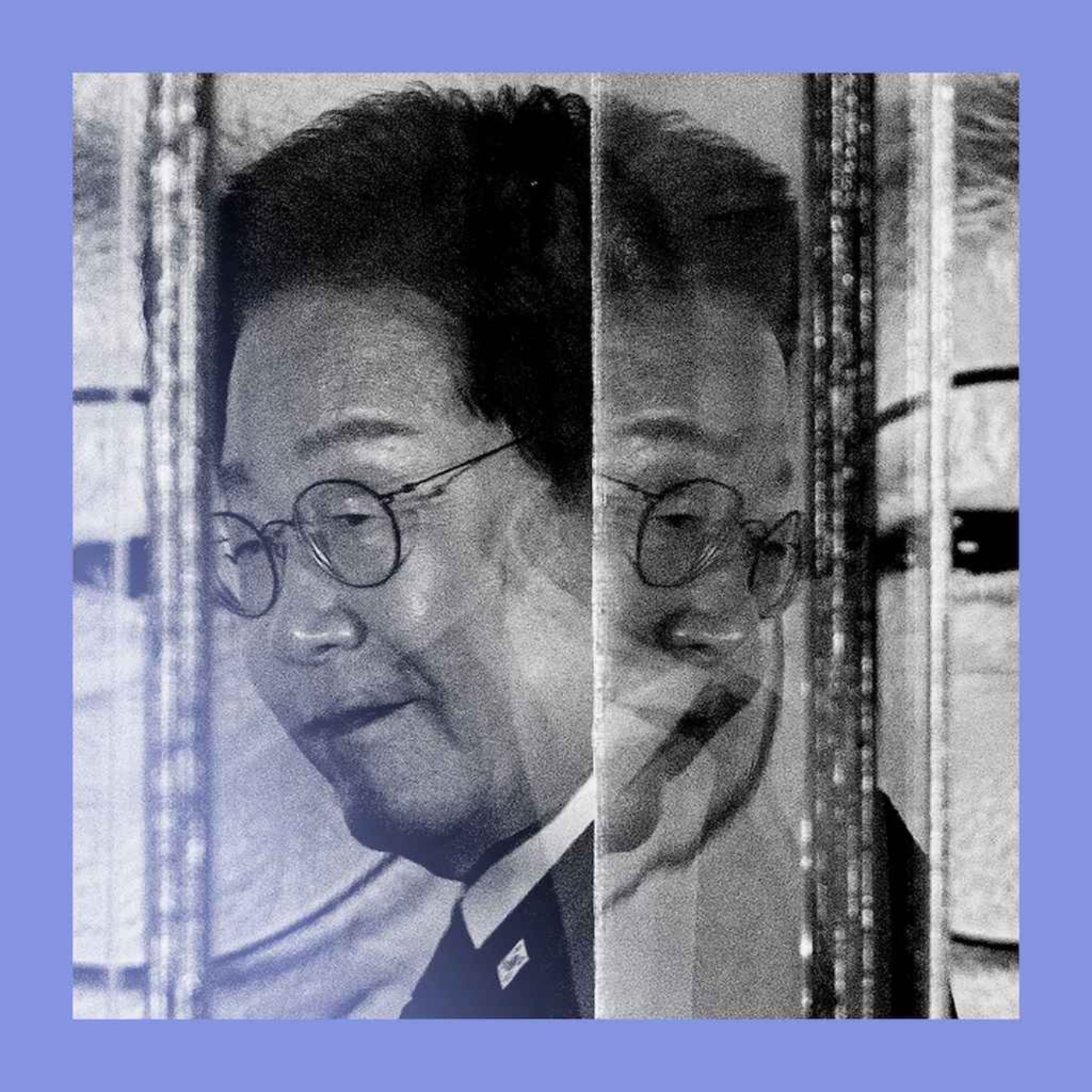
Where will the President be sitting? Just so I can place the microphone in the best place, my colleague Chris Lockwood and I recently paid a visit to an opulent blue tile complex in central Seoul known as the Blue House.
- [02:03]
Interviewer / Host (possibly Rosie Blore or a co-host)
Noah Snyder is our East Asia Bureau Chief.
- [02:06]
Rosie Blore
It's the home of South Korea's political leaders and we were there to interview Lee Jae Myung, South Korea's current president. He's been in power for just over a year now, and he took over following his predecessor's turbulent rule, which ended in a declaration of martial law and subsequent impeachment. We walked through well manicured grounds and into a central building, up a broad staircase and past a textile showing the entirety of the Korean peninsula in what seemed like full bloom and into a grand meeting room. There, President Lee really projected a kind of calm and confidence. He was clearly trying to signal that South Korea is back on track and that he is guiding the country in the right direction, that the country can move past this abnormal period of chaos and forward towards a brighter future and perhaps, as he puts it, even one where South Korea can be a nation that leads the world. Now, that may be aspirational, but it suggests again the confidence that he's operating with at this point in his presidency.
- [03:21]
Interviewer / Host (possibly Rosie Blore or a co-host)
Noah, I'm keen to hear more about what he said but first of all, tell me a bit more of what he's actually like.
- [03:28]
Rosie Blore
President Yi comes from a non traditional political background. You might say he grew up an impoverished family. He was essentially a laborer as a child, didn't receive formal secondary schooling. He became a labor lawyer, self trained initially and really rose from rather remarkable circumstances to become his country's president. But he's very much a natural politician. He has a charming effect which he's put to work on world leaders from Donald Trump to Xi Jinping, and that he certainly put on display with us as well. And he knows how to communicate his message. And again, I think the message he was sending to us and to our readers and listeners out there was that South Korea is back on track.
- [04:13]
Interviewer / Host (possibly Rosie Blore or a co-host)
He's been there a year, would you say? That's right.
- [04:16]
Rosie Blore
Is South Korea back on track?
- [04:18]
I think he does have many reasons to feel confident. For one thing, his approval ratings remain pretty high for a South Korean president at this stage in his term, around 60%. It reflects, I think, a feeling amongst many South Koreans that he has restored stability, that he has restored a kind of normalcy to South Korea's political life after a period of great turbulence. He's also managed to steer South Korea's relations with its neighbors and sometimes very complicated relationships with America, with China and Japan pretty deftly. And so I think there is a case that he has righted the ship of state, that he has South Korea back on track. But at the same time, there are clearly big challenges looming and he has another four years left in his term. And the rest of his term may prove to be more challenging even than this critical first year.
- [05:09]
Interviewer / Host (possibly Rosie Blore or a co-host)
So what's he actually done so far?
- [05:11]
Rosie Blore
Well, he's made very clear that artificial intelligence and renewable energy are the country's industrial priorities and that his government is going to be investing big in those industries and to incentivize South Korean companies to maintain their competitiveness. And all of this is happening on the backs of a blistering rally in South Korea's stock market, thanks to the AI investment cycle. Globally, South Korean chip makers make the memory chips that that are an essential part of the underlying infrastructure for AI and data centers. And that has pushed the key South Korean stock index to record highs. It's nearly tripled in the past year since President Yi has been in office. And in fact, he came into office promising to raise it from 3,000 to just 5,000 during the course of his whole five year term. But as luck would have it, the index now sits above 8,000 and you've
- [06:05]
Interviewer / Host (possibly Rosie Blore or a co-host)
already referred to the challenges he's facing. What are those challenges, particularly at home?
- [06:10]
Rosie Blore
Well, I think one of the challenges is the flip side of this market boom. If this AI investment cycle peters out or dips or pauses, I think there is a risk that his ratings and his own standing will take a hit along with that. But perhaps more importantly, in the long run, this newfound wealth is also raising new questions about equality and how to make sure that this growth is both sustainable and shared throughout society. President Yi, in our interview, he said that it's time to start thinking about new alternatives, about things like a basic income, changes to the tax system to distribute the new revenue coming into government coffers from companies that are enjoying a windfall from the AI boom.
- [07:02]
Interviewer / Host (possibly Rosie Blore or a co-host)
South Korea always has a delicate balancing act between China, its neighbor and the U.S. and you said that he has already turned on the charm with Trump and with Xi Jinping. How's he doing in terms of foreign policy?
- [07:17]
Rosie Blore
He came into office promising a pragmatic foreign policy. In fact, the last time I interviewed him, when he was still opposition leader and preparing for a run for president, he laid out exactly this case for a pragmatic principle. And I think by and large he's lived up to it. He's managed to stabilize the relationship with China without seeming too obsequious. He's managed to forge a kind of unlikely bond with Japan's right wing Prime Minister, Takaichi Sanaya, born of a shared understanding of their complicated strategic position between America and China. And finally, he has thus far kept Donald Trump happy while also achieving some long held South Korean goals in terms of their own security. He's managed to sort of placate Trump with promises of more defense spending and greater investment into America. But he also got something in return. And two really big items were Trump's blessing for South Korea to build nuclear powered submarines of its own and also to develop the capacity to enrich and reprocess nuclear fuel, which would in theory facilitate the operation of those submarines and also South Korea's civil nuclear reactors. The unspoken part is that it also gives Korea greater flexibility in the future in terms of its own nuclear options.
- [08:49]
Interviewer / Host (possibly Rosie Blore or a co-host)
And North Korea, this is another one
- [08:51]
Rosie Blore
of those challenges looming over the rest of his term. President Yi has tried outreach, but gotten little in return from the North Korean regime, which really has adopted an even more hostile than usual posture towards its southern neighbors and made very clear that it wants to talk only with America and only if denuclearization is taken off the table. As President Lee mentioned the war in Iran will only make it less likely for North Korea to consider giving up its arsenal. So there's a big question looming. How do you manage that problem, especially again as America is less predictable or less reliable.
- [09:40]
Interviewer / Host (possibly Rosie Blore or a co-host)
Noah When Yi was elected last year, there were several trials hanging over his head. What happens to those now?
- [09:49]
Rosie Blore
You're right, Rosie. President Lee was in some legal hot water heading into the campaign for a series of cases connected to his time as a mayor and as a governor and cases that he says are politically motivated prosecutions. Those cases have been put on hold while he is in office, but there is the prospect that they re emerge when he leaves office. And this is a disturbing pattern for South Korean presidents. Since the country's democratization in the late 1980s, over half of the presidents who've led South Korea have ended up being impeached or jailed after leaving office or both. There is a cycle of retribution that President Yi acknowledged in our interview and said that he wants to break some in South Korea. Even talk about this as the curse of the Blue House. And I do think that part of President Lee's legacy will depend on whether he can overcome that vicious cycle and perhaps even break the curse of the Blue House.
- [10:55]
Interviewer / Host (possibly Rosie Blore or a co-host)
Noah, thank you very much.
- [10:57]
Rosie Blore
Thank you for having me. Thank you, thank you.
- [11:13]
Jackson Advertiser
This message comes from Jackson. Taxes aren't something you can only think about once a year with investments planning for tax days year round. Fortunately, Jackson offers tax efficient products. Visit Jackson.com for more information on how our products can make your tax bill a little bit less painful. Jackson is short for Jackson Financial Inc. Jackson National Life Insurance Co. Lansing, Michigan and Jackson National Life Insurance Co. Of New York Purchase, New York.
- [11:38]
Capital One Bank Guy
With no fees or minimums on checking accounts, it's no wonder the Capital One bank guy is so passionate about banking with Capital One. If he were here, he wouldn't just tell you about no fees or minimums. He'd also talk about how most Capital One cafes are open seven days a week to assist with your banking needs. Yep, even on weekends it's pretty much all he talks about in a good way. What's in your wallet? Terms apply. See capitalone.com bank capital1NA member FDIC.
- [12:17]
Reporter (possibly Rosie Blore or a correspondent)
Last Saturday morning, Abhijit Ditka arrived in Delhi straight off the plane from Boston and staged a protest in the 40 degree heat.
- [12:26]
Interviewer / Host (possibly Rosie Blore or a co-host)
Tom Sasse is our South Asia Bureau Chief.
- [12:29]
Reporter (possibly Rosie Blore or a correspondent)
I got down there around 11am and found lots of young people chanting and banging drums. Until recently, Dipka was a 30 year old Indian communications consultant living in Boston, in America, who was fond of posting memes on the Internet. Now he's accidentally found himself at the helm of a movement. His Cockroach People's Party began as a joke in response to a nasty comment made by the Chief justice of India's Supreme Court comparing India's many jobless young people to cockroaches. But the joke quickly spiraled. Tell me what you're wearing on your head.
- [13:07]
Protester / Participant
This is actually a symbol of a Cockroach Janta Party.
- [13:10]
It's the People Party of Cockroach.
- [13:12]
Reporter (possibly Rosie Blore or a correspondent)
The party has attracted millions of followers online.
- [13:16]
Interviewer / Host (possibly Rosie Blore or a co-host)
So, Tom, tell me a bit more about this gathering. What was it all about?
- [13:20]
Reporter (possibly Rosie Blore or a correspondent)
So I asked Anurag, a guy in his 30s who was wearing a cockroach mask, to explain exactly this to me. Tell me what they're saying.
- [13:29]
Protester / Participant
They are saying they're asking our education minister resignation and also the system which is involved in this issue.
- [13:37]
Reporter (possibly Rosie Blore or a correspondent)
Lots of people I met at the protest were angry about two specific education scandals. One involving a leaked medical entrance exam paper, the other involving the credibility of a whole exam board. So that's why they were calling for the Education minister to resign. But the Cockroach Party is trying to make a bigger argument, really, that these two scandals reflect a broken system that is failing young Indians.
- [14:07]
Interviewer / Host (possibly Rosie Blore or a co-host)
So this is essentially a popular street movement. How unusual is that in India?
- [14:14]
Reporter (possibly Rosie Blore or a correspondent)
Well, Rosie, the street really matters in Indian politics. Many of the country's political heroes have really forged their reputations there by amassing giant crowds with the drums and the slogans and the placards. Of course, you think of Mahatma Gandhi. Also BR Ambedkar, who secured the rights for Dalits by organizing these giant street rallies. And also Narendra Modi. He cut his teeth as a student organizer, and protests played a big role in him coming to power nationally in 2014. The previous Congress government was dogged by corruption scandals, and a huge street movement emerged with hunger strikes and so on. And actually, Modi's most difficult moment as prime minister was a giant protest in 2020 21. Hundreds of thousands of farmers blockaded national highways in India and forced him to drop a set of new farm laws. So all that is to say that these kind of protests absolutely have been a vehicle for change before in India, including under this government. But this one is very much in its infancy.
- [15:32]
Interviewer / Host (possibly Rosie Blore or a co-host)
And what is the change that they're really pushing for? As you say, it's not just the education scandals that sparked this particular moment.
- [15:40]
Reporter (possibly Rosie Blore or a correspondent)
Well, you're right. I mean, Indians and young Indians in Particular have a lot to be angry about. It's not just education scandals. There's a real lack of jobs. Lots of them are graduating and finding it hard to meet the higher aspirations that they have.
- [15:57]
Protester / Participant
Not only Exempt, even against the system.
- [16:01]
Reporter (possibly Rosie Blore or a correspondent)
Nareen, a 25 year old from Jaipur, like many others that I met at this protest, had traveled a few hundred kilometers to get there.
- [16:09]
Protester / Participant
So we just want to change the system. Not only a single person. Everyone is asking the resignation of education minister, but I just want. My demand is that we have to change the system.
- [16:20]
Reporter (possibly Rosie Blore or a correspondent)
And others that I spoke to explained that they'd been afraid to criticize the government. And this was one of the first times they'd seen the youth really fight back.
- [16:31]
Protester / Participant
I mean, there comes a time when you think that, okay, now I have to speak up. I have to live in this country. If my next generation, if the generation next to them has to live in this country, then I really cannot stay politically inactive anymore.
- [16:44]
Reporter (possibly Rosie Blore or a correspondent)
I met a young woman called Ezeboo. She was holding a placard saying freedom from fear, but she only wanted to give me her first name.
- [16:53]
Interviewer / Host (possibly Rosie Blore or a co-host)
A lot of those expressions of angst seems to be things that resonate around the world from youth movements. And we have had particular ones in Asia, in Nepal, in Sri Lanka, in Bangladesh, that have actually toppled governments. Where does this fit into that?
- [17:09]
Reporter (possibly Rosie Blore or a correspondent)
I mean, it's true that you hear some of the same kind of messages at those protests, but I would be quite cautious about drawing too many parallels there. So in those countries that you mentioned, Nepal, Bangladesh, Sri Lanka, you really had a whole swathe of young people turning against really quite corrupt dictatorial regimes. That's not the situation in India. So the BJP, which is ruling nationally, Mr. Modi's party, is still by far the most popular party in India, including among younger voters. But there are real frustrations among the youth with how the system is working.
- [17:48]
Interviewer / Host (possibly Rosie Blore or a co-host)
But you're covering the cockroach movement, presumably because you do think it does have legs in some form.
- [17:54]
Reporter (possibly Rosie Blore or a correspondent)
Well, to be honest, Rosie, this has generated a lot of interest online. There's quite a furore over the last three or four weeks since it emerged. But I actually came away from this protest a little bit more skeptical about how big this thing will get. For one thing, the protest itself was very small. There was only around 1 or 2,000 people there. That's a fraction of the size of the farmers protest that I mentioned. The group has promised more rallies, but it's not at all clear that it's got the stamina or the organizational clout to really mount a long, sustained campaign. And at the moment, I would argue that they also lack a strong leader and a coherent message that would really appeal to a really large number of Indians. So at the protest, Ditka was leading endless rounds of chanting slogans,
- [18:49]
Protester / Participant
Honestly.
- [18:53]
Reporter (possibly Rosie Blore or a correspondent)
But the speakers weren't really loud enough for most of the crowd to hear what he had to say. I think India is in a tight spot. Everyone has been put under pressure by the Iran war. Energy prices are rising pretty fast here. Some people are struggling to get hold of cooking gas. Inflation is rising pretty sharply. So the mood here isn't complete satisfaction with the government. And in some ways these protests are tapping into that. But I think at the moment the government's bet is that they can ride it up.
- [19:26]
Interviewer / Host (possibly Rosie Blore or a co-host)
Tom, thank you very much.
- [19:27]
Reporter (possibly Rosie Blore or a correspondent)
Thanks, Rosie.
- [19:43]
Rosie Blore
Before we go on, I wanted to mention something else. We've been talking about it for months and finally the World cup has actually kicked off. It really does feel like the ultimate shared cultural moment. Half the entire global population is expected to tune in. But behind all the football hype, global culture is actually fracturing. Audiences everywhere are turning away from American entertainment in favor of local hits, often in their own language. And this week, that's what's being discussed on Economist Insider. Our video series, Insider is a chance to see how the Economist really works and the debate that goes on as we chew over the implications of what's happening in the world. So in the most recent Insider, Adam Roberts, our foreign editor, and a panel of my brilliant colleagues discuss what this shift towards local culture and away from America means for the world. If you're a digital subscriber, Insider is already part of your subscription. There's nothing extra to sign up for. If you're listening free, I've put a link to extended clips from Insider in the show notes.
- [20:59]
Ann Rowe
It all happened when Marjane Satrapi was 10 years old. She went to school one day and was handed a veil and told she had to wear it.
- [21:11]
Rosie Blore
Ann Rowe is the Economist's obituary's editor.
- [21:15]
Ann Rowe
She had no idea why nobody had explained. This was a secular school and there'd never been any restriction of this sort before. But it was 1979 and this was the Islamic revolution suddenly coming to Iran. And this was the first sign of it. And the first picture of Marjane, or Margie, as she's known throughout the book is of a very grumpy looking 10 year old girl having to wear this veil. The whole world in the end became enchanted by this book. Persepolis it sowed in millions. And it was so extraordinary to hear for the first time a voice coming out of Iran that was rebellious, especially a woman's voice. She spoke her mind always. It was partly how she had been brought up. Her parents were Marxist, they were middle class, they had a maid. Life wasn't difficult before the ayatollahs started coming in. At any rate, she told the teachers in school what she thought of them as soon as they began to impose Islamic law on her, and that got her expelled. There was nothing wrong, surely, in going out and walking in the street in a denim jacket and tight trousers that her parents had bought for her. Why shouldn't she encourage the maid to go on protest marches like she did? And why couldn't she go out at night and buy Iron Maiden tapes that were being sold by rather dodgy men on Gandhi Avenue out of suitcases? Maran actually had to leave Iran, however, when she was 14. Her parents decided to send her abroad to finish her education because, having been expelled, she was not doing anything much around the house. They sent her to a French school in Vienna, and off she went. And there, over five years, she grew into what seemed to be a Westerner. In fact, she went rather overboard. She, of course, shed the veil, she dressed herself like a punk now. She slept around, she did drugs. She rather overdid the free and wild Westerner. And yet inside she was still Iranian. She found herself increasingly ashamed at the life she was leading. She had imbibed enough of the modesty and all the repressions of an Islamic state to feel extremely uncomfortable. And so, in the end, after five years, she decided she would have to go back to Iran. And there is a picture of her in Persepolis, looking extremely sad as she ties on her veil, looks to herself in the mirror and thinks, there go all my individual and social liberties. The pictures are one of the reasons why Persepolis is such an attractive book. Mahjane Satrapi was an extremely good graphic artist. She didn't like the word graphic for her books. She preferred to call them comic books. But she had a very simple style of drawing, rather like woodcuts. And with just a few nicks of her pen, she could let the strongest emotions show through. She wouldn't have minded writing these books, but she did feel that drawing was man's first language, even before words. And therefore, if you really wanted to get something across, you had to use drawing and not writing. It was hard to keep a fun face all the time, though, when writing about her country. And it did seem to get dark very frequently. And in the most harrowing part of Persepolis, which is when she goes to a house of a friend of hers, a Jewish friend called Nada. The house has just been bombed by an Iraqi missile and she notices a turquoise bracelet in the rubble, which was Nada's. And as she looks at it, she realizes it's still attached to something. She doesn't look anymore, but at that point even the drawings have to give out and there's a panel that's completely black. The main point of her writing, though, in the end had been to explain Iran to the West. She felt this was extraordinarily important. It seems seemed to her that America in particular just did not understand Iranians. It thought that they were either peasants or terrorists and they could be summed up in the phrase a veil, a beard and a nuclear weapon. That was all Iran meant to them. She wanted America to understand that Iranians were also modern, educated people, that most of them lived in cities and that they were not represented by their government. She hoped that they would hear. Her first book had begun with a drawing of herself as a disgruntled 10 year old girl. Her last in 2024, showed a crowd of women all shouting their defiance against the regime. Their long hair was shining and cascading. They were shouting as loudly as they could. But sadly, the loudest voice of all is now missing.
- [27:11]
Rosie Blore
Ann Ro on Marjan Satrapi, who has died, age 56. Tomorrow in the weekend Intelligence slot, we have the first episode of Tocqueville Road trip, a new six part series from Economist Podcasts about America's 250th birthday. Do listen for an illuminating tour of the past, present and future of America. That's all for this episode of the Intelligence. The show's editors are Chris Impey and Jack Gill. Our deputy editor is Sarah Larniuk and our sound designer is Bill Rowe. Our senior producers are Henrietta McFarlane and Aliza Jean Baptiste. Our senior development producer is Rory Galloway and our senior creative producer is William Warren. Our producer is Anne Hannah and our assistant producer is Kunal Patel. With extra production help this week from Eleanor Sly. We'll all see you back here for Tocqueville Road Trip tomorrow.
- [28:31]
Nick and Jack
Hey, Yetis. This is Nick and Jack from the Best One yet podcast. Now, the last company we worked at, they used Paylocity and everything just worked. It wasn't until launching our own media business, this show, that we realized how rare that is, because Paylocity is one delicious burrito of operational needs.
- [28:47]
Rosie Blore
They roll up HR finance and it seamlessly into one delicious bite.
- [28:52]
Nick and Jack
When everything wraps together like that all at once, your workforce, your tech stack, your business. You don't need more tools. You don't even need cilantro.
- [28:57]
Rosie Blore
You need one solution.
- [28:59]
Nick and Jack
And that is why Paylocity built a single platform to connect HR finance and IT with AI driven insights and automated workflows that save, simplify the complex and power what's next. Or as we call it, a delicious operational burrito. Yes, we do experience a one place for all your HCM needs besties. So start now at paylocity.com 1paylocity.com O
- [29:20]
Capital One Bank Guy
N E With no fees or minimums on checking accounts, it's no wonder the Capital One bank guy is so passionate about banking with Capital One. If he were here, he wouldn't just tell you about no fees or minimums. He'd also talk about how most Capital One cafes are open seven days a week to assist with your banking needs. Yep, even on weekends, it's pretty much all he talks about. In a good way. What's in your wallet? Terms apply. See capitalone.com bank capital1NA member FDIC.