Loading summary
Transcript59 lines
- [00:00]
Grow Therapy Advertiser
History shows women keep showing up for everyone every day. But who's showing up for you? Grow Therapy helps you put your mental health first with therapy that's covered by insurance and built to support you whether it's your first time in therapy or your 50th. Grow makes it easier to find a therapist who fits you, not the other way around. You can search by what matters like insurance, specialty, identity or availability and get started in as little as two days. Therapy. There are no subscriptions, no long term commitments. You just pay per session. Grow helps you find therapy on your time. Whatever challenges you're facing. Grow Therapy is here to help. Grow accepts over 100 insurance plans, including Medicaid in some states. Sessions average about $21 with insurance and some pay as little as $0 depending on their plan. Visit growtherapy.com acast to get started. That that's growtherapy.com acast growtherapy.com acast availability and coverage vary by state and insurance plan.
- [01:09]
Strawberry Me Career Advertiser
Let's be completely honest. Are you happy with your job? The fact is, a huge number of people can't say yes to that. Too many of us are stuck in a job we've outgrown, or one we never really wanted in the first place. But we stick it out and we give reasons like what if the next move is worse? And I've put years into this place and maybe the most common one. Isn't everyone miserable at work? But there's a difference between reasons for staying and excuses for not leaving. It's time to get unstuck. It's time for Strawberry Me. They match you with a certified career coach who helps you get from where you are to where you want to be, either at your existing job or by helping you find a new one. Your coach helps clarify your goals, creates a plan, and keeps you accountable along the way. Go to Strawberry Me Career and get 50% off your first coaching session. That's Strawberry Me Career.
- [02:09]
Theatre Understudy Actor
The economist.
- [02:16]
Rosie Bloor
Hello and welcome to the Intelligence from the Economist. I'm your host, Rosie Bloor. Every weekday we provide a fresh perspective on the events shaping shaping your world. Maoist insurgencies have been a persistent security threat in India for decades. Eighteen months ago, Modi's government set itself a deadline to crush that group. Our correspondent visits a former rebel stronghold to find out how that's going. And understudies are a theatre's insurance policy a human backstory stop to guard against a show being canceled. We meet one of these underrated, often entirely hidden talents who ensure that the play goes on.
- [03:07]
Rachna Sanbog
First up, though,
- [03:18]
Rosie Bloor
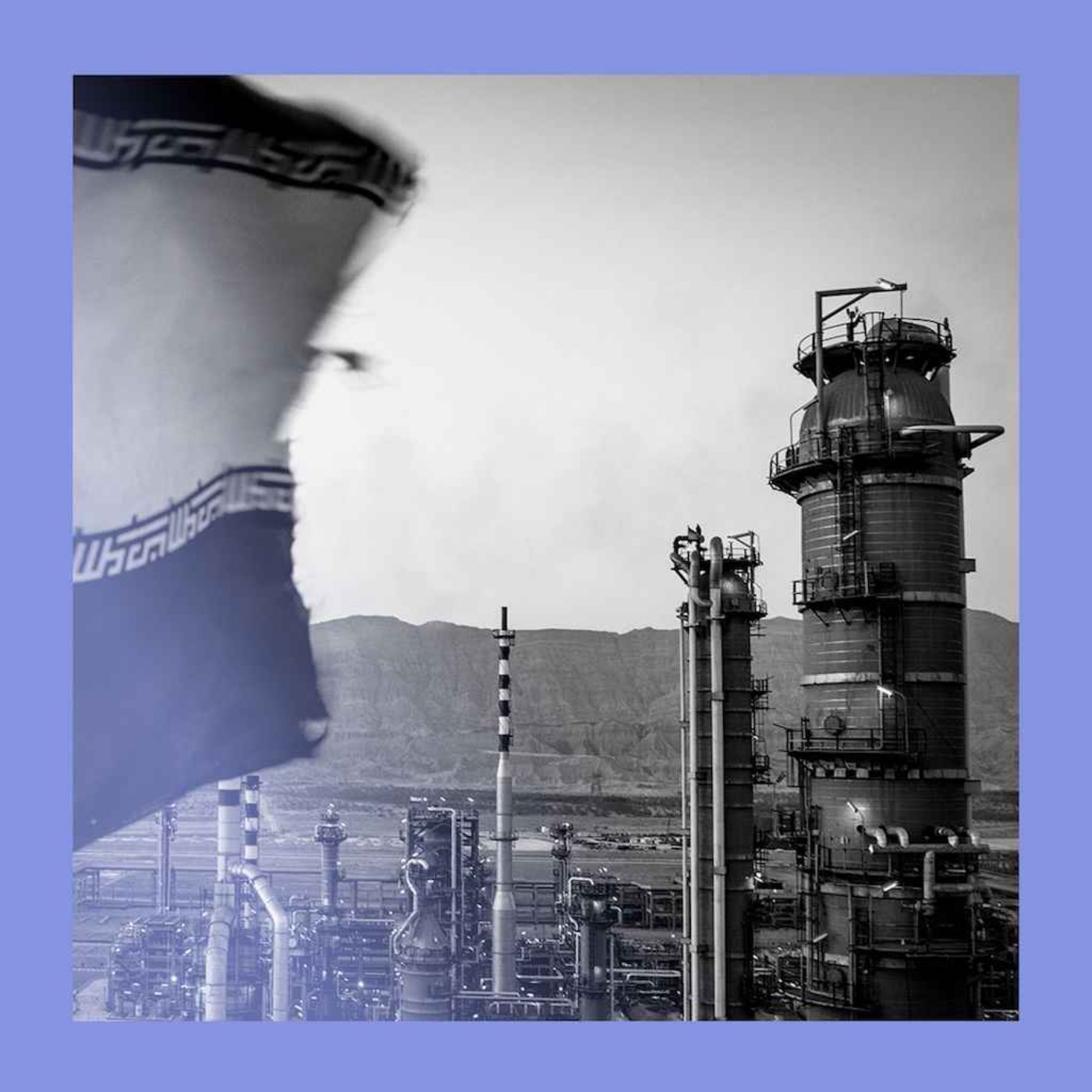
Yesterday Donald Trump threatened to destroy Iran's energy infrastructure if the regime fails to reopen the vital shipping route of the Strait of Hormuz. His targets include Kharg island, through which nearly all of Iran's oil exports flow, with one key strategic site. And after weeks of the country being pummeled from the air, you might think that Iran would be fragile, but its history of sanctions dodging is now serving it well. And when it comes to making money from oil, the Iranian regime is coming out on top, really.
- [03:53]
Rachna Sanbog
Remarkably, Iran is now earning nearly twice as much from oil as it was before the war began.
- [04:00]
Rosie Bloor
Rachna Sanbog is our business affairs editor.
- [04:04]
Rachna Sanbog
It's selling about 2.4 to 2.8 million barrels a day, which is about what it was selling before the war, if not more. And because the Strait of Hormuz is blocked and 15% of the world's oil is stranded, it's actually able to command higher, higher prices for that oil.
- [04:22]
Rosie Bloor
So how is any of that possible?
- [04:25]
Rachna Sanbog
The first thing to say is that this is some really spectacular reporting from Mathieu Favas, our commodities editor, who's enjoying a well earned holiday. And there are three parts to his story. One is what the domestic salesmen in Iran are doing. The other is the intermediaries, the kind of logistical infrastructure. And then the third is the payment infrastructure that lies behind this. And if we start first with the salesman, nominally speaking, all the oil sales happen through the national oil company. But Iranian oil has been under sanctions for years, and oil represents really precious hard currency. So there are various groups within Iran who have the power to sell this oil, ranging from the Foreign Ministry to the police to the Islamic Revolutionary Guard Corps. And they are basically able to sell bits of oil for themselves. And recent sales have been driven by the irgc.
- [05:28]
Rosie Bloor
So given the sanctions and the bloc in the Strait of Hormuz, how are they getting that oil out of Iran?
- [05:34]
Rachna Sanbog
So let's then look at the shipping side of this. Now, according to American sanctions documents, there are various private companies, or nominally private companies, they're actually front companies for the IRGC and that coordinate a lot of the freight and the transport with the oil company. And again, this is a system that has come about under years of sanctions. And even though America decided last week to waive sanctions on Iranian oil that's at sea, you know, tankers are still following the kind of procedures that they were following before that waiver was introduced. And so there's an elaborate system of stealing ships credentials spoofing locations, forging documents. That's in place here. And about 90% of the oil is exported from Kharg island, which is just off the coast of Iran and north of the Strait of Hormuz. The ships may have paid a toll to the Iranian authorities in order to get through the strait. And they sail kind of hugging the Iranian coast so that various checks can be done on land and they're on their way.
- [06:43]
Rosie Bloor
If so much of it is going from one location, why hasn't the US or Israel intervened to stop that?
- [06:50]
Rachna Sanbog
Now this is something that's very much on the table, Rosie. America has threatened to bomb Iranian oil infrastructure. It's also threatened to seize Iranian oil. Donald Trump prizes oil assets, as we know well from Venezuela. But it's a really risky move. Kharg is not Iran's only export terminal. There are smaller export terminals on the mainland. Any attack would affect Iran's ability to get oil out, which could raise global oil prices. And that's something that Donald Trump will not want. And any attack could risk Iranian retaliation and further attacks on Gulf energy infrastructure. So this is very much in contention, but it would be a very risky move.
- [07:36]
Rosie Bloor
So, Rachna, where is all this oil going? Who's buying it?
- [07:41]
Rachna Sanbog
Good question. So China is the answer. China is buying about 90% of Iranian oil. There are hundreds of small so called teapot refiners in the country's north that have been buying Iranian oil for a long time. Bigger state owned companies tend to worry about American sanctions. The smaller ones have fewer concerns. Now the relationship between the smaller teapot refineries and the state owned refineries can be quite murky. Some of them own joint ventures together, but these refineries are buying Iranian crude. They were buying them at quite a big discount before the war and that discount has shrunk as global oil prices have risen.
- [08:22]
Rosie Bloor
And how are they paying for them given international sanctions?
- [08:26]
Rachna Sanbog
This is the third part of the story, if you like. And again, it's something that has cropped up and become more and more sophisticated over years of sanctions. Payments are made into disposable trust accounts, often at small Chinese banks, again out of the reach of American sanctions. And those accounts might be registered in the names of shell companies, often set up by Chinese individuals. And then the oil proceeds are kind of funneled into these through a range of other trust accounts and turn up in various corners of the world. So some of the money stays in China because Iran wants to buy some goods from China. The rest matches, investigations have found turned up in India in Kazakhstan, in Turkey. The kind of ultimate beneficiaries of the payment system involve, you know, Iran's Defense Ministry or irgc. And this is a really dense network. It's really hard to tell what's going on. It's becoming more and more opaque.
- [09:30]
Rosie Bloor
Rachna, it sounds like Iran is raking it in. What are they doing with the money?
- [09:35]
Rachna Sanbog
So most of the proceeds seem to be going to Iran's Revolutionary Guard. So it's helping finance the war. And it's really remarkable that this system that came up through years of sanctions is evolving under war conditions. It's becoming ever out of the reach of, of America and Israel. And it really sums up how hard it will be to throttle Iran.
- [10:01]
Rosie Bloor
Fascinating stuff. Thank you so much.
- [10:03]
Rachna Sanbog
Thank you, Rosie.
- [10:24]
Strawberry Me Career Advertiser
This year, Stocks, Europe's leader in index innovation, is excited to celebrate 15 years of thematic indices. From themes such as breakthrough healthcare and energy storage to artificial intelligence, quantum computing and many more, stock's thematic indices provide investors with access to transformative trends. Find out more@stocks.com celebration that's S-T-O-X.com celebration
- [10:54]
Grow Therapy Advertiser
history shows women keep showing up for everyone every day. But who's showing up for you? Grow Therapy helps you put your mental health first with therapy that's covered by insurance and built to support you. Whether it's your first time in therapy or your 50th. Grow makes it easier to find a therapist who fits you, not other way around. You can search by what matters like insurance, specialty, identity or availability and get started in as little as two days. There are no subscriptions, no long term commitments. You just pay per session. Grow helps you find therapy on your time. Whatever challenges you're facing, Grow Therapy is here to help. Grow accepts over 100 insurance plans, including Medicaid in some states. Sessions average about $21 with insurance and some pay as little as $0, depending on visit growththerapy.com acast to get started. That's growththerapy.com acast growtherapy.com acast availability and coverage vary by state and insurance plan.
- [12:12]
Kira Huyu
For nearly 60 years, Maoist insurgents have been among India's most persistent security threats.
- [12:20]
Rachna Sanbog
A dastardly attack by Maoists killing 27 people.
- [12:24]
Rosie Bloor
22 Indian security forces were killed and 30 others injured in a gun battle with Maoist rebels in the central Indian state of Chhattisgarh on Saturday.
- [12:32]
Kira Huyu
Maoist rebels have blown up politicians and police. They've sabotaged mining projects and they've torched mobile phone towers. Since the millennium, more than 12,000 Indians have died in Maoist related violence.
- [12:46]
Rosie Bloor
Kira Huyu is Our Asia Correspondent.
- [12:49]
Kira Huyu
1 and a half years ago, Amit Shah, India's Home Minister, made a promise to the Indian people. India will be maoist free by March 31, 2026. That deadline is today.
- [13:09]
Rosie Bloor
So, Kira, just take us back to the beginning. Where did this Maoist movement emerge from?
- [13:16]
Kira Huyu
So India's Maoists are also called Naxalites. And that's because the movement began in the village of Naxalbari in West Bengal in 1967. That peasant uprising evolved into a movement to overthrow the state through revolution. Now, it almost got wiped out in the 1970s, but then in the early 1980s, the Rebels regrouped in remote forests on tribal lands, especially in eastern and central states of India. And at that point they started relying on the support tribal communities who are some of the poorest and most marginalized in India. Many joined because the rebels promised to defend tribal lands and rights from mining companies and the government's forest department. At the Maoist's Peak around 2010, they had about 20,000 fighters across large parts of India.
- [14:07]
Rosie Bloor
So how many Maoists are left now?
- [14:09]
Kira Huyu
Well, in recent years, Indian security forces have really intensified operations and so the Maoists are very much in retreat. Since 2024, 748 guerrillas have been killed, which is a record number. The leadership is basically wiped out. Only two members of the Central Committee and the Politburo are still in hiding. Rank and file fighters have been surrendering in large numbers, especially over the last six months.
- [14:39]
Rosie Bloor
So the government has said it's going to rid the country of these insurgent Maoists by today. How close is it to achieving that?
- [14:49]
Kira Huyu
It's a strangely specific deadline. And rest assured, there will still be Maoists in India tomorrow morning. But the movement has been brought to its knees. And to see that situation firsthand, I went to Kotol, a village in Chhattisgarh. It's a secluded place deep in the forests. To get there, you have to travel on bumpy, broken dirt roads. Internet arrived in Kotol only two months ago. And I got there on the day of the weekly market, so it was very busy. You had locals bartering chile and tamarind. You had goats and piglets milling around. But something didn't quite fit this picture of a quiet village life. All across the market, there were also army types in military uniforms. That's because until recently, Kotor was actually considered the Maoist's unofficial capital. But as of January 2025, the rebels have been pushed out by the Security forces. And if you look up from the market, what you find high up on a hill, towering above it is a so called Forward Operating Base. That's basically a paramilitary camp. The Indian forces use it to run area domination exercises. And there are parts of Chhattisgarh where you have a camp like this every two to five kilometers. So though the area is free of armed Maoists, it is now heavily militarized by the state's paramilitary forces.
- [16:23]
Rosie Bloor
And what has the relationship been between locals and these Maoists?
- [16:29]
Kira Huyu
There were some who when the Maoists first arrived, welcomed them as protectors of tribal rights. But many now seem to be mostly relieved that they're gone. The locals I spoke to described what the Maoists made them do. Run dangerous errands, hand over the food that they'd foraged, attend classes on Marxist ideology. They also told me that the Maoists would tend to block any kind of development reaching the villages that included roads, health centers. The village school's headmaster told me that the rebels banned kids from studying past around the age of 10. So basically just enough to create foot soldiers, but not independent thinkers. And kangaroo courts would execute alleged traitors. And some fighters themselves grew disillusioned over time that there were really strict controls over the personal lives of fighters, including forced vasectomies because children were an inconvenience to the cause. And it was also heartbreak for many to see the realities of revolution as opposed to its romance. A lot of these tribals had been promised radical equality within the movement. And what they found instead was they were being bossed around by these high caste outsiders from out of state.
- [17:47]
Rosie Bloor
So you say that some fighters grew disillusioned, but also that the rebels are being pushed out by security forces. What did the government actually do? How did they push them out?
- [17:59]
Kira Huyu
The state has come carrying carrots and sticks. So the rebels have been encouraged to surrender with different kinds of cash payouts, housing, support, other perks essentially. Also if there was a price on your head, if you surrendered, you just got that, that bounty yourself. And to locals, officials have been promising things like digital identity cards called Aadhaar Public Services Infrastructure. But frankly, this is not a heartwarming development story. This is the story of a fairly brutal crackdown. In a lot of places, the security forces are known for staged assassinations. And some of these bodies bear marks of torture and rape. And what was most striking to me is it's really the local tribals who are winning the Indian government's war on its behalf. The state of chhattisgarh operates a 5000 strong district reserve guard. And its recruitment is highly unusual. So the reserve guard draws from local vulnerable tribal youths who should be protected from the conflict instead of fighting in it. And it also draws heavily from surrendered rebels who are now asked to hunt their former comrades instead of either facing legal consequences for their insurgency days or being pardoned and rehabilitated and allowed to reintegrate peacefully into society.
- [19:26]
Rosie Bloor
So what happens now if the Maoists are out?
- [19:30]
Kira Huyu
Yeah. Many villagers in some ways are happy that the security forces came to protect them from the Maoists. But now they wish the Maoists were there to protect them from the security forces. So, tribal regions across eastern and central India have some of the country's most lucrative reserves of minerals and iron ore. Big development projects like mining have, over the decades across India already displaced upwards of 70 million people. And so locals fear that the government's push to wipe out Maoists may pave the way for mining companies to move in. And that would be another chapter in the dispossession of tribal communities in India.
- [20:09]
Rosie Bloor
So where does all of this leave Modi's attempt to really establish his grip on diverse communities in India?
- [20:17]
Kira Huyu
The government will tell you that their efforts at wiping out the Maoists is to be seen as one of the great accomplishments of Modi's third term. It seems to me that it would also suggest a level of ruthlessness in approaching vulnerable communities that is not particular becoming of the world's largest democracy.
- [20:41]
Rosie Bloor
Kira, thank you very much for talking to me.
- [20:43]
Kira Huyu
Thank you for having me, Rosie.
- [20:57]
Theatre Understudy Actor
The best thing about it, I think, in many ways is that you get to play all the different characters, characters you would never normally be cast as. So I got to play all of the male parts in the play that goes wrong. We had to do a show stop, which is where the company manager comes out and says, ladies and gentlemen, I'm so sorry, but due to the indisposition of this actor, we're going to have to stop the show and there'll be a slight cast change. Actually, nothing dramatic had happened. One of the actors had just had a nosebleed. The the only time ever that I've been told you're on in the middle of a show.
- [21:38]
Hamish Clayton
Stories like Liam Horrigan's bring into focus just how reliant Broadway and West End productions are on the hidden talents of understudies.
- [21:46]
Rosie Bloor
Hamish Clayton writes about culture for the Economist.
- [21:50]
Hamish Clayton
This is one of the least seen but highest pressure roles, oscillating between anonymity in the dressing room and immortality in the limelight. Despite Weeks of rehearsals and pay. Understudies may never be called upon. They represent an insurance policy for a theatre producer. Refunding just one performance of the Lion King on the West End or Broadway could cost up to $275,000 in lost revenue. Hiring understudies becomes an obvious business case when performers fees are around £1,100 a week in London or $2,900 in New York. But comprehensive coverage is needed. Offstage, understudies make up about a quarter of the show's performers. In some cases, there are as many performers off the stage as on it. Understudies come in many different guises. For a play, they're usually the familiar figure. We might picture the talented whipper snapper in the dressing room, awaiting their chance to dazzle and maybe suppressing temptations to spike the star's drink. For a musical. An understudy is usually part of the all singing, all dancing ensemble, but also has responsibility for covering a leading role. If they're required to step up. There are swings. The understudies understudy who will perform their ensemble role. Swings will regularly cover up to 10 different roles. Some cover as many as 20. All performers receive a minimum base rate, though stars will earn well above that, while any understudy responsibilities command an additional fee. In October 2025, Actors Equity announced their latest agreement with Broadway producers, providing a 3% increase for the base rate but a 30% increase for the additional swing. Responsibility swings now earn an extra 6% over a standard performer on the minimum rate. In Britain. They earn nearly 15% more in Britain. Equity is currently seeking an increase of around 50% for those additional responsibilities across their main collective agreements. Why are fees rising quicker for understudies? Well, learning the singing, dancing, movements, harmonies and lines of up to 10 actors, some of which might be lead roles, is no mean feat. They have less rehearsal time, their memories must be better. Vocal ranges might need to be wider, all the while being ready to perform a role to a thousand people or more at just a moment's notice. For some theatre goers, a star is the main draw. Refunds are sometimes demanded if a star is replaced by an understudy. Though understandable when a show has been purposefully marketed around a star, it does a slight disservice to the talents of understudies. Catherine Zeta Jones, for example, got her break as the second understudy for the lead role in 42nd Street street, which is even more of a fairy tale story, given the plot of that show follows the fortunes of an understudy becoming a star. It would seem that understudies are starting to step out from the shadows of the principal players.
- [25:30]
Kira Huyu
Foreign.
- [25:35]
Rosie Bloor
That's it for this episode of the Intelligence. See you back here tomorrow.
- [26:03]
Hamish Clayton
This is the exclusive table with the view.
- [26:05]
Rachna Sanbog
This is your name on the list.
- [26:06]
Hamish Clayton
This is three times points on dining
- [26:08]
Rachna Sanbog
with Chase Sapphire reserve and a 300 dining credit.
- [26:11]
Hamish Clayton
Chase Sapphire Reserve now even more rewarding.
- [26:13]
Strawberry Me Career Advertiser
Learn more@chase.com Sapphire Reserve cards issued by JP Morgan, Chase bank and a member FDIC, subject to credit approval.