Loading summary
Transcript77 lines
- [00:01]
Quo Business Phone System Advertiser
Running a business means juggling a lot of moving parts. And when your communication tools can't keep up, things start to slip. Missed calls, slow replies, scattered conversations. They're not just frustrating, they're lost opportunities and revenue left on the table. That's where Quo comes in. Spelled Q U O. Quo is the one rated business phone system on G2, trusted by over 90,000 businesses. One shared business number for calls and texts so every conversation stays visible, organized and accountable. It works from an app or computer. You can keep your existing number, add teammates and sync your CRM, letting you scale without adding complexity. And with built in AI, Quo logs, calls, summarizes conversations and flags next steps even after hours Stop missing customers. Stop leaving revenue on the table. Try Quo Free and get 20% off your first six months at Quo.com Tech. That's Quashuo.com Tech no missed calls, no missed customers.
- [01:10]
Optum Healthcare Advertiser
Healthcare can feel complicated. That's why Optum uses technology to connect the people and processes that make healthcare easier, more affordable and more effective. We're making it clearer for you to know exactly what your benefits cover and to help you better manage your health. We're coordinating care between your doctors and your technology. We believe better, simpler healthcare is always possible. That's healthy optimism. That's Optum. Visit optum.com to learn more.
- [01:46]
Jason Palmer
The economist.
- [01:51]
Rosie Blore
Hello and welcome to the Intelligence from the Economist. I'm Rosie Blore.
- [01:56]
Jason Palmer
And I'm Jason Palmer.
- [02:00]
Rosie Blore
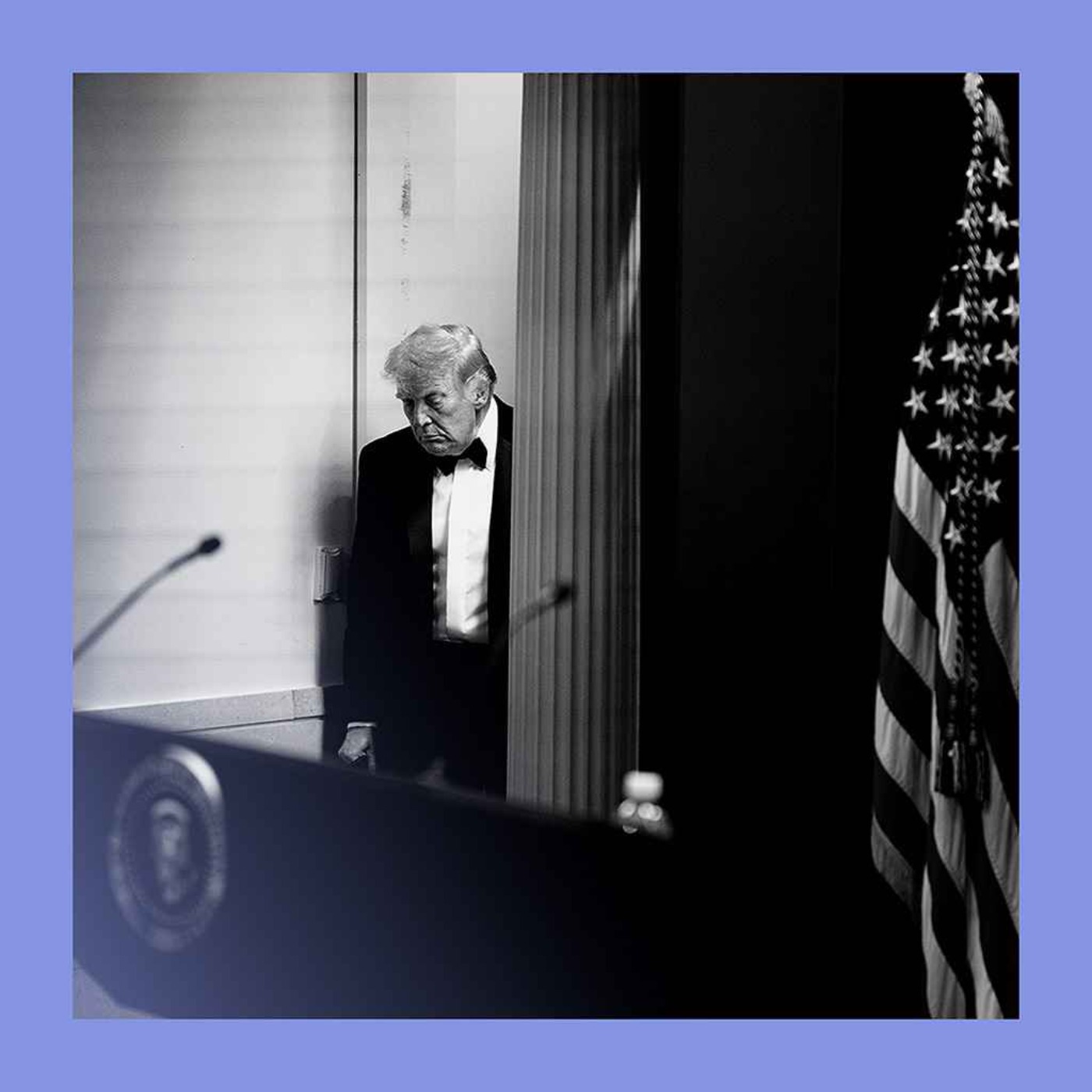
Today on the show, we speak to Germany's top general and responses to our weekend Intelligence episode on the Passport Bros. But first, At the annual White House Correspondents Dinner on Saturday, Donald Trump, along with hundreds of reporters, had been served his first course burrata salad. Then at 8:32pm a gunman ran past security, shooting a Secret Service agent and attempting to burst into the crowded ballroom. Trump and his vice president, J.D. vance, were rushed away. The shooter was detained. Later identified as 31 year old Cole Thomas Allen from Torrance, California, Trump, still wearing his tuxedo, gave a press conference.
- [03:09]
Donald Trump
Nobody told me this was such a dangerous profession. If Marco would have told me, maybe I wouldn't have run. Maybe I would have said, I'll take a pass. No, it's a dangerous profession.
- [03:20]
Rosie Blore
Havoc at the Hilton and the third assassination attempt on Donald Trump revives questions about the competence of the Secret Service.
- [03:29]
John Prideaux
The White House Correspondent's Dinner is a really odd institution. Lots of serious political journalists skip it. But it's a bit like a sort of nerd Oscars where a group of journalists who normally have a fairly oppositional relationship with the president, all get together in black tie and congratulate themselves on being important and close to power.
- [03:52]
Rosie Blore
John Prideaux is host of Checks and Balance, our weekly podcast on American politics, and our US Editor, President Trump, has
- [04:00]
John Prideaux
skipped it in the past, and this time he went. But then, of course, it was thrown off course by gunfire.
- [04:11]
Rosie Blore
So just tell me what happened.
- [04:13]
John Prideaux
Well, a gunman tried to get to the President and apparently shoot him and perhaps other senior officials. Police tackled the gunman as he ran past a security checkpoint, and before he could get to the ballroom where the President and the journalists were. But there were shots fired. Everybody dived under the tables. And I think what made things even scarier for people who were there is because the event was held in the basement of the Hilton in the Bull. People didn't have phone reception, so they didn't know what was going on. The President noted at a press conference afterwards that the Secret Service acted speedily.
- [04:47]
Donald Trump
He was fast. He was like a blur on tape. He was moving. They turned. It was very impressive the way they got him. They didn't let him get through. They drew those guns so fast.
- [04:57]
John Prideaux
There's a nasty historical echo here, which is the Hilton Hotel, where this assassination attempt happened was the site of an assassination attempt on President Ronald Reagan in 1981.
- [05:09]
Rosie Blore
So Trump said the security services acted speedily. But this sounds like a massive security failure.
- [05:15]
John Prideaux
It was, and it's hard to argue with that. There'll be lots of questions now, and have been lots of questions already about the Secret Service and whether protocols were followed. The gunman himself posted a kind of manifesto in which he sort of boasted about how lax security was at the Hilton. In order to get into the lobby, all anyone had to do was to flash a ticket. But I would say after every event like this, people bash the Secret Service. They have an incredibly tough job. America is a very large country, 350 million people, with the usual quotient of crazy people. But one big difference, of course, which is there are approximately half a billion guns held by civilians, and it's extremely hard to protect even a president from that. And also, it's important to remember that an officer was injured in the line of duty here. So, yes, there were problems with security, but I think people are perhaps expecting an impossible standard here. The President, who has a genius for turning every adversity to his advantage, said that the attempt was yet another reason why his great big new ballroom needed to be built at the White House.
- [06:22]
Donald Trump
I didn't want to say this, but this is why we have to have all of the attributes of what we're planning at the White House. It's actually a larger room and it's much more secure. It's got, it's drone proof, it's bulletproof glass. We need the ballroom. That's why Secret Service, that's why the military are demanding it.
- [06:41]
John Prideaux
I think it's important to underline that the president, yet again, displayed some real courage here.
- [06:48]
Rosie Blore
John, you and I have spoken on previous Mondays after assassination attempts. This is the third probable attempt on Trump's life. Is political violence in America becoming more commonplace?
- [07:01]
John Prideaux
Well, as you say, Rosie, three attempts on Donald Trump's life, various other plots that have been foiled over the past year. We've had the assassination of Charlie Kirk. Melissa Hautman, a Democratic state lawmaker in Minnesota, does feel like we talk about this a lot. And if you look at the polling, 85% of Americans think that political violence is increasing in America. I don't know whether that's actually right. It's an incredibly hard thing to measure in the aftermath of this. Of course it feels true, but if you take a bit of historical perspective, I think it's unarguable. There's less political violence now than there was in the 1960s or the 1970s, where there were assassinations and even bombings. I think there's partly a media phenomenon now. You know, when Charlie Kirk was assassinated, millions of Americans instantly watched on their phones. And I just think this sort of political violence, because of the media environment, feels more present than it ever has done before. Again, if you look at the numbers, 80% of Americans say political violence is always unacceptable. That means there are some who think that political violence could be justified in some circumstances. But hardly anybody thinks that it's okay to try and assassinate the president in this way. So I think it's one of these things that it's possible to take a feeling that feels true and exaggerate it. So I want to be careful not to do that.
- [08:26]
Rosie Blore
You've already said that Trump is brilliant at turning any adversity into a boost for him. We know that his popularity is low at the moment, not least because of the conflict in Iran. He's got the midterms coming up. What will this event do to his popularity?
- [08:45]
John Prideaux
I don't expect it to change his approval ratings much. I think there might be a short term boost in his popularity as shy Republicans who are not big fans of his current policies become a bit more willing to answer pollsters questions. There's a nerdy term for this which is partisan non response bias. So you might see a little uptick there. But what really underpins presidential approval is things like people's perceptions of the state of the economy. The Iran war is not popular, so I'd be pretty surprised if this had a lasting effect. But that's not to say that it doesn't matter. I think there is a real thing that America has to wrestle with here. Keeping the President completely safe from any risk would mean having him never leave the White House or interact with people that would obviously lead to him being a remote out of touch figure, whoever the President is. And the more this kind of thing happens, the likelier that system of government becomes, which would be very bad for America. And just one parting thought. This is perhaps another reminder to everyone to dial down the rhetoric about American democracy being in existential peril. We at the economists tend to be pretty careful with how we use our words, and I think that's a good thing.
- [09:59]
Rosie Blore
John, thank you very much for talking to me.
- [10:02]
John Prideaux
Thanks Rosie.
- [10:17]
Quo Business Phone System Advertiser
Running a business means juggling a lot of moving parts, and when your communication tools can't keep up, things start to slip. Missed calls, slow replies, scattered conversations. They're not just frustrating, they're lost opportunities and revenue left on the table. That's where Quo comes in. Spelled Q U O. Quo is the number one rated business phone system on G2, trusted by over 90,000 businesses. One shared business number for calls and texts so every conversation stays visible, organized and accountable. It works from an app or computer. You can keep your existing number, add teammates and sync your CRM, letting you scale without adding complexity. And with built in AI, Quo logs, calls, summarizes conversations and flags next steps even after hours Stop missing customers. Stop leaving revenue on the table. Try quo free and get 20% off your first six months at quo.comtech that's quo.comtech quo no missed calls, no missed customers
- [11:27]
Barclays Investment Bank Flipside Podcast Narrator
from globalization to innovation, sustainability to market volatility, there's always more than one side to a story. Explore different perspectives on today's most important business and economic issues with the Flipside podcast from Barclays Investment Bank. Hear two research analysts in a lively debate and get insights from every angle to further inform your view. Listen to the Flipside on your favorite platform.
- [12:00]
Shashank Joshi
The head of Germany's armed forces would not normally expect to be recognized in public. But when Carsten Breuer was on a plane to Dusseldorf recently, a man sitting in front of him on the plane decided to approach him at the end of the flight.
- [12:13]
Jason Palmer
Tom Nuttall is the Economist's Berlin bureau chief.
- [12:17]
Shashank Joshi
It's a scene you'd normally expect would happen only in America, but it's a sign of the newfound respect that the Bundeswehr, Germany's armed forces, is beginning to enjoy amongst the German public.
- [12:28]
Carsten Breuer
He stood up, he waited for me and then he said, well, I would say thank you for your service and please tell us all your soldiers.
- [12:36]
Shashank Joshi
It's also not surprising that General Breuer was recognized. Unlike most of his predecessors in the job, he is a regular on television. Germans recognize his face. And that's because as Germany embarks on a once in a generation rearmament, the General has made it a priority to communicate to the German public the need to restore the armed forces to a public that may once have been very uncertain about its own military.
- [13:05]
Jason Palmer
So Tom, you say once in a generation rearmament, what do you mean by that? Talk me through it.
- [13:10]
Shashank Joshi
Ever since Russia invaded Ukraine in early 2022, the Germans have been rethinking their approach to their military. You may remember that just days after that invasion, Olaf Scholz, who was then the Chancellor, declared a so called Zeitenwende or a turning point. And one of the features of this was a big investment in the Bundeswehr, which had been down for years up until that point. And the current government, which took office almost a year ago, has accelerated this investment. They have relaxed their fiscal rules, they're pouring vast sums into the German armed forces, they're rethinking the way that they do procurement. And so to find out more about this, our Defence editor, Shashank Joshi And I interviewed Mr. Breuer in the Bendler Bloch, the head of the Defence Ministry in Berlin the other day.
- [13:59]
Carsten Breuer
One thing is very, very clear. We are not doing this for ourselves. We are doing this for the sake of Europe. We are doing it for the sake of stability and freedom and peace in Europe. And we are doing it together with our allies.
- [14:11]
Jason Palmer
So why is it that you wanted to speak with him now?
- [14:13]
Shashank Joshi
So we were invited in by General Breuer to talk to him about the publication of a new military strategy. This is actually the first such document in the history of the Federal Republic of Germany. And the document, or at least the public bit of it that we were allowed to see, basically lays the plans for the development of the Bundeswehr for the years ahead. So it looks at all of the features of the modern battlefield, including some of the lessons that have been taken from Ukraine, the use of drones, but also the capabilities that the Bundeswehr is going to need. In the future to guide the development of a force into which vast sums of money are being poured.
- [14:52]
Jason Palmer
So this enormous rearmament. Sounds expensive.
- [14:55]
Shashank Joshi
Last year, just before the new government took office, the Bundestag, the German parliament, agreed to exempt defence spending spending from the debt break. This is a very strict rule that limits government spending. So this essentially means that at least in legal terms, defence spending can be unlimited and they're really going for it. We've already got a defence budget of over 100 billion euros this year. By the end of the decade 2029, that could rise to over 160 billion euros. That is also the year in which Germany has pledged to reach the new NATO defence spending target of 3.5% of GDP. Now that's six years earlier than the Allies are supposed to meet the target in 20. So that is a very clear signal that Germany has sent to its allies of seriousness of intent that it is going to turn the Bundeswehr, this long neglected military force, into one of the most formidable armies in Europe.
- [15:48]
Jason Palmer
But what is the actual plan here? How will the money be spent? You said lessons that have been taken from Ukraine. This is building a modern, maybe drone led force.
- [15:57]
Shashank Joshi
Yeah. So there's a lot of discussion about this and quite a lot of concerns frankly that in some respects Germany might be pouring money into fighting the last war, in essence spending too much on legacy crude systems, your tanks, your fighter jets, and not enough on R and D in general, but specifically some of the weaponry and technology that it's proven its worth in Ukraine. Drones most obviously, but AI enabled systems, robotics, also on satellite surveillance, that sort of thing. Now when we asked the General about that, his point was that the Bundeswehr had been so run into the ground in the years before Russia's invasion of Ukraine that they just had to spend a fortune on replenishing old systems before they could think about building some of this innovative weaponry on top.
- [16:45]
Carsten Breuer
You can call it legacy systems, I would call them gapfels.
- [16:48]
Shashank Joshi
I think he was also alert to the fact that there are important lessons to take from Ukraine. He said it's not a blueprint for the next war, but it does have something to teach us. And the thing he wanted to highlight wasn't so much the use of this or that system, but the fact in Ukraine they're working under these very intense wartime conditions and you have these very, very rapid innovation cycles where fresh sorts of weapons are being developed every two weeks. He said that's the sort of attitude that he wants to import to Germany. That can be very slow and sluggish with these sorts of things.
- [17:21]
Jason Palmer
And so to your mind, it is as simple as spending a sufficient amount of money to make Germany's armed forces as ready as apparently they want to be.
- [17:29]
Shashank Joshi
I would say that there's two particular challenges that lie ahead. One, and this is actually not just an issue for defence, but the German government system, is that just getting things done, getting them through the machine, getting procurement to work smoothly and efficiently and not having to deal with yards and yards of red tape really is a difficult task.
- [17:48]
Carsten Breuer
We had procurement processes which were designed to procure nothing because in the former times we had enough time, but we didn't have money.
- [17:58]
Shashank Joshi
The second is boosting the number of soldiers. So to meet its NATO obligations, by 2035, Germany needs to have 400, 160,000 soldiers, 260,000 active and 200,000 strong reserve. Right now they've got just over 180,000 active soldiers. So that means they've got to find 80,000 as well as replacements for everybody who's going to retire. And that's very, very difficult. Last year, the parliament passed a law that means that any boy who turns 18 this year will have to fill out a questionnaire that basically assesses their willingness and their readiness to enlist. And the stated hope is that enough of them will do that to be able to get those numbers up to where they need to be. But talk to anybody inside the system, and no one thinks that this is going to be sufficient. And that means that most people think at some point Germany is going to have to have a very public, difficult conversation about reintroducing conscription.
- [19:02]
Jason Palmer
And how much of any of this do you think boils down to a nervousness that Donald Trump will follow through on threats to withdraw from NATO and that the world, Germany, needs to be ready for that?
- [19:11]
Shashank Joshi
Yeah, this is kind of the ghost at the feast. So the document identifies Russia as the main adversary for Europe, but when you read it, you can feel America hovering over the whole thing. There are obviously great fears here, particularly after the Greenland and the Iran episodes, that America's security guarantee just cannot be relied on anymore. And I think that's one reason why the Germans understand that there really is this clamor for leadership, including military leadership among its allies, for the Bundeswehr to become one of the strongest forces in Europe.
- [19:42]
Carsten Breuer
I would not be a military planner or military leader if I'm not thinking in different scenarios and also in a worst case scenario.
- [19:51]
Jason Palmer
Tom, thanks very much for joining us.
- [19:52]
Shashank Joshi
Thanks, Jason.
- [20:06]
Carlos Ugudana
I recently heard about a life hack if you're struggling with dating in the west, you can just leave and go somewhere where your money goes further and your dating odds and your status improve. And this is the message that the Passport Bros pitch, who are Western men traveling abroad, often in search of what many of them refer to as good women.
- [20:31]
Jason Palmer
And Carlos Ugudana, one of our news editors, I know you took a trip to Da Nang in Vietnam for the weekend intelligence to meet some of these Passport Bros impression did you get as to what exactly they're after?
- [20:44]
Carlos Ugudana
It's important to note that this is a very broad movement. There's a very big spectrum of men going out there. On one end of the spectrum there are men who are looking for genuine long term relationships. And on the other end of the spectrum there are men who maybe want more submissive women. Some of the men we spoke to specified they wanted poor women because it was easier to be the dominant partner in the relationship this way and to live out traditional roles that way.
- [21:15]
Jason Palmer
And as you say, Carla, it is a big spectrum. And at the darker end of that spectrum are some quite troubling things. As part of the episode, we ask for people to feedback. You've been keeping an eye on social media about the reaction and there's been a lot of reaction.
- [21:30]
Carlos Ugudana
Yes, we've had a really big reaction on this story. There's been almost 3,000 comments on Instagram to start with, and we've had dozens of emails coming in.
- [21:41]
Jason Palmer
And what's the broad consensus? Or is it a mix of things?
- [21:44]
Carlos Ugudana
I think there's one thing that our listeners are really interested in, which is what is really behind this trend? Why are so many young men unhappy and feeling like they're losing out in the West? We got a really interesting email about this from Sean Boyd from Texas, and he said that as a guy, he personally finds the traditional gender role narrative to be abhorrent. But he also said that before judging Passport Bros too harshly, it's important to interrogate the socioeconomic context underlying the phenomenon. And we need to focus on the opportunity and the challenges surrounding job creation and industrialization in the US Basically hinting to the fact that there are a lot of young men who are genuinely struggling to find jobs and to move ahead in society. And I think it's a very valid point.
- [22:40]
Jason Palmer
So the sense is that if young men think they don't have sufficient status in the west, they go somewhere where they will have more status. Is that the argument? And if so, what do you make of it?
- [22:51]
Carlos Ugudana
Yeah, I think the economic aspect of this is very important as well. With the rise of remote work and digital nomading, a lot of these men are choosing to relocate in places where their money goes a lot further because they earn in dollars or pounds, and they live in countries where the cost of living is much lower than in the US we spoke to a historian who's called Beth Bailey, who gave us a very interesting perspective on this. She basically said that this concept of people trying to find their own set of rules is not the first time that it has happened. It happens in times of economic uncertainty. And I think we can definitely see the Passport bros in this context.
- [23:35]
Jason Palmer
And what about the thread in your reporting that some of these Passport bros essentially are not blaming the socioeconomic system, but rather Western women in particular, the cultural gender element of this.
- [23:48]
Carlos Ugudana
Yeah, we got a few emails about that. One of them said that men don't want a masculine wife and that this is how extreme they have to go to get a traditional wife. And this is kind of at the core of the Passport bro movement. A lot of the videos that we found in social media are blaming women for not being feminine enough, for not being accommodating enough. And there were a lot of people who were emailing and commenting that women are also going abroad for better dating prospects. The difference here is that it isn't a unified movement in social media, and I don't think they are blaming men in the west for their misfortunes. So although it is true that women also go abroad to find better dating prospects, I think the Passport Bro movement is not replicable to women.
- [24:48]
Jason Palmer
And so in that sense, you do understand how this is more than just the socioeconomic end of things. Right. Which should be applicable to both genders equally is something else in the attitudes of passport bros here. But that is to say, depending on different parts of the spectrum you describe, that you will perhaps have run into some maybe not very pleasant characters in the course of your reporting.
- [25:08]
Carlos Ugudana
Yeah, I think it depended a lot on the person and on the interview, but we definitely had some very uncomfortable moments. There was one man specifically that we interviewed who kept directly addressing me and my producer Henrietta, whenever he spoke about women. And so he would be criticizing Western women for not being accommodating enough, for not being submissive enough, and what, gesturing
- [25:34]
Jason Palmer
at you the whole time?
- [25:35]
Carlos Ugudana
He would sort of be pointing at me. So that made me feel quite uncomfortable. But some of them were actually fine. And this is something that surprised us as well. A lot of these men, they were very different to the image that they had on social media. In social media, they seemed a lot more radical, whereas in person they were actually quite normal guys. And I think this is a testament as well of how social media pushes conversations to more extreme positions than people actually hold.
- [26:08]
Jason Palmer
Having engaged with all of the comments and emails and what have you, anything that surprised you, anything that changed your mind.
- [26:15]
Carlos Ugudana
One thing that surprised me is that we had a lot of of older listeners writing in who are in their 60s, 70s, who had been married for decades, and they all found the position of the Passport Bros very outdated and very conservative. And it just made me think that the Passport Bros. They're preaching a message that they didn't even grow up with. It's sort of like they're idealizing a past that doesn't really exist. So just having all their listeners writing in made me see how radical the message that the Passport rows are preaching really is.
- [26:56]
Jason Palmer
Carla, thank you very much for your time.
- [26:57]
Carlos Ugudana
Thank you, Jason.
- [26:59]
Jason Palmer
And in case anyone out there has not yet heard the episode from which all of these comments have come, tell us.
- [27:05]
Carlos Ugudana
It's available online on the Weekend Intelligence Podcast.
- [27:09]
Jason Palmer
There it is. Go and find it.
- [27:29]
Rosie Blore
That's all for this episode of the Intelligence. See you back here tomorrow.
- [27:52]
Kachava Advertiser
Craving the coffee flavor you love, but without the caffeine? Cachava's got you covered with their newest coffee flavor. This all in one nutrition shake delivers bold, authentic flavor crafted from premium decaffeinated Brazilian beans with 25 grams of protein, 6 grams of fiber, greens and so much more. Treat yourself to the flavor and nutrition your body craves. Go to kachava.com and use code smoothie. New customers get 15% off their first order. That's K A C H-A-V-A.com code smoothie
- [28:22]
SoFi Advertiser
high interest debt is one of the toughest opponents you'll face unless you power up with a SOFI personal loan. A SOFI personal loan could repackage your bad debt into one low fixed rate monthly payment. It's even got superspeed since you could get the funds as soon as the same day you sign. Visit sofi.compower to learn more. That's s o f I.com P-O-W-E-R loans originated by Sofi Bank NA member FDIC terms and conditions apply. NMLS 696891.