Loading summary
Transcript52 lines
- [00:00]
Shashank Joshi
A better help ad. Hold on one second.
- [00:06]
Warby Parker Ad Voice
I just need to.
- [00:12]
Shashank Joshi
What if you had a room where no one interrupts, no notifications, no expectations,
- [00:18]
Warby Parker Ad Voice
just space to talk with BetterHelp Therapy happens in a space that's yours.
- [00:23]
Shashank Joshi
Visit betterhelp.com randompodcast for 10% off your first month of online therapy.
- [00:32]
Warby Parker Ad Voice
If your eyes are the windows to your soul and your glasses are the windows to your eyes, then it's pretty important to find your perfect frames. That's why at Warby Parker, we've made shopping for eyewear as easy and fun as can be. Peruse endless styles in our stores, or use our app to virtually try on frames and get personalized recommendations. To find your next favorite pair of glasses, sunglasses or contact lenses, or to locate your nearest Warby Parker store, head over to warbyparker.com that's warbyparker.com.
- [01:07]
Jason Palmer
The Economist. Hello and welcome to the Intelligence from the Economist. I'm Jason Palmer.
- [01:18]
Rosie Blore
And I'm Rosie Blore. Every weekday we provide a fresh perspective on the events shaping your world.
- [01:29]
Jason Palmer
We've been tracking the growing jihadist threat in the Sahel region for years. It's growing fastest in Burkina Faso, where the ways and means of the charismatic president's crackdown have just been labeled war crimes.
- [01:44]
Rosie Blore
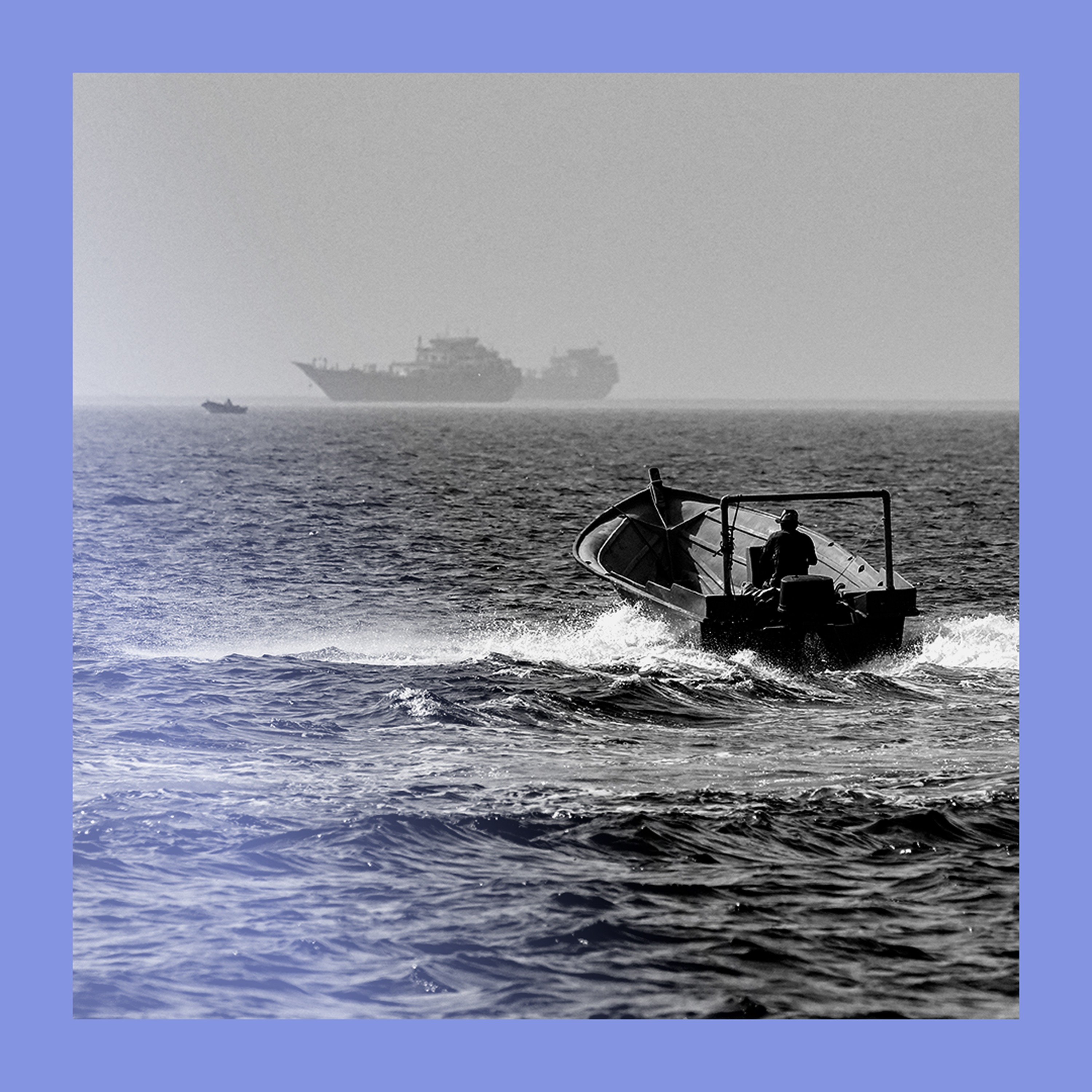
And if you're drinking less alcohol than you used to, you may still find that at the end of the day, you want to kick back and have a relaxing drink of something. Our correspondent finds his glass half empty and looks for an appropriate replacement. But first, Talks between America and Iran over the weekend could have reshaped a relationship defined by almost half a century of hostility. More realistically, some hoped that at least they'd come up with a deal to buy time and stave off a renewal of fighting. Instead, it ended with a three minute press conference and no deal. Though the conflict hasn't resumed yet, America has now embarked on a new strategy, a blockade of ships using Iranian ports and coastal areas.
- [02:44]
Shashank Joshi
When America and Israel launched their war on Iran back in February, most observers expected Iran would choke off shipping in the Strait of Hormuz. I think very few people expected that less than two months later, Donald Trump would essentially do the same thing himself.
- [03:03]
Rosie Blore
Shashank Joshi is our defense editor.
- [03:06]
Shashank Joshi
I think Trump hopes that economic strangulation of Iran is going to work where bombardment has failed. It's a gamble, and I think a dangerous one that could compound the global energy crisis and lead to another round of escalation in this war.
- [03:23]
Rosie Blore
So explain the fuller rationale here.
- [03:25]
Shashank Joshi
I think the rationale Here is quite simple, Rosie. It's America saying, look, if Iran's not allowing other people's ships to pass by, threat of missile attack or drone attack or mines, then Iran's shipping will not be allowed to pass either. That's quite straightforward in military terms. America can board and seize ships very easily. It did. You might recall 10 tankers linked to Venezuela in the last six months or so. The economic and political aspects are trickier. The aim is probably to sever Iran's economic lifeline and make the regime plunge into some sort of economic crisis. And then it will have to make a deal with America over what proved to be the sticking points in these talks we just had in Islamabad over its nuclear program and one or two other things. I think in practice it's going to be a lot harder than that.
- [04:11]
Rosie Blore
Just explain to me how America is actually enacting this blockade and whether you think it will achieve those aims you've outlined.
- [04:20]
Shashank Joshi
The mechanism is that America's Central Command, which is the branch of the Pentagon that runs operations in the Middle east, has said it will basically impose a blockade on all ships that originate in Iranian ports or go through Iranian coastal waters. And it will do that impartially, that is Iranian ships, Chinese ships, whatever, it doesn't matter. And that's a requirement of blockades under international law, that they're enforced in that impartial way. And what they're trying to do essentially, is say if a country is trying to use Iran's so called top booth system, that is getting permission from the Revolutionary Guards, paying a fee to Iran, these ships are typically going through Iran's coastal waters, very close to Iran's coastline. And this is a way of saying, if you do that, we will come and get you at the other end. Now, I think that's going to be enforced in the Gulf of Oman rather than going all the way up into Hormuz at that choke point, you know, why would you be trying to board ships in such a dangerous area? And I think we're going to have a test of this very soon because there has been a Chinese tanker. In fact, I think it's a falsely flagged tanker. It's already heading out through Hormuz this morning. I'm talking to you, Rosie, so we'll find out exactly what happens. But I think the point is that if you do enough of this, Iran's oil exports will eventually be disrupted. The problem is that Iran's just not exporting all that much oil at the moment. And if you think back to 2020, Iran's oil exports dipped well below 400,000 barrels per day. That was when Trump tried to crush Iran's economy, and Iran survived that. And so my concern is Iran can endure months of this pressure. It can print money, it can sell something like 100 million barrels of oil, it has some FLO storage off Malaysia or China, and it can get credit lines off some of its buyers. So, all in all, my concern is this will take far longer to essentially bring Iran to its knees than I think Donald Trump can stomach.
- [06:09]
Rosie Blore
So you think Iran can endure this, but what impact will it have on energy markets?
- [06:14]
Shashank Joshi
Well, that's exactly why I think it's going to be difficult for Donald Trump to endure this, because the loss of Iranian output is not in itself catastrophic. The big, big problem is that I think Iran's going to respond to this by attacking or restricting neutral shipp. Well, to say, well, if you blockade our ships, we'll go back to blockading all of yours. And what that will do is it will really trap this massive volume of Gulf supply, which has been trapped for months, and Iran's not going to allow that to come out. That's a big problem. Right. Because importers will have to then draw down stocks that are already very limited. I think that will probably push Brent crude futures to $150 a barrel by the end of April. And if you factor in potential Iranian strikes on energy facilities, as we saw in previous weeks, and also the prospect that the Houthis in Yemen join war as well, which they were very, very cagey about, I think you're going to see a serious tightening of oil markets again. Just as the traders were sort of breathing a sigh of relief and saying, ah, maybe it's back to normal now.
- [07:09]
Rosie Blore
And presumably this will affect other types of ships and shipping as well.
- [07:14]
Shashank Joshi
Absolutely. As I said, a Chinese tanker is already trying to get out of Hormuz. What's going to happen, you know, is America going to seize a Chinese tanker? And it's not just China, it's oil that's been bound for China, Pakistan, Thailand, all of it moved out of Hormuz in the days after the ceasefire. I've certainly seen French and Turkish ships, their vessels through Hormuz prior to that point, and seemingly with Iranian consent. So, for example, the Indians say, we haven't paid Iran a toll to get through. We haven't paid Iran a fee. And that's what Donald Trump said was his real concern. But if you look at the rules of this blockade set out by the Pentagon, they Say any ship going through Iranian coastal areas or ports is going to be subject to this blockade impartially. And that would probably cover lots of these ships. So you have the prospect of America imposing a blockade that will affect not just adversaries like, but many of its allies, partners and friends, like Pakistan, like Thailand, like the French, like the Turks. And I think that that's going to be diplomatically very difficult for the US to handle because it will be compounding this energy crisis, blockading friendly shipping, and of course, probably triggering another round of escalation.
- [08:22]
Rosie Blore
You said at the top that it was a dangerous gamble. Could it pay off?
- [08:26]
Shashank Joshi
Well, look, if this really succeeds in choking off Iran's hard currency access, if it gener economic crisis in Iran and hyperinflation as the currency devalues and the government prints money, all while curbing the impact on oil prices, curbing the impact on commodities. As you know we've discussed, Rosie, it's not just oil going through the Hormuz. If it can limit military escalation, then, yes, perhaps it brings Iran to its knees, back to the negotiating table, and the regime says, okay, we're willing to negotiate on our 400kg of highly enriched uranium, on the future of enrichment. And there are some reports Iran was discussing a 20 year moratorium on enrichment, which would be quite a big deal if it had agreed to something like that. I am doubtful. I think Iran feels like it won that first round of hostilities, not that it didn't come out very badly, but that it survived. It controlled Hormuz, it had its nuclear stockpiles in its hands at the end of this conflict. And I think it will look at the situation here and say Donald Trump has midterm elections in, what is it, seven months. The oil price is rising, gas prices are rising. In that situation, who can hold out longer? The theocratic regime that has survived against a siege since 1979, or an American government who is led by a man who's well known for, how should we say it? Backing away from the precipice from some of these confrontations and who has this major electoral contest coming up over the horizon where voters are already unhappy with his performance on the war and with inflation. In those circumstances, I reckon Iran thinks it can outlast an American blockade.
- [09:57]
Rosie Blore
Shashank, thank you very much for talking to me.
- [10:00]
Shashank Joshi
Thanks very much, Rosie.
- [10:11]
Rosie Blore
And a shameless plug here. Apologies in advance. The Economist has been nominated for several Webby Awards this year, including one of my own podcasts, the Last Boat, tracing the history of my father's family. Prizes are given based on the number of votes for each entry, which means you, our beloved listeners, have the chance to show your devotion or at least your support. Please go to vote.webbyawards.com and that link is also in the show. Notes. Thank you so much. I really appreciate it.
- [10:51]
Warby Parker Ad Voice
Every idea starts with a problem. Warby Parker's was simple. Glasses are too expensive, so they set out to change that. By designing glasses in house and selling directly to customers, they're able to offer prescription eyewear that's expertly crafted and unexpectedly affordable. Warby Parker glasses are made from premium materials like impact resistant polycarbonate and custom acetate, and they start at just $95, including prescription lenses. Get glasses made from the good stuff. Stop by a Warby Parker store near
- [11:20]
Chase Sapphire Ad Voice
you the day begins at the Chase Sapphire Lounge by the club at Boston Logan Airport. You get the clam chowder. In San Diego, it's Tostadas New York. Espresso martini. It's 10am why not? It's the quiet before your next flight, the shower that resets your day, the menu that lets you know where you are. This is access to over 1300 airport lounges and every Sapphire Lounge by the club. And one car deal gets you in Chase Sapphire Reserve now even more rewarding.
- [11:45]
Jason Palmer
Learn more@chase.com Sapphire Reserve cards issued by JP Morgan, Chase bank and a member FDIC, subject to credit approval. Throughout the Sahel region, just below the Sahara Desert, jihadism is a growing problem. Burkina Faso has seen some of the worst of it. Jihadists have in effect taken huge chunks of territory from the government, carried out mass killings and driven millions from their homes. Two governments have fallen to coups as they were seen to be failing to contain the threat. Ibrahim Traore, the country's leader since the last one in 2022, has been implementing a drastic solution, but it's proving as counterproductive as it is deadly.
- [12:33]
Tom Gardner
Burkina Faso's strongman president has launched what I would call a scorched earth campaign. He calls it total war.
- [12:42]
Jason Palmer
Tom Gardner is an Africa correspondent for the Economist and is based in Nairobi.
- [12:47]
Tom Gardner
Hundreds of civilians have been killed, many simply rounded up and gunned down. Survivors speak of butchery.
- [12:55]
Jason Palmer
So for a start, tell me about this strongman.
- [12:58]
Tom Gardner
Ibrahim Traore is probably Africa's most popular president at the moment. He's a 38 year old military officer who came to power in a coup in 2022. He is known for his snappy dress, his red beret. He's a good looking, charismatic man. And he has become the face of these military regimes in the Sahel. On social media, in viral videos, he is pitching himself as an anti Western, anti imperialist kind of Pan African.
- [13:49]
Jason Palmer
It's hard to understand this. This campaign is what the government wants to do. It's responding to terrorism with terrorism in effect.
- [13:56]
Tom Gardner
Yes. I mean, the government and these allied volunteer defense forces have rampaged through villages, hamlets in response to jihadist attacks. For example, on a military bas northern Burkina Faso in 2023 when hundreds were killed. This is one of many overreactions to the jihadist insurgency. According to a new report from Human rights watch, some 1800 or more civilians have been killed in some 57 attacks. But that is probably only the tip of the iceberg. There have been numerous atrocities between 2023 and 2025 which amount to war crimes and crimes against human. The junta led by Traore also stands accused of a campaign of ethnic cleansing against the Fulani ethnic minority. This is a nomadic group that's scattered across West Africa and they become the kind of primary targets now of the government's counterinsurgency strategy. And that's why Human Rights Watch and others talks of ethnic cleansing.
- [15:01]
Jason Palmer
And what has the government's response been to those accusations?
- [15:07]
Tom Gardner
They've described this report as false and its only purpose to demonize the army. I should say though, Traore has made criticizing or defying the west the cornerstone of his political or ideological agenda. And because of this, he has little difficulty in batting away allegations, however well documented, from NGOs or foreign organizations. But I think there is quite a lot of evidence now that his approach in effect kind of full bore militarism repression is actually pushing more of the population into the arms of the jihadists and thereby undermining the junta's central justification for holding power.
- [15:48]
Jason Palmer
So why has the President's strategy been ultimately so deadly?
- [15:54]
Tom Gardner
I think primarily because of the role of the volunteer defense forces, which are essentially armed civilians who've been since 2022 recruited in tens of thousands. I mean, there are more than double the number of militias than there are troops in the official army. And this has the effect of essentially ethnicizing the conflict. These are really poorly trained recruits and mostly drawn from dominant ethnic groups such as the Mossi, the most populous and most powerful. They've been targeting in particular the Fulani ethnic group.
- [16:28]
Jason Palmer
So essentially the issue is that these civilians being handed guns and notionally targeting jihadists are targeting ethnic groups they don't like.
- [16:35]
Tom Gardner
Yes, effectively there are reports from refugees of whole villages, essentially Being targeted first by the jihadists, then by the volunteers and the army, and vice versa, Essentially putting them between a rock and a hard place that has been deadly for civilians.
- [16:54]
Jason Palmer
You said the president is practiced in swatting away any criticism of what he's. He's up to. Do you see any reason why this situation could get better?
- [17:04]
Tom Gardner
Unfortunately not. I think the government's actions are effectively counterproductive. Rather than reducing the threat from jihadism, they're driving more and more of the population into the jihadist arms. I mean, I think in Burkina Faso, the jihadist movements are growing faster than they are elsewhere in the region. In neighboring Mali, Niger, in some places, they're increasingly acting like a state. You'd think this would damage Traore's regime. I don't think it has done yet. Partly because the jihadists remain far away from the capital, Ouagadougou, and partly because the scorched earth strategy still does seem to be quite popular, at least in central Burkina Faso and the capital, those areas far from the places most affected by the insurgency. The upshot then is that civilians are probably going to continue to suffer from both the jihadist attacks and, unfortunately, the army's attempts to fight them.
- [18:04]
Jason Palmer
Thanks very much for joining us, Tom.
- [18:05]
Tom Gardner
Thank you, Jason.
- [18:32]
John Fasman
As you may have heard, alcohol consumption is declining, but people still want something other than just tap water. At the end of the day, what drink might come to fill that void? Sparkling water may be one answer.
- [18:48]
Rosie Blore
John Fasman is our senior culture correspondent.
- [18:51]
John Fasman
The stuff is more popular than ever. Sales of it in America are up 70% from 2019, according to Mintel, a research firm. But trendy as it is, the story of sparkling water is an old one. Back in the 18th century, Joseph Priestley, an English chemist, became fascinated by what he called various different kinds of air. His experiments would eventually lead to his independent discovery of oxygen in 1774. But more importantly for us, seven years earlier, he developed a method of infusing water with carbon dioxide. Some 15 years later, Johann Schwepped, a Swiss scientist whose name in possessive form should be familiar, started a company to produce sparkling water at scale. By the 19th century, soda fountains, which made carbonated drinks on site, were becoming more popular. In America. Sparkling water proved especially popular among Jewish immigrants, perhaps because it was the cleanest water available On Manhattan's Lower east side. It was known colloquially as seltzer, after a German town famous for its sparkling water. These days, consumers are spoiled for choice. For European sophisticates, or wannabe European sophisticates, they are the delicate bubbles of Badua or San Pellegrino. Georgians rave about Borjomi, a naturally sparkling water with a sulfurous scent and a heavy mineral flavor believed to have healing properties. I hope any Georgians listening will forgive me, but to me it's always kind of tasted like fizzy saliva. So buoyant is demand for sparkling water that even supermarket chains have their own lines. The flavored sort of people trying to cut back on fizzy drinks can choose lightly fruity spindrift or Lacroix. But the question which is the best? Some people like a Bodoisque whisper of bubbles, but that seems an experiential waste to me. The iconic green bottle of San Pellegrino is eye catching, but comes at a price point to match. My own favorite is Topo Chico, a Mexican brand now owned by Coca Cola. One enthusiast who disagreed with me described its bubbles as the angriest in the world. And he has a point. The bubbles are fierce. There's no mineral aftertaste, it pairs perfectly with spicy food and it helps settle the stomach. Consumers should cheer for the choice they have. I certainly am.
- [21:58]
Rosie Blore
That's all for this episode of the Intelligence. See you back here tomorrow.
- [22:21]
Chase Sapphire Ad Voice
This is the table, the one with the view. This is how you reserve exclusive tables with Chase Sapphire Reserve. This is your name on the list. This is the chef sending you something he didn't put on the menu. This is 3 times points on dining with Chase Sapphire reserve and a $300 dining credit that covered the citrus pavlova and drinks and the thing you didn't think you liked until you tasted it. Chase Sapphire Reserve now even more rewarding.
- [22:45]
Jason Palmer
Learn more@chase.com Sapphire Reserve cards issued by JP Morgan, Chase bank and a member FDIC, subject to credit approval.