Loading summary
Transcript45 lines
- [00:00]
Karim
Hi everyone, this is Karim, the voice of Simon Fairchild from the Magnus archives. And today I want to talk to you about Boost Mobile. Some things quietly drain you like an expensive phone bill, trapping your money month after month. Here's a quick money Stop paying a carrier tax when you bring your own phone and Switch to boost mobile's $25 unlimited forever plan. You can unlock up to $600 in savings. That's money that belongs in your life, not trapped in a phone bill. Reclaim those savings for something you're actually into an EMF meter, a a thermal camera, or whatever strange corner of the universe you're currently exploring. Visit boostmobile.com to unlock your savings and take back control. After 30 gigabytes, customers may experience slower speeds. Customers pay $25 per month as long as they remain active on the Boost Mobile Unlimited plan. Boost Mobile January 2026 survey comparing average annual payments of AT&T, Verizon and T mobile customers to 12 months on the Boost Mobile Unlimited plan. For full offer details, visit boostmobile.com there's
- [00:53]
GNC Advertiser
one place for the newest drops in wellness and performance and the biggest sale of the year. It's the Drop by G Curating the best of what's new, handpicked by the pros who know what works. And right now, get it all. Buy one, get one 50% off during the semi annual LiveWell sale. From crushing workouts to leveling up your nutrition and everything in between, get the best deals on the latest innovations. All the newness is all on sale right now during the LiveWell sale on the drop by GNC.
- [01:28]
Karim
The Economist.
- [01:35]
Rosie Blore
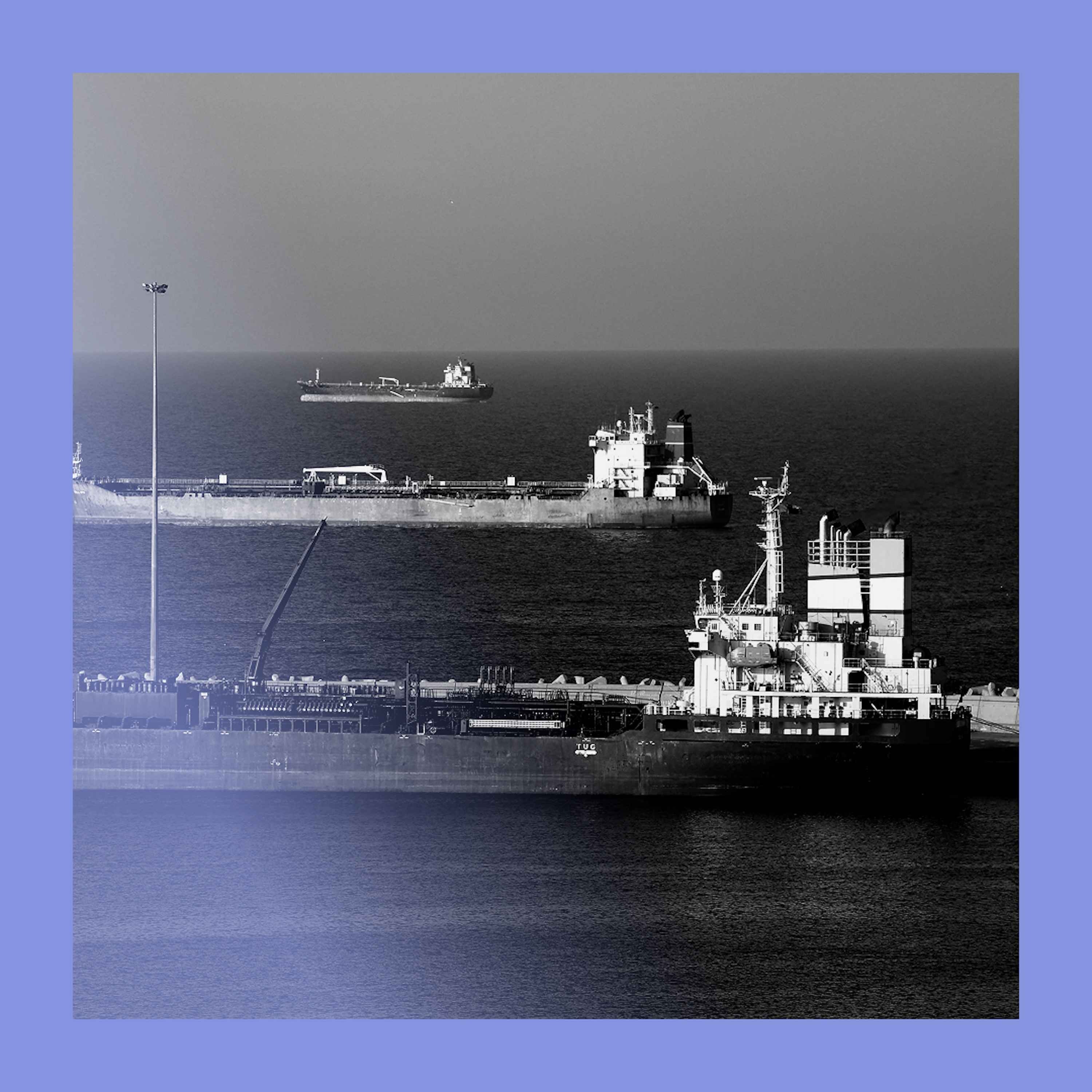
Hello and welcome to the Intelligence from the Economist. I'm your host, Rosie Blore. Every weekday we provide a fresh perspective on the events shaping your world. 15 years ago today, a giant tsunami struck the coast of Japan, causing catastrophic damage to the Fukushima nuclear power plant. The country soon shuttered all such facilities. But now Japan is reviving its nuclear dreams, and one of the films competing for an Oscar this weekend is called It Was Just an Accident, made by an Iranian filmmaker who has spent time in jail. The war has only made the movie's theme of moral reckoning more urgent. Our correspondent met its director. First up, though. Overnight, the Pentagon claimed to have eliminated 16 Iranian minelaying ships near the Strait of Hormuz. This morning, a cargo tanker was evacuated after being hit by a projectile, all news that once again raises jitters about the economic impact of the conflict in Iran. On a regular day, around $20 billion worth of oil, a fifth of the global trade sails out of the Persian Gulf and through the strait. A similar share of the world's liquefied natural gas also takes that route. But with the American Israeli war now in its second week, Iran has threatened to attack any ship that attempts to cross the strait. And oil prices are on a rollercoaster.
- [03:18]
Rachna Schanbog
Oil markets have been desperately clinging onto any signs that the war is going to come to an end.
- [03:26]
Rosie Blore
Rachna Schanbog is the Economist Business affairs editor.
- [03:30]
Rachna Schanbog
Early on Monday morning, they surged, reaching nearly $120 a barrel. Once it started to sink in that the Strait of Hormuz was closed. Then when Donald Trump said that the war was pretty much complete, there was jubilation and the oil price fell very sharply. And again yesterday, we saw gyrations. When America's energy secretary tweeted that a tanker had gone through the strait together with an escort, prices fell again. That tweet was deleted. The White House denied it. So they're stabilizing at around $90 a barrel. There's a desperation now that the war will come to an end soon. The problem is that disruption is likely to last longer than traders expect.
- [04:15]
Rosie Blore
So what are the options in terms of keeping supply steady and in keeping markets steady?
- [04:21]
Rachna Schanbog
There are many things being discussed, Rosie. One of them, which is currently being discussed in talks hosted by the International Energy Agency, is releasing strategic stockpiles of oil. Members have about 1.2 billion barrels in emergency stocks that they hold. These could be released in order to offer temporary relief and to increase the supply on the market and bring down the price. In the past, when that's happened, it's had mixed results. In 2022, for instance, it sent the oil price rising because it sent a signal that officials thought that hostilities were going to last longer than markets had expected. But at other times, it's brought the price down. The other issue is, at best, only a drip feed of supply can be put onto the market because there are capacity constraints on how quickly piped oil can be put onto the market. America has to keep a minimum of 35 to 40% of today's stocks in the caverns where they're held to preserve the geological stability of them, for example. So at best, it might offer temporary relief. But if the war keeps carrying on, ultimately it won't succeed in calming the market.
- [05:31]
Rosie Blore
As you said, there was discussion yesterday that maybe a ship had gone through the Strait of Hormuz. Is it a possibility that there may be some accompaniment, better protection of ships that they could then go through?
- [05:45]
Rachna Schanbog
The fundamental problem right now is that tankers do not want to cross the Strait of Hormuz because it's so dangerous. There have been reports of mine laying overnight, for example. And so a military escort could help in principle. Again, this is something that we've seen in the past. So in the 1980s, during the war between Iraq and Iran, there were naval escorts actually provided by America to Kuwaiti tankers, but the convoys were quite slow moving. There's so much traffic backed up in the strait right now that it would take years, actually, to get all of them through the strait if they were to proceed at the pace that we saw in the 1980s. And it may not be cost effective. The cost of providing an escort may actually be higher. This is something that I heard from an analyst yesterday, than the cargo that they would be protecting. And these naval escorts would be sitting ducks if the Iranians wanted to target them.
- [06:40]
Rosie Blore
So what other options are there?
- [06:43]
Rachna Schanbog
The other thing that Donald Trump has already done, actually, is to make Russian oil easier for customers who want to buy it to buy. Now, Russia's oil is under sanctions. As you might remember, America had put a lot of pressure on India to stop buying a sanctioned Russian oil. Then, as the war broke out, America issued a waiver so India can purchase some of that oil that's already at sea, that's looking for a customer. And he's hinted that that waiver will remain in place for as long as the strait is closed. Now, there's a trade off here. Obviously, the intent of the west and of America has been to punish Vladimir Putin for his invasion of Ukraine and try and bring him to the table to talk peace. So allowing others to buy Russia's oil may offer relief to the market, but at the same time is going against a previous aim in the Ukraine war. So, again, there's a trade off here, and Russian supply in any case, can't fully solve the problem.
- [07:43]
Rosie Blore
So the war is already benefiting Putin. Are there other suppliers?
- [07:48]
Rachna Schanbog
America itself, of course, is a huge supplier of oil, the world's biggest producer, in fact, and its shell producers might have some ability to crank up output at very short notice. But these are private sector actors, and their investors have been burned before. Companies have overinvested in the past. Oil prices have fallen, investors have taken a hit. So they're pretty canny, and they're not going to want to mandate huge increases in spending until they're sure that prices are going to stay high. And our colleagues calculate that the current supply problem, because of the closure of the Strait of Hormuz amounts to something like 14 million barrels of oil a day when you include refined product. Shell producers, analysts estimate, can probably only increase their production by about 300,000 barrels a day.
- [08:37]
Rosie Blore
So we've already seen a huge effect of skyrocketing and volatile oil and gas prices. What about the other economic impacts of this war?
- [08:47]
Rachna Schanbog
What we know is that although since the 1970s, economic activity is less oil intensive than it used to be, back then, for example, oil was used to generate electricity. Now the demand for oil is much less elastic, by which I mean oil is used for things like driving and flying, and those cannot be easily substituted away. So the only way to reduce that demand for oil is for prices to rise so high that it curbs people's activity. They decide they can't afford to drive, they decide they can't afford to fly. And so the knock on consequences for people's daily lives and for economic activity is still big. We're seeing already that in Asia, for example, which has been hardest hit, governments are pushing four day weeks. In Bangladesh, they've brought forward the EID holidays just to reduce the consumption of fuel. So we're seeing the consequences of this already. And another thing to note is that the longer this disruption goes on for, the greater the consequences. So producers in the Gulf will have to cut back on their output. It's not easy to resume that output even when hostilities end. It takes two to six weeks to get things up and running again. So it's not like things will go back to normal tomorrow.
- [10:02]
Rosie Blore
Rachna, we were talking yesterday to our deputy editor, Ed Carr, and he was talking about this trade off between the war aims and the global economic impact. And we clearly saw Trump take, take fright at the global economic impact, or at least the US Economic impact. How long is this disruption sustainable?
- [10:22]
Rachna Schanbog
The longer the disruption, the more it will feed through into gas prices, into prices of everyday products that consumers buy. It will curb their activity and the things that they can do. The impact of the war in Ukraine on the Eurozone economy was something like 2.4% of GDP over a year and a half. And the disruption to, to supply this time is much bigger. So you could start to see quite serious economic effects. And even before you get to that stage, we could see markets again start to freak out because once it sinks in, that actually this disruption could last a long time. Donald Trump has said that he sees the war ending soon, but it's not only within his gift to end the war. And so expect Donald Trump to be presented with that trade off again and again. Between the economic consequences on the one hand and achieving his aims on the other.
- [11:21]
Rosie Blore
Ratchna, thank you so much for talking to me.
- [11:23]
Rachna Schanbog
Thank you, Rosie.
- [11:26]
Rosie Blore
And you won't be surprised that our editors and correspondents have been discussing the economic fallout of the Iran conflict in many other forums too. Do check out last night's episode of the Insider, our video offering an anatomy of the oil shock. To watch that, you'll need to be a subscriber.
- [11:51]
Bill Advertiser
This economist podcast is sponsored by Bill, the intelligent finance platform that helps businesses and accounting firms scale with proven results with AI powered automation. Bill isn't just moving money, they're simplifying financial operations. For nearly half a million customers, Bill has securely processed over a trillion dollars in transactions. That's proven infrastructure. Ready to talk with an expert? Visit bill.comproven and get a $250 gift card as a thank you. That's bill.comproven. terms and conditions apply. See Offer page for details.
- [12:26]
GNC Advertiser
There's one place for the newest drops in wellness and performance and the biggest sale of the year. It's the drop by gnc curating the best of what's new, handpicked by the pros who know what works. And right now, get it all. Buy one, get one 50% off during the semi annual LiveWell sale. From Crush workouts to leveling up your nutrition and everything in between, get the best deals on the latest innovations. All the newness is all on sale right now during the LiveWell sale on the drop by GNC.
- [13:03]
Rosie Blore
As we've been hearing from Rachna, many countries in Asia rely on oil and gas from the Middle East. Prime among them is Japan. Two thirds of Japan's power is generated from fossil fuels. Ninety percent of the oil it uses is from the Gulf and 10% of its natural gas. All of which makes a long running debate about the use of nuclear power there particularly pertinent and poignant.
- [13:26]
Noah Schneider
The Kashiwazaki Kariwa nuclear power plant sits on Japan's northern coast facing the Sea of Japan, when all of its seven reactors are running. It's the largest nuclear power station in the world, but for the last 15 years, it's been sitting idle.
- [13:45]
Rosie Blore
Noah Schneider is our East Asia bureau chief.
- [13:48]
Noah Schneider
And that's because 15 years ago exactly today, a massive earthquake struck northeast Japan, sending tsunami waters flooding the reactors at the Fukushima Daiichi nuclear power plant and causing a catastrophic nuclear meltdown that led all of Japan's nuclear power plants to be shut down. But now Kashiwaza, Kikariwa, like many other plants across the country is stirring back to life. This February, the first of the plant's seven reactors restarted, and the company that operates it, the Tokyo Electric Power Company, hopes to begin full commercial operations, sending power to households in the capital of Japan later this month. And this might be just the beginning of a bigger revival of nuclear power.
- [14:45]
Rosie Blore
Noa Japan's energy supplies have been debated hotly for the last 15 years. Just explain the full significance of restarting this plant.
- [14:56]
Noah Schneider
Yeah, this particular plant is especially symbolically charged, and that's because tepco, the company that operates it, is the same company that ran the Fukushima power plant. And Kashiwazaki Kariwa is its first nuclear plant to restart since then. So for boosters of nuclear power in Japan, it shows that this technology still has a future after Fukushima. This restart is a sign that there's a way forward for nuclear power more broadly. While for critics, for those who think the technology is simply too risky for an earthquake prone archipelago, it marks an unwelcome return to an era of nuclear power. But I think mostly it speaks to the impasse that Japan's energy policy has come to. Fifteen years after Fukushima, we have a kind of a stalled build out of renewables and an aging nuclear fleet that they're trying to get running again, an enduring dependence on imported fossil fuels. And the vulnerability of that has only become more acute and more obvious in the wake of the ongoing war in Iran and the ripples that's sending through global energy markets.
- [16:07]
Rosie Blore
You talk about an impasse. How has that come about?
- [16:10]
Noah Schneider
A little bit of context is important here. Japan has struggled with energy policy for a very long time. Nuclear power seemed to be the kind of answer to Japan's energy conundrum. Without resources of its own, it could potentially supply energy through nuclear power. And they built out a huge nuclear fleet. So before Fukushima, there were 54 reactors running in Japan, providing around a quarter of the country's electricity. And the government hoped to expand that share. But after Fukushima, the public turned against nuclear power, and there were rightfully so, really big questions about the regulatory regime and the oversight of nuclear power in Japan. That kind of shut off a nuclear pathway for the time being.
- [16:59]
Rosie Blore
So where has Japan been getting energy from for the last 15 years?
- [17:03]
Noah Schneider
So the first move was essentially to transition away from nuclear power and towards renewables. But very quickly, the government and the power companies discovered that this was going to be a very hard thing to do, especially overnight. And so they did move fairly quickly to restart nuclear reactors after imposing stringent new restrictions and safety inspections and setting up a new regulator. But it has taken time and it's required sort of consent from local officials, from local populations to get these plants back up and running. So that too has not, not been an entirely smooth process. Japan now gets about a little under 10% of its electricity from nuclear power, so significantly less than it did before Fukushima. They've been trying to bring energy consumption down by improving energy efficiency, but mainly what has happened is we've seen the gaps filled with more imported fossil fuels, more lng, more oil, more coal.
- [18:07]
Rosie Blore
So now the plan is to revive nuclear power. What exactly is going to happen?
- [18:12]
Noah Schneider
There has been a big turn in recent years and it's accelerating under the current Prime Minister, Takaichi Sanaya, to really push for a restart of the nuclear power industry, the nuclear power sector more broadly, to get nuclear providing maybe about 20% of the country's electricity by 2040. So to get basically all of the existing reactors that are at a standstill up and running again, and also potentially to start building newer ones, because the long term math is really tricky. A lot of the reactors that are active now were built in the 1970s, 1980s, maybe 1990s. And their lifespans are not infinite, though they have been extended. When you get to the middle of this century, you're going to start having to retire old plants and bring new ones online. And since it takes sometimes decades to build these things, that means Japan needs to start doing so now. The government is putting a lot of support behind nuclear again. At the same time, it wants to keep supporting renewables, keep supporting other new technologies. It's sort of a catch them all strategy, if you will. But I think the danger is that by trying to do everything, you don't do any one thing particularly well.
- [19:24]
Rosie Blore
And Noah, how is the Japanese public reacting to the return of nuclear?
- [19:30]
Noah Schneider
Attitudes have shifted a lot in the last 15 years. Part of it is the passage of time and changing of generations as the memory of the Fukushima disaster recedes a bit into the distance. But part of it is also the changing global environment, both in terms of climate change, which of course has become a more and more palpable reality, including for people here in Japan. And the mayor in Kashiwazaki, Kariwa, when I spoke to him, cited climate change as a big reason for agreeing to restart the nuclear plant. Of course, his community also benefits massively economically. There's also been a change in the global energy environment. I think the Japanese public has also become aware of just how vulnerable the country is if it continues to import most of its energy. In a time of rising energy prices, perhaps Japan can't afford to keep its nuclear plants shuttered. And finally, the power companies that run these plants and the regulators that oversee see them have made efforts to try to improve safety and to invest in backup plans and to prepare for the worst case scenarios. You can see that around the Kashiwazaki Kariwa plant itself, where There's a new 15 meter high seawall to protect from tsunamis. But at the same time, there is still a lot of lingering doubt, a lot of mistrust, especially in local communities. And it's one thing to support the restart of nuclear power in the abstract, but it's quite another to support restarting a nuclear power plant in your backyard.
- [21:05]
Rosie Blore
Noah, thank you very much.
- [21:06]
Noah Schneider
Thank you for having me.
- [21:31]
Andy Miller
When you are interrogated at Aveen Prison in Tehran, recalls Jafar Panahi, you're blindfolded and placed on a chair facing a wall.
- [21:40]
Rosie Blore
Andy Miller writes our backstory column.
- [21:44]
Andy Miller
The interrogators are behind you, and you answer their disembodied questions on paper, lifting the blindfold to write. Their voices are the only way you can know them, panahi told me. The political prisoner starts wondering, are they young? Are they old? Panahi is one of Iran's best known filmmakers. I spoke to him just before the latest war with Iran began. He's been locked up twice by its embattled regime, and he drew on those experiences in It Was Just An Accident, a film that's up for two Oscars this weekend and which won the top prize at last year's Cannes Film Festival. War has made the film's theme of moral reckoning fiercely urgent. It's a haunting movie, and it and Panahy's career dramatize, it seems to me, the eternal standoff between artists and authoritarians. It's an unequal contest, camera and pen against bullet and noose, but not in the way it might seem in this movie. A family's car breaks down after hitting a dog. Vahid, a local laborer, suspects that the driver is the goon who tortured him behind bars. But to make certain, he kidnaps, binds and gags the man in his van and seeks confirmation from other survivors, among them a woman posing for wedding photos in her dress. To identify him, this crew rely on the squeak of his artificial leg, the tang of his sweat and the contours of his skin, traces of the gruesome, sightless intimacy between torturer and victim. The result is a visceral thriller driven by the twin mysteries of whether this ragtag gang have got the right man and what they would choose to do with him. This film is an inquiry into responsibility and justice under or after tyranny. How much can an individual be blamed and how much blame belongs to the system. It's also, in the end, a hopeful film because it imagines a time of judgment in Iran, perhaps one that will come sooner than it once seemed. As Panahi put it to me just before the war, the central question in the film is, shall we stop the cycle of violence or shall we allow it to continue? In the story, when they're outside the city, in a desert, for instance, Vahid and his comrades are safe. But when they start carting a kidnap torturer around Tehran, it's much riskier. This quirky odyssey that the characters undertake reflects the peril of Panahi's crew and actors when they were making the film. They shot the passages in the desert first, he told me from behind his signature dark glasses, plus the interiors. Only then did they tackle the more exposed street scenes, which the police duly interrupted. Panahi, though, is used to improvising. As well as his months long stints in prison, which included a spell in solitary confinement and a hunger strike, he has in the past been banned from traveling abroad and forbidden from making movies. In response, with ingenious defiance, he shot a film in his flat and called it this is Not a Film. He drove a taxi around the city, recording the passengers inside it, and the result was the inimitable taxi. Tehran, Panahy says of the prohibitions he's faced. You either look for alternative work or you find a way to continue. If you're determined to keep going, he said, the solution comes to you. Sticking with his medium has been a message in itself. It's a way of standing up to power, he told me this resilience and enterprise may soon be called on again. He's been out of the country for several months, and during his absence, Panahe has been sentenced to a year in prison. Again, the recent slaughter of protesters showed that the regime has reached a dead end. He thinks in any case, if people want to stop him making movies, that's their problem, not mine. I've made my choice, he told me. If you stop to think about it. Past efforts to thwart Panahi have not only failed, but backfired. His punishments transmuted on screen into drama and dignity. After all, if he hadn't been sent to Evin prison, I may never have made this film, he told me. With all their tools of repression. In this unequal struggle with the artist, the strong men are doomed.
- [27:08]
Rosie Blore
That's all for this episode of the Intelligence. We'll see you back here tomorrow.
- [27:31]
GNC Advertiser
There's one place for the newest drops in wellness and performance and the biggest sale of the year. It's the drop by gnc. Curating the best of what's new, handpicked by the pros who know what works. And right now, get it all. Buy one, get one 50% off during the semi annual Livewell sale. From crushing workouts to leveling up your nutrition and everything in between. Get the best deals on the latest innovations. All the newness is all on sale right now during the LiveWell sale on the drop by GNC.