Loading summary
Transcript42 lines
- [00:00]
Capital One Bank Advertiser
With no fees or minimums on checking accounts, it's no wonder the Capital One bank guy is so passionate about banking with Capital One. If he were here, he wouldn't just tell you about no fees or minimums. He'd also talk about how most Capital One cafes are open seven days a week to assist with your banking needs. Yep, even on weekends it's pretty much all he talks about in a good way. What's in your wallet? Term supply see capitalone.com bank Capital One NA Member, FDIC
- [00:31]
T-Mobile Advertiser
Everyone deserves to be connected. That's why T Mobile and US Cellular are joining forces. Switch to T Mobile and save up to 20% versus Verizon by getting built in benefits they leave out. Check the math@t mobile.com switch and now T mobile is in US cellular stores.
- [00:51]
T-Mobile Advertiser (Plan Details)
Savings versus Comparable Verizon plans plus the cost of optional benefits plan features in Texas and fees vary. Savings three with five plus lines include third line free via monthly bill credits. Credit stop if you cancel any lines. Qualifying credit required.
- [01:06]
Jason Palmer
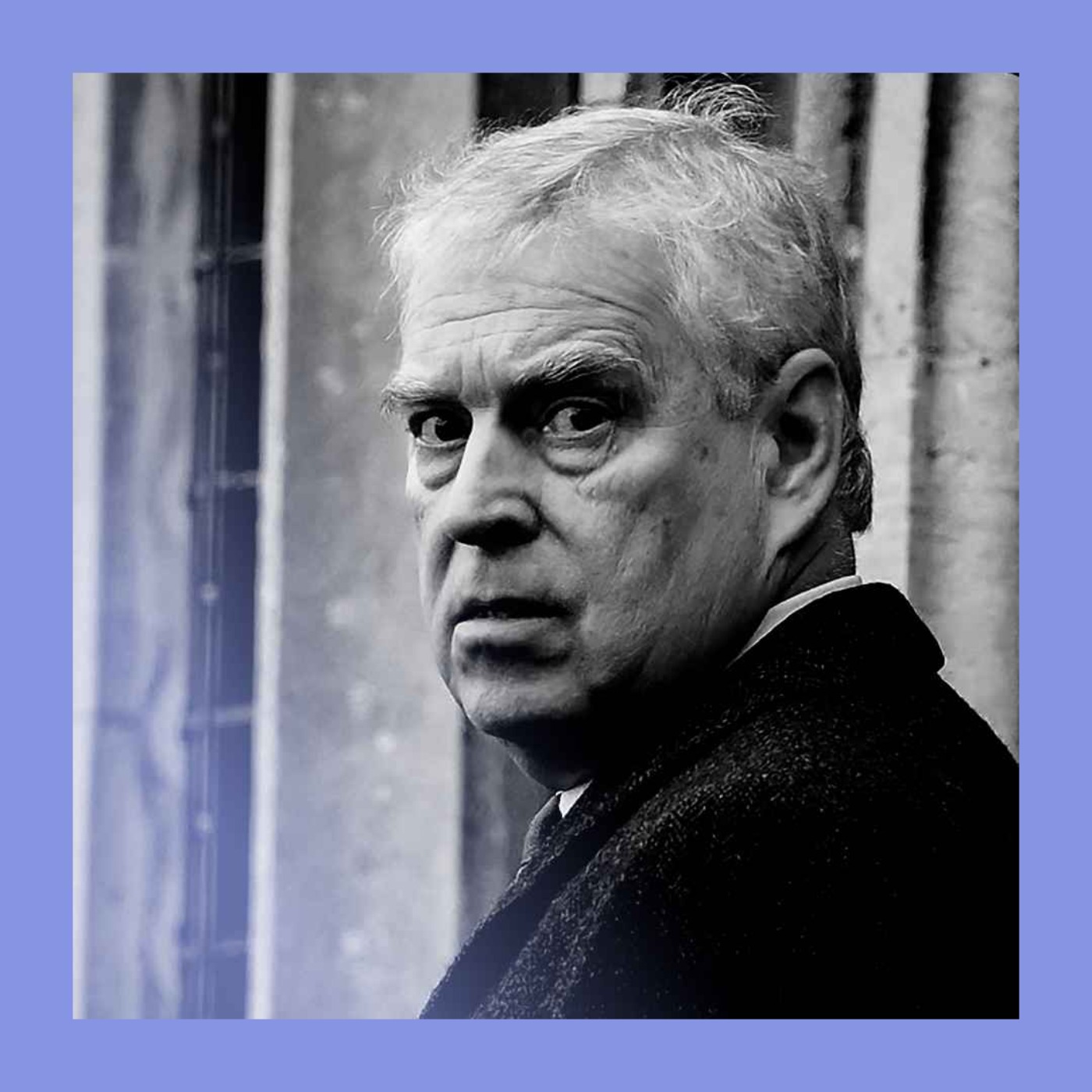
The economist. Hello and welcome to the Intelligence from the Economist. I'm your host, Jason Palmer. Every weekday we provide a fresh perspective on the events shaping your world. Saudi Arabia and the United Arab Emirates are both Gulf monarchies with vast oil and gas reserves. Both stable American allies that have had common cause for decades. But they're having a tiff, one that could be bad news well outside the region. And Jesse Jackson had an incredibly inclusive vision for America's Democratic Party, for the country itself. Our obituary's editor says he campaigned for more than a half century from the moment he witnessed the assassination of Martin Luther King Jr. But first, I think it's fair to say that most Britons love a little scuttlebutt about the royal Family indiscretions and peccadilloes and petty squabbles. It's all a reminder of their very human failings. They're no better than us kind of thing. But the King's brother, Andrew Mountbatten Windsor, he is responsible for way more scuttlebutt than the public bargained for. Perhaps most of all, the accusations of Virginia Giuffre, who claimed that Jeffrey Epstein forced her to have sex with Mr. Mountbatten Windsor. Just one of the events that have led to him being stripped of his titles and gently nudged out of his house. As the Epstein file dumps have kept coming, Andrew's name and image keep cropping up. And Yesterday on his 66th birthday, the cops came knocking.
- [03:00]
Sonny Loughran
It's really an event without precedent.
- [03:03]
Jason Palmer
Sonny Loughran is a Britain writer at the Economist.
- [03:06]
Sonny Loughran
If you look at the papers today, the pictures of Andrew leaving the police station are plastered all over the front pages, which I think gives you some sense of just how massive this is in Brent.
- [03:17]
Jason Palmer
So Mr. Mountbatten Windsor was arrested under what charges? What's going on?
- [03:23]
Sonny Loughran
So, crucially, he hasn't been charged. The investigation is ongoing and the Crown Prosecution Service will assess the evidence to decide whether a charge can be brought forward in time. That could take a while, but the timing and the fact that he's being investigated for misconduct in public office suggests that this is related to the latest batch of Epstein files released by the US Department of Justice. They appeared to show Andrew, during his time as Britain's trade envoy, passing confidential documents to Jeffrey Epstein, which isn't allowed. Those kind of documents are generally covered by the Official Secrets act and trade envoys are charged with keeping them confidential. We should also say that Andrew Mountbatten Windsor has consistently denied wrongdoing in regards with his relationship with Epstein. Having been released from the police station yesterday, Andrew returned to the King's estate in Sandringham. But Thames Valley police say they are set to resume searches at the Royal Lodge and Andrew's former home in Berkshire.
- [04:14]
Jason Palmer
But whether or not charges are eventually pressed, the idea that this has happened at all is pretty striking.
- [04:21]
Sonny Loughran
Yes, it's very unusual. In 2002, Princess Anne became the first member of the House of Windsor to be convicted of a criminal offence after her dog bit two children in a Windsor park. But she was never arrested and paid only a small fine. The last time the son of a monarch was arrested was in 1685. That was James Scott, the first Duke of Monmouth. But he was the illegitimate son of Charles II and thus never in line for the throne. Unlike Andrew, who is eighth in line, the last proper role to be detained was Charles the First, who was charged with treason and tyranny, having been defeated in the English Civil War and beheaded in 1649.
- [05:00]
Jason Palmer
Now, I think it stands to reason that Mr. Mountbatten Windsor will not be beheaded, but this is the law taking its course, I guess.
- [05:09]
Sonny Loughran
Yes, I don't think he will be beheaded, but he could still face a serious sentence. So Andrew Mountbatten Windsor is under investigation for misconduct in public office, which is a notoriously difficult offence to convict someone of. The vast majority of those convicted for misconduct in public office are prison guards and police officers. No politician or high level public official has ever been convicted. But if he is convicted, the max sentence is life. On some level, his arrest is a sign of things working as they should. None of the powerful Americans implicating the Epstein files have yet been arrested. The son of Queen Elizabeth II has. And history is full of royals who got away with things that would have put their subjects behind bars. So on some level, this is progress. And on Thursday, the king promised to help with any investigation, saying that the law must take its course. But it's definitely not a good look for the monarchy. And there could be more damaging reports to come. Police are still assessing whether to investigate separate allegations that Jeffrey Epstein trafficked a woman to the Royal Windsor Estate to have sex with Andrew. And there are big questions about just how much Andrew's aides and security officers knew and enabled his relationship with Epstein. Even the late queen, who reportedly loaned Andrew millions to help settle his case with Virginia Giuffre, may not escape criticism.
- [06:26]
Jason Palmer
And as you say, in a more general sense, this is not a good look for the monarchy after quite a long period of basketball looks.
- [06:34]
Sonny Loughran
Yes. Well, Republicans certainly sense an opportunity and they're quite optimistic that this scandal threatens the institution of monarchy itself. It's obviously a moment of weakness, but that's quite ambitious. Without getting too much into the political theory, the monarchy exists to provide a kind of national myth and spectacle. Sometimes that means deifying the royals, other times it means reviling them. Scandal is a feature of monarchy, not a bug. So I think we should be careful with the idea that any one scandal can really damage the monarchy in the way abolitionists hope, saying that we just don't know what this investigation is going to turn up. And it could still get a lot worse for the House of Windsor.
- [07:13]
Jason Palmer
Sunny, thanks very much for your time.
- [07:14]
Sonny Loughran
Cheers, Jason.
- [07:33]
Greg Karlstrom
Saudi Arabia and the UAE are the two biggest economies in the Arab world. They're the two biggest powers in the Gulf. They've been allies for decades with economies that are very tightly linked.
- [07:45]
Jason Palmer
Greg Karlstrom is a Middle east correspondent for the Economist.
- [07:49]
Greg Karlstrom
And yet over the past few months, they have fallen into a steadily worsening spat, one that is going to have consequences for the region and perhaps beyond.
- [08:02]
Jason Palmer
So what's the source of the spat, Greg?
- [08:05]
Greg Karlstrom
It's been brewing for years, and as always in the Gulf, these things are both political and personal. The political part of it is divergent approaches to foreign policy. The Saudis have become increasingly frustrated with the UAE because the UAE has been supporting, supporting rebel groups and separatist movements and other non state actors across the Middle East. We've seen that in Yemen, Sudan, Somalia and other places in the Middle East. And the Horn of Africa. And the Saudis feel like that is undermining and weakening states and central governments in the region. The counter argument from the UAE is that many of these states are weak to begin with and they would rather work with separatists or rebel groups. If they're strong and reasonably effective at controlling territory, the UAE would rather work with them than work with weak central governments. And very often this is a proxy for a dispute over political Islam. The UAE hates Islamist groups like the Muslim Brotherhood, and so it always backs their opposite numbers, whereas the Saudis are more willing to work with Islamists. There's also, I think, a level of personal animosity growing between Mohammed bin Salman, the Saudi Crown Prince, and Mohammed bin Zayed, who is the president of the uae. Ten years ago ago, when MBS was first coming onto the scene in Saudi Arabia, they were very closely aligned. But we've gotten to a point now where MBS thinks Saudi Arabia is the biggest country in the Gulf. It should be calling the shots and the Emiratis should follow behind. Whereas I think MBZ and Abu Dhabi resents taking orders from the Saudis. He feels like his country ought to be able to have its own independent foreign policy.
- [09:49]
Jason Palmer
And you said that the spat could have implications for the region and beyond. What are the effects?
- [09:54]
Greg Karlstrom
Closer to home, the most immediate concern is for business people in both countries. The economic ties between these two countries are very, very tight. Trade is worth about $31 billion a year. Saudi Arabia and the UAE are both among the largest export markets for one another. And the concern is that as relations deteriorate, business is going to get harder. I've heard from diplomats who say that in speaking to companies in the region, they've heard stories of trucks being held up at the border coming into Saudi Arab the uae, the Saudis delaying customs approval. Recently they've heard from companies in the UAE that can't get Saudi visas for employees who need to come to Saudi Arabia on business trips. None of this is catastrophic yet, right? But executives are starting to draw up contingency plans in case things get worse.
- [10:47]
Jason Palmer
And what about as regards conflicts in the region, the degree to which the spat is because each state doesn't like the way the other one is dealing with conflicts.
- [10:57]
Greg Karlstrom
So we saw this most recently in Yemen around Christmas. Now, Saudi Arabia and the UAE for many years had been on the same side in Yemen. They invaded the country in 2015 after the Houthis, an Iranian backed militia, seized large chunks of territory. The Saudis and the Emiratis and some other countries fought together. But they've really had a falling out over the past few months after a group known as the Southern Transitional Council, which is a separatist group that wants to re establish South Yemen as an independent state. Once on a major offensive back in December, they seized a lot of territory from forces backed by the Saudis. Now the southerners are backed by the uae. And so this mapped onto the proxy conflict between the two countries. The Saudis were unhappy about this. They saw it as a threat to their security, having this UAE backed separatist movement getting awfully close to their borders. And so they started carrying out airstrikes against the separatists. They forced the UAE to withdraw entirely from Yemen. They've pushed back the STC for now. But the fact that you had in December Saudi jets bombing an arms shipment from the UAE in Yemen was the first direct conflict between these two countries. And it was a sign of just how bad things have become.
- [12:14]
Jason Palmer
But given that both these countries do have entanglements much further afield, how much is this a battle between the two of them and a battle that sets things unstable elsewhere?
- [12:23]
Greg Karlstrom
I've heard about two particular areas of concern in recent weeks. One of them is the Horn of Africa. The UAE has invested quite a lot in relations with Ethiopia over the past two years. They're very close to Abe's government in Ethiopia, whereas the Saudis have aligned themselves with Eritrea. Now, Ethiopia and Eritrea already somewhat at daggers drawn. The Ethiopians are looking for access to a port on the Red Sea somewhere because they're a landlocked country. They are accusing the Eritreans of helping to foment ethnic conflict inside of Ethiopia. So they're on bad terms. And then you add to it this competition between their foreign backers, the Saudis and the Emiratis, and there's a fear that we may see greater conflict in the Horn of Africa. And then the other country that I hear people worrying about is Syria. The Saudis have invested quite a lot of in supporting Ahmed Shara's government, of course, the interim president who took power after the Assad regime fell in 2024. The UAE, on the other hand, is very skeptical of the Sharia government because he is an Islamist, he used to be a jihadist. And again, the UAE hates anyone who comes from an Islamist background. So there's a fear that if things get bad between the Saudis and the Emiratis, that that conflict may play out in Syria, that perhaps the UAE might look for partners to work with who are not the central government in Syria. The concern is that this won't stay limited to the Gulf, that in a region that is already quite unstable, this conflict between the two Gulf heavyweights will have consequences elsewhere.
- [14:01]
Jason Palmer
And is the fear of that kind of spread of instability enough to help de escalate things? Do you have a sense that this might be self limiting in some way or is this only getting hotter and hotter?
- [14:11]
Greg Karlstrom
It seems to be the latter. So far there's been no shortage of efforts to mediate. Qatar, somewhat ironically, which was blockaded by Saudi Arabia and the UAE nine years ago, is now trying to mediate the conflict between Saudi and the uae. There's also been a flurry of diplomacy from Egypt, from Bahrain, from Turkey, but they don't seem to have made any progress. And my understanding is that the top leaders from Saudi and the UAE essentially have not spoken since the end of December. So this is going to come down to whether you can convince the two of them to bury the hatchet and go back to having a functional relationship. And so far there are no signs of that.
- [14:52]
Jason Palmer
Greg, thanks very much for joining us.
- [14:55]
Greg Karlstrom
Thank you, Jason.
- [15:09]
Capital One Bank Advertiser
With no fees or minimums on checking accounts, it's no wonder the Capital One bank guy is so passionate about banking with Capital One. If he were here, he wouldn't just tell you about no fees or minimums. He'd also talk about how most Capital One cafes are open seven days a week to assist with your banking needs. Yep, even on weekends it's pretty much all he talks about in a good way. What's in your wallet? Terms apply. See capitalone.combank, capital One, NA Member, FDIC.
- [15:39]
T-Mobile Advertiser
Everyone deserves to be connected. That's why T Mobile and US Cellular are joining forces. Switch to T Mobile and save up to 20% versus Verizon by getting built in benefits they leave out. Check the math@t mobile.com switch and now T mobile is in US cellular stores.
- [15:59]
T-Mobile Advertiser (Plan Details)
Savings versus Comparable Verizon plans plus the cost of optional benefits. Plan features in taxes and fees vary. Savings with three plus lines include third line free via monthly bill credits. Credit stop if you cancel any lines. Qualifying credit required.
- [16:17]
Ann Roe
Jesse Jackson heard the crack of the gun and then he saw the impact, blood gushing out of the neck and jaw of Martin Luther King and the way he fell to the ground on the balcony of the Lorraine motel in Memphis, Tennessee on April 4, 1968.
- [16:36]
Jason Palmer
Ann Roe is our obituary's editor.
- [16:39]
Ann Roe
Jesse Jackson's first thought was to race up the stairs to the balcony and try to make King listen to him. He said he was the Last person to hear King say anything. All the aides had rushed to help, but it was Jesse Jackson, fired up with righteous anger and grief, who raced off to his base in Chicago and told an audience on the Today show that he was wearing the sweater still marked with King's blood, and that just as there'd been a crucifixion, there was going to be a resurrection. And he implied that he was going to be the man in charge of it. He immediately seized the mantle of King. He was very sure that what the civil rights cause needed was leadership. If it did not have its great founder, then it must have him, because he, he implied, was the man who had the discipline, the will, even the divine inspiration to get his people closer to the promised land. Twice, in 1984 and 1988, he ran for the presidency of the United States. He was the first black man to do so from a major party. His platform was partly the old left liberal ideas of taxing the rich, spending the money on social programs, but also he had this vision of an America that could behave rather as Jesus commanded in the Sermon on the Mount, an America that would clothe the naked, feed the hungry, house the homeless, and prefer the human race to the nuclear race. His other great vision was of America as a great rainbow, a huge diverse nation in which everybody ought to be working together, especially all those poor and dispossessed who he wanted to see brought into the centre of politics. All these people should be working together to find common ground. And he was especially fond of this image of diversity by thinking of the quilts that his grandmother used to make. She would take any old patches of sacking or cotton or silk or gabardine and bind them together with a strong thread to make a wonderfully warm and embracing, ever expanding blanket to keep the family warm. The quilt also referred to his own story of his growing up in poverty in Greenville, South Carolina. His father had abandoned him because he was born to a teenage mother out of wedlock. His stepfather barely acknowledged him. So he was brought up mostly by his grandmother, who had sewed the quilts. They lived in a shack in a slum, and he was very keen on emphasizing the poverty of his background. What he didn't mention so much was that he was quite esteemed as a clever boy and someone who was actually going to go somewhere. He could talk a hole through a billy goat, said one of his friends. He had a great power with words. Eventually, in 2008, the path was laid by Jesse Jackson for the election of America's first African American president in Barack Obama and Obama's style, his wonderful rhetoric, his slogan, yes, we can, and his appeal distinctly his pitch to the minorities, dispossessed African Americans. His direct appeal to them was a result of the path that Jesse Jackson had laid down before. He always saw himself as a trailblazer. But he also, as he grew older, began to get a little bit more able to work with the institutions that had thoroughly annoyed him before. He learned to work in more subtle ways with capitalists and also with institutions that were still doggedly white. He refused to hold hate in his heart against these people. He liked to think of his heart as full of boundless love that could win everyone over. He was a preacher first and foremost, a man who spoke persuasively about God's plan for his people. And when more modern movements sprang up among African Americans, for example, Black Lives Matter, he was not too much impressed with those. He felt they were carrying on the same story of protest, but in too negative a way. There was too much hate in it. Many people did think that he was mostly acting to enhance himself, that he was a bit of an egoist. But he never stopped campaigning. He couldn't get out of his head that image he had seen on April 4, 1968, when Martin Luther King was shot on the balcony. When he talked about it later, he sometimes had to pause. He was struggling for breath. From that moment, he had really never stopped campaigning. But still, that resurrection he had wanted to see had not come to pass. The comfort he had, however, was that he felt God had not finished with him yet.
- [22:56]
Jason Palmer
Ann Rowe on Jesse Jackson, who's died aged 84. That's all for this episode of the Intelligence. The show's editors are Chris Impey and Jack Gill. Our deputy editor is Sarah Larnyuk, and our sound designer is Will Rowe. Our senior producers are Rory Galloway, Henrietta McFarlane and Alize Jean Baptiste. Our senior creative producer is William Warren. Our producers are Jonathan Day and Anne Hanna. And our assistant producer is Kunal Patel. We'll all see you back here tomorrow for the weekend. Intelligence. This week we take a deeply reported look at an extraordinary revolution in Nepal last year. The government banned social media sites and the country's young people, already fed up with their dim prospects, weren't having it. Their protests ultimately led to the fall of the government, so those young people elected another one on a social media site.
- [24:11]
Capital One Bank Advertiser
With no fees or minimums on checking accounts. It's no wonder the Capital One bank guy is so passionate about banking with Capital One. If he were here, he wouldn't just tell you about no fees or minimums. He'd also talk about how most Capital One cafes are open seven days a week to assist with your banking needs. Yep, even on weekends it's pretty much all he talks about in a good way. What's in your wallet? Term supply see capitalone.combank, capital One, NA Member, FDIC.
- [24:42]
T-Mobile Advertiser
Everyone deserves to be connected. That's why T Mobile and US Cellular are joining forces. Switch to T Mobile and save up to 20% versus Verizon by getting built in benefits they leave out. Check the math at TMobile com switch and now T Mobile is in US cellular stores.
- [25:01]
T-Mobile Advertiser (Plan Details)
Savings versus Comparable Verizon plans plus the cost of optional benefits, plan features and taxes and fees vary. Savings with three plus lines include third line free via monthly bill credits. Credit stop if you cancel any lines. Qualifying credit required.