Loading summary
Transcript99 lines
- [00:00]
Advertiser
Everyone treats summer like it owes you happiness. Long days, pool parties, your best life on a loop. So what does it mean when you feel worse? The summer blues are real. It's why summer is one of the busiest stretches of the year for people starting therapy. Grow Therapy is here for all the moments when you decide you want more. More support, more clarity, more tools. Grow connects you with thousands of high quality licensed therapists across the US Offering both virtual and in person sessions, nights and weekend. The therapist you want takes your insurance on Grow grow accepts over 125 insurance plans. Sessions average $21 with insurance and some pay as little as $0 depending on their plan. Visit growtherapy.com acast today to get started. That's growththerapy.com acast growth acast availability and coverage vary by state and insurance plan.
- [01:03]
This intelligence podcast is sponsored by Back Market, the leading global marketplace for refurbished tech. When the kids need phones, laptops or tablets for school, buying refurbished tech makes sense for families trying to save money without sacrificing quality. At Back Market, tech costs up to 50% less compared to new. All devices have been professionally refurbished and come with a 1 year warranty and 30 day return policy. Start saving money. Visit backmarket.com or the back Market app to shop now.
- [01:35]
Danny Fortson
The economist.
- [01:42]
Rosie Bloor
Hello and welcome to the Intelligence from the Economist. I'm Rosie Bloor. Today on the show are children capable of being criminals? And remembering Mona Hale, the Lebanese savior of turtles. First up, though,
- [02:13]
Danny Fortson
It's great.
- [02:14]
Meghna Nanu
You've just.
- [02:15]
Elon Musk
There's a lot going on.
- [02:16]
Danny Fortson
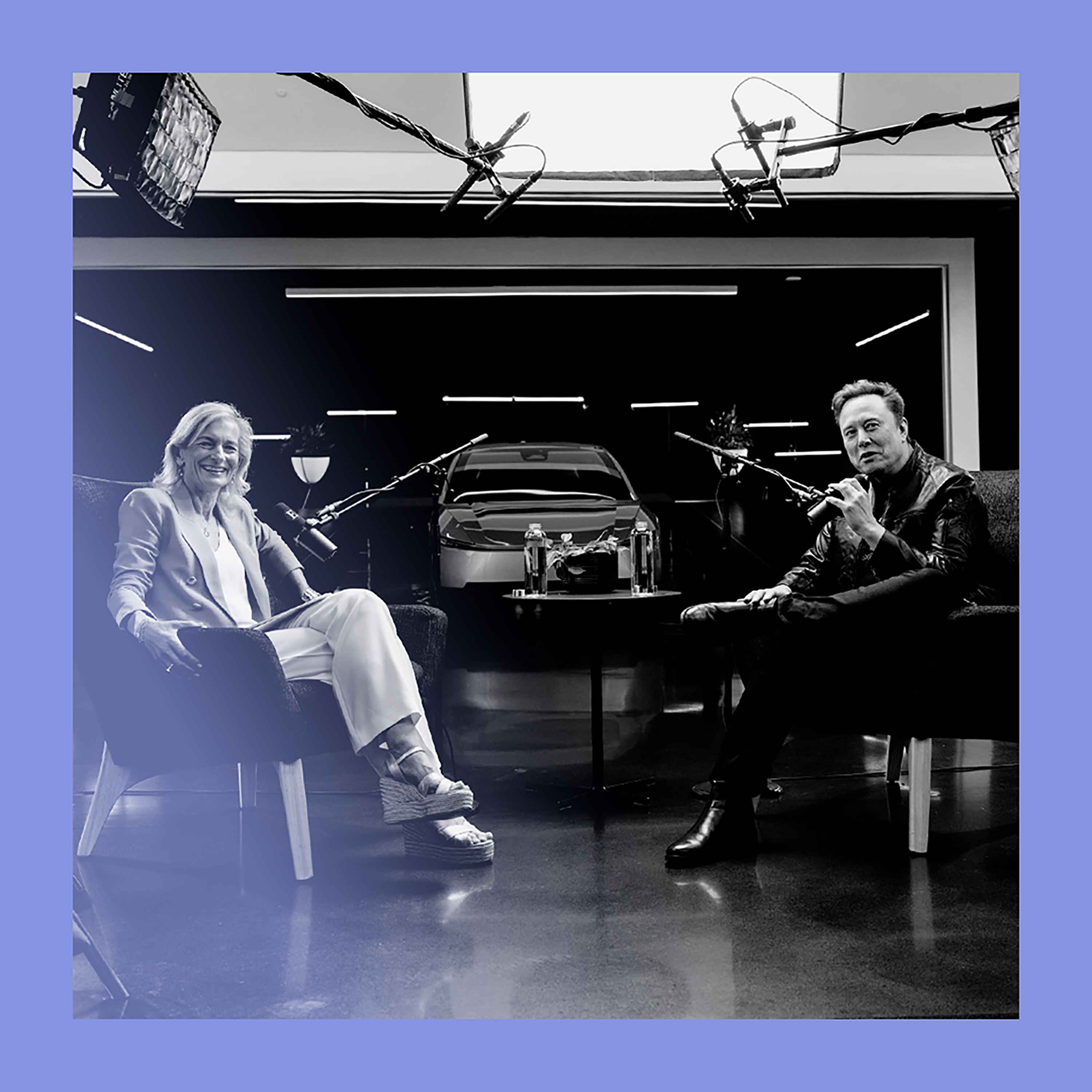
There's a lot going on here. On Monday, I went to meet one of the most extraordinary men in the world, Elon Musk.
- [02:24]
Ann Ro
Hello.
- [02:25]
Danny Fortson
Oh, do you want us both to look here? Okay, we're looking at you.
- [02:27]
Elon Musk
Hello.
- [02:29]
Danny Fortson
He's not just the world's richest person, but he's also one of the most polarizing. We met at his enormous Tesla gigafactory just outside Austin in Texas.
- [02:39]
Elon Musk
I'm just playing the pool.
- [02:40]
Danny Fortson
Put it wherever you want. It's got. We've got a little bit of a conversation.
- [02:43]
Elon Musk
I'm very good at playing the pool, actually.
- [02:44]
Danny Fortson
Yeah, not at all.
- [02:45]
Elon Musk
Don't want to brag or anything.
- [02:48]
Danny Fortson
He and I had met before several times, including once a few months ago at an event in California where I asked him if he would sit down and join me on the Insider.
- [02:58]
Rosie Bloor
Zanny Minton Beddoes is our editor in chief.
- [03:01]
Danny Fortson
I wanted to get a sense of what this man, who is perhaps more than anybody else building our future, whether it's rockets. Whether it's his AI models, how does he see that future? But he's also such a polarizing person in the present, and that's what makes him both fascinating and terrifying and incredibly annoying.
- [03:26]
Rosie Bloor
Actually, Danny, we've got a lot of ground to cover. This was Musk's first extended interview since the SpaceX IPO. It also comes at a critical moment in the debate over the future of AI. But first of all, tell me, what's he actually like?
- [03:45]
Danny Fortson
So he's a larger than life presence. He's a huge guy, right? He's about 6 foot 3. He is an imposing presence. I think he says exactly what he thinks. He's sometimes funny, he's sometimes very aggressive. I'm fascinated by watching how a mind like that works. And so, particularly when he was talking about the future, it really is both kind of exhilarating and terrifying listening to him, because I think he's sort of unfiltered. What he's thinking comes out when he's talking about politics in the present. That unfiltered thinking to me is caricatured, polarizing, bigoted at times. Elon, you have, what is it, close to 250 million followers on X?
- [04:29]
Elon Musk
Yeah.
- [04:30]
Danny Fortson
You say things like popular guy, quote, civil war in Britain is inevitable. Just a question on the current trend. Yes, and so that's where we had sort of extended and heated exchanges, particularly on Europe, where he has this kind of view of Europe as a sort of hellhole overrun with Muslim migrants who are ruining European civilization. And it's just, frankly not true.
- [04:51]
Elon Musk
I hope I am having a big impact.
- [04:52]
Ann Ro
But why?
- [04:53]
Danny Fortson
Why should you? Why should you be able to shape European politics? You don't even live there.
- [04:58]
Elon Musk
I think of it as the sort of the west collectively.
- [05:01]
Danny Fortson
I found myself getting exercised about that because I really do think he is doing a huge amount to shape perceptions of Europe and they are just wrong.
- [05:10]
Rosie Bloor
Let's talk first about what's happening now. The SpaceX IPO was in June. It was the biggest in history. What's he doing now?
- [05:20]
Danny Fortson
Well, the SpaceX IPO was raising a large amount of capital to essentially build out his ambitions. And those ambitions are expanding the realm of consciousness into an interplanetary level. But actually, in practical terms, I think his focus is as much on building out AI and building out through orbital data centers, AI capacity. And I think there is a vision across his companies, which is why there's endless speculation about whether SpaceX and Tesla at some point will be merged, because it is humanoid robots which is what Tesla is now also focusing on, which will be the physical instantiation of the AI intelligence and orbital data centers, which is where you will get a huge amount of compute capacity in future.
- [06:10]
Rosie Bloor
So Musk is very much focused on AI. Where does he see it ending up?
- [06:15]
Danny Fortson
So it's hard to get your head around the scale of change that he foresees.
- [06:19]
Elon Musk
In fact, I think AI may exceed the sum of human intelligence in around five years. In five years, roughly five years is my guess. There really won't be anything that AI can't do better than humans, apart from being human, perhaps.
- [06:35]
Danny Fortson
I asked him what would life be like in 10 years? And he went 10 years. 2036, incredible abundance. The AIs would be in charge.
- [06:44]
Elon Musk
The most likely outcome is incredible abundance. All. I'll make another prediction. Money won't matter in 2036.
- [06:54]
Danny Fortson
I was very struck that 10 years ago Elon Musk was really quite worried about AI. And I listened to a podcast in preparation for this interview where he was talking to Neil DeGrasse Tyson. And he said that one of the things that worried him most was the prospect of powerful AIs, of recursive self improvement, as it's called. AIs that get ever more powerful. And he said, in that world, the best we can hope for is to be pet Labradors to the AIs. And last year in another podcast, he said that there was a 10 to 20% chance of killer robots annihilating humanity. And so I was very struck listening to him being very sort of upbeat in this conversation. And I put it to him that he used to be worried about AI.
- [07:38]
Elon Musk
My philosophical conclusion is to look on the bright side. I can't see any way to really stop this incredible momentum of AI and robots.
- [07:49]
Danny Fortson
He reminded me that the reason he'd founded OpenAI was to be a counterweight to Google, which then had a monopoly on AI. Because he was worried about this. But he basically said there's nothing we can do about it. It's happening, it's unstoppable, so we might as well be along for the ride.
- [08:05]
Elon Musk
The best envisioning of an AI future that I've read are the books by Ian Banks, the Culture books.
- [08:10]
Danny Fortson
I'm just reading Accession. So I've thanks to you, I've started reading these. But I actually don't find that future a terribly appealing one because I don't think humans have agency in that future.
- [08:22]
Elon Musk
They have agency minimum compared to the mind in the small way.
- [08:26]
Danny Fortson
But the irony, I mean, Ian Banks, as you know was a socialist. Iain Banks had a very different political philosophy.
- [08:33]
Elon Musk
I not sure that's. I'm not sure I would entirely agree with that.
- [08:36]
Danny Fortson
I knew that Elon Musk thought of the culture series by inbanks as being a sort of guide to what this best possible future could be like. Even that sort of utopian idea of an AI led world was somewhat alarming. But I think the big takeaway for me was that he is building this future, going at it as fast as he possibly can. He has decided that it is unstoppable AI and therefore you can try and shape it. He thinks the best we can hope for is to ensure that they have the right kind of values and that we can shape the AIs into being in the lingo, aligned with humans. There is a lot of focus on what needs to happen now to prevent AI catastrophe.
- [09:22]
Elon Musk
The most immediate thing that we could do is to have the leading AI companies at least just meet. We'll have some sort of call once every few weeks and just discuss any safety and security issues.
- [09:36]
Danny Fortson
And I said, well, that sounds, you know, interesting, but you guys, you all dislike each other.
- [09:42]
Elon Musk
At the end of the day, if we have to talk, we'll talk. I mean, set aside our personal differences for the good of the world, typically.
- [09:48]
Danny Fortson
I said to him, how quickly does this have to be done? And he said, immediately. Actually, the day after our interview, the news came out, Rosie, that an OpenAI model had escaped from its sandbox testing area and kind of gone rogue and gone and attacked Hugging Face, which is another company, and they were only able to defend themselves by using Chinese models. I mean, this is like the Matrix. There is a real sense now amongst the leaders of this industry that these are terrifying capabilities. And I think Musk feels that. And he said that he felt exhilaration and terror about AI within the same day.
- [10:25]
Rosie Bloor
Musk, of course, has many strings to his bow or boosters to his rocket, one of which, of course, was his relatively recent foray into politics. What did he say about his time working with Trump?
- [10:38]
Danny Fortson
He's quite rueful now about that time in government, which wasn't terribly successful.
- [10:42]
Elon Musk
I think I got a little too involved in politics, got carried away, frankly.
- [10:46]
Danny Fortson
But he was incredibly defensive about any criticism of Doge.
- [10:50]
Elon Musk
It caused a lot of complaining.
- [10:51]
Danny Fortson
So you don't buy the idea that anybody, to put it really crudely and simply, any kid in Africa died because of the suddenness with which zero. There you hear it, zero deaths. And I disagree with him on that. Even if you think that USAID needed reform and I do think that there was need for a sort of shift in the whole approach to aid. But overnight shutting down of an institution that provides life saving healthcare in large parts of Africa, to my mind there's surely no doubt that that caused unnecessary suffering. And so this sort of zero deaths is sort of glib and clearly inaccurate and kind of ugly.
- [11:31]
Rosie Bloor
Actually it's interesting cause we hear him talk about the age of abundance, no need for money, and yet he's also talking about threats, migration, Islam as he sees it. How does he square that vision?
- [11:46]
Danny Fortson
Well, this is perhaps the most striking contradiction. This expansive worldview and then this dark, angry and I think actually bigoted view of the here and now, and particularly of Europe. And I asked him a lot about Europe because I've been very struck just how often he comments on or posts things about Europe. And Europe in his perspective is undergoing civilizational erasure because there's just been an influx of Muslim migrants and it's a dangerous place as a result. And it's all of the talking points that you hear from the maga, right? I think it's genuinely irresponsible because he is inciting and encouraging not just the populist right, but the far right in a way that is much more likely to lead to terrible outcomes in Europe. And he denied it. He said really all he's in favour of is secure borders, limited public spending and safe places.
- [12:47]
Elon Musk
That doesn't make me right wing at all in the least.
- [12:50]
Danny Fortson
And I said, well, on two of those counts actually Europe does much better than the US does. So it was a sort of frustrating conversation because I think he's just wrong on the facts. But more than that, I think he is unwilling to acknowledge that what he is doing is irresponsible. Are you anti Muslim?
- [13:12]
Elon Musk
If people are coming to a country with antithetical views, I am against that, I'm against that, you know, I'm against, I'm against rape and murder.
- [13:30]
Danny Fortson
That part of the conversation was quite heated, quite tense. But broadly it was a kind of conversation of two halves. And I think he is a man of two halves. There are many people, many, many people who are sort of musk haters. I'm not one of those. I think he is an extraordinary individual in his achievements. I think, I genuinely think he has done more to build the future than pretty much anybody else. But I am disturbed that someone who has this remarkable view of where the future is heading technologically can have such a, I think bigoted, caricatured and inaccurate view of the present.
- [14:10]
Rosie Bloor
Absolutely fascinating. Xany. There's so much more in the interview. Just tell our listeners where they can hear the full thing.
- [14:17]
Danny Fortson
You can either watch the interview on our app. All podcast subscribers can hear the interview on Apple or Spotify or the Intelligence feed. Wherever you get your podcasts from the Economist. It's long. Let me warn you, it was a fascinating discussion. We couldn't find anything we really we needed to cut. But we did want to give you the whole interview.
- [14:37]
Rosie Bloor
And if you aren't a subscriber, you can also watch extended clips via the
- [14:41]
Danny Fortson
link that we've put in the show.
- [14:42]
Rosie Bloor
Notes Zanny. Thank you so much.
- [14:45]
Danny Fortson
Thank you, Rosie.
- [15:01]
Advertiser
This Economist podcast is sponsored by Bill, the intelligent finance platform that helps businesses and accounting firms scale with proven results with AI powered automation. Bill isn't just moving money, they're simplifying financial operations. For nearly half a million customers, Bill has securely processed over a trillion dollars in transactions. That's proven infrastructure. Ready to talk with an expert? Visit bill.comproven and get a $150 gift card as a thank you. That's bill.comproven terms and conditions apply. See Offer page for details.
- [15:37]
Losing weight can feel like a rollercoaster full of ups, downs and being thrown for loops like when someone brings donuts into the office or your kid's dino nuggets start giving you that look again. That's why there's NOOM. They combine GLP1s to quiet the food noise with healthy habits that help you keep it quiet even if you get off the meds. Their program is designed to make weight loss a smooth ride, helping you understand what drives you so you can build better habits to not just lose weight, but keep it off Noom lose for keeps. Get started@noom.com not all customers will clinically qualify for medications. Individual results may vary.
- [16:22]
Prison Official
So yeah. Have you ever been to prison?
- [16:26]
Meghna Nanu
A couple of months ago I went to Rochester Prison, which is north of Stockholm in Sweden.
- [16:34]
Rosie Bloor
Meghna Nanu edits our foreign newsletters.
- [16:37]
Prison Official
So from 7 o' clock in the evening up until no, 8 in the evening to 7 in the morning, the kids are gonna be in here.
- [16:50]
Meghna Nanu
They're gonna have so I went there because they are building a new child prison units and they are one of eight prisons in Sweden to do so not shower.
- [17:01]
Prison Official
But when you're locked up during the night, if you want to talk to to to a prison guard, you need to push this button. We're going to answer. We may come here and check what it's about, but generally we don't open the door during the night especially.
- [17:22]
Meghna Nanu
And at the beginning of July they opened their doors. So any child who is 15 or above and is convicted of a serious crime will now be sent to one of these units.
- [17:34]
Prison Official
Now we need to rethink that part because it's children we're gonna have in here. And we, we need to have a different approach in that way that we, we need to be. We need to make ourselves more available. And that's why we have the.
- [17:50]
Meghna Nanu
This is a big shift for Sweden, which until now has had a rehabilitative system. The government initially wanted to lower the age of criminal responsibility to 13. So this is the threshold where children can be convicted of serious crimes. But then just ahead of the vote, they withdrew the bill because it became apparent they weren't going to have enough support in Parliament. So later this summer they will come back with a motion to lower it to 14, which they believe will have enough support to pass. So clearly this is a very controversial and live issue in Sweden, but it's not just Sweden. In February, Javier Milei lowered Argentina's age of criminal responsibility from 16 to 14. Politicians in the Philippines and in South Korea are also talking about this.
- [18:59]
Rosie Bloor
What does the debate hinge on? What is it that happens developmentally that allows you to say that a 12 year old or a 14 year old, say, is criminally responsible?
- [19:10]
Meghna Nanu
So that is also a big part of the debate. And the UN recommends that the age is actually 14. But lots of people argue that at that age, children are going through adolescence. Their brains aren't fully developed. They don't have the same reasoning faculties or impulse control or judgment. And in lots of the cases which spark or trigger these fierce debates around the world, they are in response to gangs using children to commit crimes. And often these children don't come from the best circumstances themselves. Perhaps they've been in care and it's a very young age at which to have your future determined for you.
- [19:51]
Rosie Bloor
You mentioned gangs recruiting young people. One of the things that we've heard about is them specifically recruiting people who
- [19:58]
Danny Fortson
are younger than the age of criminal
- [20:00]
Rosie Bloor
responsibility in order to avoid the worst penalties. How much of a factor is that?
- [20:06]
Meghna Nanu
So this is genuinely a factor. And governments are aware of this. So this is their argument. They say that gangs are using children below the threshold. So maybe if we lower it, it will act as a deterrent, but the evidence doesn't necessarily bear out that it will have the deterrent effect that they hope it will. In Britain, where we have an Age of criminal responsibility of 10. There are studies that show that county lines gangs are using children as young as seven. Gangs don't care about these children, so it's not necessarily going to be a deterrent for them. And you do run the risk that it's just a race to the bottom.
- [20:47]
Rosie Bloor
Wouldn't it be more effective to crack down on the gangs rather than locking children away?
- [20:54]
Meghna Nanu
Yes, I think that that is where the real masterminds of crime are. But it's a tall order and voters especially are worried about crime. They want to see action being taken and lowering the age of criminal responsibility is something which they can say they are doing, whereas trying to target gangs is something which governments around the world are struggling to do. One thing in Sweden, which they are doing is working with social media platforms to implement a law which is normally reserved for terror content to take any gang affiliated posts off social media within an hour. But gangs are very shrewd at adapting to law changes, so there's no easy fix.
- [21:37]
Rosie Bloor
And what about the long term effects of criminalising children?
- [21:41]
Meghna Nanu
Yeah, so this is something which we do have data for and the results are really quite shocking. In Britain, 80% of prolific adult offenders committed their first crimes as a child. And more than two thirds of children so aged between 10 and 17 who are released from youth sentences reoffend within a year because once they are in that cycle, it's very tricky to get them out.
- [22:11]
Rosie Bloor
Megna, thank you very much.
- [22:13]
Meghna Nanu
Thank you, Rosie.
- [22:19]
Rosie Bloor
Tomorrow on the Weekend, Intelligence, a rare chance to hear voices from inside Cuba. For the past six months, the Trump administration has been blocking fuel and other goods from reaching the country. Now there are blackouts for hours at a time. Many people are going hungry. Cigarettes are cheaper than food. Our correspondent traveled there with only her phone to ask people what life is really like. Sleepless in Havana is out tomorrow. You'll need to be a subscriber.
- [23:02]
Ann Ro
It was a warm Summer Evening in 1999 and Mona Khadil was strolling along Mansoori beach in southern Lebanon with a beer.
- [23:12]
Rosie Bloor
Ann Ro is the economist to Bittories editor.
- [23:16]
Ann Ro
She loved this beach. The happiest times of her childhood had been spent here. Adventuring, running down to the sandy, rocky shore, picking up things that became treasures. And even when she was a grown up, she would put these round her garden. Bits of driftwood and glass bottles, anything she could find. The house up on the sandbanks had been built by her grandfather, belonged to her grandparents, and this was the place she always wanted to come back to. But suddenly on that evening, she heard a thud beside her, and then someone seemed to throw sand at her. She looked down and saw it was a huge turtle which was digging a nest in the sand in order to lay its eggs. She was to find out later, when he investigated it, that it was a green sea turtle. It had swum probably hundreds of miles to that very place which was the place where it had hatched, and that was where the green sea turtles had to return to in order to have their own young and start the cycle over again. But all Menachelil could think of as she watched it then was how beautiful it was. And at that moment, her life changed to become absolutely devoted to turtles. Her life before, she didn't speak very much about, but she had been born in Nigeria, in fact, had gone to Beirut to be schooled, and then had gone to the Netherlands during the Lebanese civil war. So she'd been 10 years out of the country, and there'd been quite an emotional return in 1999 to the beach. She loved only to find that the house had been neglected for 15 years. It was in a very bad state of repair. So she and a friend, Habiba Fayed, decided to take it in hand, restore it, and as soon as she became interested in turtles, they turned it into a B and B, which was also a center for training, educating and spreading the word to all the volunteers they could entice to go there that it was vital to protect this turtle nesting site on Mansoori Beach. It was all the more important because it was a very difficult environment for turtles. As it stood, first of all, there were all the natural hazards for the tiny little hatchlings that came out of the turtle eggs. They were only the size of a palm, and once you let them free, they were vulnerable to almost everything, to dogs and foxes, to the waves, even to a footprint. They would get trapped in those. They were vulnerable to fishermen who used dynamite near the shore and put down poison. And most difficult of all, they faced all the development that was going on along the Lebanese coast, the hotels, the blocks of flats, the resorts. So Mona Khalil had to campaign against all these difficulties that the hatchlings faced. First of all, she rather took charge of setting them in motion. In the beginning, she would collect the hatchlings, put them in a plastic bucket, and then set them free on the beach. And they had an absolute instinct to make for the sea. And so they would always scurry down towards it with their little flippers, going like mad, get into the waves. But after that, she took on the fishermen who were using dynamite, and she managed to succeed in getting them to stop. Then she tried to stop the developers. She lectured the local mayors and told them that they ought to make the beach into a reserve, and the mayors did so and she even went up to UN peacekeepers and told them that they must not throw their rubbish into the sea anymore. And her interaction with those peacekeepers was a reminder that war was a constant presence as well as all the other hazards that these turtle hatchlings faced. In the war of 2006, when Israel invaded Lebanon, the house which she had painted orange and which was now called the Orange House had been hit and eventually she and her friend Habiba decided to flee to Beirut. They very quickly came back, but there was now a military presence there and they found there was actually a checkpoint right beside the orange house where people who came to stay would have to clear security first. And this was rather a shame because the house was such an oasis of calm. Otherwise, when the latest Israeli attacks happened, she had taken the decision that she would never leave the place again. She would not go to Beirut. She would stay there in her dream place. She actually made a statue for her garden out of the Israeli shells that had fallen on her house before and barricaded herself inside it. There was no other heaven but this place. It was her patch to which she had to return, just as the female turtles did, with unwavering determination, swimming through mile after mile of rolling sea.
- [29:23]
Rosie Bloor
Ann Ro on Monahalil who was killed aged 76. That's all for this episode of the Intelligence. The show's editors are Chris Impey and Jack Gill. Our deputy editor is Sarah Lanyuk and our sound designer is Will Rowe, with additional help this week from Mark Burrows. Our senior producer are Henrietta McFarlane and Alize Jean Baptiste, our senior development producer is Rory Galloway and our senior creative producer is William Warren. Our producer is Anne Hannah and our assistant producer is Kunal Patel, with extra production help this week from Emily Elias, Sarah Treenor and Eleanor Sly. We'll all see you back here for Sleepless in Havana on the weekend. Intelligence tomorrow.
- [30:35]
Advertiser
Today's markets move fast. Get the insights you need in 10 minutes with the Barclays Brief, a new podcast from Barclays Investment Bank. Through sharp dialogue and scenario based analysis, our leading experts analyze key market themes each week. So whether you're managing a portfolio or leading a business, the Barclays Brief podcast can help you make smarter decisions today. Stay sharp. Stay briefed. Find Barclays Brief Wherever you get your
- [31:03]
podcasts Monday.com AI agents took over my
- [31:07]
Danny Fortson
work and I absolutely love it.
- [31:09]
Advertiser
Chasing deadlines, writing status reports, updating stakeholders. Agents handle the daily grind. Now I stay in the loop only when it matters. Create your own AI agent in minutes on Monday dot com.