Loading summary
Transcript64 lines
- [00:01]
Caitlin Talbot
Today's markets move fast. Get the insights you need in 10 minutes with the Barclays Brief, a new podcast from Barclays Investment Bank. Through sharp dialogue and scenario based analysis, our leading experts analyze key market themes each week. So whether you're managing a portfolio or leading a business, the Barclays Brief podcast can help you make smarter decisions today. Stay sharp, stay brief. Find Barclays Brief wherever you get your podcasts.
- [00:33]
Dell PC Advertiser
Dell PCs with Intel Inside are built for the moments that matter, for the moments you plan and the ones you don't. Built for the busy days that turn into all night study sessions. The moment you're working from a cafe and realize every outlet's taken, the times you're deep in your flow and the absolute last thing you need is an auto update throwing off your momentum. That's why Dell builds tech that adapts to the way you actually work, built with long lasting battery so you're not scrambling for the closest outlet. And built in intelligence that makes updates around your schedule, not in the middle of it. They don't build tech for tech's sake, they build it for you. Find technology built for the way you work@dell.com DellPCS that's Dell.com Dell PCs built for you.
- [01:28]
Jason Palmer
The economist.
- [01:35]
Rosie Blore
Hello and welcome to the Intelligence from the Economist. I'm Rosie Blore.
- [01:39]
Jason Palmer
And I'm Jason Palmer.
- [01:45]
Rosie Blore
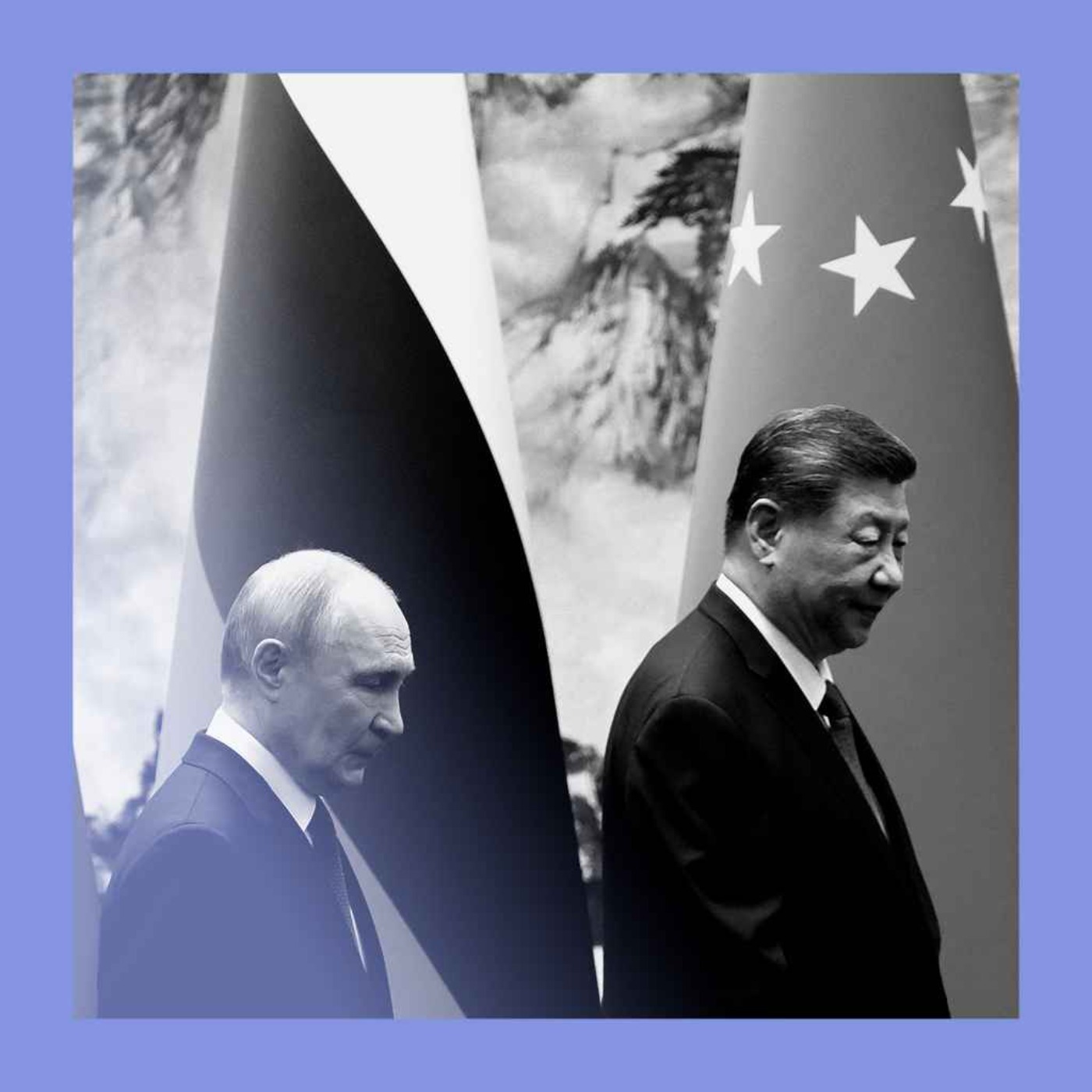
Today on the show, how did the Premier League become so successful? And why people choose holidays that are terrifying. First up, though, It's definitely summit season. Last week, fanfare for Donald Trump's visit to China. Only days later, Vladimir Putin got in there too. And once again the red carpet was rolled out in Beijing. It's good business for the Chinese marching bands, all those singing children, and of course, the sumptuous banquets. Putin was waved off yesterday with smiles, handshakes and waving flags. But this isn't just about pomp for China. There's politics too.
- [02:52]
Jeremy Page
The timing of Putin's visit to Beijing really sends an unmistakable signal that China is not going to sacrifice its close relationship with Russia just for the sake of better ties with the U.S. jeremy
- [03:05]
Rosie Blore
Page is a host of Drum, our China podcast, and our chief China correspondent.
- [03:12]
Jeremy Page
But it also shows how China is now moving much closer to the role Xi Jinping has always craved as the fulcrum of global geopolitics.
- [03:24]
Rosie Blore
Let's fill in some context, Jeremy. Tell me about the relationship between Xi Jinping and Vladimir Putin.
- [03:31]
Jeremy Page
Yeah, it's a remarkably close relationship. They've known each other for more than 13 years now. They've met something like 40 times. And in the past we've seen some unusual displays of camaraderie. They've swigged vodka together, they've made pancakes, they watched a hockey game. And I think there's a genuine personal connection. They have similar views on a lot of things. I think similar views on history, the collapse of the Soviet Union. They've definitely got a similar leadership style. They're both very strong nationalist leaders, but they also have this deep hostility towards Western liberal democracy and a determination to challenge the the US Led global order that was established after the end of World War II to basically give their countries greater say in world affairs, but also to allow them to survive as autocratic regimes. That said, I think the balance of power in the relationship has really shifted dramatically since Russia's full scale invasion of Ukraine in 2022, because Russia is now increasingly reliant on Chinese economic support as well as dual use materials that are needed for that war in Ukraine.
- [04:42]
Rosie Blore
So it's still something of a bromance. What do you think Putin specifically wanted from this visit?
- [04:49]
Jeremy Page
I think one of his main goals was probably to get a readout on the Trump visit to make sure that China and America aren't planning anything that might jeopardize Russian interests, especially in Ukraine. He definitely wanted to ensure that China would continue to provide that economic support and dual use items like drones, electronics, engine parts that are needed for the war in Ukraine. Ukraine. He probably wanted to coordinate positions on the war in the Middle east and American policy in Latin America and Asia, and he got most of that. But the other big priority for Putin, which he doesn't seem to have made progress on, was trying to get a deal to launch this long delayed project to build a new gas pipeline between Russia and China. They've been wrangling over that for years. Basically, China's been driving a hard bargain over price and volume and other terms. And the Russians were hoping that China might show a bit more flexibility since the closure of the Strait of Hormuz showed the vulnerability of China's seaborne energy imports. But it looks like Xi Jinping stood firm on that issue and his demands for better terms. And that's a real demonstration of the power dynamics and the relationship. Basically, Russia needs China far more than China needs Russia.
- [06:04]
Rosie Blore
So if China very much has the upper hand, then what did Xi Jinping want out of Putin's visit?
- [06:11]
Jeremy Page
So Xi Jinping, I think, wanted to demonstrate that he still has a powerful partner in opposing American leadership in the world. China's often tried to hide behind Russia in international affairs. So it's useful for him not to be on his own in criticizing American policy in other parts of the world. I think he also wanted to coordinate positions on Iran, Venezuela, North Korea and other issues. These are countries that China and Russia both have very close ties to, and they've both been unnerved by America's military action against both Venezuela and Iran. Xi Jinping definitely would have wanted Russia to reiterate its support over Taiwan and to join China in criticizing Japan over its rearmament. But China was also almost certainly seeking more high end military assistance in areas like nuclear submarine propulsion, ballistic missile defense. China's also very keen to get access to drone data and tactical lessons from the frontline in Ukraine because it doesn't have any combat experience of its own, having not actually fought a war since 1979.
- [07:21]
Rosie Blore
Now, Jeremy, you're an expert in the semiotics of the Chinese Communist Party and indeed of Russia. I'm interested in your thoughts on how China's treatment of Trump and Putin differed.
- [07:34]
Jeremy Page
It was very interesting to watch the choreography of the two summits. On the surface, the treatment was quite similar. They had very similar welcomes. They were both met by senior officials at the airport court. They had welcoming ceremonies on Tiananmen Square with military honor guards, small military parade, waving children, a 21 gun salute. And then they both had formal talks in the Great hall of the People next to Tiananmen Square. But for Putin, there was no equivalent of the private tours that Trump got of the Temple of Heaven and the Chinese leadership compound Zhongnan High, where Trump was shown one of the gardens there, which is considered a rare privilege. And there were none of the personal touches between Xi Jinping and Putin that we've seen in their previous meetings. I think that's partly because China wanted to avoid upsetting Trump, who puts a lot of emphasis on the pageantry of these meetings and probably would have been disappointed if he'd seen Putin getting exactly the same thing a few days later. And China and Russia were probably also trying to show that their relationship is a bit more mature and less superficial, more based on substance. So there wasn't a joint statement from the Trump visit, but there was an extremely lengthy one that came out of the Putin visit, which detailed cooperation in an extraordinary range of areas, everything from artificial intelligence and space to border infrastructure and even the protection of tigers and leopards.
- [09:05]
Rosie Blore
So a joint statement, but no vodka swigging then?
- [09:08]
Jeremy Page
Exactly.
- [09:09]
Rosie Blore
What do you think, then, that these consecutive visits say about how China is positioning itself geopolitically?
- [09:16]
Jeremy Page
Xi Jinping, I think, is trying to show that he can improve relations with America without sacrificing his so called no limits partnership with Russia. And that's important to him partly because he's aware that some Trump advisors advocate rebuilding ties with the Kremlin to try to isolate and weaken China in what they call a reverse Nixon strategy, the reverse of what the US did in isolating the Soviet Union by building closer ties with China from the early 1970s onwards. At the same time, he wants to demonstrate that China is now the central power, the pivotal power in the strategic triangle of relations between Beijing, Moscow and Washington, which really shaped those geopolitics in the Cold War. He demonstrated in these two summits that he now has better relations with Putin and with Trump than they have with each other. So that puts him in a very strong position. And more broadly, Xi Jinping has always aspired to put China at the center of global affairs. So having the American and Russian leaders coming to Beijing in quick succession, both seeking business deals and help with their foreign wars, I think that would have really boosted Xi Jinping's standing at home and abroad and essentially moved him closer to his dream of a more Sino centric global order.
- [10:40]
Rosie Blore
Jeremy, thank you very much for talking to me.
- [10:42]
Jeremy Page
Thank you, Rosie.
- [10:46]
Rosie Blore
And you can hear more about Trump's visit to China on this week's episode of Drum Tower, our China podcast, in which Jeremy goes deep into the significance of that summit and what it achieved. You'll need to be a subscriber.
- [11:07]
Sonny Loughran
High interest debt is one of the toughest opponents you'll face unless you power up with a Sofi personal loan. A Sofi personal loan could repackage your bad debt into one low fixed rate monthly payment. It's even got super speed since you could get the funds as soon as the same day you sign. Visit sofi.compower to learn more. That's S-O-F I.com p o w e R Loans are originated by SoFi Bank NA member FDIC. Terms and conditions apply. NMLS 696891. There aren't many things that work in Britain. One thing that does is football.
- [11:51]
Rosie Blore
Sonny Loughran writes about Britain.
- [11:55]
Sonny Loughran
The Premier League is broadcast to all but two of the UN's 193 member states. North Koreans might not get to tune in, but a big game can reach more than 700 million people. That's about three times the super Bowl's viewership. Arsenal are champions of England for the first time in 22 years. And if you look at Google's worldwide trends data, you can really see how much of a cultural superpower the Premier League is. Last year, more people searched for Manchester United, one of the Premier League's most famous teams, than for Taylor Swift and the Harry Potter book series combined. And if you want a more recent indicator, the government of Botswana has issued a statement debunking a fake government press release granting all Arsenal supporters a day off work to celebrate them winning the Premier League.
- [12:44]
Rosie Blore
Sunny, Very few people are talking about anything other than football right now. Take us back a bit. Remind us how the Premier League changed football in Britain.
- [12:53]
Sonny Loughran
So English football wasn't always the powerhouse that it is today. In the 1980s, it was known for all of the wrong things. Hooliganism, dangerously rundown stadiums and racism. Around the 1990s, English football started to clean up its act. They clamped down on racism in the stands, they banned drinking in the stands. And the Premier League was created in 1992 and it's just been on the up ever since then.
- [13:15]
Rosie Blore
And why is it so much more successful or so much more popular than other international leagues?
- [13:22]
Sonny Loughran
So it really comes down to three things. Imports, exports and competition. On the exports front, for the first eight years of the league's existence, it made basically no profit on international broadcast rights. The Premier League is quite unique in that about half of its broadcast revenue comes from overseas. If you look at the NFL, for example, that 98% is domestic. And the Premier League was really a first mover on that. By the time that a lot of other European leagues realized that there was a buoyant overseas market for live football, the Premier League had already established itself as the dominant football league in the world. So the Premier League is quite unique in that about half of its revenue comes from TV rights and about half of that comes from overseas. So a lot of it comes down to first mover advantage.
- [14:03]
Rosie Blore
And you mentioned also imports and competition.
- [14:06]
Sonny Loughran
Yes. So the Premier League is unusually open to foreign capital coaches and players. Fourteen of the league's 20 managers are foreign born. An Englishman has never won the Premier League, and 75% of the league's minutes this season were racked up by foreign born players, compared to 62% in Germany and 44% in Spain. In total, 128 countries have been represented in the Premier League from Iceland to Togo and Suriname to Venezuela. And when you have big name foreign players who might be the star of their national team, they bring with them fans from those countries. Mo Salah, who's been one of Liverpool's most successful players over the last few years is called the Egyptian King and he's a superstar in that part of the world.
- [14:46]
Rosie Blore
And you mentioned competition, which I would think is the very point of the Premier League.
- [14:50]
Sonny Loughran
Yes, the Premier League is especially competitive. It's a bit of a cliche that anyone can beat anyone in the Premier League. And the reason for that is that the Premier League distributes its TV money more equitably than a lot of foreign leagues. In a lot of European leagues, the money tends to get funneled to just a few top clubs, but in England it's spread out much more evenly. I think the least broadcast revenue that any team got last season was £100 million. And what that means is that even mid tier teams in England can spend a lot more money than they can in Spain. For example, if you look at Sunderland, they were promoted from the championship last season, they spent more than 200 million pounds in the summer, whereas Spain's three promoted teams spent just 15 million euros between them.
- [15:30]
Rosie Blore
So you said that the Premier League makes about half of its money from TV rights. Where does the other half come from?
- [15:37]
Sonny Loughran
Partly it's tickets. The Premier League is the most well attended league in Europe and tickets are notoriously expensive. And it's merchandising and sponsorships. They're global businesses with global audiences.
- [15:49]
Rosie Blore
So are all clubs making just as much money as each other?
- [15:54]
Sonny Loughran
Definitely not, no. There is a big range. Liverpool, I think, became the first Premier League team to make £700 million worth of revenue last year. Not all clubs are making that. And to be honest, most clubs bring in a lot of revenue, but they don't make much profit. Last year only four of the league's 20 teams made a pre tax profit. And the reason for that is that they spend a lot of money on player wages. Last season clubs spent an average of 65% of their revenue on wages. And if you look outside of the Big six, which is sort of the elite clubs, that rises to 76%. So a lot of that money is coming in and going straight back on players.
- [16:27]
Rosie Blore
But we've heard about clubs going into the red as well. So what is it that makes the difference?
- [16:33]
Sonny Loughran
One of the biggest ways to make money in the Premier League is to get into the European places. The Champions League, for example, European football massively increases your prize money and your TV broadcast revenue. So clubs are spending so much money on players because it's pedal to the metal to try and get into those top places. But because everyone's doing that, it's such a competitive league, if you have one bad season, you fall out. It can be a real spiral for teams that then don't have the money to reinvest to catch up with the rest of the league.
- [17:02]
Rosie Blore
So, as they say, it's a game of two halves. But, Sunny, there's change on the way, isn't there? The government might move the goalposts.
- [17:10]
Sonny Loughran
Yes. The government has established an independent football regulator, which is setting up a licensing regime for clubs that's due to come in around the 2027, 2028 season. We're not exactly sure what that's going to mean, but people are expecting stricter financial regulations, checks around owners and things like that. And some fear that strict regulation will make the league less vibrant. The regulator says it's trying to ensure the long term sustainability of English football and people worry about dodgy owners coming in. People worry about clubs being laden with unsustainable levels of debt, and those are the problems that it's trying to solve. Whether it will remains to be seen. Like anything in football, it's a bit of a gamble.
- [17:51]
Rosie Blore
Sonny, thank you very much.
- [17:53]
Sonny Loughran
Thank you, Rosie.
- [18:10]
Jeremy Page
All right, so arms out to the side, bend your knees in so your
- [18:14]
Sonny Loughran
feet don't hit the deck and you just want to go rag.
- [18:16]
Caitlin Talbot
A few years ago, I went to Queen's Town in New Zealand, which is sometimes called the adventure capital of the world. What you can hear is the sound of me falling around 70 meters and then swinging over a vast canyon. Obviously I sound quite frightened.
- [18:39]
Jason Palmer
Caitlin Talbot is a digital culture correspondent for the Economist.
- [18:43]
Caitlin Talbot
But I'm not the only person who wants adrenaline and adventure filled holidays. Darecations are becoming more of a trend.
- [18:53]
Jason Palmer
It sounds like you were ahead of the trend then. Tell me what the trend is like now.
- [18:58]
Caitlin Talbot
So Pinterest says that these adrenaline inducing holidays are a top tourism trend for 2026. And according to the Adventure Travel Trade association, around 14% of international travelers are keen to do such pursuits as bungee jumping, canyoning, mountaineering, and on Airbnb, bookings for nature and outdoo experiences are outpacing all other categories.
- [19:23]
Jason Palmer
So what do you think's going on there? Why do people want to, I don't know, terrorize themselves?
- [19:28]
Caitlin Talbot
So I think for me, I've always been a bit of a adrenaline junkie. I've always liked roller coasters and this is what industry experts told me as well. People want to get out of their comfort zone. People are trying more physical activities. Hiking, ab, sailing, mountaineering. That requires a lot of kit. And at the more extreme end, people are being extra careful taking out more sports travel insurance. One insurance provider called Sports Cover Direct claims that the number of people buying sports travel insurance has nearly tripled from 2023 to 2025. So a big leap in people doing those more strenuous activities where something could go wrong and they feel they need to be covered for that.
- [20:10]
Jason Palmer
But what do you suppose is going on psychologically? That a much higher fraction of people want to put themselves at risk and. And be insured.
- [20:19]
Caitlin Talbot
So I think that there's a kind of move away from these holidays where you just get by a pool. People want to challenge themselves. People want to do something they can show off to their friends. They want to do something that they can post on social media. They want new experiences. And this is something we're seeing across the entire experience economy. You know, everybody wants to do something their friends haven't done, something new. And I think the adrenaline side comes into this. These are often experiences that you can capture and post on social media. I can't say I personally did that because the screen was too embarrassing, but they're often something very different. And, yeah, you're getting an experience you couldn't maybe get at home.
- [20:56]
Jason Palmer
And for those who don't like to be terrified, though, there's still plenty of market for them.
- [21:01]
Caitlin Talbot
Yeah. So if you're not quite up to the swing or something like that, then there are these kind of soft adventures coming around. That's what industry people are calling them. And that might be where there are added luxuries, or, as one person put it to me, you're kayaking down a calm estuary rather than whitewater rafting or something like that. So you're still outside and you're still getting that rarer or more exclusive experience than you might get on your traditional poolside holiday.
- [21:28]
Jason Palmer
And as for you, what's your next element of terror you're seeking out?
- [21:31]
Caitlin Talbot
So I'm actually going on a safari, which I guess would count as a soft adventure, but I am also doing a hot air balloon as part of the safari. I have seen pictures on social media of people hanging off the side of hot air balloons. I don't plan to do that. Would you be tempted by a swing, Jason?
- [21:47]
Jason Palmer
Oh, yeah, totally. I have a little bit of adrenaline junkie still left in me to be satisfied, so I'm on board with this trend. Thanks very much for joining us, Caitlin.
- [21:57]
Caitlin Talbot
Thank you, Jason.
- [22:15]
Rosie Blore
That's all for this episode of the Intelligence. See you back here tomorrow.
- [22:39]
Jason Palmer
Today we'll attempt a feat once thought impossible, overcoming high interest credit card debt. It requires merely one thing, a SoFi Personal Loan. With it, you could save big on interest charges by consolidating into one low fixed rate monthly payment. Defy high interest debt with a SOFI personal loan. Visit sofi.com stunt to learn more. Loans originated by Sofi Bank NA member FDIC terms and conditions apply. NMLS 696891.