Loading summary
Transcript54 lines
- [00:00]
Connect Industrial Intelligence Announcer
Imagine the merging of trusted intelligence into a unified experience. Imagine collaboration amongst teams and across continents. Imagine an empowered ecosystem designed to deliver actionable insights that inspire growth and sustainability. That's the power of the Connect Industrial Intelligence platform to help you see further innovate faster, accomplish more. That's the Connect effect. Learn more@thatstheconnecteffect.com.
- [00:32]
Dell Tech Day Announcer
Have you been waiting for the perfect time to upgrade your tech? Good news. The wait is over. Dell Tech Day's annual sales event is here and we're celebrating our best customers with fantastic deals on the latest PCs like the Dell 14 plus with Intel Core Ultra processors. We've also got incredible perks like Dell Rewards, fast free shipping, premium support, Price Match guarantee, and more and more. And while you're upgrading your PC, you may as well go all out because we're also offering huge deals on our premium suite of monitors and accessories. You know what that means? That's right. You can get a whole new setup with amazing savings. Clearly this is a sale you don't want to miss. Visit Dell.com deals that's Dell.com deals.
- [01:21]
Archie Hall
The Economist.
- [01:29]
Rosie Bloor
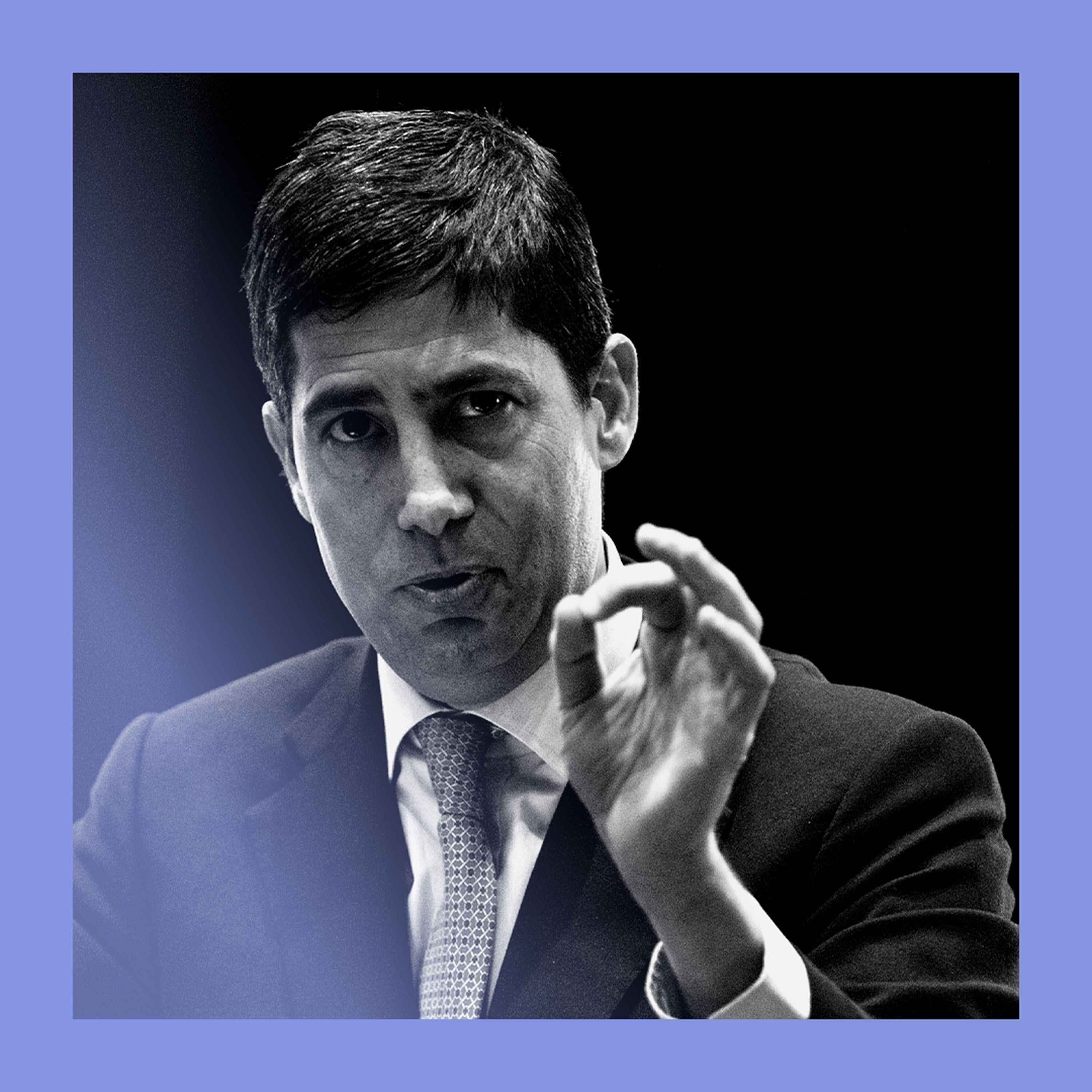
Hello and welcome to the Intelligence from the Economist. I'm your host, Rosie Bloor. Every weekday we provide a fresh perspective on the events shaping your world. Thailand holds an election this weekend and there's all to play for. But since the country's monarchy dominates politics and the economy, the population, the people's will is only one part of the picture. Our correspondent explains what's at stake and mention Hong Kong and you might think of the glittering skyscrapers, the night markets, the buzz of the streets. But today we highlight something that even visitors to the city are now enjoying in praise of the humble Hong Kong TR. First up though, Last year we spoke on the show about who Donald Trump might pick as the next chair of the Federal Reserve. It's a decision with a big impact on America and the world economy. In the end, the person who got the nod was Kevin Walsh.
- [02:43]
Archie Hall
In the whole country, I would say that this was the know perfect candidate. This was not a surprise or anything. This was the man that's most qualified, top student, best schools, everything was like perfect. Youngest person ever to serve on the Fed, got the whole package.
- [03:01]
Rosie Bloor
Trump lauded Wash his lengthy cv, writing that on top of everything else, he is central casting. So what can we expect from the Fed with Walsh at the top?
- [03:12]
Archie Hall
Kevin Wash might seem a slightly peculiar choice for Donald Trump to be making is his nominee for Fed Chair.
- [03:20]
Rosie Bloor
Archie hall is our US Economics editor.
- [03:23]
Archie Hall
In some sense, he's a very classic choice. He used to be a Fed governor. He sort of looks like a stereotypical Wall street banker from a 1980s movie. Someone who has lots and lots of experience dealing with crises and working with colleagues around the world. On the other hand, Trump wants someone to cut rates. And while Walsh recently, during the audition process, has sounded very, very keen on cutting interest rates, historically, he was famously a huge hawk. Very worried about inflation. Germany wanted to keep rates high, avoid stimulus. And so it'd be interesting to see whether the Walsh we get is a Walsh that has pivoted recently to being a keen rate cutter or someone who's a lot more cautious about that.
- [04:04]
Rosie Bloor
So, Archie, for those for whom Kevin Walsh is not a household name, just tell us a bit more about him.
- [04:11]
Archie Hall
He was first put on the Fed by George Bush in 2006. So he's someone who's been around for a while. He's someone who, while he's now connected to Trump world, is not a traditional Trump character. He's more of an old guard Republican in that way. He was a bit of a controversial pick by George Bush. He was put on the bed board at the age of 35, which was one of the youngest ever, if not the youngest ever. And potentially there were worries about his inexperience at the time. He then stayed on for about five years and was Ben Bernanke, who was Fed chair at the time, his ambassador to Wall Street. Wall street experience before then was as a banker a little bit at the White House. So he became the guy who helped work with the banks, orchestrate a lot of the bailouts. And as that time went on, he notably became a bit more disillusioned with the trajectory the Fed was taking. He worried a lot more than most of the Fed governors about the scale of Fed's interventions, and particularly about how persistent they were, how even as the crisis went on, even as the economy started recovering, the recovery is quite sluggish. And so the Fed continued with its bond buying programs in a way that Walsh was very, very uncomfortable with. And that eventually culminated in him leaving the Fed in 2011. And since then he's been in the.
- [05:20]
Rosie Bloor
Private sector, so he's got the credentials to be Fed governor. But it sounds from what you were saying earlier, like the crucial element is this flip flop over inflation. Just explain that.
- [05:33]
Archie Hall
So anyone who Trump was going to nominate for this job was going to be someone who is willing to cut interest rates, because that's very, very clearly what Trump has been berating Jerome Powell about for pretty much the entire duration of his second presidency and very, very clearly what Trump wants. And historically that's not who washes. More recently he's been making claims that are superficially perfectly plausible. He's been saying things like there's going to be vast disinflationary wave from the coming boom in AI technology. There's going to be a huge, this is probably slightly less plausible disinflationary effect of the deregulatory policies that the White House is pursuing. But I think there's a deeper political question behind that, of does he really believe that or is that what he's saying? Because he needs to do well in this convoluted years long audition process to get Trump's nod. And then the difficulty going forward is that Trump complains about regularly he picks someone to be Fed chair. This happened with Powell. They don't do what he wants and he can't fire them because Job is supposed to be independent. And so with Walsh, how much do we get this more loyalistic, this more political version of him that we've seen over the past few years and how much do we get A bit of a reversion back to who he was in the 2010s and the late 2000s when he was last at the Fed.
- [06:49]
Rosie Bloor
Okay, so where do you come down on that? What is the Fed going to look like under Walsh?
- [06:54]
Archie Hall
It's a difficult question. I'd start with interest rates. Then that's what Trump really wants to get down. He's been pushing and pushing and pushing for big cuts to interest rates, to pull down mortgages, to pull down the cost of government borrowing and so on. There I struggle to see Walsh making that much of a difference. It's totally possible that he has some persuasive power as the Fed chair. And on the margin, he might be able to sway the rest of the committee that set interest rates to slightly err on the side of keeping them a little bit lower. But those really big cuts that Trump's been demanding are going to be quite hard to push through a 12 voter committee where Walsh is only one vote and has very, very few allies and certainly very, very few out and out Trumpists on that committee. And so there I struggle to see Walsh making a huge difference. What we'd have otherwise, outside maybe a big crisis where there might be scope to have more of an excuse to cut a lot.
- [07:48]
Rosie Bloor
But he doesn't just do interest rates. What about the rest of his programme?
- [07:52]
Archie Hall
The place where Walsh really could make a difference, I think is in the structure of the Fed and its balance sheet. So on the structure of the Fed, Walsh has called for a regime change. It's not entirely clear what that means, but there are a few hints. There's a lot of consternation in Trump world that the Fed went woke under Biden and specifically they focused a bit too much, they would argue on things like ESG and climate, things like inequalities, and veered away from their really core keep inflation down, keep unemployment in the right place. Bits of their mandate that's mostly now gone anyway, but that might go further and that could well be an excuse to do things like lower the number of economists at the Fed, reshape the structure, change the personnel and so on. The other area that's probably more consequential is the balance sheets. And so this is how many bonds the Fed holds as a result of its quantitative easing programs. And that's what, if you recall, Walsh pretty much resigned over when he was last at the Fed and has been weighing against since. This is something he genuinely does really care about and something that's a bit technical enough that he's probably not going to get as much pressure or pushback from the President as on interest rates. And also something where he agrees with Scott Bessen to the Treasury Secretary on the prescription, which is the US Fed should be holding a lot fewer bonds, the balance sheet should be a lot smaller and quantitative easing should be deployed a lot less as a sluggish economy fighting tool because it's something that in their view distorts the economy, also increases inequality and causes a Fed of a footprint that's much bigger than it should be in the rest of the American economy there I can imagine Walsh really getting somewhere. The question is that if he goes too far too fast and starts really trying to get rid of the Fed's bond holdings, which would mean trying to sell those bonds to someone else potentially, or at least not buying new ones that could push up long term interest rates and therefore push against what the President's trying to achieve and cause difficulties.
- [09:47]
Rosie Bloor
There we were speaking during the process of discussions about the new Fed chair, about the independence of the Fed in the future with Walsh at the helm, is that still going to be a concern?
- [10:00]
Archie Hall
Walsh has claimed consistently that he's a believer in the independence of the Fed. He actually gave a speech when he was last at the Fed called An Ode to Independence. On the other hand, his behaviour during the audition process for this job has very much been an impress Donald Trump. So that's very traditionally not what the Fed chair is supposed to do. It's a much more political version of the job than we've seen earlier. And so while markets seem somewhat reassured by Walsh, not least, I mean, a number of very big names in the global economics central banking world have come out in favor of him. He's going to be under a lot more political pressure than almost any Fed chair in recent memory. And he's someone who, at least over the past year or so, has very much bent that political pressure.
- [10:45]
Rosie Bloor
Archie, thank you so much.
- [10:47]
Archie Hall
Thank you.
- [11:01]
Capital One Announcer
With no fees or minimums on checking accounts, it's no wonder the Capital One bank guy is so passionate about banking. With Capital One, if he were here, he wouldn't just tell you about no fees or minimums. He'd also talk about how most Capital One cafes are open seven days a week to assist with your banking needs. Yep, even on weekends, it's pretty much all he talks about. In a good way. What's in your wallet? Terms apply. See capitalone.com bank capital1na member FDIC.
- [11:31]
Connect Industrial Intelligence Announcer
This is an ad by BetterHelp.
- [11:33]
Capital One Announcer
Did I talk too much? Can't I just let it go? Thank you so much.
- [11:42]
Connect Industrial Intelligence Announcer
Take a breath. You're not alone. Let's talk about what's going on. Counseling helps you sort through the noise with qualified professionals, and online therapy makes it convenient. See if it's for you. Visit betterhelp.com randompodcast for 10% off your first month of online therapy and let life feel better.
- [12:13]
Erin Connolly
I am at a mall in a middle class part of Bangkok and the People's Party is holding a rally. I traveled to Thailand in advance of its election coming up on February 8th. Around the world, young people are making their voices heard on the street and at the ballot box. But they often play at the fringes of politics, calling for socialism or alt right policies. Thailand is a rare example of a youth led movement calling for free markets as well as more liberal politics. Thailand's People's Party is the latest vehicle for the country's young liberals and it is currently leading in the polls.
- [12:48]
Rosie Bloor
Erin Connolly is our Asia Diplomatic editor.
- [12:58]
Erin Connolly
At the People's Party rally in Bangkok, there were a lot of young people, some older people too. Most of them were wearing the party's color orange and its triangle logo. And on stage was Pita Alim Jaranrat, the former leader of the party who's a bit of a rock star. In 2023, PETA and his party won a plurality of seats in the lower house, but he was blocked from forming a government by the Thai Senate, whose members had been appointed by the army. Pita's party, then called Move Forward, was dissolved by the courts. Most of its members, however, regrouped into what's now known as the People's Party. Though unable to run for election again himself, the successor party has asked PETA to campaign heavily in the final fortnight before the election, when the People's Party hopes that it can win a majority in the lower house.
- [13:52]
Rosie Bloor
Erin, there's a lot of context to fill in here. For us, Thai politics is very complicated. Explain why Peter's party was dissolved and why he can't stand this time.
- [14:03]
Erin Connolly
Well, it all goes back to Thailand's strict Les Majeste laws that criminalize any criticism of the monarchy. And PETA and his party moved forward, had pledged to reform these laws. And the Constitutional court ruled in 2024 that that campaign promise to reform these laws amounted to a violation of the Constitution. As a result, he was banned from politics for 10 years and his party dissolved.
- [14:27]
Rosie Bloor
So this replacement party, the People's Party, how are they doing?
- [14:32]
Erin Connolly
Well, the People's Party can't campaign anymore on reforming the Les Majeste law, but they're currently leading in the polls, and they're asking voters to give them a majority this time so that they don't need to make any compromises in terms of forming a coalition. And in theory, that would give them a chance to form the government, because for the first time in about a decade, the Senate will no longer play a role in choosing the next prime minister. But they're not doing as well as they did in 2023. To give you an example, before he was banned, PETA was favored by around 45% of Thais as their next prime minister, but his successor, Nadapang, is favored only by around 29%. The bigger problem for the People's Party is that many Thais now doubt whether a liberal party will ever be allowed to form government in Thailand. The courts have now dissolved three versions of this party and banned 27 of their leaders. And so some disillusioned ties may still support the People's Party and its agenda, but they've lost the level of enthusiasm that they had in 2023.
- [15:34]
Rosie Bloor
Let's pull out for a minute. What's really going on? What are the fault lines in Thai politics?
- [15:39]
Erin Connolly
The fundamental cleavages in Thai politics are really about the monarchy's role in the economy and in politics. The monarchy actually plays a really big role in the economy in Thailand, and it is repeatedly intervened in politics to favor conservative parties. So at this point in Thai politics, you really have a three cornered contest. On the one hand, you have those young liberals of Move Forward and now the People's Party. The second group is a populist party called Pu Thai that actually formed government over most of the last three years, but it was very badly damaged by some scandals that they endured in government. And then the third group is that conservative bloc which tends to be very pro monarchy and pro military.
- [16:20]
Rosie Bloor
So if the People's Party falters, who's the frontrunner?
- [16:24]
Erin Connolly
Well, the Thai Pride Party led by Anatin Wirakun, who is currently the prime minister at the head of minority government. It's really gaining momentum. Anitin is popular and he's been very skillful at combining a populist economic platform that appeals to Thailand's populace with strong support from the monarchy and the army. Anitin's party was tiny in 2023. It won just 3% of the proportional vote, but is now pulling at 22%. And because Oniton is a deal maker, he stands a better chance of forming a coalition and which any party leader will probably need to do to form government. The People's Party is very principled and says they won't work with certain parties, but Anitin told me in an interview at Government House that he will work with anyone so long as they support the first two articles of the Constitution which regard the role of the monarchy.
- [17:17]
Rosie Bloor
Erin, at the start you talked about how popular the People's Party is. If they don't win, where does this leave their push for change in Thailand?
- [17:28]
Erin Connolly
Well, I wouldn't count the People's Party out yet. They really caught fire quite late in the 2023 campaign. And there's a lot of uncertainty around the polling, so they could exceed expectations. But even if they do win, it's possible that their leaders will again be banned and that the courts will find some reason to dissolve the party. So long as the monarchy continues to play this very interventionist role in Thai politics of the sort that we've become accustomed to over the last several decades, it's hard to see how change will come to Thailand.
- [17:58]
Rosie Bloor
Aaron, thank you very much.
- [18:00]
Erin Connolly
Thank you, Rosie.
- [18:31]
Emma Irving
When I moved to Hong Kong a couple of years ago, I began by seeing a lot of the tourist hotspots doing things like going across the harbor on the Star Ferry or clambering up the peak to try and see the sunset. But I quickly discovered on a tip from a colleague that actually one of the best ways to see Hong Kong was by taking the humble Hong Kong trams.
- [18:54]
Rosie Bloor
Emma Irving is a news editor for the Economist and is based in Hong Kong.
- [19:00]
Emma Irving
These open windows that give you unfettered access to the sights and sounds and often the smells of the city. And so, trundling home from the Economist offices in Taiku across to the other side of the island where I lived, I could really see the city transform into night things like the night markets spinning across the streets or listening to the Cantonese that was hollowing through the wet market. It really made me so aware of how vibrant and dynamic the city is and also of quite how far I was from home. So it was no surprise to discover that the trams are actually becoming really popular with tourists.
- [19:39]
Archie Hall
Yeah, my president is coming over to Hong Kong. Yeah, we are Japanese.
- [19:44]
Rosie Bloor
Ah, nice.
- [19:45]
Emma Irving
Okay.
- [19:46]
Archie Hall
So actually, he's looking forward to, you know, taking this tram.
- [19:50]
Emma Irving
Ah, so you're coming specifically to go on the trams?
- [19:54]
Archie Hall
Yeah, yeah.
- [19:55]
Emma Irving
Amazing.
- [19:56]
Archie Hall
Yeah.
- [20:00]
Emma Irving
Tourists actually now account for around 15% of the 150,000 tram trips taken each day in Hong Kong. And that share has stayed the same even as the number of tram takers has grown in recent years. One of the reasons for that is that the trams are a really inexpensive way to see what is a very expensive city. An average journey costs just 42 US cents a trip, and that relates to a wider trend. So although more tourists are visiting Hong Kong, they're actually spending less. Visitor numbers rose by around 12% to nearly 50 million last year. But actually, the average amount spent by each overnight Visitor fell by 3.5% in the first half of 2025. One of the reason why tourists are spending less is because actually, around three quarters of visitors now come from mainland China, where cheap and cheerful travel is on the rise. That's because the mainland has suffered from a property slump and weak consumer sentiment, which has meant that visitors are more reluctant to part with their cash. And poorer Chinese people also make up a larger share of travelers than they did in the past. But now the government is trying to turn things around, and it's doing that mostly by betting on pretty flashy attractions. It's unveiled a blueprint for tourism development that focuses on things like better horse racing and big pop concerts. It hopes that by 2029, those kinds of diversions will bring in around 120 billion HKD. But in fact, it might be the humble tram network that it keeps Hong Kong's tourism on track.
- [22:01]
Rosie Bloor
That's all for this episode of the Intelligence. See you back here tomorrow.
- [22:24]
Capital One Announcer
With no fees or minimums on checking accounts. It's no wonder the Capital One bank guy is so passionate about banking with Capital One. If he were here, he wouldn't just tell you about no fees or minimums. He'd also talk about how most Capital One cafes are open seven days a week to assist with your banking needs. Yep, even on weekends, it's pretty much all he talks about. In a good way. What's in your wallet? Terms apply. See capitalone.com bank capital1NA member FDIC.