Loading summary
Transcript61 lines
- [00:00]
Mai / Interviewee
This is a Monday.com ad. The same Monday.com helping people worldwide getting work done faster and better. The same Monday.com designed for every team and every industry. The same Monday.com with built in AI scaling your work from day one. The same Monday.com that your team will actually love using the samemonday.com with an easy and intuitive setup. Go to Monday.com and try it for free. Yes the same Monday.com most of us
- [00:31]
Cash App Advertiser
don't think much about how money actually moves until something slows it down or makes it more expensive than expected. That friction is exactly what Bitcoin was designed to rethink. Bitcoin is often talked about as an investment, but it was built to be used with Cash App. You can actually do that. Send bitcoin instantly, pay at local square businesses that accept it, or move it to your own wallet whenever you want. It works more like real money and less like something locked in an account for a limited time. New customers can get $10 added to their balance. Just use code CASHAPP10 when you sign up. And don't forget this part. Send at least $5 to a friend in the first two weeks. Terms apply. Cash App is a financial services platform, not a bank. Banking service is provided by Cash App's bank partners. Bitcoin service is provided by Block Inc. Brand. For additional information, see the Bitcoin disclosures at Cash App legalpodcast. The Economist.
- [01:38]
Rosie Blore
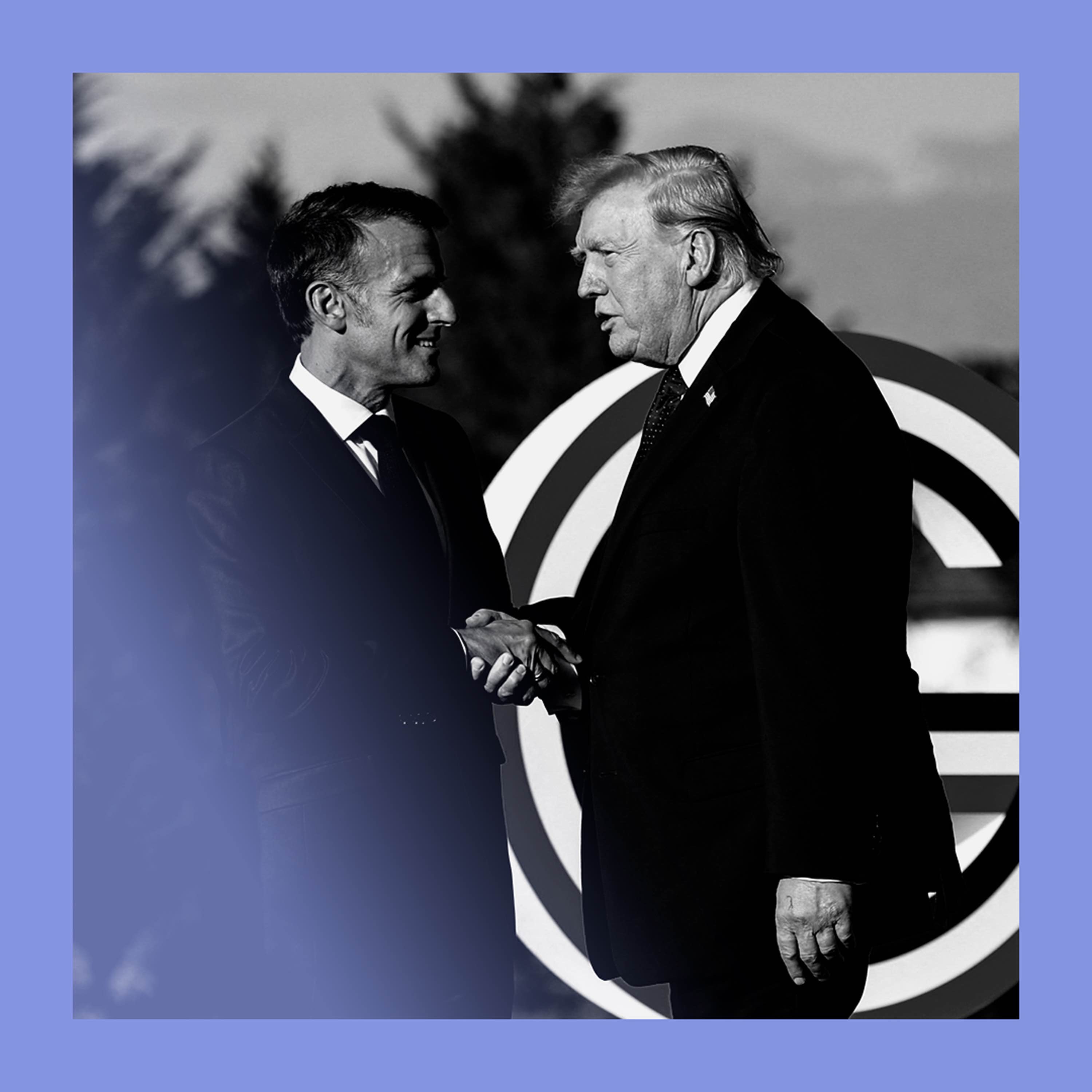
Hello and welcome to the Intelligence from the Economist. I'm Rosie Blore. Today on the show, sex work in Japan and the surprising success of British magazine Country Life. But first, On the banks of Lake Geneva, in a town famous for its bottled water, the G7 political summit has been taking place in Evian. Everything has been shut down to make space for this annual meeting where leaders of some of the world's wealthiest democracies come together. This year's tranquil setting, the sunlit gardens of the Hotel Royale, is somewhat at odds with the rather more stormy global climate. And it's a tough crowd. Last year, when the meeting took place in Canada, Donald Trump left a day early.
- [02:42]
Cash App Advertiser
President Trump is coming back tonight from the G7 summit in Canada, citing the conflict in the Middle east as the reason.
- [02:49]
Rosie Blore
This time, French President Emmanuel Macron is hosting.
- [02:52]
Mai / Interviewee
Hello, how are you?
- [02:54]
Sophie Pera
Hello.
- [02:58]
Rosie Blore
The need for frank discussion and partnership has rarely seemed more pressing. The question is whether the G7 is merely a talking shop, or whether getting leaders together could actually be precisely what everyone needed to do.
- [03:12]
Sophie Pera
It's a G7 that's been very much dominated by crises Geopolitical crises, the war in the Middle East, Ukraine.
- [03:19]
Rosie Blore
Sophie Pera is our Paris bureau chief.
- [03:22]
Sophie Pera
But it's also about Donald Trump. He's dominated all conversations, as almost every time he's been at a G7. In fact, the French shifted the date to accommodate his birthday party and celebrations. And as a result, I think they went into the G7 with pretty low expectations. Their main objective was to keep Trump on site, to keep him in France. And so far, they've managed that. And I think the mood is more optimistic than was expected.
- [03:51]
Rosie Blore
So just set that scene for us. It comes at an extraordinary moment, this summit. How has the mood been?
- [03:57]
Sophie Pera
Well, nervous on the French side, obviously, because of what the stakes are. It's been intense. And I think that what the summit organizers have felt is that, you know, keeping Trump involved in discussions, engaging him with Zelenskyy has been absolutely essential. One can feel that sort of tension of trying to make sure that at the time they are demanding enough with Trump, but they keep him on board with a sort of sense of engaging him.
- [04:20]
Rosie Blore
And what have they managed to achieve?
- [04:22]
Sophie Pera
Well, the official topic for the summit was global economic imbalances. A lot of concern about the surge of Chinese exports, how to sustain growth in that kind of a global environment. But what's really dominated, inevitably have been the geopolitical questions. Ukraine and the Iran, America war and what is happening in the Strait of Hormuz. I think that the communique that was issued very late last night was more encouraging than people had expected. There was a sense that Donald Trump has supported the idea of keeping up aid to Ukraine. He even agreed in this communique to strengthen sanctions on Russia. Now, that's quite a strong statement to sign up to for the Americans at this point. That's all been prompted, obviously, by the fall in oil prices. But it is something that the G7 leaders are pretty pleased to have got from Donald Trump. But communiques are worth what they are. And, you know, the leaders will leave the summit later on today, I think, waiting to see if any of this is followed up with real sort of concrete decisions.
- [05:24]
Rosie Blore
Sophie, going into this, all eyes were on the Iran deal. What has Trump said about that?
- [05:31]
Sophie Pera
Well, he's obviously very upbeat about it. We still don't know what's in this memorandum of understanding. It will be signed, he said on Friday in Geneva. It is something that he says is going to be strong, that Iran won't have nuclear capabilities.
- [05:46]
Cash App Advertiser
The one thing that's happening that's of note, frankly, the only thing that really
- [05:50]
Mai / Interviewee
Matters to me is Iran will never have a nuclear weapon and that the
- [05:55]
Sophie Pera
next phase of negotiations with Iran will be easier. But there is no knowledge of the detail of that deal at all. He said at one point that he would reach it out, but that remains to be seen. He said that the Strait of Hormuz is already open. The ceasefire will be extended for another 60 days while the negotiations for the final agreement take place. But all the details remain to be seen, and there's a fair amount of skepticism about what actually this deal contains, given that nobody has seen it, certainly not the other leaders at the G7. One of the things that was quite interesting, I thought, was Trump's comments about Israel and about Netanyahu. He was surprisingly critical, saying he was not happy with the way that Israel's handled itself with regard to Lebanon and Hezbollah. So this is, you know, harsher language than we've learned to expect from Trump towards Netanyahu in particular. There was also harsher language from the other European leaders for that, who I think have been equally frustrated, those who tended to be more supportive of Israel. So Lebanon is something that Trump has been very focused on. It's dominated quite a lot of discussions during the G7. He even suggested at one point that Syria might do a better job dealing with Hezbollah than Israel has, which was quite a statement.
- [07:09]
Rosie Blore
And you've mentioned Ukraine already. But what news is there of support there?
- [07:14]
Sophie Pera
Well, in the communique that the G7 leaders issued, they do all commit to unwavering support for Ukraine.
- [07:21]
Cash App Advertiser
I unanimity from all the leaders and EU presidents.
- [07:26]
Sophie Pera
Now, that again, is interesting. There were a lot of discussions yesterday with Zelenskyy. He turned up. And President Emmanuel Macron, who is hosting the summit, was very careful to make sure that Trump and Zelenskyy could have a bilateral together. That was a very important thing to have arranged. I think there was also discussion with all the G7 leaders. There were discussions with Macron present, as well as Trump and Zelenskyy. There was this sort of informal choreography of getting Trump to make sure that he heard the other leaders in a very direct way, but also that he spoke to Zelenskyy. And that did happen. The Europeans support Ukraine financially almost entirely at the moment, but they do still require American support for things like intelligence. So they want to keep America engaged. And they've been very concerned that the whole war with Iran has just distracted American attention completely from Ukraine. So better to have them engaged. The Europeans need them, but also a sense that they don't want the Americans to grab hold of this issue again and go above. So it's been a delicate balancing act on that front.
- [08:25]
Rosie Blore
It sounds like geopolitics has really derailed this summit and that's what it's all been about. Have they had time for other discussions?
- [08:33]
Sophie Pera
A little bit, yes. In fact, the French have invited a number of other countries to attend. The leaders of Kenya, Brazil, South Korea and India. Modi has been there as well. I think that one of the points has been to talk about, you know, Global South. Obviously, Ebola has come up. There's been some talk about drug trafficking. There's been talk about the fight against cancer, a number of other issues. And in fact, today there's an interesting discussion because there's a tech lunch with a couple of the big tech leaders. So Sam Altman is there, Dario Amadei is there as well. So we've got a sense that the whole issue with anthropic and what to do about regulating tech, I think that is going to be a really interesting discussion today. Whether it gets anywhere is another question.
- [09:17]
Rosie Blore
And of course, this was Macron's swan song as host. How did he do?
- [09:22]
Sophie Pera
Well, I think, you know, he's arranged a very nice location. When Trump arrived, he got out of his car and he said everything is very nice. And that sort of comment you want when you're hosting a summit, Trump has been on site, he is going to be treated to a gala dinner at the palace of Versailles. All of that is an attempt to make sure that this one works. So I think from the French side, they feel that it's so far been successful. But, you know, with always with these summits, I mean, it's a moment for showcasing your country. It's a moment for looking like a global leader, a global statesman. But at the end of it all, it depends whether any of this is followed up. And we've seen Trump commit to things one day and then uncommit the next day.
- [10:01]
Rosie Blore
And what's your assessment ultimately, Sophie, is the G7 still relevant?
- [10:06]
Sophie Pera
Well, I think there's always a frustration that you have these communiques that are signed up to by the leaders, that they are always the fruit of sort of compromise and that after that everyone goes away and gets on with things, businesses as before. The one thing I do think is interesting and useful is for these leaders to be by themselves and have informal discussions, you know, one on ones. A lot of them were talking with each other in different parts of the gardens of the hotel. There are very few formats and events when they really can do that without the presence of advisors, without the presence of a much more formal declaration. So in that sense it can be useful. And I think there is a feeling, it's certainly on the French side, that that has been the real value of this summit has been especially with having Zelensky there and being able to have those sort conversations with Trump, Zelensky and others about how to move forward on Ukraine and opening the Strait of Ormuz.
- [10:59]
Rosie Blore
Sophie, thank you so much for talking to me.
- [11:01]
Sophie Pera
It's always a pleasure. Thanks, Rosie.
- [11:17]
Cash App Advertiser
Most of us don't think much about how money actually moves until something slows it down or makes it more expensive than expected. That friction is exactly what Bitcoin was designed to rethink. Bitcoin is often talked about as an investment, but it was built to be used with Cash App, you can actually do that. Send bitcoin instantly, pay at local square businesses that accept it, or move it to your own wallet whenever you want. It works more like real money and less like something locked in an account for a limited time. New customers can get $10 added to their balance. Just use code CASH APP10 when you sign up. And don't forget this. Send at least $5 to a friend in the first two weeks. Terms apply. Cash App is a financial services platform, not a bank. Banking service is provided by Cash App's bank partners. Bitcoin service is provided by Block Inc. Brand. For additional information, see the Bitcoin disclosures at Cash App legalpodcast A Better Help
- [12:14]
Narrator / Advertiser
Ad hold on one second. I just need to. What if you had a room where no one interrupts? No notifications, no expectations, just space to talk with BetterHelp Therapy happens in a space that's yours. Visit betterhelp.com randompodcast for 10% off your first month of online therapy.
- [12:58]
Mai / Interviewee
I'm sitting inside a cafe in Tokyo with a woman called mai. Mai is 34 years old. She's a single mother. For around a decade she used to work at a hospital. During COVID she started to find her work too stressful. She also wasn't very happy with the pay. A few years ago, she decided to enter the sex industry.
- [13:26]
Rosie Blore
Moeka Iida is our East Asia reporter.
- [13:30]
Mai / Interviewee
First, she started working as a porn actress and now works as a deriher or delivery health worker. It's Japanese slang to describe call girls who visit clients at hotels or at their homes. For a two hour session, she earns 30,000 yen, or roughly $200. That's pretty good pay for a woman like Mai who doesn't have a college degree. And Mai is far from alone. There are hundreds of thousands of women like her in the country. The sex trade is estimated to be a multibillion dollar industry and it's long been part of male social life. One study found that nearly half of Japanese men have paid for sex at some point, compared with 11% in Britain. But recently sex work in Japan has come under scrutiny.
- [14:20]
Rosie Blore
Morocca, as you say, there's nothing new about prostitution, nothing new about prostitution in Japan. So why is it coming under scrutiny now? What's happening?
- [14:30]
Mai / Interviewee
I think there were two recent triggers. So one had to do with a horrible crime. So at the end of last year, there was sensational news about a 12 year old Thai girl who was trafficked to Japan and was forced to have sex with men at a brothel in Tokyo. That sparked a lot of outrage. And another has to do with the growing visibility of street prostitution in Tokyo. So a lot of the sex trade in Japan happens behind closed doors. Mai finds her clients on social media and then visits them at hotels. But recently there are been growing visibility of women standing outside in the streets and selling sex. So there's a park called Okubo park in Tokyo, around Tokyo's red light district, which has become a notorious pickup spot. And this has been a thing since around Covid. I've walked around this area myself and at its peak a few years ago, you would see rows of young women, usually wearing short skirts, standing on the streets and they're waiting for someone to pick them up. So it is quite a scene. And photos and videos of these women have circulated online and sparked a lot of public debate.
- [15:37]
Rosie Blore
So what is the debate actually on who's having the debate?
- [15:41]
Mai / Interviewee
I think people associate street prostitution as something that happens in like poor countries. So online there were a lot of people commenting on these pictures of women on Akuba park, saying, I can't believe this is happening in Japan or this feels like something that would happen in a developing country. And I think this is linked to anxieties about the economy in the country. And also people have noticed that a lot of the customers walking around Okubo park are foreigners. So the weekend has been luring a lot of tourists to the country. There's also been a rise in sex tourism linked to that. I saw a video of Kamiya Sohe, who's the leader of the right wing Sanseito Party, saying, this is truly lamentable. And I think behind this there's a sense of wounded pride. So during Japan's boom period in the 1970s and 80s, a lot of Japanese men or salarymen traveled abroad, especially to Southeast Asia to buy sex there. Now that Japan's economy is in decline, people from abroad, wealthy foreigners, are coming to the country. So this topic has been discussed on social media, and it's also been picked up by an opposition party who confronted Prime Minister Takaichi about this. And she asked the Justice Ministry to act and consider revising the country's prostitution laws.
- [16:57]
Rosie Blore
What are they actually considering? What are their options?
- [17:00]
Mai / Interviewee
They're currently debating revising a law called the Prostitution Prevention Law, which was established in the 1950s under the American occupation. The current law contains a lot of disparities. So women selling sex are subject to punishment, but strangely, buyers of sex are not subject to punishment. So the Justice Ministry is currently talking about making these people stand on a more equal footing, so introducing some punishment for the buyers. But I think this discussion has also sparked some broader debates about how to regulate sex in the country. And it's interesting how feminists in the country are also very divided. Some feminists in Japan would like the country to adopt the Nordic model, which was first introduced in Sweden and later adopted by countries like France. So the Nordic model criminalizes buying sex, but decriminalizes or protects women who are engaged in the trade. The idea is to punish the demand side and reduce demand to eventually, literally get rid of sex trade. But there are also people with different views. So some people say that criminalization only pushes those trade underground. Some people call for the sex workers work model. They point to what countries like Germany or Netherlands has done, which is legalizing and regulating the sex trade or possibly decriminalizing it, like they have done in New Zealand.
- [18:21]
Rosie Blore
And is it likely that Japan will end up with a clear reform model?
- [18:26]
Mai / Interviewee
I think a big rethink of the system is pretty unlikely. And what I've also learned is that Japan's approach to sex work has often been about moral policing or keeping vice out of public view. So the reason why the indoor sex industry is able to exist is because the laws themselves are very vague and selectively enforced. To bring up a very famous example, there are popular establishments in Japan called Soaplands, which is places where clients officially pay to take a bath and they get served by people say these people paid for the bath, but they're not paying for the sex. And it just happens that these two people, the client and the woman, fell in love and decided to have sex out of their own volition. So everyone knows these things happen, but they go along with it.
- [19:13]
Rosie Blore
So where is Japan likely to end up on this? And where will that leave those who work in prostitution, like Mai, who you met?
- [19:21]
Mai / Interviewee
So I think what's going to happen is women standing in Okuba park are going to to get arrested or detained or will fade away, but women like Mai are going to keep seeing their clients at hotels or at their homes. So I do think the current debate has started a conversation in Japan about how to regulate the sex trade, but I see very little appetite by authorities to really dig deep into the indoor sex industry, which I mentioned is a multi billion dollar industry. And I think that trade is going to keep going on under the shadows.
- [19:51]
Rosie Blore
Marika, thank you very much for talking to me.
- [19:54]
Mai / Interviewee
Thank you so much for having me, Rosie.
- [20:16]
Narrator / Advertiser
It was late March 2026. The war in Iran was raging. Donald Trump, who was also raging, had threatened to destroy Iran's power plants. Newspapers across the world raced to cover this, not Country Life.
- [20:35]
Rosie Blore
Catherine Nixie is a Britain correspondent for the Economist.
- [20:39]
Narrator / Advertiser
This British magazine instead offered a cover with two lovely lambs on it and inside, a feature on the chickens that lay our favourite eggs. It was similarly off news for the outbreak of the COVID 19 pandemic. Then its cover had a lovely picture of a thatched cottage and of the Ukraine war. It offered a lovely picture of the coast. The Second World War was admittedly marginally more newsy. On September 16, 1939, the magazine offered Golf the gate. In wartime, Britain offers two kinds of country life. There is Country Life, the simple act of living in the country. Then there is Country Life, an uppercase, upper class magazine that is related to country living. It features a lot of cows and sheep. To cover this, I spent a jolly morning chasing sheep around a field with a farmer. The photographer, who I got the impression had chased a few too many sheep around country fields with farmers, didn't bother. He said, we're never going to get them, and stayed in the corner. He was quite right. Country Life, the magazine, is quite like Country Life, the thing. It's also very different. It features a lot of country houses and croquet lawns. Country Life is less a mere publication than an institution. British novelist Satirizer British landmarks are sold in it. In 1915, Stonehenge was flogged in it for £6,600, which is just over 600,000 in today's money. British royalty reads it. Charles is a fan and the other British royal family, the Beckhams, rather like it too. David apparently reads it from COVID to cover each week. It is like the royals, surprisingly popular 40,000 buy it every week. It is also, like the Royals, odd. Each issue opens with posh porn images of grand houses that are newly on market. They tend to have things like lovely moats and in its frontispiece feature images of grand girls. They tend to have lovely smiles. Its title implies a physical location. In truth, Country Life speaks to a spiritual one. It represents an England of country piles and tennis and tea on the lawn. An England that is declining but not yet fallen. An England that is, in short, keen to read articles with titles like how do you make an 18th century stately home fit for a 21st century family? Some find it irksome. It has been described as rural porn for the rich, while its frontispiece has been called sexist and laughably old fashioned. Not wholly without cause. Each week, the Girls in Pearls offers pictures of lovely girls in poses and often in pearls next to hay bales, horses and other English erotica. The accusation that they are bosh has some foundation. Many of them were called Harriet. One is now Queen. A survey of the 2007-11 girls found that almost a quarter had attended Cheltenham Ladies College, a school that is precisely as posh as it sounds. Its critics say that the magazine remains hopelessly out of touch. Whereas other papers cover issues like gun crime, Country Life offers instead the Cotswolds issue. It does cover some serious things. It has lead on fly tipping and it covers art and architecture with similar seriousness. And it goes to very great lengths for cover shots of cows. But it's not really that surprising. Britain is an urban nation, but its favorite poems invariably feature things like daffodils. The National Trust is the country's largest charity. Elysium in England is rural. And besides, the magazine's focus on fields is not just frivolity, it's also philosophy. People remember Covid as terrible, but that spring as wonderful. I spoke to the magazine's editor, Mark Hedges, and he told me that trees, blossom and sun are not trivial. They are what actually affects most people's lives. And besides, looking at pictures of country houses and of sheep in fields isn't that trivial either. It's really rather lovely. For when summer is here. It is indeed time for mayonnaise and for reading articles about how to eat it with asparagus. And for looking at pictures of lovely sheep in lovely fields.
- [25:16]
Mai / Interviewee
Come on,
- [25:33]
Rosie Blore
That's all for this episode of the Intelligence. See you back here tomorrow.
- [25:56]
Sophie Pera
Because you didn't just say, how can I provide these investments?
- [25:58]
Mai / Interviewee
You think, how do I holistically provide everything?
- [26:01]
Sophie Pera
How do I bring in the legal,
- [26:02]
Mai / Interviewee
the accounting, all this, and do it
- [26:03]
Sophie Pera
at a price point no one else is doing.
- [26:05]
Cash App Advertiser
Learn more about how we approach wealth management@creativeplanning.com Integrated Healthcare can feel complicated.
- [26:13]
Narrator / Advertiser
That's why Optum uses technology to connect the people and processes that make healthcare easier, more affordable, and more effective. We're making it clearer for you to know exactly what your benefits cover and to help you better manage your health. We're coordinating care between your doctors and your technology. We believe better, simpler healthcare is always possible. That's healthy optimism. That's Optum. Visit optum.com to learn more.