Loading summary
Transcript84 lines
- [00:04]
A
The economist. Hello, and welcome to the Intelligence from the Economist. I'm Jason Palmer.
- [00:14]
B
And I'm Rosie Blore. Every weekday we provide a fresh perspective on the events shaping your world.
- [00:25]
A
Did you know it's been a full 20 years that the Economist has been doing podcasts? We speak to the editors who are around at the beginning and how uncertain it was that we'd keep doing it at all. First up, though.
- [01:00]
B
For 40 years, the Economist has published an annual rundown of what our journalists think will happen in the coming year. It used to be called the World. In these days, we call it the World Ahead. Starting today and over the next week, our correspondents will once again give us their expert view on what might dominate the headlines in the year ahead, from politics and geopolitics to wars and tech. But before we get to all that, let's look back to last year. Tom Standage edits the World Ahead and is a deputy editor at the Economist, and he's with me now. Happy New Year. And hello, Tom.
- [01:37]
C
Hello. Good to be here.
- [01:38]
B
So, Tom, I always think it's almost a moral point that we have to think about what we said in the previous year and how we did. What were some of the main predictions for 2025 that we got right?
- [01:50]
C
Well, I think the things we got right, we said there would be a lot of uncertainty because of Donald Trump. Surprise, surprise, that was a pretty safe bet. We said that I think it was going to be Trump technology and uncertainty that would sort of shape the year. And I think that's reason we said that even if he went ahead and did his tariffs, which of course he did, that actually the effect would probably be quite muted on the US Economy and you wouldn't really see them kicking in. And I think that's fair. I think there's still a bit of a debate about how much more of an impact there is to come. So I think that was pretty good. We also said that Chinese engineers were very, very good at engineering their way around the restrictions being placed on them by US Export controls. And then, of course, in January, we had the whole deep seq moment where that Chinese AI company revealed this amazingly capable model, which, by carefully tweaking some of the less powerful A chips, they'd managed to train at a very, very low cost. So that was quite impressive. And we also warned of the potential for China to weaponize its control of rare earths. And that's, of course, something else we did see in 2025.
- [02:44]
B
So sounding pretty impressive there, but I suspect there were some things that we got wrong.
- [02:48]
C
Indeed. And I do actually have to do a roundup of this in the World ahead. Every year I have to write Both my top 10 of what I think is going to happen, but also my analysis of the previous year. And it was a bit of a mixed year, so we thought we were a bit too blase in retrospect about the extent to which the courts would constrain Trump. And actually that hasn' happen. That may change in 2026. They may strike down some of the tariffs, but so far they do seem to be inclined to let him do whatever he wants. We obviously didn't foresee the collapse of the Assad regime in Syria or the attempted coup by the president of South Korea, but technically those things happened in 2024. So I think we can kind of quietly forget about those. But more generally, we did have these unexpected flare ups. India, Pakistan, Cambodia, Thailand. And also we expected to see some kind of more action, more grasping the nettle on dealing with deficits in the west, which are still unsust. And we also thought that it might be a crunch year for AI as the hype ran into the reality. Actually, neither of those things has happened. But what I ended up concluding in my summary of all this this year is that's just justice delayed, I think. And I think the risk of a bond market crisis in 2026 is definitely there, and we have a piece on that. And I also think that we are likely to see some kind of correction in the AI stock market pricing, because some of those valuations are frankly out of kilter with reality. So we expected both of those reckonings to materialise in some form in 2025, and they haven't. But I think we're just going to see that in 2026 instead. Stay tuned.
- [04:13]
B
Okay, so you've teed me up very well there, Tom. What do we think is going to happen in 2026?
- [04:20]
C
Well, one of the things we love at the World Ahead, we like astronomical events because they're guaranteed to happen. Celestial mechanics is very reliable. We know there's going to be a solar eclipse. Not a particularly easy to see one, actually. Another thing that cannot be stopped. Even the Olympics could be delayed, it turned out, but anniversaries can stopped. And we know that there's going to be this big 250th birthday party for the United States celebrating the 250th anniversary of the Declaration of Independence. And we know that that's going to be a bit of a bun fight because there are now Two rival organising committees, the original one set up by Congress in 2016, and then the rival one set up by Donald Trump once he came back into office, which, let's say, has a slightly different agenda. And among other things, they are planning to stage a cage fight on the lawn of the White House. I thought that our correspondent in Washington was kidding when he wrote this, but this is actually what's happening. So the headlines write them. And this is a very apt metaphor for the nature of US politics right now. So we're going to hear a lot about the past, present and future of America, and, of course, then Americans get to vote on which vision of America and where it's going they prefer in the midterm. So that's all stuff we know is definitely going to happen. And then I think just generally, the current uncertainty has bad implications for Europe, which has a lot of problems at the moment. Big budget deficits. It needs to raise its defence spending, it needs to boost growth. And the flip side of this is that the current chaos is, on balance, good for China. It means China is the adult in the room. It's outplayed America in the trade war. So far, it looks like a more reliable country to do business with, if you're one of those countries that's been trying to sort of triangulate between the two. And also America has been trashing its soft power with things like attacks on universities and on science. And China, meanwhile, has been building its soft power. The number of Chinese brands that we've heard of just keeps going up. It's not just TikTok, it's Leboo, it's BYD, the electric cars and so on and so on. So very, very different Dynam there, Tom.
- [06:09]
B
We're going to be looking at some of these issues on upcoming episodes of the Intelligence, but one thing that I know about you is that you absolutely love tech. What do you expect to see in the coming year on the tech horizon?
- [06:21]
C
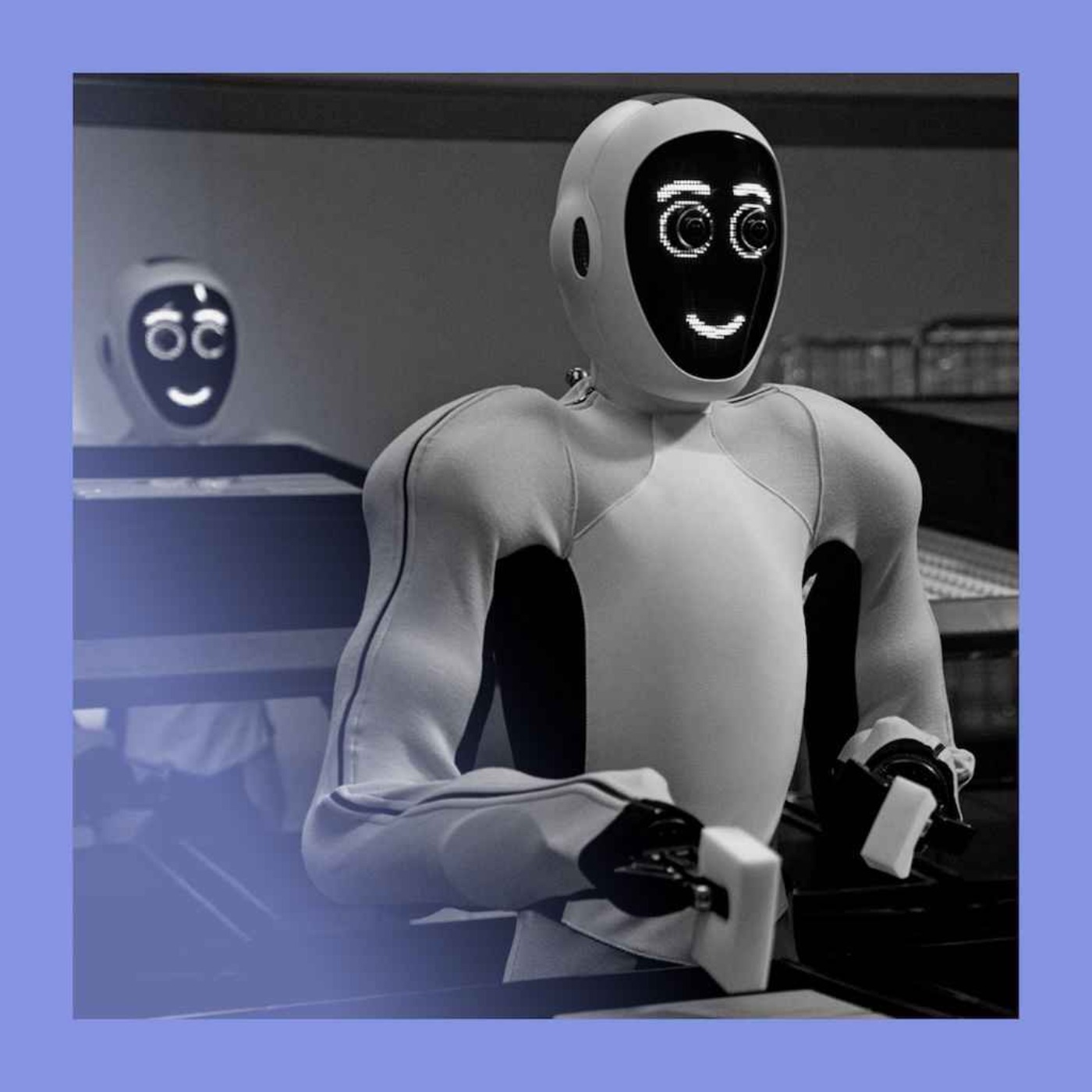
Well, as it happens, my colleague Alex Hearn and I will be talking about exactly this on our video show, Inside Tech. Alex is a particular fan. He's done a piece on humanoid robots. There's lots of companies trying to build humanoid robots. We're going to be hearing more about those. They're not ready for primetime just yet. But I think there is sort of a lot to be read into the fact that, that some big companies, including big car companies, so Tesla is not the only one think that building robots in the shape of humans makes sense. And it's sort of, you know, It's a long standing dream of science fiction. Not just because it's cheap to get someone to dress up in a robot suit, but also the world is built for human shape users.
- [06:55]
B
Tom, what are these humanoid robots going to be able to do for us?
- [07:00]
C
Well, the idea is that they'll eventually automate all human labour, but in the meantime, the two main applications are getting them to do stuff in factories and also getting them to do things in the home. And several of the companies involved are trying to actually sell them directly to consumers. They'll fold your laundry and empty the dishwasher and this kind of thing. What's really happening here though, is that the robots aren't capable of doing all of that stuff on their own yet. They're actually being remotely guided by people in a data center far away. And what that's doing is generating lots of video and training data. So training robots to go around the house and do all of these chores is actually a way of generating data so that you can make better robots, make them smarter, and then put them to use in all sorts of ways. So that's really the agenda here.
- [07:47]
B
And I suspect they cost a bit more than pocket money.
- [07:50]
C
Well, you'd be surprised because you're really giving the robot company data. One of the companies involved is called 1X, and their robot I think costs $20,000, which is quite a lot of money, but at the same time they're selling it at below cost. I'm sure it costs them more to make. The reason they want to get them into people's homes in 2026 is to gather that training data.
- [08:09]
B
Okay, so what else have we got in store?
- [08:11]
C
Another thing we're really interested in is new energy technologies, and particularly geothermal energy. We're going to have the world's biggest geothermal station opening in Utah in 2026, backed by Google, among others.
- [08:23]
B
And why now on geothermal?
- [08:25]
C
Well, it's partly the demand from big tech companies that need huge amounts of energy for AI data centers. But it's also the fact that you can borrow technology from the fracking industry. With geothermal, you're basically drilling down to hot rocks and then pumping water down and then using the steam to run a turb. You can get a lot more energy out if you drill sideways through the hot rocks when you get to them. And drilling sideways underground is what the fracking industry knows how to do. So it's drill, baby, drill, but in a good way. And then the other area of tech that I'm very excited about for 2026 is the GLP1 drugs, the slimming drugs.
- [08:58]
B
I would have thought that weight loss drugs were last year's technology.
- [09:02]
C
Well, we're really just at the beginning of this. The next generation of these slimming drugs are coming and it turns out there's quite a lot of room for improvement. So the new drugs that are coming in 20 are going to be cheaper because some of the patents are expiring in some countries, they're going to be more effective. So monthly jabs instead of weekly jabs. And there's also going to be weight loss drugs in pill form. And that means that they'll be easily distributable in countries that don't have refrigeration and cold chains. So the access to these drugs is going to improve. More people will be able to take them, they're going to be cheaper and they're going to be more effective. So I think we're really only at the beginning. And the other thing to remember is that they're effective, yes, for treating diabetes and for getting you to lose weight, but they also have lots of other health benefits on the side. They reduce heart disease, the risk of kidney and liver disease, they slow the progress of cancer, they reduce compulsive behaviour like drinking and gambling. So there's lots of benefits from these drugs and frankly, the more people who take them, the better.
- [09:57]
B
Tell us where we can hear more about these predictions for the next year.
- [10:00]
C
Well, if you watch Inside Tech Today, I'll be talking with Alex in depth about all of these things and you can watch that via the Economist app or on our website.
- [10:08]
B
Tom, thank you so much for these predictions.
- [10:10]
C
Thank you.
- [10:11]
B
Now, Tom, you're currently pioneering some of our video content, but back in the day you did the same on our podcasts. So stay where you are because in a moment, Jason's going to ask you about 20 years of economist podcasts.
- [10:37]
D
You know how everything's a subscription now. Music, movies, even socks.
- [10:41]
B
I swear.
- [10:41]
A
If to continue this ad, please upgrade.
- [10:43]
C
To premium plus platinum.
- [10:44]
D
Uh, what? No. Anyway, Blue Apron, this is a pay per listen ad.
- [10:48]
C
Please confirm your billing.
- [10:49]
D
Oh, that's annoying. At least with the new Blue Apron, there's no subscription needed. Get delicious meals delivered without the weekly plan.
- [10:56]
A
Wait, no subscription?
- [10:57]
D
Keep the flavor, ditch the subscription. Get 20% off your first two orders with code APRON20 Terms and conditions apply. Visit blueapron.com terms for more.
- [11:07]
C
Carvana is so easy. Just a click and we've got ourselves a car. See so many cars. That's a clicktastic. Inventory and check out the financing options, payments to fit our budget. I mean, that's Clickonomics101. Delivery to our door. Just a hop, skip and a click away and bought. No better feeling than when everything just clicks. Buy your car today on Carvana. Delivery fees may apply.
- [11:46]
A
You know, I really enjoy the time we spend here together. I know, I know we're not really together, but I know you're there. On January 29th, it'll be seven whole years we've been doing the Intelligence, or as we call it here, ti all those weekdays, all those fresh perspectives on all those events shaping your world. But the intelligence's lifespan only accounts for a little slice of the time that the Economist has been in this game.
- [12:12]
E
Daniel Franklin, we hear a lot about the growth of China. Looking down the road 20 years, how powerful will China be economically?
- [12:21]
F
One of the safest bets you can make in a long term horizon over the next 20 years is that China is going to be ever more on the rise of its economy.
- [12:31]
A
Twenty years ago this month, the Economist published a series of podcasts for its annual Look Ahead. The World in 2006.
- [12:40]
F
Why did we go into podcasts 20 years ago? It wasn't something that I think was a tremendously big strategic decision. It was a possibility that we could do this stuff these days.
- [12:51]
A
Daniel Franklin is our executive editor. Twenty years ago he was in charge of experimenting with new media.
- [12:58]
F
It felt fairly comfortable to do audio output for journalists. From the Economist newspaper. This is the Podcast of the World in 2007. I'm Daniel Franklin, editor of the World in 2007, and I'm speaking with Eric Schmidt, CEO of Google, who has a unique perspective on the Internet of the future. And there was technology that was meaning that people were starting to consume podcasts on the go through ipods. So it seemed like a good thing to have a go at. Try your hand at.
- [13:35]
C
I remember going into the Apple store in the Meatpacking district in New York, and this must have been the late 2000s. And back then there weren't that many news organizations doing podcasting.
- [13:48]
A
Tom Standage, now a deputy editor of the Economist, was our technology editor.
- [13:54]
C
And I remember if you went and looked at the ipods, then Apple had loaded up onto the ipod. The demo podcast that you could play from. It was from the Economist and that was amazing.
- [14:04]
A
These days we've got fancy mics with these branded foamy covers, a studio studded with cameras. Back then it was really scrappy.
- [14:15]
C
It wasn't podcasting as we know it today. It was Certainly nothing like this. The way it was done was incredibly primitive. Somebody basically rang me up and asked me questions and recorded it all. And so you can tell it's a landline phone. And I think it might even be a transatlantic landline phone. It's like really terrible. I mean, that seems weird now because we all have high definition cameras and video cameras and sound recorders in our pockets. And so, you know, it really is extraordinary, the fidelity with which we can record all of these things all the time. We kind of take that for granted, but it is amazing and it makes our lives much easier when we're doing this kind of thing. But back then, you know, we didn't. Most people didn't own a digital audio recorder. I mean, we still had, you know, tape recorders for taking to press conferences. So it was a very different world.
- [14:58]
F
It felt like a natural extension, but in the early days it was very amateur and it was very experimental. We certainly didn't have the infrastructure to begin with. We didn't have, as we sit now, in a very nice studio, we were down in the depths of the basement of the old economist building in St. James's in what was, well, felt about a little bit like a wartime bunker, trying as best we could to protect ourselves from any noises around the building.
- [15:26]
A
I remember that studio, actually there was a door on the side that said we could not go through because there was asbestos behind there.
- [15:33]
F
Yes. So it was very basic. But that had a certain spirit to it. I think you'll probably agree, if you remember it, that it felt a little bit different to be down there. And it was fun. It wasn't necessarily a place that you were happy to bring many guests into, to be honest. It served a purpose and we managed to get going.
- [15:49]
C
There were always sort of people doing. Drilling in neighbouring buildings and, you know, sometimes we'd have some quite big name guests who we'd go, oh, yes, come into our studio and then it would be this sort of terrible box cupboard and the equipment would go wrong. At some point we basically decided we needed to do it a bit more seriously and do it in house and do it with proper microphones and not sound like we were down a telephone. And it's only got better since then.
- [16:11]
A
And better and better, if we do say so ourselves. In the early days of the war in Ukraine, we heard from people on.
- [16:18]
E
The ground, met a bunch of old people today, got hugged a lot. They all live on the 10th floor or higher and all the elevators in the whole city are disabled. I don't even know how they get themselves up there. They can hardly walk. I guess someone posted my contact number or something because. Because even though I only deliver food in my district, old people all around the city call me now almost every day and ask for some medicine. And I have no idea how to get it because pharmacies are almost empty.
- [16:58]
A
We went behind the walls of secretive scam compounds on the Thailand Myanmar border as part of our series Scam Inc.
- [17:04]
C
The room is about what, 10 meters long, 2 metres wide, and there's like.
- [17:11]
B
A metal rod against the wall. Was that for handcuffs?
- [17:15]
C
Yes, actually we confiscated Almost, I think 20 handscups so people would be trapped in handcuffs. And there's a teaser tasering them. Yes, tasering them.
- [17:28]
A
And we gave you an inside view on America's nuclear deterrent in our science show, Babbage.
- [17:35]
G
You can go across Omega Bridge. Once you do, do not take any photographs. Oh, that's on lab property at that point. And it will be an intimidating situation for you if you do that.
- [17:46]
C
What about recording using microphones?
- [17:48]
G
Don't do that either.
- [17:48]
A
Don't do that either.
- [17:49]
G
You can over here on the townside, but once you cross that bridge, don't.
- [17:52]
C
Is that a rule just for us foreigners or is it a rule for everybody?
- [17:56]
G
No, my mother and sister in law accidentally took a picture. They weren't thinking about where they were, they were just forgot. And they. It was intimidating. They got in trouble.
- [18:05]
A
There are some fairies and to be perfectly honest, we didn't publish everything that got committed to tape behind the scenes.
- [18:14]
B
So, Wendlin, I'm assuming what you're saying here is that Germans are the world champions of sick leave because they also have very generous packages. Sorry, that's.
- [18:25]
C
Johnson announced the next day that he was dispatching troops and then four months later he signed the Voting Rights act into law. God damn it.
- [18:37]
A
Coming up.
- [18:38]
C
Can the sound of my wife walking down the staircase actually interrupt my recording of the Babbage podcast?
- [18:45]
A
But it was never clear how they made their will.
- [18:49]
C
There is one other really ridiculous wrinkle which is very embarrassing, which is that I have ordered Deliveroo and I don't want the guy to be satisfied.
- [18:59]
A
Why would you do that to us, John?
- [19:01]
C
I'm taking some time off to work on my collection of Economist themed erotic fiction. It's called you Don't Want to know where that invisible hand has been.
- [19:14]
A
Laina Shipper is the economist's only bureau chief. Laina Shipper is the economist's sole bureau chief.
- [19:22]
C
We definitely don't want to give people the impression that if they just skip to the last five minutes of the podcast, they'll find the answer that we the whole way through every Money Talks episode that has a question in the title, just skip to the last five minutes and you can find the yes or no.
- [19:37]
B
It's a.
- [19:38]
C
It's the journey, guys.
- [19:41]
A
What surprised us along the way, and I suppose lots of other media outlets, too, is just how much appetite there is for our journalism. But done in audio.
- [19:53]
F
I don't think any of us would have imagined quite how big it would have become for us. What a superstar you would have become. Jason household name. It was a sideshow, frankly, for the Economist at the time. So I don't think there was a realization, either journalistically or commercially, frankly, that it was going to be as important and with such a huge audience as it has now. We felt journalistically, this felt quite natural. I mean, journalists like talking. It's easy. Perhaps words are what we do best.
- [20:23]
A
From all of us here at Economist Podcasts, a big thank you for tuning in. Here's to another 20 years of it. Happy New Year and see you back here tomorrow.