Loading summary
Transcript57 lines
- [00:01]
Jason Palmer
From globalization to innovation sustainability to market volatility, there's always more than one side to a story. Explore different perspectives on today's most important business and economic issues with the Flipside podcast from Barclays Investment Bank. Hear two research analysts in a lively debate and get insights from every angle. To further inform your view, listen to the Flipside on your favorite platform.
- [00:26]
Creative Planning Advertiser
Then I thought, what if I've scaled businesses? What if I scaled my philanthropy? What if I did as much in one year as I've done in my whole life?
- [00:33]
See how your wealth could have even greater meaning@creativeplanning.com impact.
- [00:44]
Oliver Carroll
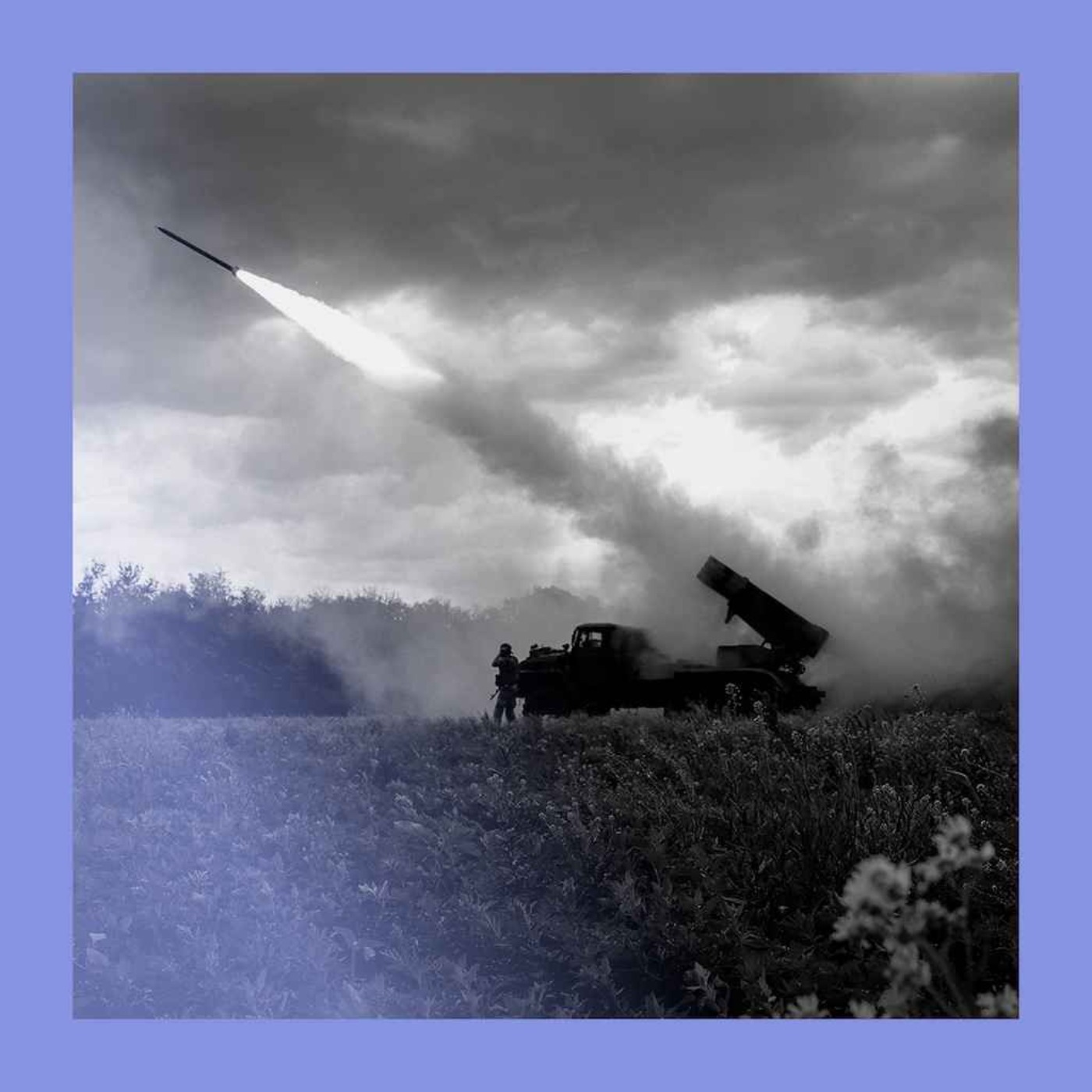
The Economist. Hello and welcome to the Intelligence from the Economist. I'm Jason Palmer. Today on the show, how Home Depot is America's housing market bellwether and the supply chain choke point for cricket bats. But first, The latest news from Ukraine paints a brutal picture of Russian intent. Missile and drone strikes on Kyiv over the weekend were among the worst of the war. Yesterday the Kremlin warned of more consistent, systematic strikes on the military industrial complex as opposed to the many civilian targets from the weekend. This is not the aggression of an invading force finishing the job. It seems more like the recklessness that comes with being on the back foot. Ukraine at last is doing more more than surviving. There's more hope on the ground than there has been in some time. But if victory comes, at what cost will it come? For the body politic,
- [02:13]
Jason Palmer
things have not looked this good for Ukraine for some time.
- [02:18]
Oliver Carroll
Oliver Carol is our Ukraine correspondent.
- [02:20]
Jason Palmer
A bitter winter has now given way to a story of momentum. But as Saturday's mass strike on Kyiv showed, Russia still remains a brutal adversary. The question still for Ukraine is how long its strategic reserve, its people and its resources can sustain the battle. And even if it can, what kind of country can survive?
- [02:44]
Oliver Carroll
So just give us a snapshot for the moment how Ukraine is doing on the battlefield.
- [02:48]
Jason Palmer
Ali the news from the front line is very promising. Ukraine is basically now inflicting casualties on Russia at rates faster than Russia is replacing. To give you an example, training for the most elite assault units is now down to basically 10 days. Usually it would be several months. Ukraine reckons 50,000 is the absolute ceiling of Russia's training capacity. I mean, to make it more would require structural changes, which you just can't bring about quickly. Now already it's showing 35,000 wounded and killed per month, and Russia has far less to show for these numbers than at any time before. I was speaking to presidential adviser Brigadier General Pavlo Palisa, and he was Saying that they're at least two years behind what are already scaled back timetables for taking the rest of Donbas, which I find listeners is the main political and military aim of Vladimir Putin at this point.
- [03:45]
Oliver Carroll
So what's changed? Why this period of momentum and success on the battlefield?
- [03:49]
Jason Palmer
Well, I think it's a combination. First of all, Russia were basically front loading an awful lot of their attacks in an attempt to show their might. On the Ukrainian side there's a new team at the Ministry of Defence and that's really turbocharged a change in the last few months there. More broadly, really key at the moment is the success they're having in extended range drone operations. And by that I mean on the one hand what we'd call intermediate range between 20 km up to a couple of hundred kilometers. And that's really hitting Russian supply lines, radars, ammunition dumps and so on. And then we're looking at also great success going thousands of kilometers inside Russia, hitting its defense industries, particular targets in the oil and gas industry. I've been speaking to commanders in charge of these units and they predict a full on air defence crisis for Russia by the autumn. And by that point it's anticipated that Ukraine's own ballistic program will be in line with and it's going to get very ugly in Russia. Ukraine's also benefiting from new lines of European cash. Now remember up until the departure of Viktor Orduban, there was a big question mark as to whether there would be consensus in the eu. Well, that's gone and his departure has cleared the way for a long promised 90 billion.
- [05:11]
Oliver Carroll
But as you say, this hasn't been, this won't be at no cost to Ukraine.
- [05:15]
Jason Palmer
Yes, and I mean the strikes on Saturday, Sunday morning really shows just the vulnerabilities which remain in Ukraine. And this has been one of the tensions actually playing out in the leadership. There have been different camps, those who basically say that Ukraine can benefit from a longer war because in time the effect on Russia's economy will be shown. The integration of Ukrainian industry with the European defense industries will come online and all of that will play into a longer term degradation of Russian potential. But others say, listen, you know, all the time that war goes on in Ukraine, it's Ukraine's critical infrastructure that's being frayed. First of all, and certainly from the civilian point of view, it really depends where you are. If you're a civilian in Kharkiv, you want this war to be over as soon as possible. The same of certain areas in Kyiv and the situation this Winter was pretty grim. The city was very close to being in total blackout.
- [06:12]
Oliver Carroll
And what about the national picture and the techy political picture you've described in the past? How are things at that high level?
- [06:19]
Jason Palmer
It's really hard to tell. But one thing we can say is that despite the grimness of the winter, public morale held. I've seen a survey which was commissioned by an American NGO which underlined that point. But it does also show that society is fracturing and there is an element which is increasingly worried about the direction of the country. And what was interesting actually in that survey was it. It wasn't actually, you know, the trauma and the exhaustion of war, which was pulling down as a demotivating factor. It was the idea of elite corruption and distrust of institutions like the presidency and so on. And the issue of conscription and injustices in conscription are increasingly controversial in society. And they hit a nerve. We have a huge number of people now awol, too scared to go out on the streets for fear of being picked up by draft officers. And we know that a lot of these people, when they're caught, are being sent as punishment to the front lines, to the kill zone positions from which many of them, frankly, a majority, won't be returning. We also have a breakdown in unity. Internal politics is a really difficult moment right now, with corruption scandals, implicating presidential circles, wartime centralization, and a sense that the President is very thin skinned about criticism. All of that is increasing the entropy in this political system, and it's not really clear where it will end up.
- [07:51]
Oliver Carroll
And to your mind, at this stage, is there a potential for a negotiated way out of this war, or is it attrition just right through to the end?
- [07:59]
Jason Palmer
There was a period at the beginning of this year where it looked like a deal might be possible. Right now those negotiations are off, and it doesn't look like they'll be opening soon. Some optimistic insiders will tell you things might happen in June. But really looking at the broader picture, you see Vladimir Putin, who is still addicted to the idea of taking control of Ukraine. So I think despite the difficulties on both sides, we're in for a prolonged period of fighting. And that's really where this question of how and who can survive this war without end comes in place. I understand that Zelenskyy has ordered preparations for the country to prepare for the next two or three years in war. And looking at the dynamics of the last six months, there's no reason to suggest it can't survive that long. But the question is, even if it does survive, that long. What is the Ukraine that will survive if it's an increasingly centralized, war worn, poor country? Well, that doesn't look like much of a victory to me.
- [09:06]
Oliver Carroll
Oliver thanks very much for joining us.
- [09:07]
Jason Palmer
Jason it's always a pleasure.
- [09:21]
Creative Planning Advertiser
Most of us don't think much about how money actually moves until something slows it down or makes it more expensive than expected. That friction is exactly what Bitcoin was designed to rethink. Bitcoin is often talked about as an investment, but it was built to be used with Cash App. You can actually do that. Send Bitcoin instantly, pay at local square businesses that accept it, or move it to your own wallet whenever you want. It works more like real money and less like something locked in an account for a limited time. New customers can get $10 added to their balance. Just use code CASHAPP10 when you sign up. And don't forget this part. Send at least $5 to a friend in the first two weeks Terms apply. Cash App is a financial services platform, not a bank. Banking services provided by Cash App's bank partners Bitcoin services provided by Block Inc. Brand for additional information, see the Bitcoin disclosures at Cash App Legal Podcast.
- [10:17]
Then I thought, what if I've scaled businesses? What if I scaled my philanthropy? What if I did as much in one year as I've done in my whole life?
- [10:24]
See how your wealth could have even greater meaning@creativeplanning.com impact.
- [10:37]
Vinjero
There is one economic indicator that can help us understand the state of the U.S. housing market. Home Depot. Home Depot is no ordinary retailer. It's the world's biggest DIY chain, and when sales drop or are flat, it can signal tough times ahead.
- [10:58]
Oliver Carroll
Weire is a news editor at the Economist.
- [11:01]
Vinjero
Long before most people saw the housing crash coming during the financial crisis in 2008, Home Depot sliding sales were already sounding the alarm. Their numbers dropped, and the housing markets soon followed. Then, once Covid hit, Home Depot's revenue surged along with the boom that followed the pandemic. And now, if you look at the current state of the housing market, Home Depot might have some clues as to what's going on.
- [11:26]
Oliver Carroll
Why is that? What are we seeing with Home Depot?
- [11:28]
Vinjero
Well, the tills at Home Depot just aren't as busy. Shoppers are still buying smaller items like gardening tools and paint, but they're not really starting large projects like kitchen and bathroom renovations. What that tells us is that America's housing market is gridlocked. Home prices have largely held up, but the home buying frenzy that we saw after the Pandemic has ground to a halt. Sales of existing homes over the past two years have fallen into their lowest level in three decades. And Home Depot's finance chief said recently that they had never seen housing activity this low for this long. So all this means fewer DIY projects, which is why Home Depot's annual sales in America have been falling or flat for three years.
- [12:15]
Oliver Carroll
And so what's behind the gridlock in the housing market?
- [12:18]
Vinjero
The spike in mortgage rates is a big part of the problem. The more expensive mortgages are, the less buyers can afford to pay for a house. Not only are higher rates putting buyers off, but homeowners with pandemic era fixed rates of 3% or below are reluctant to sell now that the average rate has risen to nearly 6.5% on a new 30 year mortgage. But another factor which I think is overlooked is homeowners unwillingness to sell at a loss. That loss aversion means that prices essentially haven't moved very much, but the number of sales has crashed.
- [12:56]
Oliver Carroll
This sounds like a fairly similar story in that here in Britain the housing market is also pretty cool.
- [13:02]
Vinjero
Yes. So similar factors have also frozen the market in Britain, where transactions remain subdued. Mortgage rates are obviously higher. But in both the US and in the uk, we're seeing that sellers are extremely reluctant to realize losses from their homes and so they're staying put rather than selling.
- [13:22]
Oliver Carroll
And so you're describing a sort of several year time scale effect going on here. All of this is only surely going to be made worse by the war in Iran.
- [13:30]
Vinjero
Yes, exactly. So before the war in Iran, America's housing market looked ripe for recovery. Unemployment was low, existing homeowners were sitting on near record equity, and affordability was improving in part because of rising incomes. But the closure of the Strait of Hormuz has sent energy prices rocketing. This threatens to drive up inflation and in turn mortgage rates. And so the housing market remains on ice.
- [13:58]
Oliver Carroll
So how to, how to melt that ice then? How to get things moving again and, well, things looking a little shinier for Home Depot?
- [14:05]
Vinjero
Well, until borrowing costs drop significantly, there are very few ways to actually get the housing market moving again, at least in the short term. Some homeowners have little option but to sell. So those undergoing divorces, for instance, or people moving for work. However, Home Depot can't rely on this trickle of transactions. So instead it's courting builders who tend to spend more than the DIY crowd. And they now account for half of Home Depot's revenue. And over the past few years, Home Depot has spent more than $30 billion, acquiring wholesale distributors that cater to professional contractors. But for now, plenty of its tills remain empty and offer a warning that the housing market is no longer working for people who need to buy or sell. And so in many ways, the housing market is broken.
- [14:58]
Oliver Carroll
Thanks very much for joining us, Vinjero.
- [15:00]
Vinjero
Thanks for having me. Jason.
- [15:17]
Andrew Rammer
May have a choke hold on rare earth minerals and Iran can close the Strait of Hormuz at will, but there's one corner of global supply chains that is forever England.
- [15:28]
Jason Palmer
Andrew Rammer writes about Britain.
- [15:31]
Andrew Rammer
High end cricket bats have massively increased in price recently and top models retail for well over £1,000. But almost all of them are produced from English willow. No other word provides the same ping, even when you grow the same species of tree in other similar climates like France or the Netherlands. The price of English willow trees has tripled since 2017, driven particularly by demand from the cricket mad and rapidly growing Indian middle class. I recently headed down to the Essex headquarters of J.S. wright Sons. They supply wood for about three quarters of the willow bats globally. When I got there, I was surprised to find the yard absolutely vibrating to the sound of chainsaw on willow. You see a stream of trucks coming in depositing willow trunks that they've sourced from across Britain.
- [16:36]
Jason Palmer
That has got a bit of woodness.
- [16:37]
Andrew Rammer
You see that there, it's not too much, but it just make it a
- [16:41]
Jason Palmer
bit harder for the bat maker.
- [16:42]
Andrew Rammer
So that brings down to a cult. They're then graded by one of the employees. It gives them a ranking from high to low, the end of the process. The vast majority of these clefts are stacked in shipping containers and sent over to India, where the final transformation from cleft to bat takes place. Business suggests right is booming. The 132 year old company employs about 100 staff, including contractors. Sourcing enough wood to meet the growing demands for cricket bats is a key challenge. An English Willow takes about 15 years to reach maturity. Each tree must be visited twice a year to remove the little side shoots that can lead to knots. And when they're felled, they have to be felled very carefully to preserve the grain and don't ruin the bat. JS Wright is planting up to 45,000 saplings a year at the moment. But Oliver Wright, the fourth generation to run this family firm, told me that they don't all make it to mature trees.
- [17:50]
Jason Palmer
We have to factor in deer damage, squirrel damage, beaver damage, lack of maintenance, all those sorts of things into the equation. So we tend to plant about three or four to one.
- [18:08]
Andrew Rammer
Cricket is a very ancient sport. Its laws were formulated well over 250 years ago. For most of that time, there was no formal restriction on the material from which a bat could be made. There was a notorious incident in 1979 when Australia's Dennis Lilly used a cheap aluminium bats as a marketing stunt for his friend's company. And after that, the Marylebone Cricket Club, which controls the rules, felt that they have to step in and codify for the first time that cricket bats need to be made of wood. Now the Marylebone Cricket Club, the arbiter of the game, taking steps to increase affordability of bats while preserving the balance of power between batters and bowlers. Amateurs will be allowed to use bats with blades that are laminated from up to three pieces of wood for the first time, but the expectation is very much that professionals will continue to use a single piece of willow. The Marylebone Cricket Club is very much open to the idea of using alternative materials for bats, but the MCC's Fraser Stewart told me they really don't want an arms race. As you've seen in tennis or golf,
- [19:17]
Jason Palmer
if someone can come up with a bat that is far more cost effective,
- [19:23]
Andrew Rammer
that performs in that sort of narrow performance window.
- [19:26]
Jason Palmer
Because if they're too bad down here,
- [19:29]
Andrew Rammer
people won't use them and if they're
- [19:31]
Jason Palmer
too good up there, we won't allow them.
- [19:41]
Andrew Rammer
Well, suppliers like Jas Wright, by sourcing as much willow as possible, trees take many years to mature. The challenge in the meantime for the arbiters of cricket is to keep the nature of this ancient game as unchanged as possible, while stopping and becoming just a pastime for the rich.
- [20:14]
Oliver Carroll
That's all for this episode of the Intelligence. We'll see you back here tomorrow.
- [20:39]
Creative Planning Advertiser
Then I thought, what if I've scaled businesses? What if I scaled my philanthropy? What if I did as much in one year as I've done in my whole life?
- [20:46]
See how your wealth could have even Greater meaning@creativeplanning.com Impact
- [20:53]
during Memorial Day at Lowe's Shop Household must haves for less save $80 on a Char Broil Performance Series 4 burner grill to chef up something special plus get up to 45 off select major appliances to keep things fresh. Our best lineup is here at Lowe's. Lowe's we help you save valid through 527 while supplies last selection varies by location. See lowe's.com for details.
- [21:16]
Jason Palmer
Visit your nearby Lowe's.