Loading summary
Transcript80 lines
- [00:01]
Narrator
Today's markets move fast. Get the insights you need in 10 minutes with the Barclays Brief, a new podcast from Barclays Investment Bank. Through sharp dialogue and scenario based analysis, our leading experts analyze key market themes each week. So whether you're managing a portfolio or leading a business, the Barclays Brief podcast can help you make smarter decisions today. Stay sharp, stay brief. Find Barclays Brief wherever you get your podcasts.
- [00:33]
Sponsor Announcer
This intelligence podcast is sponsored by Back Market, the leading global marketplace for refurbished tech. When the kids need phones, laptops or tablets for school, buying refurbished tech makes sense for families trying to save money without sacrificing quality. At backmarket tech costs up to 50% less compared to new. All devices have been professionally refurbished and come with a 1 year warranty and 30 day return policy. Start saving money. Visit backmarket.com or the back Market app to shop now.
- [01:06]
Jason Palmer
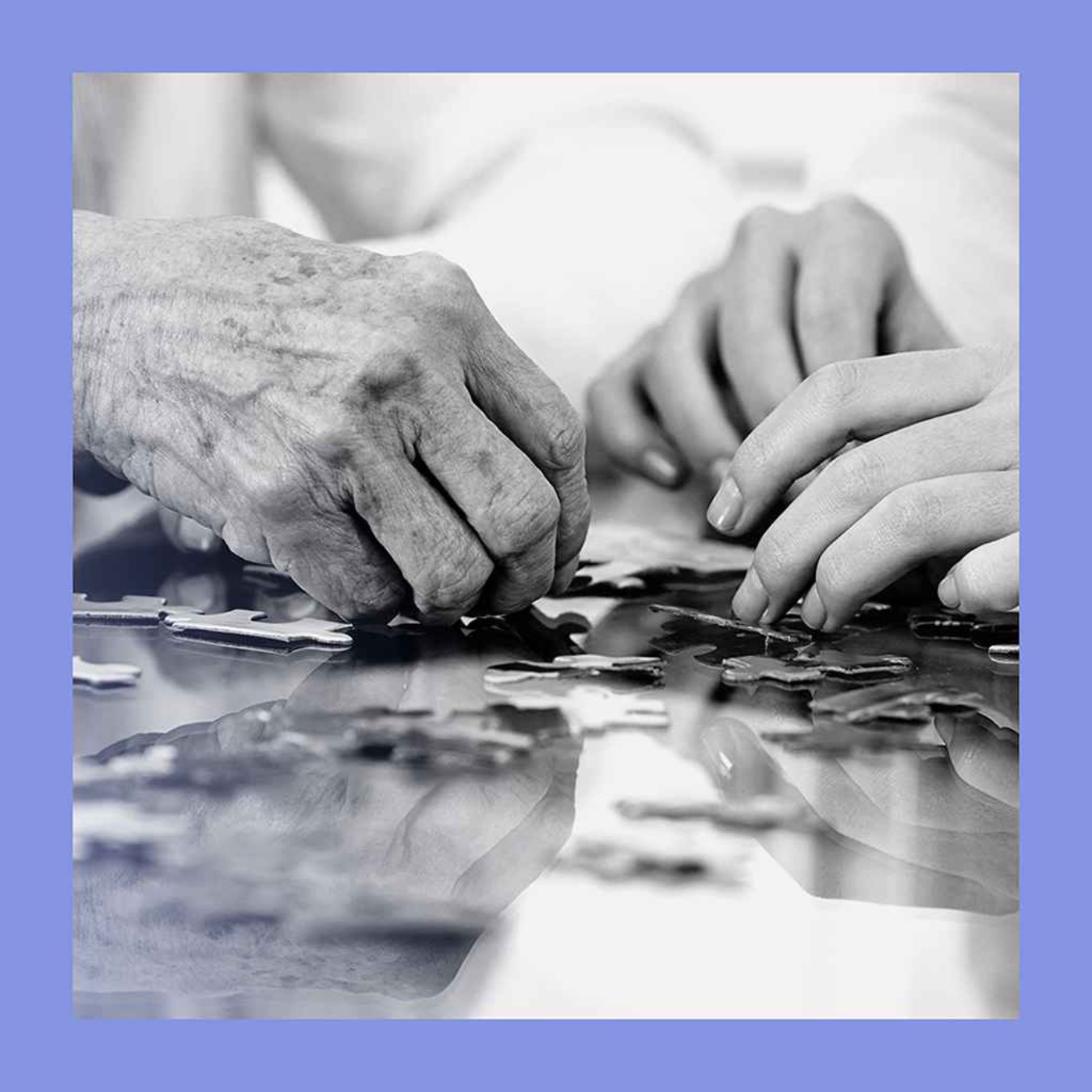
The economist. Hello and welcome to the Intelligence from the Economist. I'm Jason Palmer. Today on the show, the one person who hates Brazil's beloved digital payment system and proof that emo music wasn't just a phase. But first, There are lots of things we can all expect to lose as we grow older. Muscle mass, flexibility, deft use of the latest technology. But what really inspires fear is the possibility of losing memory, possibly losing oneself altogether to dementia. Happily, a close look at the data suggests there's steadily less and less reason to worry.
- [02:10]
Jonathan Rosenthal
There has just been this absolutely astonishing decline in the rates of dementia over the past 40 years.
- [02:16]
Jason Palmer
Jonathan Rosenthal is an international correspondent at the Economist.
- [02:20]
Jonathan Rosenthal
So just to give you an example, between 1988 and 2015, the share of older people with dementia fell by 13% a decade across six countries in North America and Europe. But perhaps even more staggering, in the 1980s, three in every ten people in their late 80s had dementia, and that rate has now gone down to roughly 1 in 10. But it also seems as if a lot of the declines seem to be happening in rich countries and actually part of the burden of dementia will be shifting to much poorer.
- [02:53]
Jason Palmer
This is sort of surprising. There had been a sort of general narrative that the dementia problem was getting bigger, not smaller.
- [03:01]
Jonathan Rosenthal
Yes. So, Jason, many people think it's going up. And part of the reason is just that the single biggest risk factor for dementia is age. That as you get into your late 60s or 70s, the risks of getting dementia pretty much double every five years or so. The fact is we thankfully are living longer. And then you've got this huge baby boom generation coming through. So we've got a lot more old people in the pipeline. And just on that kind of mechanical maths, people have been projecting these really astronomical increases. So much so that when I started talking to researchers who'd really dived in and actually looked at the rate per cohort, the age adjusted rate, some of them just couldn't believe the numbers themselves. One of them, a lovely fellow, Eric Stallard from Duke University, held off publishing for two and a half years while he just kept on going back over that data to check that he hadn't made any mistakes.
- [03:53]
Jason Palmer
So then the instant million dollar question is, what's behind the decline?
- [03:57]
Jonathan Rosenthal
Oh, that really is the million dollar question. And researchers are still really puzzling over what the exact kind of mechanisms are, what's going on in the brain chemistry that is causing a lot of these dementias. So we've had this amyloid hypothesis that it's caused by these kind of tangles of proteins in the brain. But actually researchers are not sure whether that is the cause or a symptom of dementia. So that's the kind of. No, we don't really know part of the answer. But the yes part is that there is some really good data that's been coming out about what are the sorts of things that are associated with higher or lower rates of dementia. And that is where the really promising research is going.
- [04:33]
Jason Palmer
Part of what we. Well, what I thought I knew about this is that the causes are at least partly genetic.
- [04:39]
Jonathan Rosenthal
So we know there is a huge genetic component to risk for dementia. And unfortunately, people can't change their genes, they can change their behaviors. Now, the particular gene that is associated with this is APOE4. And the 25% of the population or so that have one copy of that APOE4 gene have got a much higher risk of dementia. I think it's about two to three times higher. And a subset of them, about 2% of the population, have got two copies of that gene. And the risk for them is about 10 to 15 times higher. But again, those genes are very often just associations. So a lot of people who've got those genes don't get dementia, and a lot of people who don't have those genes do get dementia. And that's where researchers have been looking into other factors. And a lot of that is down to lifestyle.
- [05:24]
Jason Palmer
What do you mean by lifestyle, though? Tell me about that.
- [05:26]
Jonathan Rosenthal
A lot of this research came out of Finland. Actually, the eastern part of Finland bordering on Russia, had astronomically high, the world's highest rates of things like heart attacks. And that's because there were hard living, hard drinking, hard smoking, People living in those regions. And the Finnish government set out to try and reduce heart attacks, getting people to eat better, getting people to exercise, reducing obesity, getting them to stop smoking and monitoring them over the following decades. And what came out of that was actually the people who followed this lifestyle guidance didn't just have way fewer heart attacks, they also had way less dementia. So the other kind of really valuable thing that's come out of Finland is because they had all of that data and could go back and see these associations, they've now been able to go back and do randomized controlled trials RCTs, which, as you know, are the gold standard in research, whether you select people, randomly, divide them into two groups and give one lot an intervention and the other lot a placebo and see what changes. And they've run these RCTs in Finland, Sweden and the UK, initially, again, where they were able to say, these factors are now proven to reduce the rates of dementia.
- [06:33]
Jason Palmer
And that is beyond simply not smoking, not being obese, not having high blood pressure and so on.
- [06:39]
Jonathan Rosenthal
Yeah, so it goes way further than that. In the past five, six years, there's been a huge increase in the number of modifiable risks factors that researchers have identified. In fact, the Lancet Commission on Dementia, which is seen as the authoritative body, has come out with work that says that up to 45% of all dementia cases could be prevented or postponed through various interventions. Now, some of those are lifestyle, the ones we've talked about, some of those are medical. So it's things like treating high blood pressure, high cholesterol, and some of it are things that you might not necessarily expect. For instance, they found that untreated hearing loss in midlife is associated with more dementia. Depression in midlife that's untreated can be associated with greater risks of dementia. So there are a lot of factors that we can modify, and some of the factors that are coming out are things that are unfortunately outside of our individual control, but certainly within the power of governments and society. It turns out that giving kids better education when they're young helps reduce their risks of dementia later in life.
- [07:42]
Jason Palmer
So, as you say, some of those are surprising lifestyle choices or factors, social factors, even. But what about the sort of active interventions we hear a lot, including on this show, about drugs to treat or even prevent dementia.
- [07:57]
Jonathan Rosenthal
One of the most exciting findings that's come out in recent years has been a really simple intervention and cheap, that has this massive impact, and that is the shingles vaccine. So there is really good data from these kind of Natural experiments where countries have introduced the shingles vaccine to prevent shingles, nothing else. And usually it's done with a catch off date for your birthday. So someone who turned 70 a week before doesn't get the jab, but someone who turns 70 a week after the cutoff date does get the jab. And we found that there is a 20% reduction in the risk of getting dementia over the following seven years, according to the data that's out there at the moment. And some of the researchers think it probably extends well beyond that. So that is a massive effect for such a cheap and simple intervention. When one comes down to other things like drugs, a lot of the big pharmaceutical companies have been focusing on molecules that go into the brain and try to rip apart those protein tangles that clog up the brains of people with Alzheimer's, and those have been pretty disappointing. The studies have shown that they have some effect, but it's really quite minor. People get a few months of better cognition at great cost and actually often at great risk. They're really disappointing. Disappointing finding with those drugs is that carriers of the APOE4 gene that we discussed earlier are more likely to have things like swelling or bleeding on the brain if they take these drugs than other people. So that's been a disappointment so far. But researchers are now looking at various other classes of drugs that are meant to do other things. So GLP1s for weight loss, there's been a lot of thinking that could have an impact. The early studies have looked at people who've already got dementia and put them onto those drugs, and those have been disappointing. It doesn't help. But the question now is, can it help if those Drugs are given 10, 20 years in advance of any symptoms of dementia, because they are controlling things like obesity that we know are associated with it. So there is hope that those kinds of earlier interventions can help.
- [09:59]
Jason Palmer
I suppose what's really useful here is the public knowing what the risk factors are and avoiding them if they know them. Not unlike the drop in the number of smokers in the world. But also, as you say, there are real policy interventions here as well.
- [10:13]
Jonathan Rosenthal
Yeah, that's right. So, of course, there are many lifestyle things that we can do that we know are good for us, but very few of us do all of the things we're meant to do. So it's really important, I think, for policymakers to focus on some of the interventions and some of the research that lowers the barriers to getting those improvements, things like the shingles vaccine. There really needs to be a lot more of that kind of money and research going into this field. But part of the problem is much as we're asking people to do things that they know are good for but are quite difficult to do, we're asking governments to put money behind things that certainly good for the public finances in the longer run that'll save them money. But we know that cash strapped governments, cash strapped health systems are really just fighting fires. They're struggling to put money behind prevention as it is, and asking them to be doing even more of that feels like really a big ask at the moment.
- [11:02]
Jason Palmer
Jonathan, thanks very much for joining us.
- [11:04]
Jonathan Rosenthal
Thank you.
- [11:21]
Narrator
Hello.
- [11:23]
Jason Palmer
You may have seen in the digital ether that one of our interviews has been making a lot of waves.
- [11:29]
Jonathan Rosenthal
I'll make another prediction. Money won't matter in 2036. I think I got a little too involved in politics, got carried away, frankly.
- [11:36]
Jason Palmer
Elon Musk sat down with the Economist for his first long interview since the IPO of his firm SpaceX. He has a lot of thoughts about AI and where he sees things going.
- [11:47]
Jonathan Rosenthal
If you ask me on any given day, in fact, even intraday, I've gone from exhilaration to terror regarding AI. I sort of want the Star Trek Star wars future.
- [12:00]
Jason Palmer
Our editor in chief, Zanny Minton Beddoes, as ever, calls them as she sees them.
- [12:05]
Carlos Sugirana
Some people do loathe you.
- [12:06]
Jonathan Rosenthal
Yes, some people do.
- [12:07]
Carlos Sugirana
But do you understand why they hate
- [12:09]
Jonathan Rosenthal
you far more than they hate me?
- [12:13]
Carlos Sugirana
Are you anti Muslim? You're an ongoing participant in the worst kind of tribalism cesspit of social media. Like, how does that fit? They're two very different views of the world.
- [12:25]
Jason Palmer
The full interview is now available for free on YouTube and in the feed for the Intelligence. I'm not boring.
- [12:31]
Carlos Sugirana
You're definitely not boring.
- [12:33]
Jason Palmer
For full access to insider interviews the moment they publish, subscribe to the Economist. You'll find our best offers in the show Notes.
- [12:46]
Jonathan Rosenthal
Then I thought, what if I've scaled businesses? What if I scaled my philanthropy? What if I did as much in one year as I've done in my whole life?
- [12:53]
Sponsor Announcer
See how your wealth could have even greater meaning@creativeplanning.com impact. Most people don't realize how much of their personal information is being bought and sold every day. Data brokers are making billions, pulling details about you from public records and the Internet, then packaging and selling it, usually without your consent. That's how your information lands in the hands of scammers, spammers, even stalkers. It's why you get endless robocalls and why ads seem to follow you everywhere. That's where Aura comes in. Aura actively removes your data from broker sites and keeps it off. They also instantly alert you if your information shows up in a breach or on the dark web. But Aura goes beyond data protection. With one app, you get a vpn, antivirus, password manager, spam, call protection, dark web monitoring, and even up to $5 million in identity theft insurance. All backed by 24. 7 US based fraud support. Other companies might sell just credit monitoring or just a vpn. Aura gives you all of it together at the same price. Competitors charge for just one service. Start your free trial today@aura.com safety. Protect yourself now@aura.com safety.
- [14:15]
Jason Palmer
When the average Brazilian running errands and doing everyday shopping gets to the till, they're overwhelmingly likely to be using pics. It's a digital payment system introduced in 2020. People basically love it. Well, except for one person in particular, President Donald Trump.
- [14:33]
Carlos Sugirana
When I started reporting on this story and I contacted Brazilians, they just kept sending me memes and pictures of T shirts showing their support to the payment system because it's sort of become a source of national pride for Brazilians.
- [14:51]
Jason Palmer
Carlos Sugirana is a news editor for the Economist in London.
- [14:54]
Carlos Sugirana
So it's quite surprising to see something as unassuming as a payment system come under fire from Donald Trump's tariff regime.
- [15:05]
Jason Palmer
Before we get into the inevitable Trump angle, tell me about pix. What is it?
- [15:10]
Carlos Sugirana
So PIX is Brazil's instant digital payment system, which was created by the country's central bank. And basically it lets people send money to each other instantly, 24 hours a day and completely free. In most cases, you just need a phone and a QR code. And it has been a huge success. Around 80% of Brazilians use it, and it accounts for more than half of all payment transactions in the country. So for millions of people, paying with pigs has sort of become as normal as using cash once was.
- [15:45]
Jason Palmer
So why is it that so many Brazilians use it?
- [15:47]
Carlos Sugirana
PIX basically filled a hole and solved a problem that the private sector hadn't. Because before pix, electronic payments often came with fees, which meant that many poorer Brazilians relied on cash because digital payments were too expensive. So the central bank estimates that around 70 million people have entered the formal financial system since PIX was launched. So it's had sort of a democratizing effect across the payments ecosystem.
- [16:17]
Jason Palmer
And why does it tweak President Donald Trump?
- [16:20]
Carlos Sugirana
Well, the Trump administration spent a year investigating Brazil's trade practices, and it concluded that some of them were unfair to American businesses. And so recently it announced a 25% tariff on a range of Brazilian imports, and PICS ended up on that list. And the case against PICS, it basically rests on two assumptions. The first is, is that it damages American payment companies, basically Visa and MasterCard. And the second is that it's a protectionist tool. So basically, because it is operated and regulated by Brazil's central bank, the Trump administration says that the government is giving its own payment system an unfair advantage over other private competitors.
- [17:05]
Jason Palmer
What's your take on those accusations?
- [17:07]
Carlos Sugirana
Well, so what I think is that some of the complaints about Brazil's trade policies do have a point, like Brazil isn't exactly a champion of free trade. But the case specifically against PIGS is very shaky because there's very little evidence that PIC discriminates against American payment companies, because any financial institution that's licensed to operate in Brazil, whether it's Brazilian or foreign, can connect to PIC s on exactly the same terms. So there aren't any separate rules for domestic or foreign firms. And it is true that some people have concerns about the way that PICS is governed because the central bank both operates the system and regulates it. Basically, there are worries about issues around, like the concentration of data or the fact that there's a single operator managing such an important system. And those are legitimate questions, but they're completely different from saying that foreign companies are being treated unfairly. A government's routinely build and regulate essential infrastructure, like think about roads, railways, or electricity grids. And what's happening here is that Brazil has applied the same model to payments.
- [18:20]
Jason Palmer
And the assumption then that that in some way harms American providers like Visa and MasterCard, that doesn't have any footing.
- [18:28]
Carlos Sugirana
Yeah, actually the evidence points the other way. Like Pixa's biggest competitor hasn't been Visa or MasterCard. It has been cash. And if you look at the data, actually, credit card use has risen a lot since PIX was introduced. And the same is true for even debit cards. They have risen a bit less. But other forms of electronic payments have continued to increase.
- [18:52]
Jason Palmer
So if there's no foundation for these accusations, what do you think is actually going on here? What is it that's really, actually tweaking?
- [18:58]
Carlos Sugirana
Donald Trump Basically, the first is that in the long run, PIX could put pressure on companies like Visa and MasterCard. Although users are growing, they will lower eventually the fees that merchants pay for payments. But that's competition. Like, that's how markets are supposed to work and lower prices for consumers and businesses aren't considered unfair trade practices. And then another concern may be that Pix becomes a model for other countries in Latin America, because if more countries build similar instant payment systems, American card networks could lose more influence and revenue across the region. But I will say that I think that fear is also probably overstated, because Pix was the product of a very unusual set of circumstances. Brazil has a very powerful and highly trusted central bank which had the authority to require the country's banks to participate. And it also had a huge domestic market where millions of people relied on cash. So there was a lot of demand for a free digital alternative. And there are very few countries in Latin America that have those combination of factors. So Pix is actually much harder to replicate than many people assume. And you can see this with what happened in Mexico, which launched its own own version of pics in 2019, but it really never took off because unlike Brazil, the Mexican central bank didn't require major banks to adopt it. And so by 2024, only around 1.6% of Mexicans were using it. So that kind of shows how unique Brazil experience has been.
- [20:43]
Jason Palmer
So in the end, really, really, truly no reason for America to be so bothered by pics. What do you think is going to come from it by having pics in its sights anyway?
- [20:53]
Carlos Sugirana
Well, I think this has spectacularly backfired, and the biggest beneficiary may actually be Brazil's president, who's known as Lula and who is up for re election later this year because Brazilians are incredibly proud of pigs. It's sort of like one of the few things that commands broad support across the political spectrum because almost everyone uses it. And since Trump stars were announced, there have been been loads of memes defending pics spread through social media. So it's really become a symbol of resistance to what many see as foreign interference in Brazil's affair. So I think that rather than undermining it, those attacks seem to have strengthened its status as a source of national pride.
- [21:41]
Jason Palmer
Karla, thanks as ever for your time.
- [21:43]
Carlos Sugirana
Thank you, Jason.
- [21:55]
Narrator
It was a showcase of theatrics as much as it was of music.
- [21:59]
Jason Palmer
Sarah Larniuk is the deputy editor of the Intelligence.
- [22:02]
Narrator
The band was My Chemical Romance, an emo band that gained notoriety in the 2000s before then breaking up in 2013. But this month, Mikem kicked off its world tour to mark the 20th anniversary of the release of their album the Black Parade. When I was a young boy, my father took me into the city to see how I'm marching back and they started their tour With a bang, They went about creating a political satire of sorts on stage, illustrating the savagery of authoritarianism backed by their music. This following program is brought to you
- [22:48]
Jonathan Rosenthal
by the Ministry of Complementary Reconditioning.
- [22:52]
Narrator
Frontman Gerard Way remained in character throughout the set, dressed in a bandleader's uniform, and he introduced the audience to the regime's fictional ruler, enthroned and stroking a Cordy plushie. Ladies and gentlemen, put your hands together and make some noise like our lives depend on it. For his grand immortal detector, the fans too rose to this call for theatrics in true emo fashion. Thick black eyeliner, side swept fringes along with fishnets studded belts, all on full display. But some went even further. I found a wig, found a veil for like two quid on vintage Nesre, came dressed as the mourning bride from one of the band's music videos, holding throughout the concert a bouquet of roses. The worst part was the tube before the emo started getting on. And while the show was remarkable, its success is emblematic of a much bigger trend. My Chemical Romance filled Wembley Stadium in London with a 90,000 seat capacity for three nights this month, and they did it after not releasing any music since 2008. Few acts have managed to cultivate such demand after so long away. In the last decade at Wembley, the only bands that have been able to achieve those kinds of ticket sales with no new album release are Oasis and Spice Girls. Emo is short for emotional hardcore, and it evolved from the punk of the 80s and 90s. It was hallmarked by the deeply introspective lyrics, often depicting difficult topics like addiction and suicide. And with the genre's revival now, many other bands are seeing ticket sales that top what they were able to achieve when the genre originally peaked in the mid-2000s.
- [24:46]
Jonathan Rosenthal
Leaning now into the breeze,
- [24:52]
Narrator
All Time Low played London's O2 arena in January, which was the band's biggest show to date.
- [24:57]
Jonathan Rosenthal
I said it a little bit earlier
- [24:59]
Narrator
this evening, but we have been a
- [25:00]
Jonathan Rosenthal
band for going on 23 years now. It's fucking crazy. It blows our minds every day that we have managed to stick around for
- [25:06]
Narrator
as long as we have.
- [25:07]
Jonathan Rosenthal
When we started this thing.
- [25:09]
Narrator
Jimmy Eat World played its biggest headline show in November 2024 at London's Alexandra Palace. All I can say and they will return to the city this month for an encore. The trend has been building for years. When we were young, a festival that brings a lot of the big names in emo music Together launched in Las Vegas in 2022 and proved there was still a large audience to be tapped. And last summer, the emo pilgrimage known as Van's Warp Tour, returned for its 30th anniversary with dates across the U.S. canada and Mexico. The crowds at these shows span generations. Millennials, also now known as elder emos, are out in force and sometimes even bringing their kids along. I mean, and we're all really excited. Are you gonna sing really loud? Yeah, yeah. Iris, at 5 years old, was among the youngest attendees at the My Chemical Romance concert. Have you guys been seeing other shows then?
- [26:10]
Jonathan Rosenthal
Oh, 100%, yeah. Smaller shows.
- [26:12]
Carlos Sugirana
Not.
- [26:12]
Jonathan Rosenthal
Not arena shows like this.
- [26:13]
Narrator
Meanwhile, Gen Z truly seemed to be the most visible in these crowds, even though most of them discovered the bands after they stopped touring. They broke up when I was. I think I was 13ish.
- [26:24]
Carlos Sugirana
And I remember thinking, like, oh, man,
- [26:25]
Narrator
I'm not gonna be able to see them live ever. And then they came back and they were like, oh, we're doing shows now. And I was like, okay. This renaissance is no doubt part of a wider Y2K nostalgia trend. But for fans, one thing I heard again and again was that this was a genre that just encouraged people to be their weirdest selves and that that was okay. I feel like a lot of people who are emo are all like, a bit neurodivergent, a bit queer and a bit weird. And so it seems the heavy eyeliner and adolescent angst are here to stay. As emo's old refrain insists, it was never just a phase. We are the 52nd Regiment of the Black Parade.
- [27:02]
Jonathan Rosenthal
We shall drink for Regiment Zero.
- [27:15]
Jason Palmer
That's all for this episode of the Intelligence. We'll see you back here tomorrow.
- [27:38]
Sponsor Announcer
Most people don't realize how much of their personal information is being bought and sold every day. Data brokers are making billions, pulling details about you from public records and the Internet, then packaging and selling it, usually without your consent. That's how your information lands in the hands of scammers, spammers, even stalkers. It's why you get endless robocalls and why ads seem to follow you everywhere. That's where Aura comes in. Aura actively removes your data from broker sites and keeps it off. They also instantly alert you if your information shows up in a breach or on the dark web. But Aura goes beyond data protection. With one app, you get a vpn, antivirus, password manager, spam, call protection, dark web monitoring, and even up to $5 million in identity theft insurance, all backed by 24. 7 US based fraud support. Other companies might sell just credit monitoring or just a VPN Aura gives you all of it together at the same price competitors charge for just one service. Start your free trial today@aura.com safety. Protect yourself now@aura.com safety.