Loading summary
Transcript58 lines
- [00:00]
BetterHelp Announcer
BetterHelp online therapy bought this 30 second ad to remind you right now, wherever you are, to unclench your jaw, relax your shoulders, take a deep breath in and out. Feels better, right? That's 15 seconds of self care. Imagine what you could do with more. Visit betterhelp.com randompodcast for 10% off your first month of therapy. No pressure, just help. But for now, just relax.
- [00:42]
Rosie
Mom.
- [00:42]
Blue Apron Spokesperson
I like to propose a dinner optimization plan for 2026 soccer practice every week. Get back late and you're stressed out about making something fast but actually nutritious for dinner. When Ashley's mom picked me up, I noticed that she made Blue Apron. It came like a little kit and by the time it was ready, I still had shin guards on and it was real fresh. Veggies, protein, actual flavor. Take it from the younger generation, we're innovators. Giving a couple Blue Apron meals around. Not the worst idea. Get $50 off your first two orders.
- [01:07]
Blue Apron Announcer
Plus free shipping with code STIR50 Terms and conditions apply. Visit blue apron.com terms for more.
- [01:17]
Jason Palmer
The economist. Hello and welcome to the Intelligence from the Economist. I'm Jason Palmer.
- [01:29]
Rosie
And I'm Rosie. Every weekday we provide a fresh perspective on the events shaping your world.
- [01:39]
Jason Palmer
A little bit of economic lingo for you. Exorbitant privilege. It's the benefit that a country gets when its currency is what other countries save and deal in. As part of our World Ahead series, we look at how America's privilege may be in danger in 2026.
- [01:57]
Rosie
And fancy handbags used to be the very definition of a desirable good. Cradled for all to see how wealthy and fashion forward you were. And a walking advert for the luxury brand. Now shoppers are questioning their worth. Have designers left the craft out of their bags?
- [02:17]
Jason Palmer
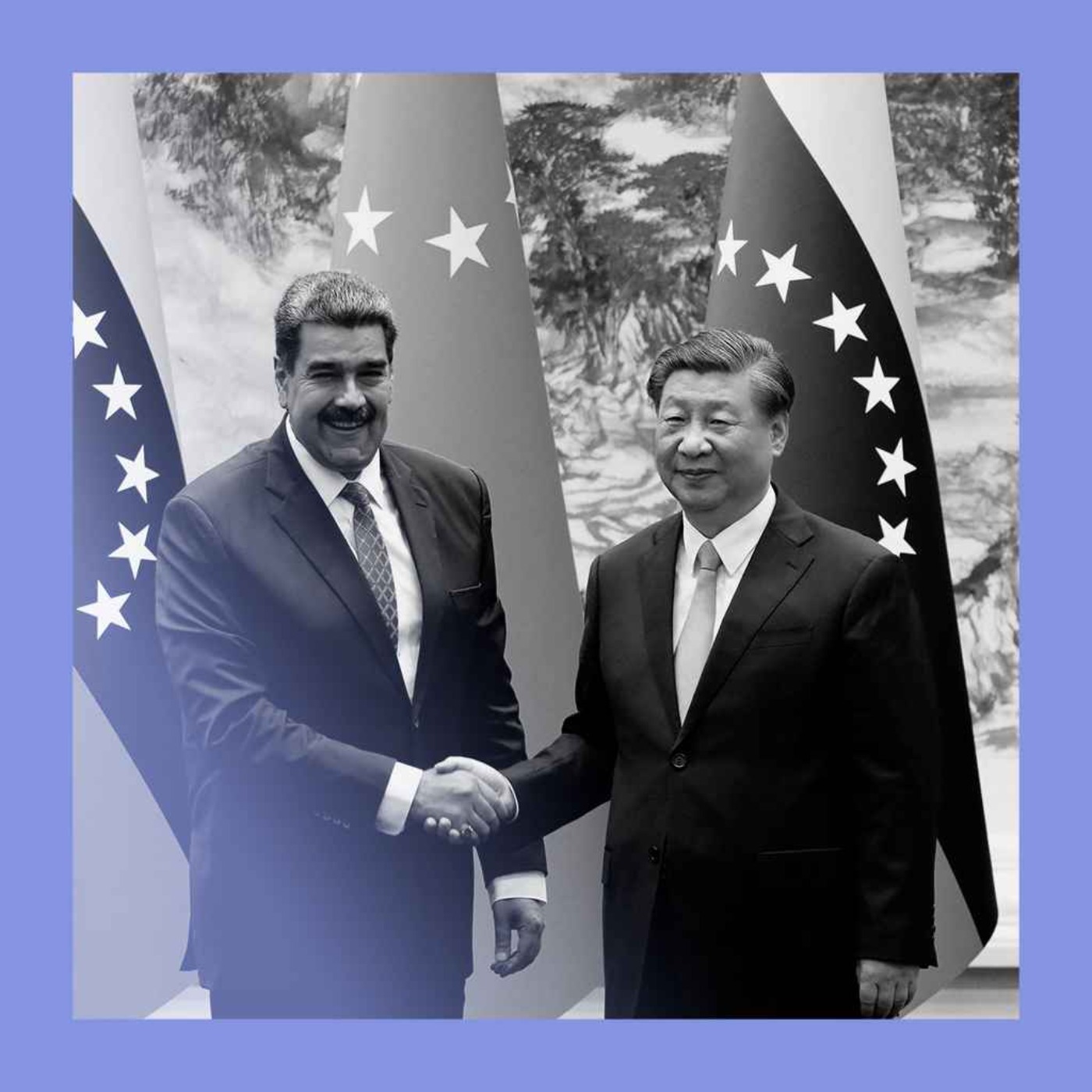
But first, So much attention has been spent on the fine detail of the American mission to snatch Venezuela's president Nicolas Maduro and his unplanned trip to the US but let's go back in time just a tiny bit to the last foreign visitors he met with. Just hours before, he met with American special forces, a delegation of senior Chinese diplomats led by President Xi Jinping's special envoy for Latin America. Afterwards, Mr. Maduro took to Instagram. China and Venezuela united, he wrote. Fast forward a couple of days and that union maybe doesn't look like Venezuela or China's other pals around the world thought it did.
- [03:07]
Aaron Connolly
China is Venezuela's most important ally in Asia. It is condemned the operation. It has called for Maduro's release.
- [03:17]
Jason Palmer
Aaron Connolly is our Asia diplomatic editor.
- [03:20]
Aaron Connolly
It has some important infrastructure investments in Venezuela, But China doesn't appear to be willing to go beyond rhetorical support.
- [03:30]
Jason Palmer
Well, let's talk about what it is that links China and Venezuela in the first place.
- [03:35]
Aaron Connolly
China is absolutely important to Venezuela, and it would not have been able to resist American pressure over the last couple of decades without Chinese support. China invested in Venezuela as part of its effort to expand its own influence in Latin America. It's Venezuela's largest creditor. It's the largest buyer of Venezuelan oil. But Venezuela is not that important to China. It was meant to be a beachhead of Chinese influence in Latin America, and that's why they invested so much money in the country over those two decades. But China's primary interests are still in Asia. And as far as those interests go, the loss of Venezuela won't affect thinking in Beijing that much.
- [04:18]
Jason Palmer
And what about the region more broadly? What have other Asian countries responses been to what's happened in Venezuela?
- [04:24]
Aaron Connolly
Well, North Korea, like China, has condemned the United States actions. Other countries have been a lot more cautious, and they basically fall into two buckets. American allies, in some cases, haven't even really addressed the situation at all. Japan released a statement that was almost entirely focused on the consular assistance that it was offering to provide Japanese citizens who are stuck in Venezuela. And other American allies responded with pretty tepid statements. They're very worried about their relationship with the United States. And while some of these states really do care about Article 2 of the UN Charter and its protections for territorial integrity and preventing things like invasions, they're more concerned about the relationship with the United States right now. And so that's driving their response. And then other countries that are not American allies, you might think that they'd be more willing to speak out against this action. And Malaysia comes close, and it has a tradition of doing this. But other countries that have a tradition of speaking, speaking out against American actions against governments in the Global south, like Indonesia, have really kind of pulled in their horns. They don't seem to be willing to condemn America at a time when they're all worried about American tariffs and what kind of effect that would have on their economies.
- [05:32]
Jason Palmer
But what about the degree to which what America did in Venezuela sets a precedent for China in its thinking about retaking Taiwan?
- [05:41]
Aaron Connolly
I don't think it does. China thinks about Taiwan as an internal matter. So international law was never one of the things, things that was holding back China from attempting an operation against Taiwan. The other thing is this is a very different operation from what China intends to do to Taiwan. It wants the whole island, not just a single leader. And the main thing protecting Taiwan from that kind of operation is China's fear that America would intervene to prevent it. And so it's really American military power that is preventing China from executing an attack on Taiwan.
- [06:15]
Jason Palmer
But what about the notion of a kind of propaganda win for China here? If America is gravely bending the international order, not being the leading light of freedom that it claims to be, and so on, surely that at least is a big win for China at this point.
- [06:29]
Aaron Connolly
Of course, China will say that this proves what they've been saying all along about America, that it's not an upholder of international order and that it's not as moral as it says. But I think the more important opportunity here for China, it's going to be very difficult to control Venezuela. If you're the United States, it's going to be very difficult to achieve an outcome in which Venezuela is stable in the next several months to years. And China has a real interest in making sure now that Venezuela isn't stable, it could really cause a problem for America in its own hemisphere.
- [07:02]
Jason Palmer
We've been talking this whole time about what China may or may not get out of this, how it feels about this. What about Venezuela, which might have expected China to come to its rescue?
- [07:11]
Aaron Connolly
Yeah, well, you know, in that respect, this really does show the limits of China's muscle and power around the world. It may very well have expected a lot more support from China than just rhetorical support and statements, and China wasn't able or was unwilling to provide that. And so if you're another Chinese ally or friend around the world, you might be thinking about just how much support your friendship with China will actually provide you.
- [07:39]
Jason Palmer
But what are the chances that outcome, that revealing of weakness in terms of China's international entanglement was actually part of the administration's intent in what it did in Venezuela.
- [07:49]
Aaron Connolly
Yeah, absolutely. And, you know, I think Marco Rubio said as much over the weekend. And this goes back to the national security strategy that the United States released in early December, in which it said that it was determined to assert American power to control resources in the Western Hemisphere. And so they probably do want to make an example of Venezuela. Whether they can do that or not still remains to be seen. But if you are a Latin American country that is thinking about accepting Chinese investment in your energy infrastructure, you may think about potential downsides of that relationship based on what happened on January 3rd.
- [08:27]
Jason Palmer
Thanks very much for joining us, Aaron.
- [08:28]
Aaron Connolly
Thanks, Jason. Nice to talk to you.
- [08:44]
Blue Apron Announcer
So here's the thing with homemade meals. Eating them is great but all the chopping and measuring and cleanup, not so much. With new one pan assemble and bake meals from Blue Apron. You get all the flavor of homemade meals with a fraction of the work. Just assemble the pre chopped ingredients, bake in the oven and enjoy. Shop assembleandbake@blueapron.com Get 50% off your first two orders with code apron50. Terms and conditions apply. Visit blueapron.com terms for more.
- [09:14]
BetterHelp Announcer
BetterHelp Online Therapy bought this 30 second ad to remind you right now, wherever you are, to unclench your jaw, relax your shoulders, take a deep breath in and out. Feels better, right? That's 15 seconds of self care. Imagine what you could do with more. Visit betterhelp.com randompodcast for 10% off your first month of therapy. No pressure, just help. But for now, just relax.
- [10:03]
Rosie
In the first half of 2025, the value of the dollar fell by 10% against other rich world currencies.
- [10:10]
Economist Narrator
The U.S. dollar Index has dropped to.
- [10:12]
Aaron Connolly
A three year low, its worst start to the year since 1973. And today it's worst weaker again.
- [10:20]
Rosie
Normally a weak dollar is good news for developing countries because they borrow more in dollars than wealthier places do. A cheap dollar means their debts are slashed. This time, though, the dollar's decline could mean something different. As part of our World Ahead series, our international economics correspondent Kerry and Richmond Jones asks whether the world's reserve currency is under threat.
- [10:45]
Kerryan Richmond Jones
The dollar became much weaker last year. It effectively got cheaper in relation to the rest of the world's currencies. And you'd think that this would be a good thing for small developing countries all around the world. If you buy materials in dollars, if you borrow in dollars, then surely the dollar getting cheaper is good news.
- [11:06]
Rosie
And yet you're going to tell me it's bad news?
- [11:08]
Kerryan Richmond Jones
Absolutely bad news. And it's bad news because the dollar fell because of Donald Trump's trade war. The thinking was if America has all these, then fewer people are going to trade in dollars. So the dollar got cheaper. But another consequence of the trade war is that the risk premia on developing countries. So that's the extra cost that developing countries pay to borrow because they're more risky than rich countries. That also shot up because all of a sudden the way in which these poor countries made money so exports to the US Suddenly looked uncertain. And so actually what happened last year was even though the dollar got weaker, the cost of borrowing in dollars for developing countries rose.
- [11:52]
Rosie
So the value of the dollar fell because of Trump's tariffs, that was obviously a big initial shock. Has it stayed low because of the effect of the tariffs?
- [12:02]
Kerryan Richmond Jones
Donald Trump's tariffs throughout the course of the year have actually been nowhere near as bad as he promised. Trump promised about a 30% tariff rate, which is how much extra you'd pay to import and export. And actually we've landed somewhere around 18% with a lot of chopping and changing as he changes his mind. But really interestingly, the dollar fell when this was announced and then hasn't recovered when the situation has been better than expected. So it's still below its value at the beginning of 2025, and that's because Trump seems to have done some longer term damage to erode the market's confidence in the dollar.
- [12:39]
Rosie
So does that mean that countries are now using other currencies?
- [12:43]
Kerryan Richmond Jones
It does mean that countries are using other currencies. And a lot of that is actually to do with the fact that increasingly they're not really exporting to America. So in the first six months of 2025, China's exports to Africa rose a quarter and its exports to Southeast Asia rose by a fifth. China's very keen not to trade in dollars. It tries to trade, when it can, in yuan. And it's the same with Europe wants to trade in euros. And so what we've seen is as trade has contracted, so too have developing countries enthusiasm for the dollar.
- [13:16]
Rosie
Why does it matter if people aren't using the dollar?
- [13:20]
Kerryan Richmond Jones
For half a century, mostly the world has traded in dollars, and that has also meant that it's borrowed in dollars, which means that lots and lots of foreign entities buy U.S. treasury bonds as their safe asset that they can sell in an emergency to get dollars that's really, really, really good. For America, it's called the exorbitant privilege, because it means that it can sell its debt much cheaper than any other country. So effectively, America can borrow more if the dollar gets knocked off its crown. Theoretically, another country could get that benefit.
- [13:52]
Rosie
So who stands to gain from this?
- [13:54]
Kerryan Richmond Jones
Perhaps Europe, or perhaps China, or perhaps even Japan. China could be the biggest beneficiary. Its central bank is trying to build a big digital payment system, circumventing the dollar, along with lots of other big emerging markets like Saudi Arabia, South Africa and India. Which means that you could get a network of countries all plugged into this system that purposefully circumvents the dollar and uses yuan or rubles or another currency. Russia as well has a lot of reasons to circumvent the dollar. So its mer Digital payment system avoids all of the dollarized systems that credit and debit card companies use in Europe and in America. And that really helps because it means that Russian businesses can trade far more with the world without running into American sanctions.
- [14:42]
Rosie
Might crypto also play a part in the shift away from the dollar?
- [14:46]
Kerryan Richmond Jones
Absolutely. People talk a lot about cryptocurrency and its use expanding. And then if you're a crypto n of which there are many around the Economist, your reply will be, oh, but the amount's absolutely tiny relative to the sheer volume that is transacted every day on global financial markets with currencies. But really you've got to think about whether crypto is trying to replace the global financial system or whether actually crypto can be incredibly impactful when it just absorbs a tiny amount of those transactions. And that's where things like crime and sanctions really come in useful. The amount of transactions that would be touched by international criminal legislation or by American sanctions are tiny relative to the global economy. So most of them could already be absorbed by crypto.
- [15:36]
Rosie
So, Kerryan, has the dollar had its Day in 2025?
- [15:39]
Kerryan Richmond Jones
Firms and countries left the dollar behind faster than they have in previous years. And likely that is going to continue. But against that backdrop, we have to keep in mind just how dominant it really is. So 60% of foreign reserves in central banks world are dollarized. 90% of foreign exchange transactions are in dollars. And that's the kind of thing that there's really very little incentive for any bank, whether it's in Shanghai or in New York, to move away from because you're just changing between currencies and you want the easiest, fastest thing to do. That and more than half of trade as well. Despite everything we've been talking about, despite Donald Trump, despite the highest tariffs in 100 years is still denominated in dollars. And most of that will be transactions between countries far, far, far away from America. The dollar is going to be incredibly hard to dislodge. But it's no longer as impossible as it once seemed.
- [16:39]
Rosie
Kerryan, thank you very much.
- [16:41]
Kerryan Richmond Jones
Thank you so much.
- [16:58]
Economist Narrator
If you spend any time watching videos about fashion or luxury goods online, one kind of weird sub genre of videos that will come up almost immediately is destroying luxury bags.
- [17:12]
Shira Aviona
I spent over a million dollars in time and money cutting up luxury bags to expose industry's biggest secret.
- [17:20]
Rosie
Shira Aviona writes for the Economist.
- [17:24]
Economist Narrator
One of the most popular accounts in this genre is this guy called Tanner Leatherstein, not his real name.
- [17:31]
Shira Aviona
The leather was mediocre construction was factory made, yet the prices were five times higher than the other quality brands.
- [17:39]
Economist Narrator
And each of his videos starts with him coming kind of caressing a luxury bag with a knife and then proceeding to dismantle it whole look at the quality of the leather, the finishings, the clasp, and so on and so forth. Another super viral video in this vein, which has been seen over 3 million times, shows a woman carrying around this blue tote bag from the brand Goyard and the blue paint rubbing off on her white shirt. And you can read in the comments people saying, if you paid thousands of dollars for this bag, you should get it repaired. And other people responding, well, if you paid thousands of dollars for this bag, you shouldn't have to get it repaired. And the point of these videos is to kind of test whether or not luxury bags are really worth their price and whether or not they measure up to the image that they're the ultimate example of craftsmanship. I think the question of whether or not the complaints are valid is difficult to answer. It depends. So some bags, like probably one of the most famous luxury bags, is Hermes's Birkin, and that is indeed manufactured, start to finish by a single craftsman. And so the vision that we all have in our heads of one person working on the leather bag at a table, something like the Birkin, probably does look a little bit like that. On the other hand, it is true that the luxury industry has exploded in size. And with that expansion comes the need to produce more and more. And so the pressure to make cost multiples has also gone up. So you have seen greater demands from luxury companies to their factories, saying, whereas we might once have sold goods for eight times the price that it cost to manufacture them, now we're trying to sell them for 12 to 15 times. Handbags aren't a side concern for luxury conglomerates. They've been central to their success over the past several years. Analysts at Bain found that such leather goods accounted for between 25 and 30% of the expansion of the luxury market between 2019 and 2023. But in the past several years, handbag sales haven't been as swinging. Where handbags used to drive luxury sales, other parts of luxury conglomerate's portfolio have been out competing them. For example, jewelry, which consumers perceive to be better value for money, or even experiences like hotels and travel. Bain also reckoned that declining sales of leather goods accounted for about 3/5 of the reduction in overall spending on luxury since 2023.
- [20:29]
Shira Aviona
Real luxury used to mean rare materials, masterful craftsmanship, genuine scarcity. But mass production changed everything.
- [20:39]
Economist Narrator
So these kind of videos are just one way in which there's been greater scrutiny of the quality of luxury handbags. Another really important one has to do with the idea that these bags are made in Italy or made in France. So over the past several years, the Italian government has opened a series of investigations and prosecutions of luxury conglomerates and their suppliers over allegations that they are using sweatshop style labor in Italy to produce luxury handbags. And some companies like Chanel and Prada have been working to fix quality issues that have been caused in part by the large expansion of the industry by either acquiring in whole or in part stakes in their suppliers and saying, we're going to engage in reviews to make sure that we know exactly how our supply chain works. And the reason why they're doing that is because they know that quality is essential to their sales. One reason why handbags have been so central to luxury company success is that they're a really visible status symbol. Everyone sees it on your arm or on the side of your outfit, but it's not just something that other people see. It's also something that people touch and feel every day. And so, yes, they care about how a bag looks, but consumers still do really care about how bags are crafted. And if they don't feel that that promise is fulfilled, they have other places to.
- [22:23]
Jason Palmer
That's all for this episode of the Intelligence. We'll see you back here tomorrow.