
Podcast
Economy Watch
Hosted by Interest.co.nz / Podcasts NZ, David Chaston, Gareth Vaughan, interest.co.nz · EN
We follow the economic events and trends that affect New Zealand.
121episodes
Episodes
Newest firstAll episodes
The rise and rise of long-term interest rates
Today00:08:17Tap to summarizeShutterstock Track 1219389 Monetization ID TFGEPGEI0LHEIJAI Kia ora. Welcome to Monday’s Economy Watch where we follow the economic events and trends that affect Aotearoa/New Zealand. I'm David Chaston and this is the international edition from interest.co.nz. Today we lead with news that now we are in August, there are only 100 working days until Christmas, and less than 70 until our 2026 general election! You will need to pull your finger out to ensure your 2026 goals are on track to be accomplished. This week will see the release of a number of updates on how the July real estate market performed. More importantly, we will get the June labour market update and that is expected to show rising joblessness (to 5.4%). To be fair, labour market data are lagging indicators. In Australia, Cotality and Domain will report what they saw in their residential real estate markets. And we will get both household spending and cost of living updates for June this week, neither expected to show improvements. We should also note that their fuel excise tax suspension ended last night. From April to June the discount was 32 AUc/liter, for June and July it was 16c. Now there is no relief discount there. Globally it will be all about July PMIs (other than keeping an eye on the warmongers who all show a distinct lack of any idea on how to end the conflicts they started). In the US, the other important data will be their end of week labour market updates in their non-farm payrolls report. There is little evidence to suggest it will be a strong one and markets currently expect another month of less than +100,000 gains (+91,000) and a rising jobless rate (4.3%). We will be tracking their bond market signals closely too. And that the Trump Organisation is regarded by banks as a money-laundering entity barely raises an eyebrow these days, indicates how low the US has fallen. But also, a key background reason risk premiums are rising. In India, they will get a central bank review but no-change to their policy rate (5.25%) is anticipated. We will be tracking those PMIs too, especially in China to see if the private S&P Global versions continue to be more upbeat than the dour official versions. After four months of minor expansion, those official factory PMIs has slipped back into small contraction with a much sharper shift than was expected. After two months of minor expansion, their official services PMI also slipped back into a small contraction, also a sharper shift lower than expected. China's overall growth targets are looking less likely to be achieved the longer the year goes on. But lets not overstate these pullback signals; most countries would love to have their growth levels even at the reduced impetus. China's key issue is that new order levels are fading and exports are the key driver, not internal consumption (which is their goal). So more induced infrastructure stimulus is on the way. Korean industrial production bounced back sharply in June after the minor but unexpected dip in May. The June level was +5.8% higher than a year ago, up +2.3% from May, a heartening rebound for them. The Korean stock market bounced back sharply on Friday after the earlier dives, but they still ended the week down more than -3%. Japanese industrial production recorded a similar recovery in June, up +4.2% from a year ago, up +1.3% for the month. But that was not matched by retail sales in Japan which took a rather large tumble, down -4.1% from the strong year-ago level, up +0.5% from May. The Japanese central bank intervention support for their currency may have been significantly expensive, even if it has succeeded in halting the devaluation with a 3% recovery. Reports indicate they spent US$45 to US$50 bln on the few-days effort. It happened again on Friday, this time in a joint action with the US. And more may be coming. EU inflation came in at 2.9% in July as expected, up marginally from June's 2.8%. Australian producer prices rose +3.6% in June from a year ago, the most since early 2025 and above the anticipated +2.5% and even the 'high' Q1-2026 3.0% level. Inflation is embedding and it is a result that will focus attention by officials. In the US, even though the US Fed held its policy rate unchanged last Thursday (despite 3 dissenters wanting higher rates), markets have pushed US benchmark rates higher anyway. The UST 10 year is +27 bps higher at the end of July than at the beginning. Their 30 year benchmark is also +27 bps higher. Most of these increases came in the past two weeks, and will resonate soon for American home loan borrowers. The updated July University of Michigan sentiment survey confirmed its better July levels, and confirmed lower inflation expectations. Still, these new levels are -11% lower than year-ago levels with perceptions of current conditions -19% lower. These measures are still in the down-trend that started in 2024 even after these better July results. They noted that US consumers remain focused on pocketbook issues like purchasing power, while political or military developments remain more in the background. Also improving in July were the results of the Chicago PMI, clearly benefiting from stockpiling and reshoring still. In the current Q2-2026 earnings season reporting, 86% of S&P 500 companies have reported a positive EPS surprise and 77% of S&P 500 companies has reported a positive revenue surprise. In Canada, they reported their GDP rose modestly in June, a third consecutive rise and the fifth gain in six months as their economy gathers steam. Q2-2026 results aren't yet available but it is clear they will be quite positive, in contrast to the small dip in Q1-2026, and the weak Q2-2025 result. The UST 10yr yield is now just on 4.75%, up +1 bp from this time Saturday, up +7 bps for the week. We make that its highest since January 2025 (briefly) and prior to that October 2023. The 30 year yield is at 5.28% and a 20+ year high. The price of gold has fallen to US$4042/oz, down -US$8 from Saturday down -US$6 for the week. Silver is down -50 USc at just over US$57.50/oz, down -US$1 for the week. Oil prices are little-changed from Saturday still at now just over US$84.50/bbl in the US, while the international Brent price is still just over US$88/bbl. The Kiwi dollar is unchanged from Saturday at just under 58.9 USc, but up +100 bps for the week and back to early June levels. Against the Aussie we are up +10 bps at 83.8 AUc. Against the euro we unchanged at 51.1 euro cents. That all means our TWI-5 starts today at 62.6 which is also unchanged from this time Saturday, and also up +100 bps for the week. The bitcoin price starts today at US$63,293 and up +0.4% from this time Saturday, down -1.4% for the week. Volatility over the past 24 hours has been modest at just on +/-1.0%. You can get more news affecting the economy in New Zealand from interest.co.nz. Kia ora. I'm David Chaston and we’ll do this again tomorrow. Track 1219389 Monetization ID TFGEPGEI0LHEIJAI Audio soundtrack opening is licensed from Shutterstock, Track 1219389 Monetization ID TFGEPGEI0LHEIJAI
Transcribe →The air is going out of the global economy
3d ago00:06:06Tap to summarizeShutterstock Track 1219389 Monetization ID TFGEPGEI0LHEIJAI Kia ora. Welcome to Friday’s Economy Watch where we follow the economic events and trends that affect Aotearoa/New Zealand. I'm David Chaston and this is the international edition from interest.co.nz. Today we lead with news the giant US economy is slowing. It hasn't had three consecutive lackluster quarters in at least a decade, certainly not since the GFC. US jobless claims fell last week but by less than seasonal factors would have suggested. There are now 1.85 mln people on these benefits, less than last year at this time but only marginally less than two years ago. US PCE inflation fell in June to 3.7% from 4.0% in May, as analysts had expected. But that is way higher than the Fed used to say it would tolerate. Personal disposable income rose less than personal spending, and for a fifth consecutive month. Meanwhile, their Q2-2026 GDP update sagged in its first estimate, now up +1.5% and lower than the Q1-2025 final reading of +2.0%. Analysts had expected Q2 to come in at 2.1% so this data is a disappointment. It does mean a Fed rate hike is probably off the table, so equity markets rose. But so did long term bond yields although there was a notable pullback in short term yields and so their rate curve steepened sharply. The USD also took a tumble and is now down -1.6% in just the past two days. As expected, China’s top leadership pledged to roll out targeted stimulus measures to support their economy in the second half of the year. The directives, issued at a Politburo meeting yesterday, come as the world’s second-largest economy faces weak domestic demand and deepening structural imbalances. Second-quarter growth has been lower than they need to reach their targets. In Japan, observers see a Bank of Japan market intervention to support the yen. The yen rose sharply to the 157 range against the US dollar at one point yesterday, its strongest level since mid-May. Staying in Japan, consumer sentiment picked up in July but that is off a lowish base and it is barely back to its 2023-2024 levels. Sentiment surveys in the EU were out too for July and they rose again to extend their streak for both consumers and business sentiment.. EU GDP results for Q2-2026 were also released overnight, rising to 1.2% from a year ago. For them, that is quite positive. In Germany, CPI inflation rose 2.8% in July, up from 2.3% in June which was below what they had in prior months, so more back at trend. The Bank of England reviewed their monetary policy overnight, but made no changes. In Australia in a briefing released on the ASX, banking major NAB noted that their "total Australian home lending applications were 15% lower than the prior quarter". Staying in Australia, they reported that the number of new dwellings consented rose +7.2% in June from May to 18,328 (up +8.9% from a year ago). Houses were up only +0.4% but other dwellings were up almost +18% from May, although that doesn't quite take them back to year-ago levels despite this recent surge. Yesterday, Ampol (the owner of Z Energy here) reported sharply increased margins. Clearly refiners have been adding much more to retail prices than just the higher cost of crude. Global air travel fell in June, not by a lot, but essentially driven by sharp retreats in Middle East travel. Also unusual is a fall-off in both domestic and international travel in North America, an unexpected shift. Domestic air travel in China was also unusually weak. Container freight rates fell again last week, down -3% but they remain +70% higher than year-ago levels. Bulk cargo rates also fell marginally to be -24% lower than year-ago levels. The UST 10yr yield is now just on 4.67%, up +2 bps from this time yesterday. The 30 year yield is nearly at a 20 year high. The key 2-10 yield curve is now at +44 bps (+13 bps). Their 1-5 curve is now at +36 bps (+8 bps) and the 3 mth-10yr curve is at +100 bps (+6 bps). There has been a sharp steepening of the US rate curve today, a harsh market verdict on the Warsh performance yesterday. The price of gold has risen to US$4105/oz, up +US$30 from yesterday. Silver is now just under US$59/oz, up +50 USc from yesterday. Oil prices have dipped by -50 USc from yesterday at now just under US$84/bbl in the US, while the international Brent price is now just over US$89/bbl and down -US$1.50. Hormuz transits are still constrained. There have been 3 crude tankers and only 7 cargo ship exiting over the past 24 hours (1 dark with transponders off) and ten entering for new loads (4 dark). The Red Sea activity is still low at less than 20 either way. The Kiwi dollar is up +100 bps from yesterday at just under 58.8 USc and suddenly back to early June levels. Against the Aussie we are up +40 bps at 83.3 AUc. Against the euro we have risen +30 bps to 51 euro cents. That all means our TWI-5 starts today at 62.5 which is up +80 bps from this time yesterday. The bitcoin price starts today at US$64,802 and up +1.4% from this time yesterday. Volatility over the past 24 hours has been modest at just on +/-1.4%. You can get more news affecting the economy in New Zealand from interest.co.nz. Kia ora. I'm David Chaston and we’ll do this again on Monday. Track 1219389 Monetization ID TFGEPGEI0LHEIJAI Audio soundtrack opening is licensed from Shutterstock, Track 1219389 Monetization ID TFGEPGEI0LHEIJAI
Transcribe →Hot war spread to reignite inflation risks
4d ago00:06:11Tap to summarizeShutterstock Track 1219389 Monetization ID TFGEPGEI0LHEIJAI Kia ora. Welcome to Thursday’s Economy Watch where we follow the economic events and trends that affect Aotearoa/New Zealand. I'm David Chaston and this is the international edition from interest.co.nz. Today we lead with news the US and the world are facing a new jolt of inflation as the hot war activity spread. The US central bank response? ignore the risks and pretend things will return to normal soon. But first, US mortgage applications fell sharply last week, their largest dip since mid-May, and driven by a -10% fall in refinance activity. And that came as their benchmark mortgage interest rate rose yet again, now its highest in a year. Also falling sharply last week were US crude oil stocks, down much more than expected. They have fallen in 12 of the past 14 weeks, and this latest one is one of the larger retreats. Worse perhaps, their strategic oil reserves are now at at levels they last had in 1983 just after they started building these reserves in 1982, and their economy is now nine times as large. These strategic reserves have gone from double the private system holdings, to only 75% of them. It is poublic mismanagement on an epic scale. The US Fed held its policy rate unchanged, even while noting they have high inflation that isn't easing and they have "supply shocks that have driven price increases" well above their 2% goal. But it was a split decision with three members voting to hike +25 bps. One of those was not Jerome Powell; he was in the nine who voted for the hold. Chairman Warsh's style is all over this statement because it was very short with little transparency. And Warsh's inflation fighting vow seems to be just talk. Across the Pacific, Singapore reported that their producer prices rose more than +30% in June from a year ago, maintaining the pace of increase for non-oil goods they have had since March. In South Korea, there has been real drama on their stock exchange with declines so sharp they had to temporarily suspend trading. It is all related to perceptions about tech valuations. Even though these companies are reporting sharp profit increases, investors worry that Chinese chipmakers are about to eat their lunch. At one point yesterday the share market there was down -13%, suddenly wiping out all the prior AI gain euphoria. But it ended down 'only' +6% to cap a five-day retreat of -17%. In Australia, June CPI inflation came in at 3.8%, and less than the 4.0% expected. It was kept up by the expiry of household energy support measures, but the falls in fuel costs more than offset that. More here. Will this deter the RBA from moving their policy rate on August 11? It may do, but inflation expectations remain very high. Some analysts now expect a hawkish hold. The lower CPI hit the AUD hard yesterday, presumably because FX markets no longer see higher interest rates imminently. The global credit risk environment has evolved heading into the second half of 2026 but continues to be driven by two main sources of short-term risk, according to Fitch Ratings; rising vulnerability to an AI-related market correction and persistent geopolitical uncertainty in the Middle East. This is on top of a broader context of slowing US consumer momentum, high inflation risks stemming from the 2Q energy shock and structural public finance pressures limiting the ability to respond to risk events. Credit risk premiums will rise, says Fitch. Iran was annoyed Trump claimed talks were taking place when they weren't, so they reinforced their point. Then the US and Saudi Arabia attacked Iran-linked forces in Iraq. And the Houthis attacked two Saudi tankers off Yemen. This mess isn't going away. June air cargo demand rose in June, at a time of a relative lull in Middle East tensions. It was up +8.5% overall, up +9.6% for international trade. Asia/Pacific activity was up +9.5% from a year ago. There were larger increases in air cargo trade with North America. Meanwhile the China-to-Europe cargo train trade is surging, added to by very fast 15 day transit times for peak demand of air conditioning units, for example. Shipping via the Suez canal chokepoint will probably never recover for consumer goods. The UST 10yr yield is now just on 4.65%, up +5 bps from this time yesterday and with a small push higher after the Fed decision. The price of gold has risen to US$4075/oz, back up +US$45 from yesterday. Silver is now just over US$58.50/oz, back up +US$1.50 from yesterday. Oil prices have risen sharply by +US$5.50 from yesterday at now just over US$84.50/bbl in the US, while the international Brent price is now just under US$90.50/bbl and up +US$5. Hormuz transits are still basically halted. There have been no crude tankers and only 8 cargo ship exiting over the past 24 hours (6 dark with transponders off) and 16 entering for new loads (11 dark). The Red Sea is even less active than the prior day. The Kiwi dollar is down -10 bps from yesterday at just under 57.8 USc. Against the Aussie we are up +30 bps at 83.3 AUc. Against the euro we have dipped -10 bps to 50.7 euro cents. That all means our TWI-5 starts today at 61.7 which is down -10 bps from this time yesterday. The bitcoin price starts today at US$63,890 and up +0.5% from this time yesterday. Volatility over the past 24 hours has been low at just on +/-0.9%. You can get more news affecting the economy in New Zealand from interest.co.nz. Kia ora. I'm David Chaston and we’ll do this again tomorrow. Track 1219389 Monetization ID TFGEPGEI0LHEIJAI Audio soundtrack opening is licensed from Shutterstock, Track 1219389 Monetization ID TFGEPGEI0LHEIJAI
Transcribe →Learning to live with less oil
5d ago00:05:15Tap to summarizeShutterstock Track 1219389 Monetization ID TFGEPGEI0LHEIJAI Kia ora. Welcome to Wednesday’s Economy Watch where we follow the economic events and trends that affect Aotearoa/New Zealand. I'm David Chaston and this is the international edition from interest.co.nz. Today we lead with news China's clear need for less oil has pushed its price sharply lower even as both the Gulf of Hormuz and the Red Sea remain effectively shut. As other sources raise their output, global demand is being undermined, essentially by this Chinese transition. But first up today, we should note the overnight dairy Pulse auction. Prices achieved were a bit more than -1% lower than the prior week's full auction in USD, but a bit less than that in NZD. In the US, the ADP weekly private payrolls monitoring recorded another easing, only +15,000 and extending the easing trend that has been in place since early May. The US merchandise trade deficit came in more than -US$100 bln in June, a second straight month of an unusually high negative level. Year-on-year, exports were up, but imports rose faster. Meanwhile both their retail (+3.1%) and wholesale inventories (+4.1%) rose in June, reflecting the stockpiling trend that has been in place for a while now. The expected improvement in the Richmond Fed factory survey didn't eventuate in July from June, but it remains modestly positive. New order flows edged lower while price and cost levels remained elevated. But there was a solid improvement in the Dallas Fed services sector recorded in their July survey. Nationally, the Conference Board's consumer sentiment survey in the US took a step lower in July. This extends its falling trajectory that started in early 2025. The auction for the US Treasury 7yr Note was well supported earlier today but again, investors are getting higher yields for the elevated risk they perceive. This latest one delivered a median yield of 4.41% (high of 4.47%) compared to 4.20% at the prior equivalent event a month ago. In Japan, a major 7.1 earthquake in the south has caused widespread damage and deaths. And Japan's parliament has approved a plan to create a "second capital" capable of keeping the country running if disaster strikes Tokyo. It is likely to be in Osaka. Malaysia said producer prices there were +9.2% higher in June than a year ago. This was an unexpected jump from the anticipated +7.7% which was similar to the May rise. Staying in the region, Singapore reported its birth rate for 2025 and for the first time since its independence, it has fallen below +30,000 in a year. It, like many places, is on a steep trajectory of lower fertility. Industrial production in India rose +7.3% in June from a year ago, more than expected and the sharpest pace of expansion in nearly two years. It seems to be bouncing back from the initial shocks from the Middle East conflict. Later today, we will be getting the June CPI result from Australia and a no-change 4.0% rate is anticipated. But yesterday Governor Michelle Bullock was out speaking and affirming that they are worried that these high levels are embedding, so their 1-3% target range is not likely in the medium term. Some are wondering if this was a signal that an unexpected hike is about to be delivered next week. The UST 10yr yield is now just on 4.60%, down -5 bps from this time yesterday. The price of gold has fallen to US$4030/oz, down -US$48 from yesterday. Silver is now just over US$57/oz, down -US$1.50 from yesterday. Oil prices have fallen another -US$3.50 from yesterday at now just over US$79/bbl in the US, while the international Brent price is now just over US$84.50/bbl and down -US$5. Hormuz transits are still basically halted. There have been no crude tankers and only 3 cargo ship exiting over the past 24 hours (1 dark with transponders off) and three entering for new loads (1 dark). The Red Sea is even less active than the prior day. The Kiwi dollar is up +20 bps from yesterday at just under 57.9 USc. Against the Aussie we are up +40 bps at 83 AUc. Against the euro we are holding at just on 50.8 euro cents. That all means our TWI-5 starts today at 61.8 which is up +20 bps from this time yesterday. The bitcoin price starts today at US$63,568 and down -2.1% from this time yesterday. Volatility over the past 24 hours has been modest at just on +/-1.7%. You can get more news affecting the economy in New Zealand from interest.co.nz. Kia ora. I'm David Chaston and we’ll do this again tomorrow. Track 1219389 Monetization ID TFGEPGEI0LHEIJAI Audio soundtrack opening is licensed from Shutterstock, Track 1219389 Monetization ID TFGEPGEI0LHEIJAI
Transcribe →US backs away in Hormuz after achieving nothing
6d ago00:06:02Tap to summarizeShutterstock Track 1219389 Monetization ID TFGEPGEI0LHEIJAI Kia ora. Welcome to Tuesday’s Economy Watch where we follow the economic events and trends that affect Aotearoa/New Zealand. I'm David Chaston and this is the international edition from interest.co.nz. Today we lead with news Iran is claiming control of the Strait of Hormuz as the US backs away, unable to exert the pressure it thought it could. The pause in fighting there has calmed markets significantly even if few ships are actually transiting. Elsewhere, the US durable goods order report for June was a strong one, up +8.9% from the same month a year ago, but only up +0.3% from May, so most of the gain was in prior months and the June rise was much less than the expected +2.5%. Capital goods were up +4.1% from a year ago, but excluding defense and aircraft, they were up a good +14%. The Dallas Fed regional factory survey was positive too, even if only marginally. That completes seven consecutive months of only marginal changes, some up, some down. Price and wage pressures remained markedly elevated, they said. There were two large US Treasury bond auctions overnight, both well supported. But both saw sharpish rises in yields from the prior equivalent events a month ago. The two year median yield rose +13 bps, and the five year yield rose +21 bps on the same basis. In Canada, their central bank surveys market participants quarterly and these professionals were less upbeat than at the previous survey. They foresaw no policy rate changes in 2026, but rises in the next two years. They also foresee a 25% chance of recession, although more likely growth in the 1-2% range. This is lower than in the prior survey. Trump's trade tensions are the main risk they see. Singapore has surprised markets with another tightening move, its second consecutive such shift. Singapore regulates its monetary policy via its exchange rate (the S$NEER). It is raising its exchange rate to dampen inflationary pressures. The June CPI inflation rate there rose to 1.9%, its highest since August 2024. Singapore's industrial production growth came in less than expected in June, up +7.2% from a year ago when a +9% rise was expected, down from the almost +18% in May. China reported strong industrial profit growth in June, up +15% from the same month a year ago although this was less than the claimed +18% growth rate for the first half of 2026. They say their factory sector profits rose more than 20% on the year-to-date basis, but companies producing electricity saw theirs fall more than -4%. Local listed companies did well, but foreign companies hardly made any gains. Local private companies came in in-between. Expectations are rising that the current CCP summit in Beijing will deliver new stimulus programs. The Indonesian central bank chief has been pushed out with two years left on his term. The Indonesian government wasn't happy with the standard approach of the experienced governor, and wanted the central bank to support it's all-out drive for economic growth rather than inflation control. It was a sudden change, but one preceded by the President appointing a family member as a deputy governor earlier in the year (remember Turkey?). Indonesia has been suffering a weak currency due to the political interference. In Europe, Spain, France and Italy are all battling out-of-control wildfires. Everywhere is battling intense heat. The UST 10yr yield is now just on 4.65%, down -3 bps from this time yesterday. The price of gold has risen to US$4078/oz, up +US$26 from yesterday. Silver is now just on US$58.50/oz, up +50 USc from yesterday. Oil prices have fallen sharply and by US$8 from yesterday at now just over US$82.50/bbl in the US, while the international Brent price is now just under US$89.50/bbl and down -US$9. Hormuz transits are still basically halted There have been 3 crude tankers and only 2 cargo ship exiting over the past 24 hours (1 dark with transponders off) and two entering for new loads (1 dark). The Red Sea is only marginally more active. The IEA has been reviewing why oil markets have proven more resilient through the current crisis than some had feared and they point out that oil output in countries not directly affected by the Persian Gulf troubles has risen notably and most countries are permitting export flows. They also point o the major release of strategic reserves to cushion the shocks, with 290 mln barrels released so far with more than 1 bln still in reserve. But they note that markets for refined products are considerably tighter than for crude oil. The Kiwi dollar is down -20 bps from yesterday at just on 57.7 USc. Against the Aussie we are down -30 bps at 82.6 AUc. Against the euro we are down -10 bps at just under 50.8 euro cents. That all means our TWI-5 starts today at 61.6 which is down -20 bps from this time yesterday. The bitcoin price starts today at US$64,917 and up +0.4% from this time yesterday. Volatility over the past 24 hours has been low at just on +/-0.9%. You can get more news affecting the economy in New Zealand from interest.co.nz. Kia ora. I'm David Chaston and we’ll do this again tomorrow. Track 1219389 Monetization ID TFGEPGEI0LHEIJAI Audio soundtrack opening is licensed from Shutterstock, Track 1219389 Monetization ID TFGEPGEI0LHEIJAI
Transcribe →Transactional Trump trapped by his own missteps
1w ago00:08:11Tap to summarizeShutterstock Track 1219389 Monetization ID TFGEPGEI0LHEIJAI Kia ora. Welcome to Monday’s Economy Watch where we follow the economic events and trends that affect Aotearoa/New Zealand. I'm David Chaston and this is the international edition from interest.co.nz. Today we lead with news that after more bellicose threats, Trump has backed off hitting Iran as he had signaled, another TACO twist. The region isn't quiet, but the threatened escalation by the US hasn't happened, not yet anyway. The oil price hasn't really eased back yet on this lull and is holding most of last week run-up towards US$100/bbl again. Trumps policy twerking has everyone unnerved. Away from that and looking ahead locally, this week will feature the big data dump of the June quarter RBNZ series. We will especially be watching household deposit growth, which stalled in May. In Australia, it will be all about Wednesday's CPI release (expect a small rise to 4.1%) and Friday's PPI (expect a rise to 3.5%). In the US, the spotlight will be on the Thursday Fed meeting. Analysts expect no-change at 3.75% even though CPI inflation was at 3.5% for June and rising, remaining well above the Fed's 2% target. Even their PCE inflation was running at 4.1% for May. We will get their June update on Friday. In the meantime, financial markets are pricing in more of a chance of a hike - if not at this meeting then two by the end of the year. There will be a lot of other US data out this week, including a Q2 GDP update, and the Conference Board's sentiment survey. The week will also feature some Big Tech profit results. In Japan, all eyes will be on Friday's central bank decision, especially on how they intend to respond to their currency problems. Not no change from their 1% rate is anticipated. In China, it will be all about a big set-piece Communist Party meeting. There will be a lot of interest to see if big new stimulus is announced there. Their PMI's may signal how urgent that is. Over the weekend in Japan, CPI inflation stayed low in June even if it did rose to a six month high. It came in at 1.7% in June from 1.5% in May, its highest since December. The pickup was largely driven by a slower decline in electricity and fuel prices as government energy subsidies were scaled back. Japan's private sector expanded to a five-month high in July via a sharp rise in manufacturing production and an improvement in their factory PMI which was driven mainly by the sharpest increase in manufacturing orders for five years. The July PMIs for India came in notably lower than for June as private sector growth receded and inflation pressure, especially for fuel, intensified. This is putting them in a tough spot with spreading social unrest. Their factory PMI dipped only marginally but their services PMI registered a notable easing. In the US the first of the July PMIs shows that business activity growth rose modestly but to an eight-month high in July although that isn't an especially high benchmark. However selling prices rose sharply and at their fastest rate for nearly four years. Input cost inflation was at a 14 month high. Their factory sector expansion was little-changed however from June with new orders little-changed. It was their services sector that expanded more, albeit modestly US new home sales were little-changed in June but maintained the modest level they have had all year. That makes then -5.6% lower than year-ago levels. Canadian producer price growth fell back slightly in June from May but are still +12.4% higher than year-ago levels. Raw material input costs by manufacturers were up more than +20% from a year go. Meanwhile, the Russian central bank trimmed -25 bps from its key policy rate, taking it to 14.0%. A year ago, this rate was 21%. They have CPI inflation officially at 6.0%, although this seems an unlikely level. In the EU, eurozone business activity has risen for first time in four months in July amid renewed expansion of new orders. Their factory PMI inched up, and their services PMI inched up too. But to be fair, these higher levels are not significant and the expansion is minor compared to other global regions. But at least it isn't a contraction. The German versions of these PMIs was generally better than the overall set. German consumer sentiment didn't budge however. In Europe, their ugly heat and worrying fire season isn't easing. In fact a new wave of extreme heat is forecast over the next few weeks. It is part of an accelerating trend that will likely extinguish European glaciers far faster than anticipated just ten years ago. Australia also got better new factory order levels in July, the first increase in new business in five months. Improved demand conditions underpinned a stronger expansion in output, led to upgraded recruitment activity and enabled greater protection of profit margins. This data confirms the good labour market data released yesterday. But overall Australian growth is likely to remain sluggish. Sydney, Melbourne and Canberra house prices actually fell in the June quarter, an unusual but necessary shift to make their housing more affordable. It takes serious political bravery to turn a frothy market where gains just fell from the sky. Bitumen prices are surging again on the closed Hormuz and Red Sea shipping lanes. They are back to levels that we had in mid-March and which lasted to mid-June. Interestingly, urea prices are staying low as are potash prices (minor rises) but sulphur prices never fell after the March spike. Naphtha (used for plastics manufacturing) is rising sharply again. The UST 10yr yield is now just on 4.68%, unchanged from this time Saturday but up +13 bps for the week. The price of gold has firmed to US$4052/oz, virtually unchanged from Saturday up +US$49 for the week. Silver is now just on US$58/oz, down -50 USc from Saturday, up +US$2 for the week. Oil prices have risen back +US$1.50 from Saturday at now just over US$90.50/bbl in the US, while the international Brent price is now just on US$98.50/bbl and up +US$2. A week ago these prices were US$82 and US$88/bbl respectively. Hormuz transits have almost halted entirely There have been no crude tankers and only 1 cargo ship exiting over the past 24 hours (0 dark with transponders off) and none entering for new lo...
Transcribe →Oil price surge sees financial markets stagger
1w ago00:06:58Tap to summarizeShutterstock Track 1219389 Monetization ID TFGEPGEI0LHEIJAI Kia ora. Welcome to Friday’s Economy Watch where we follow the economic events and trends that affect Aotearoa/New Zealand. I'm David Chaston and this is the international edition from interest.co.nz. Today we lead with news tankers in the Red Sea have been hit by missiles fired from Yemen. This is unnerving global markets today, and oil prices have jumped everywhere. Bond yields are surging, pushing up mortgage rates and weighing on equity valuations, especially for tech firms. But first in the US, there were 192,000 initial jobless claims last week, a notable drop and far lower than seasonal factors would have accounted for and lower than expected. There are now 1.85 mln people on these benefits, also lower than a year ago but actually an increase from a week ago as claimants are staying on benefits longer even if it is now much harder to get initially qualified. The Chicago Fed's National Activity Index came in slightly below trend, but enough to suggest the US economic expansion was still in place in June. But if the Atlanta Fed's GDP Now tracking is to be believed, that expansion is at a modest level. Consensus forecasts are being trimmed too. The US Treasury 10 year TIPS yield of inflation-protected bonds jumped about +30 bps today and back to the highs we last saw in the pandemic and prior to that in the GFC. Canadian retail sales expanded in June, extending their positive track to six consecutive months. This was for both value and volume terms, to be +5.9% higher than year ago levels. Canadian CPI is running at 2.8%. Across the Pacific, China's foreign direct investment rose +US$11.1 bln in June, better than expected and better than the -US$7.6 bln fall in the same month in 2025. Meanwhile, China's consumer trade-in subsidy program is losing momentum as appliance and car demand weakens. South Korea said its economic activity expanded an impressive +3.7% in Q2-2026, almost the same as the +3.8% in Q1. This is their fastest expansion since Q4-2021, and came in above market estimates of +3.5%. Strong exports were a key factor in this result. Singapore's June CPI came in at +1.9% in June and although that was its highest since August 2024 it was less than the 2% expected. And that was because there was no change from May. In India, we should keep an eye on youth protests, because they are spready and gaining surprisingly wide support. In Europe and as expected by many, the ECB left its key interest rates unchanged at its July meeting overnight, following the +25 bp hike in June. Since then, policymakers have struck a more cautious tone, adopting a "wait-and-see" approach as softer inflation, wage growth, economic activity, and inflation expectations have reduced the urgency for another move. But that may have changed today with the unexpectedly large spike in oil prices. But who knows how fast that may change again? Markets anticipate another ECB rate hike in September. Staying in the EU, consumer sentiment improved in July. That is to say it got less negative. And in a decision likely to intensify trans-Atlantic trade tensions, European Union regulators overnight hit Google with a €890 mln fine for illegally undercutting competition through its dominance in search. Google will not be hurt by this directly in the short term because it reported almost +US$41 bln in profits in Q2-2026 alone. If it is hurt, it will be from their heavy cash burn for its AI buildout. The Australian labour market grew surprisingly strongly in June, adding +76,300 new jobs, far better than the +15,000 expected. Their jobless rate was stable at +4.4%. More than half the new jobs were in NSW, with good gains also in Queensland and Western Australia. But Victoria shed jobs in the month. This strength will add spine to the RBA's fight against rising inflation (4.0%) because they will be now less worried about a weak economy The RBA next meets on August 11, 2026 - 17 days away. Global container freight rates fell -4% last week to be +74% higher than year ago levels. Outbound rates from China were the basis of the pullback from the prior week. Bulk cargo rates were down -8% for the week, and these are now a third higher than year-ago levels. The UST 10yr yield is now just on 4.70%, up +4 bps from this time yesterday and its highest since January 2025. Wall Street is -1.4% lower today on the S&P500 with the Nasdaq down -2.5%. The price of gold has fallen to US$4042/oz, down -US$98 from yesterday. Silver is now just on US$57.50/oz, down -US$2.50 from yesterday. Oil prices are another +US$6 higher from yesterday at just on US$93/bbl in the US, while the international Brent price is now just on US$101.50/bbl and up +US$7. Hormuz transits are still just a trickle There have been no crude tankers and 5 cargo ships exiting over the past 24 hours (5 dark with transponders off) and 8 entering for new loads (1 dark). The Red Sea is also now effectively blocked at Yemen although a small handful of ships are still getting through (less than 20 each way). More than 700 vessels are waiting for things to calm down. The Kiwi dollar is another -40 bps lower from yesterday at just over 57.7 USc. Against the Aussie we are also down -40 bps at 82.8 AUc. Against the euro we are down -30 bps at just over 50.7 euro cents. That all means our TWI-5 starts today at 61.6 which is down -40 bps from this time yesterday. The bitcoin price starts today at US$64,762 and down -2.1% from this time yesterday. Volatility over the past 24 hours has been extreme at just on +/-7%. You can get more news affecting the economy in New Zealand from interest.co.nz. Kia ora. I'm David Chaston and we’ll do this again on Monday. Track 1219389 Monetization ID TFGEPGEI0LHEIJAI Audio soundtrack opening is licensed from Shutterstock, Track 1219389 Monetization ID TFGEPGEI0LHEIJAI
Transcribe →The oil crisis isn't over yet
2w ago00:06:29Tap to summarizeShutterstock Track 1219389 Monetization ID TFGEPGEI0LHEIJAI Kia ora. Welcome to Thursday’s Economy Watch where we follow the economic events and trends that affect Aotearoa/New Zealand. I'm David Chaston and this is the international edition from interest.co.nz. Today we lead with news we may be facing a renewed oil supply shortage and this time reserves are at unusually low levels. The combined impacts of extended closures in the Persian Gulf, the Red Sea, and the Black Sea are mounting, and just as we thought the May-June stresses had faded. US mortgage applications rose slightly last week and that was despite an unexpected fall in refinance activity. But since mid-June this US housing market indicator has essentially been flat. And US mortgage rates are now at an 11 month high. US crude oil stocks rose unexpectedly last week when another fall was anticipated. Yes, it was minor, but still. Maybe it indicates that local production is rising faster than some assume. Or surging imports from Canada or Venezuela? Or maybe that demand is lackluster. Or all three. US Strategic Reserve levels fell again and to their lowest level since 1983. Today's US Treasury 20yr bond auction saw its yield surge through 5%, ending with a median yield of 5.12% and a high of 5.16%. That is up sharply from the prior equivalent event a month ago of 4.88%. And demand was lower too (-4%). It is quite the rate move. Not to be outdone, the overnight German 20 year bund auction rose to 3.60%, up from 3.38% a month ago. Across the Pacific, Japanese exports rose faster than expected in June, up more than +19% from a year earlier. The weak yen helped as did strong demand for electronics and other data center equipment. The June export level was their second highest on record, just a whisker off the March record. At the same time their imports surged as well, up +25% and also more than expected to a new record high, just eclipsing the October 2022 level. Oil prices were high but oil import volumes retreated. The net result was a modest but stable trade deficit in June (from May), but slightly worse than the small trade surplus in June a year ago. None of this helped the yen however because it fell to a 40 year low against the USD. Against the NZD it has only been this low in 2024 and 2007. In case anyone is still confused, or unaware, the Chinese regulator, China Securities Regulatory Commission, has been organising the SOE home team to bolster the Chinese stock markets recently, after they showed some negative indications. This has driven some good rises, but also a creeping state ownership in many listed Chinese companies. The Shanghai Composite closed up +1.8% yesterday, the Shenzhen Component was up +4.8%, while the ChiNext was up +7.1% and the STAR Market index jumped 8.8%. This is not to claim other governments don't manipulate markets; they do (Trump, Japan, etc.). But the Chinese moves don't seem sustainable unless the reasons for the dour conditions that prompted the artificial buying are resolved. In other economies, regulators would get punished by investors if issues aren't resolved. In China it is the other way around. The Philippine-China dispute about who controls the sea off the Philippine coast is taking an ugly turn with China posting racist trope video targeting Filipino's. It is unnecessary and grubby diplomacy. But 'going low' isn't something China invented. Surprising most observers, the Indonesian central bank did not raise its policy rate overnight following its June out-of-cycle shift higher. It judged that that earlier move was all that is needed at this time to defend the rupiah. In Australia, the latest update of the Westpac-Melbourne Institute Leading Index, which indicates the likely pace of economic activity relative to trend three to nine months into the future, suggests growth there is stalling. While the latest growth pulse is still not overly weak it is broadly consistent with stalling activity through the middle of the year. Later today the June labour market report will be released in Australia. It is expected to show tame jobs growth. The UST 10yr yield is now just on 4.66%, up +3 bps from this time yesterday and matching its recent mid-May highs. The price of gold has risen to US$4140/oz, up +US$71 from yesterday. Silver is now just on US$60/oz, up +US$1.50 from yesterday. Oil prices are another +US$2.50 higher from yesterday at just under US$87/bbl in the US, while the international Brent price is now just on US$94/bbl and up +US$2. Hormuz transits are still just a trickle There have been just 2 crude tankers and 3 cargo ships exiting over the past 24 hours (5 dark with transponders off) and 5 entering for new loads (3 dark). Three of these outbound ships were hit by missiles. The Red Sea is also now effectively blocked at Yemen although a small handful of ships are still getting through (less than 20 each way). More than 700 vessels are waiting for things to calm down. The Kiwi dollar is another -20 bps lower from yesterday at just over 58.1 USc. Against the Aussie we are also down -10 bps at 83.2 AUc. Against the euro we are down -10 bps at just under 51 euro cents. That all means our TWI-5 starts today at 62 which is down -20 bps from this time yesterday. The bitcoin price starts today at US$66,141 and down -0.4% from this time yesterday. Volatility over the past 24 hours has again been low at just over +/-0.9%. You can get more news affecting the economy in New Zealand from interest.co.nz. Kia ora. I'm David Chaston and we’ll do this again tomorrow. Track 1219389 Monetization ID TFGEPGEI0LHEIJAI Audio soundtrack opening is licensed from Shutterstock, Track 1219389 Monetization ID TFGEPGEI0LHEIJAI
Transcribe →New US tariffs awaited - with yawns
2w ago00:05:55Tap to summarizeShutterstock Track 1219389 Monetization ID TFGEPGEI0LHEIJAI Kia ora. Welcome to Tuesday’s Economy Watch where we follow the economic events and trends that affect Aotearoa/New Zealand. I'm David Chaston and this is the international edition from interest.co.nz. Today we lead with news many countries are awaiting news of a new barrage of US tariffs, although the fear level is nowhere near as high this time as this weapon has proven relatively limp in the past, and mainly hurts US consumers. First today, the overnight dairy auction surprised somewhat with an end to the recent weakness, rising +1.5% in USD terms although down almost -1.0% in NZD terms on the firmer NZD. Perhaps surprisingly, milk fats did quite well, other than cheddar (-6.5%). Powders were all up. Some say that northern hemisphere heatwaves have buyers nervous that this will soon weigh on production levels there, so stocks are being built in case. In the US, the slower hiring trend that started in early May continued last week with the ADP weekly tracking reporting its lowest level since March, just after this weekly tracking series started. US timber prices are rising and quite sharply recently. That is because of forest fires in the US Pacific Northwest states, and in British Columbia, the main exporting Canadian province to the US. Trump's new tariffs on Canada are making things worse for US housebuilders. The early outcomes for the Q2-2026 earnings reporting season (with 10% of S&P 500 companies reporting actual results), 88% of these companies have reported a positive EPS surprise and 85% have reported a positive revenue surprise. The US summer holiday season is starting to peak now and will stay like this until early August. The season overall ends on their Labor Day on September 7. We note this because commercial activity is different during this period and financial market activity is lighter than usual. The same is true for Canada of course. But US border states are doing it tough because Canadians are choosing to avoid the US for their holidays as the insults and tariff actions from Trump's Washington swamp stay aggressive. In China, new stimulus is being rolled out. Its gigantic "Six Networks" buildout is getting a major boost as part of more infrastructure spending. Those six are: water networks (canals), power grids, data centers, 6G development, undergrounding pipelines, and supply-chain efficiency upgrades. But they are also trying to get their service sector re-energised as well with targeted 'investments'. Meanwhile, China is re-thinking its tax rebates that are driving its export competitiveness. It needs those funds for its domestic projects, and it doesn't need the international alarm their mercantalist export policies are creating. In Europe, the ECB's Q2 lending survey has found banks have tightened credit standards moderately for firms on higher perceived risks and lower risk tolerance. Corporate loan demand rose while demand for housing loans and consumer debt decreased. Interestingly, companies seeking green loans were found to have much better financial profiles. Germany's ZEW sentiment survey recovered notably in July after four months on weakness, and this is mirrored in their wider survey for the EU. The price of copper is rising again, getting near the record highs it posted at the start of the Iran-US conflict. Driving some of this are unusually low copper stocks in China. Meanwhile the FAO is reporting that hunger in the world fell again in 2025 and for a third consecutive year. Around 645 million people, or 7.8% of the world's population, experienced hunger last year, down from 8.1% in 2024 and 8.6% in 2022 The UST 10yr yield is now just on 4.63%, up +3 bps from this time yesterday and approaching its recent mid-May highs. The price of gold has risen to US$4069/oz, up +US$65 from yesterday. Silver is now just over US$58.50/oz, up +US$2 from yesterday. Oil prices are +US$1.50 higher from yesterday at just on US$84.50/bbl in the US, while the international Brent price is now just over US$92/bbl and up +US$3. Hormuz transits are still just a trickle There have been just 1 crude tanker and 3 cargo ships exiting over the past 24 hours (4 dark with transponders off) and 11 entering for new loads (3 dark) and all this traffic is Iran-linked. The Red Sea is also now effectively blocked at Yemen. The Kiwi dollar is -20 bps lower from yesterday at just over 58.3 USc. Against the Aussie we are also down -20 bps at 83.3 AUc. Against the euro we are down -10 bps at just on 51.1 euro cents. That all means our TWI-5 starts today at 62.2 which is down -10 bps from this time yesterday. The bitcoin price starts today at US$66,421 and up +1.3% from this time yesterday. Volatility over the past 24 hours has again been modest at just over +/-1.4%. You can get more news affecting the economy in New Zealand from interest.co.nz. Kia ora. I'm David Chaston and we’ll do this again tomorrow. Track 1219389 Monetization ID TFGEPGEI0LHEIJAI Audio soundtrack opening is licensed from Shutterstock, Track 1219389 Monetization ID TFGEPGEI0LHEIJAI
Transcribe →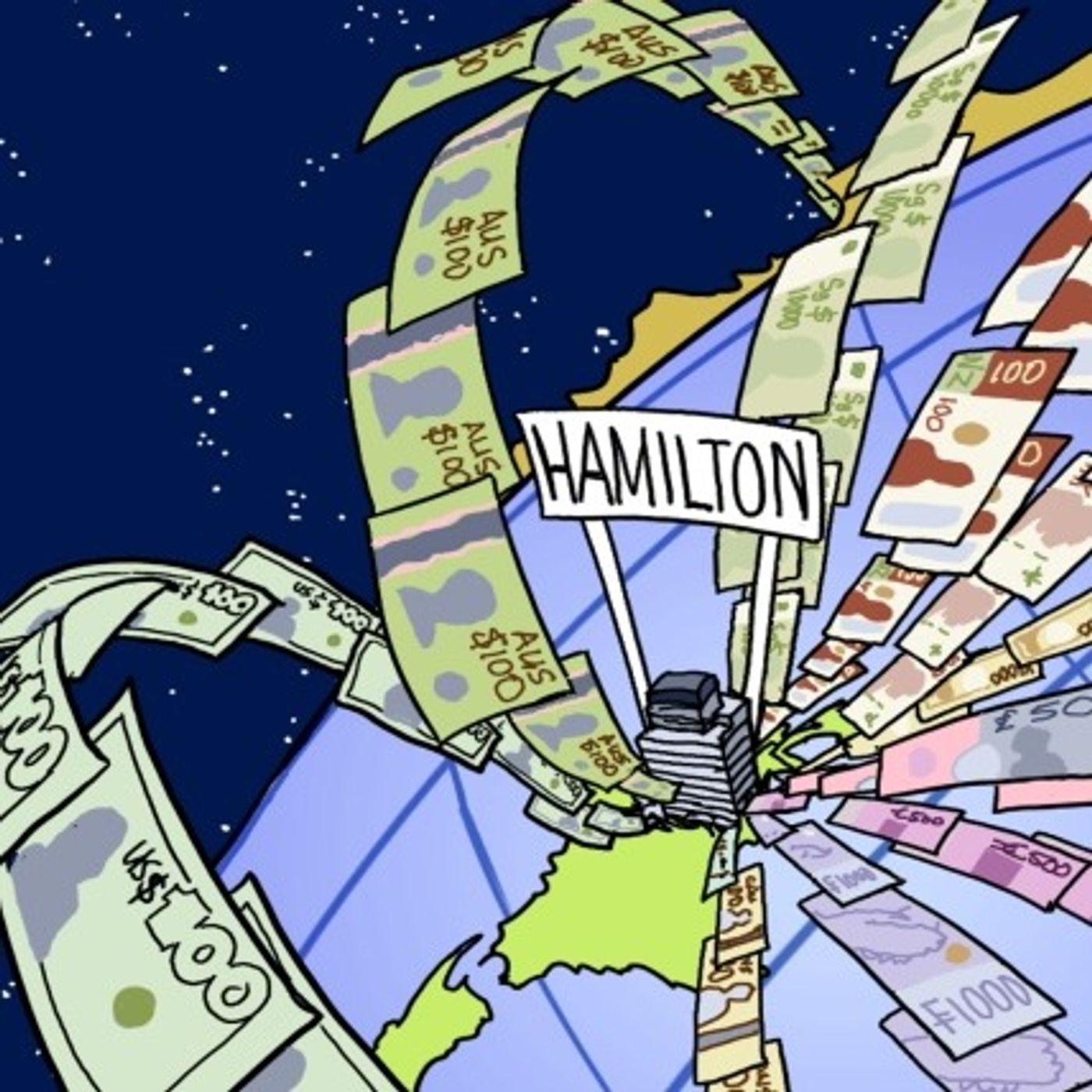
Hamilton Confidential, the Worldclear podcast, Episode 4
2w ago00:38:37Tap to summarizeHamilton Confidential is a podcast about Worldclear Ltd, based on leaked documents from the New Zealand financial services provider. Obtained by Interest.co.nz and shared with the Organized Crime and Corruption Reporting Project, Lithuania's 15min.lt, the Belarusian Investigative Center, and Sweden's Expressen, the leak shows Worldclear processing money transfers for a colorful global clientele over a five year period. With a staff of no more than a dozen people, one internal document claims Worldclear had "grown to process about $500 million in payment values per year." Worldclear was found by Department of Internal Affairs supervisors to have failed to comply with several anti-money laundering requirements. And two minority Worldclear shareholders had convictions for financial crimes overseas, with one having an Interpol red notice out in his name for an unserved jail sentence in Panama for money laundering. There is no evidence that Worldclear or its staff knowingly facilitated financial crimes. David Hillary, Worldclear's founder and managing director, denied any wrongdoing by himself or the firm, saying neither had ever; “knowingly or recklessly facilitated criminal offending, acted for the purpose of assisting any person to commit an offence, or designed or operated services for the purpose of concealing the source, destination, or beneficial connection of illicit funds.” Here are the first four episodes in the series. Episode 1, What was Worldclear and what did it do? An overview of what Worldclear was, how it operated, who its customers and owners were, and why the story matters for New Zealand. Episode 2, Richard Whitham; from Hamilton to Changi prison. Featuring an interview with Richard Whitham, who worked for Worldclear as a banking relationships establishment project officer, and ended up spending more than two years in Changi prison. Whitham was the key source of the leak. Episode 3; International customers; Michael Wilson, Guenther Klar & Odebrecht Overseas Ltd. Featuring a customer wanted by the FBI who chartered a private jet and fled Canada for Vietnam, along with his wife, mother, and three dogs. A British citizen who was later convicted in Denmark of defrauding Danish tax authorities. And a Bahamas company whose Brazilian parent company had pleaded guilty in the US to involvement in a multi-billion dollar bribery scandal. Episode 4; The Belarus & Lithuanian connection. A discussion with Belarusian and Lithuanian journalists who worked on the investigation, looking at why the Worldclear leak is of interest in their countries, and what it's like to be a Belarusian investigative journalist working from exile. Podcast hosts Gareth Vaughan and Emanuel Stoakes, producer Erica Wood. Separate text stories published as part of the investigation can be found here. Interest.co.nz is grateful for funding support from the Brian Gaynor Business Journalism Initiative and the readers who Support us, in helping bring this project to fruition. Audio soundtrack opening is licensed from Shutterstock, Track 1219389 Monetization ID TFGEPGEI0LHEIJAI
Transcribe →