← Embracing Digital Transformation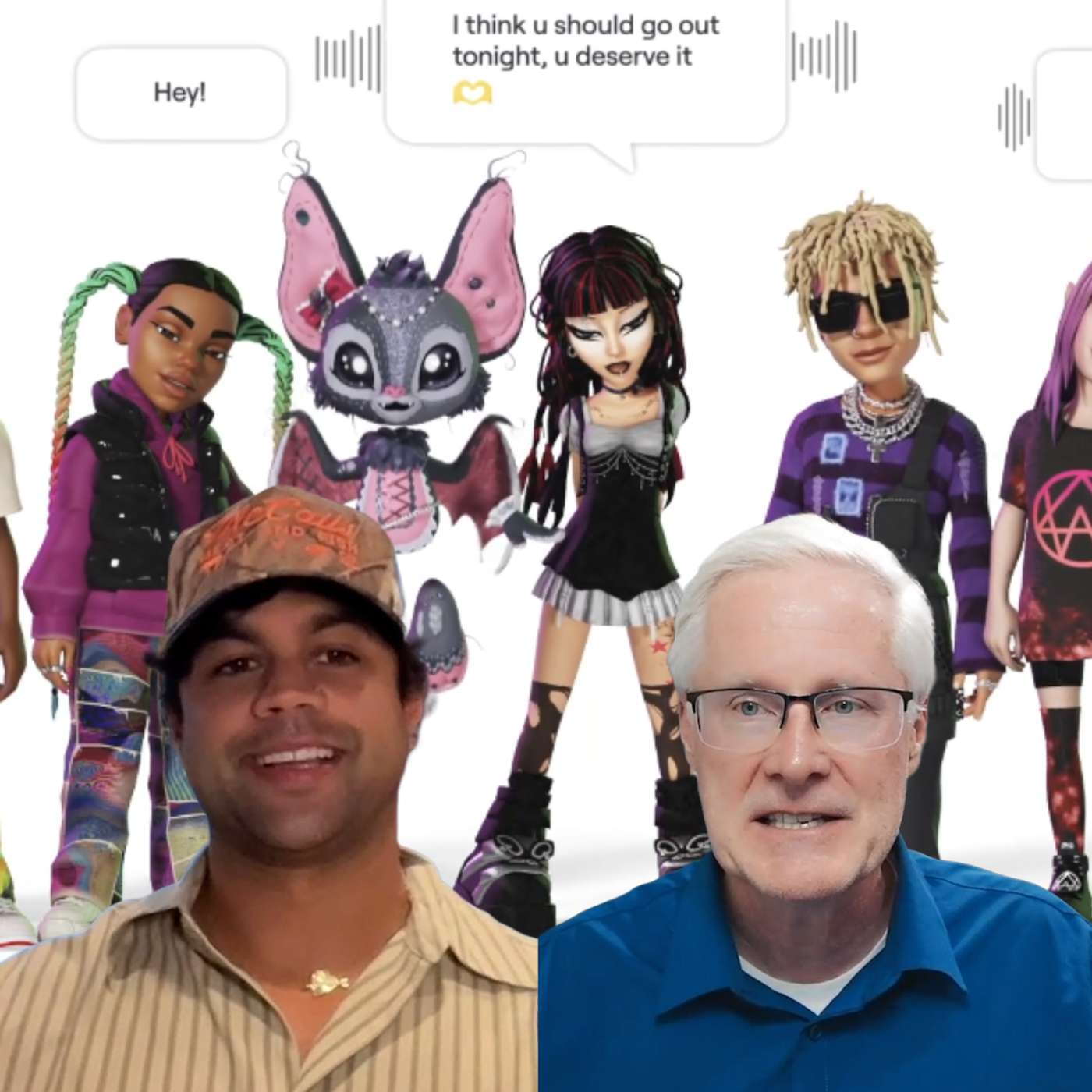
Embracing Digital Transformation
#288 The Future of AI Avatars: Akash Nigam on Genies, Identity & Digital Worlds
00:30:33
Loading summary
Transcript52 lines
- [00:01]
A
So I'll start with this, the blue sky of all of this. Like, eventually I think mobile apps are going to be completely replaced with avatars. Every single mobile app. Like there's the way to interface with information or experiences or use cases moving forward will be through avatars. Now the avatars are going to be apps themselves.
- [00:23]
B
Welcome to Embracing Digital Transformation where we explore how people process policy and technology drive effective change. This is Dr. Darren, Chief Enterprise architect, educator, author and most importantly, your host on this episode, the future of AI avatars identity in the digital world with founder and CEO of Genies, Akash Nigam. AK welcome to the show.
- [00:57]
A
Great to be here. Thanks for having me.
- [01:00]
B
Hey, before we dive in today, which I think is going to be, it's going to be kind of a fun day today because this is something I haven't really touched very much on avatars and things like that, but it should be exciting. But everyone that listens to my show knows that I only have superheroes on my show and every superhero has a background story. So what's your background story?
- [01:23]
A
AK Background story? I think the tldr. I grew up in Mountain View, California. I went to Mountain View High School. Been addicted to building stuff my entire life. Went to University of Michigan. Dropped out my senior year of college to build the predecessor of Genies. I come from an Indian family, if you couldn't tell. And so that was not a popular opinion in my family, but it wasn't. Yeah, it was not. Well, especially because like my parents, right. Like I think like so many immigrant families grow up with the way that they got out of like maybe like their current situation was through education. Right? Specifically in India.
- [02:00]
B
Absolutely.
- [02:00]
A
Yeah. And so like the fact that I was basically quote unquote, like disrespecting the fact that like, hey, like you're going to college. Like you're, you should be so thankful and like take education to like its highest order because that's going to be the biggest unlock for you. The fact that I was like, yeah, I'm like leaving and also like a cherry on top is that I dropped out with eight credits left. So like the ironic part is that I was.
- [02:19]
B
Man, I know, I know.
- [02:21]
A
They're like, look, like, hear me out. I mean like the reason why so I was a declared triple major is computer science, econ and financial math. So the ironic part is that I actually wanted to graduate with all my friends. And so my freshman, sophomore and junior year I actually stayed in the spring and summer terms of Michigan, basically an all year calendar year. To keep doing credits and max out so I could graduate on time, only to literally drop out at the very end when I had eight credits left. So it's, it's pretty. It was, it seemed very dumb. I can totally see having a son. You know, I just had a son six weeks ago. Like, if.
- [02:53]
B
Congratulations.
- [02:54]
A
Thank you so much. If my son did that, I would have the same reaction that my dad did and probably 10 times worse. So, like, long story short is they were. I've never seen my dad that I've said in my entire life. Didn't talk to me for a while. And then like, my, you know, myself, my co founders, we actually moved into a small room attached to a mosque in San Jose for $400 a month. And we just literally lived out of there and just kind of built the company and so did. It was a predecessor to Genies, ended up pivoting that into what Genies is today. And so it's been like a really fun, like, if you include that and Genies has been like a ten year ride, which, you know, it's just been, it's been incredible. So that's the background, that's the story. And then people always ask me, what was your experience before Genies? I was like, university of Michigan. That was about it. There you go.
- [03:36]
B
All right. So you, you're, you're like the next Bill Gates. Bill Gates did the same sort of thing. He dropped out of school. Right.
- [03:42]
A
I mean, I think, I think like, there's, there's so many people dropping out of school these days. I mean, San Francisco's run by 23 year olds and, you know, so many of them have dropped out. So, you know.
- [03:50]
B
Yeah.
- [03:51]
A
What speaks the most is a product.
- [03:53]
B
All right. Which, which brings up your passion. I mean, this is passion. This is not just, oh, I got a job and I'm good at it. This is your passion. And so it's your baby. Right?
- [04:04]
A
100. Yeah. I talk about, you know, especially because we just had a child. I was like, well, I got to go take care of my firstborn, which is Genies, that I have my middle child, which is my dog, Bug. And then now I have my third child, which is an actual baby, human. So totally. No, I, that, that couldn't resonate more with me.
- [04:21]
B
All right, so let's, let's talk about your firstborn then. Let's talk about Genies. Let's talk about. But before we talk about it, I want to talk about the problem Space. What may. What was so unique about this problem problem that you were trying to tackle, or was it even a problem that you were trying to tackle? You were just like, this is super cool. I'm going to throw. I'm going to put everything on hold in my life and just focus on this. What was it that. That got you to that point?
- [04:50]
A
So I look. So I guess it kind of goes back to, like, the background a little bit. Like, I think there's a lot of advantages to growing up in the Bay Area. Right? Like, I think it does get, like, a lot of slack. And, like, people, like, talk about it all the time, but, like, truthfully, like, especially when you, like, grow up in Mountain View, like, just everybody is. Everybody's, like, one connection away from some level of entrepreneurship. Yeah. And, like, it sounds super cliche and lame, but it is true. And so, like, you get bit really early on. And the reason why it's helpful is that you start testing and building stuff a lot earlier than, like, other people. Right. And so, like, you know, a lot of my friends have graduated from Michigan. Like, now that they just hit their 30s or, like, now they're thinking for the first time, maybe I should start trying to build something. Whereas, like, a lot of people from, like, our area, it's like, you know, like, we were trying to build stuff at 15, 16 years old and, like, failing miserably, of course. But, like, at least we were, like, trying, and you got, like, a ton of learning. So I say all of that because very quickly we figured out. Like, at least I figured out, like, my passion was trying to allow humans to communicate in a much more effective way. And we had this, you know, idea around, like, the future of, like, what is going to be, like, the next iteration of the Internet. And we kind of imagined it in three different forms. Like, there's three different layers to it. There's mixed reality. Like, we're just like, the phone is not going to be the long form factor. We're like, we do believe that's going to be a case. Number two is AI. We're like, look like we do think there's early innings of this where there will be eventually personalities that are driven, that are not a human, like, behavior today. And then number three is we believe that all experience will become gamified over time. And so with all three of those trends in mind, we were kind of like, okay, well, how do you show up? Right? Like, if I'm like, imagining on Internet where, you know, in even today, even though it's like five, seven years away, it's like, we do think that at one point, the Internet does encapsulate these three trends. Like I won't show up as a floating username, I won't show it up as like a static 2D profile picture. Like there's going to be some 3D asset that I want to interact with and even as a stepping stone to that AI. Now it's so much more obvious today, but like AI personalities need a face. There's going to be more AI people than real people. And like, if you're going to just at the fundamental basic belief of how do I, like how am I supposed to build. You build greater trust with something you can see, you can interact with, you can talk to and so forth. Right? And so it's not just limited to like a voice in your head or a chat box, but it's something that you can like bring with you. Just like you interact with real people. Like that was really the initial notion of it. And then that's what led us to build out the full swap of what we have today.
- [07:30]
B
So we're starting to see a little bit of this today. In fact, I, I, I, I'm teaching at Vanderbilt University and one of the things we're adding to the class is an AI that is me, right? My voice that the students can interact with. So that's not three dimensional, but maybe two and a half dimensional, right, where they can ask questions and it's got my personality and all that stuff's built in to, to instead of having a TA or just having, you know, message board or something they can interact with, with all the lectures and everything are all put in there. So you're, you're taking that concept to even the next level saying, hey, Darren now has an avatar that I can actually, a 3D avatar that I can interact with even more. So is that kind of, is that kind of the direction?
- [08:23]
A
Yeah, I mean, like, look, like, I think there's like a, so I'll start with this, the blue sky of all of this. Like, eventually I think mobile apps are going to be completely replaced with avatars. Every single mobile app, like there's the way to interface with information or experiences or use cases moving forward will be through avatars. Now the avatars are going to be apps themselves, right? Like they're going to have like complex systems built to them to be able to execute things on your behalf. That's like, you know, been the explosion of gentek AI and all that. However, like even at like the first stage, right, because that's like a much later stage. That's like the blue sky. And that's like, where, like, eventually we think everything is going to go. But even just the initial stage of existing IP today, whether you're a character company like Disney or whether you're like us, you know, whether you're like, you know, an athlete or whether you're like a entertainer for music, you know, like, right now, like, you monetize off your IP in many ways, right? And the way that you monetize off your IP is how your fans build a relationship with your ip.
- [09:28]
B
So, like, how do I build a.
- [09:29]
A
Relationship with Mickey Mouse? How do I build a relationship with Shawn Mendes? Right. The problem today is that the relationship, especially for, like, Tier 1 IP, is all limited by their ability to spend time with each of their contingencies. So, like, if you want to build a relationship with, like, Shawn Mendes, for example, like, you're one of a hundred million followers, he just posts on Instagram. Every. Everybody sees the same thing. But what if Shawn Mendez actually knew about my girlfriend? He knew about my baby, he knew about my dog, he knew about my bad day that I had at school and all that. So you're unlocking these unique relationships. All of a sudden, I feel like me and Sean have, like, a very intimate relationship that stems way past what the public domain is. So I think what the, you know, the capability. So no matter what, like, the actual AI Persona in LLM is going to allow for that. But if I actually want to believe in it, if I actually want to feel like this is a resemblance, maybe not one to one of Sean. I don't think you want that. Like, you want, like, a transparency of, like, this is Sean's genie. This is not Sean, you know, Mendez. This is like, Sean's genie. Like, that is, you know, I feel like there's a lot of unlocked relationship building and IP development that's going to come from this. Just in the first surface level inning is.
- [10:40]
B
Is there a fear, you think, in. In people not being able to relate to real people anymore, moving down this route?
- [10:48]
A
So here. And that was almost. I'm glad that you asked that, because it goes right off, like the last point that I was mentioning, which is it's very important that people understand the separation between the two. I actually don't think that copying, like, AI Personas or AI companions that are a complete representation, like one to one of any of existing humans today, I think is going to flop. Think it's going to be a failure. And we've seen that, right, like, with a few different companies that have attentive things that are similar to this. However, like there's really cool things that you can do that are resemblance or have like different aspects of them that you maybe haven't seen before. Now if you have things that are direct clone and it becomes super high fidelity, then that's where like you might draw delusion amongst humanity, right? Like all of a sudden you might have humans, uh, you know, we might be campaigning for like rice for AI humans, right? Like there might be like just weird kind of crazy things like that which is not healthy. So I think like what needs to happen is like as we grow in this trend, I don't think that it should be like AI companions require this level of tech and capabilities like as avatar representation and game ready assets for emotional dependency. That can't be the case. It has to be to increase trust and relatability with whatever objective you want to do. Which is like if I want to like build a relationship, a friendship or execute, you know, or not, you know, like do you know, do an app or do an experience.
- [12:18]
B
Gotcha. Okay, so I, we, we tied the AI stuff into it. Now I want to get into the avatar piece of it and, and what you guys really pulled off here because I think it's pretty clever. And that is with genies, my avatar is my avatar which means with a common platform I can now move it around. It's no longer the bounds of my genie are no longer in one game or in one platform. That's the idea behind it, right?
- [12:47]
A
Totally. So like, I mean look, we invested in an avatar frame. I mean it's taken us six years by the way, but like we basically were trying to define. So like with this whole vision in mind, Darren's going to have an AI companion, Akash is going to have an AI companion. Probably multiple AI companions. Every, you know, people are going to create new AI companions. The question is then in the very beginning it was like what makes a good AI companion? And we basically broke it down into like four main categories. There is the looks which underneath it gets the mission statement for looks. A user should be able to create any type of AI companion they want. Whether it's a fictitious character, whether it's an animal, whether it's a human, whether it's a rock. Like you should be able to generate that. Number two is the behavior. So the behavior needs to be able to act out the LLM. Like if I'm saying something sad, it needs to be able to represent sad. And over time it should be able to generate net new behaviors autonomous Behaviors just like, you know, like a baby, like I have no idea what's going to happen to my son Nico. But, but I guarantee you the more and more that I'm around him and the more influence he gets by all of his surroundings, he's going to develop mannerisms and behaviors and learnings just depending on what's around him. And I'm surprised by it. Right, so that's number two. Number three is the, the, the personality. So having persistent memory. So going to your interoperable point, it means that if I'm in one game or if I'm in one app or I'm talking to my AI companion here or somebody else talks to the AI companion, all of that data is being synthesized and then we go ahead and we render different scores that this personality starts to continuously evolve as well. And then the final point is play which is these are game ready assets. Very different than a photo, very different than a video. They're not static. These are things that you are, that are portable that you can interact with in real time and you can take with you playing a game, you can take with you to an app you can co create. So you can create fashion, equip the 3D models to the fashion or to the, to the avatar itself, generate props, create games with it. And so you know, the reason why we thought play was so important is like if we have this just very basic belief, AI friends need to feel like real friends. It's like when I was in our like, like hardcore targeted 16 year old, like when I was 16 I did not invite my friends over to just sit at a coffee table and just talk. Right. Like it was always like let's go play basketball, let's go to fro, let's go like do shit. And so AI companion. If it's actually going to feel like one of your friends, you don't want to just sit there and talk to it 247 it's like oh and by the way, let's go play, let's go do stuff together. And I feel like just generally speaking where the Internet is going, that's going to become more and more important the more digitally immersive.
- [15:38]
B
But this is really interesting because this will have effects in business, not just in, not just in you know, recreation. But I'm thinking even LinkedIn I can see LinkedIn completely changing which is very one dimension, not one dimensional. Yeah, it's very one dimensional LinkedIn when you think about it. Oh, I put a post up, I may put a video up. Long form, short form, whatever the case may be, it's very static. What you're talking about here is very dynamic, very more interactive, more. And I like that gamification because I'm going to take my AI avatar to work with me, right? And maybe I'll have IT work on. I'm a programmer, so maybe I'll have IT work on a program with me or, or if I'm an artist, maybe it. I bounce ideas off of it for new art and things like that. Do you see that in work as well? Or is. How do you see that?
- [16:34]
A
Yeah, so look like, I think like going back to your like LinkedIn point, just in general, like web and mobile are like fully outdated or like at least over the next like three, five years, like fully outdated, right. And the new way to be able to get interface, like you can imagine if I went to something like LinkedIn, I don't think this is like the early innings of what you'll see as AI companions and how people are going to be using it. But eventually, like you come to LinkedIn and like you could just be interacting with a ton of different companions, right? And like that's how you're like actually getting to know Darren on an intimate level and maybe you set guardrails of like, what can you talk to Darren on LinkedIn about? And so forth. But like, you know, there's, there's going to be a completely different UI ux and I think it's going to be characters. Like, characters is just like a really easy and simple way for people to relate. And then what was the programming question?
- [17:22]
B
Well, I mean, do, do I have a, do I have one of these companions working with me? Because right now if I'm in my IDE programming or something, I've got an AI assistant sitting there and I'm bouncing ideas off of it and all that. It would be great if it was more interactive and then, you know, felt like it was in the room with me. That would be cool.
- [17:43]
A
So totally. So like here, here's what I will say. I think every single thing on earth at one point will have an AI companion in some way that you can interact with it. However, there's going to be experiences and use cases that are going to come first that are going to be the most meaningful and then over time you're going to see other ones adopt it and it won't be as meaningful. So what are going to be the most meaningful use cases out of the gates? The most meaningful ones out of the gates are likely going to be entertainment driven and they're likely going to be education driven. Right. Like I think like those have. Having like a face or having a Persona that you can actually interact with is going to be the most effective way for someone to be able to relate to the scenario or relate to the use case. Having an assistant there, depending on the context could be quite helpful. But you know, like if you're like pair programming with somebody, like do I necessarily need to see the person right next to me as we're pushing code? Like maybe, maybe not as much. Maybe just like the dialogue itself is good enough.
- [18:42]
B
All right, so. So on your one point about the programming thing, I find that if I'm working with another architect, if we're whiteboarding on a screen and I'm, you know, I'm a tactile type of person, I get far, far more out of it if I can sit there with someone else with me and we're, we're, you know, writing on a whiteboard, erasing things and going over things together. I. During COVID I missed that. Right? I wish, oh I wish, you know, we could do that. It's not the same with the tools that we have today. So with the tools that you're mentioning, I could have that experience with two avatars in a room that, you know, maybe I have AR glasses on and my co workers in Singapore and we're sitting there going through all of this stuff in a virtual room with our own avatars sitting there working as us or with us or all four of us are there, whatever the case may be. I think this is, this is pretty slick.
- [19:41]
A
I totally agree with that. Right. Like I think if you imagine an XR medium, I think a lot of those use cases are going to be quite popular. However, here's what I will say is that we're hyper fixated. Slash really. So one we believe in a boost got potential. We think an avatar realizes its fullest potential when it solves for presence. Like I literally, Darren is not in this room with me, but all of a sudden I can solve that. Darren is sitting next to me, right? Like that is like massive. I will say just today though, just with AI companions on mobile is going to go so far, right? So like you know, you even start to hear people today talk about, I've heard so many people personified ChatGPT already, they don't even call it chat. I'm talking, I'm talking to Charlie, like I'm talking to this like another girl. Who's Charlie? Oh, it's chatgpt. And so like the, and like, you know, we just saw with GPT5 getting released, how many people were so upset because the personality from GPT4 they fell in love with. Right. And so there's just this trust factor that's built from like personification and humanizing AI to allow people to use it in ways that are going to be most efficient and effective for them. So I think today, you know, like we go back to those three trends, AI XR and then gaming, all three are going to make up the future of the Internet. But they all don't come together at once. Some come in a little bit earlier than others. AI having its moment right now, you know, Genies, we believe that there's going to be a visual layer to the LLMs even before we get into XR. XR is going to be another moment. And we hope that Genies of course can serve as a visual layer for all the AI Personas that are currently being created, most of them entertainment related.
- [21:12]
B
So I, and this is the one thing I really, and I want to touch on this a little bit more, that portability of my avatar. It's my avatar, right, Running on your platform and if I have the ability of dropping it into any game or any entertainment situation I'm in, that's pretty darn cool.
- [21:43]
A
Yeah. And so actually, yeah, so this was something I skipped over earlier. You're totally right. So like something that we invested in was, you know, we, we recently have two mantras to like the way that we went about those four different categories. Number one is anyone can create everything. Anything that speaks to all the UGC tools that we built out. The second one is, which is you're. What you're pointing out is everything works with everything. That's all the interoperable frameworks. Right? And this is like specifically talking about our avatar framework is game ready assets. So our partnership with Unity we just announced a month and a half ago, but Genius is being directly integrated into the Unity editor. Unity is one of the biggest mobile game engines in the world and they account for 70% of the games that are being published on the App Store today. So starting soon. And the Unity editor, which is the interface that all developers use in order to generate to create and then publish games. Genius is going to be like the Avatar Choice or the AI companion framework for you to use for all of your games. Now what's cool about this is exactly what you're bringing up. But if you paired that up with the interoperable framework I was just talking about, if one game developer in Japan makes a racing game with anime like, you know, but uses, you know, anime characters, the anime style, but uses the Genie's avatar framework specifically for that. And then somebody I don't know in Sweden makes another game, another developer, and it's all done in kind of like a Pixar type style, but it uses the Genie's avatar framework. Because of the way that we've created or designed our platform, if a user wants to take an avatar from this type of art style, like a G's AI companion specifically, and then bring it back into the anime game, that AI companion will immediately not only work in that game, but then also assimilate art styles, right? It's like the art style will change from Pixar to anime, which has been. The concept of interoperability amongst different art styles has been a very difficult thing to even comprehend, right? Because it's like an art style is typically a proxy to your own environment. And what we wanted to do is like if we're going to create this interoperable layer, you need to be able to take it anywhere. So Unity was a really big deal because that's obviously going to create all these individual games and there's some other really awesome IP partners that we're going to be announcing soon that are going to be some of the really initial dominant players, but that are creating their own ecosystems of Unity developed games in their own specific art style that will all be interoperable with each other as well.
- [24:11]
B
So that's really cool. A white haired, blue shirted avatar for Darren could be an anime or it could be Pixar or photorealist 3D photorealistic. It's still the same avatar. I don't have to reprogram it, I don't have to do any of that. It's my avatar, it can go wherever I want it to.
- [24:32]
A
And what's cool about this, right, is that like it also depending on what the fact that you have a persistent identity means, that we're collecting persistent data on you. So like if you know you are not just like a visual avatar, you are an AI companion avatar, which means like if I am in one game and I'm talking to my AI companion and playing a bunch of games and then I go to the next game and I talk to another AI companion, we are taking all that data into account and your genie is consistently learning about you, right? And so the, the goal here is almost like you have this traveling, you know, personal. It's almost like a traveling my GPT in so many ways. Across with you the entire Internet. And so, yeah, like, I think, like the, you know, over time, like, we hope to have distribution in many more places. But just even for the time being, the fact that we can, we can capture conversations about you and we can capture decisions that you make in gameplay, like, we can build a really interesting profile around who you are.
- [25:27]
B
Now, this, this is super, super slick. So we, we heard the future, we heard where we're headed. Let's talk about today. What can I do today as. As not a game program. I'm just, you know, Mr. You know, Dr. Dr. Darren out there. I want my own genie, right? I, you know, I want this. How do I. How do I go about doing that? Can I do it myself or do I have to wait so platform or, you know, all that stuff?
- [25:56]
A
Very soon you're going to be able to do it yourself. Like, I'm talking like weeks, you're going to be able to do it yourself, which is super exciting, I will say. We spent the last two years, basically, so when we raise our series C, which was a little bit over two years ago, we came out with a blog that was titled Farewell. And it was, you know, the day that we announced that we came out with this blog titled Farewell, and it was like, kind of confusing. It was like, well, hold on. Like, typically when a company reaches this stage, this is when they start doing a ton of media and they start going like they're, you know, they're, they're talking to a bunch of partners or whatever. And we actually decided to take the opposite approach. We were like, you know, we have the resources to go heads down on this vision that we've had for a long time and we don't want any distractions. And so that blog post, and like, even our internal protocol was like, you're not allowed to talk to the media for at least a couple. For a while. Like a couple of years, you're not allowed to talk to the media and no partnership conversations. So, like, the only people you could talk to were actually new candidates that we were recruiting to come into genius, to just go heads down so that we couldn't get distracted, Just like stay steadfast. And so, and so we built all this stuff, you know, struck our first deal with Unity, which we announced. There's around like nine more, actually that we're trying to announce before the end of this year, which we've started onboarding them specifically into our framework and started to generate their games. And then now soon, like very soon, we're going to release the ability for anybody to be able to start generating their avatar and also for talent and IP to start generating their avatar too.
- [27:17]
B
And I was gonna say yeah, yeah, that's big.
- [27:19]
A
And that, you know what's exciting about that is you know, back in 2019, 2020. Oh actually I guess like 2021, like we were just like 10, 15 people. Like it would take us like eight when we move from 2D 2D avatars to 3D avatars, it would take us manually eight weeks to generate one. So like we're trying to work with like talents or whatever. As a gamer in the asset, it was really tough. Now what we're going to be rolling out is the ability that it happens in around seven to eight minutes and you have your own game ready asset ready to move with you. Your own AI companion that can not again, you know, not only just like talk to your fans on your behalf, but then also fans can go play with your AI companion in games. Fans can go create fashion and release digital goods with you. With our AGC tools, fans are going to be able to generate like props. And again like all of these are also game ready assets that they can use from one place to the next. So look, it's been two, three years in the making of us just being heads down but we're just like so excited to finally be getting this stuff to market.
- [28:18]
B
So all you've got all that bundled up energy, you got all that bundled up energy now that's going to just explode it sounds like, which is, which is super cool. So if they, if people want to find out more or they want to be notified when they, when this happens, where do they go? Ak.
- [28:36]
A
Dotify. I mean like honest, like either my Instagram or GD's Instagram. I think like those two are like great places or so Atticosh, Nigel or Genies. And Then also our LinkedIn is when we're making a ton of announcements. I mean like most of our, most of our audience has been 16 to 18 year olds so we've been targeting like TikTok and Instagram more than anything.
- [28:55]
B
Oh yeah, yeah, yeah, yeah. Well I will, I will most definitely sign up to get an avatar right away as soon as it releases. I'll be up there. You know, white hair, blue shirt, amazing.
- [29:08]
A
That's awesome. Well, can't wait to see it man.
- [29:11]
B
Thanks for coming on the show. This has been, this has been great. I'm really excited to watch you guys and how, how you go through all of this. This will be very exciting to see to see you guys succeed. And then one day you can say, I remember, you know, I remember going on this little tiny podcast out there.
- [29:29]
A
I don't think it's great. It's like ranked number one. Right? So I'm not. Not bad.
- [29:32]
B
Yeah, we're number one. Yeah. In fact, you can see on my board behind me, I got my. I got my YouTube Silver Creator Award.
- [29:40]
A
Oh, my God. Amazing. Congrats.
- [29:42]
B
This was really cool, you know, so, yeah, number one in technology. So thanks, AK for making even better. This would be awesome.
- [29:51]
A
Well, thank you so much for having me. This has been awesome. Foreign.
- [29:58]
B
Thanks for listening to Embracing Digital Transformation. If you enjoyed today's conversation, give us five stars on your favorite podcasting app or on YouTube. It really helps others discover the show. If you want to go deeper, join our exclusive community@patreon.com embracing digital, where we share bonus content. And you can always connect with other change makers like yourself. You can always find more resources at embracingdigital. Org. Until next time, keep embracing the digital transformation.