← Embracing Digital Transformation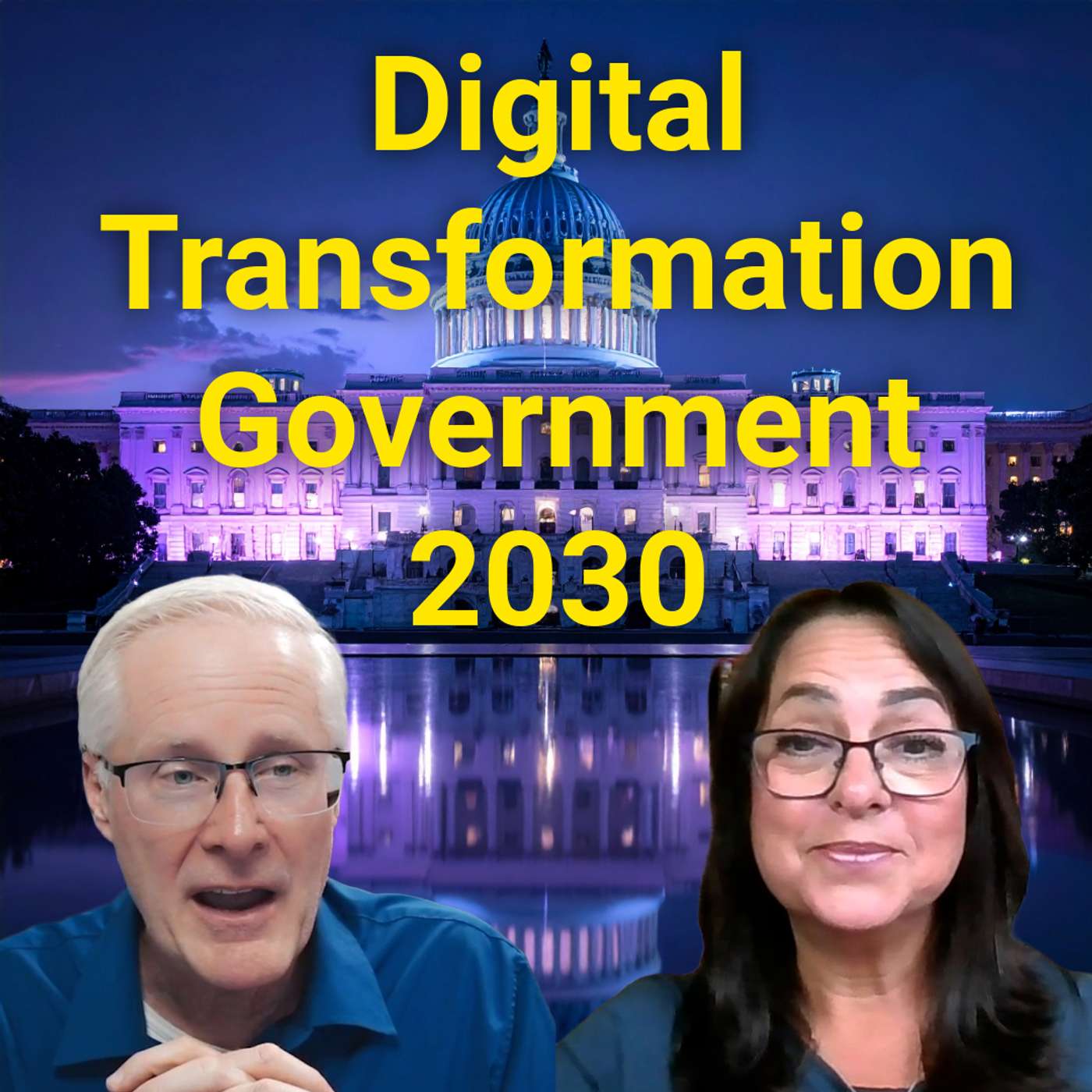
Embracing Digital Transformation
#309 The 2030 Vision: One Portal for All Government Services
00:31:15
Loading summary
Transcript64 lines
- [00:00]
A
Reassessing the way we're doing things today. Right. Because Covid's passed and you kind of want to take a step back and go, okay, we're not in Covid. It's not emergency. We can go back.
- [00:09]
B
Yeah, let's slow down again.
- [00:12]
A
Right. But it doesn't mean you have to slow down to where we were pre Covid. It means that we recognize what our capability and capacity is. So now let's do it in a responsible way.
- [00:26]
B
Welcome to Embracing Digital Transformation, where we explore how people process policy and technology drive effective change. This is Dr. Darin, Chief Enterprise architect, educator, author, and most importantly, your host. On this episode, we are looking at digital transformation in future government with special guest Andrea Roman, former deputy State CIO for California. Andrea, welcome to the show.
- [00:59]
A
Yeah, thank you. Darren.
- [01:02]
B
Hey. I'm really excited to talk. Talk to you. We, we met in person, which doesn't happen to me very often with my guests, that I actually meet them in person. And you have years of experience in California government, so this should be interesting day. I've got tons of questions about digital transformation. But before we get started, everyone that listens to my show knows that I only have superheroes on the show. The bar is high, and every superhero has a background story. So, Andrea, what's your background story?
- [01:33]
A
Yeah.
- [01:33]
B
Wow.
- [01:33]
A
So, background story. So I. Yes, State government, State of California. I spent about 33 plus years in the state of California. At the time of retiring, I was working as the clerk executive officer for the third District Court of Appeals. I was in the judicial branch, and in addition to doing that particular position, I also served as an advisor to the judicial council for the Chief justice on all things technology and all things budget. So continue to kind of evolve and grow the direction of the courts from a digital perspective. In that capacity, I was the Chief Deputy Director for the state of California, also at the same time, deputy State CIO at the Department of Technology, and held that position for a couple of years, really helping the state transition from at the time, what was pre cloud into cloud. Right. It was. So it's funny that we're doing this whole transformation today into AI. Right. But back then we were like, I don't know if I can go to cloud. I think I just need to stay on prem. Right. And so part of that whole kind of transition and whatnot. And then prior to that, I was the CIO for the California Department of Corrections, and I really spent about 20 years of my total career in the Department of Corrections. So grew up in that department.
- [02:58]
B
I was Going to say, yeah, working for the judicial branch and then Department of Corrections. There's a common theme I'm seeing there. Right. You must really like that, that side of government then.
- [03:11]
A
You know, I think it was, it was interesting. I think it was somewhat accidental that I ended up in the courts, but I was really looking for an opportunity to grow my background from just the executive branch. So I'd spent really, my, the bulk of my career in the executive branch and transitioning over to the judicial branch gave me a different purview and kind of how we run government. And having been in the Department of Corrections, absolutely, that helped. And there were some background to do. Yeah, there were some things that I was able to do at the court courts because of my knowledge at, at corrections that helped the courts evolve in, in some regards as well, from a digital perspective. So, yeah, I, it all crosses.
- [03:52]
B
Yeah. What would you say would be your superpower that you gained over all these years of experience working in government?
- [03:58]
A
Gosh. Superpower. I, you know what, honestly, it was problem solving and it was, it was something I did from very, very early on. Like, every job I ever took was always centered around like, what, what can I fix? How do I come in here and make something better? And that just became my bailiwick. Like solving problems in government became what I did. And, and I was really pulled into solutions for that.
- [04:24]
B
Yeah, I'm sure the field was ripe. It was solving problems in government.
- [04:29]
A
It was ripe.
- [04:31]
B
So, yeah, so let's, let's talk about that. I mean, government, typically government, slow and bureaucratic, takes time to make things move. Have you seen is, is that stereotype true? It's there for a reason. I mean, and, and what do you think causes that? Yeah, you know, lack of, of movement, I guess, is. I don't know what the right word is.
- [04:58]
A
I think it, I think it's an interesting perspective when you look at government and you talk about how quickly do we evolve. Right. Because, you know, you've got to be very risk, to some degrees, very risk adverse. Right. You have to, you have to be willing to take care of the fact that you're a steward of other people's money. When we're making decisions about what we're going to do, you're not making a decision about your corporation or your personal investment. You're making a decision about how you're spending taxpayer dollars. Right. I mean, that's really the way I always looked at it. And so I think there is a different level of, wow, we gotta be sure that we're doing the right thing. Right. And then, you know, and then the other challenge you have is that what we know about technology is it's not fail safe, right? It's not. We're gonna go implement this and everything's gonna go perfect. And the exact way that we thought it was gonna be implemented is exactly how it's gonna turn out at the end. The reality is you morph and, and, and adjust and grow and, and evolve in, in the project as you're going. And sometimes that causes delays, it causes cost overruns. Right. It causes issues that from a public perspective, doesn't always look good. And we don't have the latitude to have those things happen in the same way that you would someplace else. Right. And in, like, the corporate world where nobody's really paying attention to that degree. Right. So I think, yes, we are slow for a reason. But interestingly, I think what we see saw and what you're seeing today as an outcome of it is Covid. Right? It's the. The good, the bad, the ugly.
- [06:33]
B
Yeah. Covid did a number on government services.
- [06:36]
A
Huge cover. Covid resulted in government having to say, how do we change very quickly? Right. We don't have time to go through all the checks and balances. We don't have time to research everything possibly out there and make sure that what we're doing is the absolute right possible thing we could do. Covid said, you don't. You tomorrow, you have to operate differently. And we had to spin. And what I think it showed us in government is that we can do that. Not only can government move that quickly, but our people can move that quickly. And I think that has resulted in us reassessing the way we're doing things today. Right. Because Covid's passed and you kind of want to take a step back and go, okay, we're not in Covid. It's not emergency. We can go back.
- [07:22]
B
Yeah, let's slow down again.
- [07:25]
A
Right. But it doesn't mean you have to slow down to where we were pre Covid. It means that we recognize what our capability and capacity is. So now let's do it in a responsible way. And I think that's what you're seeing now. Right. And so the, you know, injection of AI into the government space. Yeah, we've been a little bit hesitant, but we haven't been disregarding. Right.
- [08:02]
B
So what prevents an organization from moving back to pre Covid thought, which is, okay, risk averse again. Right. Because I don't have the pressing issue like I did, and it was amazing. Some of the organizations, how they changed, I was like, DMV California took advantage of COVID to change everything. I mean, it, it's so much easier to work with the DMV than it was pre Covid, and it, like, happened overnight. But can I keep up that pace?
- [08:37]
A
Yeah. I think there's a few things that come into play there. One is what keeps us from continuing to operate at that same pace is the public, the demand for government services. Right. We teased them with COVID we said, look at what we're capable of. And now, now they're saying we want more of that and we want it now. And we want to do government the way we do our, our online shopping. Right. We want to operate with government the way we do everywhere else in our life. And so there's a pressure on government to keep up that pace. Right. But at the same time, we have to balance that against the funding. Right. And so if you talk about state of California specific, I mean, really, you could talk any state right now, right. Funding is tight, right. We're in really tight government times, right. We're still coming out of the impacts of COVID And in state of California, there's a lot of other things that are impacting our revenue, right. From fire is huge. Right. When you talk about things like what happened in Southern California, what that does to our revenue base within the state of California, like, there, there's an impact there. And, and so we're in tight fiscal times, which means that we can still move, but we have to be very intentional about how we're spending, the money we're spending and what we're fixing and why.
- [09:56]
B
Well, and that makes sense because no one wants you when you were in, in office, right? Andrea, you didn't want your name on the front page of the newspaper or on an investigative report by kcra, right, in Sacramento for overruns and all that stuff. That's the worst thing, right. That a politician or a civil servant servant in state government wants. So I understand the fear and the risk aversion where, like you said, in a private company, I can make some mistakes. I may take it on the chin for a couple quarters if it's a, a publicly traded company. But most of the time these technology mistakes are overlooked, Right. I have the ability to make mistakes and recover.
- [10:41]
A
Yeah. And when we make mistakes, we're sitting in front of the Senate hearing, right. We're in front of a whole group of senators saying, answer to this, like, how did you let that happen? Right? And, and I don't disregard that process, I think that process has value and I think it's important.
- [10:55]
B
Yeah, absolutely.
- [10:56]
A
You know, because we are stewards of somebody else's money. And I think we have to think, think about that when we're looking at how do we solve these problems and what do we think is the right thing to do. But I'll tell you, I also think that times like this, when, when the money is tight is when I think government gets to be the most creative. I think it's when we're forced to look internally and say, how do we drive some efficiencies? Where is it that we've implemented some tools or some technologies that maybe we're not using to the fullest extent and we could build those out differently or we can expand upon them with things such as AI today. Right. We can look at how are we running processes and what makes what, what works the best, and, and we can invest effort and resources there. You know, I know in Department of Corrections, when we were in those periods, 2009, 10, when it was tight, when we were sitting on 15% reductions in pay and three day furloughs and all of that kind of like really crazy stuff, right? That's when we were really doing what I would say, like was some really cool, crazy internal, let's just fix this kind of stuff because we, because we had some tools in front of us that we weren't necessarily taking advantage of. And, and that's what we get to do today.
- [12:13]
B
Right. So what resistance do you feel because you're a change agent, I can tell, right. You're in their problem solving things. What resistance are you feeling from the organization? Is there a cultural resistance? Is it individuals? Is it technology? Is it policy in the way? What are the impediments to doing those types of change that you're talking about?
- [12:38]
A
Yeah, it's probably bits and pieces of all of it, definitely. Culture. And every department is very different in its culture. But sometimes the larger the department, the harder the ship to turn. And you've really got to look at how, you know, how do you manage within those kinds of environments? How do you get to the right people that are change agents, as you mentioned? You know, really, that is exactly what I am. Right. And I would always attach myself to other change agents throughout the organization to say, help me spread the wealth. Right. Help me kind of do this, make this kind of thing happen. But definitely, I think you have some cultural issues that you have to be aware of and you have to be very intentional about how you address it. And how you work with that. I think it's all, you know, and we always have policy. We have policy, we have union influence. Right. There are things that we think make a lot of sense, but we've got to make sure that we're doing it in a way that is respectable to the, to the workforce community. Right. And, and that we're bringing the union in with us as a partner to driving efficiency instead of a, an out, an outcoming result of. Right. And so, yeah, I think it's a myriad of small little factors that combined become bigger.
- [14:11]
B
Well, you mentioned the union. The union throws a different kink in things quite a bit because their, their motivation is very different than the government's motivation and. Well, and that's why they exist. Right. Because the unions have a, have a protectionism of their union members, not necessarily of how do I make government more efficient. Right. Because some of the biggest costs in government are personnel.
- [14:41]
A
Oh, it's the biggest cost. Yeah, yeah, indefinitely. And California is a very strong union state when you talk about state government. Right. And so learning how to work within that environment of your unions, recognizing who they are and making them part of your process as you're doing technology is, is really what we learned. I mean, it's what I learned very early on in my career that the sooner I, I had the union working with me, the more effective I was going to be in being able to ensure that we implemented what we needed to implement to advance our, our department. Right. So without question, like the union has a, There's a strong power force and, and with purpose, again. Right. There's a reason we have the union.
- [15:30]
B
So, so instead of trying to fight against them or say, look, hey, this is it is instead, embrace them in the change, get them on board, get their idea. So that could be, that can be really hard to, to, to do. Right. I mean, but I, I guess you have to know, know the people personally. Right.
- [15:50]
A
You know, it's, it's what I always say, like government is hard work, and it's hard work because of lots of other factors that go around just the delivery of the service. Right. If all we had to do was deliver the service, man, that would be easy. But it's how we get to the delivery of the service that makes it hard. Right. And, and you know, I, I would also, I think, recognize that, you know, you look at your large companies, I think they have, they, they have that kind of stuff in there. Right. It's a little bit different, but they have their internal power forces that they have to Work through and with, Right. They have a culture. They have, it's just different in government because it's much more public.
- [16:30]
B
I, I like, I like that, what you said. It's much more public, right? And the public, we have opinions, right? Yeah, we have a lot of opinions. Like I pay taxes, I'm paying your job, I'm paying for your job. Right. I mean, that's how people feel. And, and they're going to have strong opinions that you have to pay attention to, I guess.
- [16:52]
A
Yeah. And, you know, and when you think about government services, right, A lot of your government services support those that, that aren't, you know, in some cases as fortunate. Right. Maybe don't have access to the same level of information as others. They, you know, you, you look at your social services, your healthcare services, operations and programs, Right. You know, they're providing things that people need. You talk about edd, right, and unemployment insurance, like you are, you are providing things that people need for livelihood. And, and that's, that's matters, that's important. And, and so we can't be, you know, we, we can't be fluffy about how we, we look at and manage the fact and, and do technology to help them without regard to them. Right? Because they're integral to the entire. And yeah, right. It's the outcome. Why do we do this? Right. And, and I think that's the other interesting factor with technology and government is that for every department, they have a mission, they have a purpose that they exist. And their purpose for existing is not technology. Right. So technology is a catalyst.
- [18:05]
B
Their constituents, Right.
- [18:07]
A
It's just a catalyst to make things happen. Right. But when you talk about the person on the street that's looking for the services, they're not asking about technology, they're asking about where is, where is my service and how do I get it and how do I get it faster and how do I get it, you know, more convenient or get it here and get it now. And, and the technology aspect of it is what we have to do underground and behind the scenes and just to make it all work. Right.
- [18:33]
B
So that sounds to me like that's more like a process problem than a technology problem. I mean, we talk about culture. I understand the culture part, it sounds like. And, and I've seen this before. When we start looking at our processes, what can I cut out, right? What can I cut out to streamline processes, automate processes? And then we also have the problem of fraud in government, right. Where people are, are trying to get money out of the government, where they don't deserve it or services out of the government where they don't deserve it. That's a whole nother realm in here that a lot of corporations don't have to deal with.
- [19:13]
A
No, and you're right. And that, that adds to that whole layer of what are all the other things I have to consider in how we do good government. And, and then it becomes a matter of what are the tools I can use to get me there. Right. Technology, obviously, is, is a key tool in that. Right. And so how do I use technology to advance us and enable that transformation and that modernization into what people think that they should be getting and the ease in which people should be accessing government services?
- [19:46]
B
Do you see, I work with the Spanish government a little bit with our team in Spain, and their biggest problem that they have is not enough employees because they don't have enough people going into government to. They don't have a problem of too many employees. They have a problem of not enough young people are joining. So there's this big, huge skills gap that's forming and they don't, they don't have an idea on how to overcome that. Do you see that happening in California as well? I mean, in here in the United States as well, or.
- [20:29]
A
Yeah. You know, I think that's going to be an interesting thing to consider as we go forward. Right. And as we bring more technology into government and the workforce utilization changes. Right. So I think about, like when I was early on in my career, like I started as, you know, an office assistant, office tech. Right. Very clerical, moving paper. Well, I don't need people to move paper anymore because I have systems. And so the evolution of that layer of, of the workforce has, has changed. Right. It's shifted. To be, you know, able to utilize a computer system, it changes the skill set, expectation. And I think that's going to be the thing that's going to be more interesting to look at for us. Unfortunately, I think we, you know, we struggle with the opposite problem. Right. Like in most cases we don't have enough people to provide the level of services we need to to the population that we serve in California. And we're not going to grow government. I don't see that being some, you know, like we're going to have this huge industry, right. You're not going to get that. And so really where we sit today is how do we use the technology that's out there and what is it going to cost us to use that in order to, you know, augment the process so that Our resources can do more so that they can be more effective and they're doing less of routine stuff and more of the, the real core analytical and, and decision making stuff.
- [22:05]
B
Yeah, no, I'm glad you brought that up. That we move away from the mundane and the repetitive into more critical thinking and I hope more human to human interaction. Right. Let the, let the AI and the automation handle the paperwork punching. You know, anytime I think of government, I think of those old Monty Python, you know, English government where they stamp one paper and hand it to the next person to stamp a paper. That needs to go away. Right. With automation and put the human back into the engagement.
- [22:47]
A
Yeah. And I, I mean, I think that's where we get. Right. At the end of the day, I think that's where we'll get the reality though is that that's an evolving process. And you know, as much as we think we're, we've advanced and we've advanced a lot in government. I mean you, you go into places like DMV and your ability to do more and more self service is huge. And that's all right, that's all facilitated through good technologies in, in those programs, in their operations. But that, you know, it's, we still have a lot of paper that we're still moving in a lot of departments and we still have processes that, that are, you know, very. What we could maybe consider basic processes that I think honestly the, that's where the evolution of AI is going to come into play. Right. And I think that's where AI is going to help us get rid of the checkbox stuff. Right. Where it's a yes, no, yes, no, yes, no. Right. I don't need to put, you know, eyes on paper to say did they check a box? Right. AI can tell me that for me as we get into digitized documents. And so I think there's definitely a play where you can marry it all and then you advance the skill set. And we just have to be, I think, responsible, we being government. Right. We have to be responsible with how we help advance that skill set so that we, we don't run into the problem that Spain has. We don't have people that can actually do the jobs that we need them to do. But I don't see it where we would have an issue of not enough people interested in doing the jobs. You know, there's always the balance of pay. Right. And it's, it's, you know, when you get into some of your more, you know, advanced technical skills, your security skills, like those are A high demand. And it's very hard to recruit in some of those spaces still today in government because you just can't pay and compete with the private sector. But you know, sometimes private sector goes through, through their own kind of, you.
- [24:41]
B
Know, like that's what's going on right now.
- [24:43]
A
Exactly right. And, and that's good for government because we have these people that are getting, you know, put into instability in the private sector. And, and we go, hey, hey, hey, we're over here and we can hire your skill sets. Right, Right. We want to capitalize on the bad out there. But you know, what I'm saying is that there is that balance and that ebb and flow that goes back and forth that I think is, is where we stay as government, kind of at par with where we need to be. And then recognize where your partnerships come into play, your private public partnerships come into play. Right.
- [25:16]
B
So. All right, so Andrea, big question. I want you to put your crystal ball, get it all set out. If, if you had a magic wand and a crystal ball, right. So everything, right. And you can change government, State of California to 2030. 2030, magic wand. Everything is, you have no brown field, nothing impetting you, impeding you. What would it look like? Government.
- [25:50]
A
Wow. I think you would see much faster access to everything that you would you want to do in government. In other words, I think it would be, I envision that by 2030 and hopefully it's sooner, but that you will access government services through like a single portal, that it won't be a matter of me saying I use EDD services and DMV services and I file my taxes with franchise tax board and maybe I use social services for other aspects, child care, whatever. Right. I wouldn't be going into every single different system and let's even bring the courts into that, right? Like if I need to use government services that I can come into a one stop shop, I can be verified, validated. You talk about, you know, reducing the potential of fraud. Right. If you're verifying and validating somebody at the very onset and then from there they get into what are the government services they're both eligible for and they can access, then you go out from there. And I think that's my real vision for how government will operate, you know, when we get to that point, is that you as a consumer of services will be recognized as an individual within the state of California that uses government services across the board.
- [27:13]
B
I really like that vision. I have done some work with the Saudi government and that's Their vision and they're very close.
- [27:23]
A
It's possible. It's possible.
- [27:25]
B
Yeah. It, it is possible. And I mean, everything from when someone dies in Saudi Arabia, all the other departments are notified. Amazing.
- [27:38]
A
I, it's, yeah. Cradle to grave should be. I should have one. You know, you think about the level of times. It's funny because when I was at the courts, I used to do, do some education sessions with, you know, fourth and fifth graders on, on government and on the court system and all of that kind of stuff. Right. And it, they would come into the court and they would say, you know, well, you know, I, I, I don't, my, I don't ever interact with government services. And I'm like, well, actually you do. Even as a fifth grader, you do. Right. Like you're sitting at school. Do you know your school is provided through public education? You know, who oversees all of the Department of Education? Right. How did you get here? You got here on a, on a, on a bus or you came with parents in a car. That car is registered to Department of Motor Vehicles and it's smog and it's monitored for its, you know, proper utilization within the state. Right. And that person driving you had a driver's license. You know, and then I would talk to them and you were born. And at the point you were born, like, and I would go through all of these steps and they would just look at me and I would say, you use government services every single day. You go to the grocery store and you buy fruit and vegetables. Those fruit and vegetables are possible because Department of Food and Ag ensures that we don't have bugs and pesticides and.
- [28:47]
B
All sorts of other things in our crops.
- [28:49]
A
Right. Like you, when you start thinking about it from, from that perspective, right. It's like, wow, like, you don't do anything without government services today. And so they're important, but, but they're only valuable and important if we understand how we can interact with them and how they benefit us. Right. As a consumer, I'm not going to use it if it's not good for me, so how does it benefit me? And, and I think.
- [29:12]
B
Well, and then you also mentioned it. If, if we had a more cohesive, unified validation and authentication fraud, would. It would be really hard to fool the system right now? You know, with everything all over the place, it's much easier to find loopholes and problems in the system that you can take advantage of.
- [29:35]
A
Yeah.
- [29:36]
B
So this is really, really fascinating stuff. Andrea, this has been great having you on the show. I appreciate your time today.
- [29:44]
A
Yeah, absolutely. Thank you for, for inviting me. I love this kind of stuff. It's kind of fun to just government. Right. Like, it's such an important part of our system.
- [29:52]
B
Yeah. If people want to reach out to you or find out more, how do they. How do they reach out to. To you? Andrea?
- [29:59]
A
Yeah, you know what? You can reach me through nwn. So I. I'm director of client engagement at nwnwn and email is aroman R O H M A N N W N AI Awesome. Always happy to have a conversation. Like I love it. It's how we continue to progress government. Right. By talking about it. Think talking about it. Right. Like, yeah, yeah.
- [30:21]
B
And maybe, you know, we can. We can make a huge change in California. I would love to see California more efficient and get rid of a lot of fraud, you know, because I pay taxes here just like your money. So. Yeah. Thanks, Andrea.
- [30:35]
A
Yeah, absolutely. Thank you, Darren.
- [30:40]
B
Thanks for listening to Embracing digital Transformation. If you enjoyed today's conversation, give us five stars on your favorite podcasting app or on YouTube. It really helps others discover the show. If you want to go deeper, join our exclusive community@patreon.com embracingdigital where we share bonus content and you can always connect with other change makers like yourself. You can always find more resources@embracingdigital.org until next time.
- [31:08]
A
Time.
- [31:08]
B
Keep embracing the digital transformation.