← Embracing Digital Transformation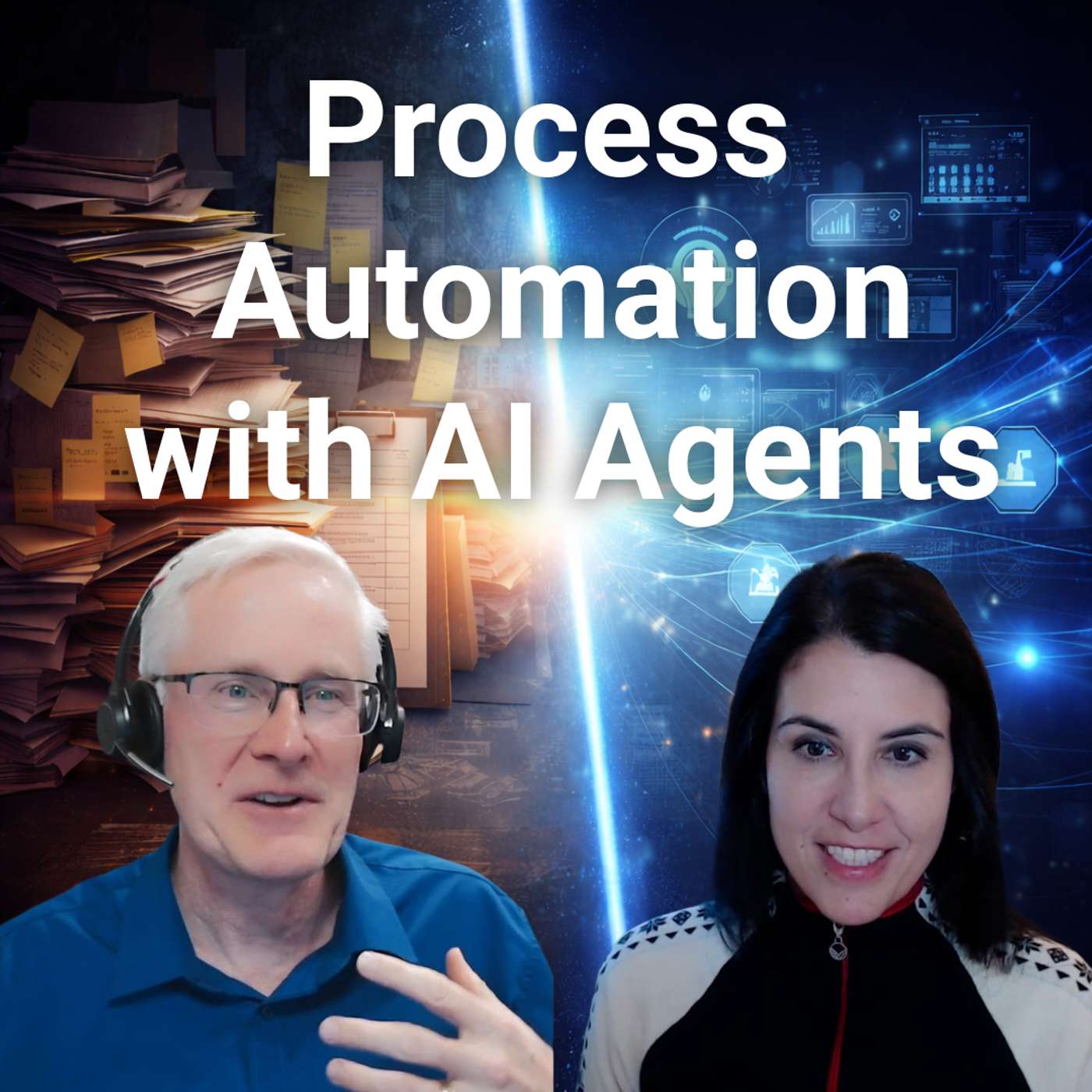
Loading summary
Transcript49 lines
- [00:01]
A
Has been on this mission for several years. I want to say it was in the ballpark of, like, $4.5 billion that they've saved as a result of turning these archaic processes into AI agents that can help you complete the task without needing to take extra time and go through hoops and bounds in order to do it.
- [00:26]
B
Welcome to Embracing Digital Transformation, where we explore how people process technology, drive effective change. This is Dr. Darren, Chief Enterprise architect, educator, author, and most importantly, your host. On this episode. AI Agents Driving Digital transformation at scale with Suzanne Livingston from IBM. Suzanne, welcome to the show.
- [01:00]
A
Thank you so much for having me, Darren.
- [01:03]
C
Hey, everyone that listens to my show knows that I only have superheroes on the show, and every superhero has a background story, an origin story. So, Suzanne, you can either say, what's your origin story? Or your superpower. Either way, the audience will be enthralled. So.
- [01:23]
A
Oh, boy. Well, I can't say I have any superpowers. I can give you an origin story. I've always been a bit of a software geek, if you will, way back to, like, early days. Broke my first computer game in, like, fifth grade, I want to say, maybe even earlier. And pretty much knew that was what I wanted to do. Found out sometime during school that we have to work. You know, that's like, something everybody does. And so my goal was, like, if I'm. If we're all going to be working, I want to make work as effective as possible. And so pretty much everything I've done, whether it was, like, on my own, for fun or work wise, is about helping people be productive at work. Is crazy. Even way back then. Except for the video game, that was the only exception.
- [02:24]
C
That's awesome. I have a similar background. I think I was 12 when I first started, you know, goofing off on. On computers and writing video games. Right. Because that was fun. Right? And then. Yeah, and then productivity has been kind of. Kind of my. My specialty as well. But, hey, let's talk about productivity in general, especially when it comes to this greatest and latest AI technology that everyone's talking about, which was agentic AI and AI agents and all of that. So let's dive right into that. I mean, how long have you been working with AI agents? Has it only been just the last couple of years, or were you guys working on this sort of stuff even before AI became the cool kid on the block?
- [03:09]
A
Yeah, great question. Um, so we've been, you know, you and I probably have been using AI assistance for the better part of a decade. You know, when you're interacting with a website and it asks you that offers you some help. Right. Like that kind of thing. I've, I've been only a short time for me personally working on this, that IBM I like, I've been on the team for about six months but I would say it was four years ago when I first started working with real agents that would take action for me. And this was at work. And it's kind of what intrigued me the most about joining this team. So way back when we like if you wanted to do any action at work, whether it was like something HR related like hire up somebody or you wanted to create a new department or, or transfer an employee or like even do your vacation, we would go into this heavy, heavy handed HR system. I won't name names but you, you.
- [04:16]
C
They all, I can imagine which one they were. All the fame, they were all heavy handed. Yeah.
- [04:20]
A
Oh, and, and how many steps did it take? And the, the most frustrating thing was there were, there were teams of people who would go and like take screenshots of how to do stuff in the tool and they would write out like lines like Darren, if you want to transfer Bob to Suzanne, step one, click on this box, make sure you check this item off, add this type of note and they would make these available to all of the employees. IBM is like few hundred thousand employees. So you'd have access to all of these documents. You have to find the right one to tell you how to go through that process. And sure enough, the next build that got released or the next like SaaS update of that software, all of the UI would change. And so those documents were out of date. And then you have that same team trying to go figure out how to do it all over again. It was so frustrating. And it's not even just hr. Right? You probably like any system.
- [05:18]
C
Oh no, no Build dev projects that did the same sort of thing. And it's, it's always the edge cases that never get updated. Right. Because no one uses the edge cases only maybe once a month or once a quarter. And you go looking at that document and you can't find anything that looks anything like what the document does. I know exactly what you're talking about.
- [05:40]
A
It's not in, it's HR is like procurement. Like I'm going to go procure a set of laptops for my new organization. Good luck like finding how to do that or I'm about to launch a new product. Like I need to go through the legal process. How do I get that done properly at the company. So you can come up with like an endless list of, of areas where you'd have to refer to the documentation. The documentation would be wrong. And there were people who were there to help you navigate this. And often they would be, you know, unaware that things had changed in the systems too. So it was like several years ago I was going to transfer an employee to someone and there was this new tool available to me and I, I, it was available to everybody at the company and it was called Ask hr. And I had been familiar with Ask hr. It was mostly, mostly like an assistant, I would say at the time before this that was answering questions like 10, tell me when is like the benefits enrollment period or how much vacation do I get? Things like that. And I went to go transfer the employee and it, I thought it was just going to tell me, hey, here's the process, here's how you follow it. But it asked me like, well, who are you transferring? And I write like John Doe. What's their serial number? Like, okay, I put their serial number in. Who are you? Trans. What's the serial number of the person you're transferring them to? I was like, okay. So I put their serial number in and then a couple more questions later and it said, it's in process, we'll notify you when it's complete.
- [07:23]
C
Oh, that's so nice.
- [07:25]
A
This was like, I want to say a good, like four years ago. And I'm, I'm looking at that. Like that's different. Like this is not the same like informational assistance. This is actually doing it for me. And we have come so far from there. So, you know, now we can read your directory. We know who you are, you know you're logged in. We have single sign on that tells us like, this is definitely Suzanne. This is her, her id. You give it the name of who you're transferring to, finds the match. Like any information that needs to get transferred. As a result, it like handles a lot more. And so I think that was the first time my eyes really opened up to a lot of these processes that are pretty brutal to get through and distract you from your value add. Like what is it that you're at work to do? Like we can, we can, we can turn them into an automated system with the right level of intelligence. But I only just joined the team in June of this, this past year by one of the hardest working teams I've ever worked with. This is such a fast paced environment and there's so much going on. There's like thousands of use Cases that our customer and other companies are using. So it is nonstop.
- [08:48]
C
So are you doing it, you're doing it for customers and internally or just external facing?
- [08:56]
A
Both, in fact. Probably like the biggest user of our own software. IBM has been on this mission for several years. I want to say it was in the ballpark of like $4.5 billion that they've saved as a result of turning these archaic processes into AI agents that can help you complete the task without needing to take extra time and go through hoops and bounds in order to do it. And so when I talk about it, I'm giving you like my experience as a user more than I'm giving you the experience.
- [09:34]
C
Yeah, no, no, that's great person.
- [09:36]
A
It is like game changing. So we have our procurement teams who are using it for purchases. So when they go on, they're going on and they're looking at like how risky is this supplier? It's, it's pretty tough to like create a new supplier and a new vendor for our company. Like they have to be vetted, they have to be low risk, they have to be able to pay back their, their dues too. And so to get them on board and takes a whole staff of people time to vet them properly. And now some of the data sources that they use, like we have John and Bradstreet data, we have S and P data, we have Moody's data. That's all available in the agents. They can just simply ask like tell me the risk of Acme Co and they'll be able to assess that really quickly. So procurement HR is the other one I mentioned already supply chain. So like imagine same scenario. Help me understand the risk of the supplier but also like help me find like the best provider for the service. I'm looking for sales even though like there's a lot of like tools that have assistants and agents within them in the sales world. Matching sales content to the information that you have in your company. Like, like I really want to know how many times we've interacted with Acme Co and what have we already sent them and like things along those lines that can help marry up for agent development and then productivity. Just like end user productivity with access to company Internet data. It's like remarkable how many things you can use an agent for.
- [11:19]
C
Have you found changes in process because of this new capability or do you find that it's easier just to automate what's already there?
- [11:29]
A
Oh, that's a good one. So I'm more of an observer in this. Like I'll work with teams and try to help them understand how to use our tools and what's coming, you know, with our tools so that they can plan for it. I do think that, like, one of three things happens. They look at a process, then they say, how much of this process do we actually need? Like, this may have been like, the. The process has built up over a year. Let's stop and say, can we just eliminate this whole part altogether? So usually the first questions are like, what is really required? And, you know, I can speak for the product development process. There's some steps that we, we just inherited along the way. And we say, no, we don't actually need to do a formal announcement letter unless we're going to be, you know, announcing a product for a specific group of buyers, like government agency or, you know, other groups like that. We don't have to do like this step. We can eliminate it. So eliminate by step one area that a lot of time is spent on the next one is what can we simplify? So, you know, there has to be a set of, if you're not going to eliminate it, can you either automate it or simplify it? And so if I can automate it, great. Like, let me automate what's needed. But before I go and automate, let me simplify, because even that will help reduce the number of steps. And every step is a point of a failure. Like, you could have the wrong answer. You have challenges. So simplify it. A good example of that is like, we have, like, again, I'll go back to the product development process because that one's the one I deal with the most. There's a ton of information we need to collect when we're going to go create a new product, when we're going to go put that in our catalog for anybody to buy or for our sellers to sell when we're going to go put that out for our customers to view. And so if you take all the information, a lot of steps, and they were for different audiences, they'd ask the same questions over again. What is it? What's the value? How are you pricing it? What are the pricing metrics? So think of everything associated to a product. You could simplify that tremendously. You have one point of entry goes to multiple teams, and any changes, those teams get automatically notified of. So things like that, that could simplify before you go automate. And then of course, the final step, right? Like, what's left? So what have we not eliminated? What. What remains with the simplify process and can we automate any of this. And that's really where like the teams, I think their processes have changed a lot.
- [14:22]
C
So this sounds like it's been a really good excuse to re engineer a bunch of process because you know, we always need an external catalyst, right to get us to move out of our comfort zones. And it sounds like AI is being used as this catalyst because if I were to just automate what I currently have, we wouldn't see the huge gains that we're seeing in some of these organizations that are taking on, you know, AI and refactoring and doing all this stuff. So it sounds to me like you're at the tip of the sphere of really a digital transformation more than in AI adoption. AI just happens to be the catalyst.
- [15:01]
A
You are 100% right. Like the very few projects do we come in and there it's just a turnkey. You know, I'm going to build my agent and go. It's often help me understand how to reinvent this process or help me understand how to re how to change this process so that I can be set up for agents. Another good example. So we are in a lot of customer call centers and so they've been using assistant technologies. They give their, their call center agents assistant technologies to help them be faster and have better results with their customers.
- [15:36]
C
Right.
- [15:37]
A
When they, when they're looking at the future, you know, it's not just about, you know, help me find answers more quickly. You know, they're the whole move to like the self service for customers is a, is enhanced with agents. So if I can take more action, like if I can go onto my bank's website and create a new account or open a new, a new credit card or even like go through the mortgage process without having to call somebody up or set up an appointment. Like that's game changing for them. That, that changes how they're doing business and that also changes how they can operate. So for them it's really about like help me transform and think of process improvements one end but then there's the future end where trying to get to which is like how can I be a better business? Like how do I serve my clients better? How can I provide more, more relevant products and services to them as quickly as I can. It's transforming how their businesses operate. And I think a little bit of what we're seeing right now is that the companies who are coming on board with an agent are not just process minded, they're also like future business model minded. Which is why like we, I'm Product development. So like, we'll come in at the point where, you know, they want to use the product, they want to have the most out of it. But there's entire teams, organizations who are dedicated to just helping them think through how to re engineer their business or their processes to take the most advantage of what they have coming.
- [17:17]
C
Now, you mentioned return on investment earlier, like $4.5 billion that IBM has been able to, you know, deferred. I guess it's opportunity cost, right, that, you know, you've been able to save or opportunity savings. How do I measure, how do I measure that roi? Because I know a lot of executives are out there, okay, I hear what Suzanne's saying. Yes, I want to do this, but how do I determine which ones to go after first? Because I could have a hundred different processes in my company. How do I make sure I'm going after the right ones? And how do I measure the return on investment? Because if this isn't working, I need to, I need to pivot. Right. So you have any ideas on that, Suzanne? I know that's two questions in one.
- [18:04]
A
But I'm thinking about a company that I recently talked to. They're in the insurance industry. And so one of, one of the things that they did was like, what are all the manual processes that we undergo today and where is the most time being spent? And so they are looking at their insurance agents and how much time are they spending and doing preparation for clients? And they ended up building agents to help, like digital agents to help their insurance agents get through the process with their client faster. So some of it, I think, is looking at which processes are dragging them the most business opportunity wise. Where, where do they see an opportunity to, to be in front of their customer in a more meaningful way? I kind of go back to the customer care and customer solutioning examples where they're really wanting to give a. Not just like answer the customer's question, but can they be ahead of what the customer need is? If you're inquiring about, you know, mortgage information, can you just help them kick off the process immediately, make it painless and easy for them? You know a lot about this customer. They're on your site. You, you have access to their information, you know, their financial history. What can you do for them now? Can you offer them a mortgage now? Right. Rather than have them go, you know, officially kick off the process?
- [19:36]
C
So in some ways I do so predicting, right. So doing some predictive customer engagement is, is what I'm hearing. That's, that's Pretty clever, actually.
- [19:46]
A
Yeah, yeah. And I think the next round of. Of customers who are coming on board are in that mode of help me be more competitive by using this technology. Not just like meeting the need of my customer today, but meeting the need of my customer tomorrow. So.
- [20:08]
C
Or predicting your need and letting them know that they need this.
- [20:12]
A
Right, there you go. Exactly.
- [20:17]
C
Well, that, that's, that's pretty clever. All right, so you're, you're in a, you're in a great spot because you get to do internal and external kind of engagements. You're a user of this stuff. What do you see as some of the biggest barriers to people moving down this route of using AI agents?
- [20:35]
A
I think trust is probably still the biggest. You know, if you look at like, what is it that's getting in the way? Um, can I trust the answers that I'm getting back from a large language model? Yeah, like, I think it comes down to a lot of that. And so. Well, trust is one difficulty, is the other. It. It. We are varying data from multiple different systems just in time to meet a request that we are interpreting. Right. Like it's an interpretation. This, this person is writing in what they need or they're voicing in what they need. Are we getting the action right? And so it's a lot of complicated systems that have, that are fragmented. And so our goal and what we try to do is help you simplify that by like getting one thread of accuracy through the result. And so how we do our evaluations, how we help you manage all the data that are required for these agents to continue. Like, that's part of where, where we come into place. But let's say we help you overcome the trust issue with better guardrails, better evaluations, you know, high accuracy of responses. The will help you guide you through the fragmented systems. There's a lot of data that's needed in order to complete these actions. There's a lot of process that we have to tie into. I think the like, probably the biggest barrier is whether the organizations have the capacity and the resources to go pull it all the way through to completion, meaning I can do a pilot or a POC fairly quickly on, let's say, an individual HR use case. But if I really want to run my whole HR department or my finance department or my procurement department, it all of the processes that they're dealing with. Right. You could do it in stages, but it takes significant time and investment for them to get to your point earlier, the transformation required for these processes to move forward. So I think like, that's probably the area where the most difficulty comes into play is how long it will.
- [23:06]
C
All right, so, yeah, yeah, three things. Data, trust, and resource. You know, I, I guess complete buy in. Right? Because if I have complete buy in, then I have the resources to do it. I. You, you said something about POCs. I see a lot of POCs. A lot of POCs, but no one taking it operational. Because I think of that last one that you mentioned because, hey, I don't have the time or resources to do it. Now, when you have a customer, that, that is their problem. That. How do you address that? How do you help them see that, you know, if you don't do this, you're not going to survive. Because I truly believe that.
- [23:47]
A
Yeah, I agree with you. And it depends on the use cases. Like, if you break it down into our businesses, it could be improved by bringing agents into this area. But we are not going to like, make or break our business model as a result of it. Then they're less likely to get out of that pilot POC phase. They want to stay there because they want to experiment. It's the ones where they're like, they're truly. There's competition nipping at the heels as a result of better experiences for their customers or better experiences for their employees and employee productivity. I think those are the areas where they're more likely to invest because they're getting much more significant roi. It's such a great part of the business. What's a good example of that? I won't say names like my insurance company, My health insurance company actually adopted our software. And so I can go onto their app and I can ask. I'll pick an innocuous example. Is, Is physical therapy covered, you know, in my insurance plan? Yes, Suzanne. Insurance does. Your insurance plan does cover it. Here are the closest physical therapists that are in your network. Would you like to submit a request to meet with any of them? Here's their ratings. Right. Like, here's information so that you can make a better decision.
- [25:19]
C
So many steps. Right. That. That's incredible. Right. Because you didn't just answer a question. You actually are helping your customer engage.
- [25:27]
A
Exactly. And if, if they're offering that, then if I have a choice in insurance providers, aren't I going to want to go with the one that's providing me the best experience? Experience. And there's still word of mouth. Oh, I heard so. And so has way better customer service. I'm going to go with them. Right. And that is a major part of their Customer service. So I think it's in these cases where they see it as a failure on how they're delivering their services to not provide. That's where we're. They're the ones who are ahead.
- [26:01]
C
So that's interesting, because what you've described here is a new engagement with our customers that maybe we've never thought of before. Right. That's going to be the competitive advantage that these companies are going to have over others that aren't leveraging this new technology.
- [26:18]
A
Exactly.
- [26:18]
C
Which I think is pretty clever, that deeper engagement. Your ultimate goal is to help the customer and to build loyalty. So I think it's a brilliant motivator for these companies and think of how.
- [26:33]
A
Much more they can do. Like, now I have your whole medical history. Here's what I would recommend for you. Or did you know that you have this program, you have this additional benefit you could take advantage of. Like, there's just so much. Right. And so, you know, the. It's only the beginning, really, of, like, this leveraging this technology in a way that's going to change how we interact with the companies that serve us.
- [26:58]
C
No, that's. That's really fascinating. So, all right, so let's say I'm, I'm a company, right? I've. I've done a couple POCs with generative AI and all this. How, how would you engage with me then? What's your first step? What would you do with me?
- [27:16]
A
Yeah, so the first. I think the first thing that we like to do is just lay out what are your business goals, what are you trying to accomplish, where are you trying to go? And then we iterate, we brainstorm with our clients. Here's where, where we've seen success in customer care. Here's where we've seen success in hr. Here's where we've seen success in, like, IT productivity or legal or marketing or sales. These are the ones that are aligned to your business goals, your business objectives. You've already POC'd, you've already piloted. But did you know that you could also do a POC that integrates your data? Right. Like your actual systems of record your data and get the feel for what that experience would be like. It's a much different thing than the assistant is now taking actions for you. And so to help you build that trust, go through some of the workflows that you would want to bring agents into. And I think that's like, to me, that's been almost always the first step. They see it in their data, in their environment. In a system that mimics what they would have running in production as best we can. And then once they're confident that the answers are what they need to be and the system is at the level that they're ready to roll out to either their employees or to their customers, then we turn them into, you know, full time production. You're ready to go and then we do the rollouts and we keep. Every week I'm seeing more and more go lives and production use cases because.
- [29:00]
C
Once you knock off the first couple, I bet things start moving quicker.
- [29:04]
A
Exactly. The infrastructure. A lot of companies actually still want to run this on their prem. Like they trust the cloud, but they still have a lot of data that's on their premises or they're in a mode where they have to run on premises. And so getting this software set up, getting it configured, getting it installed, getting it connected, and whether it's on SaaS or whether it's on prem, doing the right integrations into the systems that are going to be tied into the agents like that, all that groundwork, once that groundwork's done, one use case after another just comes on board.
- [29:39]
C
Sure. Coming on board. That's awesome. Hey, if someone wants to engage with you, Suzanne, and with IBM, how do they go about starting?
- [29:49]
A
I would say that the best thing to do is to play with the tool and we contact you when you're playing with the tool. So if you go to IBM.com orchestrate you can sign up for free trial in the upper right hand corner. Go through the steps to sign up for free trial. I have some demo videos out on LinkedIn that are create an agent in five minutes or less. Like legitimately create one like that. Our goal is to make this easy for business users to try making one easy use cases and then we'll do the outreach to you as a result of you coming on and signing up for a trial. It's a great way to get started, but that's awesome.
- [30:31]
C
Suzanne, thanks for coming on the show. I sure appreciate your time today. It's been great to hear someone in the trenches, not just thinking theoretically, all this stuff. You're actually deploying agents today. It's not, it's not future, it's today. So I appreciate you coming on.
- [30:49]
A
Thank you so much for having me. It's a pleasure talking with you and hopefully we'll see you in the agent world soon.
- [30:56]
C
Yeah, absolutely.
- [31:03]
B
Thanks for listening to Embracing Digital Transformation. If you enjoyed today's conversation, give us five stars on your favorite podcasting app or on YouTube. It really helps others discover the show. If you want to go deeper, join our exclusive community@patreon.com embracingdigital where we share bonus content and you can always connect with other change makers like yourself. You can always find more resources@embracingdigital.org until next time, keep embracing the digital transformation.