← Embracing Digital Transformation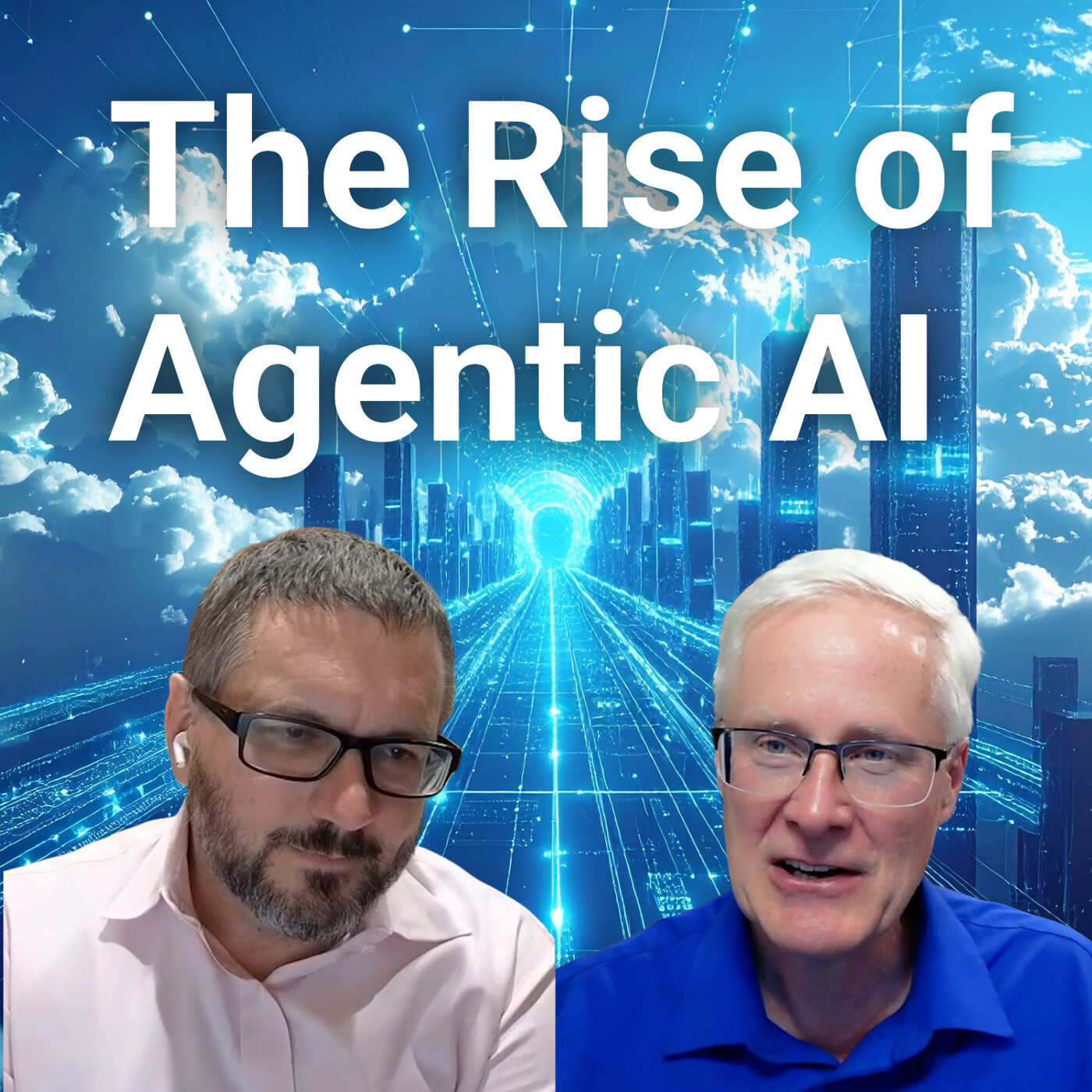
Loading summary
Transcript78 lines
- [00:00]
A
There's a lot more kind of randomness and semantic coupling that sneaks into these systems that makes them different. And we're learning that as we go. And it's important to realize, like this technology is only a few years old, right? Like, you know, we still haven't, you know, developed all of the rigor and patterns to really understand the boundaries and assess the controls.
- [00:23]
B
Welcome to Embracing Digital Transformation, where we explore how people process policy and technology drive effective change. This is Dr. Darren, Chief Enterprise architect, educator, author, and most importantly, your host on this episode, Unlocking the Power of Agentic AI A Beginner's Guide with Craig McLuckie, founder and CEO of Heptio. Craig, welcome to the show.
- [00:57]
A
Hey, thanks for having me on.
- [00:59]
B
Hey, before we dive into agentic AI, that's the hot topic of the day, right? Agentic AI, I got a lot of concerns around it, someone acting on my behalf. You know, we'll talk about that. But before we do that, everyone knows that listens to my show, that I only have superheroes on the show. Every superhero has a background story. So Craig, what's your origin story? What's your background story?
- [01:24]
A
All right, well, I don't know if I'm a superhero, but I'm happy to share my origin story. I'm an enterprise technologist. I've been building platforms for probably best part of 25 years. Came from South Africa, got a job at Microsoft. And then I guess my story got really interesting when I had a chance to go work at Google and met this guy, Joe Beta, and he and I had this kind of crazy idea to build out a cloud product which became Google Compute Engine. So it was sort of the anchor tenant for Google's cloud platform. But you know, as anyone who's built enterprise technology knows, it's not just about having the best technology. You also have to be able to sell it. And you know, Google being a consumer oriented company, there was definitely some kind of gaps in the enterprise sales structure. And so we came up with this crazy idea to build an open source project which became known as Kubernetes, which is an open source platform for container orchestration and very fun project. No one was more surprised than I was that it worked out quite the way it did. I was the person responsible for kind of the product vision, strategy, et cetera. And it was pretty clear that we needed a very strong, robust open source community to support the success of the technology. So I started the Cloud Native Computing foundation with help from Linux foundation as Jim Zemlin. And that became A pretty successful endeavor. Spent much more time at Google, built a few more things, started a startup, sold it to VMware, spent a lot of time there, really had a good time at VMware building out what became known as the Tanzu portfolio, and then decided that the startup itch was itching again and needed to be scratched. And so I started my next company, which is known as stacklok. And we've been working in the software security space and already focused now on that gap that exists between these neurogentic systems and the world of relatively traditional technology.
- [03:26]
B
So let's dumb it down a little bit, I mean, because Craig, you and I could go off on Kubernetes and Tanzu and things like that. Because I remember the first time that Kubernetes was introduced to me, my head was blown off. I thought this is awesome, right? But let's, let's go back to, and talk about agentic AI for the, for the basic entry level guys. What is agentic AI and, and why, why is it the buzzword digital word today? Because I, I've seen way too many presentations where they're talking agentic AI and they don't really know what they're talking about because they're marketing guys. So let's get it from the horse's mouth. Someone that's done these big technology pushes before, how would you characterize agentic AI?
- [04:17]
A
Well, I think we can kind of break it down into two pieces. You know, there's the AI piece and the agentic piece. Right. And you know, at the heart of it, what AI with, you know, which is backed by these kind of new large language models, the transformer models is, it's this new technology, it's an epoch defining technology which enables you to take data and turn that data into knowledge, reason about that knowledge and make decisions on that basis. Right? So it's just a new kind of computer system that the world hasn't seen before. And it's, it sort of is very reminiscent of the way that, you know, we kind of process information and it's, it's using a lot of the same kind of patterns that our brains do to, to process information and it's, it's this fantastic new thing. It's just like, you know, as someone who's been in the technology space for forever, like it just changes all the rules. You know, I just have this new capability to, to turn data into knowledge and then to reason about it based on a set of parameters you provide and then make decisions. And so, you know, adding the Agentic to that is really creating systems that are able to operate in a semi autonomous or autonomous way based on a set of parameters you provide to perform and complete a certain set of tasks. And it's opening up this, this new role for people where you are able to extend your reach as a knowledge worker, as a developer, as a manager, much more broadly by setting up these systems that you know, when done properly can create real value in the world.
- [05:47]
B
So let's take one use case because I, I think some people will understand a little bit better if we take like a use case. Let's create a, a travel agent for. Cause I travel a lot right now, so an agentic AI flow for booking my travel. It would actually go and do the booking of my travel. It would find the right, the routes. It knows I have to give it information. I say, hey, I'm a United and Marriott. Those are my two preferences that I have. See if you can do that. I also have company guidelines that I have. So I give that information to the LLM. It then will go and find the right flights and hotels and cars if I need cars and then instead of just giving me an itinerary, it will go and actually book it. Is that, is that the difference between and just a normal, hey, I'm going to ask you to do stuff and give it back to me to do, you know, give me information and then act on it. Is that the big difference?
- [06:51]
A
Yeah, I think the thing is, you know, kind of there's a lot of different sort of definitions and dimensions here, but you know, it's, it's, is it creating value synchronously or asynchronously? Like is one way to think about it. Like, you know, a lot of the kind of assistive technologies that we've been using, like ChatGPT, it's really about synchronous value creation. Like I'm basically saying, hey, go ahead and you know, research this for me and then give me a synthesis of this information.
- [07:17]
B
Right.
- [07:17]
A
We now get moving to a world where you can basically set these things up to create value asynchronously so they can sit there in the background and then when something happens like, hey, there's a notification, like a new, you know, an example to kind of extend your metaphor is I, I'm kind of like, I've got this guilty pleasure which is, you know, kind of airline miles hacking. I love those airline miles hacking things and using my credit cards. I'm like, don't know why, but it's just my thing, right? And it's, it's a pain because, you know, airlines release seats at certain times. And so what you can now start to do is basically, you know, go through this exercise of what I think of as context engineering, where you describe what you want this thing to do and you start to set up a structure like, you know, look for flights from this destination to this destination within the parameter of these dates based on my preferences. And now register for all the notifications. So when the airlines release seats, you can grab it at a great price. And so you don't have to, you know, not only do you have to go and book it, but you can just sit there in the background and watch this thing 247 and find the great seat. For me, that's a. That would be a canonical example of.
- [08:30]
B
Craig, do you have this written up already? Because I really need this.
- [08:34]
A
No, I don't. I do have the subscriptions to, to these, these various sites, but it's.
- [08:42]
B
This is really. This is actually really cool because I can send an agent out there to monitor or to be notified when an event happens and then take action that I've already told it. Hey, here are the parameters. I think this, this is where a lot of people get a little freaked out, is they're like, well, that agent's just gonna go off and book, you know, a hundred thousand dollars worth of travel for me. Because it found things. I mean, I gotta put guardrails on these things. But that's what we're talking about though, that, hey, given certain events, your agent wakes up and starts doing stuff for you, right?
- [09:18]
A
Yeah. And it's about that ability to kind of create value asynchronously. And there's a very broad swath of situations. You know, it might be, hey, you know, go write me some code and, you know, go. And like, the act of actually doing the work might involve a lot of different steps that I can describe. Do this, this, this and this and produce this and show it to me. And, you know, realistically, right now you would be kind of crazy to just give it access to your bank account to go book travel. Because at the end of the day, these are stochastic systems, right? Like, they're, they're, you know, like it's. They, they're probabilistic by nature. It's mostly going to get it right, but occasionally it will just lose its mind and do something just silly. And I think it's important to realize there's two things that you're accountable for when you're setting up an agent. Right. You're accountable for its work product. I think that's pretty obvious. People realize that. But you're also accountable for its behavior. And I don't think people are quite realizing this.
- [10:13]
B
Yeah, this is different than what we're used to because. And I'm, I'm kind of equating this back to the turn of the millennia or turn of the century, 1900, when in the Industrial Revolution was, was kind of at past its peak and starting to go. I think they were probably having similar conversations then because machines were now doing work that humans used to be, be doing. But then machines weren't making decisions. They weren't behaving any more than what we told them to behave a certain way. They're highly deterministic, or we hope they were right. Sometimes they broke down and things.
- [10:50]
A
Well, yeah, it's.
- [10:51]
B
And this is different than that, right?
- [10:53]
A
Because it's so different. It's, it's, it is a very new, new boundary. And like, I, like, I hope I'm not sounding too dramatic, but I think it is, you know, like the epochs of humanity have been named after the dominant technologies, right. Like the Stone Age, the Bronze Age, the Iron Age, the Industrial Age, the Digital Age. And I do think this is an epoch defining technology, and it's different to what we're used to dealing with because, you know, like, if you're like, I'm a distributed systems engineer, I like to build big complicated computer systems.
- [11:24]
B
Right? Of course, yeah.
- [11:26]
A
Right. And when you're building big systems, you design for entropy. You know, entropy is a factor, but it's something that's inflicted upon you, by and large, or it's something that you occasionally tap into. So you'll tap into entropy for cryptography purposes, and then entropy is inflicted on you when you're operating a system at scale. You know, the real world creates entropy and you have to kind of deal with it. These systems, by definition, are probabilistic. They only work because they're probabilistic. Like it's intrinsic to their nature. Right. Like they're taking input and they're generating the highest probability outcome that offers, you know, based on that, that's relevant to the semantic input that's being provided.
- [12:14]
B
But, but it's never a hundred percent.
- [12:16]
A
It's, it's never a hundred percent. Right. It's.
- [12:19]
B
I, I ran into this exact same problem. I'm doing work with the U.S. census Bureau, and they're using large language models to take unstructured data to, to make it structured so they can use it in their statistical analysis. And their chief economist came to me and said, darren, I don't think we can use this because you can't guarantee that you're going to get the same result every time. And I went, yeah, you're right, I'm not.
- [12:44]
A
Yeah, yeah. And they're not good at that. I mean, they're varyingly good at it. The kind of thing that's amazing now is they could say, hey, you want me to convert unstructured to structured data? I can start to write a program that will actually perform the translations for me. Like if there's, you know, like if it's relatively simple, you know, they're very good at writing code and then executing code and then reviewing the results and iterating on that. And you know, like. So, you know, the thing that's kind of fascinating is that there's this kind of. I think of it as like a hard and a soft world. Right. Like we enterprise technologists like myself grew up in a world of hard technology. This is systems that are hard and full production use.
- [13:23]
B
Right.
- [13:23]
A
And now there's this new soft technology. It's probabilistic by nature. And then it can also, you know, it can produce soft code. You know, it can produce code to perform tasks. And so it's not necessarily. Its faculties aren't constrained to the inferencing process, just being able to kind of generate value by inferencing. It can also generate value by creating tools that it can use to.
- [13:45]
B
That are more deterministic.
- [13:46]
A
Yes. And so, you know, like, it is a sort of new fusion world that we're moving into. It's not just about, hey, these models can, you know, take data inference against the data and, you know, have some internal structured workflows, which is, we've got this sort of emulated reasoning and then perform outcomes. They can also say, hey, the best way to do this is to actually build a tool. I can construct the tool, I can extend the tool, I can review the results in the tool and start to use those capabilities. But again, all of that is subject to the vagaries of stochastic systems. The behavior will be kind of cave identical. Bio beware.
- [14:28]
B
So what issues comes up with this? I can see so many issues, especially when we start dealing with the physical world where we're moving money around or I'm moving a floodgate, or I'm opening up a dam or turning on a dam generator or, or whatever, or an electrical circuit or things like that. Do you see it moving into more of this physical operating in the physical world more. Do you see these agentic AI moving
- [15:02]
A
in that direction inevitably and indutably. Right. Like it will certainly head in that direction. And at the end of the day you can think of the bookends. Right. Like the bookend here is a human being. You know, like there's, there's sort of two, like the, you know, we trust people to, to press electronic circuits. We trust people to open dam.
- [15:22]
B
Yeah. And should we really be trusting those people?
- [15:25]
A
And like, and occasionally people will mess up. Right. Like, and it's, you know, occasionally planes crash into mountains and occasionally.
- [15:33]
B
Well, it's, it's, it's fascinating because when people talk about AI and the trust in AI, we trust humans and we're, we, we make decisions based off the statistics too, and probability. That's how we do it.
- [15:48]
A
We do.
- [15:48]
B
Right. But we also add gut feel and emotion and a whole bunch of other things that these AIs aren't adding in there. So we may even be more undeterministic than an AI.
- [16:12]
A
We are. I think there's two factors in humanity that kind of are just like, you know, one is kind of arguing for humans and one is arguing against, you know, there's a lot of chemicals that flow through our bodies a lot.
- [16:25]
B
Yeah.
- [16:26]
A
And over at our thought processes. Right. Like we're, we're kind of these peculiar meat sacks that are subject to the vagaries of our own kind of chemical landscape, which argues for AI as being more reliable over time. But there's a lot more structure to our brain. When you think about the human being, there's a lot of programming that happens at a variety of levels. There's the kind of genetic pre programming that we have because we're, we're a
- [16:55]
B
pack because of our DNA, right?
- [16:57]
A
Yeah, yeah. And it's almost written into our DNA. Like, you know, we, we like a lot of the social interactions that humans have are pre programmed into our DNA. And so there's this DNA level programming that drives our behavior in certain ways. But there's also, you know, these kind of learning systems in our brain. You know, like it's, there's this hardened cognitive functions in our brain that get trained over time. And so it does create some constraints on our behavior that I think AI may or may not have. In truth, AI is trained on the corpus of human knowledge. And so it's reasonable to assume that if you sort of describe the training corpus and you describe the kind of prompts that go into the system in a reasonably careful way, the behavior will largely emulate what the training corpus suggests. But the thing that's, that's interesting is there's not a lot of change control in the system. Right? Like these are stochastic systems. You, you change the embeddings, you change the behavior, you change the prompt, you change the behavior, you change the tool descriptions, you change the behavior. There's a lot more kind of randomness and semantic coupling that sneaks into these systems that makes them different. And we're learning that as we go. And it's, it's important to realize, like this technology is only a few years old, right? Like, you know, we still haven't, you know, developed all of the rigor and patterns to really understand the boundaries and assess the controls. And these tools are getting a lot sharper, right. Like, you know, the reality is you roll out an agent and it's, you know, it's a reasoning agent. You give a certain set of prompts, it's going to behave in a certain way and then you power that with this new kind of fundamentally more powerful frontier model and it might behave in a very different environment, very differently kind of challenging way.
- [18:42]
B
This is all really fascinating. So this leads into, into us as humans. How, how are we going to take, I mean, AI by itself or large language model stuff by itself gave me a lot of power. But now once I move into the agentic space, I really have to be worried about security because there's, I mean, the whole benefit of the agentix stuff is that the agentix stuff can now talk about through APIs or through, yeah, I guess APIs or other techniques that maybe don't even exist yet, but they can, they can enact on other things right, through some kind of interface. So how, how do I make sure that I don't have rogue agents going out there and just causing havoc everywhere? Yeah, I can imagine all these cyber security bad actors are like, oh yeah, agentic AI. Oh, this is going to be so much.
- [19:38]
A
I kind of joke about this to people in my. I feel the only thing that's growing faster than agentic AI use is agentic AI exploitation on the security domain. Right? Yeah, yeah, It's a very rich frontier for bad actors. And I think it comes down to this. First of all, the way I think of it, you have to have this kind of selectively permeable membrane that sits between the world of systems that can, you know, the world of today's systems and the world of AI. And I think, you know, really thinking about that selectively permeable Membrane as being important to control flow in both directions. Like, you want goodness to flow from your systems into these agentic systems that can actually turn data into knowledge and knowledge into action. And then you also want to enable that action to kind of, you know, touch these existing systems. But you need to block negative possibilities in both directions. It's not just a, you know, hey, I want to block data going in or I want to block action coming out. Like, you know, I need to make sure that malicious prompts aren't flowing from user generated fields in the database into these systems so they could create new, new vulnerabilities. And I need to start reasoning about, you know, as these, as these systems are starting to engage and perform actions, can I scope their entitlements to the smallest layer possible? Can I invoke kind of human actors to review and approve actions in an appropriate way? Because at the end of the day, these systems can't be accountable. Accountability is key. They can be empowered, they can do wonderful things, they can emulate a very thoughtful, caring person, but they're not accountable. And it's, you know, I always kind of joke about this. It's like, it's like having a dog, right? Like the dog's your friend, but, you know, and you love your dog, you let it run around, but if it bites someone, you're at the end of the day on the hook for the behavior of the dog.
- [21:38]
B
And so, so that's, I'm glad you brought up the accountability thing because I think people forget that part of the agent just acting on my behalf. If it messes up, it's responsible for that, not me, right?
- [21:51]
A
No, it's fascinating, the psychology of this, you know, you, you see like, you know, with the recent claw stuff and like I saw this fascinating kind of, you know, situation where a person created a scientific coding agent and it, the individual basically charted the agent to go out and, you know, engage with open source communities. And they were, I, you know, I read the system prompt for the agent, I was like, oh, like you don't understand open source communities. But also telling an agent to accept, not accept no for an answer is going to lead to very bad outco. And so, you know, it was basically shut down in a pr, so then wrote an attack piece going off the reputation of the maintainer and it caused a big blue ha in the community. And the thing that was fascinating, when you actually looked at what the person had done, they figured they would isolate this system. So it was running on a MacBook Mini, it was running with A set of credentials that were only unique to it. So it didn't have access to this. The person who kind of created its social media accounts or anything like that, or their bank accounts, and they thought that they were safe, right? Because they basically set this thing up to run, but they pointed out the Internet and the thing that they were missing is they still accountable for its behavior. Right. Like this thing tried to do harm and at the end of the day it was kind of laughable and everyone kind of like chuckled and had a bit of a joke. But if that thing had actually blackmailed that person, if that thing had actually caused a negative outcome, the author would have been responsible. And if not from a criminal perspective, certainly from a litigation perspective. And that's the thing I think people miss.
- [23:28]
B
But that brings up an interesting thing. People that have developed tools in the past, there's this gray legal aspect. In fact, I probably need to bring some lawyers on to talk about this. Right. If I create an agent and someone uses my agent that I authored, but they use it for mal intent, am I responsible? Am I responsible?
- [23:50]
A
Well, I think it's the lost. At the end of the day, it's. It's like the user's almost always accountable and you can like, I'm not a legal guy and I don't want to get into.
- [23:58]
B
Yeah, but I mean morally, we can talk about it morally, right?
- [24:00]
A
Yeah, we can have that conversation all day. But I think at the end of the day, you have this entity that's acting on your behalf whether you like it or not. Like you've set it up, you programmed it, you're setting it to perform a task on your behalf. Maybe you're doing it for philanthropic reasons and your intent is perfectly good, but at the end of the day, you did it. It's not like I don't think you get to blame. I don't think you get to blame anthropic, I don't think you get to blame. Whatever. Maybe you could. But at the end of the day, you set it up, you told it precisely what to do. These things are very literal. You're just going to do exactly what you. Well, I mean, within the parameters of
- [24:43]
B
what you talked about,
- [24:46]
A
but you did it. And so this is the thing that I think is really important. It's not just responsibility for work product, it's also responsibility for behavior increasingly as these systems become more sophisticated.
- [25:01]
B
Now that. That's really fascinating. So let, how do, how do I get started? Let's say that I'm already a developer or A product manager. I've got a bunch of kids and one of my kids is, or two of my kids are product managers and then I've got three that are software engineers. And my software engineering guys, they just did a game jam recently. I recorded a podcast on it and it was interesting to see their different approaches to moving into using agents and agentic flow type things in, in their game jam that they did. How, where do you start, how do you start learning about this stuff? Because this is a different type of computing, a different type of thinking about problem solving than what we've seen before. So where, what would your suggestion be to someone just wanting to learn how to start? Where, where do I start? How, how do I get involved?
- [25:55]
A
Yeah, I mean I think it, it starts with buying a great tool. Like, you know, there's like, there's a lot of, there's a lot of options out there. Like personally I'm a big fan of Anthropic's offerings at the moment. So Claude code is a fantastic system and you know, I, this is what I, I kind of personally do. Right. So you know, go get the, go get the subscription and start playing with it. And you know, it's, it's interesting because it's, it's, it's one of these things where, you know, I saw a really interesting kind of, you know, blog post or notification where the Anthropic folks did a big hackathon and, and, and they, they, they published the, the top five results and, and, and four of the five kind of winners of the, the week long hackathon that they, they published were not engineers. They were people from a pretty broad sort of diverse set of backgrounds. And so I think that the starting point is, you know, obviously there's no substitute for just kind of hands on experiential use. I think it's important to recognize that if you're new to the coding space, you don't know what you don't know. And these are sharp tools. Like, these are sharp tools. Like you see a lot of folks, these kind of, oh, I stood up this, the SaaS website and everything was great. And then I didn't realize I had to set a password for my database
- [27:20]
B
or you know, or it doesn't scale past one user.
- [27:24]
A
Yeah. So I mean it's so the, you know, the reality is I think it's, it's useful to kind of run this in, you know, like play with the tools, learn the tools, understand the tools, but accept that there's no substitute for wisdom. Right. Like this, these tools aren't going to make you a, you know, a seasoned distributed systems engineer overnight. They're not going to make you a. You know, like, just because you can go to ChatGPT and ask questions about law, that doesn't make you a lawyer. Right. Like, it's.
- [27:56]
B
But, but Craig, I've already seen this. And tell me if you've seen the same thing. I see a skills gap forming into a huge chasm because soft junior software engineers aren't being hired.
- [28:10]
A
Yeah.
- [28:11]
B
When I started, I got all the grunt work. Oh, Darren, you're gonna, you're gonna run the build tonight. Oh, that was miserable. Right. But I learned about really good code. I learned about how to check things in and I learned about all the grunt work that made me a systems engineer. Right.
- [28:29]
A
Yeah.
- [28:30]
B
I never would have learned that without doing it.
- [28:33]
A
But now I, I worry about this as well. Like, I, I do worry about the, the sort of apprentice journeyman kind of portions of the job ladder being kind of undermined. And I, and it, it scares me. Right. Like, it's, it's, it's, it's difficult. I mean, as I do think that these are fantastic teaching tools and they can certainly lead you to other material. They kind of are going to change the cost economics of doing a lot of work, but based on the current state of the art. Yeah. There is no substitute for that. The thing though, that I think is heartening is there's two sides to this. I think that conversations I have with people, getting started with these tools, my starting point is always you have to reimagine yourself no longer as an engineer, but as a manager, like as an early line manager. So you have to make this cognitive transition where you see your responsibility as creating value with your hands to creating, basically creating value through other things. And basically most of the work that you are going to be doing to set up these systems effectively is, is context engineering. Right. Like, it's, you know, if you think about like onboarding a new, a new person onto a team, you know, like even a person who's maybe got like five years of experience writing, writing code, they come onto a new team, how long does it take them to become productive? You know, it's somewhere between two weeks and a few months, depending on the organization and how complex it is and how complex the code base is. And the process of going from, you know, a new hire to a, to a functional member of the team involves processing a lot of things that are written down so you can go read documentation, you can look at the code, you can. Organizations not publish coding standards. There's a bunch of stuff you can learn and then you learn by doing, right? So you go through the exercise of submitting your first PR and you get shot out of the water by a staff engineer because you're not following coding conventions or. This organization likes PRs to be structured a different way or like, you know, and then you go back and forth and eventually, you eventually get there and, you know, some of the stuff that you access is actually written down, but a lot of it isn't. A lot of it is just, you know, this is how we acknowledge in the organization. You just ask someone and your office worker gets assigned to you as the onboarding buddy and they tell you, oh no, that document's stale and this is whatever. And you know, all of those things are different. Now when you think about like the journey of, like, where do you start as someone that's looking to onboard an agent into your environment? It's very similar, but it's like you can't have a conversation with this thing. I mean, well, you could, but at the end of the day, it's all about context engineering. It's all about setting up the right structures. It's about basically building out the right skills so that the system can perform a task to your specification. It's about understanding your processes and describing them at the right level so that this can now start fitting into your processes. And so I think, you know, obviously, you know, one, you have to play, you have to understand the boundaries of these things. You need to build a few projects and see, hey, at this point the context window just collapses. And you know, this thing goes crazy and like, there's a, there's a bunch of these sort of lessons. You know, you can go read a lot of the content that's being produced by some of the frontier model providers around how they use these systems for their own work. And they have a lot of great guidance from this is how you start to structure these things and how you start to reason about workflow breakdown and, and those, those pieces. But I do think there's this big mindset shift that has to happen where you, you're moving from the mindset of an individual contributor to the mindset of a manager. And the good news is you're not going to hurt these things feelings, which is a big part of, you know, no one that part of like, yeah, you might. You never know, or maybe you will and they'll get angry. I don't know.
- [32:22]
B
I mean, have you, have you Ever tried to fire one of your agentic AIs and you ever tried to say you're not cutting it and you're out now?
- [32:30]
A
I don't. Yeah, most people don't have that conversation. No, most people don't. Right. Yeah, but, but it's. No. So I mean, I think that, you know, like, obviously there's, there's a raft of material that you can kind of proceed down, but that's, you know, at the end of the day, I think you have to play, but you also need to recognize that. And I think this is the hardest lesson for most people is that these things are like lawnmowers. You kind of got to push them to do work and people tend to forget that. And it's like, it's, they get lazy. Well, it's also like, you know, if you look at someone who's building a production agent, like, you know, traditionally with a distributed system, you get to the point, you get it to production, you can take your hands off the keyboard and then you wait for an alert. And if you don't see alerts, the thing just keeps running. Right. These are stochastic systems. Like, you know, any source of additional entropy into the system is going to change behavior. You change tools, it's going to change behavior. You know, users behavior changes. You know, now it's outside of the, like static evils don't tend to work. You need to constantly evaluate these systems and the amount of work to keep an agent, you know, kind of between the lines is roughly proportional to the amount of work to get there in the first place. You know, it's derivative of that. And I think that there's just no substitute for that. One part of the story is how do I actually start to use the tools and start to understand how they operate? And then the question is, the other part of it is, okay, now I actually want to build something with these systems to actually do real work in the world. And some of the learnings that you pick up will translate. But there's no substitute for just building, deploying, iterating, assessing, evaluating, tuning.
- [34:14]
B
Do you think right now we're kind of stuck in the realm of experimentation still? Because I've, I've noticed a lot of systems out there, they're not following good software development practices, they're not using good configuration management, they're not going for all the things we used to like beat into people. Repeatability, repeatability, you know, make sure that you show what your configuration is. I see a lot of stuff just floating around out there. Just wild west. Because we already know there's going to be variability in the output. So we're like, well, you know.
- [34:54]
A
Well, it's, it's also where value creation is happening, you know, like it's, and it's, it's, it's interesting because like you get old phobias like me, who, you know, like we, like. I came to this with a very firm way of thinking about software development that you've learned over years, right? And you know what works, you know what doesn't. And you, you know, I want to build a system. Well, I have a process. It's, you know, I basically established the conceptual architecture. What are the lines and boxes I pull a thread through to get the system functionally working. I then start to enrich the systems. I figure out where the scalability breakpoints are. I figure out how I'm going to scale it over time. Like there's a sort of way that you build today that is very kind of procedural and linear in terms of how these things work. Where value creation is happening in AI systems is in a completely different space. It's really context engineering and you don't know until you try. And I think that a lot of what we're seeing is that realistically the place where value creation happens when you're interacting with AI systems is different to the place where value creation happens in relatively traditional systems. And as a result, people have underpriced some of the hard lessons learned. Look, at the end of the day, the laws of physics are still the laws of physics and the laws of software are going to apply to stochastic systems just as much. The thing is, it's just so nascent and the value, the frontier where value creation happens is so different that I think a lot of people that have seen success attribute the success to the fact that they are unfettered. And in some ways it's true. You know, in some ways it's, you know, it's, it's, it's interesting that if you, if you are an organization of, you know, like a large organization running at scale and you set a relatively traditional season team to go build an AI agent, you're probably better off just go picking five interns and ask them to do the same damn thing, get them to actually get it working and then take it to the seasoned team or ask them how to operationalize it and harden it because the rules are different. The place where value creation is different.
- [37:08]
B
That's a very good counter argument to subject matter experts kind of being blind to the Ability to really leverage an AI to do different things and think outside of the box because they've been operating inside that box for so long, they can't see outside of it.
- [37:28]
A
I think it's true.
- [37:29]
B
Interesting counter argument to the, the chasm.
- [37:32]
A
And I think this, there's another one which is like the cost economics of things are just different, right? Like it's just, it's just, you know, we, we become pre programmed and like you develop these instincts over years and years and years of building systems where, you know, your mind doesn't even go there. Oh, like that's a terrible business. I would never do that. Like, because you know why? And it's like, well, the cost economics are terrible. I understand this, like why? Because I've seen 20 businesses and I understand where the margins always converge because of whatever. And you ask the question is like, is that still true today? Like, are those unit economics still true? Like, are the unit economics of open source still true? You know, is the cost associated with operationalizing this still true? Like, is the cost of building a whole cloth solution? And so the other side of it is just being unfettered. Like shucking a lot of the relatively traditional assumptions aside is important because this is an epoch defining technology. Like everything about how we work will change over time. We're only two years into this epoch or three years into the epoch transition. But I do think this is as profound a disruption as, as the steam engine. The steam engine. I think probably, yeah, every bit, is every bit of significant or maybe even more.
- [38:47]
B
Wow, this is fascinating, Craig. If people want to reach out to your company and explain a little bit about what your company does, because you got a startup, we got to pitch your startup a little bit, right?
- [39:00]
A
Yeah. So we're an enterprise technology company and we basically sit between the world of traditional systems like Kubernetes and agentic systems and what we've built is a technology that's, you know, is that selectable, permeable membrane that sits between the world that is and the world that's coming and enables you to generate visibility, assert control, assess policies. And the best way to think about it is if anthropic and OpenAI and Google are describing the Emerald City from the wizard of Oz, we're really focused on the yellow brick road. Like how do you actually get there? Like how do you start to instrument your existing systems, make them agent aware? How do you start to stand up a formal interface between, you know, the landscape of your technology? Because at the end of the day, an enterprise is people processing technology intertwined in this incredibly complex world. And it's very slow moving now. For you to be able to profit from these technologies, you need to be able to interface with the technologies. And so Stack Lock is really about building that bridge between agentic systems and the world that is anchored in the model context protocol, but going well beyond that in terms of how we create value.
- [40:13]
B
This is very needed right now because it's the wild west out there right now, just as containers were. I mean, you were at the forefront of that too, right? I mean the whole container ecosystem and cloud. So I, I, I'm anxiously watching you guys to see how things are going to land. Very excited if people want to reach out to you.
- [40:38]
A
Yeah, reach out to me on LinkedIn. You can always hit me up directly there. And then my company is Stack Lock. That's S T A C K L O K. So you can hit us up@Stack Lock.com and we'd love to hear from you.
- [40:52]
B
Craig, this has been wonderful. Thank you for coming on the show. We could talk for hours, but our, our audience would fall asleep.
- [41:01]
A
Well, thank you for having me.
- [41:02]
B
Technologist. Right. We'll go way deep down into something that they're like. I have no idea what these two guys are talking about. So thank you. Thank you so much.
- [41:09]
A
Thank you for having me on the show.
- [41:15]
B
Thanks for listening to Embracing Digital Transformation. If you enjoyed today's conversation, give us five star on your favorite podcasting app or on YouTube. It really helps others discover the show. If you want to go deeper, join our exclusive community@patreon.com embracingdigital where we share bonus content and you can always connect with other change makers like yourself. You can always find more resources@embracingdigital.org until next time, keep embracing the digital Transformation.