← Embracing Digital Transformation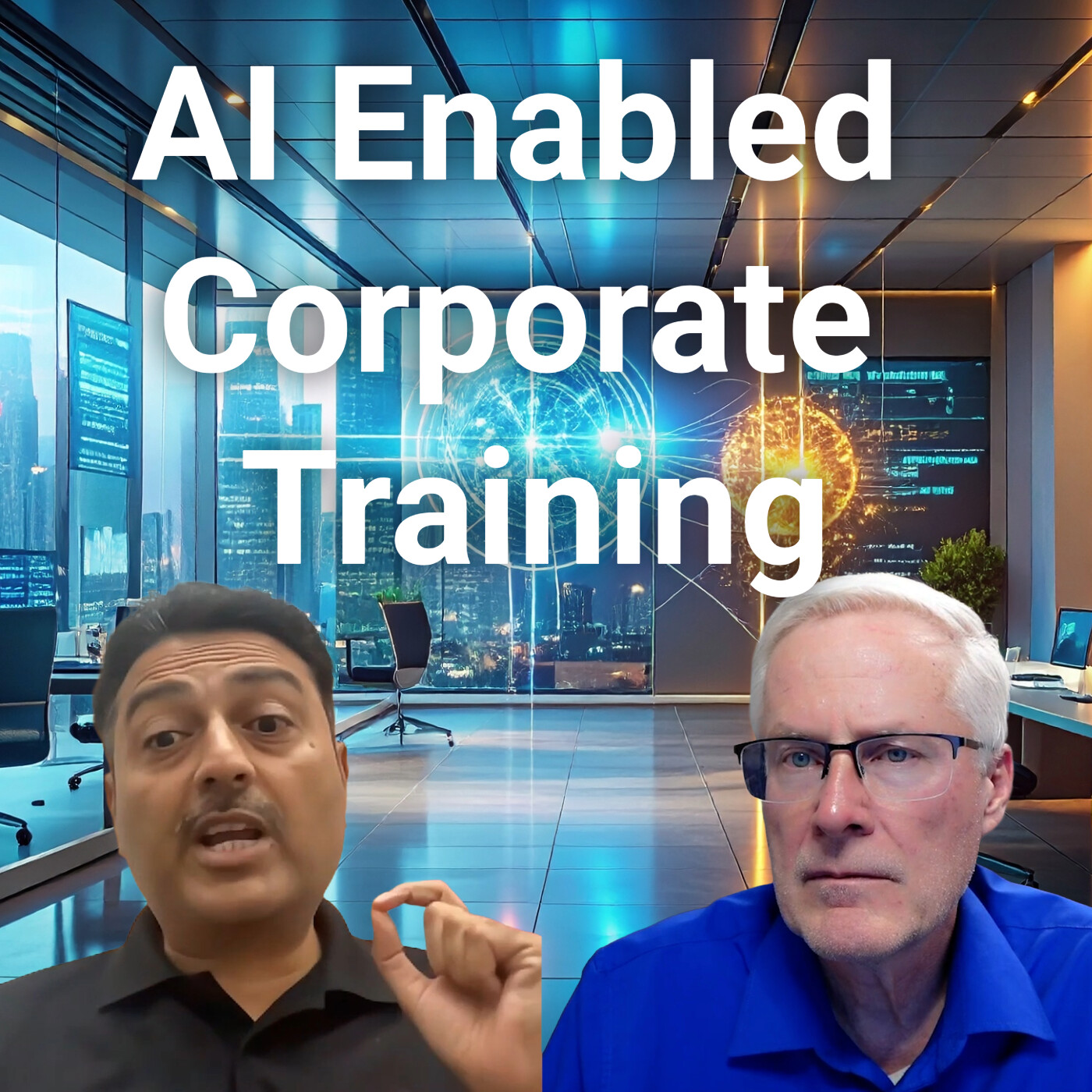
Embracing Digital Transformation
#343 Revolutionizing Corporate Training with AI and Userization
00:32:18
Loading summary
Transcript72 lines
- [00:01]
A
I think with AI, with the innovations what we had in last few years, it's possible and we should expect that instead of humans always adapting to technology, technology should adapt to individual humans.
- [00:18]
B
Welcome to Embracing Digital Transformation, where we explore how people process policy and technology drive effective change. This is Dr. Darren, Chief Enterprise architect, educator, author, and most importantly, your host on this episode, Revolutionizing corporate training with AI and userization with special guest Kadeem Bhati, CEO of whatfix. Karim, welcome to the show.
- [00:52]
A
Thanks Veren. Thanks for inviting me.
- [00:54]
B
Hey, I really look forward to talking about. When we first talked about this, I said this is perfect. It fits well within the book that I'm releasing coming out called AI Augmented Teams. It has a lot to do about training our people and using tools effectively, which I'm excited to talk about today because it's so something I'm writing about right now. But before we get started, everyone that listens to my show knows that I only have superheroes on the show. So. Karim, every superhero has a background story. What's your background story? Sure.
- [01:34]
A
Thanks for once again. I'm looking forward to your book and learning more about it. I'm Khadim Bhatti. I'm currently CEO and co founder of company called what Fixed. I started with my co founder colleague called co founder colleague Varak Kumar. I am based in Bangalore. He relocated to us because that's our bigger market as a background. I'm born and brought up in Mumbai, a city in India. Did my electrical engineering, Worked for a year in a hardware. Wanted to switch to software. So I did my master's from IIIT Bangalore and moved to Bangalore and did first in 10 years of work in telecom switching industry and then quit. And I started this company.
- [02:19]
B
Wow, that's. That's a great background. So I was just in Bangalore two weeks ago. We should have hooked up. It would have been.
- [02:26]
A
We should have had coffee.
- [02:27]
B
Bangalore. I'll have to tell you something. K. Bangalore is so crowded.
- [02:31]
A
Yes.
- [02:31]
B
And traffic is so horrible. Even if you were like five miles away or you know, eight kilometers away, it would have taken me two hours to go see you. So
- [02:43]
A
I think a friend told me that if you are in Bangalore, please do not tell anyone the distance in miles or kilometers. Please tell in terms of how much time it takes.
- [02:52]
B
Yes. That is so true. I made. I made a huge mistake. I booked my hotel. I thought, oh, it's. It's only. It's only 8km from the office and it was a lot cheaper than the hotel that was right next to the office. And I said, oh, I'll just go with the cheaper option. That was a huge mistake. I wasted four hours a day. It took me two hours. Yeah, yeah. And I'm like, this is crazy. And it's just so much energy in that city, which is great because there's so much new stuff going on and energy. But yeah, the traffic is horrible. So
- [03:32]
A
I hope you had a good experience. And there's another interesting thing about what Bangalore is. You throw a stone. There's a high probability every second person it falls on, it'll be a software engineer.
- [03:43]
B
Yes, yes, I noticed that too. A lot of young people on scooters. Yeah. So I noticed that too. Exciting stuff. So let's talk about some of the issues that we're starting to see specifically around generative AI and people not being trained effectively on it, not using it appropriately. But, but not just AI. You're seeing similar things with lots of tools that are out there that are, that these tools have been around for some time and people are not using them effectively and what the impact is on organizations. That's what we want to talk about today, right?
- [04:22]
A
That's right. So Darren, just to qualify that more or give you more context.
- [04:30]
B
Yeah, give me context.
- [04:32]
A
You have seen like last 10, 15 years Rate of change is just accelerating. People moved from on premise to cloud. Right. And then there's so many SaaS, products are getting deployed in every large enterprises. People need to adapt, people need to learn those softwares very, very quickly. It was few softwares that everybody had to use 10 to 14 softwares in their day to day life. In last three years the rate of change is further accelerated. Every board is talking about AI. CEOs want AI in the company to improve efficiency. Every CX source, every department wants to rapidly transform as an AI first company. But it all boils down to can employee adapt to the change rapidly. If they don't adapt, there's no benefit. That's the whole premise. So.
- [05:24]
B
So I mean when you were saying that, I was thinking of all the corporate training I have to do every year. That's a lot. Most of it is regulatory and I have a lot of work to do. So when it comes to training on tools, I don't do training on tools. I just start using the tools and, and if, you know, hit the help menu thing and get some help. But I'm missing a whole bunch. I know I am. So how do we, how do I overcome that?
- [05:55]
A
Right.
- [05:55]
B
Because I, I don't think people are getting the training they need on Basic tools, even best basic tools like Word or Excel. Yes.
- [06:05]
A
So I think very, very important point I think you have raised, right? Like you also go through a lot of tools. You also use them and you try to learn by using them, by hitting help or something. Right. So in a way you are trying to learn in the flow of work. We just recently did a study with Forrester. We just rolled out that paper. It says a company which is around thousand employees on an average around a billion dollar in revenue, they lose around 10 to 12 million dollars every year because people are not able to seamlessly use their systems processes. That's the productivity loss right now. Two things. Another important point also you mentioned training needs to be done because you need to go through regulations. There are some industries where compliance is very important. You cannot allow someone to go and do some processes or operate on some production environment without they are certified pharmaceuticals, life sciences, financials, very highly regulated industries. So number one, can we provide a safe environment or a, or a playground where people can practice. But it has to be as, as real environment as possible so that when they switch to real production environment, they don't feel the difference. Right? So a simulated environment with the real context and everything. Second, when they're working in the real environment, people still forget, people still get surprised because there is so much of context switching and all. Can we provide learning in the flow of work proactively? Like how GPS helps. We are driving on the road. Nobody goes to the maps today, right? So what fix basically provides complete end to end the whole journey for a user, for a company, for an employee where they do this, they are compliant, they can do the regulation properly, their digital transformation projects can be successful. So just to elaborate further, what fix provides a product called Mirror, which is a simulation of real time system processes, along with how they can talk in a customer facing environment, on the calls, on the voice objection handling. They get that safe environment to play, they get certified and then they move to real production environment. In the production environment, Vofix provides called digital adoption platform. On a web, on a desktop, on a mobile, while they're working. It gives them the nudges in real time to complete their task seamlessly. What to fill, when to fill, how to fill and the whole process in a simulation as well as in real time. It gets measured by another product called Analytics Voxfix product Analytics, which tells how much it took a time while practicing a simulation in a process. What are the bottlenecks in a real real time, which cohort did well? So you know, whole transformation can be measured, can be practiced, can be seamlessly performed during a production. That's what the one fix is about.
- [09:25]
B
Okay, so I like, I like where you're going with this because, because now if I'm gathering all that analytics, I can, I can do a couple things with that, right? I can, is, I can judge is my training effective, right? Where before people take training and then they take a survey, did you like the training? Who cares, right? I just, I just go, yes, I like the training on everything into that. But with this, now you're saying, how effective was the training by capturing the analytics. Right. Of things. So I think that's pretty, that's pretty brilliant. That's, that's great. However, I think you can also use that analytics to also say maybe there's something wrong with the application or the process flow. Are you seeing some, are you seeing some benefit in looking at that part of the analytics as well, or do you guys primarily just focus on the training part?
- [10:24]
A
No, you're perfectly right, Danit. There are business applications owner, product managers in every enterprise, every company where they want to optimize their processes, they want to optimize the user experience, and they need to collect lot of data. In our analytics, we also have a session, session replay which actually captures the session and which can replay it for people to actually observe how real users are actually using them, right along with all the data of steps and all. Again, let me give an example. Let's say there's a contact center, for example, somebody is talking on a call. Now, once you have enough data, there are insights which are coming out saying, okay, while talking on the phone for a cohort where there's a refund to be processed, most of the agents are spending 40 seconds to figure out how to do that refund on my database or my CRM. Now, that process can be simplified by the product manager or in the system itself. Also, this data can be used to ensure that all the agents go through in a simulated environment that particular scenario so that they don't fumble next time. So it can be used both of us. Exactly like what you mentioned.
- [11:37]
B
I like that. So how. I mean, if I can run these captures all the time, then that would feed into like, almost like a continuous improvement in both training and in process improvement. How hard are these feedback loops to implement in these large organizations? Because I can't stop everything and say, okay everyone, we're going to do training for a day because these organizations continue to have to do their work.
- [12:08]
A
Right? Yeah. So it that that was happening, didn't before. Right. Like if I want to change, I want to manage a change, its process has changed or my system has changed or I have a new compliance or new regulation. I need to take my workforce or a set of people out, get them to a classroom, make them practice, make them learn and then they go back. That's, that's impacts the productivity. Similarly, how do I analyze so much of data? With AI, many of these things have become more simpler now. Like for example, I can create a simulation for a specific change. I don't have to wait for a big bang. Right. I can have a specific change that my different process has changed. My different process. I can set the calendars for all my agents. Anybody can take in next 48 hours by just allocating 15 minutes and I can capture how they have performed on that. Somebody, if there's a need, I can send a report to their manager that probably certain set of people need to repeat this. Right, that's, that's one important part. Second, sorry, I know you want to ask. Well, but I want to add something here.
- [13:10]
B
No, I like this.
- [13:11]
A
Yeah. Second, let's say session replay. I was talking about. Or I'm talking about process data. So much of data, so much of information insights we have with AI now it becomes easier to also analyze those and surface the recommendation automatically. Otherwise somebody has to deep dive into tons of data which takes probably a weeks, months to close that feedback loop. But with AI, what fix can actually recommend surface those recommendations inside actionable which actually can immediately they can evaluate product managers can evaluate business managers can evaluate and actually quickly close the loops.
- [13:49]
B
So. Oh, I, I like how you're using AI in here to, to not replace but augment the, the work that someone could do. I take it from three months to maybe, you know, two hours or 30 minutes is a big deal. All right. Especially when it comes to feedback loops. Right. Because I think you know this as well as I do. If my feedback loop is three months, I mean that's worthless. Really. I mean a three month feedback loop, things change so quickly now that, that you know that that information's gone or that situation is, is now buried in lots of other things. So I really like, I really like that, that concept. Yeah.
- [14:37]
A
I think similarly for AI on the simulation also, let's say before AI, how training was done in a simulation environment. Like it was like we both sitting and talking to each other. I, I'm, I'm a, I'm an instructor. I would want to play a role saying that okay, I'm an angry Customer calling you. Let's see how Darren responds. I'll play the role and we'll correct each other. It's like so much of human effort. So much of it's not easy. Right. Also it's very similar how you're talking to me. Along with that, you operate on your CRM or a system as well. So with that mirror which I was talking about, just you can configure the scenarios with just prompts. It can create emo. What kind of emotions you want. Angry customer, happy customer, somebody who is anxious. Right. Somebody who's anxious. Gender accent. Right. And, and, and different. And, and also you can configure, it can train the system, can train on your compliance requirements of the company, your regulations, your refund policies, your different policies in the company. The way objection should be handled. So, and all this can be done offline. You don't have to be like in the room, in the classroom. Mo instructors required. Everything is automated along with all the, all the inputs not only on how you perform in the system, but how you could have handled this objections better, how you could have responded.
- [16:06]
B
All right, so wait, so let me make sure I understand this. You're saying that, let's say that I do take a call with someone. Let's say it's a sales call instead of a call center. I'm doing a sales call. It records my, my call at the sales call and, and all that happens and then I can get immediate feedback on what I could have done better. Exactly right. So I don't have to sit in class and I don't have to have my manager on the phone listening and saying, okay, you know, this is, you know, we'll pull you aside at the end of the week and tell you what you could have done better this week. Instead I could get some instant feedback and saying, hey, this is how you could have handled that situation more effectively. Or maybe a good kudos, hey, way to go. You did a great job. Reinforce that good. Right? That, that good behavior is. Are we seeing those systems coming into play now, Kareem? It is there.
- [16:59]
A
That's what Watford Miller can do. Right. I'll give you a couple of more scenarios, right? It can come back and tell you, hey, hey, Darren, you were, you maybe you should have listened more. You were cutting across that person. He was not able to complete. Like, these are the simple examples of communication skills. There can be another system inputs like, hey, this certain set of people are actually fumbling when there are information security related questions like does your system adhere to this Specifications do. You are SOC2 compliant, you are ISO compliant, your FedRAMP compliant. This guy doesn't know enough. Let that person go through a security training. So there are very specific inputs as well as soft skill inputs as well.
- [17:50]
B
Yeah, I like how you have that. The hard skills and the soft skills. I actually think we're in an age now where we need to teach better soft skills. I don't think soft skills are being taught in, in the education system very well. In fact, I think they become mushy skills, maybe not soft skills. Mushy, Is that a good word? Because, I mean, we, we see it. People coming out that can't carry on a conversation, can't ask questions, can't have eye contact, some basic soft skills that, that are needed. So may. All right, we, we just coined a new phrase, mushy skills. We got mushy skills coming out. How we turn those into soft skills is, that's part of, that's part of this, this whole thing, right, is, is, hey, I gotta build up those skills too.
- [18:46]
A
Yeah, this was all not possible before, but with Generative, all this is possible. And this configuration of those skills also is very simple. You just type English like what scenario you want to create, what kind of solution you want to create. So even the consequences have become really easy.
- [19:01]
B
No, you know, this is, this is, this is great because now we can say, hey, AI is bringing the humanity back into humans. If I consider humanity the ability to have a, a conversation with someone, I think this is pretty valuable because I can run lots of different scenarios for an individual. Right. And teach them.
- [19:22]
A
Yeah, I just want to add here. So, you know, all the while we were. Humans were expected or people expected to adapt, learn to technology. I think with AI, with the innovations, what we had in last few years, it's possible and we should expect that instead of humans always adapting to technology, technology should adapt to individual humans. And that's what we call, I think we have a lot of research papers and we call this userization. So our belief and vision is that every software in the world, every technology in the world should get userized. And it's like specific adaptation to every individual because every individual is different.
- [20:14]
B
Yeah, you're, you're absolutely, you're absolutely right. I mean, with Generative AI now I can have a core set of knowledge and present it to individuals in the way that they can understand it, whether it's a verbal visual in English, in Hindi, in, you know, Afrikaans, whatever it can be. Now I can actually adapt the output and the interaction with Software based on off the human that I have sitting there. That's pretty fundamental change in the way that we think about interacting with technology.
- [20:52]
A
And also not only for the simulation part, actually if I take to the live production environment for other use cases, let's let more of call and role play. There are people who always working every day on so many complex systems with ERP, supply chains, CRNs and so on. Right, right.
- [21:09]
B
Yeah, yeah.
- [21:10]
A
All the systems are customized in an enterprise for that enterprise process. Everybody's again expected to read, understand, learn those processes and compliance. Now how can we userize this? Right now to do the userization of this, you need to create another layer on top of it which can be specific to an individual. That's again possible with our digital adoption platform or the core platform which we started with. So I'll give you how simple useration can happen. As a seller, I am working on a prospect. Working with a prospect. Let's say the prospect is a property and casualty insurance player. Now ideally, expectation is after the call, ordering the call. I need to go through my CRM, my, my lms, my knowledge base to figure out, hey, did I work with any of the PNC customers before? What kind of case studies we have, what kind of ROI or value we deliver. Now imagine this conversation is going on or if I'm as a sales or seller filling up this information in crr. What fix practically prompts you? Hey, hey John, we have these three customers for P and C. These are the typical value they have derived. These are the use cases. Would you like to communicate to them? Should I help you compose an email? So this is how a technology can start adapting to every individual's need at that point of time.
- [22:30]
B
I really, I really like this approach. This is, this changes a lot because I could actually even skip all that customization that I spend hundreds of millions of dollars on. I could skip a lot of that and, and, and go more directly to customize or user. What'd you call it? User Vacation Userization tab. Yeah, I could do that directly without writing a line of code. That's huge.
- [23:02]
A
Right?
- [23:03]
B
And have the back end normalized because I can do that normalization layer through the generative AI. I think this is a pretty smart move in that direction.
- [23:25]
A
Yeah. So also we, as the, as the technology is getting more mature, as the capabilities are improving in the industry, gen AI capabilities and all, I think we are able to offer more flexibility, more features, more intelligence to this layer as well. So for example, we've been building for last one year AI layer Called screen sense. Screen sense sense. Right. It tries to understand from the screen what's happening.
- [23:52]
B
Right, right.
- [23:54]
A
What's the business context? So it creates the whole context graph, context layer, tries to collect as much information possible. So that, and, and also from the analytics what we discuss like what is a typical path, what are the typical processes. Try to understand that business context and merge with our visualization and our understanding what's the intent of that person, what this person is trying to achieve. Combine this context indent as a screen sense what we call and try to predict what's the next best, what's the next thing.
- [24:24]
B
Yeah, yeah, yeah.
- [24:25]
A
It sounds really simple, but it's pretty complex at the back. But imagine if we can collect as much of context information, intent information. It's just going to increase the productivity drastically.
- [24:37]
B
Yeah, absolutely. This is something that we are actually working on at the US Census Bureau that, that I do work with US Census Pro, very similar in that a generative AI, it's not learning, but I'm building up that intent and con context of the interactions between the human, the individual and the system. And the geni sits there in the middle and captures all this context. So if it can identify patterns of common patterns of reuse, it can, it can now, you know, move forward in that direction. I, I think this is the way that we're going to see these systems be adaptable to, to humans. I think this is a great way to go.
- [25:22]
A
What's happening with at Waterfix, just to add more color to this. We've been in this business for last 10 years now. We have 700 customers. Primarily we work with large enterprises. We have 85 of Fortune 500. We work with life science, BFSI, manufacturing tech, retail, Department of Defense and many, many different verticals and sectors. We have more than 40,000 processes captured. Like how typical packing loan origination moves how the pnc.
- [25:54]
B
That's crazy.
- [25:55]
A
So we have good amount of this context information. Now we plug this generic information with a specific information of a company of their knowledge base, of their compliances, of their regulation, of their specific information and then understand how the their specific companies, different cohorts of users move. Combine this.
- [26:16]
B
No, I, I think, I think you're onto a gold mine here. I now I. Here's another. I'll throw you a curveball here. All this, all this technology that we're using that we're throwing a lot of people at and we're training people. Can't generative AI just replace them? That's a big question. Everyone has and it sounds like the more context that we capture, I'll be able to replace some of these mundane, repetitive type of things that a lot of users do. So shouldn't I be able to reduce my staff by doing that? That's what the big question is today. What do you think?
- [26:57]
A
So there are multiple ways to look at it actually. Right. Number one, let's hypothetical scenario where AI does everything. Then who's going to consume it? Maybe I don't know.
- [27:10]
B
Yeah, no one. Well, okay, wait, so let's pause right there because that's a great question which says maybe the better question here is are we consuming things that we don't need to consume in. In a large enterprise. And you know exactly what I'm talking about, there's a lot of internal processes in large corporations that provide no real value to the bottom line or to the customer base. Right. Or even to the employees. They are processes that were created through ad hoc bureaucracies. Right. Can't I weed those out anyway? Do you see where I'm going with that? Kidding. I mean I don't need AI to do that. I just need to go in and possible.
- [27:59]
A
But let's take a different, completely different perspective. I'll come back to that. Okay. Eight billion people in the world, right?
- [28:06]
B
Yeah, eight billion people.
- [28:07]
A
Yeah, maybe, maybe a billion people have consumed more like 80% of the stuff consumers. The other guys who spend most 6,7 billion still don't have everything to their per use. They don't use everything. One of the reason is of course the reach distribution. Second is also affordability because good part
- [28:29]
B
of the world isn't affordability.
- [28:31]
A
Now let's say AI automates a lot of stuff efficiencies 3x4x5x. That what it is today. It also means we can, can we can produce in volumes at much in in a cost effective way. I'm sure in next three, five, seven years the rate happens. So whatever this consumption today, let's say it's 1x for example with this such population, if we can reach and distribute the consumption can go 3x4x as well. Life quality of life for a good amount of people can go up and in turn I feel more jobs will get created which will have definitely high productivity and it will work along with a lot of automation in AI agents. I feel it this quality of life can go up for maybe seven more and more people.
- [29:17]
B
Yeah, no, you know, I'm glad you brought that up because I believe the same thing you do. There's a lot of people that talk About AI as doom and gloom. It's going to destroy the world and no one has to work anymore. I actually think the opposite is true. I think the reach will be greater. We'll be able to be more efficient. We'll be able to produce more and more people will, will be able to sit at the table for. For no better word. Right. And feast on all the great productivity that, that we're producing. I, I think we can get there.
- [29:50]
A
We might have in between again, just to add more complexity to that. I think before we start producing at volumes, make it cost effective, there might be a period where there's a confusion, uncertainty might impact a bit, but then eventually it'll come up.
- [30:10]
B
Yes, I totally agree with you there. And we saw the same thing in the 90s with the dot com boom and then bust. Right. And then, and then rebuild even bigger. Right. We're going to see the same sort of thing. Big corporations will make lots of mistakes in this space and a lot of them will make some great strides forward. But you know what? We'll work through it. It's just going to be a little rough for a little bit, but this happens every time we get a technology revolution like what we're going through right now.
- [30:43]
A
We'll figure it out.
- [30:45]
B
Yeah. Hey, Kadeem, if people want to find out more about you and your company and what you do, where do they go to find out more?
- [30:53]
A
Yeah. So what? Fix.com is our website personally. If want to I can interview phone Kadim bhatti@in LinkedIn. Khadibatfix.com is my email id. I think these are the easiest way to reach me. Great.
- [31:09]
B
All right. Hey, thanks for coming on the show. This was really cool. I mean, we solved all the world problems today, right? So what else is there? This is probably the last podcast I'll ever do because we've solved everything. So we're in good shape.
- [31:25]
A
Yeah, I wish. I think we'll. We'll have more things to discuss maybe very soon, but I think. Thank you. I think, I think we touched a lot of topic and I really enjoyed that in talk.
- [31:37]
B
Hey, thanks again for coming on the show.
- [31:39]
A
Thank you.
- [31:44]
B
Thanks for listening to Embrace the Digital Transformation. If you enjoyed today's conversation, give us five stars on your favorite podcasting app or on YouTube. It really helps others discover the show. If you want to go deeper, join our exclusive community@patreon.com embracingdigital where we share bonus content. And you can always connect with other change makers like yourself. You can always find more resources@embracingdigital.org until next time.
- [32:11]
A
Time.
- [32:12]
B
Keep embracing the digital transformation.